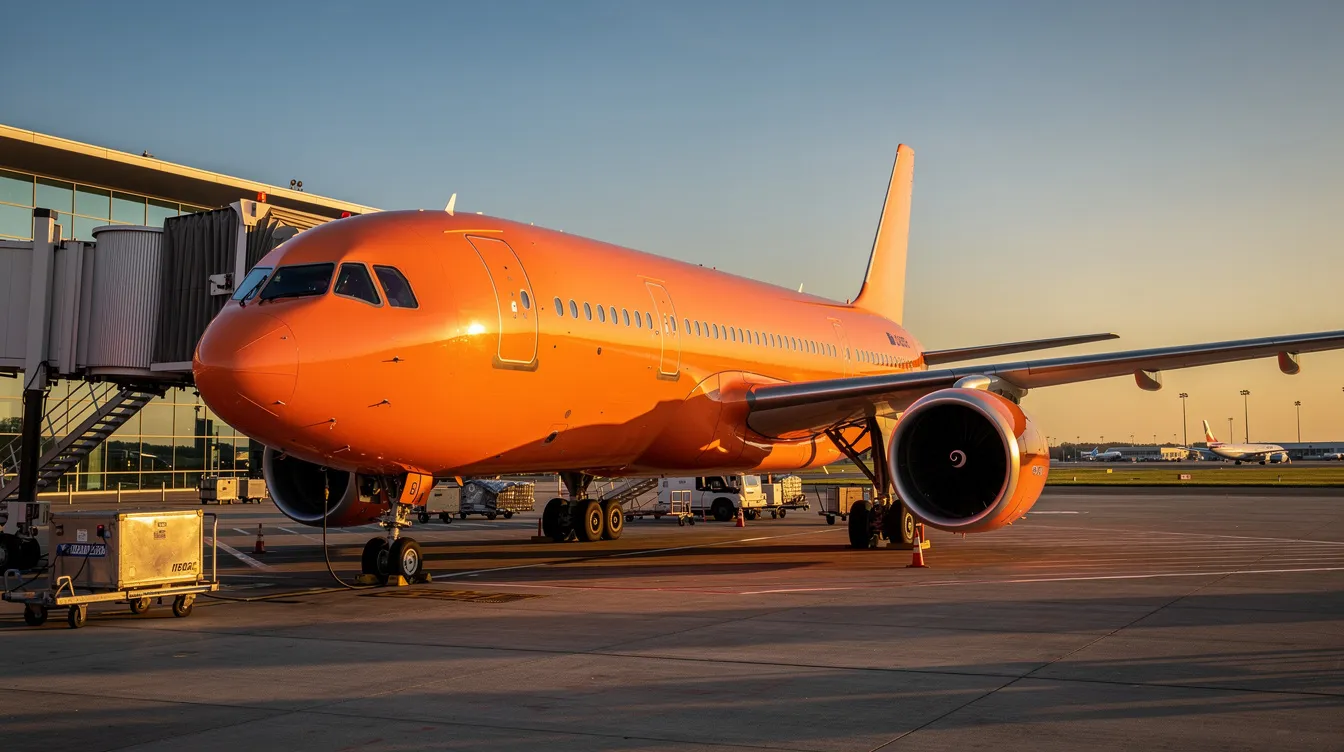
Introduction: Why Widebody Airliners Matter for Global & Private Travel
The widebody airliner reshaped intercontinental travel from the moment the first Boeing 747 carried passengers in 1970. Defined by twin aisles, a wide fuselage measuring 5 to 6 meters (16 to 20 feet) in diameter, and the ability to carry 250 to 400+ passengers on a single flight, these aircraft remain the backbone of every major airline's long-haul network.
For travelers who typically fly private, understanding how widebody airliners work-and where they fall short-sharpens the comparison against Jet Card–based private access. BlackJet's perspective: knowing what commercial premium cabins deliver helps you decide when a widebody makes sense and when a private jet is the smarter choice, especially if you're evaluating the best jet cards for frequent flyers.
WWide-bodyaircraft dominate intercontinental routes with unmatched passenger capacity and cargo volume.
Modern twins like the Boeing 787 and Airbus A350 have dramatically improved fuel efficiency and cabin comfort.
For executives and high-net-worth travelers, the real question is when scale matters more than flexibility.
Key Takeaways: Understanding Widebody Airliners and Private Jet Options
Widebody airliners are defined by their twin-aisle design and wide fuselage (16–20 feet), enabling them to carry 250 to 400+ passengers comfortably on long-haul international routes.
These aircraft offer superior cargo capacity, spacious cabins, and faster boarding compared to narrowbody planes, making them ideal for large groups and extended flights.
Modern widebodies like the Boeing 787 and Airbus A350 incorporate advanced materials and technologies, achieving 20–25% better fuel efficiency and reduced noise footprints.
Jumbo jets such as the Boeing 747-400 and Airbus A380 represent the largest widebody category, designed for very high-demand routes with exceptional passenger capacity.
Private jets accessed through BlackJet’s Jet Card programs provide unmatched flexibility, privacy, and convenience, allowing travelers to customize schedules, airports, and onboard environments.
For smaller groups or complex itineraries, private jet charters offer tailored solutions that widebody airliners cannot match, including access to smaller airports and synchronized multiple aircraft.
Both widebody airliners and private jets adhere to stringent international safety standards; BlackJet enhances safety with proprietary operator audits and real-time oversight.
Sustainability is a key pillar for modern aviation; BlackJet ensures carbon-neutral private flights via integrated offsets, aligning luxury travel with environmental responsibility.
Choosing between widebody airliners and private jets depends on travel needs: scale and cost efficiency favor widebodies for large groups, while flexibility, privacy, and time savings favor private jets for discerning travelers.
The future of widebody airliners is focused on twin-engine efficiency and sustainability, complementing private jet programs that offer strategic upgrades for premium travelers.
This summary encapsulates the strategic advantages and considerations for discerning travelers evaluating widebody airliners versus private jet access through BlackJet.
What Is a Widebody Airliner? Definition, Design & Key Differences
A widebody airliner is a jet with two passenger aisles and a fuselage diameter typically between 16 and 20 feet. This dual-aisle configuration enables faster passenger movement and more efficient boarding compared to narrow-body types. Narrowbody airliners, by contrast, feature a single central aisle in the cabin and usually have a fuselage diameter of 3 to 4 meters, carrying 100 to 240 passengers.
Key traits that set wide bodies apart:
Cabin layouts: configurations like 2–4–2, 3–3–3, or 3–4–3 across each row, with seating from roughly 250 to 600+ depending on the airplane and class mix.
Range and fuel: widebody airliners support long-haul flights due to their large fuel capacities, commonly covering 10- to 15-hour sectors such as New York–Tokyo or London–Johannesburg.
Cargo: widebody airliners have greater cargo capacity compared to narrowbody aircraft, making them profitable beyond just ticket revenue.
Comfort: spacious cabins improve passenger comfort through wider seats, premium suites, and dedicated space for onboard bars or lounges.
Economies of scale: widebody jets generally offer better economies of scale for high-demand routes, though airport infrastructure requirements for widebody aircraft are more stringent.
Narrowbody aircraft are commonly used for regional and domestic flights and are optimized for short-haul and medium-haul routes. That said, extended-range narrowbodies are increasingly capable on longer routes-but they cannot match the cabin size or cargo volume of a true widebody. Widebody airliners are designed for long-haul international routes where payload and range dictate the aircraft choice, just as private flyers must match missions to different private jet sizes.
Iconic Widebody Airliners: From Jumbo Jets to Modern Efficient Twins
Below are the most significant widebody types seen on long-haul routes today and in recent history, with concrete performance data; in parallel, private aviation has its own roster of the top private jets in the world competing for high-end travelers.
Boeing 747-400: The original jumbo jet lineage. The Boeing 747-400 can carry 624 passengers in high-density layouts, cruises at roughly 900–980 km/h, and has a range of 11,430 km. The Boeing 747-400 is made using composite materials for fuel efficiency-an early step toward lighter airframes.
Airbus A380: The largest civilian airliner in the world. The Airbus A380 can carry 471 passengers in a typical three-class configuration and has a range of 12,920 km. Its double-deck design offers features like onboard showers and lounges in premium cabins.
Airbus A330-300: A workhorse twin-engine wide-body with a range of 8,930 km, seating 250–300 in standard layouts, commonly deployed on medium- to long-haul routes across the world.
Airbus A340-600: A four-engine long-range type with a range of 12,410 km, now largely retired from active fleets as airlines shifted to more fuel-efficient twins- a contrast to today's buyers comparing 10-million-dollar private jet options rather than owning legacy widebodies.
Boeing 767-300: One of the earlier twin-engine widebody aircraft, accommodating roughly 220–290 passengers with a range over 9,000 km-a market pioneer on transatlantic routes and an instructive comparison point for modern private jets carrying up to 50 passengers.
Boeing 787 Dreamliner: The result of a generational leap in airplane design. The Boeing 787-8 carries 248 passengers. The Boeing 787 family is 25% more fuel-efficient than predecessors. The 787 Dreamliner has a noise footprint 60% lower than older models. The 787's cabin features improved altitude and humidity for passenger comfort, mirrored on a smaller scale by cheaper private aircraft options that prioritize efficiency for point-to-point missions. Since 2011, the 787 Dreamliner has flown nearly 5 million flights, and the Boeing 787 Dreamliner has flown over 1 billion passengers.
Airbus A350: Built from roughly 70% advanced composite materials and titanium, the A350 claims a ~25% advantage in fuel burn, CO₂ emissions, and operating cost versus previous-generation commercial plane models, much like today's cheapest private jets for entry-level travelers leverage modern design to cut operating costs.
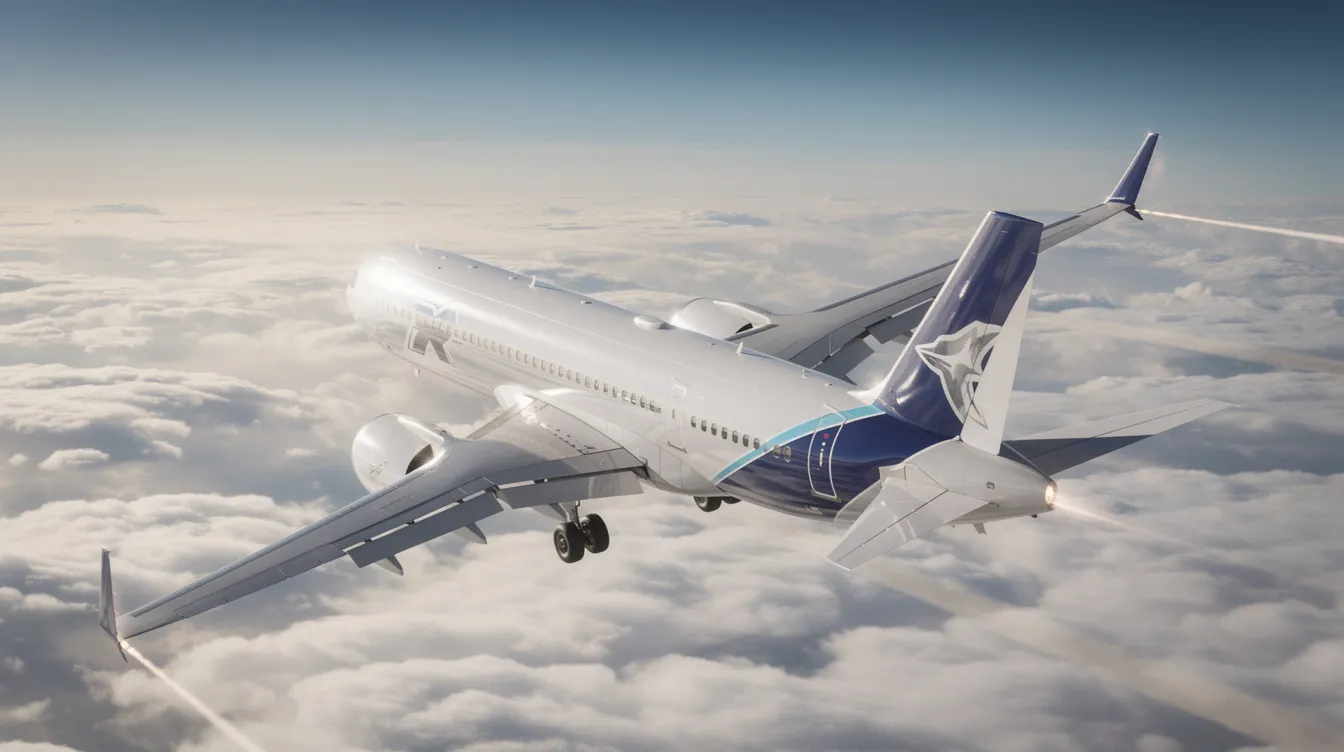
Wide Body vs. Private Jet: Choosing the Right Aircraft for High-End Travel
Flying in a wide-body airliner's business or first class delivers lie-flat suites, premium catering, and lounge access-but you share the aircraft with hundreds of other passengers, follow fixed schedules, and connect through congested hubs. A private jet through BlackJet's Jet Card program flips every one of those constraints: you choose when to depart, from which airport, with whom.
Widebody airliners are advantageous for transporting large groups of passengers, and widebody aircraft typically incur higher operating costs due to their size-costs airlines distribute across hundreds of seats. Private jets are priced by the hour for the whole aircraft, making them a different value equation entirely, especially when you look at a detailed cost comparison of chartering a private jet.
Scenario: A four-person executive team flying New York to London.
Factor | Wide-body business class | BlackJet large-cabin jet |
|---|
Departure | JFK, fixed schedule | Teterboro, your schedule |
Airport time | ~2–3 hours pre-departure | ~15 minutes |
Privacy | Shared cabin | Exclusive aircraft |
In-flight work | Limited confidentiality | Full boardroom environment |
Cost structure | Per-seat pricing | Hourly Jet Card rate, predictable |
Safety | Stringent international standards | Same standards + BlackJet's additional operator vetting |
Both options follow rigorous international safety certification. BlackJet layers proprietary operator audits and real-time operational oversight on top of that baseline, making the choice about time, privacy, and control rather than compromise on safety, while also opening the door to strategic jet card tax deductions for qualifying business use.
Group Travel on Wide Body Airliners vs. Chartering with BlackJet
When 200 to 400+ travelers need to move together-corporate roadshows, incentive trips, large events-a single wide body is hard to beat on per-seat economics. But when the number is smaller, or the logistics are more complex, a tailored group charter through BlackJet offers advantages no scheduled widebody can match, particularly once you understand the cost of chartering aircraft for around 100 passengers.
Capacity comparison: A wide-body handles hundreds on one airplane; private jets typically carry 8–16 passengers each, support private jets for 20 passengers, or up to 30+ in VIP airliner configurations.
Coordination: BlackJet can arrange separate jets for C-suite and project teams, synchronize arrivals across cities, provide private jet options for up to 50 passengers, and access smaller airports that wide-body airliners simply cannot serve.
Privacy: internal meetings happen freely on a private aircraft-impossible in a commercial cabin regardless of class.
Sustainability: new-generation widebodies are more fuel-efficient per seat, but BlackJet's premium private jet service ensures every private flight is carbon neutral via built-in offsets, so group decision-makers can view environmental impact as a solved variable rather than a trade-off.
If you hate the complexity of coordinating large-scale travel across fixed airline schedules, consult BlackJet's team to evaluate whether a widebody charter, a fleet of private jets, or a hybrid solution fits your next event.
Frequently Asked Questions About Widebody Airliners and Private Jet Travel
Q1: What defines a widebody airliner compared to narrowbody aircraft?
A widebody airliner features a fuselage diameter of 5 to 6 meters (16 to 20 feet) and two passenger aisles, allowing for greater passenger capacity (typically 250 to 400+ seats) and faster boarding. Narrowbody aircraft have a single aisle and smaller fuselage, optimized for short- to medium-haul flights with 100 to 240 passengers.
Q2: Why are widebody airliners preferred for long-haul international flights?
Their larger fuel capacity, spacious cabins, and dual-aisle design support extended flight ranges (up to 13,000 km or more) and passenger comfort over long durations, making them ideal for intercontinental travel.
Q3: How do modern widebody jets like the Boeing 787 and Airbus A350 improve efficiency?
These aircraft incorporate advanced composite materials, fuel-efficient engines, and aerodynamic enhancements, delivering roughly 20-25% better fuel efficiency and reduced emissions compared to older widebodies.
Q4: When should a traveler choose private jet access over flying widebody business class?
Private jets offer unmatched flexibility, privacy, and convenience—allowing travelers to set their own schedules, choose airports, and maintain confidentiality. Widebody business class suits large groups or when economies of scale matter more than timing and exclusivity.
Q5: Can private jet programs like BlackJet ensure sustainability in air travel?
Yes. BlackJet provides carbon-neutral private flights through built-in offsets, combining luxury and environmental responsibility without added cost to the traveler.
Q6: How does group travel differ between widebody airliners and private jet charters?
Widebodies efficiently transport large groups (200+ passengers) on a single aircraft, ideal for big events. Private jet charters offer tailored solutions for smaller groups, multiple jets, synchronized arrivals, and access to airports widebodies cannot serve.
Q7: What safety standards apply to widebody airliners and private jets?
Both follow stringent international safety certifications. BlackJet adds proprietary operator vetting and real-time oversight to ensure the highest safety standards beyond regulatory requirements.
Q8: How does boarding speed compare between widebody and narrowbody aircraft?
Widebody airliners with two aisles enable faster boarding and disembarking compared to narrowbodies with a single aisle, reducing turnaround times on busy routes.
Q9: What are jumbo jets, and how do they relate to widebody airliners?
Jumbo jets are the largest category of widebody aircraft, such as the Boeing 747 and Airbus A380, featuring exceptional passenger capacity and two aisles. They are a subset of widebody airliners designed for very high-demand, long-haul routes.
Q10: How do operating costs of widebody airliners compare to private jets?
Widebody jets have higher absolute operating costs due to size but spread costs over hundreds of seats. Private jets charge hourly for the whole aircraft, offering a different value proposition focused on flexibility and privacy rather than per-seat cost.
Future of Wide Body Airliners & The Role of Private Jet Programs Like BlackJet
The wide body market is consolidating around twin-engine types. Airlines across the world are retiring four-engine aircraft like the 747-400 and A340 in favor of the Boeing 787 and Airbus A350, which deliver 20–25% efficiency gains over 1990s-era wide bodies through advanced engines, aerodynamic refinements, and extensive use of composite materials. The result is a fleet that is quieter, lighter, and designed to meet tightening ICAO emissions standards.
Premium travelers increasingly view commercial and private aviation not as an either/or choice but as complementary modes. A wide-body business-class page in your itinerary might cover one intercontinental leg, while a BlackJet Jet Card handles the onward regional segment-offering the number of routing options and schedule flexibility that no single airline can. BlackJet's 24/7 digital booking platform and real-time support make accessing a private jet nearly as frictionless as booking a commercial seat, but with full control over timing, aircraft size, and cabin type.
BlackJet's pillars-safety through rigorous operator audits, sustainability through carbon-neutral flight at no extra cost, and flexibility across light, midsize, and large-cabin jets via 25- and 50-hour Jet Card programs informed by a clear understanding of private jet sizes and categories-position membership not as a replacement for wide-body travel, but as a strategic upgrade for the legs where time and privacy matter most.
Elevate your travel-effortlessly. Explore BlackJet's Jet Card programs and, with a solid grasp of overall Jet Card membership pricing and how Jet Card pricing structures work, discover how seamless, carbon-neutral private flight becomes your new standard. Leave a comment or reach out to our team to find the right Jet Card for your travel profile.


 Sign up with google
 Sign up with Apple