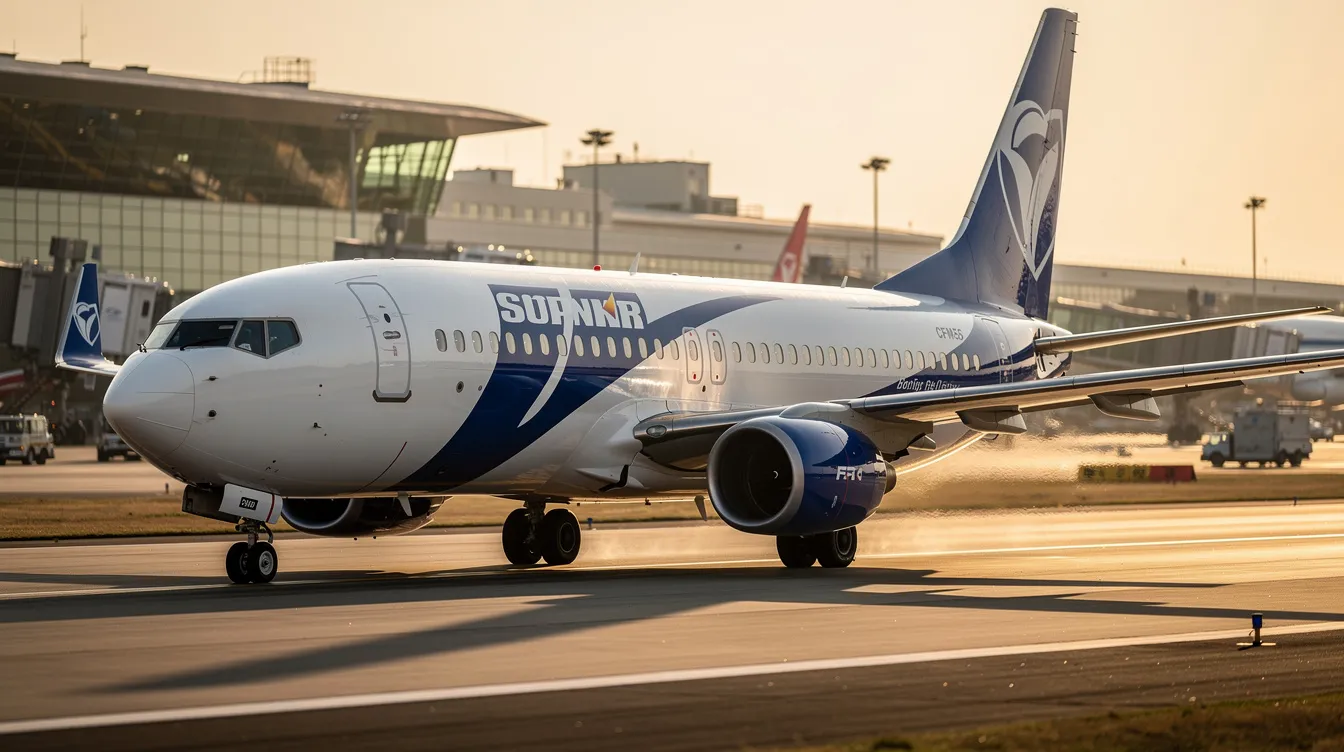
The Boeing 737 -800, officially known as the 738, is the most popular Boeing 737 Next Generation variant—a twin-engine narrow-body jet airliner designed for short- to medium-haul flights. It is commonly used for both passenger and cargo operations and typically seats about 160 to 189 passengers, cruises around Mach 0.78 to 0.79, and handles the short- and medium-haul routes you've almost certainly flown, even if you did not know the shorthand code. With nearly 5,000 delivered and thousands still performing daily service across six continents, it defines modern commercial air travel for travelers comparing comfort, reliability, and convenience on common business and leisure routes.
This guide is designed for frequent business travelers, aviation enthusiasts, and anyone comparing commercial airline cabins with private jet alternatives. We cover cabin layouts, seat maps, technical specifications, safety history, and private jet alternatives, providing a comprehensive resource for those evaluating their travel options.
Below, you’ll find a direct comparison of the 738 Boeing 737’s main features with private jet alternatives, followed by detailed sections on cabin layouts, seat maps, technical specifications, safety history, and how the onboard experience compares with BlackJet private jet options on similar city pairs. For frequent business flyers and high-net-worth leisure travelers weighing the tradeoffs between scheduled airline service and private aviation, this guide also looks at Jet Card pricing, booking technology, and sustainable flight options, including BlackJet’s carbon-neutral approach.
Summary Table: 738 Boeing 737 vs. Private Jet Alternatives
Feature | 738 Boeing 737-800 (Commercial) | Private Jet Alternatives (BlackJet) |
|---|
Cabin Layout | 1 or 2-class (Economy, Premium, First/Business); 162–189 seats | 4–16 seats; lounge-style, fully reclining, customizable |
Seat Map | 3-3 across in Economy; 2-2 in First/Business; exit rows, bulkheads, variable amenities | Club, divan, or conference layouts; all seats with aisle access |
Technical Specs | Twin-engine, narrow-body; Mach 0.78–0.79; 2,000–3,000+ NM range | Light, midsize, super-midsize, large-cabin jets; similar or greater speed/range |
Onboard Experience | Shared cabin, limited privacy, variable amenities, fixed schedule | Private cabin, bespoke catering, flexible schedule, direct boarding |
Safety | Regulated by FAA/EASA, robust maintenance, high safety record | Strict operator vetting, top-tier safety audits, and personalized oversight |
Sustainability | Improved efficiency over earlier models; high-density, lower per-passenger emissions | Carbon-neutral by default via offsets or SAF; right-sized aircraft for each trip |
Key Takeaways
"738" is the standard IATA code for the Boeing 737-800, the most prolific variant of the Boeing 737 Next Generation family and the backbone of global commercial fleets since its first delivery in 1998.
A typical 738 seat map offers around 160–189 seats across mixed cabin layouts (first or business class, premium economy, economy class), with details like movable armrests, exit row restrictions, and galley or lavatory locations shaping the passenger experience.
Core performance data: cruising at approximately Mach 0.78–0.79 (roughly 830–840 km/h), a practical range of 2,000–3,000+ nautical miles depending on configuration, powered by two CFM56-7B turbofan engines, with a service ceiling of 41,000 feet.
Compared with a commercial Boeing 737 flight, BlackJet's private jet access through a Jet Card can transform the same route into a faster, more controlled end-to-end journey—eliminating terminal queues, boarding groups, and seat-map compromises.
This article also covers the safety history of the 737 Next Generation series, structural issues and inspections, and how BlackJet approaches safety and carbon-neutral operations differently.
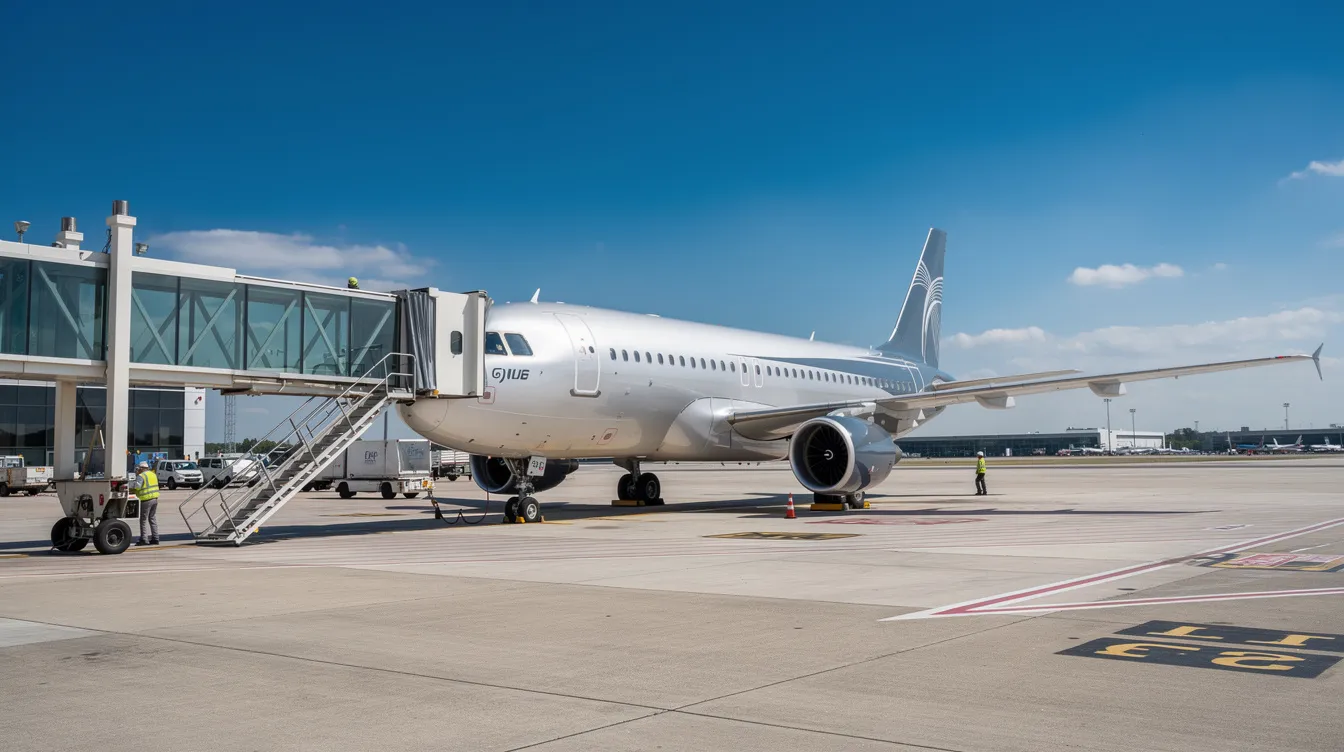
What "738" Means: Position of the Boeing 737-800 in the 737 Next Generation Family
The Boeing 737-800 (often referred to as "738") is a twin-engine narrow-body jet airliner designed for short- to medium-haul flights. It is commonly used for both passenger and cargo operations. "738" and "73H" are IATA and airline-internal codes referring to the Boeing 737-800, the best-selling variant of the Boeing 737 Next Generation series.
The 737NG family includes the -600, -700, -800, and -900 variants. The 737-800 was launched on September 5, 1994, and has been in service since 1998, when Hapag-Lloyd Flug received the first delivery.
Approximate capacities across the lineup: -600 (~110–132 seats), -700 (~126–149 seats), 738 (~160–189 seats), -900/ER (~177–215 seats depending on exit configuration).
By mid-2018, over 4,700 Boeing 737-800 aircraft were active in commercial service worldwide, forming the majority of the total 737NG fleet.
While airlines use the 738 in high-density economy-class layouts, BlackJet focuses on smaller, more exclusive cabin aircraft where 4–16 passengers enjoy full privacy and personalized service.
With this context, let's move on to the technical specifications that define the 738 Boeing 737-800.
Core Technical Specifications of the Boeing 737-800 (B738)
Airframe and Engines
Airframe Dimensions:
Engines:
Two CFM International CFM56-7B turbofan engines (commonly the -7B26 or -7B27 subtype)
Each engine produces roughly 117 kN of thrust
Blended winglets standard on most models
Cockpit and Avionics
Cockpit:
Modern glass cockpit with digital avionics
Common type rating with other 737 variants, reducing pilot training costs for operators
Performance and Weights
Performance:
Typical cruising speed: Mach 0.78–0.79 (about 830–840 km/h at standard cruise altitudes)
Maximum certified altitude: 41,000 feet
Practical range: approximately 2,000 NM in dense seating configurations and up to ~3,000 NM in lighter business-focused layouts
Weights:
Maximum takeoff weight: 174,100 lb (approximately 79 tonnes)
Fuel burn: approximately 850 US gallons of jet fuel per hour during cruise
Fuel capacity: approximately 6,875 U.S. gallons in standard commercial configuration
These specifications translate into trip profiles of 2–4 hours on routes like London–Athens, New York–Dallas, or similar sectors—the same legs many BlackJet clients now fly on private jets matched to their group size.
With these technical details in mind, let's explore how the 738's cabin is typically configured for passengers.
Seat Map Overview: Typical 738 Cabin Layouts
Cabin Layouts and Seat Map Basics
The 738 seat map varies by airline, but most configurations fall into a 160–189 seat range with one aisle and six-abreast seating in the main cabin (3-3 layout). The Boeing 737-800 seats 162 passengers in a typical two-class layout—a two-class layout on the 737-800 typically seats 162 passengers—while a one-class configuration can accommodate up to 189 passengers.
Common Mixed-Cabin Setup:
12–16 domestic first or business class seats in a 2-2 arrangement at the front
Approximately 30 premium economy or extra-legroom rows
120+ standard economy seats
Galley and Lavatory Locations:
Window and Overhead Bin Details:
Preferred Seating and Zones:
The contrast with private aviation is stark: BlackJet members on similar stage lengths enjoy fully reclining seats in cabins configured for a handful of passengers, not 162.
Transitioning from the overall seat map, let's look more closely at the economy class experience on the 738.
Economy Class on the Boeing 737-800 (738)
Economy Class Features
Economy class is the dominant cabin on most 738s, and subtle differences in pitch and seat design meaningfully affect comfort. Economy class on a Boeing 737-800 typically serves 126 passengers in a two-class configuration.
BlackJet positions its private jet cabins as the practical alternative to economy or premium economy: lie-flat or deep-recline seating, quiet work environments, and no middle seats at all, with multiple ways to buy a seat on a private jet depending on budget and flexibility needs.
Next, let's examine the features of premium economy and extra-legroom seating on the 738.
Premium Economy and Extra-Legroom Seating
Premium Economy Features
Many airlines use the same Boeing 737-800 fuselage but designate part of the cabin as premium economy or "extra legroom" rather than deploying a different aircraft type. Premium economy on a Boeing 737-800 typically accommodates 30 passengers in this intermediate zone.
Layout and Comfort:
Seats arranged 3-3 across
34–36-inch pitch, slightly greater recline
Sometimes dedicated overhead space, upgraded meals, or priority boarding
Amenities:
Movable armrests and adjustable headrests more common
Power outlets are concentrated in these rows on newer interiors
Visual dividers or curtains separate the section from the main cabin
With BlackJet, every seat on board a private jet effectively offers "premium" or better comfort, with direct aisle access for all passengers on many aircraft types, and travelers can compare this experience against typical private jet price list structures when planning their budgets.
Now, let's move forward to the first class and business cabin layouts on the 738.
First Class and Business Cabin Layouts on the 738
First and Business Class Features
Regional distinctions matter here. US domestic 737-800s often feature "first class," while European and other carriers designate the front rows as business class—sometimes simply by blocking the middle seat. United Airlines, for example, offers First, Economy Plus, and Economy classes on its 738 fleet.
First Class Layout:
Typically 16 seats in a 2-2 arrangement
Wider leather seats, increased pitch (about 37–40 inches), larger recline, enhanced meal service
Euro-Business Style:
Same 3-3 seating as economy, but with the middle seat left unsold, upgraded catering, and a curtain providing separation
Forward Cabin Amenities:
Fixed or partially movable armrests, larger tray tables, power outlets at every seat, priority boarding and baggage handling
For clients seeking privacy beyond what a 738 cabin can deliver, a BlackJet private flight provides bespoke catering, confidential meeting space, and direct access via FBO terminals—advantages no commercial forward cabin can match, especially for groups comparing large-cabin options like the best private jet for 20 passengers.
To further understand seat selection, let's look at special seat types such as exit rows and bulkheads.
Exit Rows and Bulkhead Seats on the 738
Not all seats on a Boeing 737-800 are equal. Aircraft structure and safety regulations create meaningful variation from one row to the next.
BlackJet's private jet seating eliminates these "gotcha" positions entirely. Every passenger can select a seat with generous legroom and full recline without structural compromises, and larger groups can evaluate private jets for up to 50 passengers when they need VIP airliner-style capacity.
Next, let's discuss how movable armrests and cabin ergonomics affect accessibility and comfort.
Movable Armrests, Accessibility, and Cabin Ergonomics
Small design details like movable armrests and seat hardware significantly influence accessibility and comfort on the 738. Most aisle seats and some window seats feature movable armrests, while exit rows, bulkheads, and locations housing controls or tray tables typically have fixed armrests.
Movable armrests support passengers with reduced mobility, parents traveling with children, and anyone needing easier ingress and egress. Boeing's "Sky Interior" cabins on many 738s incorporate sculpted seatbacks and redesigned overhead bins that increase the perception of space on both sides of the aisle.
In private jet cabins arranged through BlackJet, clients benefit from lounge-style seating, walk-around freedom, and crew who can adjust the cabin layout—swiveling or club seats—to individual preferences.
With cabin ergonomics covered, let's move on to the in-flight experience and amenities.
In-Flight Experience: Boeing Sky Interior, Connectivity, and Amenities
Cabin Features and Passenger Comfort
Boeing's "Sky Interior" represents a major cabin update on many 737-800 aircraft, with sculpted sidewalls, LED mood lighting, and larger pivoting overhead bins. The 737-800's cabin features improved passenger comfort with customizable LED mood lighting that can display sunrise and dusk scenes to ease jet lag.
Typical Amenities:
Wi-Fi internet, streaming entertainment to a personal device or seatback screen
In-seat power, improved noise insulation compared to older 737 models
Variability:
BlackJet offers a tailored experience by comparison: curated entertainment, business-ready connectivity, and the ability to personalize catering and cabin environment for each mission, similar in feel to many of the top 10 best private jets in the world but on a fully on-demand basis.
Now, let's address structural issues and safety actions relevant to the 737NG.
Structural Issues and Safety Actions on the 737NG
Even widely used aircraft like the 737 Next Generation series have faced structural concerns requiring regulatory action. In 2019, fatigue cracks were found on 5% of inspected 737NGs in the fuselage-to-wing "pickle fork" fittings—critical attachment components that form a structural link between the wing structure and fuselage load path—primarily on airframes exceeding 30,000–35,000 flight cycles.
The FAA issued an Airworthiness Directive for 737NGs on October 3, 2019, mandating inspections and, where necessary, repair or grounding of affected aircraft.
Boeing also faced a proposed fine of $3.9 million for faulty components on separate quality-control issues, underscoring the importance of rigorous manufacturing oversight.
Earlier legal disputes in the mid-2000s over alleged structural defects on 737NGs were ultimately resolved in Boeing's favor, and engineering changes since then have mitigated risk.
These actions demonstrate why regulatory oversight and mandatory inspections remain essential. BlackJet reinforces this subject by requiring its partner operators to meet or exceed leading third-party audit standards, with proactive inspections and conservative maintenance philosophies, aligning with broader analyses of how safe private jets are in practice.
With structural safety addressed, let's review the overall safety record of the 737-800 and 737NG series.
Safety Record of the Boeing 737-800 and 737NG Series
The 737NG family has completed tens of millions of flights worldwide with a statistically low hull-loss rate. The 737 Next Generation series has 22 hull-loss accidents, with a hull-loss rate of 0.17 per million departures—significantly lower than the classic and original Boeing 737 series, reflecting improvements in design, systems redundancy, and crew training.
These numbers, while confirming tragic individual events, represent a tiny fraction of total flights. Modern commercial aviation remains an exceptionally safe mode of transport as a result of continuous improvement in oversight.
Beyond aircraft type, operator standards, pilot experience, and operational oversight are what define risk in private aviation—a principle central to BlackJet's safety framework.
With safety in mind, let's look at how the 737-800 fits into Boeing's evolving product line.
From 737NG to 737 MAX: Evolution and Future of the Line
The 737-800 sits at a pivotal point in Boeing's lineup. The 737 MAX was launched in 2011 and first flew in 2016, designed to succeed the NG series with LEAP-1B engines, new split-tip winglets, and avionics updates that further reduce fuel burn.
The distinction between 737NG safety performance and the separate issues encountered on early 737 MAX operations is important: they are different aircraft with different systems.
Boeing essentially discontinued passenger 737NG assembly around 2019, transitioning production to MAX variants, while freighter conversions of 737-800 airframes continue.
Despite this change, many airlines still rely heavily on 737-800 fleets, making the 738 seat map relevant for travelers today. The stretched version of the NG line, the 737-900ER, serves as the basis for larger configurations and the BBJ3.
With the product evolution outlined, let's examine the 737-800's role in global fleets.
Orders, Deliveries, and Role in Global Fleets
The Boeing 737-800 is the "workhorse" of short- and medium-haul networks worldwide. Boeing delivered 4,979 737-800s by May 2019, with total orders approaching 4,989. It is commonly used for both passenger and cargo operations, with approximately 192 airframes converted to freighters.
Major airlines operating the 737-800 include Southwest Airlines, Ryanair, and American Airlines. Ryanair alone operates over 400, while carriers like ANA in Asia-Pacific and Qantas in Australia maintain large 738 fleets.
The type's efficient economics and commonality with other 737 variants lower training and maintenance costs—a purpose-built advantage for high-frequency operators.
BlackJet offers a contrasting model: bespoke access to diverse aircraft categories, from light jets for short hops to large-cabin jets for intercontinental missions, including options that mirror some of the cheapest private aircraft for budget-conscious flyers, rather than mass-market fleet standardization.
With the 737-800's global role established, let's look at its business jet variants.
Boeing Business Jet (BBJ) Variants Based on the 737NG
Boeing adapted 737NG airframes into Boeing Business Jet (BBJ) variants for heads of state, corporations, and ultra-high-net-worth individuals needing large-cabin private aircraft.
BBJ1 (based on 737-700): features strengthened 737-800 wings and landing gear, extra fuel tanks, and an extended range approaching 6,000 NM.
BBJ2 (based on 737-800): approximately 19 ft longer than BBJ1, offering about 25% more cabin volume and auxiliary fuel tanks in the cargo hold, plus winglets for efficiency. Range in VIP configuration reaches roughly 4,500 NM.
BBJ3 (based on 737-900ER): about 16 ft longer than BBJ2, sacrificing some range for maximum floor space.
While BlackJet does not center its Jet Card program exclusively on BBJs, similar large-cabin jets are available on demand for clients needing "flying office" capacity, and some organizations may even explore whether it makes sense to buy a Boeing 737 for private use.
With BBJ options explained, let's compare speed, range, and real-world route examples.
Speed, Range, and Real-World Route Examples (km/h Perspective)
At its typical cruise Mach 0.78–0.79 and standard cruise altitudes, a 738 usually travels in the 830–840 km/h range. Its maximum range is approximately 3,115 nautical miles, and the 737-800 has a range of over 3,000 nautical miles in most configurations—enabling legs of 2,000–5,500 km in roughly 2.5–5 hours.
Concrete route examples within the 738's performance envelope:
London–Canary Islands (~3,000 km)
New York–Denver (~2,600 km)
Singapore–Hong Kong (~2,600 km)
Range varies by payload, weather, and configuration. Dense economy class layouts carry more weight and reduce operational radius, while lighter business setups allow greater fuel load and distance.
BlackJet clients on these same routes avoid the block time penalties of scheduled commercial operations—boarding delays, taxi queues, and deplaning—gaining meaningful door-to-door time savings, especially on congested city pairs where private jet charters in Karachi or similar markets unlock more direct routings.
With route performance in mind, let's directly compare the 738 and private jets in terms of time and experience.
738 vs Private Jets: Time and Experience Comparison
Step-by-Step Comparison
Commercial 738 Boeing 737-800 Flight:
Arrive 1.5–2 hours early at the airport
Security queues and boarding by groups
Pushback delays, possible connections, baggage claim
Shared cabin, limited workspace, zero privacy
BlackJet Private Jet Flight:
Arrive 15–30 minutes before departure at an FBO
Minimal security, direct boarding
Disembark directly to ground transport at the destination
Private, quiet, configurable space for meetings or rest
A Jet Card turns travel time into productive or restorative time—not just an upgrade in seat comfort, and understanding overall jet card cost and pricing models helps frequent flyers decide when this shift makes financial sense.
With the experience comparison clear, let's look at BlackJet's Jet Card as an alternative to 738 business and premium cabins.
BlackJet Jet Card: An Alternative to 738 Business and Premium Cabins
Imagine a frequent traveler currently booking Boeing 737-800 business or premium economy on a series of weekly regional flights, seeking greater control over schedule and surroundings.
BlackJet's Jet Card structure—available in 25-hour and 50-hour blocks through its flagship BlackJet 25+ Hour Jet Card—gives prepaid access to multiple aircraft categories without committing to ownership or a single tail number. Core advantages include:
Guaranteed availability windows and transparent hourly rates
The ability to select aircraft class for each trip (light, midsize, super-midsize, large-cabin)
No yield-management surprises—no last-minute seat map changes or downgraded aircraft
The Jet Card is not a luxury splurge. It is a flexible mobility asset supporting fast-moving business and family schedules.
With Jet Card basics covered, let's compare private jet categories to the 738.
Aircraft Categories vs the 738: Choosing the Right Private Jet Size
Using the 738's ~162 passengers and roughly 5,500 km range as the reference point, here is how private categories compare:
Light jets (4–7 seats, ~2,000 km range): ideal replacements for short 738 hops when a small team travels, especially on routes with limited commercial schedules, and often among the cheapest private jet options for stepping up from commercial cabins.
Midsize and super-midsize jets (7–10 passengers, 3,000–5,500 km range): the practical alternative to regional 737-800 business class on transcontinental or high-value medium-haul missions like executive roadshows, and they frequently feature in comparisons of the best jet cards for frequent flyers.
Large-cabin and long-range jets: rival or exceed BBJ comfort on intercontinental segments, offering stand-up cabins and lie-flat berths for overnight journeys—ideal for family ski holidays or last-minute deal closings that once required a listed commercial itinerary, and overlapping with aircraft often chosen as the best private jet for 20 passengers or even the best private jet solution for 50 passengers when group sizes grow.
Explore how to find flights by aircraft type through BlackJet's platform.
With jet categories compared, let's discuss safety and certification differences.
Safety and Certification in Private vs Commercial Operations
Both commercial 738 operations and reputable private operators must meet strict safety standards, but oversight mechanisms differ.
Airlines: national aviation authorities (FAA, EASA) enforce standardized training, large-scale maintenance organizations, and fleet-wide airworthiness tracking for every Boeing 737 in service.
Private operators: charter companies work under Part 135 or equivalent regulations, with requirements for recurrent pilot training, duty-time limits, and maintenance programs tailored to smaller fleets, all of which factor into jet card pricing structures and benefits.
BlackJet's criteria: only partnering with operators holding top-tier safety ratings (Wyvern Wingman, ARGUS Platinum, IS-BAO), plus proprietary vetting of pilots, maintenance history, and operating practices.
A safety-conscious traveler stepping from a familiar 738 airline cabin into a private jet should click through the operator's audit certifications and confirm crew experience—or let BlackJet handle that vetting entirely.
With safety protocols explained, let's address sustainability.
Sustainable Aviation: 737-800 Efficiency and BlackJet's Carbon-Neutral Commitment
The 737-800 improved fuel efficiency over earlier 737 generation models through redesigned wings, more efficient engines, and winglets that reduce drag. High-density economy layouts can achieve relatively low emissions per passenger-kilometer, though total fuel burn—approximately 850 US gallons per hour—remains substantial across busy networks.
BlackJet's sustainability approach ensures every flight is carbon neutral by default through high-quality carbon offsets or sustainable aviation fuel (SAF) partnerships, with no extra administrative burden on the client. Members can also request route optimization and aircraft selection that minimize fuel use—right-sizing the jet rather than flying a larger plane than needed, a key theme in guides to budget-friendly private aircraft choices.
With sustainability addressed, let's look at booking technology and support.
Technology and Real-Time Support: Booking vs Traditional Airline Channels
Passengers typically book 738 flights through airline websites, OTAs, or corporate travel tools—processes subject to fare changes, seat map revisions, and display limitations. BlackJet members access capacity differently.
BlackJet's 24/7 digital booking platform enables members to read availability, select specific aircraft categories, and have itineraries confirmed quickly via app or web, mirroring the full suite of services outlined in its premium private jet cards and programs. Real-time flight support includes live status updates, proactive re-routing during weather disruptions, and direct communication with operations—not generic call centers.
Technology integrates with on-the-ground services (chauffeurs, FBO coordination, catering) to create a continuous experience that turns private aviation from a one-off luxury into a consistent, predictable mobility tool.
With booking technology explained, let's consider when upgrading from 738 premium cabins to a Jet Card makes sense.
When Does Upgrading from 738 Premium Cabins to a Jet Card Make Sense?
The decision to move from commercial Boeing 737-800 premium or business cabins to private jets is about time, control, and privacy—not only seat comfort. Clear thresholds to measure include:
Trip frequency: 10–20+ medium-haul round trips per year
Group size: 2–8 passengers traveling together on a regular order
Productivity value: confidential work, deal preparation, or restorative rest that commercial cabins cannot accommodate
A regional CEO visiting multiple cities in one day, or a family coordinating multi-stop vacation travel to destinations not directly served by 738s, often finds that the total cost comparison shifts once lost time and missed opportunities are factored in. Serious 738 frequent flyers should model one year of travel under a BlackJet Jet Card to understand potential ROI, comparing options like a 100-hour jet card cost guide, a detailed look at 50-hour jet card pricing and value, or even benchmarking against NetJets jet card costs before deciding.
With upgrade criteria clarified, let's provide tips for reading a 738 seat map if you still fly commercial.
How to Read a 738 Seat Map Strategically (If You Still Fly Commercial)
Even BlackJet clients sometimes accept commercial flights, and understanding the 738 seat map helps optimize those trips.
Check for exit rows, bulkheads, and limited-recline seats before you select. Avoid seats directly in front of lavatories or galleys to minimize noise and foot traffic.
Use seat map tools and airline diagrams to identify which rows lack windows, and which seats have power outlets and movable armrests on each side of the aisle.
Choose forward economy or premium rows to reduce deplaning time when making tight connections or moving quickly to ground transport at the left or right exits.
For particularly critical journeys—key meetings, high-stakes negotiations—booking a BlackJet private jet eliminates these seat-map trade-offs entirely.
With seat map strategy covered, let's look at real-world BlackJet use cases that mirror typical 738 routes.
BlackJet Use Cases Mirroring Typical 738 Routes
Example 1: Transcontinental executive route.
A New York–Los Angeles traveler who previously flew 738 business class switched to a super-midsize private jet through BlackJet. Result: total door-to-door time dropped significantly, and in-flight board meetings replaced cramped laptop sessions.
Example 2: European multi-city tour.
A client once relied on three separate 738 segments (Paris–Milan–Berlin) across two days. Using a light jet through BlackJet, the entire itinerary was compressed into one efficient day with no layovers or checked baggage.
Example 3: High-end leisure.
A family heading to a resort destination with limited 738 service used BlackJet for direct access to a smaller regional airport—eliminating a multi-hour transfer and an overnight stay at the end of a long travel day.
For many former 737-800 frequent flyers, private aviation becomes less about indulgence and more about reclaiming control over complex schedules.
FAQ
These FAQs address practical questions not fully covered above, focusing on both 738 details and BlackJet's private alternatives.
Is the Boeing 737-800 (738) considered a safe aircraft to fly on today?
Yes. The Boeing 737-800 is one of the most widely used commercial aircraft in history, with a strong overall safety record supported by robust maintenance programs and regulatory oversight. Isolated structural concerns—such as the pickle-fork inspections received in 2019—were addressed through mandatory FAA directives and targeted repairs. Safety ultimately depends on operator standards, pilot training, and adherence to maintenance directives. Modern oversight systems closely track fleet airworthiness across thousands of active 738s.
What is the cruising speed of a Boeing 737-800 in km/h?
A typical 738 cruises at approximately Mach 0.78–0.79, corresponding to roughly 830–840 km/h at standard cruise altitudes. Actual groundspeed varies based on winds, routing, and altitude. Most private jets in the midsize and super-midsize categories cruise at similar or slightly faster speeds, depending on the specific aircraft.
How many seats does a 738 usually have, and what is the layout?
Most Boeing 737-800 aircraft carry between 162 and 189 passengers. A standard two-class layout has 162 seats—typically 16 in first class, 30 in premium economy, and 126 in economy class, all in a single-aisle configuration. Exact seat counts, movable armrest locations, and seat pitch vary by airline, so passengers should always consult the specific airline seat map before selecting a seat.
Can BlackJet arrange flights on Boeing 737-type aircraft, or only smaller private jets?
BlackJet's core Jet Card offering centers on traditional private jet categories—light, midsize, super-midsize, and large-cabin—not scheduled 738 operations. For special missions requiring larger group capacity, BlackJet can assist with custom charter solutions via vetted partners, maintaining strict safety and service standards throughout.
How does BlackJet ensure its private flights are carbon neutral compared to flying on a 738?
BlackJet automatically calculates emissions for each private flight based on aircraft type, flight hours, and fuel consumption. The company then invests in verified carbon offset projects or sustainable aviation fuel programs to neutralize the environmental impact—at no additional cost or administrative burden to the client. Members can request full transparency on the underlying projects and methodology for peace of mind.
Elevate your travel—effortlessly. With BlackJet, private flight is accessible on your terms through Jet Card programs built around rigorous safety, carbon-neutral performance, and unmatched flexibility. Explore our offerings and discover how refined, purposeful travel becomes your new standard.
Join BlackJet's Jet Card program for seamless, premium private travel—safety, sustainability, and flexibility built in.
Conclusion: Elevate Your Travel Experience Beyond the 738
The Boeing 737-800 remains a cornerstone of commercial aviation, offering reliable, efficient service across countless routes worldwide. However, for the discerning traveler seeking more than just transportation—valuing privacy, flexibility, personalized service, and sustainability—private jet access represents a strategic advantage. BlackJet transforms this vision into reality by providing seamless, carbon-neutral private jet travel through its innovative Jet Card programs.
With BlackJet, you gain effortless access to a curated fleet of private jets outfitted and equipped to meet your unique travel needs, all supported by proprietary safety certification and real-time booking technology. Whether replacing 738 business-class flights or embarking on bespoke journeys, BlackJet’s commitment to sustainability, safety, and service ensures that every trip is not just a flight but an elevated experience.
Discover how BlackJet can reshape your travel. Visit www.blackjet.com to explore premium private jet access and join a community where refined, meaningful travel becomes your new standard.


 Sign up with google
 Sign up with Apple