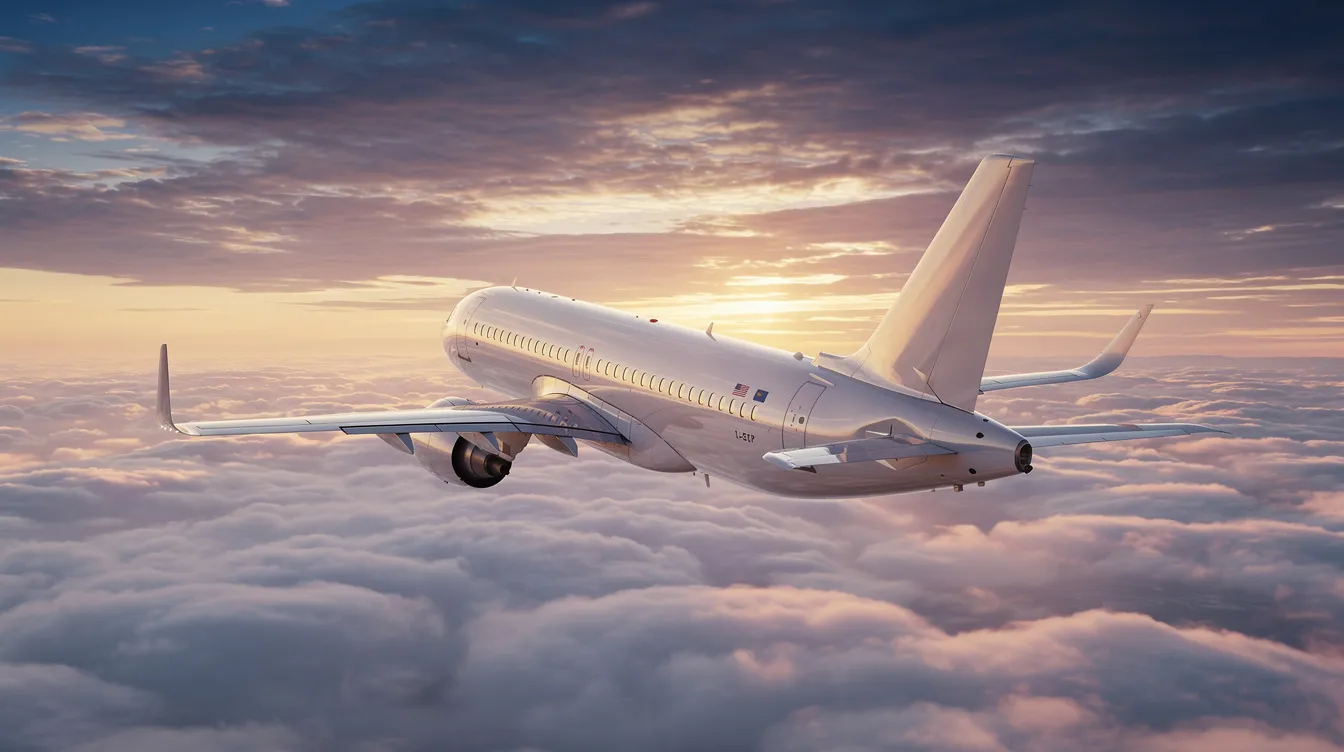
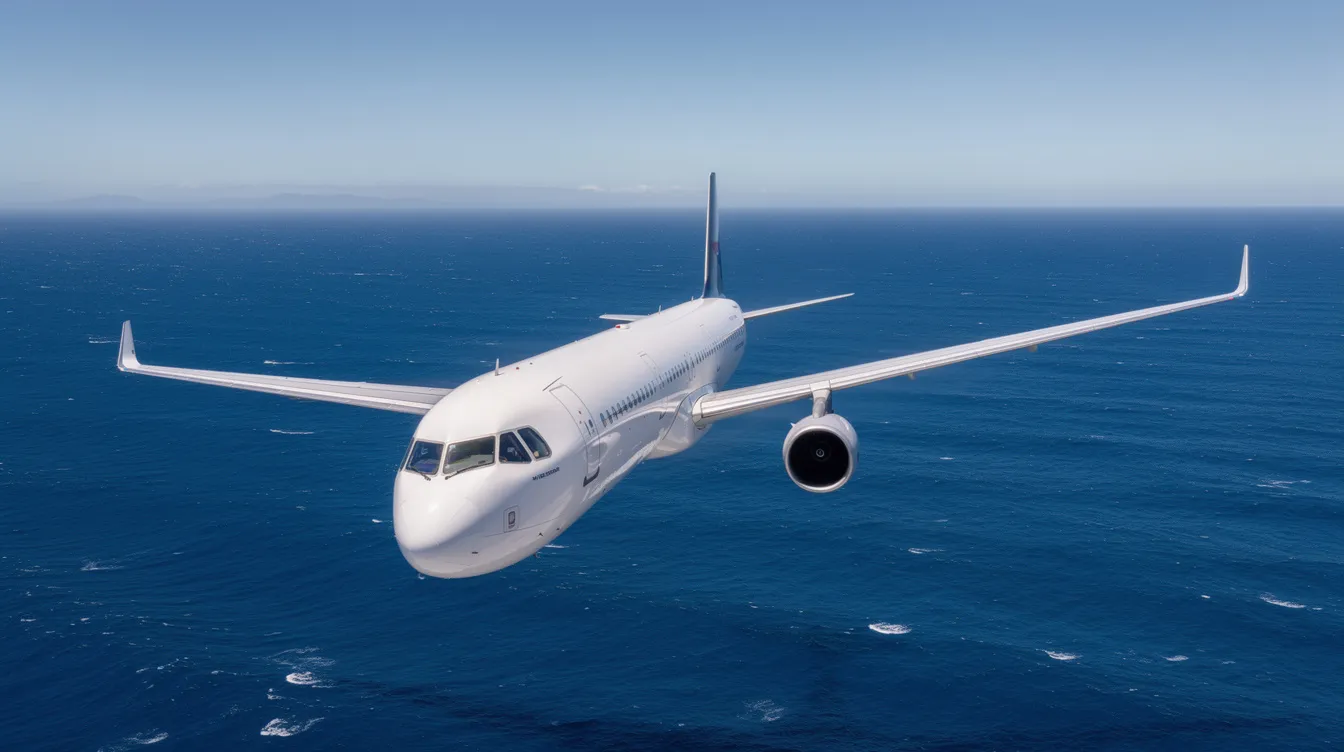
The Airbus A321neo is a highly efficient single-aisle, narrow-body aircraft that has redefined what is possible in commercial aviation. As the largest variant of the Airbus A320 family, the A321neo combines advanced technology, impressive range, and exceptional fuel efficiency, making it a standout choice for airlines and discerning travelers alike. In aviation, "single-aisle" refers to aircraft with one central aisle in the passenger cabin, while "narrow-body" describes planes with a single passenger aisle and a fuselage typically less than 4 meters wide. The A321neo is the largest and most capable member of this family, offering operational flexibility for both short-haul and long-haul routes.
This article covers the A321neo's variants (including the LR and XLR), performance, cabin experience, and how it compares to private jet options for BlackJet travelers. Whether you are a frequent flyer, a corporate travel planner, or a BlackJet member seeking the best in premium air travel, this guide will help you understand why the Airbus A321neo is considered a game changer in the single-aisle market.
Key Takeaways
The Airbus A321neo is a highly efficient single-aisle, narrow-body aircraft and the largest variant of the Airbus A320 family.
It delivers over 20% lower fuel burn, extended range (including A321LR and A321XLR variants), and a significantly quieter cabin compared to previous-generation models.
Aerodynamic improvements, including Sharklet wingtip devices, contribute to a 6% improvement in fuel efficiency per seat and a projected fuel burn reduction exceeding 20%.
Its CFM LEAP-1A and Pratt & Whitney PW1100G engines enable transatlantic routes and long narrow-body services with fewer emissions and reduced noise.
At cruising altitude FL330, the A321neo burns approximately 2,200 kilograms of fuel per hour, showcasing its efficient performance over long flights of up to 8 hours non-stop.
With one of the widest cabins in the single-aisle market, the A321neo supports flexible layouts accommodating up to 244 passengers in the Aircraft Cabin Flex (ACF) configuration, with a maximum seating capacity reaching 250 in high-density setups.
Premium cabins on the A321neo feature Business Class with full flat beds, while Economy Class seats offer reclining features and ample personal space, as seen on carriers like United Airlines, which offers three cabin classes.
The Airspace cabin design enhances passenger comfort with improved features such as quieter engines, larger overhead bins, and customizable ambient lighting, contributing to a more comfortable experience than competing aircraft like the Boeing 737 MAX.
BlackJet clients may encounter the A321neo through premium scheduled services or bespoke charter arrangements that complement our Jet Card programs.
This article covers variants (neo, LR, XLR), performance, cabin comfort, seat map concepts, and how the aircraft compares to private jet options in terms of efficiency, cabin experience, and mission profile.
Why the Airbus A321neo Matters for High‑End Travelers
A321neo: Largest and Most Efficient of the A320 Family
The Airbus A321neo is the largest and most advanced member of the A320 family, offering unmatched efficiency and flexibility in the single-aisle, narrow-body category. Its design allows airlines to serve both short-haul and long-haul routes with a single aircraft type, making it a strategic asset for premium and high-capacity missions.
A321neo Range and Speed
With a cruising speed of 525 mph and the ability to fly non-stop for up to 8 hours, the A321neo opens up new route possibilities, including transatlantic flights that previously required wide-body aircraft or fuel stops. The standard A321neo covers approximately 3,370 miles (3,500–3,700 nautical miles), while the LR and XLR variants extend this range even further.
Cabin Comfort Features
The Airspace cabin design features improved lighting, larger overhead bins, and quieter engines.
Economy Class seats offer reclining features and ample personal space.
Business Class cabins can include full flat beds and direct aisle access, rivaling some wide-body experiences.
United Airlines offers three cabin classes on the A321neo: First, Economy Plus, and Economy.
Operational Flexibility
The A321neo's operational flexibility allows airlines to configure the aircraft for a variety of missions:
High-density layouts can accommodate up to 244 passengers in the ACF configuration, with some configurations reaching up to 250 passengers.
Typical two-class layouts seat 180 to 220 passengers.
The aircraft features eight emergency exits and four lavatories, supporting flexible cabin arrangements.
For BlackJet members, understanding the A321neo's capabilities helps identify when a premium scheduled service or large narrow-body charter can complement private jet travel. The aircraft's environmental performance also aligns with BlackJet's carbon-neutral commitments, making it an attractive platform for sustainable group movements or corporate shuttles.
With these advantages, the A321neo stands out as a top choice for discerning travelers and BlackJet members seeking efficiency, comfort, and flexibility. Next, we explore how the A321neo evolved to achieve these capabilities.
Design Evolution: From A321ceo to A321neo
A Brief History
The A321 first appeared in the mid-1990s as the longest fuselage variant of Airbus's single-aisle lineup. It served airlines reliably for two decades before Airbus launched the neo (new engine option) program in December 2010. The A321neo's first flight occurred on February 9, 2016, marking a significant leap in narrow-body capability.
Key Structural Changes
Sharklet wingtip devices on the wings improve the lift-to-drag ratio and extend the range.
Strengthened wing and landing gear to support higher maximum weight configurations.
Aircraft Cabin Flex (ACF) layout with revised exit configurations, featuring eight emergency exits and four lavatories, improving seating capacity and flexibility.
Wingspan of 117 ft 5 in (35.8 m), optimized for aerodynamic efficiency.
Certification and Weight
EASA and FAA granted type certification for both the Pratt & Whitney PW1100G-JM and CFM LEAP-1A powered variants by early 2017.
The neo's empty weight is roughly 1.5–2 tonnes higher than the ceo due to strengthened structures and new engines, but this is offset by superior climb and cruise performance.
With these design improvements in place, the next key factor is the aircraft's performance and efficiency, which we explore below.
Engine Choices, Fuel Efficiency, and Performance (The Core of the "New Engine Option")
Engine Options
The "neo" in A321neo stands for "new engine option." Airlines can select between two advanced powerplants:
Both engine families represent a generational leap in fuel-efficient technology.
Fuel Efficiency Data
Each engine delivers approximately 15–20% lower fuel burn than the CFM56 and V2500 engines they replaced.
The A321neo improves fuel efficiency per seat by 6% and achieves a projected fuel burn reduction exceeding 20%.
The aircraft generates fewer carbon emissions and features quieter engines than previous models.
EASA testing confirmed overflight noise of roughly 83.3 dB for the LEAP-1A, compared to approximately 85.2 dB for previous-generation powerplants.
Performance Highlights
Thrust sits in the 30,000+ lbf class per engine (the LEAP-1A produces about 143 kN), enabling better hot-and-high airport performance and improved climb gradients.
At cruising altitude FL330, the A321neo burns approximately 2,200 kilograms of fuel per hour.
The A321neo can fly non-stop for up to 8 hours, making it suitable for both short-haul and long-haul routes.
These performance enhancements make the A321neo a leader in operational flexibility and environmental responsibility. Next, we examine the different variants and their specific capabilities.
A321neo, A321LR, and A321XLR: Variants and Range
The A321neo family now spans three main variants, each tailored for different mission profiles:
Variant | Range (nm) | Key Feature | Entry Into Service |
|---|
A321neo | ~3,500–3,700 | High-frequency workhorse | 2017 |
A321LR | ~4,000 | Three additional center tanks (ACTs) | 2018 |
A321XLR | ~4,700 | Permanent rear center tank, ~101-tonne MTOW | 2024 (Iberia first delivery) |
The standard A321neo handles high-frequency routes like Paris–Athens or Mumbai–Singapore.
The A321LR, launched in 2015 and delivered in 2018, enables transatlantic sectors like New York–Dublin with around 206 passengers using up to three additional center tanks.
The A321XLR pushes the envelope furthest, with a range of approximately 4,700 nautical miles, enabling long-haul flights such as Madrid to Boston non-stop.
These missions increasingly overlap with routes often handled by 16-seat large-cabin private jets—a detail worth noting for travelers weighing their options.
With a clear understanding of the variants, let's explore how the A321neo's cabin is configured for comfort and capacity.
Cabin Layout, Seat Map Logic, and Aisle Seat Experience
Seating Configurations
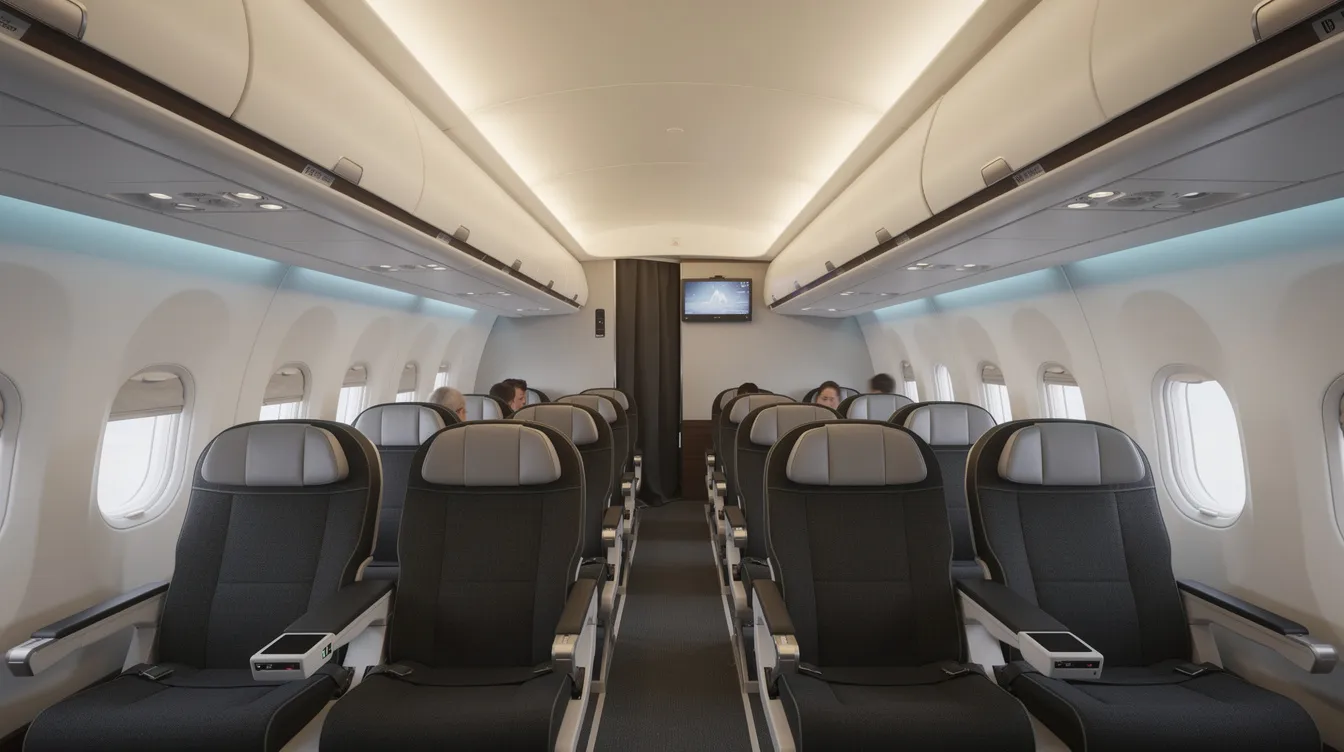
The A321neo's cabin is one of the widest in the single-aisle world, with an internal width of approximately 3.70 meters supporting a 3+3 economy layout. Airlines use Airbus's flexible "Airspace" design elements to tailor each seat map for their specific market.
Maximum seating capacity: The A321neo has a maximum seating capacity of 244 passengers in high-density ACF (Aircraft Cabin Flex) configurations. In some high-density layouts, the aircraft can be configured to carry up to 250 passengers, depending on airline-specific requirements and regulatory approvals.
Typical two-class arrangements: Seat 180–220 passengers, balancing comfort and capacity.
Flexible exit configurations: The ACF layout allows for modified door placement and overwing exits, with eight emergency exits and four lavatories, supporting various seating densities.
Aisle vs Window Seats
Aisle seats are prized for easy movement and faster boarding.
Window seats offer privacy and views.
Some airlines sell extra-legroom rows near exits as premium economy or preferred seating.
Premium Cabin Features
Premium seat maps on LR and XLR aircraft may feature lie-flat business class in staggered layouts in the forward cabin.
Business Class with full flat beds is available on carriers like American Airlines (20 Flagship Suite seats, 12 Premium Economy, 123 Main Cabin) and Qantas (20 business, 177 main cabin).
Economy Class seats offer reclining features and ample personal space, with seat width typically running 17–18 inches.
In-Flight Technology
Latest-generation in-flight entertainment systems.
Full-cabin Wi-Fi connectivity (United's XLR fleet will feature Starlink).
USB-A and USB-C charging and Bluetooth audio pairing on newer IFE platforms.
While the A321neo's cabin comfort approaches wide-body standards, travelers seeking full privacy, bespoke layouts, and guaranteed exclusivity often choose a super-midsize or large-cabin private jet through BlackJet, especially when they determine that chartering a private jet is worth it from a cost and flexibility perspective.
With the cabin experience detailed, let's look at how the Airspace cabin and technology further enhance passenger comfort.
Passenger Experience: Airspace Cabin, Comfort, and Technology
Airspace Cabin Features
Redesigned sidewalls reclaim shoulder space.
Larger overhead bins simplify boarding.
Signature ambient LED lighting with customizable modes helps mitigate jet lag on longer flights.
Comfort and Quiet
Passengers report the A321neo has a more comfortable cabin layout compared to its predecessor and competing aircraft like the Boeing 737 MAX.
Economy Class features reclining seats with ample personal space.
The A321neo is quieter and easier to sleep on than the A321ceo, thanks to reduced noise and vibration.
Passengers appreciate the A321neo's modern interior and quiet cabin.
In-Flight Technology
Latest-generation in-flight entertainment systems.
Full-cabin Wi-Fi connectivity.
USB-A and USB-C charging ports.
Bluetooth audio pairing on newer IFE platforms.
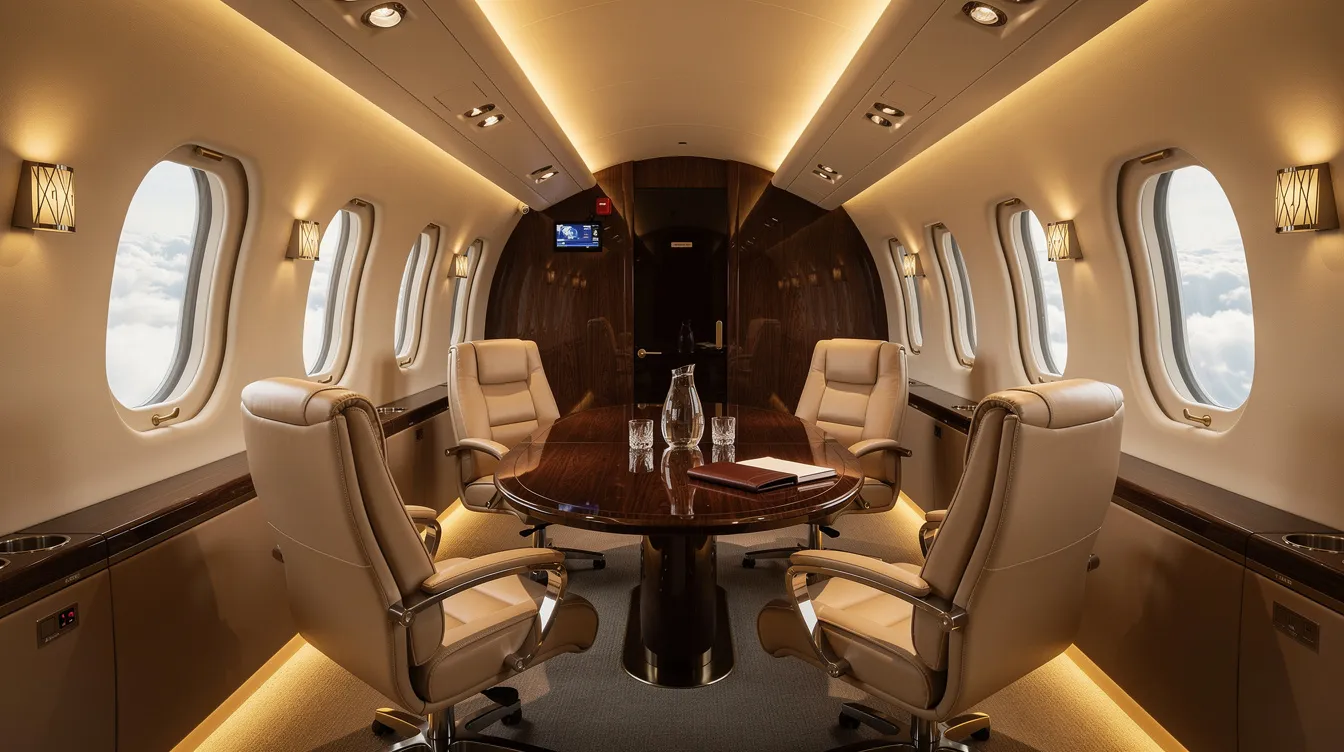
Premium configurations approach wide-body comfort, but they still cannot match the total cabin exclusivity of a dedicated business jet. BlackJet's private jet experience builds on similar technologies—Wi-Fi, power, curated entertainment—but adds bespoke catering, personalized service, and a cabin that belongs entirely to you. Learn more about how Jet Cards compare to charter options.
With a focus on passenger experience, let's examine how the A321neo fits into airline operations and the broader market.
Operations, Airlines, and Market Position
By mid-2025, more than 1,700 A321neo-family aircraft were in service worldwide. Leading operators include IndiGo, Wizz Air, American Airlines, China Southern, and Delta—each building large fleet commitments around the type. The A321XLR alone has attracted over 500 orders.
The A321neo has captured a dominant share of the upper single-aisle market compared to competing models like the Boeing 737 MAX 10, thanks to its range, capacity, and cabin width advantages. It operates across diverse missions:
High-density leisure flights in Europe.
Transcontinental North America routes with premium cabins.
Long, thin transatlantic routes served by LR and XLR variants.
Deliveries continue at pace from Airbus's final assembly lines in Hamburg, Germany, and Mobile, Alabama. Special-mission derivatives, including corporate shuttle versions and proposed maritime patrol platforms, demonstrate the family's breadth. In March 2025, several operators confirmed additional fleet expansion plans, and by September of that year, XLR operations had spread across multiple continents.
With its operational flexibility and market dominance established, let's compare the A321neo to private jet options for different travel needs.
A321neo vs Private Jets: When Each Option Makes Sense
The difference between an A321neo and a private jet comes down to mission profile. In some cases, travelers may even buy a single seat on a private jet rather than chartering the whole aircraft. The A321neo excels as a high-capacity, fuel-efficient commercial or charter platform, while Jet Card membership pricing structures make predictable-cost access to smaller jets attractive for frequent flyers. Private jets deliver low-capacity, maximum-privacy, on-demand air travel, spanning everything from light jets to executive airliners, as outlined in our guide to types of private jets for every traveler.
Consider two scenarios:
Corporate roadshow: A company needs to move 150 executives from London to New York. An A321XLR charter provides nonstop service, lie-flat seating for senior leaders, and dramatically lower cost per person than booking multiple private jets, similar in strategic logic to a large-group private jet charter for around 100 passengers.
Executive trip: Three partners need to reach a client meeting in a secondary city by noon tomorrow. A BlackJet Jet Card on a super-midsize jet gets them there on their schedule, departing from a nearby airfield with zero wait; this is precisely the type of mission where the best Jet Cards for frequent flyers deliver maximum value.
The A321neo is typically constrained to primary airports with longer runways and standard schedules, while private jets can access hundreds more secondary airfields and depart on the client's timetable—minimizing total door-to-door travel time—especially when flying on the world’s top-performing private jets.
Guidance for BlackJet members: Use the A321neo when moving larger groups or when a particular scheduled premium service is ideal for the route. Rely on BlackJet private jet access for high-value, time-critical, or privacy-sensitive missions where integration of schedule flexibility, cabin exclusivity, and smaller airport access matters most, including more cost-conscious options for those exploring the cheapest viable private jet solutions.
With these options in mind, let's see how the A321neo aligns with BlackJet's standards for safety, sustainability, and technology.
Safety, Sustainability, and Technology: Aligning A321neo with BlackJet Standards
Modern airliners like the A321neo embody the same priorities BlackJet emphasizes in private aviation: rigorous safety certification, reduced environmental impact, and advanced digital systems—principles that also underpin how we structure private jet pricing and access options.
The A321neo holds full EASA and FAA type certification, backed by extensive flight testing and redundant flight-control systems.
Environmental performance: roughly 20% lower fuel burn and CO₂ per seat, a lower noise footprint around airports, and current capability to use up to 50% Sustainable Aviation Fuel. Airbus aims to reach 100% SAF capability by 2030.
Operational technology like the Airbus Skywise data platform enables predictive maintenance and real-time performance monitoring—concepts that mirror BlackJet's own digital tools for real-time flight support and seamless member booking.
Whether flying privately with BlackJet or occasionally utilizing the A321neo through our curated charter solutions, discerning travelers can expect world-class safety and sustainability, supported by transparent Jet Card pricing structures that keep costs predictable.
With safety and sustainability assured, let's explore practical ways BlackJet members might use the A321neo.
How BlackJet Members Might Use the A321neo
A321neo access can complement a BlackJet Jet Card in ways that many members haven't yet considered. When a narrow-body airliner is optimal—for group size, route economics, or environmental alignment—it becomes a powerful addition to any private travel strategy.
Practical scenarios include:
A multinational firm chartering an A321XLR for a European sales conference, with lie-flat business seating for 20 senior leaders and premium economy for 80 team members.
A sports team flying on an A321LR to a transatlantic event, combining wide-body comfort with narrow-body economics.
A family group using an A321neo charter for a Mediterranean wedding, paired with private jets for VIP transfers at the destination.
BlackJet can source certified A321neo operators, negotiate bespoke cabin layouts—including preferred aisle seat allocations and enhanced catering—and deliver carbon-neutral flights under our sustainability framework, or recommend private jets for groups of up to 50 passengers when a dedicated VIP airliner is more appropriate. Members reserve smaller private jets for frequent, flexible travel through their Jet Card hours and add on ad-hoc A321neo charters when group size or route profile favors a larger aircraft, or choose among the best private jets for 15 passengers when a single large-cabin jet is the optimal fit.
Elevate your travel—effortlessly. Explore BlackJet's 25+ Hour Jet Card program and speak with an aviation advisor about integrating A321neo-based solutions into your overall travel strategy. With rigorous safety, carbon-neutral performance, and unmatched flexibility built in, refined travel becomes your new standard.
Frequently Asked Questions about the Airbus A321neo
What is the typical range of the Airbus A321neo and its LR/XLR variants?
The standard A321neo covers approximately 3,500–3,700 nautical miles (around 3,370 miles) in a two-class configuration. The A321LR extends that to about 4,000 nm using additional center tanks, while the A321XLR reaches roughly 4,700 nm—enough for Western Europe to the U.S. East Coast nonstop. Actual range depends on payload, headwinds, and airline-specific cabin layouts.
How comfortable is the A321neo cabin compared with older single-aisle aircraft?
Passengers generally experience a quieter ride, improved lighting, larger overhead bins, and slightly wider seats compared with many older models. The Airspace interior with customizable lighting and slimline seat designs preserves knee space effectively. Premium configurations with flat-bed business seats can feel close to wide-body comfort, though still without the privacy of a private jet cabin.
What are the main differences between the Airbus A321neo and the Boeing 737 MAX?
The A321neo typically offers a wider cabin, more seating capacity (up to 244 versus roughly 230 for the 737 MAX 10), and longer-range options—especially the LR and XLR variants. The Boeing 737 MAX can be marginally lighter on certain short routes. For travelers, the bigger difference is the airline's specific cabin and service design—seat pitch, aisle seat availability, in-flight entertainment—rather than the airframe name alone.
Can the A321neo be used as a private or corporate shuttle aircraft?
Yes. Several operators offer A321neo aircraft in corporate shuttle or high-end charter configurations with re-pitched seating, generous legroom, and enhanced catering for business groups. BlackJet can arrange such charters on request for clients needing to move large teams efficiently while maintaining a premium onboard experience, and can also advise on the best private jet options for 20 passengers when a fully private large-cabin solution is preferable.
How does flying on an A321neo align with BlackJet's sustainability goals?
The A321neo's new engine option technology, Sharklets, and aerodynamic enhancements deliver among the lowest fuel efficiency figures in commercial aviation per seat. When BlackJet organizes flights on A321neo-family aircraft, we layer our carbon-neutral commitment on top, using verified offsets to balance remaining emissions at no extra cost to members.
Conclusion: The Airbus A321neo’s Strategic Advantage for Discerning Travelers
The Airbus A321neo represents a pinnacle of efficiency, comfort, and operational flexibility in the single-aisle aircraft market. For high-net-worth individuals and corporate travelers, it offers a compelling blend of extended range, quieter cabins, and advanced technology—qualities that elevate group travel without compromising on sustainability or safety. Its variants, including the LR and XLR, unlock new long-haul possibilities previously reserved for wide-body jets, while its spacious cabin configurations rival many premium commercial offerings.
For BlackJet members, the A321neo complements private jet travel by providing a strategic option for moving larger groups or serving specific routes with exceptional efficiency and comfort. When paired with BlackJet’s Jet Card programs, travelers gain seamless access to both exclusive private jets and select premium commercial charters, all backed by rigorous safety standards and carbon-neutral commitments.
Ultimately, the A321neo is not just an aircraft; it is a transformative tool that reduces complexity and enhances travel possibilities for the discerning traveler. Whether chartering an A321neo for a corporate roadshow or flying privately on a super-midsize jet, BlackJet ensures every journey reflects the highest standards of luxury, safety, and sustainability—ready to elevate your travel experience today.


 Sign up with google
 Sign up with Apple