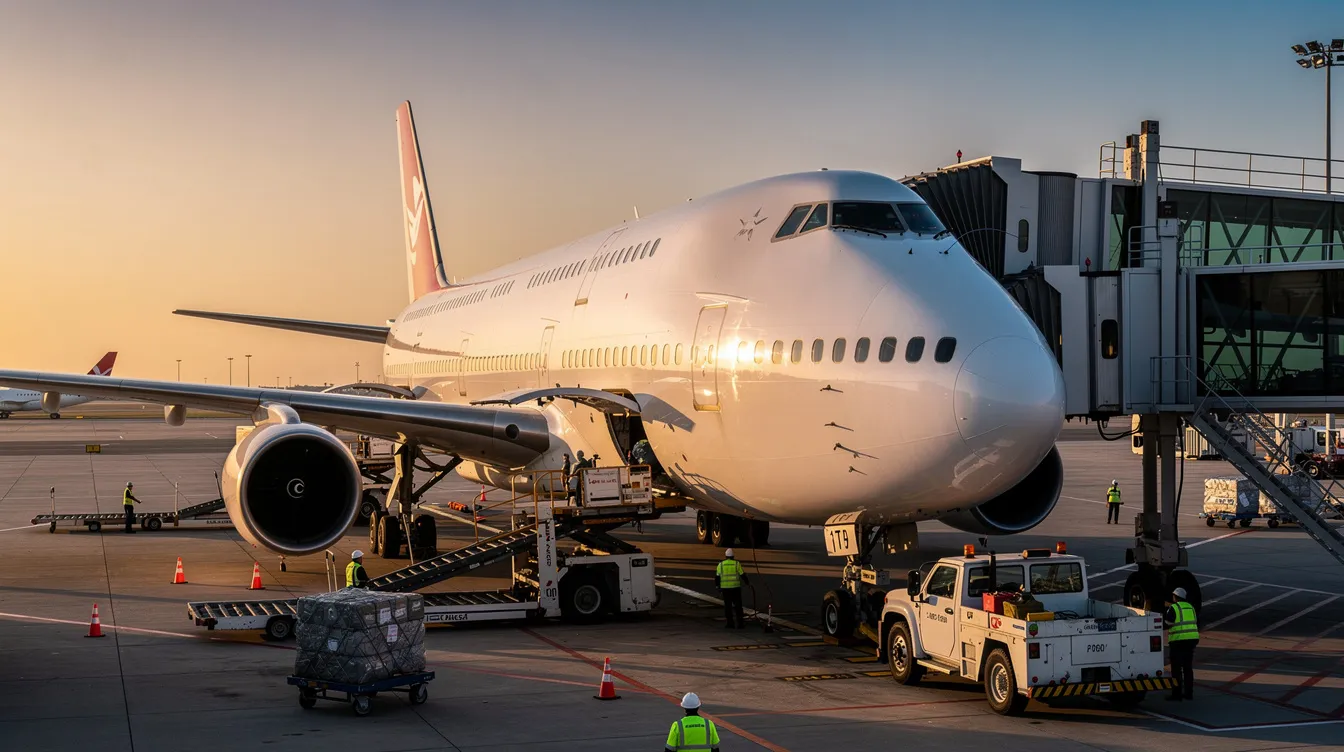
The Airbus Industrie A380-800 is the world’s largest commercial aircraft: a full-length double-deck, wide-body, four-engine jet airliner that typically seats 450 to 550 passengers across economy, premium economy, business, and first class while delivering unusually quiet, spacious cabins on long-haul routes. By combining massive passenger capacity with unprecedented cabin volume—40% larger than the Boeing 747-8—it created a flying experience that remains unmatched in commercial service: onboard lounges, shower spas, private suites, and a smooth ride at 40,000 feet. The cabin is pressurized to the equivalent altitude of 1,520 m, and air circulation systems refresh cabin air every 2–3 minutes, enhancing passenger comfort and reducing fatigue. Even as production has ended and airlines recalibrate fleets around smaller wide-body planes, the Airbus A380 continues to serve as the flagship aircraft on high-density trunk routes like London–Dubai, Doha–Sydney, and Singapore–London.
For frequent business travelers and high-net-worth leisure flyers weighing premium airline cabins against private aviation, that matters because the A380 offers exceptional comfort but still comes with fixed schedules, hub connections, and hours spent navigating terminals. Flying first or business class on an Airbus A380-800 delivers outstanding comfort in the air, but a BlackJet Jet Card flight delivers something the largest commercial aircraft cannot—complete control over departure time, routing, and privacy, often saving three to five hours per intercontinental trip.
This article offers a data-backed, authoritative look at the A380-800’s specifications, cabin layouts, operational history, technology, environmental performance, market challenges, passenger experience, and safety, while also showing how BlackJet’s premium private jet cards and Jet Card programs complement A380 travel for travelers who want both flagship commercial comfort and greater flexibility.
Key Takeaways
The Airbus A380-800 is the world's largest commercial aircraft type—a full-length double-deck, wide-body, four-engine jet airliner that typically seats 450–550 passengers across economy, premium economy, business, and first class layouts, with a maximum certified capacity of 853 passengers in an all-economy configuration.
Its maiden flight took place on 27 April 2005 in Toulouse; it entered commercial service on 25 October, 2007, with Singapore Airlines flying the inaugural A380 flight from Singapore to Sydney, and production ended in 2021 after Airbus delivered a total of 251 aircraft to 14 customers.
Emirates operates the largest fleet of A380S with 116 aircraft, making it the primary operator on high-capacity long-haul international routes.
The A380-800 is a passenger favorite for its quiet cabins—50% less cabin noise than previous models—wider seats, larger windows, bigger overhead bins, and generous personal space across all classes, especially on airlines like Emirates, Singapore Airlines, Qatar Airways, and British Airways.
The aircraft introduced key technological innovations—including advanced materials like carbon-fiber composites making up roughly 25% of its structure, a digital mock-up design process, and advanced avionics—but was ultimately challenged by a limited market shift toward smaller, efficient long-range jets.
For travelers who value time, privacy, and schedule control, BlackJet's Jet Card programs offer a strategic complement to scheduled A380 mega-hub travel, transforming transit time into productive or restful hours on your own terms.
Overview of the Airbus A380-800 as a Commercial Aircraft
The Airbus A380-800 is the only aircraft in service that qualifies as a full-length double-deck jet. It is a four-engine, wide-body airliner with a maximum certified capacity of 853 passengers in an all-economy configuration. Airlines typically configure the A380 for 450–550 passengers across three or four classes, prioritizing passenger comfort over raw density.
The A380 was developed to serve high-capacity hub-to-hub routes and was designed as a response to the needs of busy international hubs where slot constraints limit flight frequency. Its two decks provide approximately 550 square meters of usable cabin floor area—a cabin area 40% larger than that of the Boeing 747-8—offering space for configurations that no other aircraft type can match. That volume is what enables airlines to install onboard lounges, bars, and even showers.
Despite production ending in 2021 after delivering 251 aircraft, leading airlines continue to refurbish A380-800 cabins with new seat products, upgraded in-flight entertainment, and premium economy sections, keeping this very large aircraft as a flagship on their most prestigious long-haul routes.
Development History and Maiden Flight
Airbus launched its ultra-high-capacity A3XX program in the 1990s with a clear target: to challenge the Boeing 747-400's dominance on intercontinental routes by offering roughly 15 percent lower operating costs per seat. The program called for a large aircraft capable of carrying more passengers between the world's busiest airports, where adding flights was either impossible or prohibitively expensive.
The A380-800's maiden flight took place on 27 April 2005 from Toulouse–Blagnac Airport. Early flight test objectives focused on envelope expansion, handling qualities validation, and systems integration across the aircraft's complex fly-by-wire architecture. The program reached a critical milestone when both EASA and FAA granted type certification on 12 December 2006.
Singapore Airlines was the first airline to operate the A380, receiving its first aircraft on 15 October 2007. Singapore Airlines flew the inaugural A380 flight from Singapore to Sydney as flight SQ380 on 25 October 2007—a moment that marked the A380's entry into commercial service and launched a new chapter in global aviation.
Overall development and industrialization costs reached an estimated €18–25 billion, with significant schedule delays linked to wiring complexity across multinational production sites in France, Germany, Spain, and the United Kingdom.
Technical Specifications and Performance Data
The Airbus A380-800 measures 72.7 m in length and 79.8 m in wingspan, with an overall height of approximately 24.1 m. The fuselage accommodates two full passenger decks within a cross-section wider than any other commercial aircraft. Depending on the build standard, maximum takeoff weight ranges from roughly 560 to 575 tonnes, making it the heaviest passenger aircraft ever certified.
The A380-800 is powered by four Rolls-Royce Trent 900 engines (or, on some operator aircraft, Engine Alliance GP7200 turbofans), providing combined installed thrust on the order of 280,000–300,000 lbf. Typical cruise speed sits between Mach 0.85 and Mach 0.89—approximately 900–945 km/h—with the Airbus A380-800 reaching a maximum speed of 945 km/h.
Operational service ceiling is near 13,100 m (43,000 ft). Its range is approximately 15,400 km (9,500 miles), enabling nonstop flights of 15–17 hours on routes like Dubai–Los Angeles or Doha–Auckland. The A380 primarily serves long-haul international routes where these range and capacity figures justify deployment, and in rare cases, the platform has even been adapted as a private jet Airbus A380 with ultra-luxury configurations for heads of state and ultra-high-net-worth individuals.
The A380 facilitates high efficiency per seat on long-haul routes when load factors are strong, but overall trip cost and airport infrastructure constraints—gate width, runway strength, taxiway clearance—limit where it can be deployed, especially when compared with private jet solutions for up to 50 passengers that can access a wider range of airports for large-group travel.
Airbus A380-800 Key Specifications Table
Specification | Details |
|---|
Length | 72.7 meters (238 feet 8 inches) |
Wingspan | 79.8 meters (261 feet 10 inches) |
Height | 24.1 meters (79 feet) |
Maximum Takeoff Weight | 560,000 - 575,000 kg (1,234,000 - 1,268,000 lbs) |
Passenger Capacity (Typical) | 450 - 550 in 3-4 class layouts |
Maximum Certified Capacity | 853 passengers (all-economy) |
Range | Approx. 15,400 km (9,500 miles) |
Maximum Speed | 945 km/h (587 mph, Mach 0.89) |
Cruise Speed | Mach 0.85 - 0.89 |
Engines | 4 × Rolls-Royce Trent 900 or Engine Alliance GP7200 |
Cabin Layouts: Economy, Premium Economy, Business, and First Class
Airlines use the A380-800's generous cabin volume to create sharply differentiated experiences across classes. The A380 typically seats 450–550 passengers in three classes, and in a four-class configuration, it has a passenger capacity of 469 seats. The A380's cabin design allows for luxury features like onboard lounges and showers that simply do not exist on other aircraft, while select private jets configured for about 20 passengers offer analogous levels of privacy and customization for groups who prefer to avoid commercial hubs altogether.
The aircraft configuration varies by operator, but the platform's sheer scale enables more personal space in every class than most competing wide-body jets.
Economy Class on the A380-800
Economy class seats are arranged in a 3-4-3 layout on the main deck, with cabin widths that allow for wider seats than those of many comparable long-haul jets. Airlines typically offer 31–33 inch seat pitch, large seatback screens, USB charging, and LED mood lighting designed to reduce fatigue across 12–15 hour flights.
Full hot meal services, complimentary beverages on legacy carriers, and extensive on-demand entertainment libraries are standard. The A380 has 50% less cabin noise than previous models of similar size, and the lower-vibration cabin environment is a key reason the aircraft earned its reputation as a passenger favorite even among economy class passengers.
For travelers accustomed to private aviation, A380 economy class remains a compromise in privacy and schedule control. On a BlackJet small-cabin aircraft, every seat is effectively first class—with tailored departure times and no middle-seat neighbors.
Premium Economy on the A380-800
Premium economy on the Airbus A380-800 is typically a separate, smaller cabin featuring wider seats in 2-4-2 layouts on the main deck or upper deck, with increased pitch of roughly 37–40 inches. Premium economy provides wider seats and extra legroom compared to economy, narrowing the comfort gap without the price tag of a fully flat bed.
Enhanced services include priority boarding, extra checked baggage, upgraded meal presentations, and improved amenity kits. Airlines like British Airways and Emirates have introduced premium economy on select A380-800 aircraft type configurations, targeting value-conscious but comfort-driven passengers who want more personal space without paying business class fares.
Premium economy can meaningfully improve the long-haul experience, but it still lacks the privacy, work efficiency, and time control that BlackJet Jet Card clients experience when they fly on private jets.
Business Class on the A380-800
The typical A380-800 business class offers fully flat-bed seating in 1-2-1 or reverse-herringbone layouts on the upper deck, providing direct aisle access to most passengers. Business class offers fully flat beds and premium dining options, along with integrated laptop storage, noise-canceling headphones, and turndown bedding service.
Soft-product elements include lounge access, dedicated check-in, fast-track security, multi-course à la carte dining, curated wine lists, and premium amenity kits. Notable A380 business class offerings include the Emirates onboard lounge and bar at the rear of the upper deck, Qatar Airways' privacy-focused suites, and Singapore Airlines' generously wide business-class seats.
For those who value these products, our guide to the best business class airlines offers a broader comparison. Yet even the finest A380 business cabin cannot replicate the boardroom-in-the-sky feel of a private jet in flight—true privacy, minimal boarding time, and schedules tailored to the executive's day, not the airline's.
First Class and Flagship Suites
On many A380-800s, first class occupies the front of the upper deck or main deck with 1-2-1 configurations. First class features private suites with flat beds and luxury amenities, including sliding doors, personal minibars, and vanity mirrors. The cabin class represents the pinnacle of what a commercial aircraft can offer.
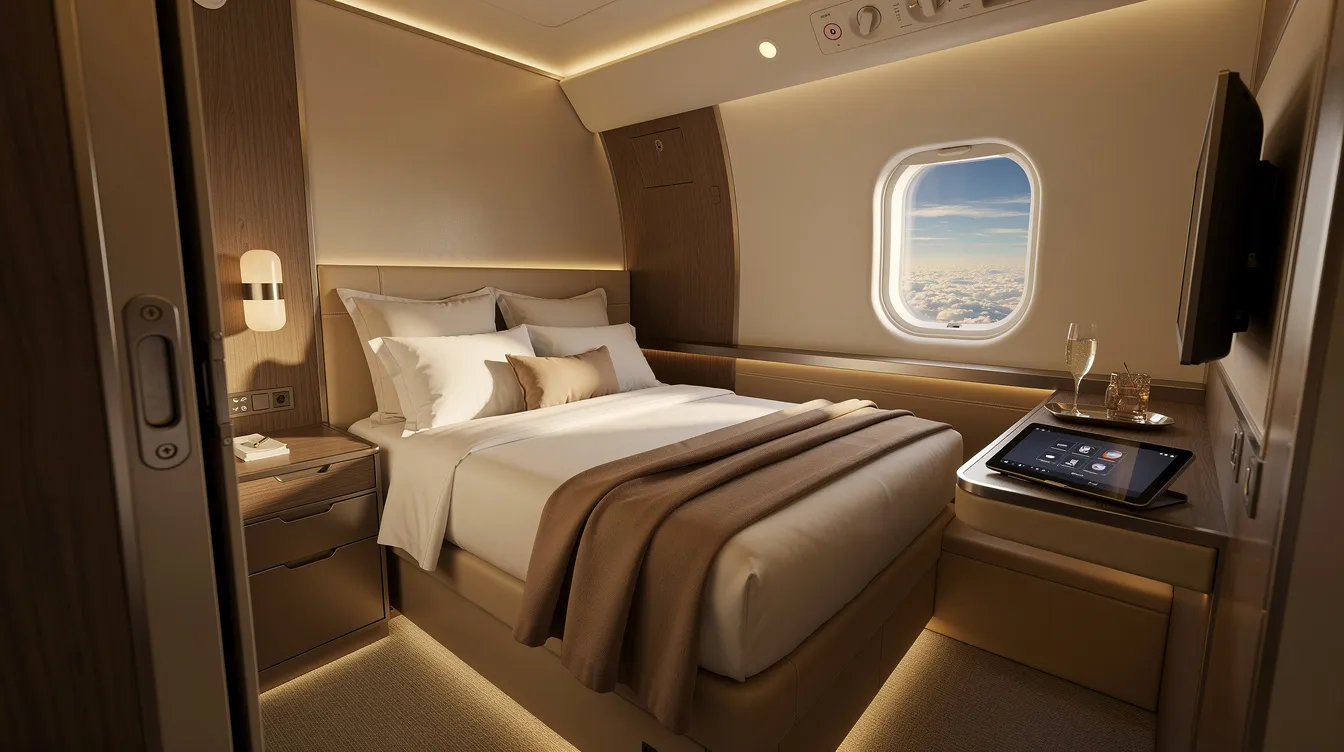
Emirates' A380 first class includes two shower spas with heated floors and rainfall shower heads—passengers receive a 30-minute turn with five minutes of running water at 40,000 feet. Singapore Airlines operates separate seat-and-bed Suites on certain A380S, while Etihad and Qatar Airways have offered their own high-end products.
First-class passengers benefit from chauffeur-driven transfers, dedicated lounges, à la carte dining, and priority services end-to-end. Yet some travelers move beyond A380 first class to private jets not for more luxury, but for schedule control, meeting privacy, and multi-city itineraries that fixed airline schedules simply cannot accommodate.
Main Deck, Upper Deck, and Seat Maps
The A380-800's main deck is typically used for high-density cabins—mainly economy—with a cabin width of approximately 6.58 m (21 ft 7 in). The upper deck often houses premium cabins and is slightly narrower, creating a more intimate atmosphere for business class and first class passengers. The lower deck beneath the main deck houses cargo, baggage, and crew rest facilities.
Airlines publish detailed A380-800 seat maps showing emergency exits, galley positions, lavatories, and bassinet locations. Some operators offer downloadable PDFs or interactive 3D tours, enabling travelers to visualize both decks before selecting seats. Understanding the seat map helps passengers choose between quick-disembarkation rows near forward doors, quiet zones away from galleys, or proximity to the onboard lounge.
For private jet travelers, seat-selection concerns vanish entirely. On a BlackJet flight, the cabin is yours—no seat map required- and understanding private jet sizes and cabin categories helps align the cabin with each specific mission.
Key Operators: Emirates, Qatar Airways, and Other A380 Airlines
As of the mid-2020s, about a dozen airlines operate the Airbus A380-800 in commercial service. A total of 251 A380S have been delivered to 14 customers over the program's lifetime.
Emirates operates the largest fleet of A380S with 116 aircraft, making it by far the largest operator. Its network radiates from Dubai as a mega-hub, with high-frequency A380 flights to cities like London, Sydney, and New York. Qatar Airways deploys the A380-800 on select high-demand routes from Doha, with tri-class layouts featuring business class and first class geared toward premium long-haul travelers.
Other key operators include Singapore Airlines, British Airways, Qantas, Lufthansa, Korean Air, ANA (All Nippon Airways), Etihad, and Asiana Airlines. Lufthansa has stated it will keep its A380 fleet in service through the late 2020s or early 2030s to cover capacity gaps pending delivery of newer wide-body aircraft.
Some carriers, including Air France and Malaysia Airlines, have retired their A380 fleets entirely, while others have reactivated aircraft post-pandemic in response to resurgent demand on high-density routes.
The Passenger Experience: Why the A380-800 Became a Favorite
The A380-800 earned its status as a passenger favorite through measurable differences in cabin environment. The aircraft is recognized as one of the quietest wide-body aircraft built—it produces half the noise of the Boeing 747-200 during takeoff and landing. In the air, the cabin is pressurized to the equivalent altitude of 1,520 m, lower than that of many other aircraft, which reduces fatigue and dehydration on long flights.
Air circulation systems refresh cabin air every 2–3 minutes through HEPA filtration. The A380 features larger windows and bigger overhead bins than comparable planes, and its high ceilings on both decks create a sense of openness that passengers consistently notice. The A380 introduced advanced materials and systems, enhancing passenger comfort and efficiency in ways that set a new standard for what travelers expect from wide-body flight.
Across classes, typical amenities include large in-flight entertainment screens, in-seat power, Wi-Fi connectivity, and signature features like onboard bars and lounges on carriers such as Emirates. The smooth ride quality—attributable to the aircraft's weight and wing design—further distinguishes the experience from smaller planes.
Yet even this high-end commercial experience cannot match the door-to-door efficiency of private aviation. While the A380 delivers outstanding in-cabin comfort, private jet travel eliminates the hours spent in terminals, security lines, and boarding queues that frame every scheduled flight.
Technology and Innovation Behind the A380-800
The A380-800 embodied several technological innovations that advanced the state of commercial aircraft design. Airbus used a full digital mock-up during the aircraft's development—one of the first programs to rely entirely on virtual prototyping rather than physical mockups for systems integration. This digital approach reduced design errors and accelerated testing timelines.
Approximately 25 percent of the A380's structure uses composites, including carbon fiber reinforced plastic and GLARE (glass-fiber-reinforced aluminum) laminates, concentrated in the wings, upper fuselage panels, and tail sections. These new technologies achieved meaningful weight reduction while improving corrosion resistance and structural fatigue life.
Avionics and Flight Systems
The A380 features an integrated modular avionics architecture with shared processing modules for flight management, navigation, and systems control. The cockpit layout includes eight large identical LCD displays, side-stick controllers, and QWERTY keyboards with trackballs supporting a largely paperless environment for checklists, performance calculations, and electronic logbooks.
Fly-by-wire flight control laws include multiple redundancy layers across electrical and hydraulic backup systems, enhancing overall safety margins. The common Airbus flight-deck philosophy means pilots transitioning from smaller Airbus types—the A320 or A330—require less additional training time, reducing operator costs.
These same fly-by-wire and glass cockpit philosophies are found in many of the best business jets, which BlackJet evaluates when selecting aircraft partners for its Jet Card fleet.
Materials, Structure, and Aerodynamics
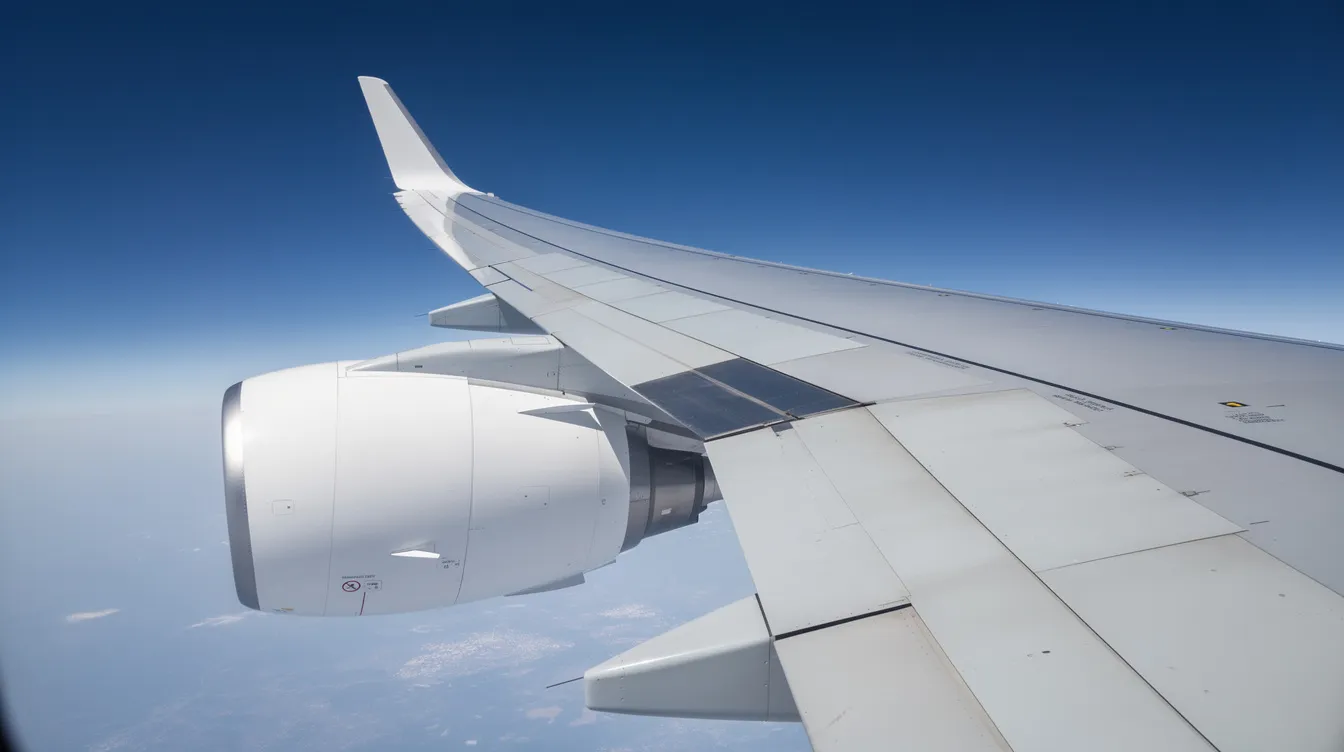
Carbon fiber composites make up roughly 25% of the A380's structure. CFRP, GLARE laminates, and advanced aluminum alloys are distributed across the wings, central wing box, tail surfaces, and door structures to achieve weight reduction while maintaining strength. The use of carbon fiber in primary structures was groundbreaking for a commercial aircraft of this scale.
The A380's advanced aerodynamics improve fuel efficiency and performance through carefully shaped wing profiles, smoothly contoured wing-body fairings, and wingtip fences designed to reduce wake turbulence while staying within the 80-meter airport gate span limit. The wings were originally sized for potential stretched variants such as the proposed A380-900, resulting in structural margin but also contributing to a higher empty weight per seat than later-optimized aircraft.
These design lessons influenced subsequent Airbus programs, most notably the A350 XWB, which applied composite and aerodynamic advances learned from the A380 in a smaller, more flexible platform optimized for point-to-point operations.
Environmental Performance and Efficiency
The A380-800's environmental profile is a story of trade-offs. The A380 consumes about 3.1 liters of fuel per 100 passenger-kilometers at typical three-class seating densities—a figure that can drop to roughly 2.4 liters at maximum-density configurations. The A380's design allows for lower emissions per passenger than the Boeing 747-400, and its fuel efficiency per seat is competitive when load factors are high.
Noise-reduction features include advanced nacelles, optimized fan blades, and airframe shaping. The aircraft produces half the noise of the Boeing 747-200, which allows it to operate into airports with strict noise limits, such as London Heathrow.
The trade-off becomes clear when the aircraft is not filled close to capacity. The A380's large airframe burns significant fuel per flight hour regardless of passenger count, making it less economically and environmentally optimal than modern twin-engine wide-body alternatives on routes where demand fluctuates.
BlackJet addresses the environmental dimension of private aviation through a carbon-neutral approach, including verified carbon offset projects and the selection of modern, fuel-efficient business jets for its Jet Card fleet. Travelers exploring more economical entry points can also consider the cheapest private jet options and empty-leg strategies, which often pair well with sustainable practices. For travelers who weigh sustainability alongside comfort, understanding the environmental profile of both commercial and private options helps align premium travel with responsible choices.
Operational History, Routes, and Notable Milestones
The A380-800 entered commercial service on October 25, 2007, when Singapore Airlines launched its first revenue flight. From there, the fleet expanded rapidly. Emirates, Qantas, Lufthansa, Air France, and others deployed the type on their most prestigious routes through the early 2010s.
Key milestones punctuated the aircraft's operational life:
Airbus delivered the 100th A380 on March 14, 2013
By December 2021, the A380 fleet had carried over 300 million passengers
The aircraft served flagship routes including Dubai–London, Singapore–New York (via intermediate stops), Doha–London, and Sydney–Dallas
The A380 also played a role in sustainable aviation testing, including early trials of synthetic liquid fuels and ongoing interest in SAF (sustainable aviation fuel) blends on select routes. Travelers comparing this to private options can use a complete guide to Jet Card pricing and benefits to understand how sustainable practices and cost structures align in private aviation. By the early 2020s, the global A380 fleet had completed more than 800,000 flights while maintaining an enviable safety record with no hull-loss accidents.
Market Challenges and the End of Production
The core market challenge for the A380 was structural: a global shift from hub-and-spoke traffic to point-to-point flying using efficient twin-engine aircraft like the Airbus A350 and Boeing 787. These planes offered lower fuel burn, lower unit costs, and the flexibility to serve thinner routes profitably—qualities that eroded demand for a very large aircraft requiring consistently high load factors.
Airbus announced in 2019 that A380 production would end. The final A380 was delivered to Emirates on December 16, 2021, bringing total deliveries to 251 aircraft. Airbus ended production of the A380 in 2021 after delivering 251 aircraft, closing a chapter that had begun with enormous ambition but faced a limited market reality.
Proposed variants—the A380F freighter, the stretched A380-900, and the re-engined A380neo—never entered production due to insufficient business cases. The A380 marked the end of the 'very large aircraft' era in aviation, as airlines shifted investment toward smaller, more versatile platforms.
The secondary market for used A380S remains thin. Several first-generation frames have been parted out, with salvaged engines and components reused to support remaining fleets. The aircraft's size and infrastructure requirements make it impractical for airlines without existing A380 experience.
Comparing A380-800 First and Business Class with Private Jet Travel
The gap between A380 first or business class and private jet travel is not about thread counts or champagne brands. It is about time, privacy, and control.
Consider a senior executive traveling from New York to London. Flying overnight in A380-800 first class delivers excellent onboard comfort: a private suite, a fully flat bed, multi-course dining, and a shower upon arrival. But the journey includes a taxi to JFK, check-in 90 minutes before departure, security screening, a connection through a hub like Dubai or Doha if flying Emirates or Qatar Airways, immigration, and baggage collection at Heathrow. Understanding the broader private jet price list and access models helps quantify whether upgrading parts of this journey to private aviation makes financial sense. Total door-to-door time can exceed 14–16 hours.
A BlackJet Jet Card flight on a long-range business jet offers a bespoke departure time from a private terminal, direct routing, and arrival at an FBO where a car waits on the tarmac. For those not ready to commit to full aircraft charter, guides on how to buy a seat on a private jet outline shared and semi-private options that still deliver many of these time savings. Total door-to-door time compresses significantly, often saving 3–5 hours per trip when factoring in security, boarding, and post-arrival formalities.
Private aviation transforms travel from a passive experience—however luxurious—into an extension of the office or home. For high-net-worth and corporate travelers, analyzing Jet Card cost per hour across aircraft types is key to quantifying that value proposition.
BlackJet Perspective: When to Choose A380-800 vs Private Jet
The choice between an A380-800 and a private jet is rarely binary. Experienced travelers make the decision based on specific trip parameters, often guided by analyses of the best Jet Cards for frequent flyers to match usage patterns with the right private aviation product.
Consider these factors:
Party size: A solo traveler or couple on a predictable long-haul route may find A380 first class efficient. A group of four executives needing privacy for a board discussion en route benefits from a private cabin, while larger groups can look to top 16-seat private jet options that balance capacity with range and comfort.
Route availability: The A380 operates on a select number of city pairs. Multi-city itineraries or destinations without A380 service favor private aviation, including localized options such as private jet charters in Karachi for travelers needing direct access to specific regions.
Timing: Fixed airline schedules work when departure times align with your agenda. Last-minute departures or arrivals timed to specific meetings are better served by BlackJet's on-demand model, particularly for travelers evaluating whether a larger 100 Hour Jet Card commitment matches their annual flying patterns.
Privacy: Sensitive conversations, confidential documents, and uninterrupted work require a private environment that no commercial cabin—however premium—can guarantee, even though some travelers will prioritize the cheapest private aircraft options to access that privacy in a more budget-conscious way.
Many BlackJet clients use a hybrid strategy: A380-800 business or first class for predictable, long-haul trunk segments, and private jets for feeder legs to secondary cities or time-critical journeys. For travelers exploring membership options, an in-depth guide to overall Jet Card cost and structure clarifies how these programs support that hybrid strategy. Booking a private jet through a Jet Card makes the logistics of this hybrid approach seamless.

FAQ
Below are answers to common questions about the Airbus A380-800 and how it relates to private aviation choices.
How many Airbus A380-800 aircraft are still flying today?
Although Airbus stopped producing the A380 in 2021 after 251 deliveries, approximately 180–190 A380-800s remain in active service worldwide as of the mid-2020s. Emirates, Singapore Airlines, Qatar Airways, Qantas, British Airways, Korean Air, and several other carriers continue to operate the type. Some aircraft remain in storage or are being parted out, and fleet numbers fluctuate as airlines adjust capacity in response to post-pandemic travel patterns.
Which cabin class offers the best value on an A380-800 for long-haul flights?
Economy class offers strong comfort relative to cost thanks to the A380's spacious cabins and low noise. Premium economy balances comfort and cost for many travelers on flights of 10 hours or more. Business class usually delivers the best blend of rest, privacy, and productivity on ultra-long-haul sectors, with fully flat-bed seating and lounge access. First class is ideal when maximum privacy and bespoke service are priorities—but for comparable total trip budgets in some corporate scenarios, a private jet via BlackJet may offer similar or greater privacy with the added benefit of complete schedule control.
Can I combine Airbus A380-800 flights with BlackJet private jet segments on one trip?
While tickets are not issued on a single commercial booking record, many BlackJet clients routinely pair an A380-800 long-haul flight—such as London–Dubai on Emirates or Doha–Sydney on Qatar Airways—with a private jet leg arranged through their Jet Card. BlackJet's travel support team can coordinate timings with commercial arrivals, arrange private terminal access, and organize ground transfers to create a seamless hub-to-final-destination journey.
Is the A380-800 safer or more reliable than smaller jets?
Both large commercial aircraft like the Airbus A380-800 and modern business jets operate under rigorous regulatory frameworks with extremely low statistical accident rates. Safety is driven by operator quality, maintenance culture, and regulatory oversight—not aircraft size. The A380 has an exemplary record with no hull-loss accidents. BlackJet selects only vetted operators meeting top-tier third-party safety audit standards, ensuring that private jet travel maintains the same commitment to safety that passengers expect from the world's leading airlines.
Will there ever be a new version of the A380, such as an A380neo?
Airbus studied several concepts, including a re-engined A380neo and the stretched A380-900, but as of the mid-2020s, it has no active program to restart or redesign the aircraft. While individual airlines such as Emirates have publicly expressed interest in a future re-engined variant, market trends currently favor efficient twin-engine wide-body jets and high-end narrow-bodies for most route structures. The only aircraft of this scale ever built in a full-length double-deck configuration, the A380-800 appears destined to remain a one-of-a-kind chapter in aviation history.
Elevate your travel - effortlessly. With BlackJet, private flight is accessible on your terms through our Jet Card programs, complete with rigorous safety, carbon-neutral performance, and unmatched flexibility. Explore our Jet Card programs and discover how refined, meaningful travel becomes your new standard.
Conclusion: The Airbus A380-800’s Legacy and Its Place in Modern Travel
The Airbus A380-800 stands as a monumental achievement in aviation, offering unparalleled passenger capacity, comfort, and technological innovation. While its era of production has concluded, the aircraft continues to serve as a flagship on the world’s busiest international routes, delivering an exceptional travel experience that few commercial jets can match. For high-net-worth and corporate travelers, the A380 offers a unique blend of space and luxury, yet it also highlights the inherent limitations of scheduled mega-hub travel—fixed departure times, hub connections, and limited privacy.
BlackJet’s Jet Card programs provide a strategic complement to the A380-800 experience, empowering travelers with flexible, private, and efficient travel options that save valuable time and enhance productivity. Whether used to connect with an A380 flight or to replace segments where convenience and control are paramount, private jet access offers a new dimension of premium travel.
As the aviation landscape evolves toward sustainability, safety, and personalization, the Airbus A380-800 remains an icon of what is possible when engineering ambition meets passenger-centric design. Its legacy endures not only in the skies but also in how discerning travelers choose to shape their journeys—balancing the grandeur of the world’s largest passenger aircraft with the bespoke freedom of private aviation.


 Sign up with google
 Sign up with Apple