Speed has always defined progress in aviation—from the moment the Wright Brothers lifted off at Kitty Hawk to the modern jets that connect continents in a single flight. But which commercial jet holds the crown today, and how do private jets stack up against the fastest commercial airliners? Here is everything you need to know.
This guide is for frequent flyers, aviation enthusiasts, and business travelers interested in the fastest options for air travel. Understanding which jets are fastest can help travelers optimize their time and travel experience.
Fast answer: What is the fastest commercial airliner flying today?
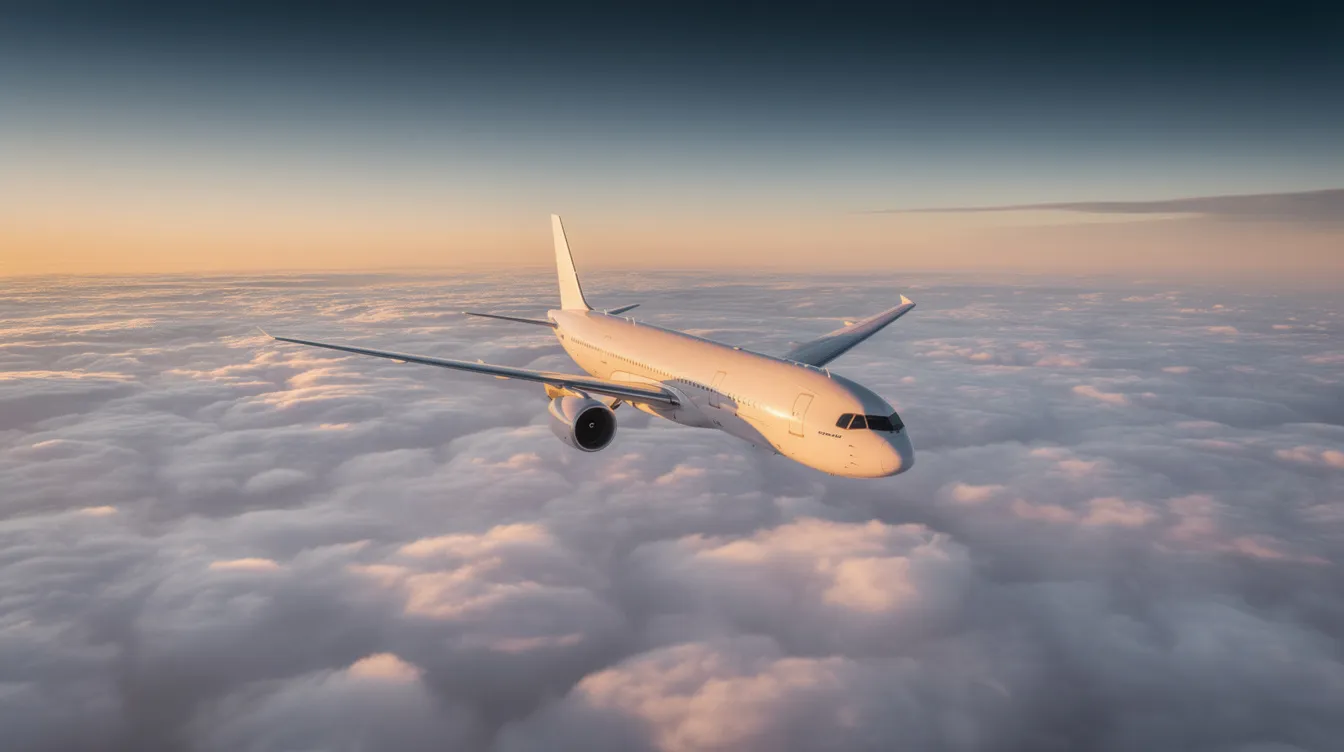
The Boeing 747-400 remains the fastest commercial airliner by certified maximum operating Mach number. With a maximum speed of Mach 0.92—roughly 706 miles per hour at cruise altitude—it outpaces every other subsonic commercial passenger aircraft still in airline service. The Boeing 747 8i, its more fuel-efficient successor, cruises at approximately 706 mph (around Mach 0.86–0.90), while modern workhorses like the Boeing 787 Dreamliner and Airbus A350-1000 typically fly at Mach 0.85.
Yet "fastest commercial jet" deserves a caveat. There is a meaningful difference between a plane's certified top speed and its actual speed in everyday operations. Airlines rarely push aircraft to their absolute limits; most commercial planes fly at cruise speeds of 550–600 mph to optimize fuel consumption and maintenance intervals. The cruising speed for commercial airliners clusters between Mach 0.78 and Mach 0.86 on the majority of long-haul routes.
For travelers who demand the highest speed in the air today, certain private jets surpass even the 747-400. The Cessna Citation X is certified to Mach 0.92, and the upgraded Citation X+ reaches Mach 0.935—making it the fastest civilian aircraft in regular production during its era. While large commercial airliners are impressive, high-net-worth travelers and executives who value every minute often choose private jet access via Jet Cards for faster, door-to-door journeys. BlackJet provides exactly that advantage.
Boeing 747-400: Maximum Mach 0.92 (~706 mph)
Cessna Citation X+: Maximum Mach 0.935 (~717 mph)
Most modern commercial airliners: Cruise Mach 0.78–0.86 (~550–600 mph)
Speed, strategy, and why fast jets matter for premium travelers
Speed is not just a technical spec—it is a strategic asset. For an executive flying New York to London, shaving even 30 minutes off a passenger flight translates into an earlier arrival, an extra meeting, or one fewer overnight stay—and for frequent users, evaluating 50-hour jet card costs and value can turn that time savings into a predictable, scalable strategy. Multiply that across dozens of trips per year, and the cumulative advantage becomes significant for business travel.
Commercial vs Private Jet Speed Comparison
Consider two aircraft departing for London at roughly the same time. A BlackJet Jet Card member drives to Teterboro, New Jersey, boards a fast super-midsize business jet within 15 minutes of arriving at the FBO, and departs on a direct routing to Farnborough. Meanwhile, a commercial traveler heads to JFK, clears security, waits at the gate, and boards a Boeing 787 bound for Heathrow. Even though the 787's cruise speed is competitive—Mach 0.85—the private jet passenger might arrive an hour early relative to the commercial traveler, thanks to faster ground processing, shorter taxi times, and the ability to fly faster at higher performance cruise settings.
Factor | Commercial (JFK → Heathrow) | Private (Teterboro → Farnborough) |
|---|
Airport arrival to wheels-up | ~90–120 min | ~15–20 min |
Cruise Mach | 0.85 | 0.88–0.90+ |
In-air time savings | Baseline | 20–40 min on transatlantic leg |
Customs & ground transfer | 45–60 min | 10–15 min |
BlackJet combines aircraft speed with scheduling flexibility, direct routing, and 24/7 digital booking to maximize time saved far beyond raw Mach numbers, delivering premium private jet card programs tailored to frequent flyers.
How commercial planes fly fast: the basics of speed and Mach
Understanding speed in commercial aviation requires a few key concepts.
Key Definitions: Cruise Speed, MMO, and Mach Number
Cruising speed for commercial airliners is 550–600 mph.
Most modern commercial jets typically cruise between Mach 0.78 and Mach 0.86.
Most modern commercial jets cruise at or below Mach 0.85.
Mach number is the ratio of the aircraft's speed to the local speed of sound—which itself changes with temperature and altitude.
Maximum Operating Mach (MMO) is the highest Mach number at which an aircraft is certified to operate safely.
Cruise speed is the typical speed at which an aircraft operates during the main portion of a flight, balancing efficiency and time.
Most commercial airliners cruise between 30,000 and 43,000 feet. At those high altitudes, the air is thinner, which reduces drag and increases aircraft speed for a given thrust setting. Higher altitudes also mean colder temperatures, so the speed of sound drops, and a given Mach number corresponds to a lower figure in km/h or mph than it would at sea level. This is why Mach 0.85 over the North Atlantic at Flight Level 390 translates to a different actual speed than Mach 0.85 near the ground.
Why Commercial Jet Speeds Have Plateaued
Commercial jets have not significantly increased in cruise speed since the 1960s. The reason is straightforward: advancements in commercial jet speed are driven by innovations in propulsion, materials, and aerodynamics, but the aviation industry has overwhelmingly prioritized fuel efficiency over raw velocity. Modern jets use high-bypass turbofan engines that produce enormous thrust with lowered fuel consumption, while advanced aerodynamics—including supercritical wing profiles—minimize drag and improve flight efficiency near the speed of sound. Digital flight management systems further optimize flight paths to maintain efficient speed throughout each segment.
Engine thrust is a key factor in aircraft speed, and aerodynamic design significantly impacts how fast a plane can fly. But regulations also matter: speed limits below 10,000 feet (typically 250 knots), air traffic control spacing, and the exponential increase in fuel burn as you approach critical Mach all keep commercial planes flying well below their theoretical maximums. For reference, takeoff speed for commercial airplanes is 160–180 mph, and landing speed is typically 130–160 mph—far below the transonic cruise regime.
The fastest commercial airliners in service today
Now let's look at the specific aircraft that sit at the top of the speed rankings among current commercial airliners. This section focuses on mainstream passenger aircraft still operating with airlines, not historical supersonic types.
The ranking logic here emphasizes maximum operating Mach (MMO) and typical cruise Mach, while acknowledging that airlines almost always cruise slightly below maximum for efficiency. Most modern commercial jets cruise at or below Mach 0.85 in daily operations, even when their airframes are certified for more. The differences between models may seem narrow—Mach 0.84 versus Mach 0.89—but on a 4,000-nautical-mile leg, those fractions translate into meaningful minutes.
Aircraft | Max Mach (MMO) | Typical Cruise Mach | Entered Service |
|---|
Boeing 747-400 | ~0.92 | ~0.85–0.88 | 1989 |
Boeing 747-8i | ~0.90 | ~0.86 | 2012 |
Airbus A350-1000 | ~0.89 | ~0.85 | 2018 |
Boeing 777-300ER | ~0.89 | ~0.84 | 2004 |
Boeing 787 Dreamliner | ~0.90 | ~0.85 | 2011 |
Airbus A380 | ~0.89 | ~0.85 | 2007 |
While many of these commercial aircraft cluster in a narrow speed band, differences exist between newer composite designs and older aluminum airframes, as well as between wide-body flagships and smaller regional jets that cruise closer to Mach 0.70–0.78.
Boeing 747 family: the original "fastest commercial airliner"
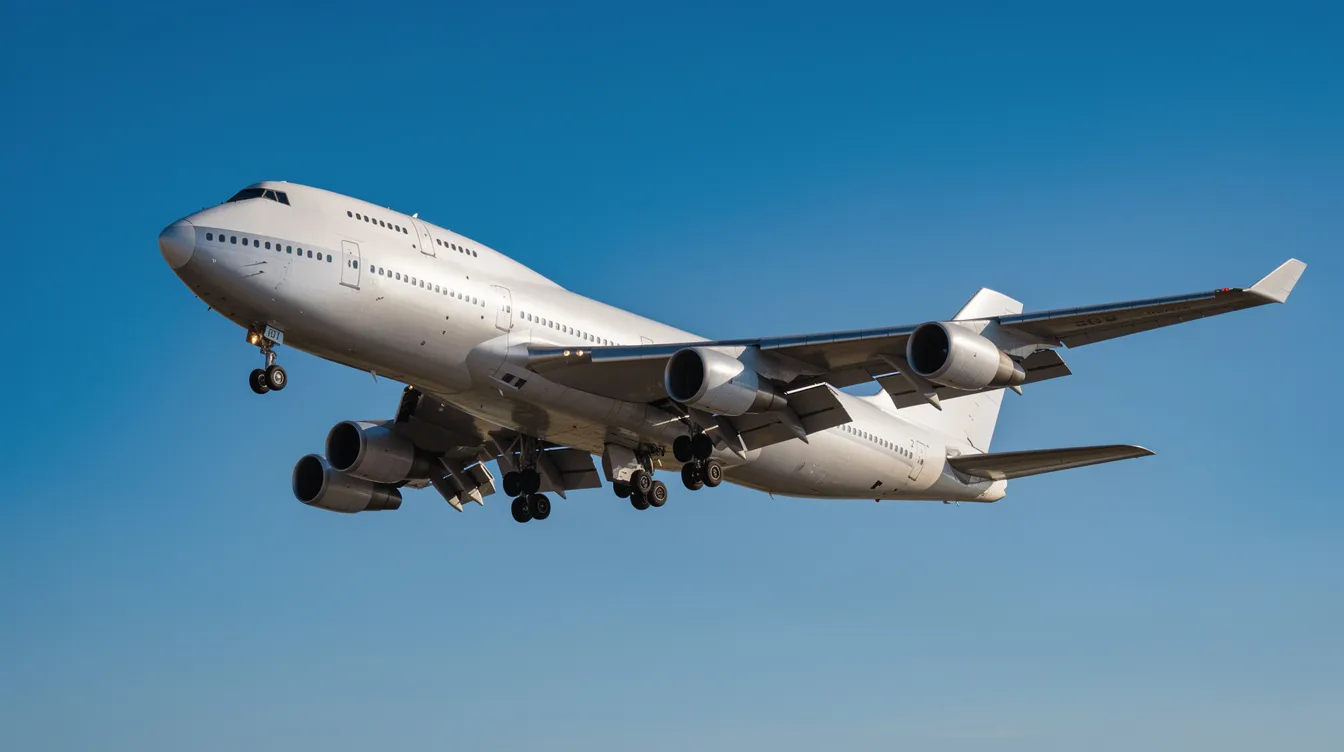
The Boeing 747 reshaped global air travel when it entered service in 1970. Known as the "Queen of the Skies," it combined unprecedented passenger capacity with speed and range that made nonstop intercontinental travel routine. It also served in cargo transport roles that continue to this day.
Boeing 747-400 vs Boeing 747-8i: Key Specs
Variant | Max Mach | Typical Cruise Mach | Range (nm) | Entry into Service |
|---|
747-400 | 0.92 | 0.85–0.88 | ~7,670 | 1989 |
747-8i | 0.90 | 0.86 | ~7,730 | 2012 |
The 747-400 was introduced in 1989 and reached Mach 0.92—the highest speed of any subsonic commercial airliner still referenced today. Its typical cruise sits around Mach 0.85–0.88, with a range of approximately 7,670 nautical miles. Distinctive winglets reduced drag, and four Pratt & Whitney or GE engines delivered the thrust needed for its massive frame. It often gets labeled the fastest commercial airliner by maximum certified speed, even though its day-to-day operations mirror other airliners of the era. It has a maximum speed of Mach 0.92, a figure no other subsonic commercial passenger aircraft has matched.
The 747-8i, entering airline service in 2012 with Lufthansa, features General Electric GEnx-2B67 engines, a redesigned wing, and a stretched fuselage. Its maximum Mach is approximately 0.90, and it cruises at roughly 706 mph—slightly more efficient than the -400 thanks to its newer powerplants and aerodynamic refinements.
While VIP "head of state" versions of the 747 exist, BlackJet clients typically choose smaller, faster-climbing business jets for flexibility—aircraft that can reach high altitudes faster and operate from thousands more airports worldwide.
Boeing 787 Dreamliner and Boeing 777: efficient speed for long‑haul routes
The Boeing 787 and 777 families form the backbone of many airlines' long-haul fleets, balancing high cruise speeds with exceptional fuel economy, much as leading programs like NetJets jet cards and pricing structures balance access, cost, and availability for frequent private flyers.
Boeing 787 Dreamliner
The Boeing 787 Dreamliner has a cruising speed of Mach 0.85, with a maximum Mach around 0.90. Carbon fiber composites are used to make the aircraft lighter and stronger—over 50% of the primary structure is composite material. Its raked wingtips, smooth nose profile, and efficient Rolls-Royce Trent 1000 or GE GEnx engines allow sustained high-subsonic cruise with roughly 20% less fuel consumption than the aircraft it replaced. The 787 entered service in 2011 and carries 242–335 passengers depending on variant, with ranges exceeding 7,300 nautical miles.
Boeing 777
The Boeing 777 has a cruise speed of Mach 0.77 in its base configuration, though later variants like the 777-300ER and 777-200LR push typical cruise into the Mach 0.84–0.89 range. Introduced in the mid-1990s, it has become one of Boeing's most-produced wide-body commercial airliners, with routes like Dubai to Los Angeles showcasing its speed and range advantage. United Airlines operates the 777 extensively across its transoceanic network.
BlackJet often sources long-range business jets for similar city pairs, offering comparable or slightly higher cruise speeds with tailored schedules and far fewer passengers aboard, matching each mission to specific types of private jets across size and range categories.
Airbus A350‑1000 and A380: Europe's fastest wide‑body commercial airliners
Airbus's flagship long-haul aircraft hold their own in the speed rankings while pushing efficiency forward.
Airbus A350-1000
Cruise speed of Mach 0.85, with maximum Mach approximately 0.89
Entered service in 2018, carrying up to 410 passengers in a three-class layout
Range of approximately 8,700 nautical miles—among the longest of any commercial aircraft
Over 50% composite construction, Rolls-Royce Trent XWB-97 engines, and advanced winglets deliver about 25% lower fuel burn versus older aircraft types
The Airbus A350-1000 has a cruise speed of Mach 0.89 at its maximum operating limit, making it one of the fastest commercial aircraft in regular passenger service today.
Airbus A380
The Airbus A380 has a maximum speed of Mach 0.85 in normal cruise, with an MMO of approximately Mach 0.89
During certification testing, the A380 reached approximately Mach 0.96 in a shallow dive—a figure never used in commercial service.
Capacity up to 853 passengers in all-economy, though typical three-class layouts carry 500–600+
First flight in 2005, entering service in 2007 with Singapore Airlines; production ended in December 2021 after about 251 aircraft delivered
Despite their size, both of these commercial airliners cruise at speeds comparable to smaller jets, a testament to modern wing design and powerful turbofan engines. Premium travelers weigh the A380's quiet cabin and the A350's pressurization improvements against the privacy and tailored experience of a BlackJet flight—where the plane departs on your schedule, not the airline's.
Other notable fast commercial airliners
While modern wide-body jets dominate the fastest commercial airliner discussion, several earlier aircraft pushed boundaries in their eras and deserve mention for historical perspective.
BAC One-Eleven Series 500
A British short-haul jet from the 1960s–1990s, cruising around Mach 0.70 with a top speed of Mach 0.71. It featured advanced avionics and autoflight for its era, and carried a flight engineer on early variants.
Ilyushin IL-62M
A Soviet long-range narrow-body from the 1960s onward, cruising at Mach 0.74 with a maximum around Mach 0.78. It was once the world's largest jet airliner.
BAe 146 Series
A regional airliner with four engines, cruising at Mach 0.70–0.74. Known for quiet operations and steep approach capability rather than raw speed.
Early Jet Age Milestones
The first commercial aircraft to carry passengers by jet power was the de Havilland Comet, which flew in 1949—an achievement that launched the jet age. The Boeing 707 entered service in 1958, revolutionizing air travel with coast-to-coast and transatlantic jet service that made propeller-driven airliners obsolete. In many ways, the 707 was the first aircraft to establish the cruise speed standards that modern commercial airliners still follow.
These aircraft were respectable in their day but are clearly slower than current Boeing 747, 777, 787, or Airbus A350 models. Aviation technology advanced rapidly after World War II, and jet propulsion transformed what was possible. Many of these older planes have been retired due to high operating costs, noise regulations, and inability to compete economically with other airliners that fly faster on less fuel. As Flying Magazine and Aviation Week have both noted over the decades, each generation of commercial planes has prioritized efficiency gains over outright speed increases.
Supersonic legends: Concorde and Tupolev Tu‑144 as commercial outliers
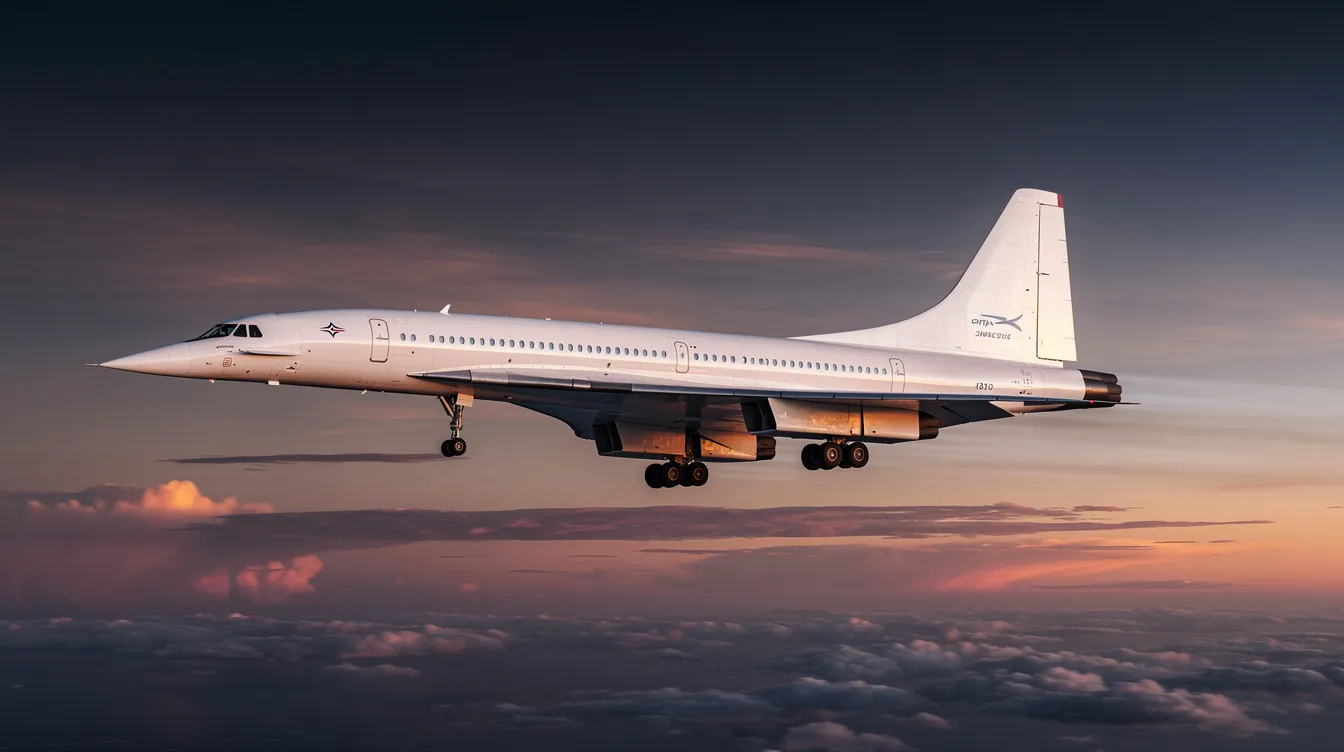
When discussing the fastest commercial aircraft ever built, two aircraft tower above every subsonic jet: the Anglo-French Concorde and the Soviet Tupolev Tu-144. Both shattered the sound barrier in commercial passenger service—something no airline offers today.
Concorde: The Concorde could fly at Mach 2.04, twice the speed of subsonic airliners, reaching approximately 1,354 mph at cruise altitude. British Airways and Air France operated the Concorde on routes like London–New York, completing the transatlantic crossing in roughly 3–3.5 hours versus 7–8 hours in level flight on today's commercial airliners. Its first commercial flight took place in 1976, and it was retired in 2003 after 27 years of commercial service, largely due to high operating costs and safety concerns following the tragic 2000 Paris crash.
Tupolev Tu-144: The Soviet Tupolev Tu-144 was the first commercial aircraft to exceed Mach 2, with a top speed of Mach 2.15–2.29 (up to approximately 1,510–1,757 mph claimed). However, its passenger service was extremely limited—operating briefly in the late 1970s before complete retirement from commercial use by 1983. It consumed far more fuel than even the Concorde and never achieved reliable scheduled service.
Both aircraft hold a speed record that no current commercial airliner approaches. Their demise came from enormous fuel consumption, sonic boom restrictions over land, limited route networks, and evolving environmental standards. The current record for the fastest passenger plane in commercial service remains firmly with Concorde. No supersonic commercial airliners currently carry passengers, so modern "fastest commercial jet" rankings focus entirely on subsonic types.
The fastest business jets: Cessna Citation X, Citation X+ and other high‑speed private aircraft
Some private jets are actually faster in cruise than today's fastest commercial airliners—a fact that surprises many travelers.
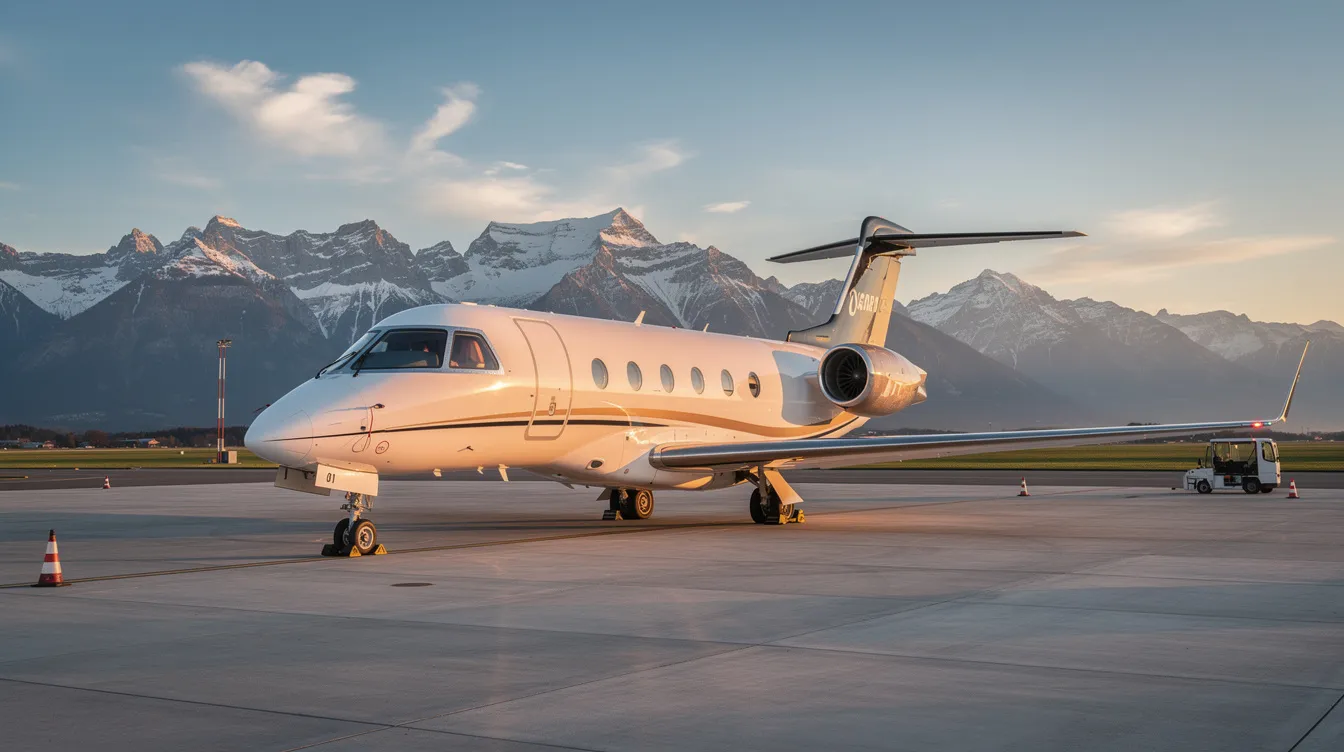
Cessna Citation X: The Cessna Citation X made its first flight in 1993 and entered service in the mid-1990s. With a maximum speed of Mach 0.92, it matched the Boeing 747-400's certified top speed in a package carrying 8–12 passengers, illustrating why many owners look to premium private jets for sale in the UK and beyond when they want airline-level performance in a personal aircraft. It quickly established itself as one of the fastest subsonic business jets ever built, with a range exceeding 3,000 nautical miles.
Citation X+: The upgraded Cessna Citation X+ was certified in 2014 to a top speed of Mach 0.935—approximately 717 mph—making it the fastest civilian aircraft in regular production at the time. Improved avionics, winglets, and AE3007C2 engines with dual-channel FADEC control gave it higher performance across the board. Production ended in 2018, but these aircraft remain active in charter and private fleets.
Other high-speed contenders: For travelers focused on value as well as velocity, it is worth noting that there are budget-friendly private aircraft options that still deliver impressive performance compared to many commercial jets.
Bombardier Global 8000: The Bombardier Global 8000 has a top speed of Mach 0.95, the highest of any current production business jet, with a range exceeding 8,000 nautical miles.
Gulfstream G700/G800: Cruise around Mach 0.90–0.925 with ranges over 7,000 nautical miles, ideal for ultra-long-range missions, while travelers exploring entry-level access can compare these flagships against the cheapest private jet options that still offer meaningful speed advantages over airlines.
BlackJet's Jet Card members access aircraft across multiple categories—including fast super-midsize and large-cabin jets—so they can match speed, range, and cabin size to each trip, using a clear understanding of private jet sizes and capacities to optimize each itinerary. Whether the mission calls for a transcontinental dash or a multi-city European itinerary, the right jet is available.
Speed versus comfort, safety, and sustainability in modern aviation
Raw speed is only one variable in the equation. Modern aircraft designers routinely accept slightly lower maximum speeds in exchange for meaningful gains elsewhere:
Factor | Impact on Speed | Tradeoff |
|---|
Speed vs fuel | Higher speed increases fuel consumption | Airlines and private operators balance time savings against the cost of more fuel |
Speed vs comfort | Lower cruise speeds reduce cabin noise and stress | Smoother ride and longer maintenance intervals |
Speed vs emissions | Faster flight means higher fuel consumption and greater CO₂ output | The aviation industry is working to resolve this tension with sustainable solutions |
Safety underpins everything. Both commercial aviation and certified private aviation operate within conservative margins well below each aircraft's theoretical limits. BlackJet requires third-party safety audits from its operator partners, ensuring that every flight meets the strictest standards regardless of speed, reflecting the broader realities of private jet safety and risk management.
On sustainability, advanced airliners like the A350 and 787 cut fuel consumption through composite construction and efficient engines. In private aviation, sustainable aviation fuel and carbon offsetting are becoming essential tools. BlackJet ensures every journey is carbon neutral at no extra cost to members—a commitment that matters to environmentally conscious travelers who refuse to choose between speed and responsibility and who understand broader trends in the global private jet fleet and its growth. Learn more about sustainable private aviation.
The future of the fastest commercial jet: new supersonic and hypersonic concepts
The question of whether commercial passengers will ever fly faster than Mach 1 again is no longer hypothetical—several programs are actively working toward it.
Boom Supersonic's Overture concept targets approximately Mach 1.7 using sustainable aviation fuel, aiming to halve transatlantic travel times without the environmental penalty of Concorde-era kerosene burn. Meanwhile, NASA's X-59 QueSST technology demonstrator is testing low-boom supersonic design to assess whether overland supersonic commercial flight can satisfy noise regulations. If regulators allow it, supersonic air travel could return to select long-haul routes within the next decade.
Beyond supersonic, broader hypersonic aspirations exist. Boeing and other manufacturers have floated conceptual designs for Mach 3–5 passenger aircraft that could theoretically cut London–New York to about two hours. Realistic entry-into-service dates, however, remain decades away.
Key Technological Hurdles
Sonic boom regulations still ban supersonic flight over most populated land masses.
Enormous fuel consumption at supersonic speeds increases per-passenger emissions unless offset by next-generation fuels.
Certification complexity for entirely new speed regimes requires years of testing.
Ticket pricing would likely restrict supersonic commercial flight to premium travelers initially.
Private and business aviation may be early adopters of these technologies, since premium travelers are willing to pay for dramatic time savings. For now, subsonic jets remain the backbone of commercial airliners, while niche fast business jets and experimental supersonic designs continue to push the envelope. The fastest commercial jet of tomorrow may fly faster than anything the aviation industry has yet produced in level flight.
Frequently Asked Questions about the Fastest Commercial Jets and Private Aviation
What is the fastest commercial airliner currently in service?
The Boeing 747-400 holds the certified maximum operating speed record for commercial airliners at Mach 0.92 (approximately 706 mph). The Boeing 747-8i follows closely with a maximum speed around Mach 0.90.
How do private jets compare in speed to commercial airliners?
Some private jets, like the Cessna Citation X+ and Bombardier Global 8000, can exceed the speeds of the fastest commercial jets, reaching up to Mach 0.935 and Mach 0.95, respectively. This makes private jets a faster option for time-sensitive travelers.
Why don't commercial jets fly faster than Mach 0.85–0.90 regularly?
Flying faster than Mach 0.85 significantly increases fuel consumption and operational costs. Additionally, aerodynamic challenges and regulatory speed limits restrict commercial jets from routinely cruising near their maximum certified speeds.
What is Mach number and why does it matter in aviation?
Mach number is the ratio of an aircraft's speed to the local speed of sound, which varies with altitude and temperature. It is a crucial metric for pilots and engineers to ensure safe and efficient flight near transonic speeds.
Are supersonic commercial flights returning?
Several companies are developing supersonic aircraft like Boom Supersonic’s Overture, aiming to resume faster-than-sound passenger travel in the coming decade. However, regulatory, environmental, and economic challenges remain before supersonic service becomes mainstream.
How does BlackJet provide faster travel compared to commercial airlines?
BlackJet combines access to fast business jets with flexible scheduling, direct routing, and streamlined ground processes. This reduces total travel time significantly compared to commercial flights, especially on busy international routes.
What role does sustainability play in fast aviation today?
Modern aircraft like the Airbus A350 and Boeing 787 use advanced composites and efficient engines to lower fuel burn and emissions. BlackJet further offsets carbon emissions for private jet flights at no extra cost, balancing speed with environmental responsibility.
Choosing the fastest way to fly today: commercial airliners vs BlackJet private access
For a speed-focused traveler in 2026, three real options exist—and frequent flyers should understand the best jet cards for private travel:
Fly on the fastest commercial airliners (Boeing 747-8i, 777, 787, Airbus A350) at Mach 0.85–0.90, accepting airport procedures, fixed schedules, and hub connections, or explore private plane rideshare options where you pay per seat instead of for the entire aircraft.
Charter a one-off private jet flight for flexibility on a single trip, with variable pricing and availability, using models like buying a seat on a private jet or booking the whole aircraft depending on your needs.
Use a BlackJet Jet Card for streamlined, repeat access to fast business jets across multiple cabin classes—with guaranteed availability, transparent pricing, and 24/7 digital booking, supported by a clear framework for jet card pricing, costs, and benefits.
Consider a European executive who needs to visit London, Zurich, and Milan within 36 hours. On commercial airliners, that itinerary involves three separate bookings, two aircraft changes, security lines at each airport, and inevitable delays. With a BlackJet 25+ Hour Jet Card, a single aircraft flies the entire route on the executive's schedule—departing when ready, landing at airports minutes from each meeting.
The Boeing 747-400 may claim the title of fastest commercial airliner by certified Mach number, but the genuinely fastest way for an individual traveler to get from point A to point B is often a well-planned private jet itinerary. When cruise speed, ground time, and routing flexibility are combined, private aviation consistently delivers passengers to their destinations faster, whether accessed via on-demand charter, leasing a private jet for longer-term use, or structured Jet Card membership.
Discover how BlackJet can reshape the way you travel—where speed meets precision, and every minute counts. Explore BlackJet Jet Card membership to understand 25-hour jet card features and costs and align your travel with your ambitions.


 Sign up with google
 Sign up with Apple