Are Private Jets Really Faster Than Commercial Planes? (Quick Answer)
In pure cruise speed, most commercial airliners match or exceed the majority of private jets. A Boeing 787 cruises at roughly Mach 0.85 (about 900 km h), while many private jets cruise around 500 to 700 km h. The fastest private jets, however, flip the comparison: the Bombardier Global 8000 has a maximum operating speed of Mach 0.94 (about 980 km h), and the Gulfstream G800 reaches high-speed cruise at Mach 0.90.
Private jets are faster than commercial planes in the metric that matters most: total travel time, because private jets offer time-saving advantages beyond raw cruise speed. Private jet travelers save an average of 127 minutes per flight compared to commercial air travel when you account for ground procedures, routing, and airport access.
Comparison of Key Factors:
Private Jets vs. Commercial Aircraft: Definitions & Key Differences
Private jets range from light jets like the Embraer Phenom 300 to ultra-long-range aircraft like the Gulfstream G700. These types of private jets carry fewer passengers (typically 2–14), operate on demand, and are accessed through charter or Jet Card programs such as BlackJet's 25- and 50-hour blocks.
Commercial airplanes like the Boeing 737 or Airbus A350 are built to move 100–500+ passengers on fixed schedules through major hubs. Commercial airlines serve approximately 500 airports in the U.S., whereas private jets have access to over 5,000 public airports nationwide. This vast difference in airport accessibility significantly impacts the real-world perception of what it means to be "faster." That difference in airport access changes the real-world meaning of "faster."
Commercial travel means fixed schedules, crowded terminals, hub-and-spoke networks, and long lines at security. Private jet travel means on-demand departures from private terminals, customized itineraries, and direct flights to your desired destination.
Cruise Speed: How Fast Do Private Jets and Commercial Airliners Really Fly?
Speed comparisons between private aircraft and commercial aircraft are often misleading because they lump all aircraft classes together, from pistons and turboprops to small private aircraft. Here is what specific models actually deliver:
Commercial airliners:
Boeing 737-800 / Airbus A320neo: Mach 0.78–0.80 (~830–870 km h)
Boeing 787-9 / Airbus A350-900: Mach 0.85 (~900 km h)
Most commercial airliners cruise at roughly 0.80 to 0.85 Mach; commercial jets cruise between 850 and 900 km h
Private jets:
Light jets (Phenom 300, Citation CJ4): many private jets cruise around 450–500 knots (~770–820 km h)
Private jets typically cruise at 500 to 700 km h in the light and midsize categories
High-end private jets cruise at 0.85 to 0.925 Mach; the Bombardier Global 8000 reached Mach 1.015 during testing (1,243 kph), though its certified maximum speed is Mach 0.94
Some high-performance private jets can reach speeds near 0.925 Mach in normal operations
The speed differences between categories are clear: many private aircraft in the light jet segment fly slower than commercial jets, while the fastest private jets exceed every commercial airliner in service. Both private and commercial aircraft fly just below the speed of sound because of fuel efficiency constraints and airframe certification limits.
Altitude, Air Traffic & Direct Routes: Why Private Jets Feel Faster
Cruising altitude affects travel time more than most passengers realize. Higher altitudes mean thinner air, less drag, and less air traffic.
Commercial airliners typically fly at 35,000 to 40,000 feet. Commercial airlines usually cruise between 31,000 and 38,000 feet on shorter routes.
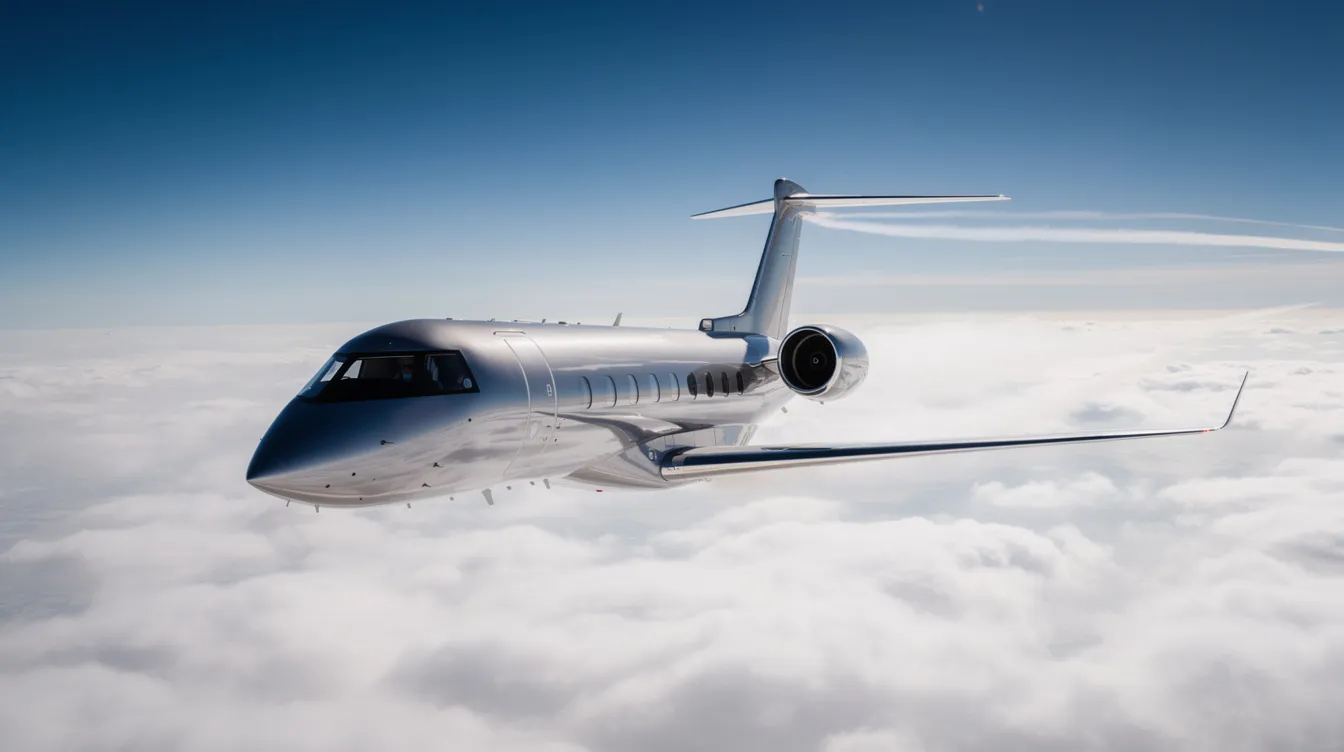
Private jets typically cruise at altitudes of 41,000 to 51,000 feet, a difference explored in detail in how high a private jet flies compared to commercial flights. The Gulfstream G650 and Global 7500 hold service ceilings near 51,000 ft.
Higher cruising altitudes reduce air traffic and drag for private jets. Flying above crowded airspace means fewer holds, fewer speed restrictions, and less time spent waiting for air traffic control clearance. Private jets can take more direct routes than commercial flights because they file point-to-point flight plans instead of following the rigid flight paths assigned to commercial airlines through congested corridors.
On a route like Paris to Geneva, a private flight via Le Bourget to a smaller Swiss airport can cut total travel time by over two hours compared to a CDG-to-GVA commercial connection, despite covering the same distance. More direct flight paths and higher cruising altitudes make all the difference.
Door-to-Door Time: Where Private Jets Gain Hours Over Commercial Travel
The real speed advantage of private jets over commercial planes shows up in total door-to-door time, not just cruising speed.
Commercial Air Travel: Time Breakdown
Commercial passengers often spend 2 to 3 hours on ground procedures before a flight (check-in, baggage drop, long security lines)
Connecting flights through major hubs add 1–4 hours of layover time
Taxi-out delays at large airports like JFK or LAX add another 20–40 minutes
Private Jet Operations: Time Advantages
Private jet passengers typically arrive just 15 to 30 minutes before departure at an FBO
Private jets can bypass TSA lines and lengthy boarding processes
Private jets often take off within minutes of boarding
Private jets eliminate layovers, saving several hours on routes that would otherwise require connections
Case Studies: Time Savings in Action
New York to Miami:
Flying private from Westchester (HPN), gate-to-gate flight time is about 2.5 hours.
Commercial from LaGuardia to MIA, including check-in, security, boarding, landing, and ground transportation time: 5+ hours.
Private jet passengers save 2 to 3 hours on each end of the trip.
Paris (Le Bourget) to Geneva:
Private jets save an average of 2 hours per flight compared to commercial. For same-day business travel, that gap often determines whether a round trip is possible at all, even when accounting for concerns like private jet turbulence compared to commercial flights.

Airport Access: More Airports, Shorter Drives, Less Waiting
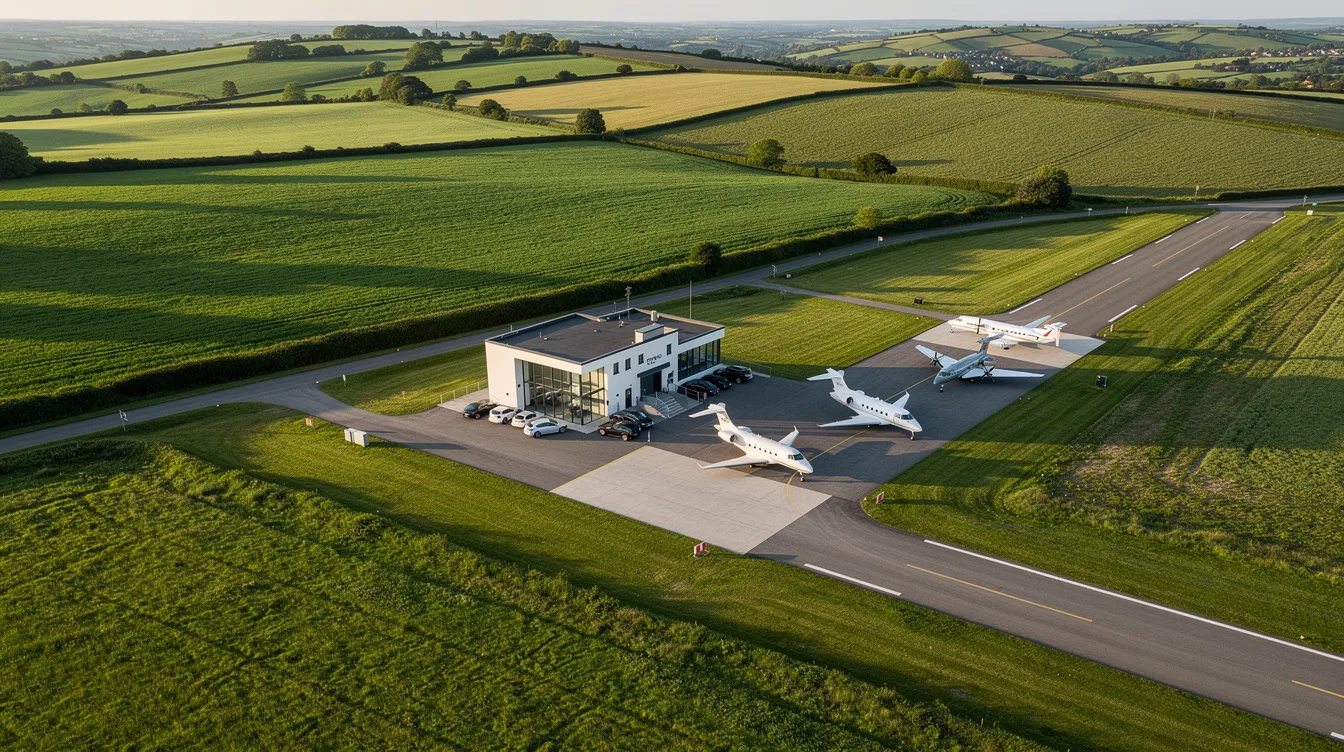
Airport access is central to why private flyers land closer to their final destination. Private jets can access over 5,000 airports in the U.S. Commercial airlines service roughly 500. That 10:1 ratio across different private jet sizes creates a distinct advantage for private travel.
Regional Airport Swaps That Save Time
Los Angeles: Van Nuys (VNY) or Burbank (BUR) instead of LAX
New York: Teterboro (TEB) or White Plains (HPN) instead of JFK/EWR/LGA
South Florida: Opa-locka (OPF) or Fort Lauderdale Executive (FXE) instead of MIA/FLL
Time-Saving Benefits of Private Airport Access
Each of these swaps can trim 30–90 minutes of driving on each end, which often outweighs any small difference in cruising speed versus commercial planes.
BlackJet's flight support teams help members choose the optimal departure and arrival airports to minimize total journey time.
Avoid the ground transportation time penalty of commercial aircraft alternatives that require connections through major hubs.
Aircraft Design, Performance & Safety: Why Private Jets Climb and Turn Faster
Even when top cruise numbers look similar, private jets are built for a different performance profile than large commercial airplanes. Aerodynamic designs of private jets minimize drag for higher speeds through smaller frontal area, clean wing profiles, and optimized fuselage shapes.
Private jets are lighter with higher power-to-weight ratios, which translates to faster climbs to optimal cruising altitude.
Both private and commercial aircraft must observe the FAA's 250-knot limit below 10,000 ft, but private jets punch through that ceiling faster, spending more total flight time at efficient cruise speeds.
Steeper approaches and shorter runway requirements open up smaller airports that commercial aviation cannot serve, while rigorous standards mean private jets are safe even when operating into these more constrained fields.
Private jets often exceed commercial jets in operational efficiency for small groups, but speed is always balanced with safety. All aircraft in BlackJet's Jet Card program meet strict Part 135 certification and maintenance standards, similar to the standards that govern the top private jets in the world. Performance is governed by regulatory compliance, weather margins, and crew training.
Commercial Flights vs. Private Jet Travel: Real-World Use Cases
Corporate travelers and private flyers who run meeting-packed schedules see the clearest benefit from flying private. On very long routes, in-air flight times are similar for jets and commercial airliners. The gains come from everything around the flight, especially when using integrated services like BlackJet's premium private jet programs.
Private jet cabins also function as quiet offices. International flights and transcontinental flights become productive work sessions, making private flying more time-efficient than the cruising speed alone would suggest, especially on routes well-suited to small private jets for luxury travel.
BlackJet Jet Cards: Turning Speed into Strategic Advantage
Speed is a competitive advantage for executives, not just the ultimate luxury. BlackJet Jet Cards, including the flagship BlackJet 25+ Hour Jet Card, convert that advantage into a predictable, accessible program.
Jet Cards work as prepaid 25-hour or 50-hour blocks at fixed hourly rates across cabin classes. Members gain guaranteed aircraft access with short booking lead times through BlackJet's digital platform and 24/7 support, eliminating the per-trip quoting delays of ad-hoc charter. Consistent access across aircraft categories lets members match aircraft type to mission: light jets for short hops, large-cabin jets for long-haul, while understanding jet card cost per hour to budget accurately.
BlackJet ensures carbon-neutral flights through verified carbon offsets and, where available, the use of sustainable aviation fuel. Flying faster does not require a larger environmental footprint. Fuel efficiency improvements in modern business jets, combined with offset programs, keep private aviation aligned with sustainability goals and inform comprehensive jet card pricing that reflects these initiatives.
Explore BlackJet's Jet Card options to discover how your next business itinerary can be both faster and smarter than commercial travel.
FAQs: Private Jets, Speed & Commercial Travel
Are private jets always faster than commercial airliners in the air?
No. Large commercial aircraft like the Boeing 787 cruise at Mach 0.85, matching or exceeding most light jets and many private jets in the midsize category. The fastest private jets (Global 8000, Gulfstream G800) do cruise faster than any commercial airliner, with private jet speeds reaching Mach 0.90–0.94.
How much time can I actually save flying private instead of on commercial planes?
Private jet travelers save an average of 127 minutes per flight. On routes requiring connecting flights, savings can exceed 4–5 hours. Private jet check-in takes only 5 to 30 minutes versus 2–3 hours for commercial, and increasingly affordable private jet options are making these time savings accessible beyond ultra-high-net-worth travelers.
Do private jets fly higher than commercial aircraft, and does that make them faster?
Private jets can operate at altitudes of 41,000 to 51,000 feet, above most commercial traffic at 31,000–40,000 ft. Less air traffic at those altitudes means fewer delays, more direct flight paths, and reduced drag, all of which shorten flight time.
Is it safer to fly slower on commercial aircraft?
Speed within subsonic ranges does not determine safety. Both commercial airliners and business jets operate under strict FAA and EASA certification. Safety depends on maintenance, pilot training, and operational discipline, not on whether an aircraft cruises at Mach 0.80 or 0.90, as explored in depth in our guide on private jet safety and risk.
Can private jets use direct routes that commercial flights can't?
Yes. Commercial flights are often limited to hub-and-spoke networks with rigid flight paths. Many private jets file point-to-point plans, taking more direct routes subject to air traffic control and weather. This flexibility gives private jet travel a distinct advantage on routes where commercial airlines would require a connection through congested hubs, particularly for heavy users considering a 100-hour jet card cost to lock in predictable access.
Conclusion: Why Private Jets Are Faster in Every Meaning That Counts
Private jets may not always outpace commercial airliners in raw cruise speed, but they deliver a clear and decisive advantage in total travel time. Their ability to fly higher, take direct routes, and access thousands of smaller airports closer to your final destination means fewer delays and shorter journeys. Coupled with streamlined ground procedures—arriving minutes before departure, skipping security lines, and boarding swiftly—private jets transform travel into a seamless, efficient experience.
For business executives and discerning travelers, these time savings translate into enhanced productivity, flexibility, and peace of mind. BlackJet's Jet Card programs further amplify these benefits by providing guaranteed access to a diverse fleet, real-time support, and sustainable aviation options like the use of sustainable aviation fuel and carbon offsets.
Ultimately, private jets offer more than just speed—they deliver a strategic advantage that commercial airlines cannot match, turning every flight into a premier journey tailored to your needs. Discover how BlackJet can reshape your travel experience and unlock the true value of flying faster, smarter, and greener by exploring our insights on types of private jets and understanding the safety standards in private aviation.


 Sign up with google
 Sign up with Apple