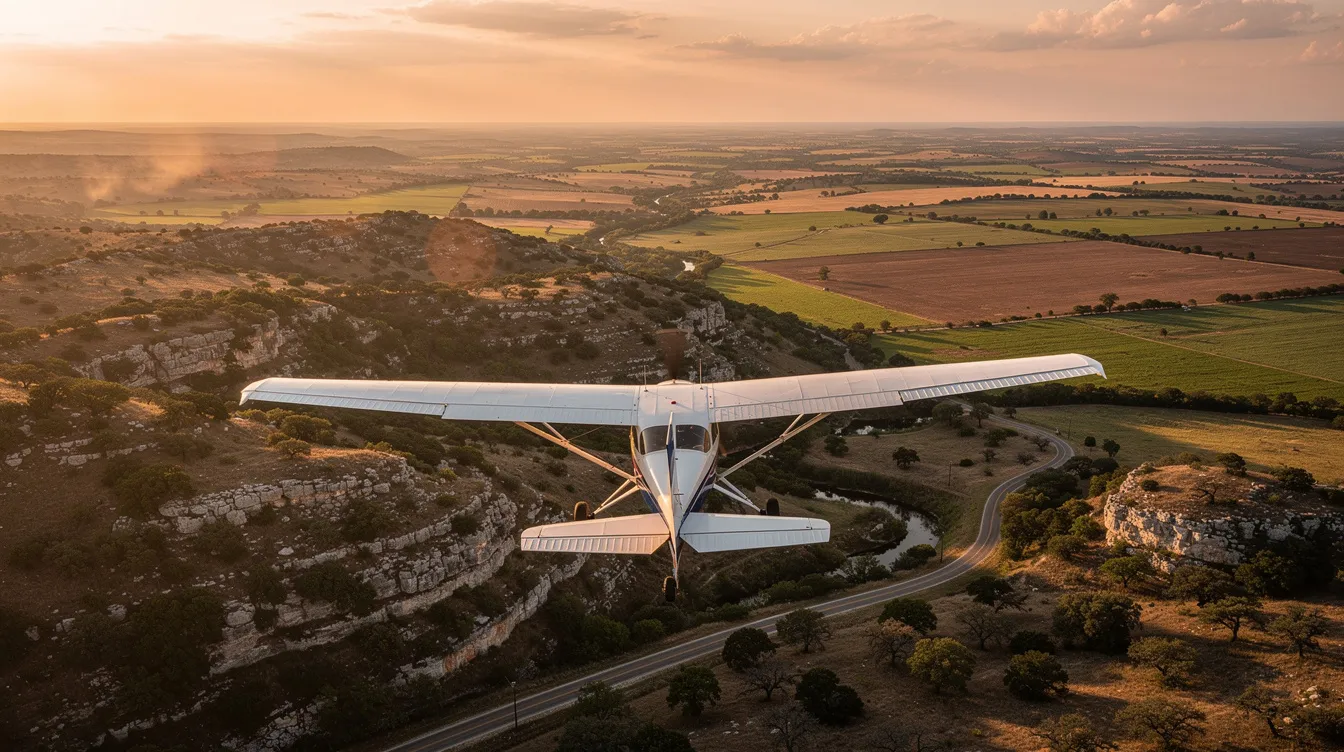
For Austin-based founders and executives, private aviation represents more than convenience—it’s a strategic tool for reclaiming productive hours. Consider a same-day Austin–Dallas business trip: commercial air travel through Austin Bergstrom involves drive time, TSA lines, boarding delays, and limited schedules. Private flight cuts that process to a fraction, saving 3–5 hours door-to-door on typical Texas business routes.
Austin plane rental covers three distinct tiers. Licensed pilots access hourly aircraft rental in reliable aircraft like the Cessna 172 or Cirrus SR22 for regional hops. Students pursuing a private pilot certificate enroll in structured flight training programs with rental privileges. Executives and high-net-worth travelers leverage on-demand charter flights or private jet access for time-critical missions.
Here’s a concrete 2025–2026 scenario: a tech founder based in downtown Austin needs investor meetings in San Jose. A light jet departing Austin Executive returns the same day with 4 hours of productive flight time versus a 10-hour commercial itinerary with layovers and ground transport delays. For frequent travelers, combining piston rental for regional trips with a jet card for longer missions often proves more efficient than owning an aircraft outright.
Key Takeaways
Austin plane rental spans three tiers: hourly aircraft rental for licensed pilots ($170–$480/hr), integrated flight training programs, and on-demand charter or private jet access for executives
Private aviation from Austin saves 3–5 hours door-to-door on typical business routes compared with commercial departures through Austin Bergstrom International Airport
Modern fleets feature technologically advanced aircraft with Garmin G1000 avionics, ADS-B compliance, and advanced safety systems like the Cirrus Airframe Parachute System
Safety standards (ARGUS/Wyvern certification), carbon-neutral flight options, and seamless private flight booking are core decision factors for discerning travelers
Strategic travelers combine cost-effective piston rental for regional hops with the best jet card programs for frequent flyers for longer missions—often more efficient than aircraft ownership
Overview of Austin Plane Rental Services
Austin’s aviation ecosystem offers remarkable depth—from training-focused rental at reliever fields to premium on-demand jets at Austin Bergstrom. With over 28 nearby airports and 150+ private jets available within 50 miles, the market supports every mission profile.
Main service types include:
Hourly aircraft rental for experienced pilots (Cessna, Piper, Cirrus)
Integrated flight training with rental privileges for student pilots
Charter services and private plane access for non-pilot travelers
Realistic 2024–2026 pricing bands:
Entry trainers (Cessna 172N, 152): $150–$230/hr
Advanced singles (Cirrus SR20, Cessna 182T): $260–$480/hr
Turboprops/Light jets (charter): $3,000–$8,000+ per leg
Availability and pricing fluctuate seasonally around SXSW, Austin City Limits, and the F1 US Grand Prix at COTA—advance planning matters during these windows.
Primary Locations: Austin-Bergstrom and Central Texas Reliever Airports
Austin’s aviation infrastructure balances major commercial facilities with quieter reliever airports. Many rental fleets and charter operators position aircraft between these fields for cost and logistics efficiency, affecting where renters actually depart.
Factor in drive time from central Austin, hangar fees, and preferred training airspace when selecting your departure point.
Austin-Bergstrom International Airport (AUS)
Austin Bergstrom International Airport serves as the primary hub for commercial and many private jet operations. Multiple FBOs offer executive lounges, ramp access, dedicated security screening, and direct car-to-aircraft transfers.
AUS is especially attractive for:
Business charter flights to national and international destinations
High-profile arrivals during events like SXSW and Formula 1
Travelers prioritizing integrated airline and private options
Note that landing, ramp, and handling fees run higher at AUS than at reliever airports, directly influencing charter quotes and positioning fees.
Reliever and Regional Airports Around Austin
Key reliever fields include Austin Executive (EDC) northeast, San Marcos Regional (HYI) south, and Georgetown Executive (GTU) north. These airports typically offer:
Lower landing and ramp fees
Simpler taxi and departure procedures
More flexible training slots due to lighter traffic
Concrete example: A weekend VFR cross-country in a Cessna 172 from EDC to Fredericksburg (T82) for Hill Country wine-tasting and dining, returning same-day with a 2–3 hour minimum rental, costs roughly $400–$690 in aircraft hire—significantly less than equivalent charter positioning.
Cost-conscious recreational aviators and many pilots building flight time operate from these fields to maximize air time while reducing hourly costs.
Ground Access and Door-to-Door Convenience
Real-world ground access differs substantially: AUS features integrated rideshare and parking garages, while reliever airports like EDC and GTU offer direct “park at the hangar” simplicity. Executives often calculate the entire door-to-door time, including traffic on SH-130 or I-35, when choosing departure points, especially when deciding whether to buy a seat on a private jet or charter an entire aircraft.
Plan for early-morning or late-evening departures when highway congestion and FBO staffing levels can affect your overall experience.
Rental Fleets and Advanced Aircraft Options
Most Austin-area fleets center on high-utilization trainers—Cessna 172, Piper Warriors and Archers—with select high-performance singles and Cirrus models for advanced aircraft access. “Advanced” here means both performance (speed, range, increased fuel capacity) and modern avionics (glass cockpits, IFR-certified GPS, autopilot integration). Many aircraft available for rent in Austin are equipped with advanced avionics, such as glass cockpits and IFR-certified GPS units. Many rental fleets have undergone upgrades and modernizations, adding updated features that enhance performance, avionics, and safety. These advanced aircraft provide pilots with access to modern technology and improved flying capabilities, supporting both training and operational efficiency.
2024–2026 rental fleets increasingly feature full ADS-B compliance, digital engine monitoring, and tablet-friendly cockpits optimized for EFBs like ForeFlight.
Common Aircraft Types for Austin Plane Rental
Core training and rental types:
Cessna 172N/172R/172S: Staple four-seat trainers ideal for primary training, local sightseeing over Lake Travis, and 300–400 NM cross-country trips
Piper Archer/Warrior: Similar performance with lower-wing feel and slightly smaller handling characteristics preferred by many pilots
Cessna 182T: Step-up option with greater useful load, impressive performance, and speed—excellent for Hill Country family trips or mountain flying prep
Advanced avionics packages, including Garmin G1000 or G1000 NXi, are widely available on these models, particularly at busier schools and rental operations.

Cirrus SR20/SR22 and Other High-Performance Singles
The Cirrus SR20 and Cirrus SR22 represent premium single-engine options in Austin’s rental market. These dependable aircraft feature faster cruise speeds (150–180 KTAS), impressive range, and luxury-style interiors with air conditioning.
The Cirrus Airframe Parachute System (CAPS) provides a distinctive safety feature that influences both pilot confidence and insurance requirements.
Typical use cases include:
Business day trips to Midland, New Orleans, or Santa Fe
Advanced instrument training for pilots preparing for turbine transitions
Hourly rates exceed Cessna trainers, and providers typically require minimum logged PIC time, recent instrument currency, and a mandatory checkout flight with transition training.
Avionics, Simulators, and Technology-Driven Training
Many Austin providers pair aircraft rental with simulator access using FAA-approved basic aircraft training device systems and advanced desktop simulators for IFR and avionics practice.
Common avionics configurations:
Garmin G1000/G1000 NXi glass panels with integrated autopilot
WAAS-enabled GPS, synthetic vision, and ADS-B In/Out for traffic and weather
Integrated engine monitors provide pilots with real-time situational awareness
Simulators enable instrument students to practice complex IFR approaches into AUS and nearby airports without burning fuel, rehearse emergency procedures, and reduce overall training costs. This technology-driven approach prepares pilots for eventual turboprop or private jet cockpits.
Austin Plane Rental Policies, Pricing, and Eligibility
While each operator maintains unique terms, Austin rental policies broadly align on minimums, insurance, and checkout requirements—especially post-2020 as insurers tightened standards. Student rental (with flight instructors) carries different pricing than solo rental for certificated pilots.
Request a written policy sheet covering all fees, minimums, and documentation requirements before your first booking.
Hourly Wet Rates and Minimum Time Requirements
Most Austin rental providers quote “wet rates” that include fuel. Realistic example bands:
Cessna 172: Wet rate ranges from $170 to $230 per hour; instructor fees range from $70 to $110 per hour.
Cirrus SR20/SR22: Wet rate ranges from $270 to $480 per hour; instructor fees range from $80 to $120 per hour.
Common minimums:
2-hour minimum Monday–Thursday
3-hour minimum on weekends and holidays
Higher minimums for multi-day trips and overnight cross-country flights
Calculate flight time versus minimums before booking a weekend Hill Country or Gulf Coast trip to avoid surprise billing.
Insurance, Currency, and Checkout Flights
Documentation typically required:
Pilot certificate and current medical (birth certificate or passport for citizenship verification)
Proof of recent flight time (logbook excerpts)
Instrument rating currency for IFR rentals
The rental facility’s policy serves as primary insurance; optional renter’s insurance (non-owned aircraft coverage) is strongly recommended, particularly for high-performance aircraft.
Common checkout requirements:
One or more flights with a staff CFI demonstrating proficiency
Familiarity with specific avionics (G1000 procedures)
Additional training for night, complex, or high-performance endorsements
Some providers require 100+ hours PIC for complex aircraft or IFR rentals, reflecting insurer-imposed thresholds.
Cost Management: Block Time, Memberships, and Off-Peak Scheduling
Reduce per-hour rental costs through:
Strategic scheduling—choosing weekday mornings or flying outside major Austin event weeks—avoids scarcity-driven surcharges. Business travelers should compare piston rental economics with jet card cost per hour and broader jet card pricing structures and benefits, especially when valuing executive time at high hourly rates.
Flight Training, Ratings, and Building Time in Austin
Austin offers year-round flying weather, modern fleets, and access to busy airspace, preparing pilots for real-world conditions. Many renters begin as student pilots in Part 61 or Part 141 programs, then transition to solo rental, advanced aircraft, and ultimately turbine or jet access.
Proof of U.S. citizenship or TSA approval is typically required to begin flying lessons, especially for private and instrument courses.
Training Programs and Typical Timelines
Standard progression:
Discovery/intro flights over Austin and the Hill Country
Private Pilot License (40 hours FAA minimum; 60–75 hours typical)
Instrument rating, Commercial License, and advanced endorsements
A student training 2–3 times per week in a Cessna 172 could complete a PPL in roughly 6–9 months, investing $18,000–$25,000 at 2024–2026 rates. Training in glass-cockpit aircraft facilitates smoother transitions into modern jets.
Instructor Expertise and Safety Culture
Experienced instructors—many with CFII and MEI credentials plus airline, military, or corporate backgrounds—anchor Austin’s safety record. Structured safety practices include standard operating procedures, weather briefings tailored to Central Texas patterns (spring storms, summer convective activity, occasional winter icing), and rigorous risk management training.
This professional safety mindset aligns with expectations in private jet operations, where ARGUS and Wyvern audits, dual-crew operations, and recurrent training are standard.
Using Simulators to Reduce Cost and Build Proficiency
BATDs and higher-fidelity simulators enable pilots to practice complex instrument approaches, rehearse emergency checklists, and lower overall costs by substituting simulator hours where FAA regulations permit.
Example: An instrument student completing several hours of holds and approaches in a BATD before flying them in a G1000-equipped Cessna significantly reduces real-aircraft time—translating to $500–$1,000 in savings per rating attempt.
Concierge and Support Services for Austin Plane Rentals
Concierge and support services are a cornerstone of the premium aircraft rental experience in Austin. Leading providers such as Cutter Aviation go beyond simply offering aircraft—they deliver a full suite of personalized services designed to make every flight seamless and stress-free. Whether you’re a student pilot embarking on your first solo cross-country or a seasoned aviator planning a multi-day business trip, these concierge teams handle the details that elevate your journey.
From the moment you book your aircraft rental, support staff can assist with comprehensive flight planning, ensuring your route, weather briefings, and fuel stops are optimized for safety and efficiency. Cutter Aviation’s concierge team is renowned for arranging ground transportation, coordinating catering for in-flight meals, and managing passenger handling for group flights. They can even secure hotel accommodations and recommend local attractions, making your time on the ground as enjoyable as your time in the air.
This level of personal service is especially valuable for pilots new to the Austin area or those flying unfamiliar aircraft types. By providing expert guidance and logistical support, aircraft rental companies in Austin empower pilots to focus on flying, knowing that every aspect of their trip—from preflight to post-landing—is handled with care and professionalism.
Online Booking Systems and Digital Access
The evolution of online booking systems has transformed aircraft rental in Austin, making it easier than ever for pilots to access the skies. Today’s digital platforms allow pilots—whether they fly occasionally or are frequent renters—to browse available aircraft, compare rates, and secure their preferred plane with just a few clicks. Companies like Chiota Aviation and Above & Beyond Aviation have embraced this technology, offering intuitive online portals that streamline the entire rental process.
Through these platforms, pilots can not only reserve aircraft but also access essential flight planning tools, review aircraft specifications, and manage their rental accounts. Many providers now offer mobile apps, enabling pilots to book flights on the go, receive instant notifications about aircraft availability, and download important documents such as checklists and operating manuals directly to their devices.
This digital convenience extends to every stage of the rental experience. Pilots can update their flight plans, check weather conditions, and even coordinate with flight instructors or support staff—all from their smartphone or laptop. By leveraging these advanced online systems, Austin’s aircraft rental companies ensure a fast, efficient, and user-friendly experience that meets the needs of modern aviators.
Travel Logistics and Planning for Private Aviation in Austin
Effective travel logistics and planning are essential for a smooth private flight experience in Austin. Whether you’re preparing for a cross-country trip, an instrument training session, or a business charter, careful coordination ensures safety, efficiency, and comfort. Austin Bergstrom International Airport (AUS) serves as the city’s primary gateway, offering extensive services for private aviation, including fueling, maintenance, and dedicated concierge support.
For pilots seeking a quieter environment or lower operational costs, nearby airports such as Austin Executive and Georgetown Executive provide excellent alternatives. These locations are ideal for cross-country flights, offering ample runway length, modern facilities, and reduced congestion compared to Austin Bergstrom. When planning your flight, it’s important to consider the type of aircraft, its fuel capacity, and any specific training requirements—especially if you’re transitioning to a new model or preparing for instrument training, or coordinating similar private jet charter logistics in other cities like Karachi.
Providers like SOTOW Aviation and Cutter Aviation offer transition training and checkout flights, ensuring pilots are fully prepared to operate advanced aircraft safely. Their experienced instructors guide pilots through the nuances of each aircraft type, from fuel management to advanced avionics, supporting both student pilots and seasoned aviators. By thoughtfully planning every aspect of your journey—from airport selection to ground transportation and accommodation—you can maximize the benefits of private aviation in Austin and enjoy a truly tailored flying experience.
From Piston Rental to Private Jet: Charter and Executive Travel Options
For many Austin-based executives and families, the natural progression from renting small aircraft is to leverage a 25+ hour private jet card for longer or time-critical missions, particularly once they understand the specific features and costs of a 25-hour jet card.
Three strategic modes: Frequent flyers who expect to log closer to triple-digit annual hours may instead evaluate the costs and structure of a 100-hour jet card.
Continue renting and chartering ad hoc, or compare this approach against the pricing and value of a 50-hour jet card
Book on-demand charter flights for specific trips
Join a jet card or membership program for predictable hourly rates and guaranteed availability
Private jet use protects executive time, improves access to secondary cities, and enables same-day multi-city itineraries impossible with commercial air travel, especially when leveraging the most affordable private jet options for cost-sensitive missions.
On-Demand Charter Flights from Austin
On-demand charter works simply: specify date, route (AUS to Teterboro, AUS to Aspen), and passenger count. Operators propose aircraft type—King Air, Citation, Challenger—with all-in pricing. Itineraries often confirm within hours.
Key benefits:
Depart on your schedule, often within 90 minutes of confirmation
Land at smaller, more convenient airports closer to final destinations
Skip layovers, missed connections, and TSA lines
During major Austin events, charter demand spikes and aircraft reposition from other states. Earlier booking secures better availability, pricing, and aircraft selection.
Aircraft Classes and Mission Matching
Turboprops: Examples include King Air 250 and Pilatus PC-12. Best for regional hops (~800 NM) such as Austin to New Orleans or El Paso.
Light Jets: Examples include Citation CJ3 and Phenom 300. Suitable for 3–7 passengers, with typical routes such as Austin to Chicago or Phoenix.
Midsize Jets: Examples include Citation XLS+ and Challenger 350. Ideal for coast-to-coast trips, such as Austin to New York or Seattle.
Large-Cabin Jets: Examples include the Gulfstream G450. Designed for transcontinental and transatlantic missions, including international travel and large-group private jet trips for around 20 passengers.
Match aircraft to mission profile, passenger comfort expectations, and runway lengths at intended destinations—not just hourly rate, especially when evaluating the best private jet options for 15 passengers on larger-group trips.
Safety, Certification, and Carbon-Conscious Private Jet Travel
Safety remains non-negotiable. Reputable operators maintain ARGUS or Wyvern certification, employ two-pilot crews, conduct recurrent training, and follow strict maintenance schedules.
Sustainability expectations are rising. Leading providers incorporate carbon-offset programs and utilize modern, fuel-efficient aircraft to reduce emissions per passenger-mile, while cost-conscious travelers may prioritize the cheapest private aircraft and budget-friendly private flying options.
Ask operators about safety ratings, maintenance standards, whether flights are carbon-neutral or offer sustainable aviation fuel options, and how they handle large private jet charters for up to 50 passengers.
When Austin Plane Rental Isn’t Enough: Choosing a Private Jet Access Strategy

When does pivoting from piston rental to dependable private jet access make sense? Consider three strategic models:
Continue renting and chartering ad hoc—best for fly occasionally scenarios, particularly after reviewing a comprehensive private jet price list with costs and access options
Commit to a jet card—fixed hourly rates and guaranteed availability without ownership burden
Consider fractional or full ownership—for ultra-frequent flyers (150+ hours annually) who may eventually evaluate buying a premium private jet as part of a broader aviation strategy, including analyzing fractional jet ownership depreciation and the potential tax benefits of fractional jet ownership
For travelers logging 25–75 private flight hours annually, jet cards often deliver the optimal balance: flexibility, predictability, safety oversight, and an affordable option compared to ownership’s capital and management overhead, especially when comparing NetJets jet card costs and structures against other programs.
Evaluate annual flight hours, typical routes, need for short-notice departures from Austin, and preference for carbon-neutral, technologically advanced aircraft when selecting your strategy.
Elevate your travel—effortlessly. Private flight isn’t reserved for a select few; it’s accessible on your terms through jet card programs that feature rigorous safety standards, carbon-neutral performance, and unmatched flexibility. Explore how refined, personal service reshapes your travel standard.
Join BlackJet’s Jet Card program for seamless, premium private travel—safety, sustainability, and flexibility built in.
FAQ: Austin Plane Rental and Private Aviation
Do I need my own insurance to rent an aircraft in Austin?
Most rental providers carry primary coverage on their fleet, but many strongly recommend or require non-owned aircraft (renter’s) insurance covering pilot liability and hull deductibles. Check coverage limits, worldwide versus U.S.-only applicability, and exclusions related to complex or high-performance aircraft before your first flight.
How far in advance should I book a rental aircraft or private jet in Austin?
For routine weekday training flights, 3–7 days’ notice typically suffices. Weekend cross-country flights and popular aircraft may require 1–3 weeks’ lead time. For business charter flights during peak Austin events (SXSW, ACL, F1), secure aircraft several weeks or months ahead to avoid repositioning premiums and limited availability.
Can I start flight training in Austin if I plan to fly jets later?
Absolutely. Many pilots begin in aircraft like the Cessna 172 or Cirrus SR20 in Austin, then progress through instrument training, commercial ratings, and multi-engine endorsements before transitioning to turboprops and jets. Choose schools with modern avionics and strong safety cultures—providers such as Cutter Aviation, Chiota Aviation, or SOTOW Aviation—to ease future turbine transitions.
What weather challenges should I expect when renting in Central Texas?
Expect spring thunderstorms, intense summer convective activity, and occasional winter icing risks at altitude. Proper preflight weather briefings through flight planning tools, conservative go/no-go decisions, and scheduling flexibility are essential, especially for newer pilots building experience in the Austin offer of year-round flying weather.
Is renting or using private jets more cost-effective than owning an aircraft?
For most individuals flying under 150–200 hours annually, renting or combining rentals with private jet access (charter or jet cards) is more economical than ownership, when factoring in hangar costs, maintenance, crew, insurance requirements, and capital tied up in an aircraft. High-net-worth travelers should perform a detailed cost-benefit analysis, including opportunity cost and the unparalleled level of executive time saved, before committing to ownership.
Conclusion
Austin plane rental offers a versatile and strategic approach to private aviation, catering to a wide range of pilots and travelers—from student pilots building flight time to executives seeking luxury executive and business charter flights. The combination of reliable aircraft rental, advanced flight training, and on-demand charter services ensures flexibility, cost-effectiveness, and convenience tailored to individual needs.
For those looking to elevate their travel experience, BlackJet provides seamless private flight booking with a fleet of technologically advanced aircraft and exceptional personal service. Their private jet membership programs offer unmatched access to luxury executive and group charter flights, emphasizing safety, sustainability, and efficiency. Whether you fly occasionally or frequently, integrating Austin plane rental with premium charter options like BlackJet can optimize your travel time and enhance your overall aviation experience.
Explore how BlackJet can transform your private aviation journey by visiting blackjet.com, where effortless booking and unparalleled service await.


 Sign up with google
 Sign up with Apple