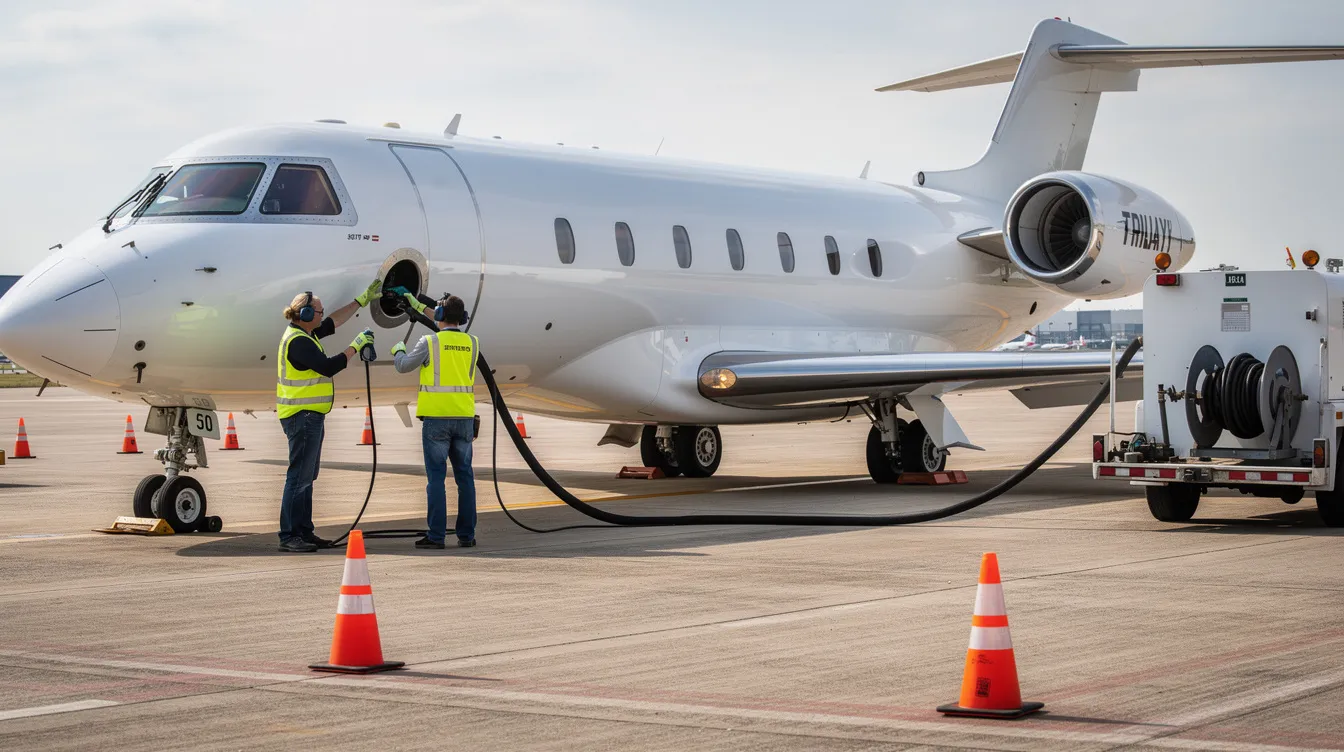
Aviation fuel is a specialized petroleum product for powering aircraft, and its main types are aviation gasoline and jet fuel—two families with distinct chemistries and applications. This article explains the different types of aviation fuel—jet fuel, avgas, and sustainable aviation fuel (SAF)—and how they affect private jet travel. It is designed for private jet travelers who want to make informed decisions about safety, cost, and environmental impact. Aviation fuel is the invisible force behind every private flight—determining range, safety, cruise altitude, and increasingly, environmental impact. For discerning travelers who fly privately, understanding fuel is a strategic advantage, not a technical footnote.
Why Aviation Fuel Matters for Private Jet Flyers
Consider a New York–to–London journey. A commercial business-class passenger endures a two-hour airport buffer, fixed departure windows, and no control over routing. A BlackJet Jet Card member departing Teterboro in a large-cabin jet gains hours back: fuel planning determines the optimal flight level, departure timing, and whether the aircraft carries maximum passengers or trades payload for extra reserves against North Atlantic headwinds.
Core Types of Aviation Fuels Used in Private and Commercial Aviation
Aviation fuel is primarily categorized into aviation gasoline and jet fuel. Aviation gasoline is used for piston engines in smaller aircraft, while jet fuel is used for turbine engines in commercial aircraft. Aviation fuels are engineered for extreme conditions: high altitude, temperatures as low as −60 °C, and sustained power output across thousands of nautical miles. Every BlackJet-contracted operator must meet or exceed strict international specifications set by ASTM D1655 and DEF STAN 91-091, and understanding the different types of jet fuel used in aviation helps explain why these standards matter for performance and safety.
Kerosene-based jet fuels:
Jet A - The standard specification in the United States and Canada. Flash point around 38 °C, freezing point maximum −40 °C. Used by most business jets departing US FBOs. Jet A is a kerosene-based fuel designed specifically for turbine engines.
Jet A-1 - The international standard with a stricter freezing point of −47 °C maximum. Dominant across Europe, Asia, and long-range international aviation operations. Jet fuel is used for turbine engines in commercial aircraft and private jets alike.
Jet B - A naphtha-kerosene blend used in colder climates. Jet B is used in extremely cold climates due to its low freezing point (as low as −60 °C), but its higher volatility makes it rare in mainstream business aviation. It appears primarily in northern Canada and some military aircraft operations.
Aviation gasoline (avgas):
Aviation gasoline is used for spark ignition piston engines in smaller aircraft. The most common grade, avgas 100LL, carries a high octane rating and is dyed blue for identification. Its role in the BlackJet ecosystem is limited but relevant when coordinating feeder flights to remote airstrips.
After understanding the main types of aviation fuel, it is helpful to compare their key properties:
Property | Jet A / Jet A-1 | Avgas 100LL |
|---|
Density (15 °C) | ~0.78–0.84 kg/L | ~0.72 kg/L |
Energy per kg | ~42.8–43.4 MJ | ~43–44 MJ |
Energy per liter | ~34–35 MJ | ~31–32 MJ |
Private jet range planning is based on fuel weight, not volume, because every kilogram of fuel subtracts directly from available payload.
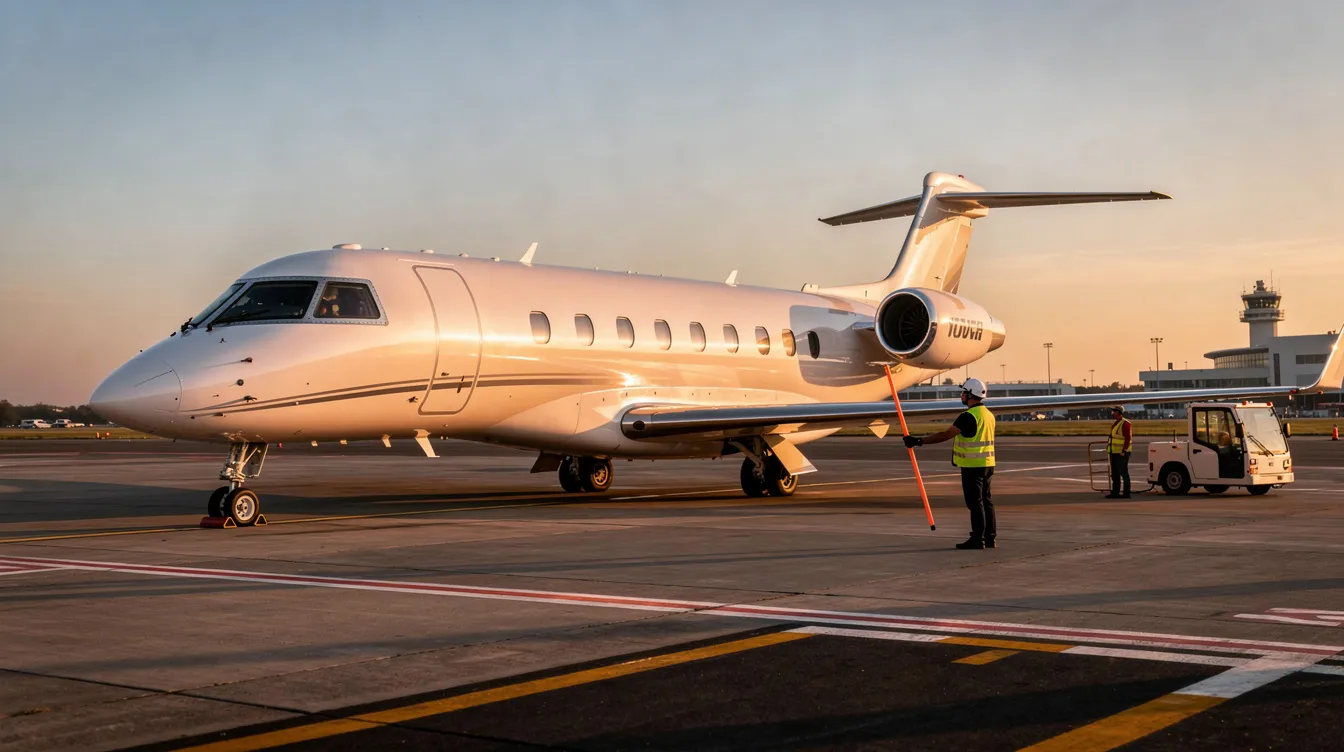
Jet Fuel in Detail: Jet A, Jet A-1, and Jet Card Operations
Nearly every BlackJet itinerary—whether a short hop from Teterboro to Miami on a 25-hour Jet Card or a transatlantic crossing on a 50-hour program—relies on Jet A or Jet A-1, and the dedicated BlackJet 25+ Hour Jet Card program is structured so members never have to manage fuel sourcing or price swings themselves.
What Jet A and Jet A-1 look like and how they perform:
A clear to straw colored kerosene liquid with combustion temperatures inside turbine engines reaching roughly 980–1,500 °C.
Jet fuel has a flash point around 38 °C and a freezing point of approximately −40 °C for Jet A, or −47 °C for Jet A-1. Aviation fuel's flash point is higher than gasoline's, which makes jet fuel safer to handle and store.
Jet A-1 is the most common jet fuel used for international flights.
Governing standards:
Jet fuel must meet ASTM D1655 specifications for aviation turbine fuels.
DEF STAN 91-091 adds stringent requirements for Jet A-1 at UK and international hubs, including mandatory static dissipator additives and tighter limits on acidity.
These standard specification frameworks govern energy content, contaminant thresholds, and approved additives such as corrosion inhibitors.
How this affects your flight:
Higher energy density supports longer range and higher cruise speeds, directly benefiting jet turbine efficiency. A low freezing point allows optimal flight levels over the North Atlantic in winter. Clean-burning fuel reduces engine maintenance downtime and dispatch risk.
Scenario: A BlackJet client flying from Van Nuys (KVNY) to London Luton (EGGW) in a large-cabin jet would require Jet A-1 for the transatlantic leg, cruising at approximately 41,000 ft. Fuel load might reach 30,000–40,000 lb depending on headwinds and reserves for alternate airports. BlackJet's technology platform pulls live fuel pricing and availability from partner FBOs to optimize routing, ensuring members benefit from competitive fuel costs without managing the complexity themselves.
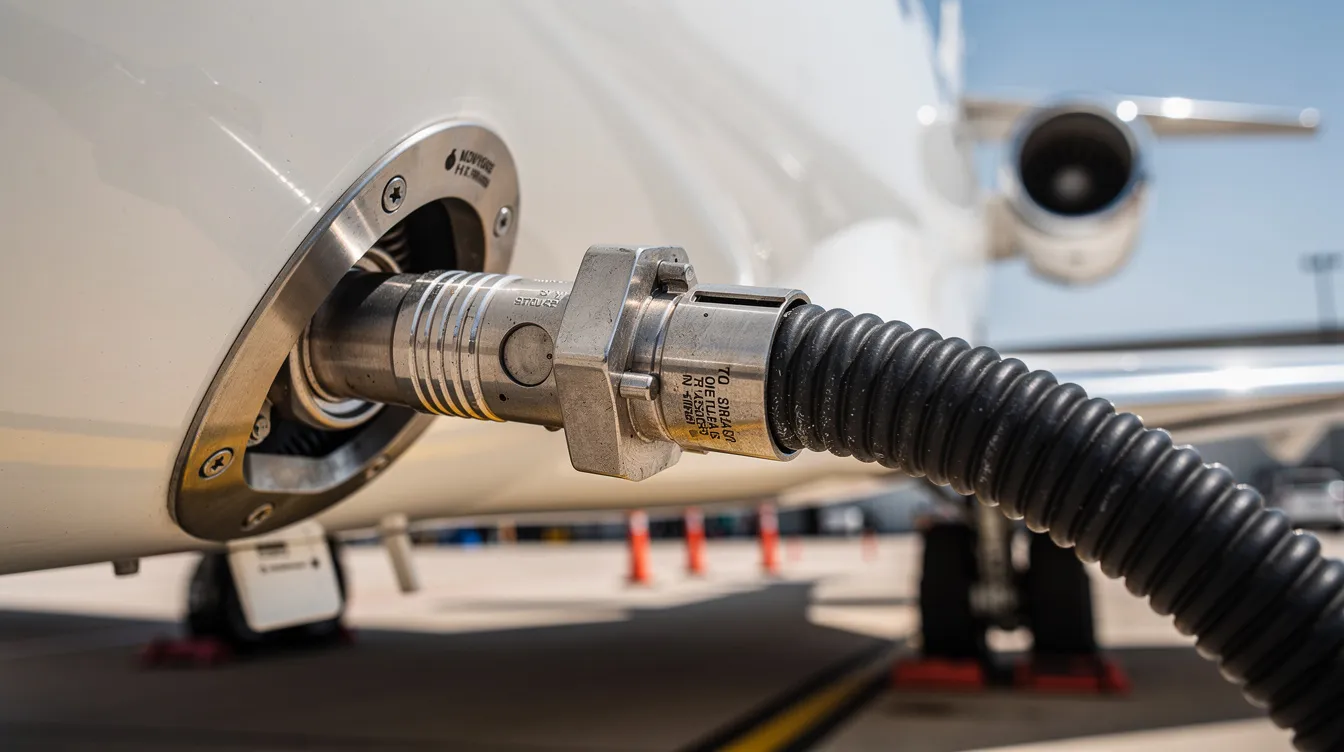
While jet fuel powers most private jets, aviation gasoline remains important for certain aircraft, as discussed next.
Aviation Gasoline (Avgas): Where It Fits in the Private Aviation Landscape
Avgas powers internal combustion engines in piston aircraft—a minority in premium private aviation but common at secondary and remote airports across every country where general aviation operates, while turbine aircraft within BlackJet’s premium private jet card programs rely almost exclusively on Jet A and Jet A-1.
Main grades:
100LL (low lead): 100 octane, dyed blue, the dominant grade worldwide. Avgas 100LL contains lead—specifically tetraethyl lead—to prevent engine knocking in high-compression piston engines.
Historical grades like 100/130 (green) and 80/87 (red) are now rare but still appear in legacy type certificates.
No fully certified drop-in unleaded replacement yet covers the entire piston fleet, though the FAA's EAGLE initiative targets elimination of leaded avgas by the end of 2030. Environmental concerns around lead emissions and air pollution near airports continue to drive safe development of alternative fuels and unleaded avgas formulations.
Critical distinctions:
Avgas carries a higher octane rating and different additive package than road gasoline or ethanol-blended motor fuel.
It is not interchangeable with Jet A or Jet A-1 in turbine engines. Misfueling—putting conventional jet fuel into an avgas-only piston aircraft—can lead to serious engine damage or immediate engine failure on takeoff.
BlackJet occasionally coordinates avgas-fueled feeder flights or helicopter transfers where runways cannot accept larger jets, and ensures every partner maintains strict fueling and safety standards, even when clients opt for the most economical private aircraft options to reach shorter or more price-sensitive missions.
Looking ahead, sustainable aviation fuel is shaping the future of jet-powered flight.
Sustainable Aviation Fuel (SAF): The Future of Jet Fuels at BlackJet
Sustainable aviation fuel is a family of drop-in jet fuels produced from renewable sources and waste-based feedstock: used cooking oil, waste oils, non-food plant oils, municipal solid waste, agricultural residues, and emerging power-to-liquid e-fuels using hydrogen fuel and captured carbon dioxide, with future pathways also including fuels derived from natural gas and other gaseous inputs. SAF must be blended with Jet A before use, typically up to 50% under ASTM D7566 certification, making it fully compatible with existing aircraft engines and airport equipment.
Key benefits:
Sustainable aviation fuel can reduce carbon emissions by up to 80% over the full lifecycle compared with conventional jet fuel, depending on feedstock and production pathway.
Lower particulate matter and sulfur emissions reduce air pollution at major business aviation hubs.
No modifications required to turbine engines or fuel tanks when blended within approved limits.
Real-world deployment:
Over 360,000 flights have used SAF at 46 airports worldwide. Approximately 24.5 million gallons of SAF were consumed in 2023, up dramatically from approximately 5 million gallons in 2021. The Sustainable Aviation Fuel Grand Challenge aims for 3 billion gallons of saf production by 2030—and announced project capacity already exceeds that target. Several FBOs at Van Nuys, Teterboro, and Farnborough now offer SAF or book-and-claim programs for business aviation operations, and frequent flyers increasingly pair SAF usage with the best jet card programs for guaranteed availability.
BlackJet's position:
BlackJet prioritizes SAF use where physically available, working with operators who maintain SAF-ready fueling procedures. When SAF is not available at the departure FBO, BlackJet can arrange book-and-claim: equivalent SAF volume is uplifted into the fuel system at another airport while the client receives the verified emissions benefit. For regulatory clarity, sustainable aviation fuel SAF is the preferred industry term, distinct from older labels like biojet or biofuels, though all describe alternative fuels produced from renewable or waste materials including fatty acids, synthetic fuel pathways, and agricultural feedstock.
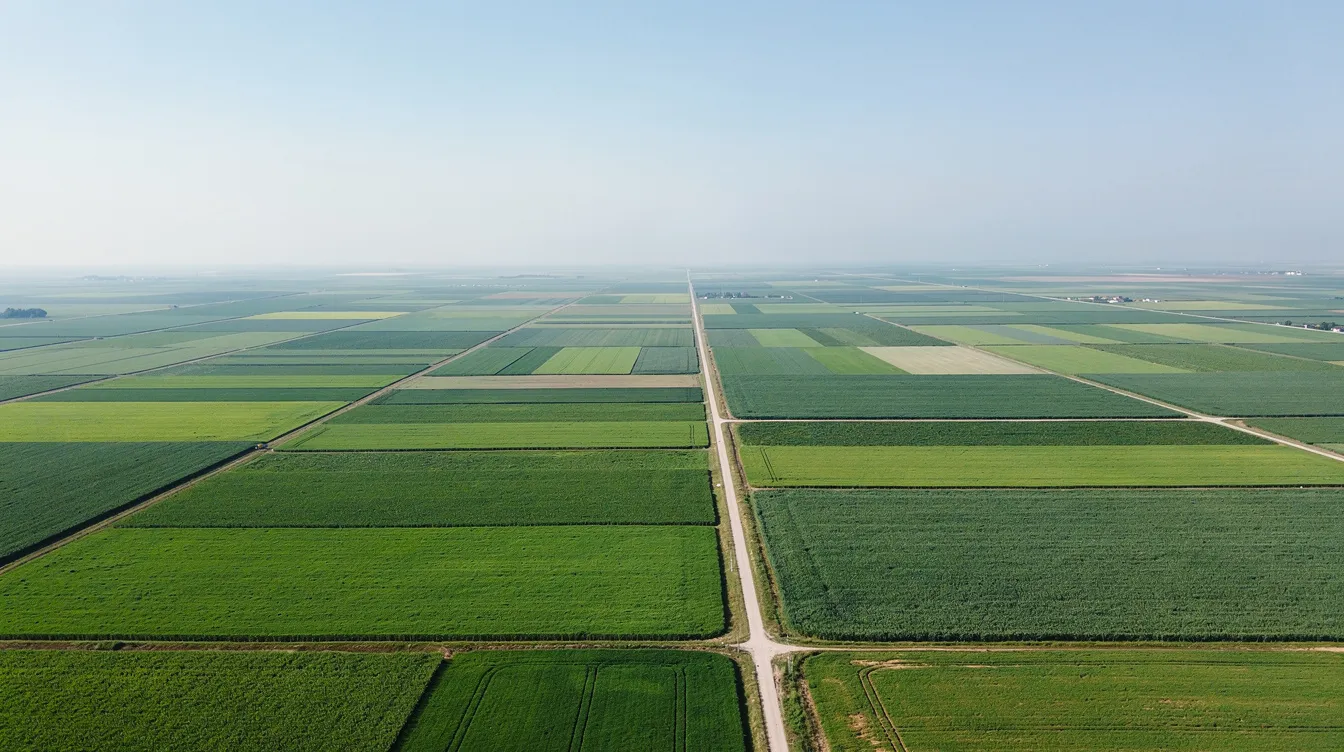
As fuel technology evolves, understanding how fuel choices affect private jet performance, range, and cost is essential for travelers.
How Fuel Choices Shape Private Jet Performance, Range, and Cost
For BlackJet members, fuel is the single largest variable operating cost and a decisive factor in aircraft selection, routing, and Jet Card pricing; understanding how jet card pricing structures work across providers helps put these fuel-driven cost differences into context.
Performance Trade-offs
A long-range private jet flying New York to Dubai may need to limit baggage or passenger count because maximum takeoff weight constrains how much fuel the aircraft can carry, making it essential to match private jet size and cabin category to mission length and passenger needs.
Light jets burn roughly 150–300 gallons per hour; super-mid and large-cabin jets consume 400–800 gallons per hour. This directly influences which jet BlackJet recommends for a 1.5-hour domestic mission versus a 6-hour transatlantic leg and ultimately shapes the effective jet card cost per hour for each aircraft class.
Operational and Environmental Factors
Cruising at higher altitudes lowers specific fuel consumption but may be constrained by air traffic control or turbulence.
Westbound transatlantic sectors face persistent headwinds, requiring additional fuel reserves and occasionally technical fuel stops, which is one reason private jet rental costs can vary widely by route and conditions.
Aviation fuel generally arrives at airports via pipeline systems; fuel distribution at airports uses tanker trucks or permanent piping to reach FBO ramps, and these logistics sit alongside aircraft, crew, time, and handling in overall private jet charter pricing calculations.
Cost Dynamics
Private jet fuel costs vary significantly by region due to taxation, refining capacity, and airport fees. BlackJet's network agreements and bulk purchasing help stabilize hourly rates for Jet Card members despite fuel price volatility, which can otherwise be a major driver of overall private jet price ranges across aircraft types and access models.
Scenario: A BlackJet client choosing between a super-mid jet and a large-cabin jet for a New York–Aspen ski trip might save 30–40% on fuel burn by selecting the super-mid for a 3.5-hour flight, while still enjoying a spacious cabin. BlackJet's digital booking platform surfaces recommended aircraft with engine performance and fuel efficiency factored in—not just cabin size.
Understanding the importance of fuel safety is the next step in ensuring a secure and reliable private jet experience.
Fuel Safety: From Misfueling Risks to BlackJet's Protection Standards
Aviation fuel safety is non-negotiable. BlackJet works exclusively with operators and FBOs that follow rigorous fueling standards aligned with FAA, EASA, and aviation industry best practices.
Misfueling Explained
Putting Jet A into an avgas-only piston aircraft can cause engine failure shortly after takeoff. Using the wrong fuel grade or contaminated fuel in turbine engines can cause engine damage, combustion instability, and compromise flight safety.
Common Causes
Miscommunication between pilot and fueler
Similar-looking aircraft or assumptions based on size
Poor labeling of tanks or fuel caps
Use of nozzle adapters that defeat size-based safeguards
Human fatigue, rushed operations, or incomplete checklists
Modern Safeguards
Differentiated nozzle sizes and color coding between jet fuel and avgas
Mandatory fuel grade confirmation on work orders and cockpit placards
Aircraft must be electrically bonded before fueling to prevent ignition from static discharge
Fire extinguishers must be present at any fueling operation
Aviation fuel must be checked daily for contaminants; aviation fuel undergoes stringent quality control to prevent contamination across the entire supply chain
BlackJet's oversight:
BlackJet only uses operators with audited fuel handling procedures, training records, and incident reporting processes. The 24/7 operations team reviews NOTAMs and fuel availability alerts, confirming fuel services at selected FBOs before launching any Jet Card mission. While misfueling incidents remain rare across the aviation industry, the layered safety protocols and certifications BlackJet requires keep that risk effectively negligible for members and complement the broader cost and responsibility of employing private jet pilots and crews.
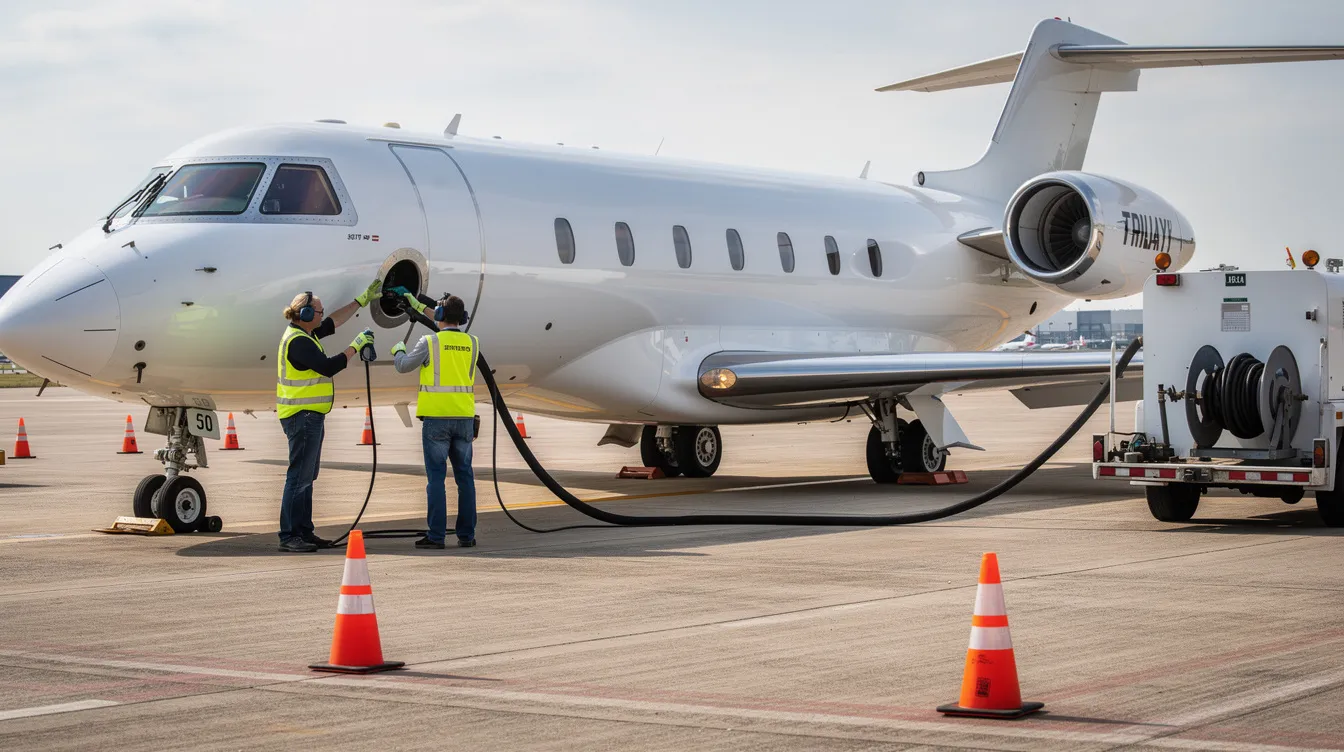
With safety protocols in place, the focus shifts to sustainability and how BlackJet is leading the way toward cleaner aviation.
Sustainability, Carbon Neutrality, and BlackJet's Approach to Clean Aviation
Aviation accounts for 2% of global CO₂ emissions, and private jets face heightened scrutiny. BlackJet treats sustainability as a core design principle—not an afterthought. ICAO's CORSIA framework caps net CO₂ from international aviation at 2020 levels through 2035, reinforcing the urgency to reduce emissions across all aviation operations.
BlackJet's Decarbonization Strategy
Prioritize efficient aircraft and optimal routing to reduce fuel burn per passenger-mile
Utilize sustainable aviation fuel where available, or via book-and-claim programs to produce SAF volume elsewhere in the system.
Offset residual carbon emissions with high-quality, third-party verified credits—making every BlackJet flight carbon neutral at no extra cost to members.
How Offsets Work
Projects such as reforestation, renewable energy, and verified methane capture generate credits under internationally recognized standards like Gold Standard or Verified Carbon Standard. These ensure that every tonne of carbon dioxide offset represents a real, measurable reduction.
Where SAF and Technology Intersect
BlackJet uses data analytics to identify routes with growing SAF availability and is developing emissions dashboards for the member portal—so clients can see estimated emissions and reductions for each trip. A green private jet strategy combines SAF, offsets, and efficient airframes to keep private access compatible with ambitious personal and corporate ESG commitments, working toward the broader goal of net zero carbon emissions across the aviation industry.
As sustainability becomes a priority, choosing the right private jet solution is more important than ever.
Choosing the Right Private Jet Solution When Fuel Really Matters
The technical complexity of fossil fuels, alternative fuels, refueling logistics, and environmental compliance is real. The question for a discerning traveler is straightforward: how do you gain flexible private jet access without absorbing fuel price risk or sustainability complexity alone?
How BlackJet's Jet Card model simplifies fuel:
For high-utilization travelers, comparing a 25- or 50-hour structure with a 100-hour jet card cost breakdown clarifies when stepping up to larger hour blocks makes financial sense.
Prepaid blocks of hours (25-hour and 50-hour cards) carry fixed hourly rates that already account for fuel, crew, and standard fees, and many clients benchmark these against comprehensive 50-hour jet card cost guides when evaluating value.
No need to negotiate fuel prices, minimum uplift quantities, or fuel surcharges at different FBOs, in contrast to some legacy providers where NetJets jet card cost structures include a wider range of surcharges and program nuances to review.
Frequently Asked Questions:
Travelers weighing membership against traditional ownership or on-demand charter often compare cards with comprehensive private jet leasing guides to understand when leasing or fractional models might be more efficient.
Can I request SAF on my BlackJet flight? Where SAF is physically available at your departure FBO, BlackJet will coordinate uplift. Otherwise, book-and-claim ensures verified emissions benefits reach your trip.
Does fuel price volatility affect my Jet Card rate? BlackJet structures pricing to absorb standard fuel fluctuations, so members operate with predictable costs, which makes it easier to compare against market-wide jet card cost per hour benchmarks.
How does BlackJet verify safety and sustainability claims? Through documented audits of operator fuel handling, materials sourcing, and third-party emissions verification.
Understanding aviation fuel is how informed travelers ensure every flight meets their standards for safety, engine performance, and environmental responsibility. Whether you’re evaluating how to buy a single seat on a private jet, comparing private jet pricing in rupees for India-bound travel, or exploring the cheapest private jet options for occasional trips, aligning fuel strategy with your access model is key. Explore BlackJet Jet Card membership or speak with a specialist to design a travel profile that optimizes time, comfort, and impact on the routes that matter most to you.
Conclusion: Fueling the Future of Private Jet Travel with Confidence and Care
Aviation fuel remains the cornerstone of private jet travel, balancing performance, safety, and environmental responsibility. Understanding the distinctions between jet fuel, avgas, and sustainable aviation fuel empowers discerning travelers to make strategic decisions that optimize range, comfort, and carbon impact. BlackJet’s commitment to rigorous fuel safety protocols, seamless integration of sustainable aviation fuel, and transparent pricing ensures members enjoy premier private jet access without compromise.
As the industry advances toward cleaner, smarter fuel solutions, partnering with a provider like BlackJet offers not just luxury and convenience, but a role in shaping the future of aviation—where every flight is efficient, secure, and aligned with your values. Discover how BlackJet can elevate your travel experience with effortless, carbon-neutral private jet journeys tailored to your unique needs. Explore our Jet Card programs and learn more about sustainable aviation fuel to see how we integrate innovation with safety and luxury.


 Sign up with google
 Sign up with Apple