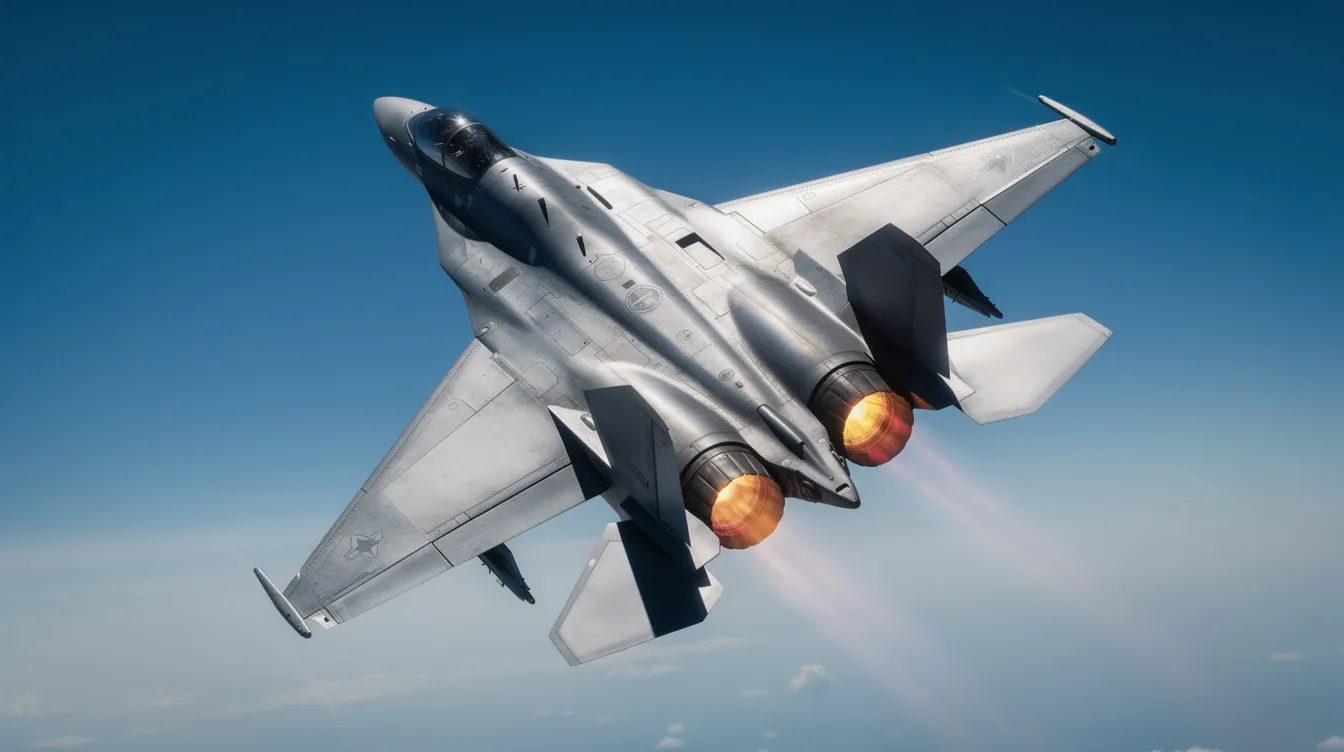
There is no single best jet fighter in the world today, and the best jet fighters vary depending on what you value most - stealth, speed, combat record, cost-effectiveness, or technological sophistication. Ask a US Air Force pilot, an Israeli weapons officer, and a Swedish defense planner, and you will get three different answers, each defensible.
This article explores the world's best jet fighters by category—stealth, speed, combat record, and value—and explains how their technology and performance standards influence modern private aviation. Whether you're an aviation enthusiast, a frequent private jet traveler, or simply curious about cutting-edge aerospace, you'll discover how lessons from elite military jets shape the future of luxury air travel.
In 2026, most defense analysts consider the F-35 Lightning II the best overall combat aircraft, the F-22 Raptor the best pure air superiority fighter, the F-15 Eagle the holder of the best combat record in air-to-air combat history, and the MiG-25 Foxbat the fastest operational fighter jet in the world. Modern fighter jets are designed for various roles, including air superiority, multirole combat, and electronic warfare - and the debates among aviation enthusiasts only intensify as sixth-generation fighters begin taking shape on design boards.
Nation-states treat elite jets as strategic instruments - tools that buy time, control airspace, and project power. In a parallel way, high-net-worth individuals and executives use private jet access for a similar strategic advantage: reclaiming time, controlling schedules, and reaching destinations on their own terms. BlackJet operates in the private aviation world, not the military one, but understanding the best fighter jets gives useful context for modern aerospace technology, safety culture, and the performance expectations that flow from decades of military R&D into civilian flight.
Ranking the Best Fighter Jets: How "Best" Is Defined
Ranking the best fighter jet depends on what you measure. Modern combat performance relies on who sees whom first rather than visual dogfights, which means stealth, sensor fusion, and networked data matter more than raw speed or aerodynamic maneuverability alone. Sensor fusion, a hallmark of fifth-generation fighters, integrates data from multiple sources into a single display, greatly enhancing pilot situational awareness and decision-making. Advanced radar systems are crucial for modern air combat, and modern military aviation emphasizes sensor fusion and network-centric warfare as foundational capabilities.
The categories that matter most include:
Best overall military aircraft (multirole capability, global adoption, technology)
Best air superiority fighter (dominance in air-to-air combat)
Best combat record (verified kills and losses over decades)
Fastest fighter jet (top speed, though less relevant than it once was)
Best value for smaller air forces (cost effectiveness, maintainability)
Most expensive fighter jet program (investment scale and capability return)
Pilot training, doctrine, and supporting assets - AWACS, tankers, electronic warfare suites, ground control - remain decisive. A capable single jet in the hands of a poorly trained pilot, without network support, will underperform a lesser aircraft flown by an expert backed by comprehensive infrastructure.
The Lockheed Martin F-35 Lightning II – Best Overall Fighter Jet in 2026
The F-35 Lightning II stands as the best fighter jet overall in 2026 because no other aircraft matches its combination of stealth, advanced sensors, multirole flexibility, and international adoption. The Lockheed Martin F-35 entered service in 2015 with the US Marine Corps, and by mid-2026, over 1,355 aircraft had been delivered globally, surpassing one million flight hours across more than 20 air forces - including operators in Europe, the Asia-Pacific, and South Korea.
The F-35 excels in multirole capabilities. Its core advantage is advanced sensor fusion that integrates data from multiple sources into a single display: the AN/APG-81 AESA radar, the Distributed Aperture System for 360-degree infrared coverage, and the AN/ASQ-239 electronic warfare suite combine to deliver situational awareness no other operational fighter can match. This fusion lets pilots handle air superiority, precision strike missions, electronic warfare, and ISR without switching platforms. The F-35 has a radar cross section equivalent to a golf ball, enabling it to operate as a stealth aircraft deep inside contested airspace. Its three variants - F-35A for conventional air force operations, F-35B for short takeoff and vertical landing, and F-35C for aircraft carriers - cover nearly every operational requirement.
The trade-offs are real. The F-35 Lightning II program costs $1,196.4 billion - projected to reach that figure by 2077 - making it the most expensive military project ever undertaken. Its top speed of roughly Mach 1.6 is modest compared to other fighters, and sustainment complexity has kept mission-capable rates lower than desired. Yet for sheer breadth of capability, the F-35 remains the most consequential new aircraft of this generation, with continuous upgrades planned for decades to come.
The F-22 Raptor – Best Pure Air Superiority Fighter
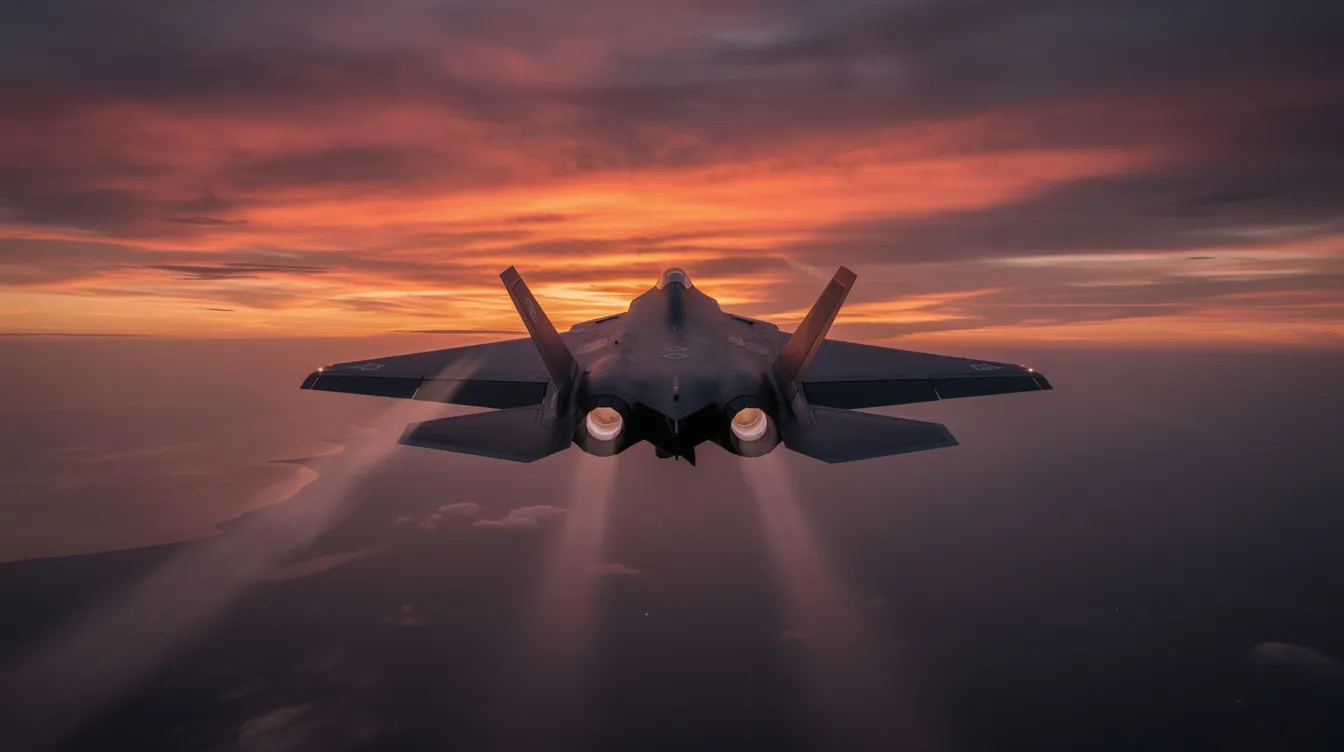
The F-22 Raptor remains the benchmark for pure air superiority - the fighter jet that other aircraft are measured against in clean air-to-air combat. It was the first fifth-generation fighter, and many pilots still consider it the hardest opponent to face in any engagement.
The F-22's specifications reinforce that reputation. First flown in 1997, it entered service with the US Air Force in 2005, with around 187 built and approximately 180 operational aircraft remaining. The F-22 Raptor can reach a top speed of Mach 2.25, and it can supercruise at approximately Mach 1.8 without afterburners - sustaining supersonic flight without the fuel penalty of afterburning turbofan engines. Supercruise capability allows the aircraft to sustain supersonic speeds without using afterburners, a significant tactical edge. The F-22 has a radar cross section comparable to a marble, making it virtually invisible to most radar systems. Its 2D thrust-vectoring nozzles deliver exceptional agility in close combat, while a powerful AESA radar and advanced avionics handle beyond-visual-range threats with precision. Fighter jets like the F-22 utilize internal weapons bays to enhance stealth capabilities, keeping weapons payload hidden from radar until the moment of release.
In exercises like Red Flag, the F-22 routinely achieves lopsided kill ratios, engaging opponents before they detect it. Yet the F-22 Raptor has never scored an air-to-air kill in actual combat - its dominance exists in training, simulation, and doctrinal superiority rather than a verified wartime record. The F-22 Raptor is the most expensive fighter jet per unit at $150 million, with the total production cost estimated at nearly $300 million per jet when development is factored in. The F-22 Raptor costs over $140 million per unit at base procurement. Production ended in 2011, and a US export ban means only a handful of air forces - specifically, only the US Air Force - will ever fly it.
The F-15 Eagle – Best Combat Record in Air Combat History
The F-15 Eagle holds the most dominant combat record of any fighter jet ever built. Across US, Israeli, Saudi Arabian, and Japanese air forces, the F-15 Eagle's record is often cited as 104 to zero - 100-plus air-to-air kills with no confirmed air-to-air losses. The F-15 Eagle is the most successful fighter jet in history by this measure, and the F-15's combat record spans more than fifty years of service since its first flight in 1972.
The F-15 Eagle has a top speed of Mach 2.5, an excellent thrust-to-weight ratio, and was designed from the outset as a dedicated air superiority fighter with a powerful APG-63 radar. Heavy payload capacity is significant for aircraft designed for extended missions, and the F-15 carries that principle forward with substantial weapons payload on multiple hardpoints. Its success reflects not just the aircraft but comprehensive training, AWACS support, and favorable doctrinal environments - yet the undefeated record stands unchallenged.
Major variants have kept the design relevant:
F-15C/D: the original air superiority standard
F-15E Strike Eagle: dual-role strike and air superiority
F-15EX Eagle II: modernized with advanced radar, electronic warfare systems, and compatibility with current weapons
Despite its large radar cross section and lack of stealth, the F-15 remains one of the best fighter choices for nations prioritizing range, speed, heavy weapons payload, and a proven track record over low observability.
MiG-25 Foxbat and the Speed Question – Fastest Fighter Jet vs. Real-World Effectiveness
The MiG-25 Foxbat, introduced in 1970, remains the fastest fighter jet to have served operationally. The MiG-25 Foxbat has a top speed of Mach 2.83 under operational conditions, though in clean configuration it could reportedly reach Mach 3.2 in limited bursts - holding speed records that no conventional operational aircraft has matched since. For context, the NASA/USAF X-15 reached Mach 6.72, but that was an experimental aircraft - a rocket-powered research plane, not a fighter jet.
The Foxbat was designed as a high-altitude interceptor and reconnaissance platform for the Soviet Union during the Cold War, with larger wings optimized for high-altitude performance and over 1,200 produced. Its primary armament included R-40 air-to-air missiles guided by a powerful (for its era) radar. Yet extreme speed came with severe trade-offs: limited maneuverability at high Mach numbers, enormous fuel consumption, and structural heat constraints that restricted sustained flight above Mach 2.4 to roughly five to fifteen minutes.
Modern fighters deliberately sacrifice peak speed for stealth technology, agility, advanced sensors, and endurance - capabilities that win engagements in the world today. The fastest fighter jet is not necessarily the best fighter jet. Modern jet fighters combine stealth technology, advanced radar, and maneuverability rather than chasing raw Mach numbers.
Eurofighter Typhoon and Dassault Rafale – European Air Superiority and Flexibility
The Eurofighter Typhoon and Dassault Rafale represent Europe's premier 4.5-generation modern fighters, both strong contenders for best fighter status outside the stealth-centric fifth generation. Fourth-generation fighters offer significant advantages in cost and operational flexibility, and these two aircraft exemplify that principle while pushing toward the capabilities of the most advanced fighters in service today.
The Eurofighter Typhoon evolved from an air superiority fighter to a multirole fighter over its development life. First flown in 1994, with a top speed of Mach 2.0, the Eurofighter Typhoon can supercruise at Mach 1.5 in certain configurations. Over 500 are in service across the UK, Germany, Italy, Spain, and export customers. It excels in high-altitude turning fights where its delta-canard aerodynamics provide strong sustained-turn performance. Electronic warfare systems enhance threat awareness and self-protection for the Typhoon, which carries a sophisticated defensive aids suite.
The Dassault Rafale traces its lineage back through French fighters like the Mirage III and is designed for omnirole flexibility - handling air-to-air, deep strike, reconnaissance, and nuclear deterrence from the same airframe. Its SPECTRA electronic warfare suite is among the most capable in any non-stealth aircraft, and it has accumulated a strong combat record since 2007 in operations over Libya, Mali, Syria, and Iraq. Pilot reports often note the Rafale's edge at lower altitudes and in strike flexibility, while the Typhoon tends to dominate at higher altitude engagements. The F-16 Fighting Falcon is a true multirole aircraft that competes in the same general market, but the Typhoon and Rafale offer more advanced sensors and greater weapons payload for demanding missions.
Saab JAS 39 Gripen – Best Value Fighter Jet for Smaller Air Forces
The Saab Gripen represents a fundamentally different philosophy: build a lightweight fighter optimized for cost effectiveness, rapid deployment, and ease of maintenance rather than outright dominance in any single metric. First flown in 1988, the Gripen reaches a top speed of around Mach 2.0 and is operated by Sweden, the Czech Republic, Hungary, Brazil, South Africa, and others. The latest Gripen E/F variant features an AESA radar, expanded combat radius, and improved electronic warfare capability.
What sets the Gripen apart is its operational concept. Ground crews can rearm and refuel the aircraft in under fifteen minutes. It can operate from short or improvised airstrips - including public roads - using minimal support infrastructure. This makes it an ideal operational fighter for nations that need dispersed air defense across large or austere territories without enormous logistics chains.
The Gripen is not the most stealthy, the fastest, or the most heavily armed. But its low lifecycle cost, high availability rate, and flexible deployment model make it one of the best fighter choices for air forces seeking affordable, reliable air defense. Best fighter jet for air forces seeking cost-effective air defense and flexibility.
Eastern Contenders: Su-27/35, Su-57, MiG-29, and J-20
The Su-27 family, which first flew in 1977, remains one of the most recognizable fighter lineages outside the West. The Su-35, its most capable derivative, features thrust-vectoring nozzles, a powerful Irbis-E radar, and long range - making it a formidable air superiority platform on paper. However, its combat record is mixed and largely limited to air-to-ground operations, with fewer verified high-profile air-to-air kills than Western counterparts like the F-15.
Russia's Su-57 Felon represents its fifth-generation fighter ambition. The Sukhoi Su-57 offers multirole capabilities with advanced sensors, 3D thrust vectoring, and some degree of stealth shaping. The Chengdu J-20 can reach speeds of Mach 2. But only a few dozen Su-57s are in service as of 2026, and questions persist about radar signature quality, sensor fusion maturity, and production scalability compared to other fighters in the advanced stealth category.
The MiG-29 Fulcrum is a capable short-range dogfighter, comparable in concept to the F-16, with strong close-combat performance but older avionics and limited range. It remains in service today with numerous air forces, sometimes modernized to SMT or later standards.
China's Chengdu J-20 is one of only four operational stealth fighters in the world, alongside the F-22, F-35, and Su-57. Long-range stealth allows fighters like the J-20 to penetrate defended airspaces, and it carries PL-15 long-range missiles in internal bays for air superiority and interception missions. Estimates suggest over 250 J-20s in PLAAF service, with mass production accelerating rapidly. No confirmed air combat record exists, and sparse, non-transparent data makes it difficult to rank definitively against NATO jets - but the J-20 is central to any discussion of the future air combat balance.
Special Categories: Best Combat Record, Air Superiority, Technology, and Cost
Different experts name different aircraft as the best fighter jet depending on what criterion matters most. Here is how the leading categories break down:
Best overall combat aircraft in 2026: F-35 Lightning II - for its stealth, sensors, multirole depth, and deployment across more than 20 air forces.
Best air superiority fighter: F-22 Raptor - stealth and exceptional agility make it the dominant platform in air-to-air combat scenarios.
Best combat record: F-15 Eagle - 104 air-to-air kills, zero air-to-air losses, across more than fifty years.
Fastest operational fighter: MiG-25 Foxbat - Mach 2.83 operational, Mach 3.2 in limited clean configuration.
Best value fighter: Saab Gripen - lowest lifecycle cost among modern jets with high sortie rates.
Best European duo: Eurofighter Typhoon and Dassault Rafale - covering high-altitude superiority and omnirole strike, respectively.
Most expensive fighter jet program: F-35 Lightning II at $1,196.4 billion total. Most expensive fighter jet per unit cost: F-22 Raptor.
These categories help explain why the debate over the best fighter never produces a single winner. The answer depends entirely on the mission.
Pilot Skill, Training, and Network Support – The Decisive Factor in Air Combat
Technology sets the ceiling, but pilot skill and training determine where an air force actually performs. The F-15's legendary 104-to-zero record reflects not just a capable airframe but thousands of hours of realistic combat training, well-integrated AWACS support, and doctrine that emphasized detection and engagement before the adversary could react. Modern combat performance relies on who sees whom first, and the infrastructure behind the pilot - electronic warfare aircraft, tanker support, ground-based radar - substantially shapes the outcome even when both sides field similar modern fighters.
The same principle applies directly to private aviation. Just as the best fighter jet needs elite pilots and support crews, the best private jet experience depends on certified crews, rigorous safety protocols, and professional operations teams who ensure every flight meets exacting standards.
From Air Combat to Private Jets: How Fighter Technology Shapes Luxury Travel
Technologies pioneered in the best military aircraft now define modern business and private jets. Fly-by-wire flight controls - first proven in advanced fighters - are standard in aircraft like Gulfstream, Dassault Falcon, and Embraer business jets. Composite materials developed for stealth aircraft reduce weight and improve fuel efficiency in civilian airframes. Advanced avionics originally designed for situational awareness in combat cockpits now enhance safety and navigation in business jets for 2026.
Private jets focus on reliability, range, noise reduction, and comfort rather than extreme maneuverability or stealth, yet they benefit immensely from decades of military R&D. BlackJet operates within this lineage - leveraging modern certified fleets, digital booking technology, and stringent safety standards to deliver an elite but practical counterpart to the high-performance fighter world. Current private aviation trends emphasize flexibility and luxury in travel, and the technology transfer from military to civilian aviation is a key reason why premium private jet programs keep getting safer, quieter, and more efficient.
BlackJet Jet Cards vs. Owning a Jet or Ad Hoc Charter
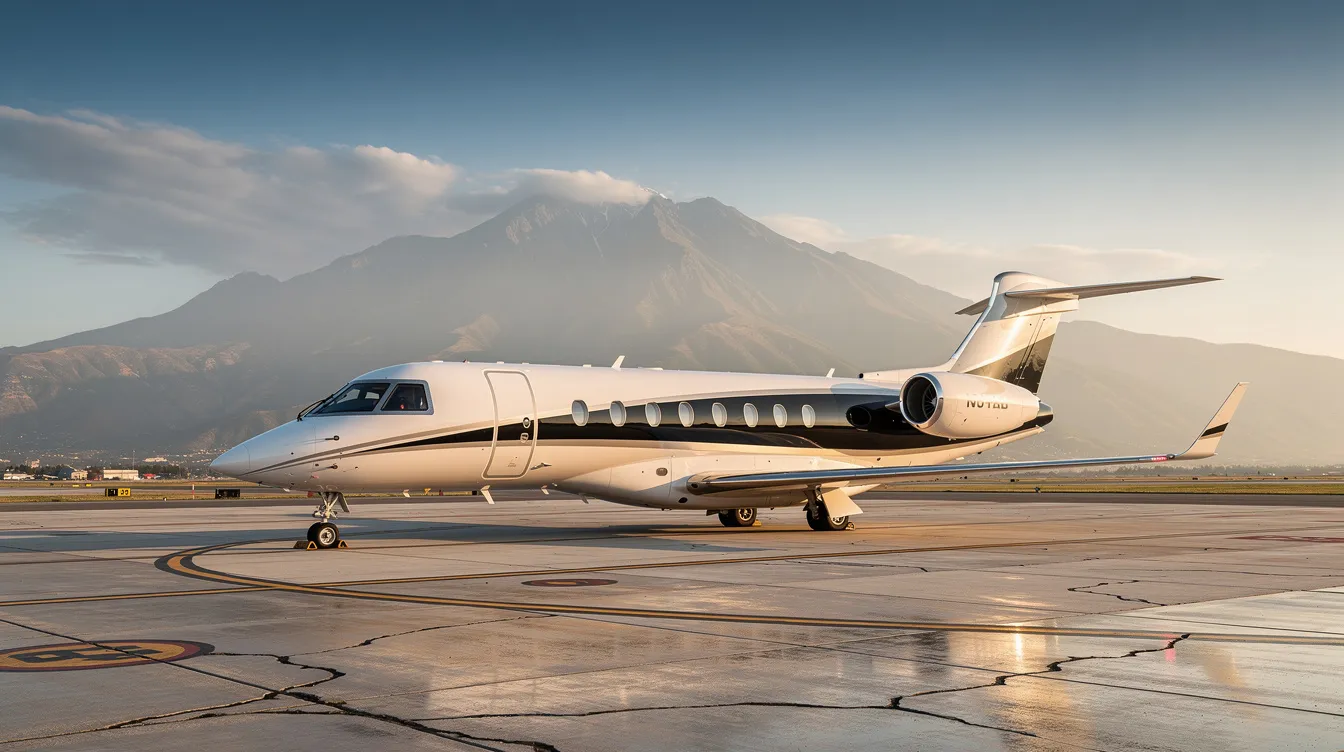
Fighter jets belong to nation-states and air forces. But private individuals and executives can access top-tier aviation through three main models, each with distinct trade-offs - similar to how air forces weigh capability against budget when selecting their next operational aircraft.
A Jet Card through BlackJet provides prepaid blocks of flight hours - typically 25-hour or 50-hour programs, such as the BlackJet 25+ Hour Jet Card-, across different cabin classes. Private aviation offers access to multiple cabin types without the need for full ownership. Members get guaranteed availability, fixed hourly rates, and carbon-neutral flights built into every program. Here is how the three models compare:
Ownership: full control, but massive capital outlay, maintenance, crew salaries, hangar fees, and depreciation. Ideal only for those flying 400+ hours annually.
Pure charter: flexibility on paper, but variable pricing often compared against a broader private jet price list, uncertain aircraft availability, and inconsistent service quality.
BlackJet Jet Card: predictable costs, 24/7 digital booking tools, access to light jets for regional hops and larger cabin jets for transcontinental or transatlantic missions, with a real-time support team and rigorous safety vetting.
For executives and frequent travelers who fly privately multiple times a year, the Jet Card model delivers the performance and reliability of ownership while offering the predictable costs described in a comprehensive guide to jet card cost, without the financial burden of maintaining a single jet.
Safety, Certification, and Technology in Private Aviation
Just as the best air force fighters rely on strict maintenance standards and operational discipline, high-end private aviation hinges on safety, certification, and procedures that leave nothing to chance.
BlackJet partners exclusively with operators holding top regulatory certifications and third-party safety ratings, including ARG/US and equivalent audit frameworks, aligning with the wider realities of private jet safety standards. Regular audits track aircraft condition, crew qualifications, and maintenance records. Mandatory experience thresholds and recurrent training requirements apply to every pilot and cabin crew member. Technology reinforces these standards: real-time flight monitoring, weather and NOTAM integration, and digital verification systems ensure every element is confirmed before departure.
For the traveler, this translates to the same disciplined risk management that keeps frontline military aircraft combat-ready - applied to comfort-focused private jets where the mission is your schedule, your privacy, and your safety.
Sustainability and Carbon-Neutral Flights with BlackJet
Modern air forces and manufacturers increasingly prioritize fuel efficiency, and private aviation faces the same expectation. Discerning travelers want performance without ignoring environmental responsibility.
Every BlackJet Jet Card flight is carbon-neutral as standard, aligning sustainability with the kind of cost-effective private aviation options many travelers now seek. This is achieved through verified carbon offset programs and sustainable aviation fuel where available. BlackJet prioritizes newer, more efficient aircraft to reduce per-passenger emissions, and provides transparent reporting so members can see the environmental impact of their flying and how it is mitigated. Carbon offsets fund verified projects - reforestation, methane capture, renewable energy - that deliver tangible, audited emission reductions equivalent to the flight's footprint.
BlackJet ensures every journey is carbon neutral - at no extra cost to you, while transparent jet card pricing structures keep overall costs predictable.
Choosing the Best Jet for Your Mission (Air Combat vs. Executive Travel)
Air forces match fighter jets to missions - air superiority, interception, deep strike, reconnaissance - with precision. BlackJet applies the same logic to private travel, helping clients match aircraft types to their specific trip profiles rather than defaulting to a one-size-fits-all solution.
Consider these scenarios. An executive team flying from New York to London books a large-cabin jet through a 50-hour Jet Card, leveraging the kind of 50-hour Jet Card cost and value analysis frequent flyers care about, arriving rested and ready for morning meetings with no layover, no terminal, and no delay. A family heading from Los Angeles to Aspen for a long weekend selects a midsize jet - choosing from several private jet sizes and right-sized for four passengers with ski gear, departing on their schedule. A multi-city European business roadshow uses efficient light jets or even large-cabin aircraft comparable to the best private jets for 50 passengers to reach secondary airports that commercial airlines cannot serve easily, compressing five days of meetings into three.
Unlike the best fighter jet debates where nations invest billions in a single platform, BlackJet members make pragmatic, data-driven aircraft choices trip by trip with support from aviation specialists. The best jet for your mission is the one that matches your route, your passengers, and your priorities - precisely.
FAQ: Best Fighter Jets and Elite Private Aviation
What is the best fighter jet in the world right now?
The F-35 Lightning II is the best overall, the F-22 Raptor is the best for air superiority, the F-15 Eagle holds the best combat record, and the MiG-25 Foxbat is the fastest. Fifth-generation fighters prioritize stealth and sensor fusion as defining capabilities, just as private travelers prioritize matching missions to the right private jet size category.
Is the F-22 Raptor better than the F-35 Lightning II?
In pure air-to-air combat, the F-22 is generally considered superior due to its stealth, speed, and agility. But the F-35 is a far more versatile and exportable platform - serving strike missions, ISR, and electronic warfare roles the F-22 was never designed for, much like how travelers compare jet card cost per hour when choosing between flexible private aviation options.
Which fighter jet has the best combat record?
The F-15 Eagle, with approximately 104 air-to-air kills and zero confirmed losses - maintained over more than fifty years across multiple air forces- mirrors how frequent flyers might justify a 100-hour jet card cost based on long-term reliability and performance.
Why are modern fighters slower than the MiG-25?
Modern jets trade peak speed for stealth, maneuverability, endurance, and advanced sensors. Stealth technology allows aircraft to operate undetected by radar, which is more tactically valuable than arriving fast but visible—just as many travelers trade outright ownership for a flexible 25-hour jet card that better fits real-world usage.
Can civilians fly in the world's best fighter jets?
Frontline jets like the F-22, F-35, and J-20 are restricted to military personnel. Civilian flight experiences typically use ex-military trainers or retired aircraft - exciting, but a different category entirely, and very different from simply buying a seat on a private jet for comfortable point-to-point travel.
How does BlackJet remain carbon-neutral?
Every Jet Card flight includes verified carbon offsets or sustainable aviation fuel, built into the membership at no additional cost. Transparent reporting tracks impact and mitigation.
What is a Jet Card and who is it best for?
A Jet Card is a prepaid block of private flight hours offering fixed rates, guaranteed availability, and consistent service, structured within clear jet card pricing models. It is best for frequent travelers who fly several times a year privately and value predictability and speed of access over the complexity of jet ownership.
Conclusion: From the Best Fighter Jet to the Best Way to Fly Private
No single fighter jet dominates every category. The F-35 leads overall in 2026 with unmatched sensor fusion and global reach. The F-22 rules air superiority with stealth and agility that remain unmatched. The F-15 holds the best combat record in aviation history. And the MiG-25 reminds us that the fastest fighter jet is not always the most effective - speed alone does not win modern air combat.
The same strategic thinking that guides nations in selecting the right military jet for each role applies to how sophisticated travelers choose their aviation access. Ownership, charter, and Jet Cards each serve different needs - and the smartest choice depends on your mission profile, not on prestige alone.
BlackJet's Jet Card programs offer fighter-pilot levels of control over your schedule - with the comfort, safety, and sustainability of premier private aviation, including options highlighted among the cheapest private jet solutions for smart flyers. Explore how refined, purposeful travel becomes your new standard.
Join BlackJet's Jet Card program for seamless, premium private travel - safety, sustainability, and flexibility built in, whether you’re comparing competitors like Flexjet jet card costs or NetJets jet card pricing, evaluating top private jet companies, exploring UK private jets for sale, or arranging bespoke private jet charters in Karachi.


 Sign up with google
 Sign up with Apple