For those who live and breathe aviation—whether you fly several times a month privately or simply admire the engineering behind modern jets—a premium aircraft model is more than shelf décor. It is a statement of passion, precision, and personal taste. This guide will walk you through everything you need to know to find the best plane model for your collection, your office, or as a gift that genuinely impresses.
Why the "Best Plane Model" Matters for Discerning Collectors
High-quality airplane models appeal to aviation enthusiasts, executives, and private jet travelers because they embody the same engineering excellence found in the real aircraft they represent. A precision-crafted replica on a mahogany stand carries the same gravitas as a curated art piece-every panel line, every livery detail, every accurate cockpit glazing tells a story of innovation and ambition. High-net-worth individuals often prefer private jet services for leisure and business travel, and for many of them, the model sitting on the credenza is a tangible echo of that lifestyle.
Premium aircraft models represent the pinnacle of craftsmanship. Compare a hand-painted Gulfstream G650 replica to a mass-produced souvenir, and the difference is immediately clear: shape fidelity, paint depth, and surface detail that you can study up close. For BlackJet clients-many of whom regularly book super-midsize or large-cabin jets-choosing a model that matches the aircraft type they fly most often transforms a display piece into a personal emblem.
The goal of this post is straightforward: to help you identify the best plane model based on whether you want it for display, collecting, gifting, or as a companion to your premium private aviation lifestyle with BlackJet. We will break down materials, scales, aircraft categories, and even how your travel habits can guide your selection.

Quick Answer: What Is the Best Plane Model for Most Buyers?
If you want a fast recommendation, three categories consistently deliver the strongest combination of realism and visual presence:
1:200 diecast airliners - A Boeing 787-9 in this scale captures livery details, fan blade accuracy, and nose shape beautifully while remaining desk-friendly.
1:72 military warbirds - An F-16C Fighting Falcon at this scale offers cockpit detailing, weapons bays, and authentic camouflage that history buffs love.
1:48 business jet models - A Gulfstream G650 or Bombardier Global 7500 in this range gives a commanding presence, perfect for anyone who actually flies these planes.
Of course, "best" depends on purpose. An office display piece calls for different priorities than a detailed hobby build from one kit, and commemorating private jet trips through a jet card program is a different motivation than collecting warbirds. These models are suitable for collectors and as gifts alike. The sections ahead will help you match material, scale, and aircraft type to your personal preferences and space.
Understanding Aircraft Models: Static Display vs. Flying
Airplane models split into two broad families, and understanding the distinction saves purchasing mistakes:
Static display replicas are built for realism. They sit in fixed poses-often gear-down with accurate operator liveries-and prioritize surface detail, paint quality, and scale integrity. Static scale models are used for collection or display purposes, and they are the focus of this guide.
RC and flying models are functional aircraft designed to actually fly. They use lightweight materials like balsa, foam, or composites, and surface detail is often simplified to reduce weight and drag.
This article focuses on premium static display models-the kind that sit on an executive desk, a home library shelf, or the lounges frequented by BlackJet travelers between flights. If you want stuff that takes to the air, you are looking at a different hobby entirely.
Key Materials: Resin, Wood, Metal, and Multi‑Material Builds
Material choice heavily influences the look, feel, and longevity of any aircraft model. Here is what to expect from the four main options:
Resin-cast models deliver sharp panel lines and smooth surfaces. Brands like Fine Molds and Hobby Boss produce kits in resin that are popular among military and airliner collectors. The tradeoff: resin is brittle, and extremities like winglets or struts can chip if mishandled. Paint adhesion also requires proper priming.
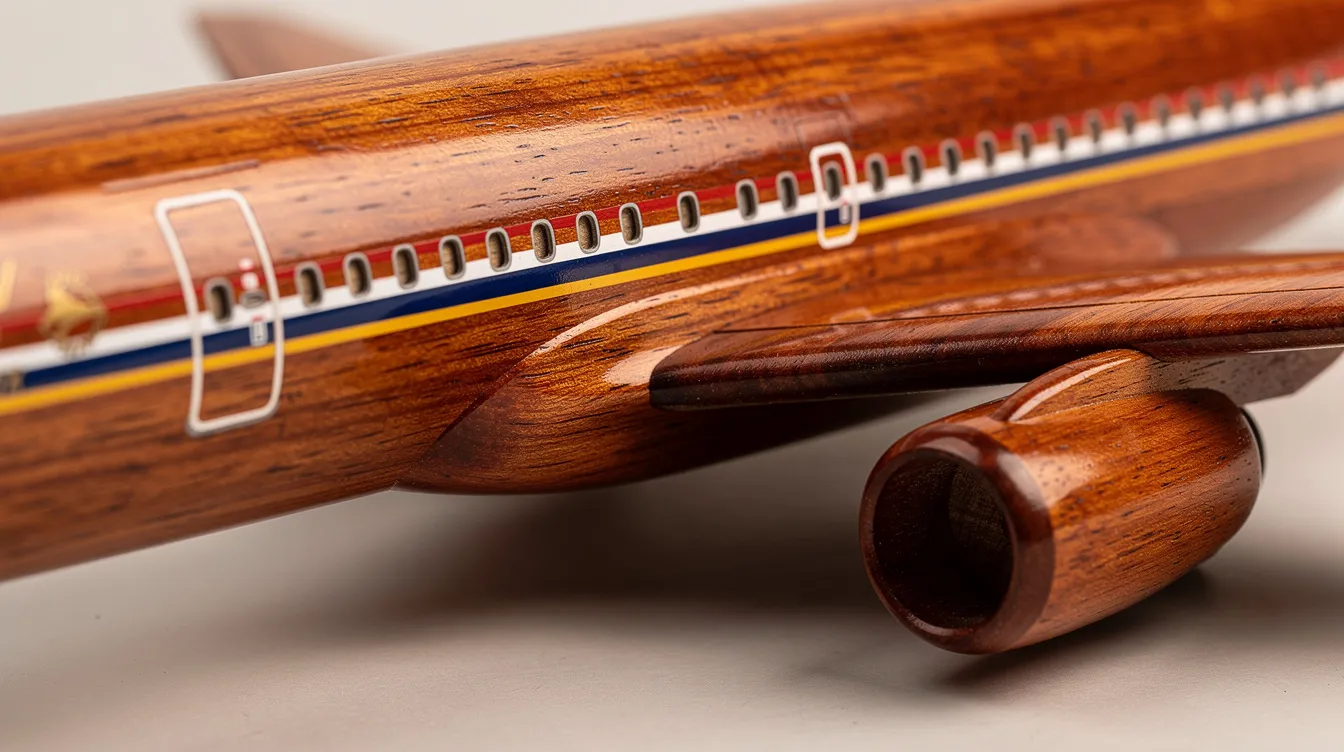
Mahogany and hardwood models occupy the premium tier. These are hand-carved and hand-painted for realism-often from solid mahogany-giving them a warm sheen and visible wood grain that plastic cannot replicate. Premium models are often hand-carved from solid mahogany wood, and that labor-intensive process drives both prices and perceived value. Business jet airplane models in hardwood are especially popular among private aviation clients who want something that feels as refined as their office.
Die-cast metal models use zinc or aluminum alloys to deliver weight and durability. That solid-in-hand feel matters to collectors who want presence, not fragility. Brands like Gemini Jets and Herpa Wings, a major producer based in Germany, offer extensive die-cast line-ups covering over 250 airlines. The downside: seam lines can show, and low-quality alloys risk zinc pest over time.
Multi-material builds combine a resin or plastic fuselage with metal landing gear, photo-etched brass parts, and wooden display stands. These balance durability and detail, keeping the airframe lightweight while giving critical components like wheels and struts a satisfying heft.
Scale Options: How Big Should Your Airplane Model Be?
Scale is the ratio between your model and the real aircraft it represents—a 1:200 model is 200 times smaller in linear dimensions. Scale models replicate full-size designs, though not always real aircraft; some represent concept or prototype planes that never entered production.
Here are the most common scales and where they shine:
Scale | Best For | Typical Wingspan (Widebody) | Detail Level |
|---|
1:400 | Large collections, limited shelf space | ~17 cm (747) | Good |
1:200 | Desk and shelf display | ~34 cm (747) | Very good |
1:144 | Wide-body airliners at a manageable size | ~42 cm (747) | High |
1:72 | Military jets, business jets | Varies | Very high |
1:48 | Statement pieces, detailed builds | Varies | Exceptional |
A FlightStore scale guide notes that a Boeing 747 at 1:200 has roughly a 34 cm wingspan compared to about 17 cm at 1:400-a meaningful difference when you are deciding what will sit on a crowded desk versus a dedicated display cabinet.
Premium aircraft models are larger in scale than standard models, which means a 1:48 business jet can easily become a boardroom centerpiece. Match scale to room: 1:200 or 1:400 for a home office shelf, 1:48 or 1:72 for a statement piece in a conference room or lounge used by BlackJet clients between flights.
Detail, Fine Molds, Moving Parts, and Landing Gear: What to Look For
The best plane model balances visual fidelity with functional touches that reward closer inspection.
Surface detail to look for includes accurate panel lines, antennas, cockpit glazing, correct operator liveries, and realistic engine nacelles. A well-executed replica will capture the shape of the real airframe down to winglets and navigation lights. Revell and williams bros kits, for instance, give hobbyists the raw plastic components to build that level of accuracy themselves.
Landing gear is a major differentiator. Options range from fixed gear-down poses to retractable landing gear that lets you switch between flight mode and parked mode. Many premium models feature moving components like retractable landing gear, spinning propellers, and opening cargo doors-details that add interactivity and signal serious craftsmanship.
Paint and finish matter just as much. Look for UV-resistant paints, pad-printed markings rather than water-slide decals, and a gloss-matte combination that mimics how light plays across a real fuselage. Some military models include tasteful weathering to suggest operational history.
Note that some premium lines provide optional gear-up and gear-down displays-ideal for representing a favorite route or aircraft type in action. This kind of versatility is a welcome surprise for collectors who want to change things up seasonally.
Types of Aircraft Models: Airliners, Warbirds, and Business Jets
Aircraft models span a wide spectrum, and each category attracts a different audience. Airplane models include trainers, airliners, jets, and helicopters, so the range is enormous. Here is a quick breakdown of the three most popular families:
Airliner models - Think Boeing 787-9, Airbus A350-900, and the iconic 747-400. These capture the romance of long-haul travel and heritage liveries. Guys who grew up watching 747s taxi often start their collection here. Wingnut wings and other niche producers even offer legacy types that are no longer in service.
Military and warbird models - From the P-51 Mustang and Supermarine Spitfire to modern jets like the F-35A, these planes carry deep history and narrative weight. The competition in this category is fierce, with brands constantly vying to produce the most accurate molds of classic fighters.
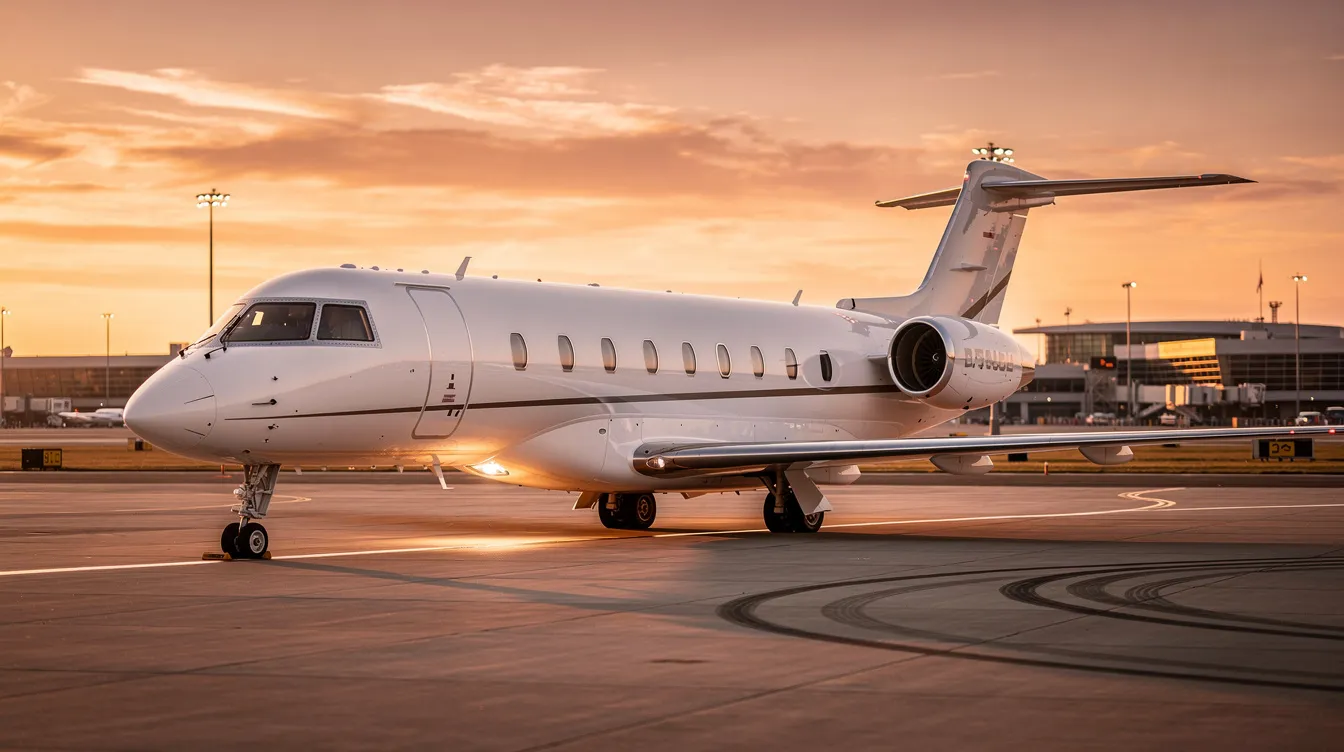
Business jet models - This is where private aviation clients lean forward. Popular types mirror what BlackJet's network offers: Cessna Citation XLS+, Bombardier Challenger 350, Gulfstream G650, and Embraer Praetor 600. Private aviation clients often choose business jet airplane models to mirror the cabin class they most frequently book via jet cards.
Best Plane Models for Private Aviation Enthusiasts
This section is tailored to readers who use or aspire to use private jets. Here are recommendations matched to common trip profiles:
Light jets (Embraer Phenom 300): Perfect for regional hops and small-airport access. A 1:48 or 1:72 model showcases the sleek winglets and compact cabin length at a fraction of the footprint of a large-cabin replica.
Super-midsize jets (Challenger 350, Citation Longitude): The workhorses of cross-country USA travel. These make great planes for a desk display because their proportions are balanced and recognizable.
Large and ultra-long-range jets (Global 7500, Gulfstream G650ER): Flagship models with commanding presence. The Global 7500 measures 33.8 meters in length with a 31.7-meter wingspan and features four cabin zones—specifications that translate into an impressive model even at smaller scales.
Many models can be customized to specific tail numbers or liveries. Specialty manufacturers like Flyboy Toys let you request your exact N-number or operator scheme, so the model on your desk matches the jet you recently bought hours on or fly most often. That personal connection elevates a model from a generic display to a meaningful conversation piece, especially if you favor the best small private aircraft for personal and business travel.
Use these models as visual planning tools: placing a Global 7500 replica on your desk when considering frequent New York–London flights makes the aspiration tangible.
Collecting Strategy: Building a Cohesive Aircraft Model Collection
Collecting is more than random purchasing—it is about telling a story. Whether that narrative follows career milestones, favorite routes, or aviation history, a thoughtful collection has coherence.
Common themes include:
Fleet by manufacturer: A Gulfstream line-up from G280 to G700, or a Bombardier progression from Learjet to Global 8000.
Mission-based: Short-haul regional jets alongside transatlantic flagships, showing the range of your travel life.
Era-based: 1960s silver-age jets next to modern composite-fuselage designs, highlighting how far the industry has come.
A "BlackJet traveler" collection might start with a light jet, add a super-midsize, then culminate in a long-range flagship—each model symbolizing growing business reach or lifestyle evolution.
Practical tips: track your purchases with a simple page or spreadsheet noting date, source, and price. Keep original boxes and certificates of authenticity—some limited-edition die-cast runs from brands like JC Wings carry serial numbers that affect resale. If you shop on eBay or a third-party site, verify the seller's pics against manufacturer references to avoid counterfeits. Periodically curate your collection: as tastes change, upgrade lower-detail items or sell pieces that no longer fit the thread of your narrative—much like you would reassess a jet card membership based on cost and flexibility.
Display Ideas: Showcasing Models in Offices, Homes, and Lounges
Where a model sits matters almost as much as which model you choose. Here is practical, visual inspiration for maximum impact:
Recommended locations:
Executive office desk - a single hero piece at 1:48 or 1:72
Conference room credenza - two or three models in consistent scale
Home library shelf - a curated row grouped by era or manufacturer
Entryway console - an eye-catching conversation starter for guests
Stands and angles: A slightly nose-up attitude suggests takeoff energy. Polished wooden or metal stands match upscale interiors. Sufficient lighting—LED strips or directional spots—highlights engine detail, cockpit glazing, and livery colors that might otherwise go missing in ambient light.
FBOs and private lounges frequented by BlackJet members often use aircraft models as subtle branding and conversation starters. You can recreate that atmosphere at home with just two or three well-chosen pieces and intentional placement that echo different private jet sizes and cabin classes. Even something as simple as the right stand can split the difference between "toy on a shelf" and "curated aviation art."
Safety, Sustainability & Innovation: How Real-World Jets Shape Model Choices
Real aircraft technology trends increasingly shape what aviation enthusiasts want reflected in their airplane models.
Safety and certification: Many collectors prefer models of aircraft with strong safety records and advanced avionics. Safety certification is an important factor for private jet travelers, and that sensibility carries over to model selection, just as it does when reviewing a private jet price list and aircraft categories. Operators vetted to ARGUS Platinum or Wyvern standards fly the same aircraft types that collectors display proudly.
Sustainability: Sustainable aviation practices are becoming more prominent in the private jet industry, and carbon-neutral flights are increasingly popular among private aviation companies. Collectors now favor models of newer, fuel-efficient jets—Airbus A321neo, Boeing 787, Gulfstream G700, Global 7500—as symbols of modern, lower-emission aviation. BlackJet offsets carbon emissions for jet card flights, and displaying a model of a next-generation jet aligns your collection with that forward-looking ethos.
Compared to old four-engine airliners like the 747 or A380, newer twin-engine wide-bodies and business jets offer dramatically better fuel economy per seat-mile. Many collectors now prefer to display both: the nostalgic giant alongside the efficient modern design, creating a visual timeline of progress. It is hardly a surprise that concept models of hybrid or electric aircraft are also gaining availability among specialty producers, mirroring how travelers compare different jet card pricing structures and benefits when they modernize their real-world flying.
How BlackJet Fits In: From Jet Cards to the Perfect Desk Model
Picture a founder who flies between Los Angeles and New York several times a month. She books through BlackJet's 25-hour Jet Card, typically selecting super-midsize aircraft for the range and cabin comfort—an arrangement very similar to what you will find in a complete guide to the 25 hour jet card. On her office credenza sits a Bombardier Challenger 350 in 1:48 scale-a daily reminder of the efficiency and privacy her travel lifestyle affords.
Frequent business travelers value the flexibility and privacy of private jet services, and a BlackJet Jet Card delivers exactly that: prepaid hours at fixed rates, access across multiple cabin types, 24/7 real-time flight support, and a mobile booking platform that makes scheduling seamless. Private aviation companies offer Jet Card programs for prepaid access to private jets, and BlackJet's options-including 25-hour and 50-hour packages-let you experience different aircraft categories without the burden of ownership, similar to other leading jet card programs for frequent flyers. Real-time flight support is a critical service in the private aviation industry, and mobile booking platforms are essential for modern private jet travel; BlackJet provides both.
Aircraft models connect to planning and aspiration. A customer might display a super-midsize jet model today while considering upgrading their card tier to include large-cabin, transatlantic-capable jets and evaluating the jet card cost per hour across aircraft types. The model becomes a helpful visual anchor for where your travel life is heading.
Ready to align your collection with how you actually fly? Explore BlackJet's jet card programs and aircraft categories, then choose a model that represents how you want to travel in the years ahead.
FAQ: Common Questions About Choosing the Best Plane Model
What scale is best for a desk display?
Models in the 1:200 range are the sweet spot for most desks-large enough to show livery detail, compact enough not to overwhelm your workspace. A Boeing 787-9 at 1:200 runs about 25–30 cm in wingspan, similar in footprint to many of the top affordable private planes that open the door to private aviation. If your desk has generous real estate, consider 1:100 or 1:72 for more detail.
Are die-cast or wooden airplane models better for long-term collecting?
Both have merits. Diecast offers robustness and a satisfying weight; hardwood brings warmth and hand-crafted character. Wood can expand or contract with humidity, while low-quality metal may suffer paint chips. Your decision should come down to aesthetic preference and the environment where the model will sit—much like choosing between the cheapest private aircraft and more premium options when planning real-world flying.
How do I care for and clean premium aircraft models?
Use a microfiber cloth for dusting. Avoid alcohol or harsh chemicals. Keep models out of direct sunlight to prevent paint fading. For resin pieces, minimize water exposure. Wooden models benefit from occasional polish, and metal joints may need gentle tightening over time.
Can I get a model of the exact aircraft I flew on?
Yes. Many manufacturers allow customization with specific tail numbers and operator liveries. If you have recently bought a model and want it matched to a particular jet, specialty shops can often accommodate the request, though custom work adds cost and lead time. Availability varies by aircraft type and brand.
Which models match common BlackJet aircraft categories?
Light jet: Embraer Phenom 300 or Cessna Citation XLS+. Super-midsize: Bombardier Challenger 350 or Citation Longitude. Large and long-range: Global 7500 or Gulfstream G650/G700. Look for these in 1:48 or 1:72 scale for business jets, especially if you already use a 100-hour jet card and want your models to mirror your fleet mix. Comments and reviews from fellow collectors on forums can point you toward the most accurate production runs—a thread on an aviation hobby forum is often the best place to vet quality before you buy.
Conclusion: Turning Aviation Passion into a Curated Collection
The best plane model aligns material, scale, aircraft type, and display context with your personal story and travel habits. Choosing quality over quantity leads to a more meaningful aircraft model collection-one that reflects not just what you admire, but how you actually move through the world.
For private aviation enthusiasts who fly frequently, the connection between the replica on the shelf and the jet on the tarmac is more than symbolic. It is aspirational, motivational, and deeply personal. Whether you are comparing a 50-hour jet card and its value, exploring how to buy just a seat on a private jet, or evaluating NetJets jet card costs versus other providers, the right aircraft model can mirror those decisions on your desk. Some collectors even favor scale versions of large-group aircraft after reading about the best private jet options for 50 passengers, or showcase compact cabins that echo small private jets and other luxury light aircraft. If you are moving from access models toward ownership, your display may shift toward types featured in UK-based premium private jets for sale or more economical entries highlighted in guides to the cheapest private jet options for new buyers. Explore BlackJet's jet card options, discover which aircraft category fits your next chapter, and then find the model that makes it real—even when you are on the ground.


 Sign up with google
 Sign up with Apple