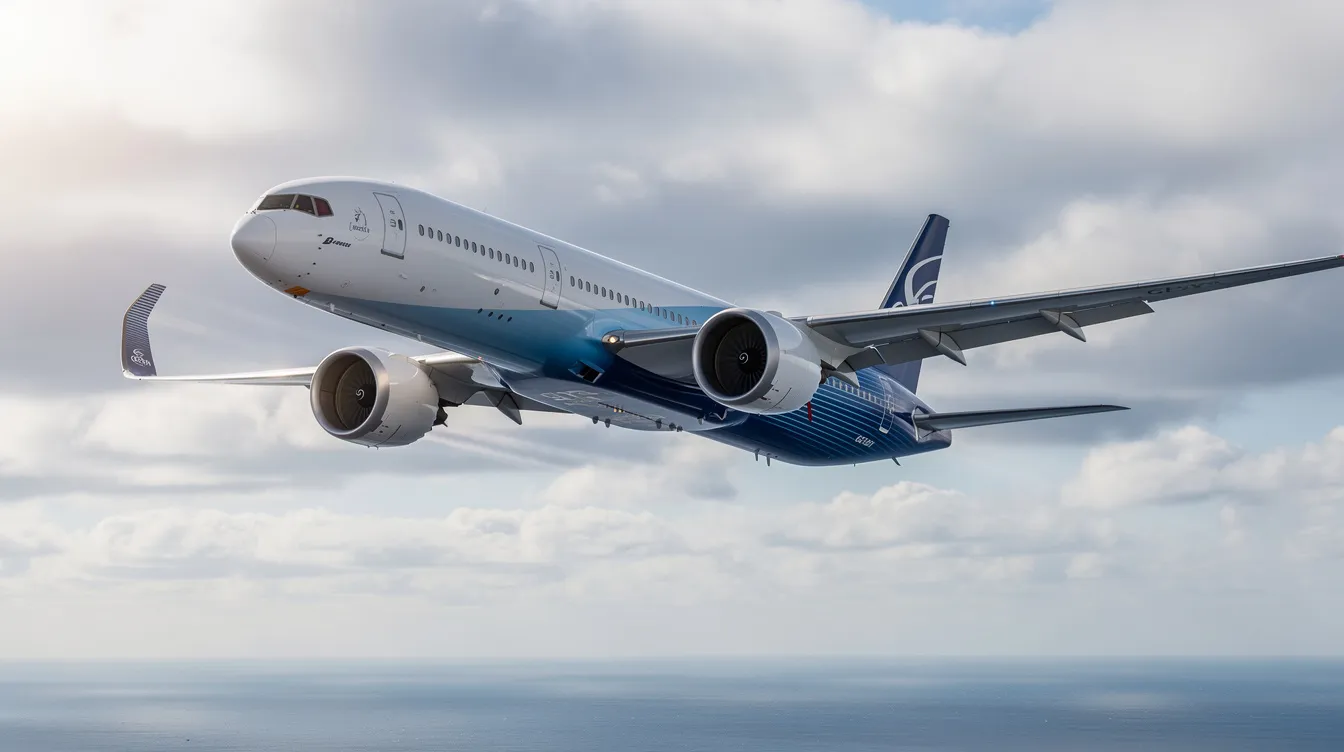
The Boeing 777X price has become shorthand for ambition in commercial aviation. With a catalog figure hovering around $442 million for the 777-9 variant, this high-end, long-range, luxury plane represents the pinnacle of twin-engine development—and the steepest entry ticket in Boeing’s current lineup. For airlines, it’s a calculated bet on fuel efficiency and premium capacity. For governments and ultra-high-net-worth individuals eyeing Boeing Business Jets derivatives, it’s a statement piece that rivals superyacht investments.
“The $400M+ list price is just the starting point. True transaction prices are far lower for airlines—but the all-in cost for a fully outfitted BBJ 777X can exceed $500 million.”
The distinction matters. Emirates or Qatar Airways negotiating a fleet of 200 frames operates in an entirely different financial universe than a head of state commissioning a single BBJ 777X with palace-like interiors. Yet both decisions are anchored on the same fundamental aircraft platform—one with an impressive range exceeding 11,000 nautical miles and capacity for 400+ passengers in airline configuration.
For frequent private flyers who rely on jet cards and charter access rather than direct ownership, resources like an in-depth guide to jet card costs and membership pricing provide useful benchmarks, and understanding the Boeing 777X price provides essential context. This flagship shapes what “long range” means across the industry, influences how airlines configure their premium cabins, and ultimately defines the upper boundary of what private travel can look like at scale.
Boeing 777X Price At A Glance
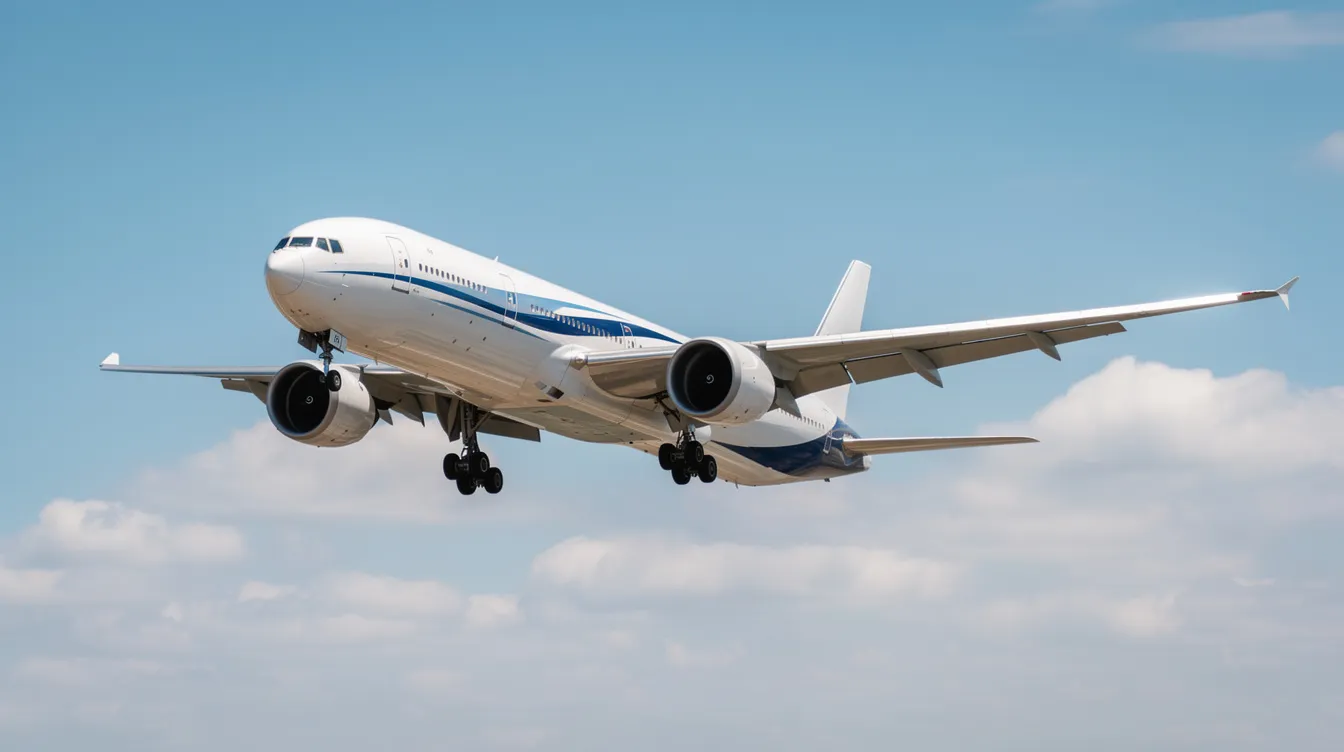
The Boeing 777X price anchors around publicly cited catalog figures that aviation analysts and media have relied upon since Boeing stopped publishing annual list prices around 2017–2018. The Boeing 777X family consists of several models, each offering distinct configurations and features tailored to different customer needs, including commercial, cargo, and VIP applications. Here’s what current guidance suggests for these models:
Boeing 777-9: Catalog price frequently cited at approximately $442 million, often rounded to $450 million in industry shorthand. This variant is the costliest in the 777X family and is positioned as the most expensive twin-engine aircraft ever built.
Boeing 777-8: Assumed slightly lower, with early guidance placing it in the low $410 million range.
BBJ 777-8: List price approximately $442.8 million for the green airframe.
BBJ 777-9: Commands roughly $453.6 million before any interior completion work.
Aviation media simplifies these figures into “a $400M+ airplane” narrative for both commercial and business jet messaging. This framing captures the essential truth: the 777X represents Boeing’s most expensive twin-engine production aircraft.
However, real deal values tell a different story. Airlines typically negotiate discounts of 30–50%, and sometimes up to 60%, off list prices through volume orders, campaign-specific incentives, and bundled service packages. Effective “street prices” for large fleet orders can land closer to $190–230 million per aircraft—less than half the headline figure.
List Price Versus Real Market Price
The gap between catalog and transaction pricing defines widebody economics. Using the Boeing 777-9 as the core example, that $442 million list price serves primarily as a negotiating baseline, not an expected payment.
Key factors driving actual pricing include:
Order volume: Airlines ordering dozens or hundreds of frames leverage significantly better per-unit economics.
Launch customer status: Lufthansa, as a launch customer, secured terms unavailable to later buyers.
Delivery timing: Aircraft scheduled for earlier or later slots carry different pricing implications.
Campaign packages: Engines, maintenance support, simulators, training, and spare parts pools all factor into the total deal structure.
As the company behind the 777X, Boeing strategically structures comprehensive deals and partnerships with suppliers to maximize value for both itself and its customers.
Avitas, a respected aviation valuation firm, modeled the 777-9’s discounted purchase price at approximately $200 million in 2018 dollars—a figure that remains directionally relevant as production ramps toward 2027 deliveries.
The bundled negotiating points matter enormously. GE Aerospace’s GE9X engines represent a massive portion of the aircraft’s value. Each engine costs roughly $41 to $42 million, making them the largest and most powerful jet engines ever built. Maintenance pools, financing terms, and support infrastructure transform the “price” into a comprehensive relationship rather than a simple transaction.
For governments and VVIP buyers of BBJ 777X frames, the calculus shifts. These customers often approach closer to list pricing for green aircraft due to customization premiums and limited production slots. Then they layer on tens to hundreds of millions in interiors—creating all-in envelopes that can exceed $500–600 million.
The Boeing 777X Family: Variants, Range, And Capability
Boeing launched the 777X program in November 2013 at the Dubai Airshow, securing 259 initial orders worth $95 billion in list value, underscoring the appeal of the largest private and corporate jets with global reach among airlines and VIP operators alike. The development promised to combine the efficiency of composite construction with the proven reliability of the 777 platform.
The program features two variants of the Boeing 777X:
777-8: Approximately 395 passengers in three-class configuration, with a range of 8,745 nautical miles (16,196 km) and a maximum takeoff weight of 775,000 pounds.
777-9: Larger capacity at roughly 426 passengers, with 7,285+ nautical miles (13,492 km) range, optimized for high-density hub routes.
Both variants share the GE9X powerplant—the largest commercial jet engine by thrust ever produced—and feature massive carbon-fiber composite wings with innovative folding wingtips. Each wing is estimated to cost around $50 million. The extended wingspan reaches 235 feet for cruise efficiency, folding down to 212 feet to fit standard Code E airport gates. This folding wingtip system is a commercial aviation first and directly enables the range capability that justifies the premium pricing.
The 777X seeks to replace the Boeing 747-8 and is aimed at the top of the widebody market in terms of cost and capacity, placing it alongside the world’s top luxury private jets in range, technology, and onboard experience—albeit at an airline scale. It is generally more expensive to acquire than its direct competitor, the Airbus A350-1000, but offers superior fuel efficiency and capacity over both the 777-300ER and the A350.
Flight testing began with the 777-9’s first flight on January 25, 2020, but the path to certification has been challenging. Delays from GE9X issues, folding wingtip certification, supply chain disruptions, and heightened Federal Aviation Administration scrutiny pushed the expected first delivery from 2020 to 2027.
The BBJ 777X line—both BBJ 777-8 and BBJ 777-9—uses the same platform but delivers as a green airframe for VIP completion. The 777-8F freighter variant adds cargo capability to the family, contributing to total orders that reached 619 aircraft from 12 customers as of late 2025.
Boeing 777X Price Breakdown: What Drives The Cost?
Understanding why the Boeing 777X commands such premium pricing requires examining the development program’s scope and complexity:
Composite wing development: The massive new carbon-composite wing with 3.5-meter folding wingtips represents an aerodynamic breakthrough requiring enormous R&D investment, with at least $2 billion allocated for this technology alone.
GE9X engine program: Developing and certifying the world’s largest commercial turbofan demanded billions in joint manufacturer investment.
Certification complexity: Post-737 MAX scrutiny intensified Federal Aviation Administration oversight, adding testing requirements and timeline extensions.
Manufacturing innovation: New production systems to replace the 747 and 777-300ER production lines required significant capital expenditure.
Boeing's total program development costs for the 777X have exceeded $20 billion, reflecting the scale and ambition behind this flagship aircraft.
Unit cost composition splits across several major categories:
Airframe structure and assembly.
GE9X engines (a significant portion of per-aircraft cost).
Avionics and flight deck systems.
Cabin infrastructure and systems.
Freighter-specific adaptations for the 777-8F.
Higher early production block costs typically push up launch pricing. Scale from mega-orders—such as Emirates’ 200+ unit commitment following Dubai Airshow announcements—drives per-frame savings that enable competitive campaign pricing for large customers.
What Does A Boeing Business Jet (BBJ) 777X Actually Cost?
The BBJ 777X represents a different financial proposition than its airline counterpart. While based on identical 777-8 and 777-9 platforms, these aircraft deliver as green (unfurnished) frames for VIP completion, with catalog values still anchored in the $400M+ range.
Green airframe pricing:
BBJ 777-8: Approximately $442.8 million list price, with 303 square meters of cabin area and 11,645 nautical miles (21,570 km) range.
BBJ 777-9: Approximately $453.6 million, with 343 square meters of cabin space and approximately 11,000 nautical miles (20,370 km) range.
The green airframe represents only the foundation. Completion costs for head-of-state or royal family interiors typically add:
Standard VVIP completion: $80–150 million for high-end finishes, security systems, and communications.
Extreme customization: Approaching $200 million for palace-like configurations with advanced security, military-grade communications, and bespoke design elements, often including dedicated rest areas such as luxury lounges or exclusive rest spaces for VIP passengers.
Completion houses, including Jet Aviation, Greenpoint Technologies, and Unique Aircraft Design, quote interior projects based on complexity, materials, and certification requirements.
Flagship interior feature: The BBJ 777X includes a Private Suite offering a private bedroom, bathroom with a massive rainfall and massage shower—the largest ever designed for a business jet—and a multifunctional 'Work&Balance' area that leverages the aircraft’s massive cabin width. Technologies from the Boeing 787 Dreamliner, such as larger windows, higher ceilings, and improved cabin humidity, contribute to a more comfortable flying experience.
Realistic total project envelope: A fully outfitted, ultra-long-range BBJ 777X for a royal family or government easily exceeds $500–600 million when accounting for interior completion, systems integration, certifications, and ancillary support infrastructure.
This investment rivals or surpasses large superyacht projects—explaining why outright ownership remains limited to sovereign wealth, heads of state, and the most capitalized private buyers who might otherwise consider private jet options around the $10 million mark for more measured aviation investments.
Operating And Ownership Costs: Beyond The Purchase Price
Acquisition represents only the entry cost. Operating a 777X-class aircraft in VIP or airline service demands ongoing financial commitment across multiple categories:
Fixed annual costs (largely independent of flight hours):
Flight crew salaries and training (multiple crews for 24/7 availability).
Hangar space at suitable facilities.
Insurance (hull and liability coverage for a $400M+ asset).
Regulatory compliance and airworthiness maintenance.
Estimated range: $3–5 million annually for fixed costs alone.
Variable operating costs:
Fuel for long-haul missions (sensitive to routing and sustainable aviation fuel premiums).
Ground handling and navigation fees.
Maintenance and unscheduled repairs.
Estimated range: $12,500 to $21,000 per flight hour for BBJ 777X charters, depending on distance, route complexity, and airport infrastructure.
For a lightly used head-of-state BBJ 777X flying perhaps 400–600 hours annually, fixed costs dominate the budget. Annual operating expenditures can reach tens of millions of dollars—excluding the opportunity cost of capital tied up in the asset and potential planning opportunities such as optimizing jet-related tax deductions for those using smaller aircraft or structured access programs.
Consider a typical ultra-long-haul mission profile: Dubai to Los Angeles or New York to Sydney nonstop. High fuel uplift requirements, premium ground handling, and positioning legs compound expenses. ESG-conscious operators facing sustainable aviation fuel price premiums add further cost sensitivity.
The economics clarify why even frequent travelers rarely justify 777X-scale ownership. For many, structured access such as a 50 Hour Jet Card and its pricing/value tradeoffs strikes a more rational balance between flexibility and cost. Right-sizing aircraft to actual mission requirements—using jet cards for appropriate cabin classes per trip and understanding how jet card pricing structures work—delivers far better capital efficiency.
How Much Does It Cost To Charter Or Operate A 777X Privately?
Charter availability for BBJ 777X aircraft remains extremely limited. Most units will serve governments or private operators without commercial charter programs. However, existing BBJ widebody benchmarks provide directional pricing:
BBJ widebody charter rates: Generally $12,500–$21,000 per flight hour for BBJ 777X, with costs calculated individually based on distance, route complexity, and airport infrastructure.
The BBJ 777X is designed for long-haul international charters, making it a suitable option for groups of executives and VIPs requiring large cabin space and nonstop range.
Annual charter equivalent: At 400 hours annually, charter costs could approach $5–8 million—before positioning, ground expenses, and catering—figures that can be usefully compared with the investment outlined in a 100-hour jet card cost guide.
Compared with outright ownership or long-term bespoke charter commitments, some travelers instead weigh 25 hour jet card programs and their cost structures as a lower-commitment way to secure similar aircraft classes.
Actual charter pricing depends heavily on:
Routing complexity (London–Singapore versus New York–Tokyo).
One-way versus round-trip arrangements.
Positioning leg requirements.
Interior configuration (dense entourage layout versus ultra-spacious presidential).
The practical reality: BBJ 777X charter represents an outlier product. Most travelers seeking premium cabins instead explore more accessible options like buying a seat on a private jet via shared and semi-private services. Most aircraft will never enter the commercial charter market, remaining in dedicated government or private service.
The strategic alternative: Instead of pursuing the rare and expensive 777X charter option, BlackJet members access super-mid, large-cabin, and ultra-long-range private jets—such as Gulfstream G650/700 or Bombardier Global 7500—through flexible products like the BlackJet 25+ Hour Jet Card that deliver similar nonstop city-pair capability. These aircraft match ranges like New York to Tokyo or London to Singapore at a fraction of the hourly cost, with significantly more flexible availability.
The 777X In The Boeing 777 Family Price Hierarchy
The Boeing 777 family has evolved through multiple generations, with pricing reflecting capability advances:
Model | Historical List Price Range | Key Capability |
|---|
777-200ER | ~$260–280 million | Original long-range variant |
777-300ER | ~$320–360 million | Extended capacity workhorse |
777 Freighter | ~$350 million | 224,000 lb payload capacity |
777-9 | ~$442 million | Next-generation flagship |
777-8 | ~$410 million | Ultra-long-range variant |
The 777X sits definitively at the top of this hierarchy as the most expensive twin-engine passenger jet in Boeing’s history, a useful reference point when comparing it with the broader private jet price landscape across categories and access models. It positions above the 787 family and comparable to (or exceeding) the now-ceased 747-8 in per-unit value despite smaller physical dimensions.
With its exceptional range, the 777X is capable of connecting cities around the world non-stop, underscoring its global reach and appeal for international travelers and VIPs.
The 777 Freighter’s reputation as a high-value cargo workhorse—with its substantial payload and long range—established the economic foundation that the 777X builds upon at an even steeper price point.
Airline strategy drives this premium positioning. Carriers deploy 777X to replace aging 777-300ERs and remaining 747s, seeking 12–13% fuel burn improvements through efficiency gains. Better seat-mile costs justify premium acquisition pricing over the aircraft’s operational life.
Who Is Actually Buying The Boeing 777X – And Why?
The 777X order book reflects a concentrated group of major international carriers committed to premium long-haul operations:
Key airline customers (approximate order sizes as of mid-2020s):
Emirates: Over 200 777X on order after Dubai Airshow increases—the program’s anchor customer.
Qatar Airways: Substantial fleet commitment for Doha hub expansion.
Lufthansa: Launch customer with initial 777-9 orders.
Etihad Airways: Fleet renewal for Abu Dhabi hub operations.
Cathay Pacific: Hong Kong hub requirements.
Singapore Airlines: Premium long-haul network optimization.
Air India: First major Indian 777X order marking fleet modernization.
China Airlines: Trans-Pacific route deployment.
Total historical orders: 619 aircraft from 12 customers.
Hub-and-spoke carriers prefer the 777X for trunk routes requiring high premium cabin demand—Dubai to Sydney, Doha to New York, Frankfurt to Shanghai—served efficiently with twin-engine economics rather than four-engine Airbus A380 complexity, just as discerning travelers evaluate leading private jet companies and access models when optimizing for long-haul flexibility and service.
The BBJ 777X customer base emerged more recently, and for ultra-large groups of VIPs evaluating similar capacity, private jet solutions for up to 50 passengers illustrate how chartered VIP airliners can mirror BBJ 777X-style travel without full ownership. Boeing announced the first BBJ 777-9 order in May 2023 from an undisclosed buyer widely believed to be a governmental client. Middle Eastern and Asian governments represent the primary expected demand source.
Economic rationale: High upfront cost offset by lower fuel burn, reduced maintenance versus four-engine aircraft, and right-sized capacity compared to the retiring A380 fleet.
Inside The $400M+ BBJ 777X: Ultra-Luxury Cabin Concepts
Completion houses have revealed ambitious interior concepts demonstrating what space and budget can create aboard a BBJ 777X:
Lufthansa Technik’s CelestialSTAR concept (BBJ 777-9):
Over 3,600 square feet of cabin space designed for royal families and heads of state.
Private Suite: Circular master bedroom with full rain and massage shower, “Work&Balance” office featuring hidden mechanisms.
Celestial Lounge: Lobby area with bar, serving as the aircraft’s social hub.
Conference & Dining: Majlis-inspired area for formal gatherings.
Executive cabin: Business-class equivalent for senior staff.
Entourage cabin: Premium economy configuration for extended travel parties.
Additional completion houses—including Greenpoint Technologies, Jet Aviation, and Unique Aircraft Design—have developed their own BBJ 777X interior visions. Common elements include multiple bedroom suites, spa-like bathrooms, dedicated office spaces, and lounge configurations rivaling luxury hotels.
These interiors explain why BBJ 777X projects command final prices far exceeding the green airframe:
Security system integration (often classified specification).
Military-grade communications suites.
Custom materials and finishes.
Certification complexity for novel installations.
Extended completion timelines (often 18–24 months).
The cabin volume—up to 343 square meters—enables palace-scale luxury unmatched elsewhere in business aviation.
Boeing 777X Price Versus Other Options For Long-Range Private Travel
For perspective, consider how 777X ownership compares with ultra-long-range business jets:
Factor | BBJ 777X | Gulfstream G700 | Bombardier Global 7500 |
|---|
Acquisition cost | $500M+ (complete) | $75–80M | $72–78M |
Passenger capacity | 50–100+ (VIP config) | 13–19 | 14–19 |
Range | 11,000+ nm | 7,500+ nm | 7,700+ nm |
Cabin space | 340+ sq meters | ~60 sq meters | ~60 sq meters |
Hourly operating cost | $30,000+ | $8,000–12,000 | $8,000–12,000 |
The 777X delivers palace-like space and entourage capacity. For most large groups, aircraft optimized for around 20 passengers offer a better balance of cost and comfort, and guides to the best private jet options for 20 passengers highlight how large-cabin business jets focus on 10–16 passengers in extreme comfort—more aligned with actual private travel requirements for most BlackJet clients.
Capital efficiency consideration: Tying up $500M+ in a single aircraft asset rarely makes financial sense outside sovereign wealth or government contexts. The opportunity cost alone—at even modest return expectations—exceeds the annual operating budget of a right-sized jet program.
BlackJet’s Jet Card model offers a strategic alternative: members book the appropriate aircraft class (super-mid, large cabin, ultra long range) per specific trip requirements rather than maintaining overcapacity, similar in spirit to other top jet card programs for frequent flyers. Carbon-neutral flights, certified safety standards, and technology-driven booking tools deliver the experience without the capital commitment.
Safety, Technology, And Sustainability: How They Influence 777X Value
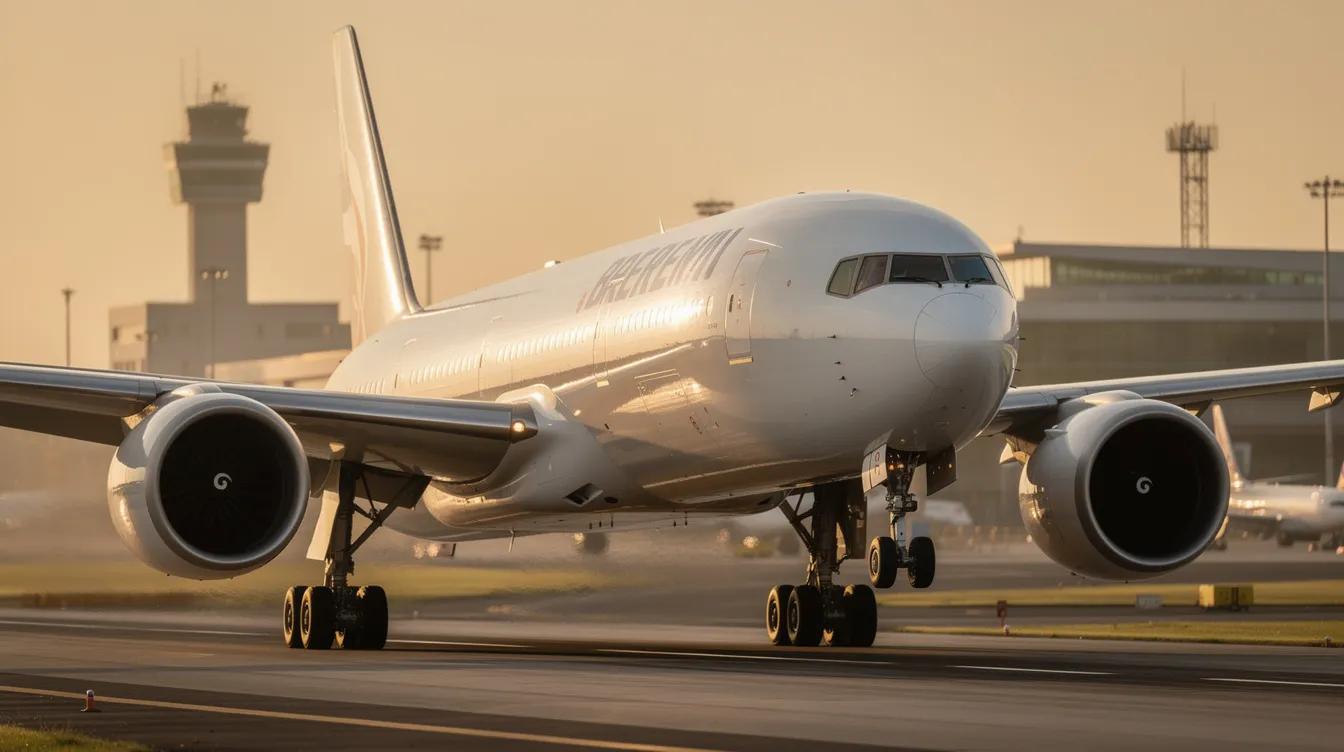
The 777X incorporates advanced systems that contribute to both its value proposition and its price point:
Safety and technology:
Fly-by-wire flight controls (new for the 777 family).
The modern flight deck is derived from the 787 architecture.
Enhanced flight-envelope protections were developed under heightened post-737 MAX certification scrutiny.
Type inspection authorization requirements are adding testing rigor.
Efficiency and sustainability:
GE9X engines, developed and provided by GE Aerospace, deliver approximately 10% better fuel efficiency than GE90 predecessors.
Composite wing construction contributes to a 12–13% overall fuel burn reduction versus the 777-300ER.
Sustainable aviation fuel (SAF) compatibility for operators under regulatory and ESG pressure.
Reduced emissions profile compared to four-engine alternatives.
These elements justify premium pricing through lifecycle cost reduction and regulatory compliance. Airlines facing carbon targets and passenger expectations for sustainable operations find value in the efficiency investments embedded in the 777X platform.
BlackJet integrates similar pillars across its offering: rigorous safety audits, top-tier operator certifications, and carbon-neutral flights by default. While operating smaller aircraft than the 777X, the commitment to safety and sustainability remains consistent with what premium travelers expect.
FAQs About Boeing 777X Price And Private Access
What is the official list price of the Boeing 777X today?
Boeing ceased publishing annual catalog prices around 2017–2018. Current estimates based on historical guidance and industry analysis place the 777-9 at approximately $442 million and the 777-8 around $410 million. BBJ variants list slightly higher: BBJ 777-8 at $442.8 million and BBJ 777-9 at $453.6 million for green airframes.
Why are real Boeing 777X prices kept confidential?
Transaction prices remain confidential to preserve competitive positioning. Airlines negotiate discounts of 30–50% based on order volume, delivery timing, and bundled services. Revealing actual deal values would disadvantage both Boeing and customers in future negotiations.
How much more does a BBJ 777X cost than an airline 777X?
The green airframe prices are similar, but total project costs diverge dramatically. While airlines take delivery of line-fit aircraft, BBJ buyers add $80–200 million in interior completion, security systems, and communications equipment—pushing total investment to $500–600 million or beyond.
When will the first 777X be delivered, and does that affect price?
Boeing targets 2027 for the first delivery following multiple delays from GE9X issues, certification challenges, and supply chain constraints. Extended development timelines have added billions in program costs, but production efficiencies expected at scale should stabilize pricing once deliveries begin.
Can I charter a BBJ 777X for private use, and what would it cost?
Charter availability will be extremely limited. Most BBJ 777X aircraft will serve governments or private operators without commercial programs. Estimated charter rates—based on comparable BBJ widebodies—suggest $12,500–$21,000 per flight hour, with costs calculated individually depending on distance and route complexity.
Is it more cost-effective to use a jet card than to own a large jet like a 777X?
For virtually all private travelers, yes. Jet card programs like BlackJet provide access to right-sized aircraft—from super-mid to ultra-long-range—without the capital commitment, fixed costs, and operational complexity of owning a $500M+ asset, and can be thoughtfully compared with major providers like NetJets and their jet card pricing. Members pay only for hours flown, with carbon-neutral operations included.
Bottom Line: Is The Boeing 777X Price Worth It – And What’s The Smarter Move For Private Flyers?
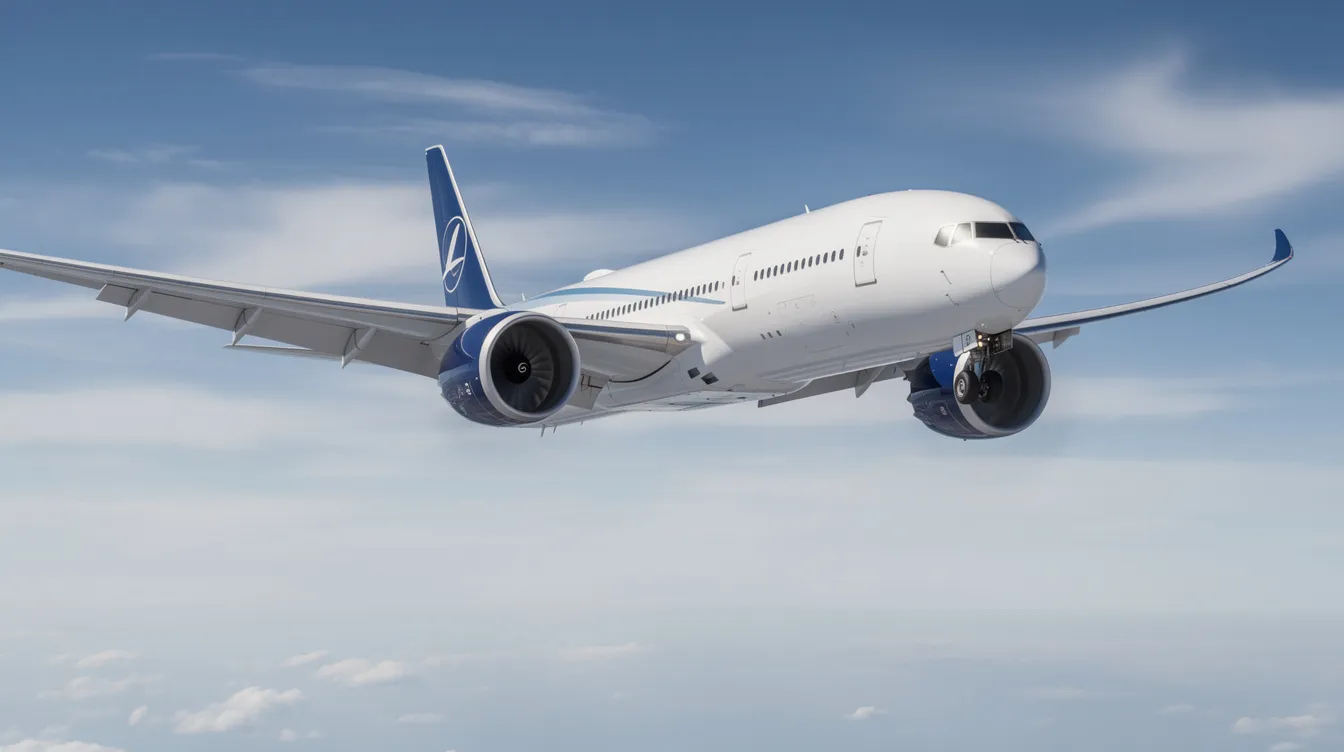
The Boeing 777X represents an extraordinary engineering achievement commanding an extraordinary price. The 777-9’s $442 million list price, heavy discounting for airline campaigns, and BBJ total project costs exceeding $500 million define the upper boundary of twin-engine commercial aviation.
Demand persists despite delays. Emirates, Qatar Airways, Lufthansa, Singapore Airlines, and other major carriers maintain commitments totaling over 600 aircraft. Governments and royal families continue to specify BBJ 777X for head-of-state transport. The aircraft delivers unmatched capability for those who require 400+ passenger capacity or palace-scale private configurations.
For discerning private travelers, however, the economics rarely justify ownership at this scale. The capital commitment, operating complexity, and opportunity costs exceed what even frequent intercontinental travel requires.
BlackJet’s Jet Card membership offers a more strategic path: carbon-neutral flights aboard certified, right-sized aircraft with technology-driven booking tools. Ultra-long-range jets like the Gulfstream G700 deliver New York to Tokyo or London to Singapore nonstop—matching 777X range capability for a fraction of the hourly cost.
Explore how BlackJet can deliver 777X-level range and comfort through a curated fleet of long-range private jets—without the $400M price tag. Stay updated with the latest news on the Boeing 777X and private aviation developments to make informed decisions about your travel options.
Conclusion
While the Boeing 777X stands as a pinnacle of aviation innovation and luxury, its price and scale place it beyond the practical reach of most private travelers. Instead, BlackJet offers an exclusive gateway to private jet access that combines premier safety, sustainability, and technology with unmatched convenience. By choosing BlackJet, travelers unlock effortless access to a diverse fleet of private jets tailored to their journey’s demands—delivering the power and prestige of long-range travel without the burdens of ownership, and often at price points comparable to the most affordable private jet and entry-level access options.
Discover more about BlackJet’s Jet Card programs and how they can elevate your travel experience at www.blackjet.com. Embrace a smarter, more flexible way to fly private, with the sophistication and service that define modern luxury aviation.


 Sign up with google
 Sign up with Apple