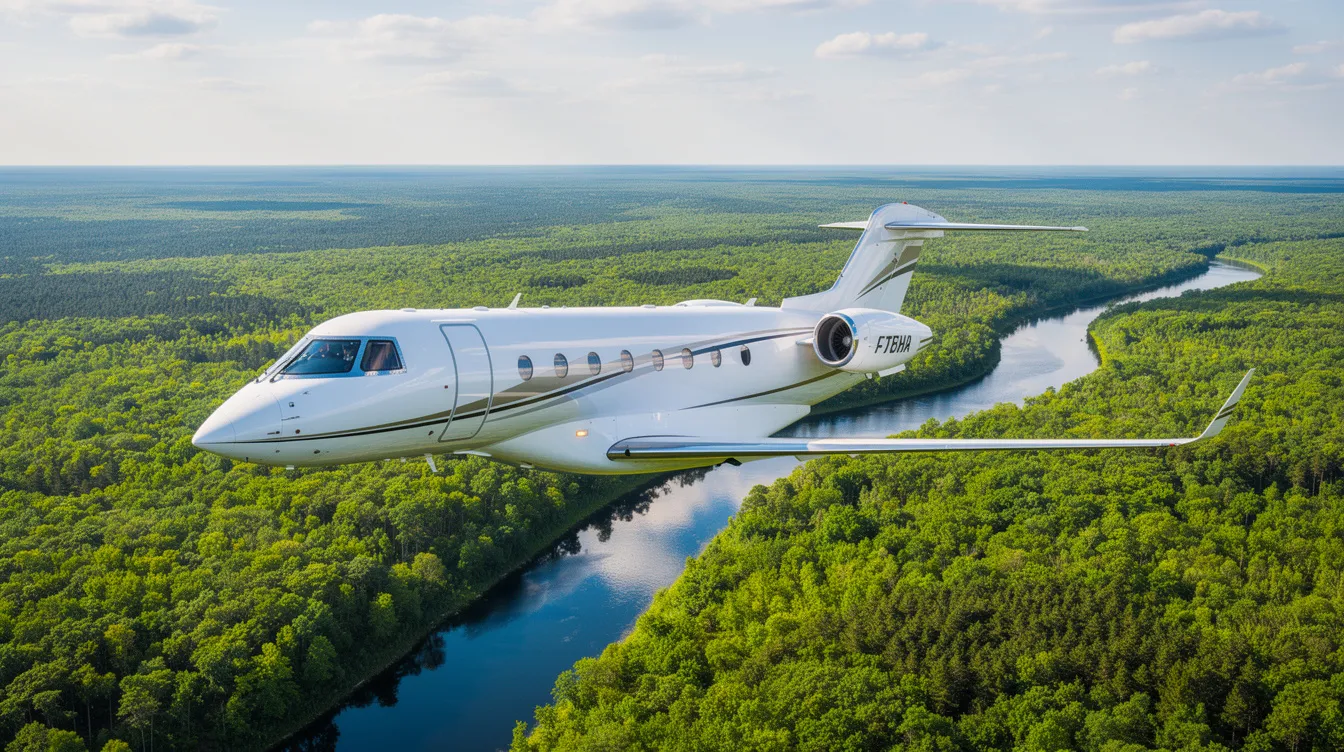
Business aircraft charter is no longer reserved for Fortune 100 boards. It has become a precise operational tool for founders, dealmakers, and executives who measure success in hours recovered, not miles flown. This guide breaks down how it works, what it costs, and why BlackJet's Jet Card model delivers the predictability and safety that serious business travelers demand.
Why Business Aircraft Charter Is a Strategic Advantage, Not Just a Luxury
Consider a single data point: a New York to Chicago round trip. Commercial first class takes roughly eight to ten hours door-to-door once you factor in airport arrival windows, security, boarding, taxiing, and ground transport on both ends. A private jet charter compresses that same journey to approximately four hours total, returning you to your desk the same evening.
That gap is not about comfort. It is about what you do with the hours you reclaim.
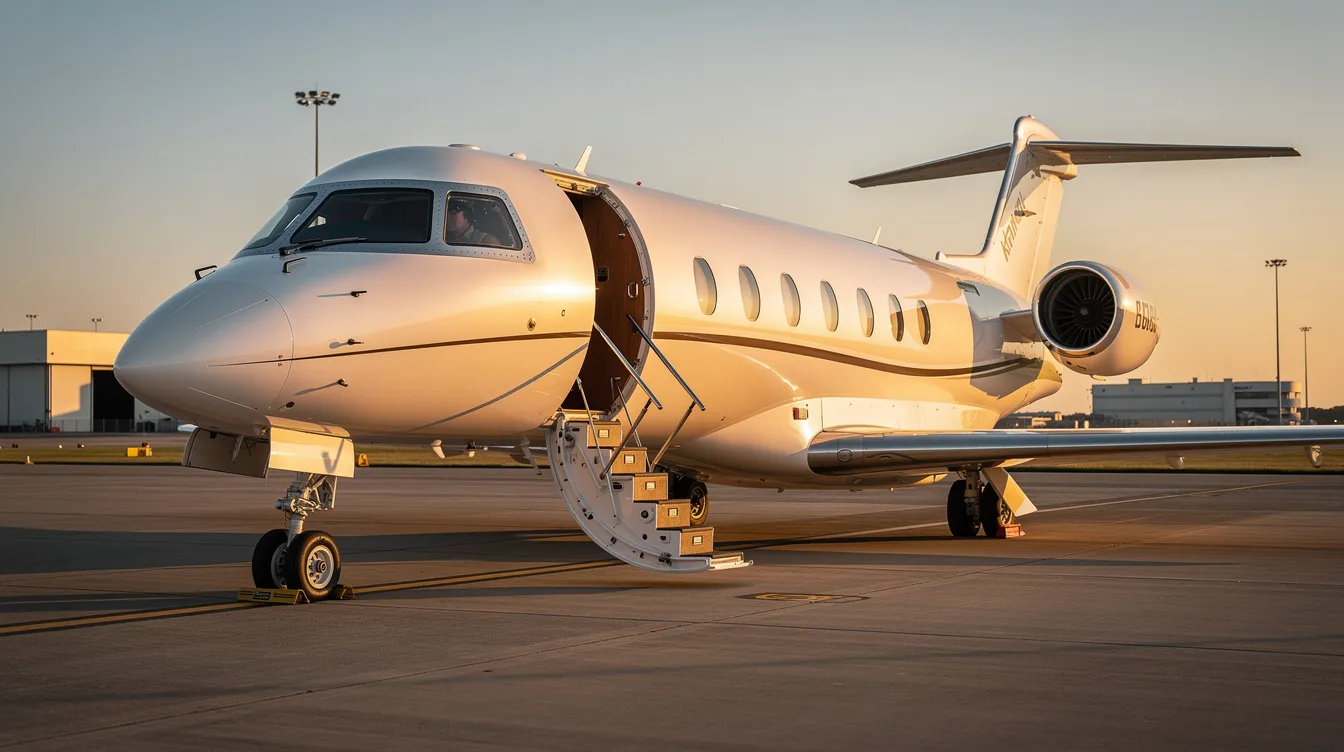
Productivity in the air. Business aircraft charters increase in-flight productivity with spacious seating and reliable Wi-Fi, turning a cabin into a mobile boardroom where sensitive strategy discussions happen without eavesdroppers two rows back.
Privacy and confidentiality. Charters ensure privacy and security for confidential corporate discussions. You depart from private FBO terminals, not crowded commercial concourses.
Flexible scheduling. Business aircraft charters offer flexible scheduling around the client’s travel needs. Your departure time bends to your calendar, not the other way around.
Airport access. Private jet charters provide access to over 10,000 airports globally, including thousands of regional fields that commercial carriers never serve. Charters allow for direct routing to thousands of regional airports, reducing ground transit time on both ends.
Multi-city days. Charters can facilitate visits to multiple cities in a single day. A CEO can move from Boston to New York to Washington, D.C. between breakfast and dinner without checking into a hotel.
Reduced fatigue. Chartering a business aircraft can reduce travel-related fatigue and improve wellness, keeping executives sharp for the meetings that matter.
Competitive edge. Business aircraft charter provides competitive advantages over commercial flights by enabling time savings that bypass commercial airport delays entirely.
BlackJet specializes in exactly this kind of business-focused private jet travel, combining Jet Card membership with on-demand charter access, rigorous safety oversight, and carbon-neutral operations.
How Business Aircraft Charter Works: From On‑Demand to Jet Cards
At its core, business aircraft charter means paying for exclusive use of a private aircraft without owning it. The market offers two primary paths:
On-demand private jet charter. You contact an air charter broker or operator, request a quote for a specific trip, and pay per flight. This model suits most travelers who fly privately fewer than 25 hours per year. Pricing fluctuates with demand, aircraft availability, and positioning. An indirect air carrier or charter company arranges the flight on a certified operator's certificate.
Jet Card programs. You prepay a block of hours, typically 25 or 50, at a fixed or capped hourly rate. Private jet charters allow for customized routes and schedules under this structure, and you gain guaranteed availability on short notice. For many executives, understanding overall Jet Card membership pricing is the key to deciding whether this structure makes sense versus an ad hoc charter. Chartering provides flexibility to choose aircraft for each trip rather than being locked to a single tail number.
Who benefits from each model:
A consultant flying two to three private flights per quarter may find ad hoc air charter services sufficient.
A law firm partner logging three to four trips per month, covering domestic flights and occasional international travel, gains cost predictability and priority access through a Jet Card membership.
BlackJet's membership approach lets clients purchase hours across multiple cabin classes, lock in rates, and book through a 24/7 digital platform backed by aviation experts.
Business Use Cases: When Chartering a Private Jet Makes Sense
Private charter is not about luxury for its own sake. It is a response to specific operational pressures where commercial travel falls short.
M&A roadshows. A private equity team flies from New York to Boston to Philadelphia in a single day, presenting to three investor groups and returning home that evening. Chartering can potentially lower total trip costs by consolidating travel efforts that would otherwise require hotels, per diems, and lost workdays.
Real estate site inspections. A development firm visits four prospective sites across the Southeast before a Friday bid deadline. The ability to land at small regional airports close to each site eliminates hours of driving.
Emergency plant visits. Energy and utility companies use business aircraft charters for urgent trips or rapidly changing business scenarios, dispatching engineering teams to a damaged facility within hours of an incident.
Multi-city sales tours. A BlackJet client recently flew from Dallas to Nashville for a morning meeting, continued to Atlanta for an afternoon investor pitch, and returned to Dallas by evening, all in a midsize jet. Without a private aircraft, that itinerary would have required two hotel nights and three separate airline bookings.
Confidential transactions. Private jet travel supports confidentiality for sensitive deals or product launches. Private FBO lounges and closed cabins keep discussions away from terminal crowds, critical for biotech IP, litigation strategy, or pre-announcement M&A activity.
Optimal chartering scenarios involve multiple travelers and carefully considered mission requirements. When three or four executives share a charter flight, the per-person cost often approaches or beats commercial business class on comparable routes while delivering more flexibility dramatically, underscoring when chartering a private jet is worth it.
Aircraft Options for Business Charter: Matching Jet to Mission
There are approximately 15,000 business jets available for charter worldwide, and travelers can access over 20,000 aircraft globally when including turboprops and specialty platforms. Private jets include light, midsize, and large-cabin categories, each suited to different missions. Choosing the right aircraft starts with selecting the right plane for the mission by matching range, passenger count, and runway requirements to the trip at hand, informed by a clear view of private jet sizes and categories.
Turboprops (e.g., Pilatus PC-12, King Air 350): 6–9 seats, range up to ~1,000 nautical miles. Ideal for short regional hops and small airports with shorter runways. Turboprops are among the most economical aircraft for charter, making them practical for sub-two-hour missions.
Very light jets and light jets (e.g., Phenom 100, Citation CJ3): 4–8 seats, range ~1,200–1,800 nm. Suited for regional to short cross-country legs of two to three hours.
Midsize jets (e.g., Citation XLS, Hawker 800XP): 7–9 seats, range ~2,500–3,000 nm. Coast-to-coast U.S. capability with stand-up cabins and solid luggage capacity.
Super-midsize jets (e.g., Challenger 350, Gulfstream G280): 8–10 seats, range ~3,500–4,000+ nm. Transcontinental reach with larger cabins and higher cruise speeds.
Heavy and ultra-long-range jets (e.g., Gulfstream G450, G650, Bombardier Global): 10–16 seats. Ultra-long-range aircraft in this class can fly over 7,000 nautical miles, enabling nonstop international flights such as New York to London or Los Angeles to Tokyo, and they also form the core of the best private jet options for 20 passengers on higher-capacity missions.
VIP airliners: converted airline-class aircraft that can accommodate 18 to 200 passengers for large group charters. VIP airliner charters start around $16,000 per hour and are central to charter planning for 100-passenger groups and other large-scale missions.
BlackJet clients can view aircraft options and select from multiple choices per trip, with advisors guiding selection based on group size, luggage, range, cabin preferences, and each client’s travel needs. Aircraft manufacturers continue to expand the fleet with more fuel-efficient models, giving the market growing depth across every category and ushering in the latest generation of top aircraft that emphasize performance and sustainability.
Safety Oversight and Operational Standards in Private Aviation
Safety oversight is the non-negotiable foundation of any reputable jet charter service, and it should be the first question any corporate travel manager asks before approving a provider, especially when comparing standards across many charter companies in the market.
BlackJet works exclusively with operators meeting or exceeding the following standards:
FAA Part 135 certification. Every operator on BlackJet's network holds a valid Part 135 certificate, the regulatory baseline governing non-scheduled commercial operations in the U.S. Passengers should confirm the charter operator's FAA certification before booking any flight.
Third-party safety audits. Safety ratings should include independent certifications from organizations like ARGUS or Wyvern. ARGUS rates operators up to Platinum Elite based on maintenance records, incident history, and safety management. Wyvern's Wingman and Wingman PRO designations evaluate risk management and operational history.
IS-BAO compliance. The International Standard for Business Aviation Operations adds a structured Safety Management System framework across three progressive stages.
Crew requirements. Jet aircraft require two qualified pilots with appropriate type ratings, minimum flight hours, and recurrent simulator training at least annually.
Pre-flight safety reports. Before each charter flight, BlackJet shares the aircraft model, tail number, aircraft age, operator credentials, crew experience, and insurance coverage with the client. Full transparency, not luxury gloss.
Insurance verification. Hull and liability insurance levels are reviewed and confirmed for every BlackJet Certified flight.
Cost of Business Aircraft Charter: What Drives the Price
Understanding cost in private aviation requires looking beyond a single number. Hourly rates range from $2,000 to over $14,000, depending on aircraft type, and several variables push the final invoice up or down.
Hourly rate by aircraft type. Turboprops and light jets typically fall in the $2,500–$5,500 per hour range. Midsize jets run approximately $5,500–$8,500. Super-midsize and heavy jets range from $8,500 to $14,000+. VIP airliner charters start around $16,000 per hour for large-group missions.
Trip-level pricing. A typical one-way domestic charter costs between $10,000 and $55,000. International flights can exceed $100,000 depending on distance. For example, a one-way New York to Miami flight in a midsize jet typically falls in the $18,000–$28,000 range, consistent with benchmarks you’d see on a broader private jet price list.
Key cost drivers. Aircraft type and age, flight time, positioning or empty legs, peak-day surcharges (holidays, major events), international handling and overflight fees, fuel price fluctuations, and minimum segment billing all contribute to the final cost, especially when you charter a smaller private plane for regional missions.
Jet Card predictability. BlackJet's Jet Card structure converts variable charter pricing into fixed hourly rates, eliminating fuel surcharges and most ancillary fees. Understanding Jet Card cost per hour helps translate these fixed rates into apples-to-apples comparisons with ad-hoc charter. Entry-level 25-hour cards for light jets generally start around $150,000–$250,000, while midsize programs run $200,000–$350,000 for 25 hours.
Transparency matters. Comparing quotes is essential to ensure pricing transparency and that the quote includes all potential costs, from Federal Excise Tax to overnight crew charges.
Chartering avoids long-term ownership costs and commitments. When measured against the total ownership costs of purchasing, staffing, insuring, and maintaining a private aircraft, charter and Jet Card economics are compelling for anyone flying under 200 hours annually, particularly when you understand how Jet Card pricing is structured.
Jet Card Membership vs. Ad‑Hoc Private Jet Charter
Cost predictability. Ad-hoc private jet charter services price each trip at current market rates, which can swing 20–40% based on demand and positioning. A Jet Card locks your hourly rate for 12–24 months.
Guaranteed availability. BlackJet Jet Card members receive guaranteed aircraft access with as little as 24–48 hours' notice. An ad hoc charter has no such guarantee on peak travel days.
Cabin class flexibility. BlackJet's Jet Card programs let you fly a light jet one week and a super-midsize the next without separate contracts, matching the aircraft to the mission each time.
No capital outlay. Unlike fractional ownership, which requires buying a share of a specific aircraft (often 1/16th to 1/8th) with a multi-year commitment, Jet Cards carry no asset risk, no depreciation, and no aircraft management burden.
Break-even analysis. Industry data suggests that 25–50 flight hours per year is the threshold where Jet Card programs become more cost-efficient than booking individual charters, particularly for midsize or larger jets, making it essential to compare the best Jet Cards for frequent flyers against your actual flight profile.
Accounting simplicity. Jet Card hours are a prepaid operating expense. No balance sheet asset, no residual value risk, no maintenance reserves to fund, especially attractive when starting with a 25-hour Jet Card to test real-world utilization.
Versus whole ownership. Whole aircraft ownership is practical only when flying 250+ hours annually and requiring a highly customized operation. For most business travelers, it introduces unnecessary ownership costs and complexity, which is why many compare it to a 50-hour Jet Card structure before committing capital.
Booking a Business Aircraft Charter with BlackJet: Step‑by‑Step
Booking a private jet involves specific logistical steps and safety considerations, but BlackJet streamlines the process into four clear stages.
Step 1: Share your itinerary. To book, share your itinerary with departure and passenger details, including preferred departure time, destinations, group size, and luggage requirements. You can submit via the BlackJet app, website, or a direct call to your dedicated advisor.
Step 2: Review aircraft options. BlackJet presents curated aircraft options matching your mission, with pricing, cabin specs, and operator safety credentials for each.
Step 3: Confirm pricing and sign. Confirm your reservation via a transparent quote and DocuSign. No hidden fees, no ambiguity, particularly if you are drawing from a BlackJet 25+ Hour Jet Card with fixed hourly rates.
Step 4: Receive your flight brief. Once confirmed, you receive a detailed brief: FBO details, crew names, tail number, timing, catering selections, and ground transport arrangements, plus real-time support on the day of travel. Many first-time flyers are surprised that even more economical private aircraft options receive the same level of planning and support.
Charter flights can be arranged in as little as four hours for urgent same-day departures within the U.S. Learn more about the booking process.
Leveraging Empty Leg Flights for Business Travel Savings
What they are. Empty leg flights are repositioning segments flown without passengers, typically before or after a booked charter. They exist because an aircraft must return to base or reposition for its next mission.
Savings potential. Empty leg flights can reduce charter costs by 25% to 75%, making a flight that would normally cost $25,000 available for $6,000–$18,000 and often ranking among the cheapest private jet travel strategies when your schedule is flexible.
Trade-offs. Schedules are fixed, routing is predetermined, and last-minute cancellations by the primary charter can alter or cancel the empty leg. This is a tactical tool, not a core strategy for time-critical travel.
How BlackJet helps. BlackJet's platform and advisors flag suitable empty legs for members, particularly on heavy business routes such as New York to South Florida, Los Angeles to Las Vegas, and Chicago to Teterboro.
Real-world example. A BlackJet member with a last-minute client meeting in Miami spotted an available empty leg on a super-midsize jet repositioning from New York that same afternoon. The saving: over 60% off the standard one-way charter rate.
Sustainability and Carbon‑Neutral Private Jet Travel
Private aviation carries a higher per-passenger carbon footprint than commercial airline travel. BlackJet addresses this directly rather than deflecting it.
Carbon-neutral flights. BlackJet automatically offsets every charter flight at no extra cost to the client. Offsets support independently certified projects such as reforestation, renewable energy, and carbon capture, verified through programs like Gold Standard and Verra.
Sustainable Aviation Fuel. SAF can reduce lifecycle CO₂ emissions by up to approximately 80% compared to conventional jet fuel. BlackJet supports SAF use where available at key hubs including Los Angeles, London, and Amsterdam. According to an Airbus Corporate Jets survey, 89% of senior executives expect SAF use to increase over the next five years, especially as newer best-in-class aircraft are certified for higher SAF blends.
Fleet efficiency. Newer aircraft in the global network burn less fuel per nautical mile. BlackJet prioritizes operators with modern, fuel-efficient fleets, similar to those highlighted in analyses of Flexjet Jet Card aircraft and costs.
Sustainability as standard. Carbon neutrality is not an upsell. It is a core pillar of the BlackJet experience, reflecting the expectation that premium service and environmental responsibility are no longer in tension.
Technology, Support, and the BlackJet Travel Experience
Digital platform. Search and compare aircraft options, request quotes, manage Jet Card balances, and review upcoming trips from desktop or mobile. Advanced technology powers real-time availability and transparent pricing.
24/7 flight support. Itinerary changes, weather diversions, and last-minute passenger updates are handled by experienced aviation professionals around the clock, delivering personalized service at every stage of the journey.
Door-to-door coordination. BlackJet arranges car services, catering tailored to dietary requirements, pet travel, and secure ground transfers. Every detail is managed so clients focus on the meeting ahead, not logistics.
Global consistency. The same service standards apply whether you fly from New York to Toronto, Paris to Dubai, or Los Angeles to Honolulu. BlackJet's network of vetted partner operators ensures a consistent charter experience across destinations worldwide, which becomes especially valuable for organizations leveraging a 100-hour Jet Card commitment for year-round travel.
Frequently Asked Questions About Business Aircraft Charter
FAQ: Key Questions About Business Aircraft Charter with BlackJet
How fast can BlackJet arrange a private jet? Private jet travel can be arranged in as little as four hours for domestic missions. For international travel, 24–48 hours is typical to secure overflight permits and customs handling.
Is private jet travel safe for my executive team? Yes. BlackJet flies exclusively with operators holding FAA Part 135 certification and third-party safety ratings from ARGUS, Wyvern, or IS-BAO. Two qualified pilots are assigned to every jet, and pre-flight safety briefs are shared before departure.
Can I fly internationally on a business charter? Absolutely. BlackJet arranges international flights across the world, from transatlantic crossings (New York to London is among the most requested routes) to intra-European and Asia-Pacific itineraries. The company's global network covers destinations on six continents.
How far in advance should I book? Jet Card members enjoy guaranteed access with as little as 24–48 hours' notice. For peak travel periods or ultra long range missions, booking five to seven days ahead is recommended.
How does a BlackJet Jet Card work vs. standard private jet charter services? A Jet Card is a prepaid block of flight hours at a fixed rate, providing access to a curated fleet without ownership, asset risk, or variable pricing. Standard ad hoc charter prices each trip individually at market rates. The Jet Card simplifies budgeting, guarantees availability, and rewards consistent travelers with rate stability.
What aircraft types can I access? BlackJet provides access to the full spectrum of business aviation, from turboprops and light jets for short-haul domestic trips to heavy and ultra-long-range jets for intercontinental missions. There are approximately 15,000 business jets available for charter, and BlackJet's network spans the carriers and operators that meet its certified safety standards.
Conclusion: Elevate Your Business Travel with BlackJet's Business Aircraft Charter
Business aircraft charter with BlackJet transcends traditional luxury to become a strategic asset for modern leaders who value time, flexibility, and safety. By leveraging BlackJet's Jet Card programs and extensive network of certified operators, executives and entrepreneurs gain unparalleled access to a global fleet tailored to every mission—from short regional hops to intercontinental journeys.
The future of business travel is defined by efficiency, privacy, and sustainability. BlackJet’s commitment to carbon-neutral flights, advanced safety protocols, and cutting-edge technology ensures that every trip not only meets but exceeds the expectations of discerning travelers. Whether optimizing multi-city tours, responding to urgent operational needs, or securing confidential meetings in the air, business aircraft charter with BlackJet delivers a seamless, productive, and responsible travel experience.
Discover how BlackJet can reshape your approach to private aviation—unlocking new possibilities for your business and personal travel. Explore premium jet access and join our Jet Card program to experience the definitive advantage in strategic private aviation.


 Sign up with google
 Sign up with Apple