Premium air travel is no longer just about comfort. For executives and high-net-worth travelers, choosing between the world's best business class airlines and private jet access is a strategic decision that shapes productivity, privacy, and how effectively time gets used. This guide breaks down both options-from flagship airline seats to BlackJet's Jet Card model-so you can match the right premium cabin to every mission.
Executive overview: business class airlines vs private jet access
The premium cabin has become a strategic tool. Executives treat long-haul flights as extensions of the office, where time saved, privacy gained, and stress reduced translate directly into business outcomes. The question is no longer whether to fly premium, it's which form of premium air travel delivers the most value per trip, especially as more top private jet companies compete alongside flagship airlines and providers like BlackJet.
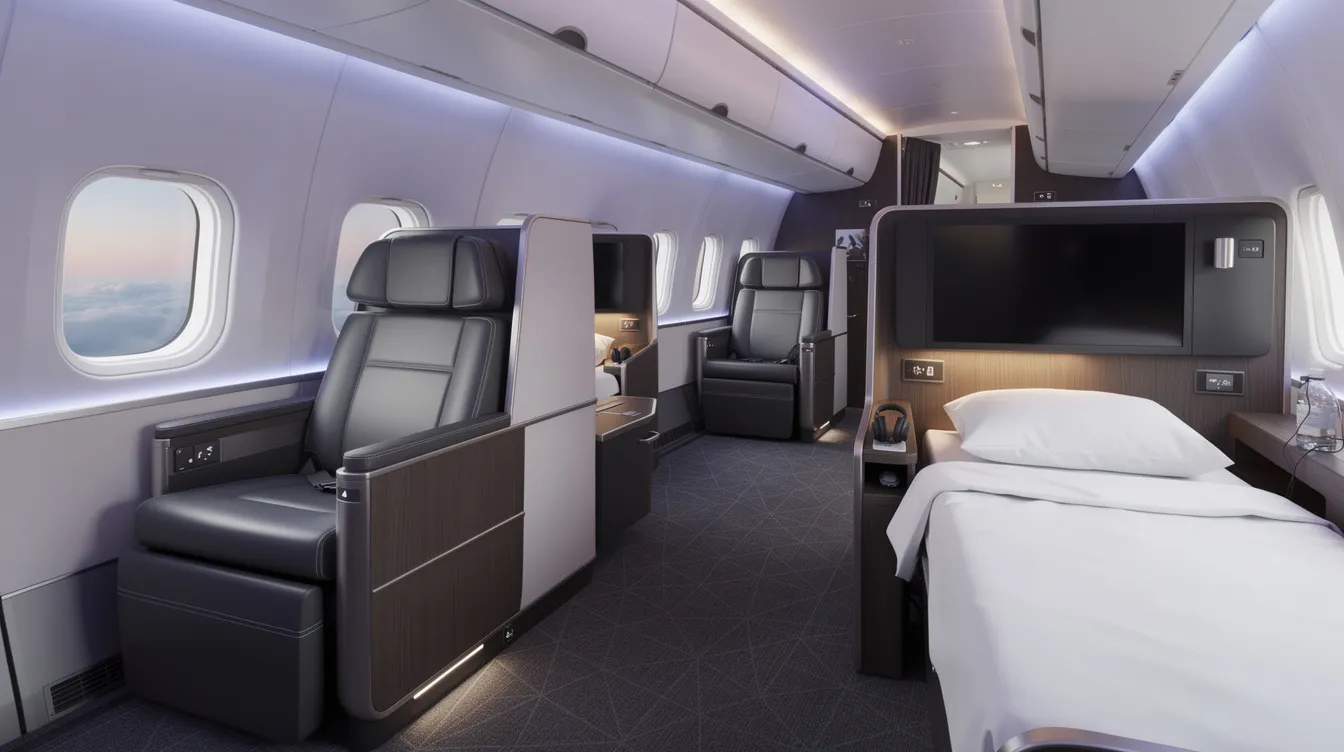
Modern business class seats on flagship carriers now feature flat beds, closing doors, and curated dining. The business class cabin on a top-tier airline offers a genuine premium experience with lie-flat seats, dedicated lounges, and priority boarding. But even the finest commercial premium seats operate on fixed schedules, through crowded airports, with shared cabins.
Private jet cabins flip that equation entirely. The whole flight is yours-departure times bend to your schedule, not the other way around. Consider a London–New York overnight: on British Airways, you'd arrive at Heathrow roughly 90 minutes early, navigate security and immigration, board with the cabin, and land after 7–8 hours of shared flight time. On a BlackJet 25-hour Jet Card, you'd arrive at a private terminal 30 minutes before departure, walk directly to the aircraft, and save 2–3 hours of total travel time. The cost difference is significant-business class runs roughly US$4,000–$6,000 one-way versus $50,000+ for a private aircraft—but when group travel, tight schedules, or confidential work enter the picture, the calculus shifts, much like evaluating 15 million dollar private jet features and ownership against flexible access models.
This article is written from BlackJet's perspective as a private aviation provider. Our goal isn't to dismiss business class airlines-many offer remarkable flight experience-but to help you understand when each option makes sense and when combining both creates the smartest travel strategy.
How business class seats evolved into "mini-suites in the sky."
Twenty-five years ago, business class meant a wider recliner, a better meal, and more legroom. Today,y it means a private suite with a closing door, a fully flat bed, and technology that rivals a home office. The transformation happened in distinct phases.
Late 1990s–early 2000s: British Airways introduced one of the first lie-flat business class beds with its Club World product around 2000. Lufthansa followed shortly after and even offered all-business class services using Privatair jets from 2002. These were revolutionary at the time-flat beds on a commercial airline felt like first class to most travelers.
Mid-2000s: Herringbone and reverse herringbone layouts emerged, giving every passenger direct aisle access. Cathay Pacific and Air Canada were early adopters. This solved a persistent pain point: climbing over sleeping neighbors.
2010s and beyond: Singapore Airlines operated the longest all-business class flights until 2013, setting a benchmark for premium service and comfort with the widest business class seats at 30 inches, unmatched in the industry. Qatar Airways launched all-business class flights in 2014 between Doha and London, raising the bar further with its Qsuite innovation. British Airways offers an all-business class service between New York and London City Airport, while Saudia launched an all-business class flight in 2016 between Jeddah and Riyadh. These niche services cater to travelers seeking exclusivity and efficiency beyond standard business class offerings. By 2019, British Airways followed with its Club Suite on the A350-1000. Doors became the new baseline for any carrier claiming to offer the best business class.
What's striking is that premium economy in 2026 now offers seating pitch, recline, and more room-that would have qualified as business class two decades ago. Meanwhile, current flagship business class products rival or exceed older international first and business class offerings in both hard product and service. Long-haul international business class is often superior to domestic business class, delivering a distinctly elevated experience.
The hard product has largely peaked. Most top-tier carriers now offer fully flat beds, direct aisle access, and some form of privacy partition. Incremental gains focus on technology (wi fi speed, USB-C ports, wireless charging), cabin ambience (mood lighting, noise insulation), and connectivity. The seat itself is no longer the primary differentiator-how the entire journey is managed around it is what separates good from exceptional.
What defines the best business class seat today?
Declaring any single seat the best seat is subjective, but the industry has converged on clear benchmarks that separate current-generation products from older ones.
Core hard-product features worth evaluating:
Fully flat bed, at least 78–80 inches (198–203 cm) in length
Direct aisle access from every seat, typically a 1-2-1 layout
Privacy: closing doors or high sidewalls that eliminate sightlines from neighbors
Large IFE screen (17–18.5 inches), high definition, with streaming options
Multiple charging options: AC outlet, USB-A, USB-C
Ample personal storage: side consoles, cubbies, wardrobe space for laptops and carry-ons
Reliable, fast wi fi throughout the whole flight
Trade-offs to watch:
Not every improvement comes without compromise. A business class suite with a full door sometimes sacrifices width or shoulder space compared to an open-concept pod that feels more spacious but offers less visual privacy. Wider seats aren't always longer-taller passengers should prioritize bed length, while others may value mattress cushioning or extra space at the hips.
Some travelers prize personal space and silence above all else. Others need reliable connectivity and power outlets because they plan to work the entire flight. Understanding your own priorities matters more than chasing any single airline's marketing.
For context, older angle-flat class seats and cradle recliners-still found on some carriers' secondary routes-offer a noticeably inferior sleep experience and far less privacy. If you're booking a long-haul route and the aircraft has an older cabin, you may be paying premium fares for a product that doesn't deliver a premium experience.
Flagship business class airlines and their signature seats
Here is a tour of specific business class airline products passengers actually book in 2024–2026. Each represents a different design philosophy, and each has strengths worth understanding before your next trip.
British Airways – Club Suite (A350-1000, 777-300ER, 787-10) The Club Suite uses a 1-2-1 layout with closing doors, direct aisle access from every seat, a bed length of approximately 198 cm (79 inches), and an 18.5-inch IFE screen. Storage is generous, including a side console, mirror, and vanity area. All 777-300ERs are now equipped with Club Suite; rollout continues across the fleet. Note that some older 777-200s still carry the previous Yin-Yang configuration, so check your aircraft before booking. British Airways also operates an all-business class service between New York and London City Airport, catering to business travelers seeking a streamlined, exclusive experience on this premium route.
Air France – Safran Versa (select 777-300ERs and A350s) Air France's newest business class suite uses Safran's Versa seat with full-facing door suites. The Parisian design cues are distinctive, spacious suites, especially at bulkhead seats, with dining aligned to French gastronomy and partnerships with renowned Michelin-starred chefs. On long-haul flights to North America, South America, and Asia, the soft product is among the most refined in the sky, featuring curated menus paired with premium wines.
Air Canada – Reverse Herringbone and Super Diamond (787s, 777s) Air Canada has upgraded many of its long-haul fleet with reverse herringbone seats and Super Diamond-style seats featuring doors or high walls on newer 787s and 777s. Strong IFE and improving wi fi make these competitive for routes to Europe and Asia-Pacific.
Etihad Airways – Business Studio (A380, 787) and newer A350 suites. Etihad's dovetail layout interlocks seats for greater privacy, with dine-on-demand service and premium bedding. On the A380, travelers get access to The Lobbylounge, a shared social space mid-cabin. The Middle East carrier's approach blends personal space with hospitality.
Cathay Pacific – Reverse Herringbone and Aria Suites (777s) Cathay Pacific's newer Aria Suites on 777s feature improved doors, enhanced soundproofing, and strong bedding. The Hong Kong–centric service style emphasizes consistency and quiet professionalism, with a business class lounge network that's among Asia's best.
Singapore Airlines offers the widest business class seats at 30 inches, providing exceptional personal space on its Airbus A350 and Boeing 777 fleets. This width, combined with fully flat beds, makes for a notably comfortable long-haul experience. Singapore Airlines also operated the longest all-business class flights until 2013, demonstrating its longstanding commitment to premium service and innovation.
Qatar Airways remains the World's Best Business Class Airline in 2025, renowned for its Qsuite featuring fully enclosed private suites with sliding doors and flexible seating arrangements. Qatar Airways also pioneered all-business class flights starting in 2014 between Doha and London, setting new standards. Its dining on demand service offers restaurant-quality meals curated by world-class chefs, paired with premium beverages. The Al Mourjan lounge in Doha complements the onboard experience with luxury and exclusivity.
Turkish Airlines has been recognized with the Best Business Class Onboard Catering award, reflecting its commitment to exceptional dining. Similarly, EVA Air delights travelers with globally inspired cuisine and premium wine selections, ensuring a refined culinary experience in the air.
Also worth mentioning: ANA (All Nippon Airways, also referred to by some as Nippon Airways in shorthand) offers "The Room," a business class product that feels closer to first class seats in dimensions. Emirates' A380 business class includes the onboard bar and lounge. Japan Airlines, Turkish Airlines, and La Compagnie (a boutique all-business airline) each bring distinct strengths, and many airlines continue iterating on their business class products. Other airlines without door-equipped suites risk falling behind as traveler expectations rise.
Beyond the seat: lounges, service, and onboard experience
The business class seat is only part of the journey. What happens before and after boarding often defines whether a trip feels seamless or stressful.
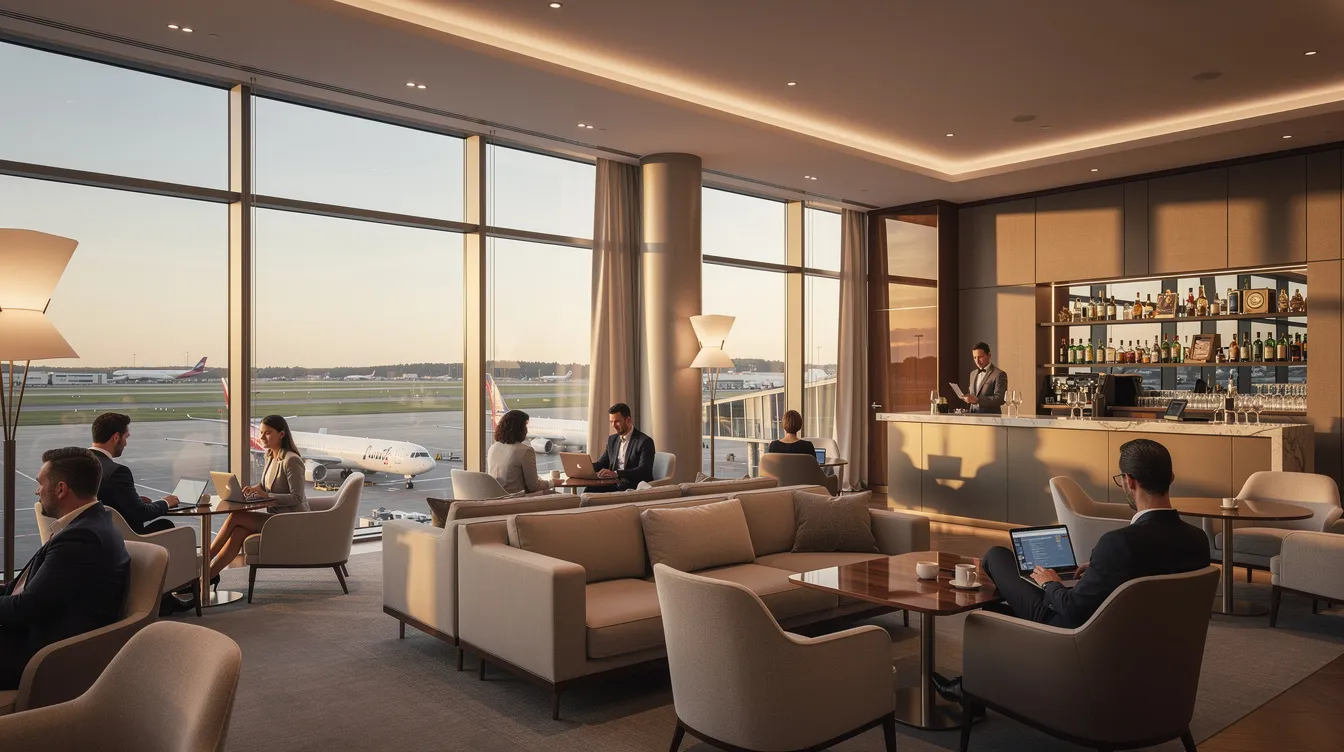
Lounge access and ground experience: Most business class tickets include lounge access, quiet work zones, showers, premium dining, and bar service. Air France's lounges at CDG and British Airways' Galleries lounges at Heathrow are concrete examples of pre-flight environments designed for productivity and relaxation. Some airlines blur the line with first-class cabins: Qatar's Al Mourjan Business Lounge in Doha rivals many first-class lounges in quality, with fine dining and private,e quiet rooms.
In-flight soft product: The soft product-everything beyond the physical seat-has become a key differentiator. Flagship carriers now offer curated multi-course menus with dine-on-demand flexibility, amenity kits from luxury brands, bedding comparable to boutique hotels (mattress pads, duvets, full-size pillows), and even sleepwear on ultra-long haul routes. Board service has evolved from a trolley to restaurant-style plating. Noise-cancelling headphones and circadian-timed cabin lighting are increasingly standard. The exceptional service on leading carriers makes even a 14-hour flight manageable.
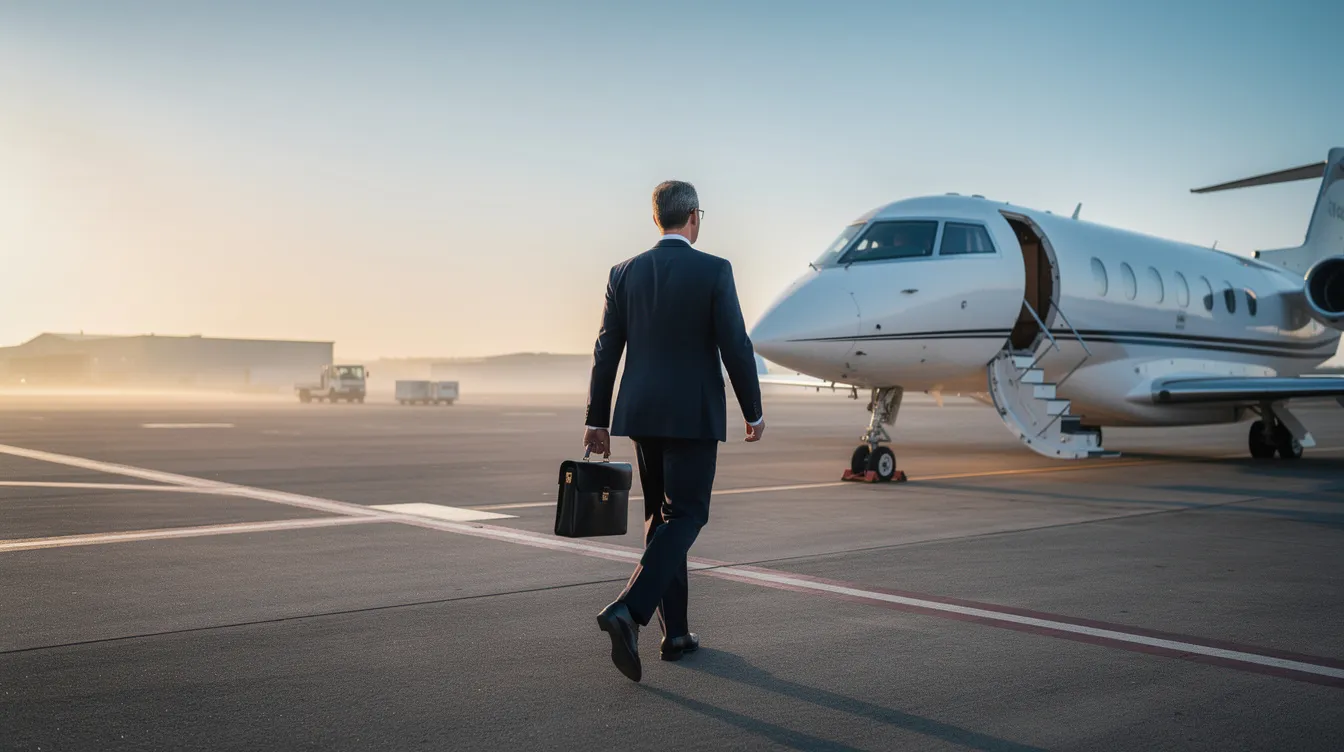
Contrast with private aviation ground experience: Even the finest airline lounge still requires arriving 90+ minutes early, standing in check-in lines, clearing security, and waiting at a gate. BlackJet's model uses private FBO terminals: arrive 20–30 minutes before departure, drive to the ramp, and walk directly to your aircraft. No lines, no shared terminals, no priority boarding queue-because you board the moment you arrive.
Business class vs first class vs private jet cabins
This is where many travelers wrestle with their options. Here's how the three tiers compare in practice.
Modern international first class is ultra-niche. Think Air France La Première or Emirates Suites: fully enclosed rooms, caviar service, private first class cabins, dedicated lounges, chauffeur transfers, and, in some cases, onboard showers. These products are extraordinary, but they exist on limited routes, specific aircraft, and come with first-class fares that can exceed $15,000–$25,000 one-way.
Business class offers a premium travel experience between economy and ultra-luxury First Class. Carriers have discontinued or restricted first class because demand is stronger at the business tier, and more seats are sold at sustainable price points. The improvements in business class (doors, privacy, bedding, dining) have narrowed the gap so much that paying first class fares often yields only marginal additional comfort.
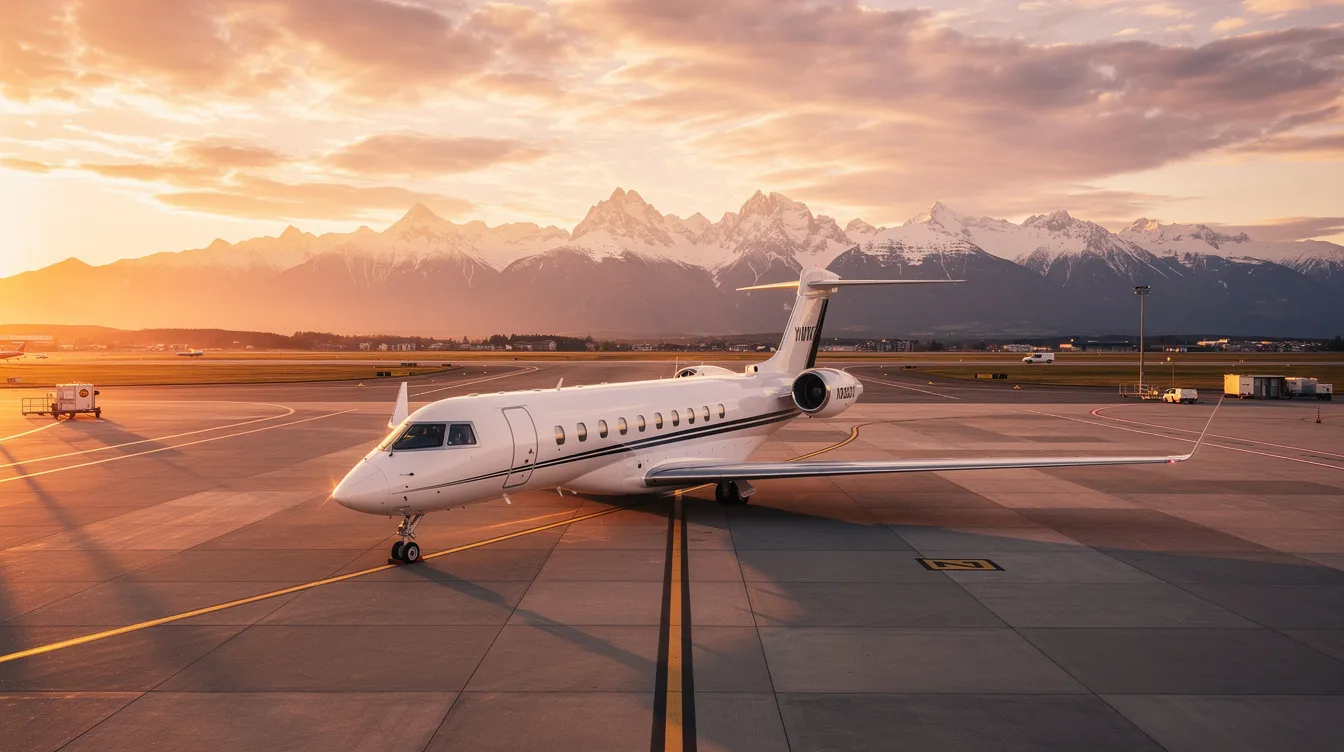
A private jet cabin is a different category entirely. The entire aircraft is reserved for you and your party. There are no seatmates outside your group, no fixed departure times, and no connecting flights. You choose the aircraft category-light jet for regional hops, midsize for longer range, large cabin for intercontinental, drawing on a clear understanding of private jet sizes and their ideal missions, and the schedule builds around you, not around an airline's hub operations.
Two scenarios illustrate the difference:
New York–London overnight: Business class gets you there comfortably but on someone else's timetable. A private jet lets you depart after a late board meeting, sleep in a fully private cabin, and arrive on your terms—similar to the intercontinental capabilities highlighted in 20 million dollar private jet options.
LA–Aspen weekend ski trip: Business class requires connecting through a hub, possibly arriving midday. A private jet flies directly into Aspen's regional airfield, saving hours and eliminating ground transfers.
When business class airlines make sense-and when private aviation wins
This isn't an either-or decision. It's about matching the right tool to each trip.
Business class makes sense when:
A direct, high-quality route exists between your origin and destination on a flagship carrier
You're traveling solo or with one colleague, and per-seat cost matters
You value loyalty programs, alliance status, and mileage accrual
Your schedule is flexible enough to work around fixed departure times
The route is well-served by premium seats and reliable service
Pain points persist even in the best business class:
Fixed departure and arrival times with limited recourse during delays
Airport time: check in, security, immigration, gate transit-often 2+ hours each way
Limited privacy despite a business class seat door; shared cabin noise
Large airports are often far from your actual destination
Private aviation wins when:
Concrete use case: An executive flying Toronto → Chicago → Dallas → Vancouver in 36 hours. Piecing together business class airline sectors means specific schedules, possible overnight stays, expensive ground transfers, and wasted hours in terminals. A BlackJet 25+ Hour Jet Card member selects the aircraft class, departs when needed, avoids commercial hubs, and handles all legs efficiently. For a trip like that, private doesn't just make sense-it's the only model that works.
Inside BlackJet's Jet Card model: an alternative to business class fares
BlackJet is a business-class airline. We're a private aviation provider offering premium private jet cards and Jet Card programs as an alternative to repeatedly purchasing premium cabin tickets on commercial carriers.
How it works:
Jet Cards come in blocks, typically 25-hour or 50-hour programs-prepaid across multiple aircraft categories
Transparent hourly rates with minimal additional fees; fixed pricing reduces exposure to market fluctuations
Members book via app or web: select cabin class (light jet, midsize, super-midsize, large cabin), specify airports, confirm schedule-often in hours rather than days
The entire private cabin is one "fare" per flight; no need to pay for multiple premium seats when traveling with a team, and understanding jet card cost and membership pricing helps you compare this model against repeat business class spending.
Cost comparison example: Suppose a frequent flyer takes 12 transatlantic business class trips annually at roughly $10,000 roundtrip each-$120,000 per year. A 50-hour Jet Card in a large cabin category might run $400,000, but selective use for the highest-value missions (tight schedules, group travel, routes with no direct service) means reallocating only a portion of that business class spend—similar to how some travelers weigh 10 million dollar private jet options against access models like cards and charter. When you factor in time saved, hotels avoided, productivity gained, and exclusive deals available through membership, the marginal value of each Jet Card hour can exceed the best price you'd find on any commercial airline—especially once you understand jet card pricing structures and benefits.
The real advantage isn't just about price. It's about converting travel from something you endure into something that actively supports your goals. You fly on your terms, from airports closer to where you actually need to be, with no shared cabin and no compromises.
Safety, certification, and reliability in premium air travel
At a certain level of wealth, safety and operational consistency matter more than any amenity kit or champagne label, especially for those considering the most expensive private jet option,s where expectations for security and reliability are absolute.
Commercial airline safety: Major business class airlines-British Airways, Air France, Air Canada, Etihad Airways, Cathay Pacific, Singapore Airlines-operate under stringent national aviation authorities (CAA, DGAC, GCAA, CAD) with regular audits, mandatory maintenance schedules, crew training requirements, and safety management systems.
BlackJet's safety approach: We source exclusively from vetted operator networks. Partner operators hold third-party safety ratings, including ARG/US Platinum (the highest rating, assessing pilot experience, incident history, maintenance, and insurance) and Wyvern Wingman certifications (providing ongoing, data-driven safety audits and continuous monitoring). IS-BAO compliance-the International Standard for Business Aviation Operations-ensures operators meet globally recognized minimums for safety, maintenance, and crew training.
Reliability during disruptions: When weather hits,s or airspace closes, commercial airlines are bound by hub schedules and slot constraints, and delays cascade. Private aviation operators can reroute around storms, swap aircraft when needed, and avoid congested hubs entirely. That agility is a safety and productivity advantage that no commercial business class ticket can replicate.
Sustainability: from efficient business class fleets to carbon-neutral private flights
Climate scrutiny of premium cabins and private jets is growing, and responsible travelers deserve transparent answers.
Airlines like Air France and La Compagnie have invested in newer aircraft-Airbus A321neo, A350-that deliver up to 25–30% lower fuel burn per seat compared to previous-generation widebodies. That's meaningful progress. However, the extra space per passenger in a business class cabin means emissions per traveler remain higher than in the economy, even on the most efficient aircraft.
BlackJet addresses this directly: every flight is carbon neutral as standard, through verified offset programs at no additional cost to our members. Where available, we participate in Sustainable Aviation Fuel (SAF) initiatives. Route optimization-eliminating unnecessary repositioning legs-further reduces our environmental footprint, aligning our operations with the sustainability features found on the best private jets in the world.
For travelers who care about aligning their premium experience with sustainability goals: private aviation's total emissions footprint is small relative to commercial aviation overall, and choosing a provider that bakes carbon neutrality into its pricing model means your travel decisions don't have to compromise on either comfort or conscience.
Technology, booking tools, and real-time support
Traditional airline booking channels-websites, apps, call centers-work well for straightforward itineraries. Most carriers offer seat maps so you can choose specific class seats, upgrade bidding features, and loyalty program portals. For a single business class ticket on a known route, the process is efficient enough.
Private aviation demands more. For travelers exploring alternatives to business class, learning how to buy a seat on a private jet is a helpful starting point. BlackJet's digital platform provides:
Mobile and web booking with instant pricing estimates by aircraft class
Real-time Jet Card balance tracking, making it easy to compare with competitors once you understand Flexjet jet card costs and options
Itinerary updates pushed to your device.
Catering customization, ground transport coordination, and FBO selection-all in one interface
Behind the app sits a 24/7 flight operations team. Last-minute schedule shifts, weather reroutes, crew adjustments-these are handled proactively, not reactively. The technology doesn't just facilitate booking; it turns premium travel from stressful planning into a fully managed service.
How to decide: key questions before you book your next premium trip
Before selecting your next premium cabin, run through this checklist:
Is this trip single-city or multi-city? A direct route with a strong business class product? Airline makes sense. Multiple cities in compressed time? Private jet wins.
What is a lost workday worth? If an extra 4–5 hours in airports costs you a client meeting or a deal, the math changes quickly.
How many travelers are in your party? Solo or duo, business class is cost-effective. Four to six executives? Splitting a private aircraft approaches parity while adding total privacy.
How much privacy is truly required? Would a lie-flat business class seat on Cathay Pacific or British Airways suffice, or does this schedule require private jet flexibility via a Jet Card?
What's the airport logistics reality? Major hubs are often 60–90 minutes from city centers. Smaller private fields can be 15 minutes away.
Three scenarios:
Business class is clearly optimal: Solo executive flying London–Singapore on Singapore Airlines. Direct route, exceptional service, strong lounge, competitive price.
A private jet is clearly superior: A team of five flying to investor meetings across three European cities in 48 hours. No direct commercial options connect all three without overnight stays. For conferences or roadshows with dozens of attendees, 50-passenger private jet charters can move the entire group efficiently.
Hybrid strategy: Use business class for regularly served routes to maintain airline status and accrue miles. Use a BlackJet Jet Card for mission-critical legs, late departures, remote airports, and group travel. Over a year, reallocating even 20% of business class spend to private access can yield disproportionate value.
FAQ: business class airlines and BlackJet private jet access
Is private jet travel always more expensive than business class?
Not necessarily. For a solo traveler on a standard route, business class is almost always cheaper per person. But add group travel (four or more), tight schedules that would require hotel stays, or routes without direct service, and the total cost per person on a private jet can approach—or even undercut—multiple business class tickets. Aircraft type, distance, and whether repositioning fees apply all affect the final price.
How does business class lounge access compare with the FBO experience?
Airline and alliance lounges offer premium amenities—food, showers, quiet zones—but they're shared with hundreds of other travelers and subject to peak-hour crowding. FBOs used in private aviation offer exclusive terminals, curbside vehicle access, rapid boarding, and near-total privacy with minimal security delays.
What safety certifications apply to BlackJet's partner operators?
BlackJet vets operators against third-party audit programs, including ARG/US (Platinum rating), Wyvern (Wingman and Wingman PRO), and IS-BAO. Operators must hold FAA Part 135 certification (or equivalent national authority), maintain robust safety management systems, and meet stringent pilot training and maintenance standards.
How does BlackJet handle carbon-neutral flights?
Emissions are calculated using standard methodologies—fuel burn per hour per aircraft type, load factor, and route distance. We purchase verified carbon credits (through forestry, renewables, and reforestation projects) and include the cost in our standard rates. Members don't pay extra for carbon neutrality—it’s built into the program.
How quickly can someone join a Jet Card program and take their first trip?
Most members are onboarded within days: sign the membership agreement, make the initial deposit, gain access to the booking platform, and schedule a flight. Depending on aircraft availability and route, first flights can happen on very short notice, sometimes within 24–48 hours.
Conclusion
The real decision isn't which business class seat to book. It's the travel model that best supports the way you work and live.
The world's best business class seats, on airlines like Air France, British Airways, Air Canada, Etihad Airways, and CathayPacific, offer remarkable comfort, premium service, and genuine productivity in the air. But private jet access delivers something those airlines structurally cannot: control over your schedule, complete privacy, and hours returned to your day that no flat bed or closing door can replicate.
Review your last 12 months of premium travel spend. Consider the hours lost in terminals, the connections that added stress, and the meetings that were scheduled around airline timetables instead of your priorities. Then ask whether reallocating a portion of that spend to a BlackJet Jet Card for your most strategic trips could reshape the equation.
Discover how BlackJet can complement your favorite business class airlines and redefine the way you move between the world's financial and leisure capitals by exploring our Jet Card programs and learning more about private jet charter benefits.


 Sign up with google
 Sign up with Apple