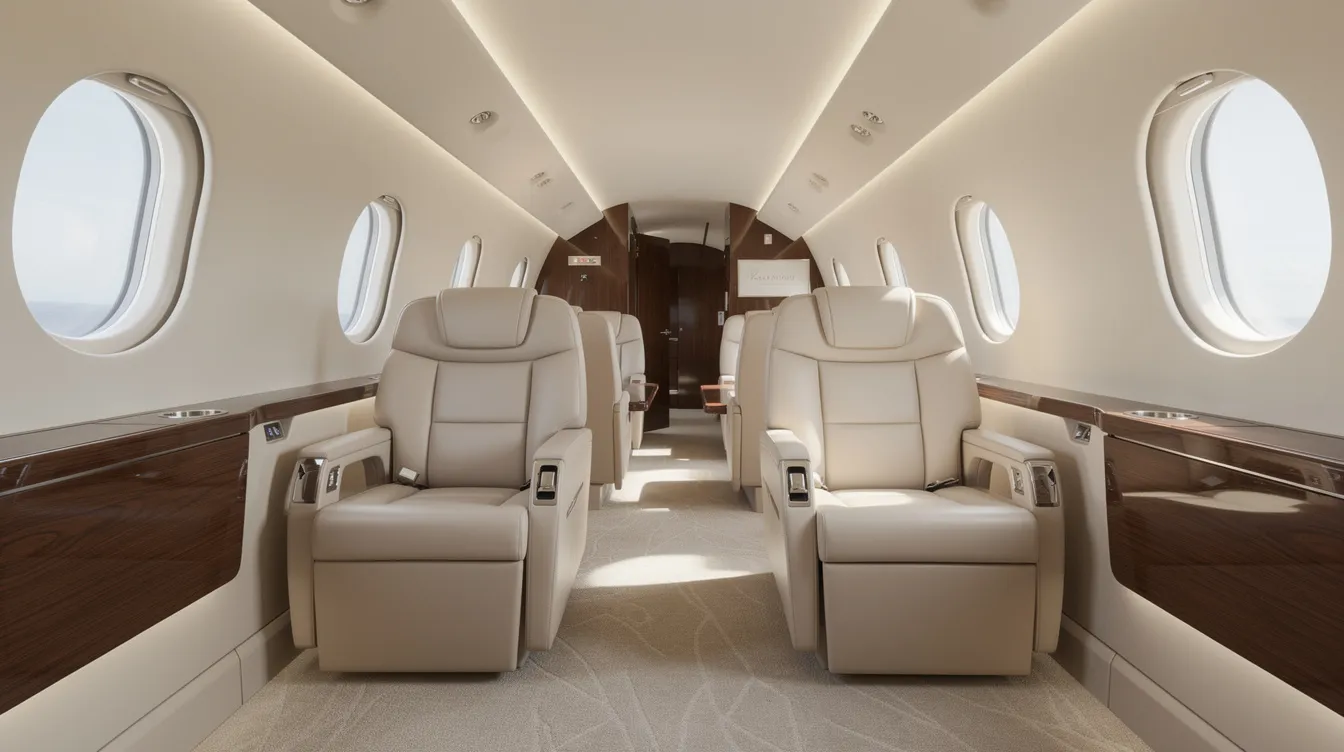
From a small aircraft company started decades ago on the Kansas plains to a global force in business aviation, the Cessna Aircraft Company has shaped how executives, entrepreneurs, and discerning travelers move through the skies.
Why Cessna Still Matters to Today's Private Jet Traveler
Cessna is an American aircraft manufacturer based in Wichita, Kansas, and its influence on the private aviation industry is difficult to overstate. Now operating under Textron Aviation, the Cessna brand remains one of the most recognized among private aircraft brands worldwide. Cessna has delivered over 200,000 aircraft—a staggering figure that spans single-engine piston aircraft, Caravan turboprops, and a full lineup of Citation jets designed for business aviation missions.
For the executive weighing a cessna citation against commercial first class, or even exploring how to buy a seat on a private jet, the calculus is straightforward: skip the hub transfers, bypass two-hour security queues, and fly direct from secondary airports minutes from your home or office. A BlackJet Jet Card member boarding a Citation CJ3+ at Teterboro for a two-hour hop to Chicago saves roughly four hours door-to-door compared to a commercial itinerary through O'Hare.
Cessna offers a range of aircraft including single-engine pistons and business jets, and that broad range is precisely why we at BlackJet regularly source Citation jets within our vetted partner fleet—valuing their reliability, dispatch consistency, and operating economics as core to our premium private jet services. This article traces Cessna's origins, explores its key aircraft families, and explains how these planes translate into real-world advantages for Jet Card members and charter clients.
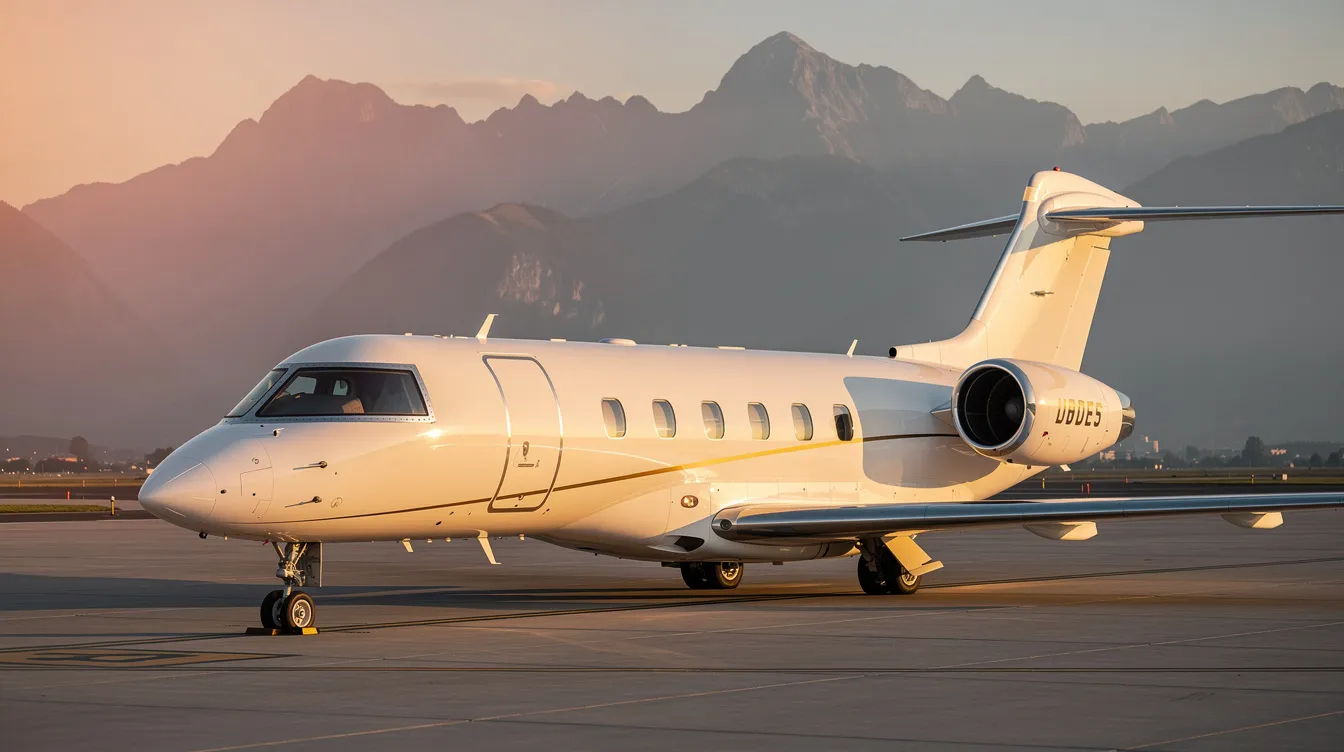
Origins of the Cessna Aircraft Company
Clyde Cessna grew up on Kansas farmland, captivated by aviation after witnessing early monoplane flights in the 1900s. His first flight came in June 1911 aboard a hand-built, process wood-and-fabric monoplane he constructed himself on the Oklahoma Salt Plains—a moment that forever changed his trajectory and, eventually, the aviation world.
In 1927, Cessna partnered with Victor Roos to form the cessna roos aircraft company in Wichita, Kansas. Roos resigned within weeks, and on December 22, 1927, the venture was renamed Cessna Aircraft Company. Cessna's first aircraft took flight on August 13, 1927, a cantilever monoplane that eliminated the supporting struts common on biplanes of the era. Cessna produced the first cantilever monoplane in aviation history, prioritizing aerodynamic efficiency when most designers still favored fabric-braced biplanes.
Early models like the Cessna A series and DC-6 established the company's identity: practical, owner-flown airplanes built for utility rather than spectacle. When the Great Depression hit, Cessna ceased operations in 1931, but reopened in 1934 under Clyde's nephews Dwane and Dwight Wallace. Clyde Cessna died on November 20, 1954, at age 74, but the aircraft company he founded had already become synonymous with reliable, easy-to-fly planes—qualities modern private travelers still demand when tight schedules leave zero margin for mechanical surprises.

Growth, Textron Acquisition, and Role in Textron Aviation
After World War II—during which Cessna produced specialized military trainers—the company pivoted to civil aviation and rode the general aviation boom of the 1950s through 1970s. Commercial production of light general aviation aircraft put millions of pilots into the left seat, and Cessna manufactured more aircraft than nearly any competitor, achieving the highest volume output in the segment. Cessna has played a significant role in making general aviation accessible to everyday businesses and individuals.
In 1992, Textron purchased Cessna, recognizing long-term demand for business aviation and synergies with holdings like Bell helicopter and other aerospace subsidiaries. Unlike industrial peers such as general dynamics, Textron pursued a strategy of consolidating aviation brands under one roof. By March 2014, Cessna became a brand of Textron Aviation alongside Beechcraft (maker of the King Air turboprop) and Hawker—three distinct brands produced under a single subsidiary company. These distinct brands produced a wide breadth of aircraft, from all metal aircraft trainers to transcontinental jets.
The 2008–2010 recession hit hard. Cessna's sales dropped 44% during the economic downturn. Cessna laid off over 8,000 employees during the 2008-2010 recession, including cutting 665 jobs at its Wichita and Bend plants in 2009. Cessna laid off 4,600 employees between 2009 and 2010, closed three manufacturing facilities in Georgia from 2010 to 2011, and Cessna's production was reduced from 535 to an undetermined number in 2009. Cessna's parent company reported an $8 million loss in Q1 2010, and programs like the Citation Columbus were suspended. Earlier, Cessna announced production of the 162 in China in 2007, with plans to build all aircraft models in China by 2012, though Cessna's Chihuahua plant faced a $2.4 million FAA fine in 2011 for quality lapses that underscored the risks of rapid offshoring.
The formation of Textron Aviation helped stabilize the product portfolio. For BlackJet, this integration means consistent OEM support, standardized maintenance data, and more money invested in the global service infrastructure—translating to predictable costs and higher dispatch reliability for the aircraft we place in our network across different private jet sizes.
Cessna's Signature Piston and Turboprop Aircraft
Cessna is a gateway brand. More than half of all professional pilots took their first flight or earned their license in a cessna single engine piston aircraft, including models that often appear on lists of the most affordable small planes. Classic piston aircraft dominate flight schools worldwide, and the Cessna 172 Skyhawk sits at the center of that legacy, frequently used as a benchmark when comparing the best small private aircraft for training and personal travel.
Cessna Skyhawk and 172
The Cessna Skyhawk is the most popular single-engine aircraft ever built—and the Cessna 172 is widely recognized as the benchmark for flight training. Its forgiving handling, high-wing visibility, and durable airframe make it the most iconic aircraft in the world for student pilots.
Skylane and Turbo Stationair HD
The Skylane and Turbo Stationair HD extend the classic piston aircraft lineup with more power, payload, and range for owner-pilots transitioning to personal or business missions.
Caravan Family
Beyond piston aircraft, Cessna's Caravan family is the most delivered utility turboprop on the planet and is often considered alongside other models when evaluating the cheapest private jet options and entry-level turboprops for efficient regional missions. The Cessna Caravan is known for its utility and ability to operate from short runways, while the Grand Caravan EX can carry up to 14 occupants across rugged terrain. Cessna aircraft are popular in cargo transport and humanitarian missions—serving various roles in transportation and utility operations where other aircraft simply cannot reach.
SkyCourier
The Cessna SkyCourier turboprop was designed for high frequency operations and is often compared with other budget-friendly private aircraft that prioritize rugged utility and low operating costs for regional routes. Its first flight came in 2020, and the SkyCourier can be configured for 19 passengers or freight, supporting operators like FedEx and regional commuter airlines. These platforms feed passengers into hubs where light jets and midsize jets wait—expanding routing options for BlackJet members and illustrating how even budget-friendly private aircraft options can integrate into wider private aviation networks.
Key Cessna Piston and Turboprop Models

The Cessna Citation Family of Business Jets
Cessna's line of business jets began in the 1970s as an answer to growing demand for efficient, short-runway-capable jets that didn't require more money than a large-cabin competitor. Today, the Citation series includes some of the largest fleets of private business jets in service, and cessna citation models span a new line of categories from entry-level to super-midsize, covering much of the spectrum outlined on a typical private jet price list.
Light Jets
Citation M2: Touch-controlled avionics, seats up to eight, maximum range of 1,550 nautical miles—ideal for regional hops.
Citation CJ3+: Range of roughly 2,040 nm at 416 KTAS.
Citation CJ4 Gen2: Upgraded seating and COOLVIEW skylights, cruises at 451 KTAS with approximately 2,165 nm of range.
Midsize Jets
Super-Midsize Jets
Citation Latitude: Approximately 2,700 nm of range, flat-floor, stand-up cabin, advanced avionics like the Garmin G5000.
Citation Longitude: Flagship model, 3,500 nm at 483 KTAS, links New York with western Europe non-stop with four passengers.
Citation Jet Comparison Table
Model | Category | Seats | Max Range (nm) | Cruise Speed (KTAS) | Notable Features |
|---|
Citation M2 | Light Jet | Up to 8 | 1,550 | — | Touch avionics, regional missions |
Citation CJ3+ | Light Jet | 4–7 | 2,040 | 416 | Efficient, popular for short hops |
Citation CJ4 Gen2 | Light Jet | 4–9 | 2,165 | 451 | COOLVIEW skylights, upgraded seating |
Citation XLS+ | Midsize Jet | Up to 11 | 2,100 | — | Coast-to-coast, flexible cabin |
Citation Latitude | Super-Midsize | 6–9 | 2,700 | — | Flat-floor, stand-up cabin, G5000 |
Citation Longitude | Super-Midsize | 4–8 | 3,500 | 483 | Flagship, transatlantic capability |
Ongoing Gen2 upgrades across Cessna's line ensure cabin comfort, Wi-Fi availability, and noise reduction remain competitive—aligning with what BlackJet expects from every aircraft in our partner fleet.
Manufacturing, Innovation Programs, and Pilot Training
Manufacturing and Innovation
Cessna production and engineering operations are centered in Wichita and Independence, Kansas, with additional facility locations and suppliers coordinated through Textron Aviation. Modern production tools and automated processes have replaced much of the hand-built methods of earlier decades, though quality craftsmanship remains central to every airframe.
Recent innovation efforts focus on upgraded avionics suites, improved diagnostics (the LINXUS system enables real-time fault isolation), and incremental aerodynamic refinements rather than headline-grabbing experimental designs. For the most advanced aviator or the advanced aviator transitioning from piston planes to jets, these incremental gains matter—they reduce workload and increase safety margins.
Pilot Training and Simulation
Textron Aviation's Top Hawk program partners with university flight schools that use Cessna aircraft, feeding the training pipeline that keeps professional pilots current and demonstrating how even cheapest small planes for new pilots can uphold high training and safety standards. TRU Simulation + Training—a Textron company—delivers high-fidelity simulators and type-rating programs for Citation jets. BlackJet prioritizes operators whose crews maintain currency through OEM-approved training programs, ensuring quality standards match what the manufacturer intended—just as we guide frequent flyers toward the best jet card programs to align with their usage and safety expectations.
Higher dispatch reliability follows naturally: enhanced diagnostics, longer maintenance intervals, and a global parts network mean fewer delays for Jet Card members who cannot afford to miss a meeting in another city.
Safety, Certification, and Reliability in Cessna Operations
Certification Standards
Cessna Citation jets are certified under FAA and EASA regulations—lighter models under Part 23, while the Latitude and Longitude meet the stricter Part 25 standards governing structural loads, systems redundancy, and failure handling. These certifications are the floor, not the ceiling, for safe private jet travel.
Safety Features
Modern Cessna aircraft include terrain awareness and warning systems, TCAS, synthetic vision, and advanced autopilots. Data recording tools support flight operations quality assurance, giving operators visibility into trends before they become issues.
Reliability and Maintenance
Maintenance programs follow manufacturer service bulletins and airworthiness directives, backed by Textron Aviation's global network of over 30 Mobile Service Units and the 1CALL AOG support system.
BlackJet's screening approach is direct: we only partner with operators who meet or exceed leading third-party safety ratings and manufacturer maintenance guidance, the same level of diligence we recommend when comparing NetJets jet card costs and programs to other market options. Consider a member scheduling three city hops in a single day on a Citation CJ3+—aircraft reliability and redundant systems keep the schedule intact while pilots trained in OEM simulators handle each leg with practiced precision.
Sustainability and Operating Efficiency
Fuel Efficiency
Fuel efficiency drives both cost management and environmental impact. Many Cessna business jets and turboprops maximize performance on comparatively modest fuel burn—the Caravan's single engine turboprop configuration and the Citation line's aerodynamic refinements translate into lower emissions per passenger-mile versus older or larger aircraft types on similar missions.
Sustainable Aviation Fuel
Textron Aviation has approved sustainable aviation fuel across Cessna turbine models, enabling operators to reduce lifecycle carbon emissions without hardware modifications, which is increasingly relevant even when evaluating the cheapest private jet options for responsible operation.
BlackJet Carbon-Neutral Policy
BlackJet's carbon-neutral policy calculates emissions for every flight on Cessna aircraft within our network and offsets them through certified programs—at no extra cost to Jet Card members.
A properly sized Citation carrying four passengers on a direct route often produces fewer total emissions than those same travelers flying commercial business class through a hub with connections—fewer flight segments, more direct routings, and right-sized aircraft all contribute. Efficient aircraft selection is responsible travel planning, and BlackJet's advisors propose the most sustainable options available for each mission, helping customers fly with both purpose and principle while also clarifying jet card costs and pricing structures for predictable budgeting.
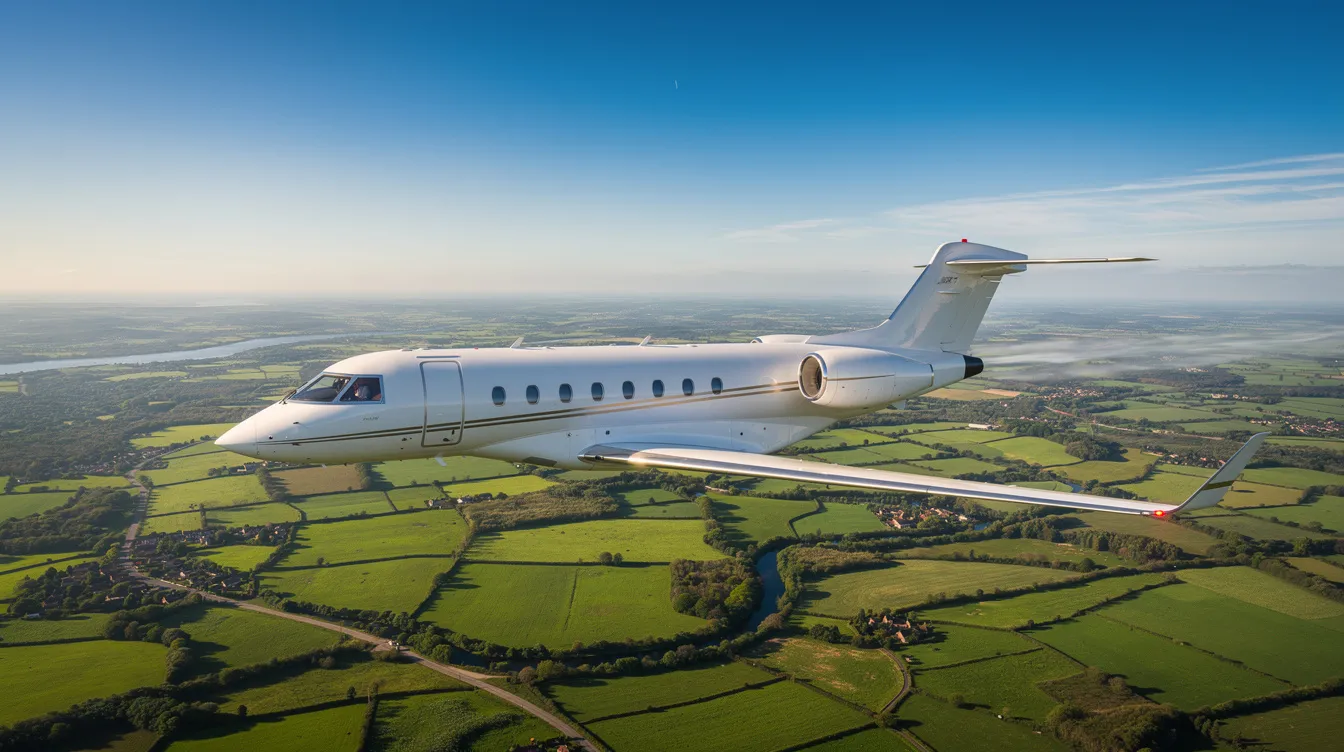
Choosing the Right Cessna Aircraft Through BlackJet
BlackJet's Jet Card programs, including flexible 100-hour jet card options and 50-hour jet card solutions, and on-demand charter solutions, connect customers with a wide spectrum of Cessna aircraft—products finding solutions for every mission profile, from a two-hour regional hop to a transatlantic crossing.
Quick Mission-Matching Guide
Mission Type | Recommended Aircraft | Passengers | Approx. Range (nm) |
|---|
Regional (sub-3 hrs) | Citation M2, CJ3+, CJ4 | 4–7 | 1,550–2,165 |
Coast-to-coast U.S. | Citation XLS+, Latitude | 6–9 | 2,100–2,700 |
Transatlantic/long-haul | Citation Longitude | 4–8 | 3,500 |
Large group (20+ passengers) | See private jets for 20+ and charter for 50 | 20–50+ | Varies |
Our 24/7 support and digital booking tools let clients filter by cabin size, range, and amenities, while our aviation specialists validate performance factors like runway length, altitude, and weather—essentially walking clients through how to think about different private jet sizes in real-world missions. Every operator in our network is screened for maintenance history, pilot time in type, connectivity options, and cabin configuration suitable for both business and family travel, just as we scrutinize jet card pricing and value to help clients pair aircraft quality with the right access model.
Cessna's heritage—from those first airplanes built in Wichita to today's super-midsize jets crossing oceans—represents exactly the kind of reliability and engineering discipline that underpins every BlackJet flight. Explore BlackJet Jet Card membership to secure predictable hourly rates on Citation and other premium aircraft, including options like the BlackJet 25+ Hour Jet Card, with carbon-neutral flights and elite-level safety oversight built into every journey.
Frequently Asked Questions About Cessna Aircraft Company
What is the history behind the Cessna Roos Aircraft Company?
The Cessna Roos Aircraft Company was a short-lived partnership formed in 1927 between Clyde Cessna and Victor Roos in Wichita, Kansas. Roos resigned within weeks, and the company was renamed Cessna Aircraft Company later that year. This early partnership laid the foundation for what would become one of the most influential aircraft manufacturers in the world.
What types of aircraft does Cessna manufacture?
Cessna produces a broad range of aircraft including single-engine piston planes like the Skyhawk and Skylane, utility turboprops such as the Caravan family and SkyCourier, and a full lineup of Citation business jets ranging from light to super-midsize categories. This diversity allows Cessna to serve pilots and operators across training, personal, business, and specialized mission needs.
How does Cessna ensure safety and reliability in its aircraft?
Cessna Citation jets are certified under stringent FAA and EASA regulations, incorporating advanced safety features like terrain awareness systems, TCAS, synthetic vision, and autopilot technology. Maintenance follows manufacturer service bulletins and airworthiness directives, supported by Textron Aviation’s global service network, ensuring high dispatch reliability and operational safety.
What role does sustainability play in Cessna’s operations?
Cessna business jets and turboprops are designed for fuel efficiency, reducing emissions per passenger-mile. Textron Aviation has approved sustainable aviation fuel for Cessna turbine models, enabling operators to lower lifecycle carbon emissions without hardware changes. BlackJet complements this by offering carbon-neutral flights on Cessna aircraft through certified offset programs.
How can I access Cessna aircraft through BlackJet’s services?
BlackJet provides Jet Card programs and on-demand charter solutions that connect clients to a vetted network of Cessna aircraft. Members can select from various Citation jets and turboprops tailored to mission profiles, with 24/7 digital booking, real-time support, and elite safety oversight, ensuring seamless, reliable private jet access.
Conclusion: The Enduring Value of Cessna Aircraft in Modern Private Aviation
Cessna Aircraft Company’s legacy is more than a history lesson—it is a living testament to innovation, reliability, and accessibility in private aviation. From the pioneering cantilever monoplane to today’s sophisticated Citation jets and rugged turboprops, Cessna continues to deliver aircraft that meet the diverse needs of pilots and travelers worldwide. For BlackJet clients, this translates into seamless access to a trusted family of aircraft that combine safety, efficiency, and comfort on every flight.
Choosing Cessna through BlackJet means more than booking a private jet; it means tapping into nearly a century of engineering excellence supported by Textron Aviation’s global service network and cutting-edge technology. Whether embarking on a short regional trip or a transcontinental journey, Cessna aircraft offer a strategic advantage—saving time, reducing environmental impact, and elevating the travel experience.
Explore how BlackJet’s curated fleet of Cessna aircraft and flexible Jet Card programs can transform your travel, ensuring every journey is effortless, reliable, and perfectly tailored to your needs. Discover premier private jet access with BlackJet and experience the unmatched heritage and innovation that only Cessna can provide.


 Sign up with google
 Sign up with Apple