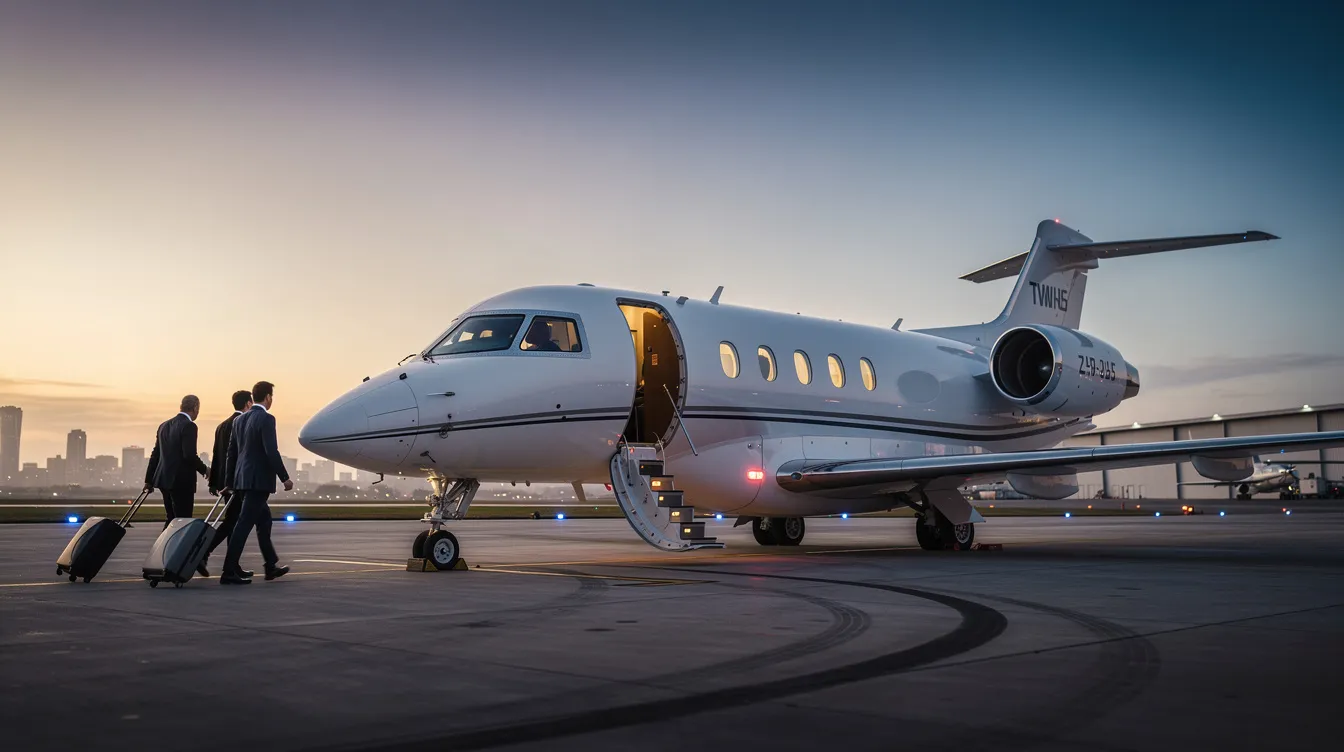
For executives, founders, high-net-worth families, and frequent business or leisure travelers, the difference between a commercial flight and a private flight is straightforward: commercial airlines run on fixed schedules with set boarding and longer door-to-door travel, while private flights offer on-demand timing, faster boarding, more privacy, and far greater control. Choosing between them is not just a question of comfort. It is a strategic decision about how to spend your most limited resource: time.
This guide compares the factors that shape that decision in real life, including door-to-door time, boarding, cost, safety, sustainability, privacy, productivity, aircraft categories, flexible scheduling, environmental impact, and digital booking options such as Jet Card-style access. If you are weighing private aviation for business or leisure, the right choice affects not only convenience, but also how efficiently you travel, work, protect your privacy, and keep your plans moving.
Commercial Flight vs Private Flight: Key Differences at a Glance
Consider a typical trip from New York to Los Angeles. On a commercial airline, the entire journey—door to door—runs roughly eight to ten hours: driving to JFK, arriving at the airport early, standing in long security lines, boarding a packed commercial aircraft, flying five and a half hours, waiting at baggage claim, and making the final ground transportation transfer into the city. On a private jet with BlackJet, the same route clocks closer to six hours total, with none of the friction.
Private jet travelers save an average of 127 minutes per flight compared to commercial options. Over the course of a year with frequent travel, these saved minutes accumulate into weeks. Across a year of frequent travel, those minutes add up to weeks.
Factor | Commercial Flight | Private Flight |
|---|
Door-to-door time (NYC–LA) | 8–10 hours | ~6 hours |
Airport arrival | 2–3 hours before departure | 15–30 minutes before |
Accessible airports | ~500 in the U.S. | Over 5,000 in the U.S. |
Privacy | Shared cabin with other passengers | Full cabin control |
Scheduling | Fixed timetable | On-demand or Jet Card |
When comparing private and commercial flights, a commercial flight means scheduled service on a commercial jet—economy, business class, or first class—sold per seat, while a private flight means on-demand charter flights, Jet Card programs, or membership-based access where you control the aircraft, schedule, and passenger list.
For the high-value traveler, the core question is not whether flying private feels better. It is whether the time savings, flexibility, and privacy justify the higher cost. BlackJet, a carbon-neutral private aviation company offering premium Jet Card programs, private jet services, and 24/7 digital booking, is built for travelers who have already answered yes.
Door-to-Door Time: Private Jet vs Commercial Flight in the Real World
Door-to-door time measures the full span from your origin—home or office—to your final destination. It is the metric that matters most, and it is where private jets consistently outperform commercial air travel.
Take New York City to Miami. Flying commercial, the total journey typically stretches to six and a half to eight hours once you account for the drive to a commercial airport, the two to three hours required for check-in and security, the flight itself, taxiing, deplaning, baggage claim, and the final transfer. A private flight on the same route brings that total to roughly three hours and twenty-five minutes. Private flights can reduce total travel time by four to nine hours compared to commercial on routes like this.
The breakdown is straightforward:
Drive to the airport: Private terminals and smaller airports are often closer, trimming 20–40 minutes from the ground leg alone.
Arrival and check-in: Private jet passengers can arrive just 15–30 minutes before departure, versus the 1.5–3 hours commercial flights require.
Security and boarding: No long lines, no gate changes, no zone-based boarding.
Deplaning and transfer: Walk off the aircraft, collect your bags immediately, and step into a waiting car.
Private jets save 90–180 minutes door-to-door compared to commercial flights on a typical segment. For frequent flyers doing 30–50 segments per year, that compounds into 60–100 hours of regained time annually—equivalent to nearly two working weeks. That is time returned to deals, family, or rest.
The Boarding Process: Stress vs Seamless
Imagine two departures for a 7:00 a.m. flight from New York to Chicago.
For the commercial flight, your alarm goes off at 4:15 a.m. You drive to LaGuardia, find parking, join the check-in queue, drop your bag, clear TSA, navigate the terminal, and wait at the gate. Commercial flights typically have a longer airport process due to security and boarding. You board by zone, compete for overhead bin space, and settle in alongside strangers. If anything runs late, you miss the flight.
For a BlackJet departure, you leave at 6:15 a.m. A chauffeured car drops you at a private terminal. You show your ID, walk through a quiet lounge, and step directly onto the aircraft. Private jets typically require only 15–30 minutes for check-in. Private flight boarding is faster due to fewer security checks. The plane waits for you—not the other way around.
The private experience eliminates the unpredictability that makes commercial flying stressful: no rushing through crowded terminals, no overhead bin competition, no gate changes. BlackJet members can coordinate chauffeured ground transportation and synchronize arrival precisely with departure time through digital booking tools.
In-Flight Experience: Economy, First Class, or Private Cabin?
Commercial flying, even in business class or first class, means sharing the cabin. You sit near strangers, hear announcements meant for 200 people, and work within the confines of a seat—however well-appointed. Commercial flights share cabins with other passengers, limiting privacy and creating an environment you cannot control.
A private jet cabin is a different category entirely. Private jets provide more space and comfort than commercial flights, with club seating, couches, and conference tables arranged for four to twelve passengers. Private jets can include office areas and sleeping areas for comfort. The cabin experience on private jets can be customized based on passenger needs—whether that means a working layout for a deal team or a relaxed setting for a family.
Amenities reflect this control:
Catering: Luxury in private flights can include personalized catering and more space, with menus tailored to dietary preferences and cultural requirements.
Connectivity: Private jets offer satellite-based internet connections up to 20 MB/s, enabling video calls, file transfers, and streaming.
Environment: You set the lighting, temperature, and noise level. No announcements. No strangers.
Even the finest first-class suite on a commercial airliner cannot match the control over your environment that a private aircraft provides. On commercial planes, you are a guest. On a private plane, you are the host.
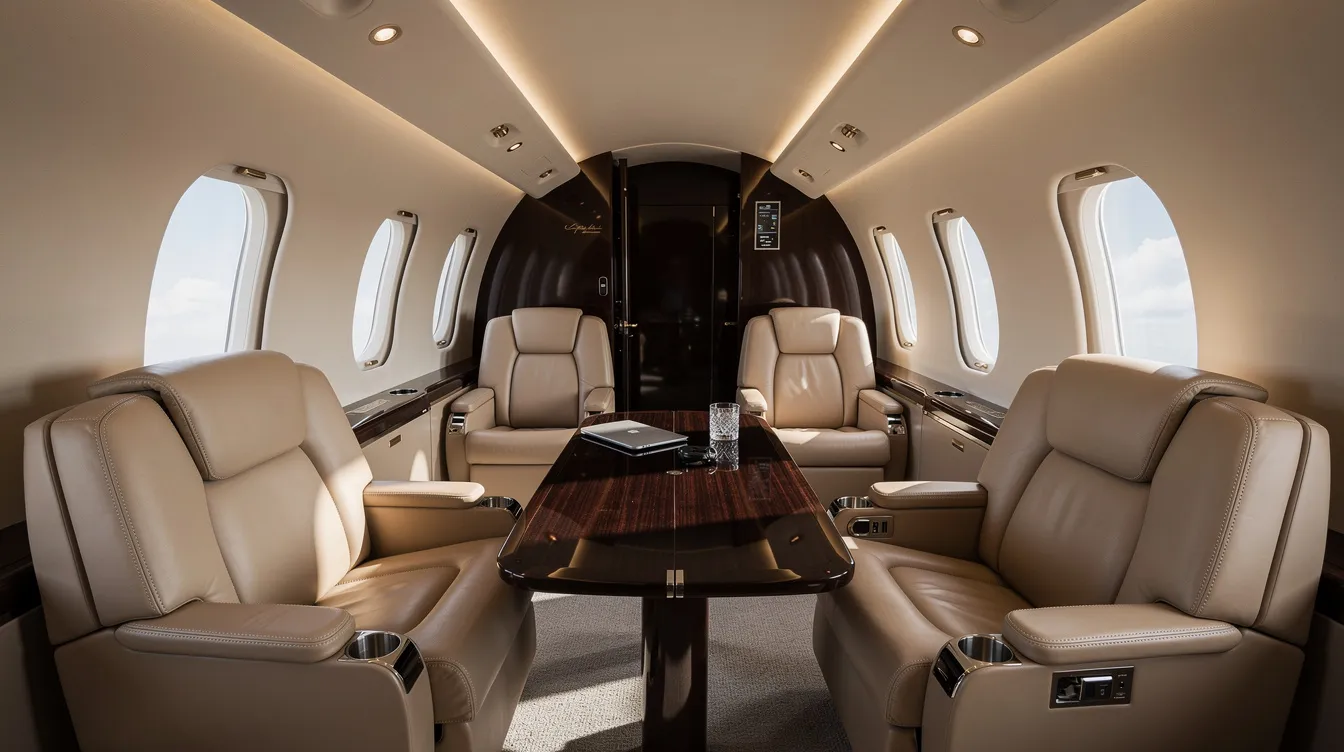
Privacy, Productivity, and the Value of Controlled Time
For executives, founders, and UHNW families, privacy is not a luxury—it is a requirement. Reviewing an acquisition term sheet, preparing board materials, or discussing family financial planning on a commercial flight—even in first class—means risking exposure to nearby strangers and ambient distractions. Private flights offer a higher level of privacy for sensitive discussions. Private jets allow you to control who is on board, and private flights allow you to travel only with known companions.
This control translates directly into productivity. Two-thirds of travelers report being more productive on private jets than in their own offices. Private flights allow for onboard Wi-Fi and private calls, and the table space accommodates laptops, documents, and multi-screen setups. Private aviation is designed for enhanced privacy and personalized service that makes deep work possible at 40,000 feet, and structured solutions like the BlackJet 25+ Hour Jet Card formalize that flexibility for frequent flyers.
Consider a CEO using a BlackJet 25-hour Jet Card to visit three investor cities in a single day: Boston at 8 a.m., New York at noon, Washington, D.C. by 4 p.m.—conducting prep and follow-up meetings in the air between stops. On commercial flights, that itinerary would span two days and require overnight hotels. Flying private compresses it into one. The increased productivity and sensitive information protected on each leg justify the incremental cost.
Speed and Routing: Do Private Jets Actually Fly Faster?
In pure cruise terms, private jet speed and commercial jet speed are often comparable. Light and midsize private jets cruise between 400 and 480 knots. Larger commercial airliners cruise at 450 to 520 knots. The difference is marginal in the air.
The real advantage comes from altitude and routing. Private jets can fly higher and request more direct routes, bypassing holding patterns and traffic-heavy corridors that delay commercial planes. On short- to medium-haul sectors—Los Angeles to Las Vegas, London to Zurich—reduced taxi times, shorter takeoff queues, and quicker climb and descent sequences trim significant minutes from total flight time.
Private flights also avoid the hub-and-spoke model. Commercial flights depend on connecting through major hubs, which can add hours through layovers. Private planes can fly point-to-point, choosing more direct routes between origin and destination.
However, on ultra-long-haul routes like New York to Tokyo or London to Singapore, commercial widebodies with nonstop service may match or beat private aircraft that need a fuel stop. This is one area where commercial aviation retains a clear edge, especially for solo travelers or those who prioritize efficiency on intercontinental legs.
Flexibility and Scheduling: Who Sets the Timetable?
Commercial flights operate on fixed schedules and per-seat pricing. If your meeting runs long, the plane leaves without you. Red-eye departures, inconvenient layovers, and limited seat availability are facts of commercial travel. Commercial passengers often face delays due to fixed schedules and connections, and commercial flights provide access to a global route network with multiple daily frequencies—but only on routes and times the airline chooses.
Private flights are often used for urgent travel or when flexibility is needed. With a Jet Card or membership, you set the departure time. Private flights offer custom scheduling and entire-plane charters, allowing you to adjust last minute when plans change. Jet Card programs provide prepaid access to private jets across different cabin types, with many programs guaranteeing availability within 24–48 hours.
Real-world examples make all the difference:
Adding a same-day stop in Dallas between New York and San Francisco.
Shifting a return from Sunday night to Monday morning without rerouting through hubs.
Departing two hours later because a client dinner ran long.
BlackJet's Jet Card members can book and modify flights through digital booking tools, supported by 24/7 real-time flight support. That level of flexibility simply does not exist in commercial flying.
Cost Comparison: Ticket Price vs Total Cost of Travel
Private flights usually cost more than commercial tickets. That is the straightforward reality, and understanding whether chartering a private jet is worth it depends on how you value time savings, flexibility, and privacy against the higher fare. For many travelers, commercial flights are the most economical option, and commercial aviation is optimized for affordability and scale. Commercial flights are more affordable due to higher passenger counts spreading the cost across hundreds of passengers on a single commercial aircraft.
But ticket price is not the same as total cost of travel.
On a sample route like London to New York, two first class tickets run roughly $36,000–$48,000 round trip, which aligns with broader benchmarks on how much it costs to rent a private jet for comparable missions. A light private jet on the same route costs approximately $8,400–$9,500 per flight hour, with the crossing taking roughly seven to eight hours. The private option costs more—but factor in four passengers splitting the fare, and the per-person gap narrows significantly.
Total cost also includes what you lose in transit: billable hours, overnight hotel stays from suboptimal schedules, missed meetings, and delayed decisions. Booking a private flight entails greater planning responsibility than commercial flights, but transparent pricing through Jet Card models and frameworks for understanding jet card cost per hour simplify budgeting with fixed hourly rates.
Cost optimization strategies include, for travelers focused on budget, additional tactics for flying private as affordably as possible without sacrificing core benefits:
Empty leg flights and one-way pricing can offer lower rates with one-way charters.
Right-sizing: choosing a light jet for a two-hour hop instead of a super-midsize saves time without sacrificing the private experience, and there are dedicated guides to the cheapest private aircraft options for travelers who want maximum efficiency.
Last-minute deals on repositioning flights can reduce costs further.
Safety, Risk Management, and Health Considerations
Both flight types follow strict FAA safety regulations. Commercial airlines maintain strict regulatory oversight and safety standards, and reputable private operators meet the same federal requirements. The difference lies in implementation, transparency, and passenger control.
BlackJet's approach to safety centers on third-party safety ratings such as ARGUS and Wyvern, rigorous operator and commercial pilot and private pilot certification standards, and consistent maintenance protocols, aligning with broader industry data on how safe private jets actually are. Charter jet passengers can request safety documentation for any flight, adding a layer of accountability that general aviation travelers should always exercise.
From a health perspective, flying private reduces exposure to illnesses during travel. Fewer passengers pass through a private terminal, security checks are minimal, and the cabin is shared only with people you choose. Passengers can control health protocols on board—who flies, cleanliness expectations, mask policies—compared to the shared environment of commercial airports and commercial airliners.
Private jets can also access more airports, which matters in diversions or emergencies: alternate landing options closer to medical or corporate facilities are available when you are not restricted to the limited network of major hubs.
Airports and Access: Big Hubs vs Close-to-Home Fields
Commercial airlines concentrate service in roughly 500 airports in the U.S. and a comparable number in Europe—large hubs like JFK, LAX, Heathrow, and Frankfurt, often located well outside city centers. Getting to and from these commercial airports can add an hour or more to each end of the trip.
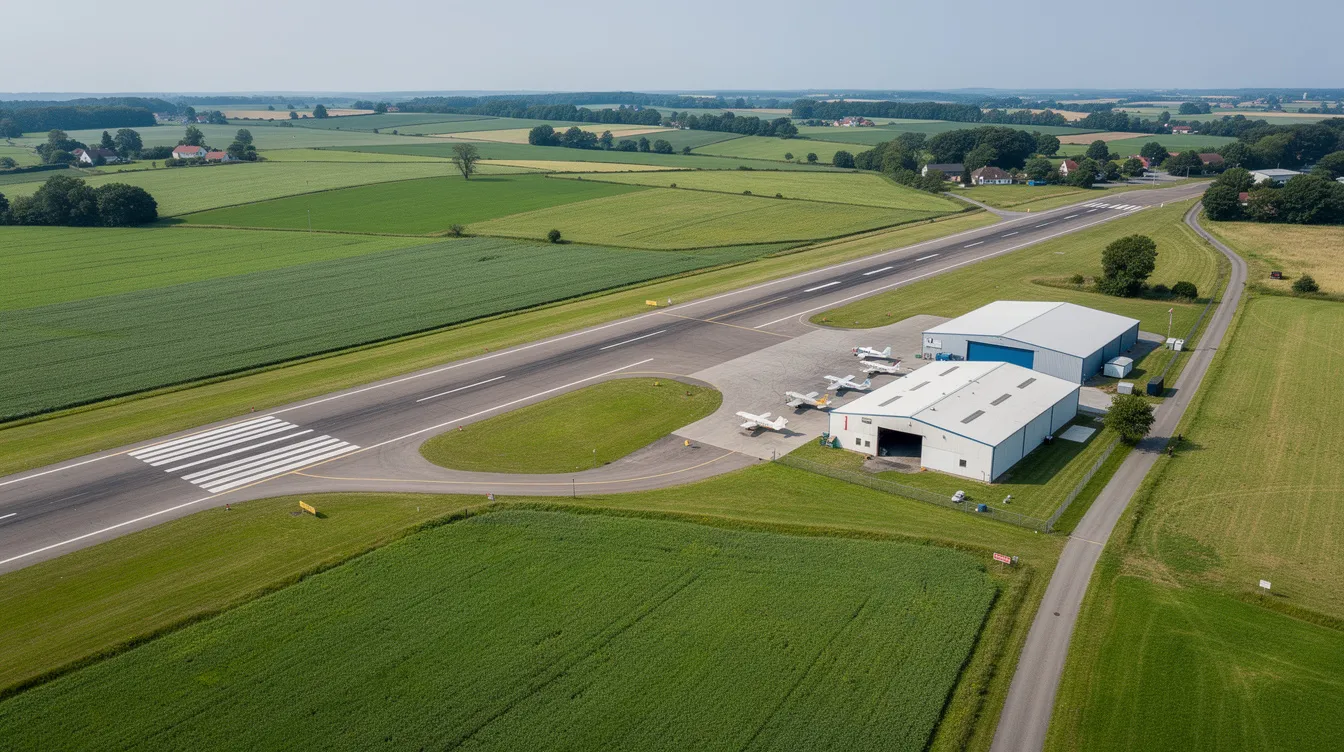
Private flights can land at over 5,000 airports. Private aviation allows access to thousands of smaller regional airports that sit closer to business parks, resorts, and second homes. Airport proximity makes all the difference for back-to-back schedules.
Concrete examples:
New York: Fly into Teterboro or White Plains instead of JFK—cutting ground transfer time by 30–60 minutes each way.
Los Angeles: Use Van Nuys or Burbank instead of LAX, avoiding one of the most congested airport corridors in the country.
Colorado: Land at Eagle County Regional or Aspen-Pitkin County instead of connecting through Denver.
Private jets can access over 5,000 airports, reducing ground travel time and giving travelers the ability to land minutes from their final destination rather than an hour away. BlackJet advisors and digital booking tools help map start and end addresses to optimal airport pairs, rather than defaulting to the biggest commercial hubs. The result: less room for error, less time on the road, and direct flights into more airports that matter.
Technology and Digital Booking: How Private Aviation Is Catching (and Beating) Commercial
Commercial airlines pioneered digital booking, with apps, loyalty programs, and route visibility that millions rely on. But their platforms remain constrained: fixed routes, fare classes, complex change penalties, and less room for customization.
Private aviation has caught up—and in many cases, moved ahead. Digital platforms allow quick booking of private flights in minutes, with instant pricing by aircraft category, cabin selection, and trip customization, making it easier to match trips with the right type of private jet for each traveler. Platforms like Jettly connect travelers to over 20,000 private charter aircraft, illustrating the scale of the market. Private flight operators provide real-time flight tracking for passengers, and real-time support is often a feature in private jet services.
BlackJet's platform enables members to view available aircraft categories, request specific cabin classes, and confirm flights from their phone, with 24/7 human support layered on top; it can also support emerging models like private plane rideshare options where appropriate routes and partners exist. Integrated features include itinerary sharing with assistants or family, easy access to safety and carbon-neutral flight documentation, and time-saving features that eliminate the friction of flying commercially.
Environmental and Sustainability Considerations
Private jets have higher per-passenger carbon footprints than commercial flights. On a lightly loaded aircraft, the disparity can be significant, and this reality deserves honest acknowledgment rather than deflection.
The industry is responding. Key mitigation strategies include:
Newer aircraft: Newer private jets can achieve fuel economies of up to 4.0 nautical miles per gallon, a meaningful improvement over older fleets. Fuel efficiency gains are accelerating with each generation.
Optimized routing: Direct routes and reduced repositioning cut unnecessary fuel burn.
Sustainable aviation fuel: SAF can reduce carbon emissions by up to 80% compared to conventional jet fuel, though availability remains limited.
Carbon offsets: Carbon offset programs can mitigate the environmental impact of private flights by investing in verified projects that remove or reduce greenhouse gases.
Carbon-neutral flights are increasingly becoming a focus in private aviation. BlackJet operates carbon-neutral flights by default, at no extra cost to the member, as part of its commitment to responsible private flying. Travelers can also prioritize efficiency by choosing light jets or turboprops for shorter hops and selecting direct routes wherever possible.
Choosing Between Private Flights and Commercial Flights: Who Is Each Best For?
Choosing between commercial and private flights depends on cost, convenience, and flexibility. Neither option is universally superior—the right choice depends on who you are and how you travel.
Commercial flights (including first class) suit:
Infrequent leisure travelers or solo travelers on a budget
Ultra-long-haul routes where nonstop service is critical and commercial aviation's scale advantage is clear
Travelers who prioritize cost above all else
Private flights via Jet Card or membership suit:
Individuals or executives who frequently travel regionally or internationally and prioritize control over time, flexibility, and personalized experiences
Teams or families who can spread the cost of an entire aircraft across multiple passengers, including larger groups that may require private jets configured for around 20 passengers
Anyone for whom bad weather delays, missed connections, or lost hours represent unacceptable risk, and who may even evaluate 12-seater private jet solutions when their travel pattern consistently involves mid-sized groups
Three personas illustrate the decision:
European PE partner: Weekly city hops across London, Frankfurt, Milan, and Zurich. Private aviation turns three-day commercial itineraries into single-day circuits, saving hotel nights and preserving weekends, and detailed private jet price lists and cost breakdowns help quantify that tradeoff.
New York–Aspen family: Monthly trips between a primary home and a mountain residence. Smaller airports near Aspen, group pricing across four to six family members, and pet-friendly private planes make the choice obvious, especially when they leverage the most affordable private jet options that still meet safety and comfort needs.
Global executive: Uses commercial first class for New York–London long haul, then a BlackJet Jet Card for regional hops across the U.S. and Europe—a hybrid strategy that optimizes both cost and time and aligns with best practices for selecting the right jet card as a frequent flyer.
Private aviation is not about replacing every commercial flight. It is about recognizing when the value of your time, privacy, and flexibility exceeds the incremental cost—and having a partner like BlackJet ready when it does.
FAQs: Commercial Flight vs Private Flight with BlackJet
Is flying private always faster than flying commercial? On most short- to medium-haul routes, yes—private jets save significant time through faster check-in, airport proximity, and direct routes. On ultra-long-haul routes where commercial widebodies offer nonstop service, commercial can match or beat private aircraft that require a fuel stop.
How does a BlackJet Jet Card differ from one-off charter flights? A Jet Card provides prepaid block hours at a fixed rate with guaranteed availability, simplified digital booking, and consistent service standards. Charter is booked per trip with variable pricing and less certainty. Jet Cards offer more flexibility and cost predictability.
How does private aviation compare to commercial first class? First class excels in seat comfort and onboard service on long routes. Private aviation offers full control over schedule, guest list, cabin environment, and routing—advantages first class cannot replicate regardless of ticket price.
Can I justify private flights for my business? Many companies model the ROI by comparing billable hours saved, meetings gained, and staff efficiency against the higher cost of private jet travel. When time is the binding constraint, the math often favors private, especially in scenarios where chartering a private jet proves its value.
How quickly can I arrange a private jet through BlackJet? Jet Card members can typically arrange flights with 24–48 hours' notice, and same-day bookings are possible depending on aircraft availability. International legs may require additional coordination for customs and landing permits, and understanding Jet Card pricing structures helps ensure that this flexibility fits your budget.
What aircraft categories can I book? BlackJet offers access to light, midsize, super-midsize, and large-cabin jets. Light jets suit short hops for two to four passengers. Large-cabin aircraft handle transcontinental routes with full office and lounge setups, and comparisons like NetJets jet card cost analyses can provide useful benchmarks when evaluating options.
How does BlackJet ensure safety and sustainability? BlackJet requires third-party safety certifications (ARGUS, Wyvern), rigorous operator vetting, and modern maintenance standards. Every flight is carbon neutral by default, with offsets included at no additional cost to the member, which can be especially compelling compared to the ongoing staffing and private jet pilot cost considerations that come with full ownership.
Conclusion: Making the Smart Choice Between Commercial and Private Flights
For the discerning traveler, the choice between commercial flight and private flight transcends mere luxury—it is a strategic decision that optimizes time, privacy, and productivity. Private flying offers unparalleled advantages: significant door-to-door time savings, access to thousands of smaller airports closer to final destinations, seamless and expedited boarding, and a customizable in-flight environment tailored to your needs. These benefits translate into more productive hours, reduced travel stress, and enhanced control over your schedule.
While commercial flights remain the most economical option for many, especially on ultra-long-haul nonstop routes or for those prioritizing cost above all, private flights provide a compelling value proposition for frequent travelers, executives, and families who demand flexibility, privacy, and efficiency. With innovations in technology, sustainability efforts like carbon-neutral flights, and flexible Jet Card programs, private aviation is evolving to meet the needs of today’s high-value traveler.
Ultimately, the decision hinges on your unique travel priorities and how you value your time. BlackJet’s premium Jet Card programs and digital booking platform offer an exclusive gateway to private flying that empowers you to reclaim your schedule and travel on your terms. Discover how private aviation can reshape your travel experience—where every journey is not just a flight, but a strategic advantage.
Explore our insights on private jet safety and learn about our commitment to carbon-neutral flights that ensure responsible luxury travel.


 Sign up with google
 Sign up with Apple