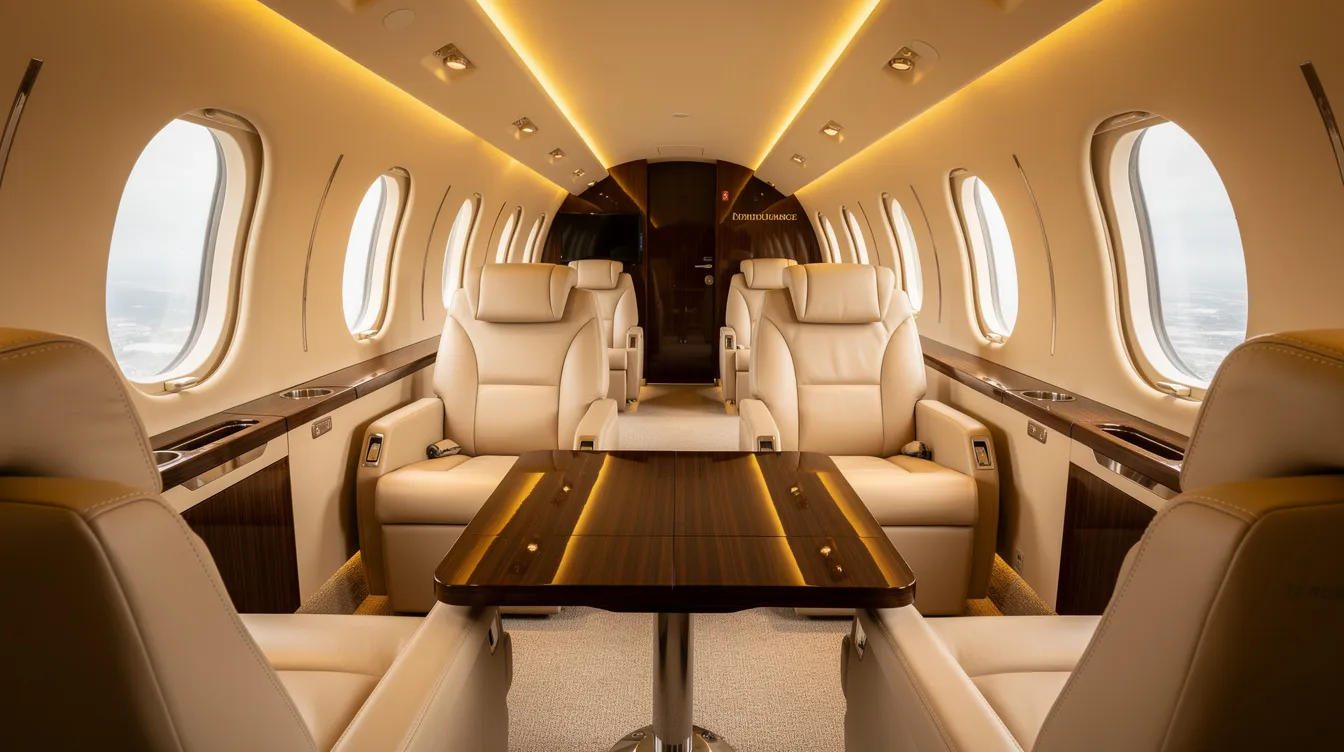
The coolest jets in aviation history are far more than engineering spectacles. They are strategic instruments that redefined wars, reshaped air superiority, and pioneered the very technologies now embedded in the business aircraft that executives fly today. From the F-22 Raptor's radar-invisible airframe to the SR-71 Blackbird's Mach 3 titanium skin, from the F-35 Lightning II's trillion-dollar sensor network to the P-51 Mustang's war-winning range, these aircraft represent the peak of human ambition in the air.
This article is for aviation enthusiasts, private jet travelers, and anyone curious about how military jet technology shapes modern private aviation. We’ll explore legendary military jets, their technological breakthroughs, and how these innovations influence today’s private jets and Jet Card programs.
What does any of this have to do with private aviation? More than you might think. Fly-by-wire controls, composite structures, advanced avionics, and aerodynamic shaping all migrated from military cockpits into the business jets that BlackJet members access through Jet Card programs. Consider the numbers: a typical New York–London commercial itinerary takes 10–11 hours door-to-door once you factor in check-in, security, boarding, and ground transport. A private jet trims that to roughly 7–8 hours-and you arrive on your schedule, rested and productive.
This article moves chronologically from World War II icons through fifth-generation stealth fighters, then pivots to how BlackJet translates that engineering DNA into safe, sustainable, carbon-neutral private travel.
Defining "Cool": Speed, Stealth, Story, and Strategic Impact
A jet qualifies as one of the coolest ever built through a combination of performance envelope-top speed, exceptional agility, altitude ceiling-and technological innovation in stealth technology, advanced avionics, and materials. But specs alone don't make a plane legendary. Combat record, cultural impact, and the stories pilots tell matter just as much.
The designation of the best fighter jet is always relative to the mission. An air superiority fighter like the F-22 Raptor dominates enemy aircraft in aerial combat-it is designed primarily for that role. Air superiority fighters dominate enemy aircraft in aerial combat. A multirole fighter aircraft like the F-35 Lightning II handles a wide array of mission types from strike to electronic warfare. Multirole fighters perform various combat missions effectively. The MiG-25 Foxbat pursued raw power and speed above all else. No single aircraft wins every category.
Air forces worldwide choose fleets based on doctrine, threat environment, and budget-balancing capabilities across a portfolio. This is remarkably similar to how discerning travelers select different cabin classes and aircraft categories for each trip. A light jet for a quick regional hop; a large-cabin aircraft for a transatlantic overnight flight, mirroring the key types of private jets for every traveler. Each subsequent section showcases specific jets with concrete dates, specs, and mission roles rather than vague generalities.
World War II Icons: Where Air Superiority Was Born
The Second World War was the crucible where modern concepts of air superiority, long-range escort, and ground attack first crystallized-years before jet propulsion went mainstream.
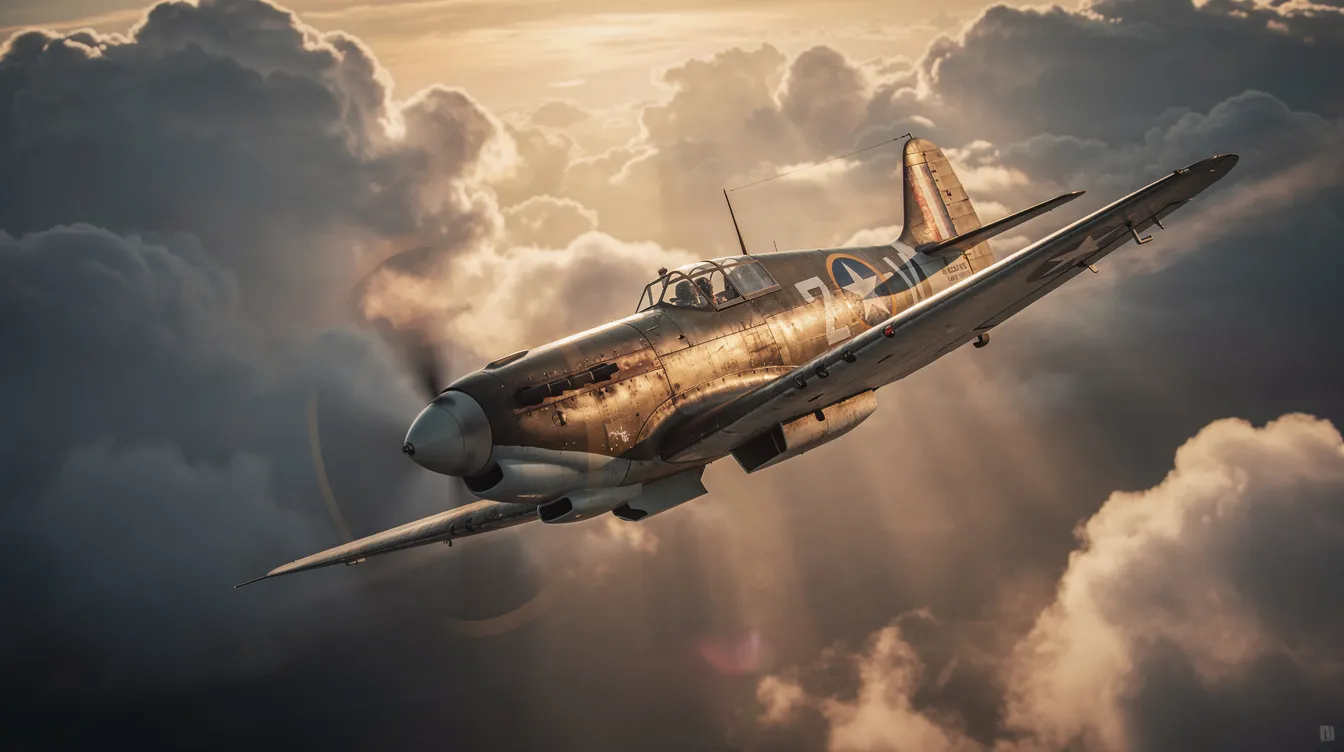
Piston-engine legends defined the doctrine. The Supermarine Spitfire, with its elliptical wings and Merlin engine, became the soul of British resistance during the Battle of Britain in 1940, when roughly 2,900 RAF pilots held off the Luftwaffe and preserved Britain's sovereignty. The North American P-51 Mustang, often called one of the best fighter aircraft of its era, transformed the air war over Europe after 1944: its Merlin-powered variants could escort bombers from England deep into Germany and back, something no other fighter could match at the time. The Messerschmitt Bf 109 served as Germany's backbone fighter across numerous conflicts and fronts.
These World War designs influenced every postwar fighter jet: swept wing shapes, bubble canopies for pilot visibility, armor plate survivability, and the doctrinal emphasis on controlling the skies before anything else could happen on the ground. Aviation history pivoted here, and the lessons endure.
The Dawn of the Jet Age: Me 262, F-86 Sabre, and MiG-15
The late 1940s marked the moment when aviation leapt from propellers to jet engines, transforming both speed and how air forces engaged in aerial combat.
The Messerschmitt Me 262 was the world's first operational jet-powered fighter aircraft. Entering service in late 1944, it could reach approximately 540–560 mph, roughly 100 mph faster than any Allied piston fighter. But fuel shortages, Allied bombing of factories, and its late introduction meant it arrived in too few numbers to change the outcome of the war.
The real proving ground for early jets came during the Korean War, where the North American F-86 Sabre clashed with the Mikoyan-Gurevich MiG-15 over "MiG Alley." Both entered service around 1949–1950 with top speeds near Mach 0.9. The F-86 featured a swept wing design, a bubble canopy for superior pilot visibility, and a radar-guided gunsight. The MiG-15, developed in the soviet union, boasted an excellent climb rate and high-altitude performance. American pilot training, situational awareness, and the Sabre's stability gave it the edge, producing kill ratios that cemented the F-86 as a legend.
These early jets forced rapid innovation: swept wings to manage transonic drag, ejection seats for pilot survivability, and the first generation of airborne radar. The stage was set for the speed race that followed.
Cold War Speed Demons: MiG-25 Foxbat, F-104 Starfighter, and SR-71 Blackbird
By the 1960s, military aviation was consumed by an obsession: fly higher and faster than anything the other side could field.
The MiG-25 Foxbat, which first flew in 1964 and became operational around 1970, was the fastest operational fighter jet of its era. The MiG-25 Foxbat has a top speed of Mach 3.2 in short bursts, though sustained flight was typically limited to Mach 2.83 to prevent engine and structural damage. Its service ceiling reached roughly 80,000 feet. Built from approximately 80% stainless steel rather than expensive titanium, it sacrificed maneuverability for raw interceptor speed. When Soviet pilot Viktor Belenko defected with one in 1976, Western analysts were stunned by its rugged simplicity-including vacuum tubes in certain avionics, chosen partly for EMP resistance.
The Lockheed F-104 Starfighter earned the nickname "missile with a man in it." With Mach 2+ supersonic speeds and tiny stub wings, it was blindingly fast but notoriously difficult to fly at low speed, earning a grim "Widow Maker" reputation in several air forces.
Then there was the Lockheed SR-71 Blackbird-a different category entirely. The Lockheed SR-71 Blackbird is known for its titanium construction and Mach 3.2 speed. Its first flight came on December 22, 1964. Designed for strategic reconnaissance rather than dogfighting, it cruised above 85,000 feet and could survey 100,000 square miles of territory per hour. Only 32 were built. None were ever lost to enemy action despite being fired upon over 4,000 times; its defense was simply to outrun anything launched at it.
The lesson from this era: pushing speed and altitude to extremes demanded specialized materials, enormous fuel consumption, and brutal maintenance. Engineers began pivoting toward stealth and sensor fusion instead of ever-higher Mach numbers-a shift that defines every modern fighter and influences advanced business jet design today.
Multirole Marvels: F-16 Fighting Falcon, F-15 Eagle/EX, and Su-27/Flanker Family
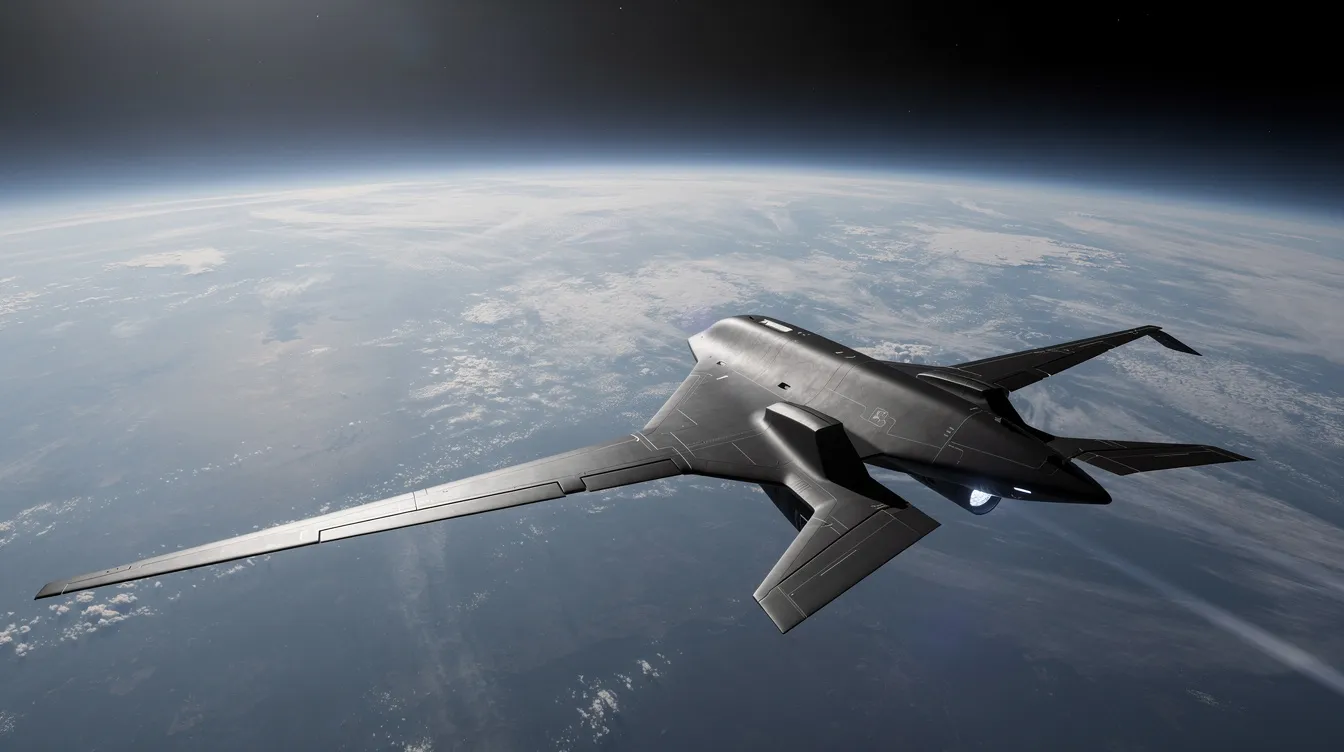
The 1970s–1990s brought a fundamental shift. Instead of building specialized interceptors or pure air superiority platforms, engineers created multirole fighters that could perform various combat missions effectively-air-to-air, ground attack, reconnaissance-in a single airframe.
The General Dynamics F-16 Fighting Falcon, with its first flight in 1974, introduced fly-by-wire flight controls to US fighters-a technology that allows improved stability and reduced pilot workload. Its blended wing-body, bubble canopy, and side-stick controller made it a pilot favorite. Produced in the tens of thousands, it serves in over 25 air forces and remains one of the most cost-effective fighter jets worldwide.
The McDonnell Douglas F-15 Eagle is the heavyweight counterpart: a dedicated air superiority fighter with a top speed of Mach 2.5, over 100 aerial victories, and near-zero air-to-air losses. The modern Boeing F-15EX Eagle II takes the airframe further-it can carry almost 30,000 lbs of weapons, making it a heavily armed "missile truck" for contested environments. The Grumman F-14 Tomcat, famous for its variable-sweep wings, also deserves mention as a carrier-based interceptor that could adapt its wing geometry for improved maneuverability at various speeds.
On the other side of the Iron Curtain, the Sukhoi Su-27 "Flanker" family answered with long range, extreme agility, and flowing aerodynamic lines capable of high-alpha maneuvers like Pugachev's Cobra. Its evolution into Su-30 and Su-35 variants with thrust vectoring and multirole capability ensured the Flanker lineage remains in active service across multiple nations today.
European Elegance: Eurofighter Typhoon and Dassault Rafale
European air forces took a different path in the 1990s–2000s, collaborating and competing to produce 4.5-generation fighter jets that blend agility, advanced avionics, and multirole flexibility into elegant airframes.
The Eurofighter Typhoon features a delta-canard design that delivers supercruise capability at around Mach 1.5 without afterburner, plus an advanced AESA radar and cutting-edge technology in electronic warfare. It serves as a front-line air superiority and strike jet for the UK, Germany, Italy, Spain, and several export customers. Its continuous upgrades keep it relevant against fifth-generation threats.
The Dassault Rafale markets itself as an "omnirole" fighter-available in both carrier and land-based variants, equipped with the SPECTRA electronic warfare suite, and capable of missions from air superiority to nuclear strike. Recent export successes to India, Egypt, and Indonesia confirm its versatility and political appeal as a non-US option.
Both aircraft share design hallmarks that any aviation enthusiast would recognize as cool: sleek delta wings, side-stick controls, fully integrated glass cockpits, and sensor fusion architectures that allow pilots to manage a wide array of threats simultaneously. These same principles-integrated avionics, glass cockpits, real-time datalinks-now appear in high-end business jets, connecting the lineage between military and civilian aerospace engineering.
Fifth-Generation Stealth Icons: F-22 Raptor, F-35 Lightning II, J-20, and Su-57
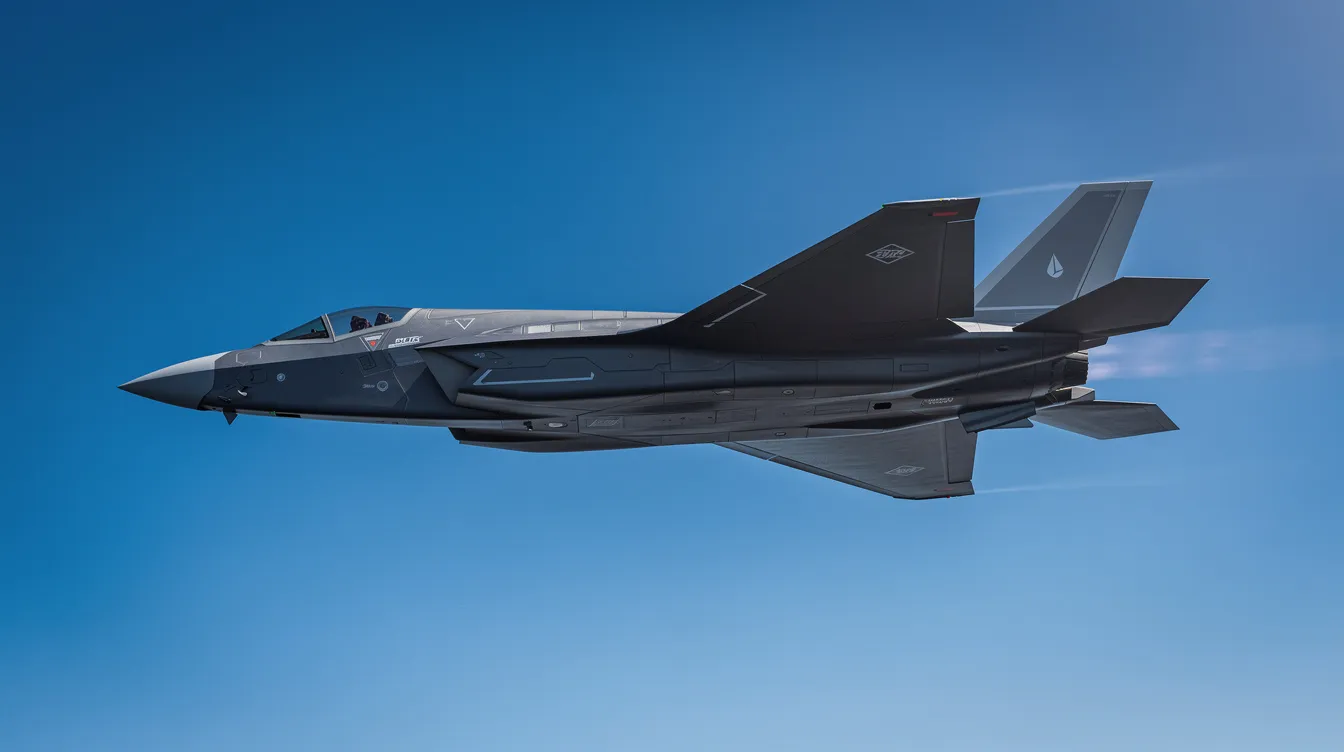
Fifth-generation fighters represent the current pinnacle of fighter aircraft design. These jets feature advanced stealth technology-shaping, internal weapons bays, radar-absorbing materials-combined with sensor fusion, networked warfare, and supercruise. They are exclusively flown by a handful of nations with the industrial base and budget to develop them.
The Lockheed Martin F-22 Raptor is the first operational fifth-generation fighter, an advanced tactical fighter designed for air dominance. With its first flight in September 1997 and entering service in December 2005, the Martin F-22 Raptor established benchmarks that still stand. The F-22 Raptor can supercruise at Mach 1.85 without afterburner. Its radar cross section is famously compared to the size of a golf ball, roughly 0.0001 m². Only about 187 were built, with approximately 177 in service. The F-22 Raptor costs over $150 million per unit, and its total production cost is nearly $300 million per airframe when development is included, making the F-22 Raptor the most expensive fighter jet in the world. It remains the benchmark for air dominance.
The Lockheed Martin F-35 Lightning II is the world's most widely deployed fifth-generation jet in the world today. The F-35 Lightning II has over 880 units in active service across allied air forces, with over 1,335 total deliveries and more than one million flight hours logged. It comes in three variants: F-35A (conventional), F-35B (short takeoff/vertical landing), and F-35C (carrier). The F-35 Lightning II has a top speed of Mach 1.6 and a unit cost of about $110 million. But the full F-35 Lightning II program costs approximately $1.196 trillion over its lifetime, making it one of the most expensive military projects in history. Multirole fighters perform various combat missions effectively, and the F-35 exemplifies this across air superiority, strike, electronic warfare, and ISR.
China's Chengdu J-20 Mighty Dragon has been in PLAAF service since 2017, with an estimated 300+ built by late 2025. The Chengdu J-20 has a weapons payload of 24,000 lbs carried internally, and the Chengdu J-20 can reach Mach 2 without afterburners, making it a formidable long-range stealth platform designed for anti-access/area denial operations.
Russia's Sukhoi Su-57 "Felon" entered service in December 2020. The Su-57 has approximately 30 units in service as of 2026, with serial production ongoing. The Sukhoi Su-57 has a maximum speed of Mach 2.0 and features 3D thrust vectoring for exceptional agility in close-in combat. Questions remain about its stealth and avionics maturity compared to other aircraft in its class.
These jets prioritize information dominance and interoperability-paralleling how BlackJet uses real-time digital tools to integrate aircraft, crew, and travelers into one seamless ecosystem through the BlackJet experience.
Beyond Fighters: A-10 Warthog, B-52 Stratofortress, C-5M Galaxy, and AN-225
Cool jets aren't just fighters. Some of the most beloved military aircraft are attack platforms, bombers, and cargo giants that project power or move entire armies across continents.
The Fairchild Republic A-10 Thunderbolt II, universally known as the "Warthog," first flew in 1972 and was designed primarily for close air support. Its titanium "bathtub" cockpit can withstand 23mm cannon fire, and its GAU-8/A Avenger 30mm cannon is one of the most devastating weapons ever mounted on an aircraft. The A-10 proved itself as a fighter-bomber and ground-attack platform across numerous conflicts in Iraq and Afghanistan, beloved by ground troops for its survivability and precision.
The Boeing B-52H Stratofortress, a stealth bomber's polar opposite in philosophy, first flew in the early 1950s and is expected to serve past the 2050s-over a century of service. With a 185-foot wingspan and nuclear/conventional capability, it remains the US Air Force's long-range strike backbone.
The Lockheed C-5M Galaxy is one of the largest USAF transports, capable of carrying multiple helicopters or armored vehicles intercontinentally. And the Antonov AN-225 Mriya, a single prototype built in 1988 with six engines, held world record payloads and was originally designed to carry the Soviet Buran space shuttle-a visual symbol of sheer aerospace engineering scale.
Mission-specific design shapes every aircraft's form and function. The same principle applies to private aviation: different cabin classes serve different member missions, from light jets for short hops to super-midsize jets for coast-to-coast flights, and the best small private aircraft for every need are chosen the same way.
Experimental Legends: XB-70, X-15, Concorde, and the Space Shuttle
Some experimental aircraft never entered mass service but permanently changed what jets could do-and what engineers dared to attempt.
The North American XB-70 Valkyrie was a 1960s supersonic bomber prototype capable of Mach 3 cruise, with dramatic canards and folding wingtips that compressed shockwaves for additional lift. Though never produced, its aerodynamic research informed high-speed supersonic design for decades.
The North American X-15 rocket plane launched from a B-52 mothership and reached Mach 6.7+ and altitudes above 350,000 feet, earning several pilots astronaut wings. It remains among the fastest, highest-flying crewed aircraft ever built and generated data that directly fed into the Space Shuttle program.
Concorde was the only successful supersonic airliner, operating from 1976 to 2003 at Mach 2.02 cruise with its iconic droop nose. Noise restrictions, economics, and environmental concerns ended its run despite technical brilliance-a cautionary tale for any new aircraft pursuing supersonic civilian flight.
The Space Shuttle itself, a hybrid spacecraft and plane, completed 135 missions with dead-stick glider landings at roughly 200 mph, proving that reusable aerospace vehicles were possible.
These programs drove fly-by-wire systems, composite materials, and high-temperature alloy research directly into civilian aviation. Today, blended-wing-body designs like the JetZero Z4 design promise up to 50% lower fuel consumption than conventional airliners. Hydrogen fuel cells are considered a potential alternative propulsion system for future aircraft. Modern jet designs focus on aerodynamic efficiency, sustainability, and stealth-a direct inheritance from these boundary-pushing programs, just as the top private jets in the world blend cutting-edge tech with passenger comfort.

Scoring the Cool: How Experts Rank the "Best Fighter Jet" in 2026
Ranking the best fighter jet requires scoring across multiple dimensions rather than one simplistic metric. The categories that matter:
Category | Top Contenders |
|---|
Stealth | F-22 Raptor, F-35 Lightning II, J-20 |
Agility | Su-57, Eurofighter Typhoon, Su-35 |
Weapons payload | F-15EX, J-20, F-35 |
Top speed | MiG-25 (historically), Su-57, F-15 Eagle |
Operational scale | F-35 (880+ in service), F-16 (4,500+) |
Cost efficiency | F-16, Gripen, Rafale |
A typical scoring approach awards points in each category-10 for the top performer down to 1 for the tenth-with cumulative scores producing an overall ranking. By this method, the F-35 Lightning II often tops such lists in the world today because of its unmatched multirole breadth, while the F-22 Raptor leads in pure air superiority but suffers from limited numbers and the distinction of being the most expensive fighter jet ever produced. The MiG-25 remains historically unbeatable in high-speed interception but weak in dogfighting. The Eurofighter Typhoon and Su-35 excel as 4.5-generation agility champions with more range and flexibility than pure interceptors.
The analogy to private aviation is direct: just as no single fighter fits every mission, no one plane or ownership model suits every traveler. That is precisely why flexible Jet Card access across multiple aircraft classes exists-matching the right asset to each trip's requirements and mirroring what the best jet cards for frequent flyers are designed to deliver.
From Air Superiority to Executive Superiority: Technology That Leaped into Private Jets
Today's business jets-and the aircraft BlackJet members fly-inherit core engineering from military icons. Fly-by-wire systems, born on jets like the F-16, now enable smoother and safer handling on modern business aircraft. Composite materials enhance the strength and corrosion resistance of aircraft while reducing weight; the Boeing 787 Dreamliner utilizes a composite airframe to reduce weight and improve fuel efficiency, and the same materials appear across new business jet platforms and across many types of private jets.
The same focus on reliability and mission readiness that keeps fighter squadrons combat-capable translates into rigorous maintenance cycles, inspection protocols, and safety certifications in private aviation. Military GPS and encrypted datalinks paved the way for precise routing and real-time flight tracking capabilities that modern jets in the private fleet now take for granted and that factor heavily into any realistic private jet price list and cost comparison.
Design priorities differ, of course. Fighters optimize for G-loads, survivability, and performance envelope at the edges. Private jets use similar materials and systems to prioritize cabin quiet, pressurization comfort, and long, non-stop range. But the engineering DNA is shared.
BlackJet selects operators and aircraft that benefit from this lineage, giving members an experience best described as fighter-level engineering delivered with executive-level comfort.
BlackJet Perspective: Safety, Certification, and Carbon-Neutral Performance
BlackJet applies the discipline of high-performance aviation to private travel-without the noise, weapons, or G-forces of a fighter squadron, structuring access via Jet Cards that follow the core principles outlined in this guide to understanding jet card cost.
Safety is the foundation. BlackJet partners exclusively with operators holding top third-party audit ratings such as Wyvern and ARGUS certifications. Pilots meet stringent experience thresholds-thousands of flight hours and current type ratings on the specific aircraft they fly. Maintenance protocols mirror airline-level standards, with documented inspection cycles and regulatory compliance under Part 135 regulations, even as clients benchmark options using clear jet card cost per hour comparisons.
Sustainability is non-negotiable. Every BlackJet flight is carbon neutral via automatic offsets at no additional cost to the member. Where available, BlackJet prioritizes operators using sustainable aviation fuel (SAF)-a meaningful contrast to the fuel-hungry nature of frontline military aircraft like the SR-71, which burned specialized JP-7 fuel at extraordinary rates, and a key differentiator even among the cheapest private aircraft and budget options.
Technology and support complete the picture. A 24/7 mobile booking platform, real-time flight support, and proactive rerouting mirror mission-control concepts from air forces, but are aimed at minimizing client disruption and maximizing productivity.
The Jet Card membership model-available in 25-hour and 50-hour blocks-provides predictable, prepaid access across multiple cabin types. In contrast to the rigid, single-airframe commitment of owning a jet, it delivers the flexibility that modern travel demands, and offerings like the BlackJet 25+ Hour Jet Card are built around that philosophy.
Why Jet Cards Beat Owning Your Own "Cool Jet" (For Real-Life Missions)
Owning an F-22 Raptor or ex-military MiG would be spectacular at an airshow. For actual travel? Not so much.
Fighter jets present real limitations for civilian use:
Single-seat or cramped tandem cockpits-no room for two children, a spouse, or luggage
Minimal range without aerial refueling
No pressurized spacious cabin, galley, or Wi-Fi
Extreme operating and maintenance costs (recall the F-22's total production cost approaching $300 million per airframe)
Noise restrictions that would bar landing at most civil airports
BlackJet's Jet Card provides access to light, midsize, super-midsize, and large-cabin business jets that can fly real-world missions in various forms of comfort and efficiency, structured around transparent jet card pricing, costs, and benefits:
CEO overnight to London: Depart New York after dinner on a large-cabin jet, arrive rested for morning meetings-no terminal queues, no connections.
Family ski trip: Fly LA to Aspen with pets, gear, and the whole family in a midsize or super-midsize cabin.
Investor roadshow: Tour four European cities in two days, with ground transport coordinated at each stop.
These are missions where a fighter aircraft would be entirely useless, but a private jet is ideal, even when you are comparing what the cheapest private jet options look like against higher-end cabins. Think of Jet Cards as the "mission-ready squadron" for executives: always available, pre-paid, predictable cost, and backed by BlackJet's safety, sustainability, and support infrastructure.
FAQs: Fighter Jets, Private Jets, and the BlackJet Access Model
What is an air superiority fighter? An air superiority fighter is an aircraft designed primarily to gain and maintain control of the skies. Air superiority fighters dominate enemy aircraft in aerial combat through superior speed, agility, and weapons systems. Classic examples include the F-15 Eagle, the F-22 Raptor, and the Su-27 Flanker. They differ from ground attack aircraft like the A-10 Warthog, which focus on supporting troops on the ground.
What is a multirole fighter? A multirole fighter handles air-to-air, air-to-ground, reconnaissance, and electronic warfare in a single airframe. The F-16, F-35, Eurofighter Typhoon, and Dassault Rafale all fit this description. The flexibility of multirole platforms-adapting to whatever the mission requires-mirrors the concept behind multi-cabin Jet Card access, where members select the right aircraft for each trip.
Can civilians own or fly ex-military fighter jets? Technically, yes, demilitarized jets like the L-39 Albatros or certain MiG variants can be purchased. However, the unit cost, specialized training, insurance, maintenance burden, and restricted airspace access make ownership impractical for most. The vast majority of high-net-worth individuals who love aviation choose private jets for actual travel, reserving fighter experiences for dedicated flight schools or airshow events.
What is a Jet Card and how does BlackJet's program work? A Jet Card is a prepaid block of flight hours-typically 25 or 50 hours-that guarantees access to private jets across multiple cabin types. BlackJet's program includes transparent pricing, guaranteed availability, 24/7 digital booking, and real-time support, whether you are considering a 25-hour starter block or evaluating a 100-hour Jet Card cost guide for heavier use. It is a smarter alternative to both ad-hoc charter (unpredictable pricing) and full ownership (massive capital outlay and fixed costs).
Is private aviation safe and sustainable? Yes. BlackJet partners only with operators meeting the highest safety standards, including third-party audits and rigorous pilot qualification requirements. Every BlackJet flight is carbon neutral through automatic offset programs, and the company actively supports sustainable aviation fuel adoption across its operator network-all of which intersects with how travelers may structure and document flights when looking to maximize jet card tax deductions.
Conclusion: The Lasting Allure of Cool Jets-and Your Next-Level Way to Fly
From the P-51 Mustang escorting bombers deep into Germany to the SR-71 Blackbird outrunning every missile launched at it, from the F-22 Raptor's invisible supercruise to the F-35 Lightning II connecting allied air forces across continents, the coolest jets represent the peak of human engineering, courage, and strategic thinking in the air.
Many of the technologies and safety philosophies pioneered by these aircraft now power the private jets that BlackJet members use for business and leisure. The romantic notion of strapping into a fighter is thrilling-but for real-life travel, seamless, carbon-neutral private jet access via a Jet Card delivers something a fighter never could: comfort, productivity, and time reclaimed.
The next generation of aviation-sixth-generation fighters with directed energy weapons, next-generation sustainable business jets with lower emissions and greater range-is already taking shape. The engineering ambition that made the coolest jets in history possible is the same ambition that drives every BlackJet flight.
Explore BlackJet's Jet Card programs and discover how world-class aerospace engineering becomes your everyday travel advantage, whether you're comparing 50 hour Jet Card cost and value, weighing the pros and cons of a 5 million dollar private jet, analyzing Flexjet Jet Card cost and options, benchmarking NetJets jet card pricing, browsing private jets for sale under 10 million, or even considering unlimited private jet flight memberships.


 Sign up with google
 Sign up with Apple