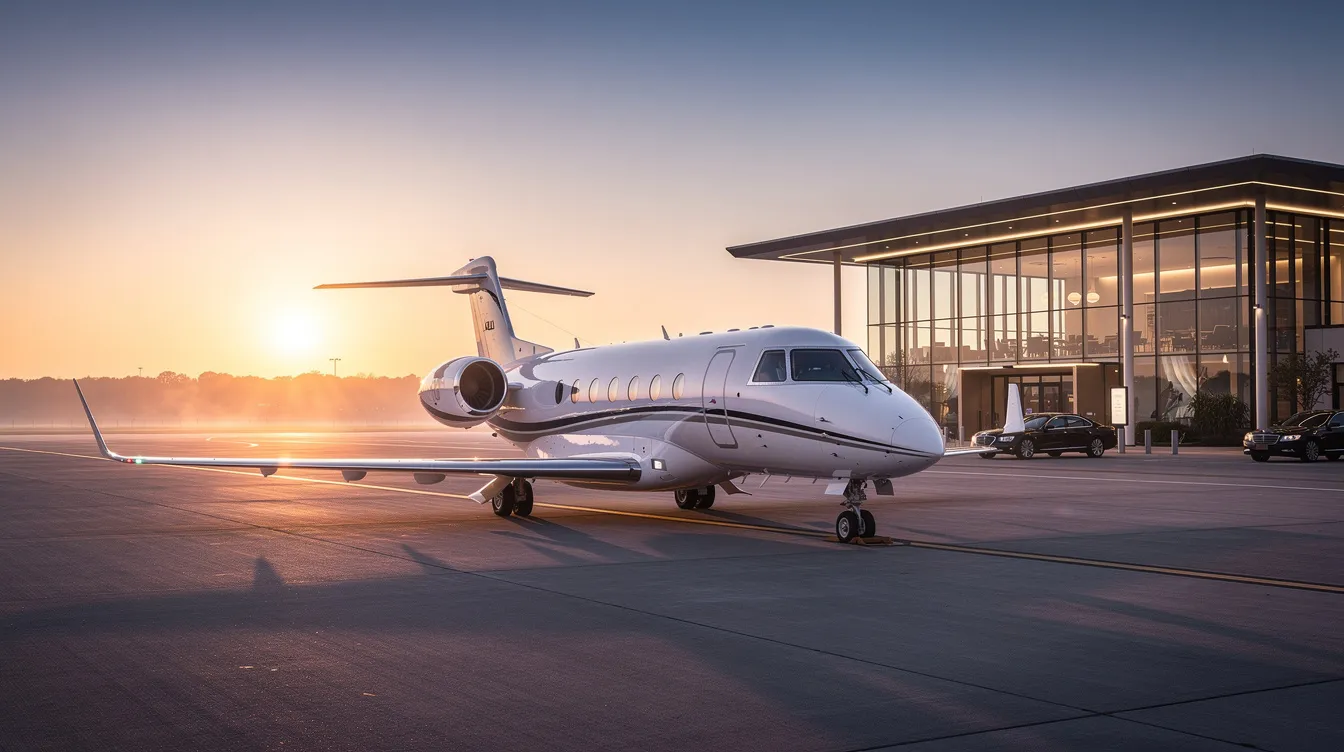
For executives, founders, families, and high-net-worth travelers, private aviation is not only a luxury. It is a way to buy back time, protect privacy, avoid fragile airline schedules, and reach smaller airports that commercial airlines cannot serve efficiently.
This guide breaks down the real cost to fly private in 2026: hourly rates, fees, aircraft categories, Jet Card economics, safety standards, sustainability, and where BlackJet helps frequent flyers turn private jet travel into a predictable part of business and leisure travel.
How Much Does It Cost to Fly Private? (Answer Upfront)
Private jet charter hourly rates generally range from $2,000 to over $14,000, influenced by factors such as aircraft size, flight route, and onboard amenities. In practical terms, the private jet cost can start around $2,000–$3,500 per hour for turboprops and rise to $18,000+ per hour for ultra-long range jets or vip airliners.
Most U.S. private jet charter flights fall between $8,000 and $60,000 per leg, depending on route and aircraft type. For example, New York to Boston on a turboprop may cost $5,000–$7,000 one-way; New York to Miami on a light jet may run $12,000–$18,000; New York to Los Angeles on super midsize jets may cost $30,000–$45,000 or more; and New York to London on long-range jets can reach $90,000–$140,000+.
The cost to charter through on-demand private jet charter services changes with aircraft availability, aircraft positioning, fuel, airport fees, and peak demand. With jet cards such as BlackJet’s 25-hour and 50-hour programs, travelers receive fixed hourly pricing, guaranteed aircraft availability, clearer ancillary fees, and carbon-neutral flights built into the program, and it becomes easier to benchmark Jet Card cost per hour across providers.
BlackJet clients typically fly 25–75 flight hours of private jet travel per year. At that level, fixed-rate private jet pricing can turn unpredictable charter costs into a known cost of business travel or lifestyle mobility.
The “sticker price” is rarely the whole bill. A 7.5% Federal Excise Tax is applied to all domestic flights within the United States, along with a segment fee of about $4.80 per passenger for each leg of the journey. Short leg fees, fuel surcharges, landing fees, aircraft positioning fees, crew expenses, and other hidden fees can raise the final invoice by 20% to 40%.
Route | Commercial first/business expectation | Private jet expectation |
|---|
NYC–Boston | Lower seat cost, more terminal time | $5,000–$7,000 one-way on turboprop or very light jets |
NYC–Miami | Efficient for individuals | $12,000–$18,000 on a light jet |
NYC–Los Angeles | Premium cabin per seat | $30,000–$45,000+ on super midsize jets |
NYC–London | Business/first class may be high | $90,000–$140,000+ on long range jets |
Why High‑Net‑Worth Travelers Pay the Private Jet Premium
The premium for flying private is paid for control. Private jet travel opens access to more than 5,000 U.S. public-use airports versus roughly 500 airports with meaningful commercial service, helping travelers land closer to meetings, homes, resorts, and smaller regional airports. It also converts lost terminal time into usable working time, because private terminals and fixed base operators make boarding faster, quieter, and more discreet.
On routes like NYC–DC or LA–San Francisco, the private advantage is not just flight time. It is the reduced friction before and after the private jet flight: no standard airline check-in, fewer lines, and often a shorter drive from smaller airports. On NYC–London, the aircraft may not fly dramatically faster than commercial flights, but privacy, sleep, customs handling, and direct ground transportation can change the value of the entire trip.
Consider a CEO flying same-day NYC–Chicago–NYC. Commercial airlines may force a rigid schedule, early arrival at the airport, and a late return. A private flight can depart closer to the executive’s calendar, support confidential work onboard, and return the same night without sacrificing the day.
Or consider a family leaving Aspen for Teterboro after a Sunday ski weekend. Charter flights avoid the hub-and-spoke complexity of many commercial flights, reduce luggage friction, and can turn a stressful return into a seamless door-to-door experience.
For groups, the math can become more rational. A Miami–Nassau or Dallas–Vail private jet charter may look expensive as a full aircraft, but with six to eight passengers, the per-person private jet rental cost can approach premium first-class fares, especially when the group values schedule control, privacy, and direct airport access. For frequent flyers, BlackJet’s 25+ Hour Jet Card converts this variable spend into a predictable operating tool.
How Private Jet Charter Prices Are Calculated
Private jet charter prices begin with an hourly rate multiplied by billable flight time, then add taxes and trip-specific charges. Private aviation charters are billed primarily by the flight hour, scaling sharply with the size, range, and passenger capacity of the aircraft.
The primary factors influencing private aviation pricing include the size of the aircraft, flight duration, and various operational fees. The four major drivers are: aircraft type, flight distance and flight time, positioning or empty leg flights, and peak demand. The price of chartering a private jet depends on multiple factors, such as the aircraft's size and type, the distance to your destination, and any specific onboard amenities or requirements you may have.
Billable flight time is usually wheels-up to wheels-down, not the time you spend at the terminal. Operators often enforce a minimum flight time clause, billing for a full minimum hour even for flights shorter than that duration. Short leg fees may be imposed on flights that fall below the operator’s minimum billable flight time, which usually ranges from 30 to 60 minutes.This is why a 35-minute hop may still price like a billable flight hour.
A quote usually includes the aircraft, crew, base fuel, and standard insurance. Wi-Fi, premium in-flight catering, ground transportation, pet cleaning, and international handling fees are often treated as additional services, while landing and ground handling, deicing, crew overnight costs, and hangar fees may also increase the total charter bill. Fuel is the highest variable operational cost in private aviation, with surcharges ranging from $300 to over $900 per hour when oil prices increase. Fuel surcharges can be applied when fuel prices exceed a certain threshold, potentially adding $300 or more per hour to the charter cost.
Here is a simple example. A 2.5-hour light jet at $3,200 per hour equals $8,000 in base flight costs. Add the 7.5% federal excise tax, or $600. Add segment fees for four passengers at about $4.80 each, or $19.20. Add $900 in landing and handling, $600 in fuel surcharges, and $1,200 if aircraft positioning is needed. The total becomes roughly $11,319 before optional catering or ground transport.
That is why the actual invoice for private aviation rarely reflects just the base hourly rate due to various variable costs. Private aviation pricing is complex because costs are determined by operational variables, flight durations, and the level of capital commitment. BlackJet Jet Card members see these components simplified into fixed hourly rates by cabin category, with transparent ancillary fees rather than surprise add-ons.
Private Jet Cost by Aircraft Type (From Turboprops to Ultra Long Range)
Aircraft type is the foundation of private jet flight costs. A larger aircraft has more range, more passenger capacity, more powerful aircraft engines, and usually spacious cabins, but it also burns more fuel and carries higher operating costs.
Very Light Jets (VLJs) are compact aircraft designed for shorter trips, accommodating four to seven passengers, and are ideal for regional travel or quick business trips. Light jets typically accommodate six to nine passengers and are ideal for short to medium-haul flights, offering enhanced speed, range, and comfort compared to smaller aircraft. Midsize jets provide a balance between cabin space and range capabilities, seating between seven and nine passengers,s and offering greater interior comfort and amenities.
Category | Typical seats | U.S. hourly rate range, 2025/2026 | Sample route | |
|---|
Turboprops | 4–8 | $2,000–$3,500 | Pilatus PC-12 NYC–Nantucket | |
Very light jets | 4–7 | $2,500–$4,000 | Phenom 100 NYC–Washington | |
Light jets | 6–9 | $3,000–$5,000 | Citation CJ3+ LA–Las Vegas | |
Midsize jets | 7–9 | $4,000–$7,000 | Citation XLS+ NYC–Dallas | |
Super midsize jets | 8–10 | $5,500–$9,000 | Challenger 350 NYCDenvere | Heavy/long |
ng range | 10–16 | $8,000–$14,000 | Gulfstream G450 NYC–London | |
Ultra-long-range jets | 10–19 | $11,000–$18,000+ | Global 6500 LA–Tokyo | |
Heavy jets, such as the Gulfstream G450, can carry 10 to 16 passengers and are designed for long-haul flights, with hourly rates typically ranging from $8,000 to $14,000. Ultra-long-range jets are capable of nonstop flights over vast distances, including transoceanic routes, and typically have seating capacities ranging from ten to nineteen passengers.
For regional trips, turboprops, very light jets, and light jets often optimize private jet rental. For coast-to-coast domestic missions, midsize jets and super midsize jets offer more comfort, luggage capacity, and range. For transatlantic, transpacific, and other international flights, a heavy jet, long-range jets, or ultra-long-range aircraft is often required, while the very largest ultra-long-range aircraft increasingly resemble billionaire private jets with bespoke interiors and capabilities.
Longer flights generally necessitate larger aircraft equipped with greater fuel capacity, which elevates the overall cost of private jet charters due to increased fuel consumption and possible crew changes. BlackJet Jet Card programs typically separate pricing by cabin class: light, midsize, super midsize, and long range, so travelers can predict the cost to fly private across different trips.
Taxes, Fees, and the “Hidden Costs” of Flying Private
Many travelers underestimate the difference between private jet charter rates and the final invoice. Mandatory and incidental fees typically increase the final bill for private aviation by 20% to 40%, and private jet charter costs can rise further on complex routes.
The federal excise tax is 7.5% on most U.S. domestic flights, and per-segment fees are approximately $4.80 per passenger per leg in 2025/2026. These charges are small compared with aircraft costs, but they apply consistently and should be visible in any quote.
Airport landing fees can vary widely, typically ranging from $100 to $1,500 per flight, depending on the airport and the aircraft's size, and they are a core component of private jet charter pricing. Landing fees vary widely between airports and can add between $150 to $1,500 to the cost of a private jet charter, depending on the airport's size and location. Landing and ground handling fees charged by airport authorities vary based on aircraft weight and airport popularity.
Fixed base operators may also charge ramp, handling, parking, and hangar fees. Crew overnight accommodation fees can add between $150 and $600 per crew member per night to the total cost of a private jet charter. Winter operations can add deicing and hangar costs, especially at ski destinations.
Aircraft positioning matters. Repositioning fees apply when a plane must fly empty to pick up a passenger, impacting overall pricing. If the aircraft is not stationed at the departure airport, repositioning fees can add 20% to 40% to the bill. Aircraft positioning fees occur when a private jet must fly empty to the departure airport to pick up passengers, which can significantly increase the overall cost of the charter.
Private jet charter prices can surge during high-demand periods, such as holidays and major events, leading to increased rates of 20–40% above baseline prices. Booking during major travel windows can increase standard rates by 15% to 30%. Add onboard extras such as Wi-Fi, premium catering, pet fees, specialized cleaning, and bespoke ground transportation, and the difference between the base price and the actual bill becomes clear.
A reputable charter company should disclose all of this before you sign. BlackJet’s Jet Card structure is designed to reduce surprise hidden fees by giving members fixed pricing, vetted aircraft operators, and clear terms before departure.
Chartering a Private Jet vs. Jet Cards vs. Ownership
There are three main ways to access business jets: on-demand charter services, jet cards or membership programs, and fractional or full ownership. Each suits a different level of usage, capital commitment, and desire for control.
On-demand private jet charters work well for occasional trips, especially when you understand the specific economics of chartering a small private plane. You pay trip by trip, but pricing changes with aircraft availability, route, season, and aircraft positioning. Jet cards and membership programs provide fixed hourly pricing and guaranteed aircraft availability, which can lead to cost savings for frequent flyers compared to booking individual charters, but it is important to understand the overall Jet Card cost and value drivers. BlackJet’s 25-hour and 50-hour programs add carbon-neutral flights, digital booking, real-time support, and vetted charter operators.
Ownership provides the most control, but it is capital-intensive. A full or fractional aircraft can make sense at 150–300+ hours per year, yet owners carry crew, insurance, maintenance, depreciation, storage, and regulatory costs, or they may explore leasing a private jet as an alternative structure. Routine inspections for private aircraft occur every 400–600 flight hours, with major unexpected parts failures triggering bills from $200,000 to over $1 million.
Access model | Best for | Cost profile |
|---|
On-demand chartering of a private jet | Occasional travelers | Variable private jet charter rates, trip-by-trip negotiation |
BlackJet Jet Card | 25–100 hours/year | Fixed hourly rates, priority access, carbon-neutral flights |
Fractional/full ownership | 150–300+ hours/year | High capital cost, maximum control, and ongoing fixed expenses |
For 50 flight hours, an ad-hoc charter may appear as 50 hours multiplied by an hourly rate, then rise 20% to 40% after fees, which is why many travelers benchmark those numbers against a 50 Hour Jet Card cost guide. A fractional model can add management fees and capital exposure. A fixed-rate Jet Card like BlackJet’s is designed for travelers who want predictable private jet cost, one contract, 24/7 support, and safety-led access without owning the aircraft.
How to Fly Private for Less (Without Compromising Safety or Service)
The cost to fly private is high, but smart planning can reduce waste and help you fly private more cheaply while preserving comfort. Choose the smallest suitable aircraft instead of larger aircraft when passenger count, luggage, weather, and range allow, since many budget-friendly private aircraft options can safely and comfortably serve short missions. Four passengers on a short route rarely need a super midsize cabin if a light jet can safely complete the mission.
Use point-to-point routing and airports close to your true origin and destination. Using smaller regional airports can result in lower landing fees and quicker turnarounds, contributing to overall savings in private jet travel costs. Secondary airports may also reduce congestion and shorten ground time.
Empty leg flights, which occur when a private jet must return to its base without passengers, can offer discounts of 25–75% off standard charter rates, making them a cost-effective option for travelers with flexible schedules and a powerful tactic among the cheapest private jet strategies. The trade-off is control: empty leg flights may have fixed departure times, limited routes, or cancellation risk if the original charter changes.
Semi-private aviation services allow passengers to purchase individual seats on shared flights, significantly reducing costs compared to chartering an entire aircraft and complementing other fly private cheap strategies and platforms. This can be useful when the schedule matches your route, though it does not provide the same privacy or customization as private jet charter flights.
Avoid stacking brief leg flights that trigger minimums. Consolidate meetings, reduce unnecessary stops, and ask whether daily minimums apply. Around holidays, major sporting events, summer weekends, and ski season, Jet Cards like BlackJet’s can help protect frequent flyers from seasonal spikes and last-minute scarcity.
Never trade price for safety; working with a vetted provider such as BlackJet’s premium private jet programs helps ensure standards are properly enforced. Confirm FAA Part 135 compliance, an active air carrier certificate, insurance, pilot experience, and third-party ratings such as ARGUS, Wyvern, or IS-BAO before selecting aircraft operators.
Safety, Technology, and Sustainability: What You’re Really Paying For
A meaningful part of the private jet rental cost reflects safety infrastructure, not just luxury interiors. Serious charter operators operate under federal aviation administration oversight, including FAA Part 135 rules, recurrent pilot training, maintenance standards, operational control procedures, and documented crew qualification.
Technology also affects private jet pricing and fits into the broader private jet price list of aircraft categories and access models. Advanced avionics, redundant systems, weather radar, real-time flight tracking, mobile trip management, and aircraft performance tools add cost while improving reliability. BlackJet’s digital booking and live support tools are built to make private jet charter services feel seamless without removing human oversight.
Sustainability is becoming part of premium private aviation, and many travelers now weigh carbon impact alongside the cheapest private jet operating options. Sustainable aviation fuel may be used where available, while carbon offset programs help address unavoidable emissions. BlackJet commits to carbon-neutral flights for Jet Card members as part of the base program, rather than treating carbon responsibility as an afterthought.
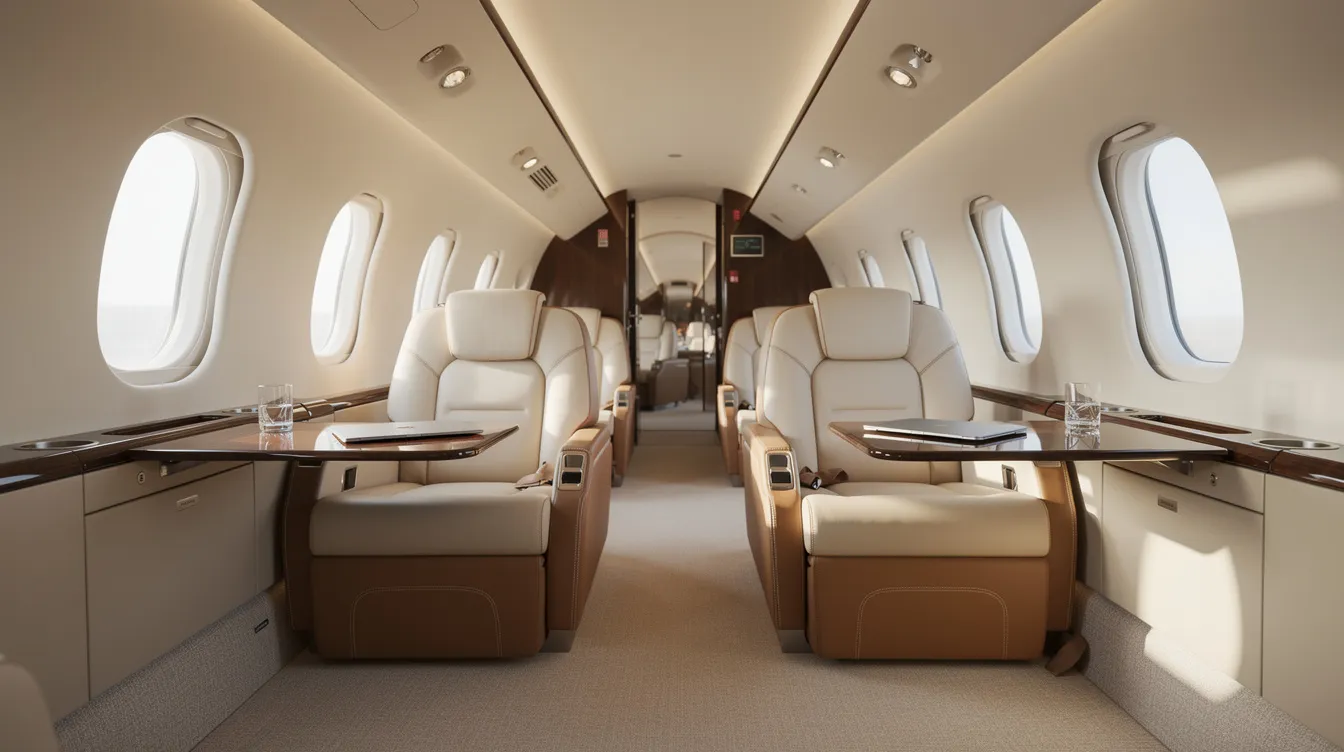
Premium service elements matter, too. A consistent cabin class, onboard Wi-Fi, appropriate flight attendant service on larger aircraft, curated catering, and clean modern interiors help separate a disciplined network from the lowest-bid spot market.
Frequently Asked Questions About the Cost to Fly Private
How much does it cost to charter a private jet for a 2‑hour trip?
For a 2-hour private jet flight, costs can range from about $8,000 for a turboprop flight to about $37,000 for an ultra-long-range jet flight, reflecting the wide variability based on aircraft type and operational costs. The typical cost to charter a private jet in the United States ranges from $5,000 to $10,000 for a standard 2-hour domestic flight on a midsize jet, covering the base hourly rate, fuel surcharges, landing fees, and crew expenses, although premium midsize jet quotes may be higher in busy markets.
Is flying private ever cheaper than first class?
For one passenger, usually no. For six to eight travelers, flying private can become comparable to premium commercial flights on certain routes, especially when commercial first-class fares are high, and schedule control is valuable.
What is the cheapest way to fly private for a family of four?
Use the smallest safe aircraft, consider turboprops or very light jets for short routes, avoid repositioning, and watch for empty leg flights. Ask for the full private jet rental quote, not just the hourly rate.
How do federal excise tax and segment fees affect my bill?
The 7.5% federal excise tax is applied to the majority of domestic private jet charter flights within the U.S.Segment fees add about $4.80 per passenger per leg, so they are small but should still be itemized.
Do Jet Cards really save money vs. on-demand charter?
They can be used by travelers flying 25–100 hours per year. Jet Cards offer fixed hourly rates, guaranteed aircraft availability, and reduced pricing uncertainty compared with one-off charter flights.
Are there hidden fees I should ask my charter company about?
Yes. Ask about fuel surcharges, landing fees, aircraft positioning, crew overnights, hangar fees, international handling fees, deicing, Wi-Fi, pet cleaning, cancellation terms, and additional services like catering and ground transportation, since they can increase the final bill.
How much notice do I need to book a private jet?
Many charter flights can be arranged with 24–48 hours’ notice, but aircraft availability improves when you book earlier. Jet Card members may receive priority access, especially during peak travel periods.
How does BlackJet price its Jet Card hours?
BlackJet prices Jet Card hours by cabin category, such as light, midsize, super midsize, and long range. Members receive fixed hourly pricing, carbon-neutral flights, vetted operators, digital booking, and transparent ancillary fees.
Choosing the Right Charter Company (and Why BlackJet Is Different)
The provider matters as much as the airplane. The lowest quote can hide older aircraft, poor recovery support, unclear contracts, or hidden fees that appear after the itinerary is set.
Before you charter a private jet, confirm the operator holds a valid Part 135 certificate and air carrier certificate. Review safety ratings, insurance limits, maintenance standards, crew experience, cancellation terms, and whether the charter company explains the full cost to charter before payment.
Traditional brokers shop the market trip by trip. That can work, but service quality and pricing may vary. Membership-based models reduce friction by combining private jet charter flexibility with consistent standards, safety screening, and clearer billing.
BlackJet’s model is built around a curated network of audited aircraft operators, Jet Card tiers such as 25-hour and 50-hour programs, access across light, midsize, super midsize, and long-range jets, 24/7 human support, mobile booking, carbon-neutral flights as standard, and transparent billing designed to minimize repositioning and short-leg fees.
A 25-hour Jet Card member flying NYC–Palm Beach several times each winter can plan costs without renegotiating every trip. A business traveler doing quarterly London–New York international flights can access larger aircraft and long-range capability with safety, support, and cost clarity already in place.
Conclusion: What It Really Costs-and What You Really Gain
Private jet charters generally run $2,000–$18,000+ per flight hour, depending on aircraft, with most U.S. trips landing between $8,000 and $60,000 per leg, figures that align with broader analyses of how much it costs to rent a private jet. But the better question is not only “how much does it cost?” It is what that cost returns in time, privacy, productivity, flexibility, and access.
Understanding aircraft categories, taxes, operational fees, and hidden charges allows travelers to budget with confidence and decode the full structure of private jet charter pricing. It also helps you choose the right access model: on-demand charter for occasional needs, ownership for very high utilization, or a Jet Card when predictable private aviation matters, ideally informed by a clear view of Jet Card pricing structures and benefits.
With BlackJet, private jet access becomes more structured: fixed-rate Jet Card pricing, certified safety standards, carbon-neutral flights, and modern booking technology. Explore BlackJet’s Jet Card programs to turn ad-hoc private jet rental into a seamless, elevated part of your business and lifestyle strategy, and compare them with other top Jet Cards for frequent flyers.


 Sign up with google
 Sign up with Apple