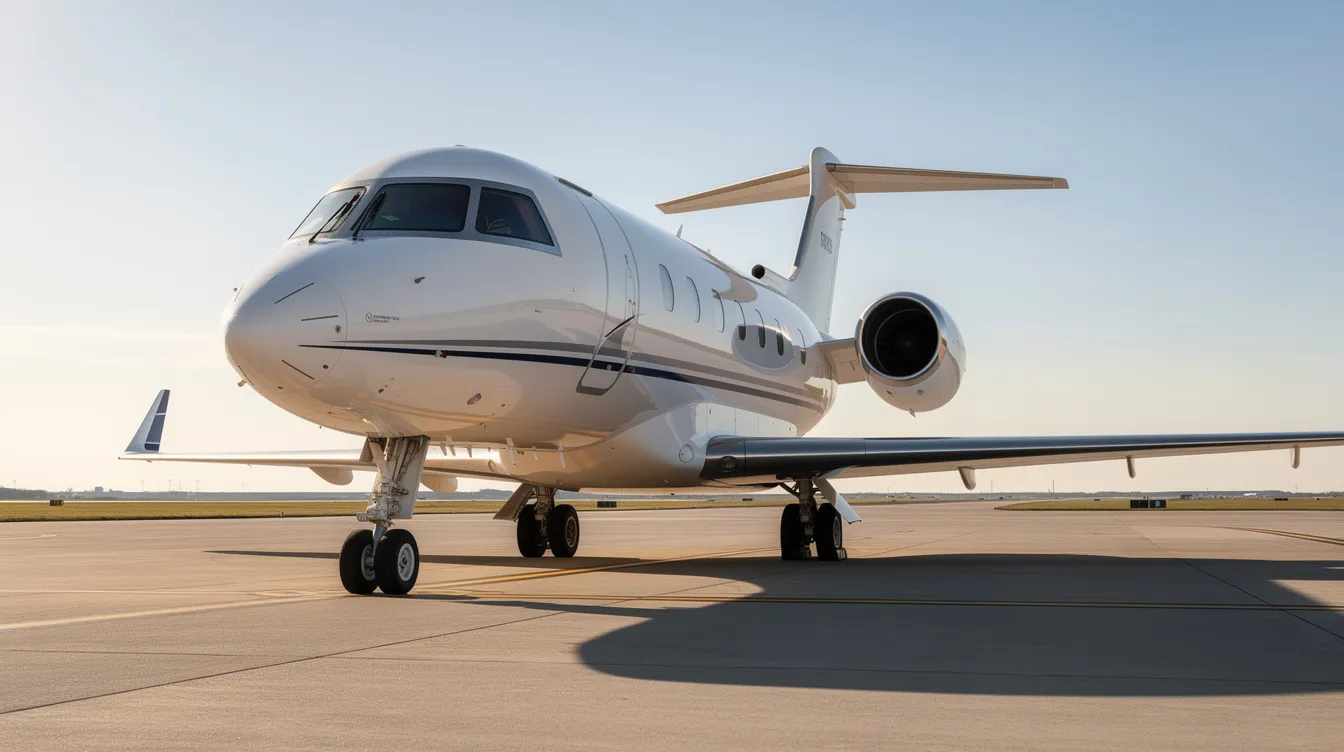
For more than five decades, Embraer has shaped the way the world flies. Today, Embraer is a leading global aerospace company and the world’s third-largest civil aircraft manufacturer, best known for regional airliners and executive jets like the Phenom and Praetor that play a central role in private aviation. What began as a state-backed initiative in Brazil has evolved into one of the most consequential names in the aerospace industry-producing aircraft that serve airlines, militaries, agricultural operators, and discerning private travelers alike.
For frequent business flyers and high-net-worth leisure travelers considering flexible private aviation, Embraer represents something specific: a manufacturer whose engineering rigor, safety standards, and cabin philosophy directly influence the quality, efficiency, and reliability of every flight. This guide looks at Embraer’s history, commercial and executive aircraft, safety and sustainability credentials, and how its aircraft fit into BlackJet’s Jet Card ecosystem—context that matters when you want private travel that delivers privacy, luxury, and dependable access without aircraft ownership.
Embraer at a Glance in the Global Aerospace Industry
Embraer S.A. is the third-largest civil aircraft manufacturer in the world, a global aerospace company with over 55 years of aeronautical expertise. Established by the Brazilian government in 1969 and headquartered in São José dos Campos, Brazil, where its headquarters are based, the company operates across commercial aviation, executive aviation, defense and security, agricultural aviation, and services and support.
In the commercial segment, Embraer's commercial aviation sector specializes in aircraft with up to 150 seats, making it a key competitor in the regional jet market once dominated by both Embraer and Bombardier's CRJ line and providing platforms that can scale into private jets for up to 50 passengers. With CRJ production ended in 2020, Embraer now stands as the primary independent manufacturer of commercial aircraft in the 70–150 seat space.
The scale is substantial. In 2025, the company delivered 244 aircraft across its segments-78 commercial, 155 executive, and a handful of defense units-while on track to achieve USD 7.578 billion in revenue. The firm order backlog reached USD 34.5 billion by mid-2026, a record. Embraer operates in over 60 countries with a client portfolio of 100 airlines.
For BlackJet clients, Embraer aircraft appear at both ends of the travel spectrum: E-Jets serve commercial hubs where members connect before transitioning to private flights, while Phenom and Praetor executive jets form a core part of BlackJet's light and midsize fleet options for travelers who may also explore buying a seat on a private jet instead of chartering the whole aircraft.
Historical Roots: From Brazilian State Project to Global Player
Embraer was established by the Brazilian government in 1969, driven by a strategic ambition to build a domestic aerospace sector. Under the leadership of engineer Ozires Silva, the prototype EMB-110 Bandeirante first flew in October 1968, and formal operations began in January 1970 in São José dos Campos.
Early programs like the Bandeirante regional turboprop, the Ipanema agricultural aircraft, the EMB-312 Tucano military trainer, and the EMB-120 Brasilia cemented Embraer's reputation across regional, military, and agricultural markets. These aircraft were produced to solve practical problems-connecting remote Brazilian communities, training the Brazilian Air Force, and supporting farming operations.

Key milestones in the company's history include:
1987: Aerotec was sold to Embraer, strengthening military and training capabilities
December 1994: The company was privatized, with majority ownership passing to private investors while the government retained golden shares for strategic veto power
2000: Dual IPO on NYSE and B3 (BM&F Bovespa), establishing Embraer as a publicly traded global player
Late 1990s–2000s: Launch of the ERJ family and E-Jet family, helping expand Embraer's commercial footprint worldwide
Engineering Excellence and Innovation Culture
Research and Development Commitment
Embraer's reputation for engineering excellence spans five decades of designing, certifying, and supporting high-performance aircraft across every segment it serves. The company invests nearly 10% of revenues in research and development annually, a commitment that drives continuous improvement across its product lines.
Patent Portfolio and Innovation Outposts
Embraer's aircraft are recognized for their advanced aerodynamics and fuel efficiency-qualities that stem directly from this R&D intensity. The company holds approximately 800 patents for aviation technologies, with 987 patent applications filed and 820 granted as of its most recent filings, and that innovation also depends on integrating aircraft components and subsystems effectively. Five research centers support this work, and Embraer's innovation outposts-including facilities in Silicon Valley and Boston-keep the company at the forefront of emerging aerospace solutions. Embraer also works to establish collaborations with universities and research centers.
Innovation Initiatives
Concrete initiatives include:
Innovation Verticals focused on future products, energy transition, and shaping future air mobility
Embraer-X, an incubator developing adjacent technologies and startups
Smart Window™ technology in the newest Praetor 500E and 600E cabins, enabling immersive virtual meetings and cinema experiences
Cross-licensing and PCT patent strategies that sign long-term technology partnerships
Passenger-Centric Design Philosophy
Embraer emphasizes a passenger-centric design philosophy, ensuring comfort in its aircraft through cabin layout, pressurization quality, noise management, and materials innovation. Its employees also contribute ideas and process improvements that support the company's innovation culture.
Commercial Aviation: E-Jets and the E2 Family
E-Jet Family Overview
Embraer developed the E-Jet family to bridge the gap between small regional aircraft and larger narrowbody jets. The E-Jet family significantly transformed regional aviation when the E170 entered service in the mid-2000s, offering airlines a 2-2 seating configuration with full overhead bins-a meaningful comfort upgrade over older regional jets.
Operational Flexibility
The capacity range of Embraer's E-Jets allows airlines to service low-to-medium-density routes profitably. Airlines like United Express and American Eagle adopted E-Jets for exactly this reason: right-sized capacity, lower trip cost, and high dispatch reliability, and variants like the ERJ-135 and ERJ-145 can even be configured as private jets for around 30 passengers. Embraer's E-Jets family provides airlines with operational flexibility for various routes, from secondary city pairs to hub feeding operations.
E2 Generation Advancements
The E2 generation brought further gains. Re-engineered wings, Pratt & Whitney geared turbofan engines, and advanced aerodynamics delivered measurable reductions in fuel burn, noise, and emissions. In 2025, Embraer delivered 44 E2 aircraft alongside 34 E1s, and guidance for 2026 targets 80–85 commercial jet deliveries, figures closely watched by travelers comparing major providers like NetJets jet card programs and their costs.
The proposed Boeing-Embraer joint venture, which would have combined Embraer's commercial operations with Boeing's scale, was canceled in 2020 amid COVID-19 disruption, leaving Embraer independent and focused on expanding its commercial and executive portfolios in a market also shaped by leading private jet companies.
Embraer Executive Jets: Phenom, Legacy, and Praetor
Legacy 600 and Early Business Jets
Embraer Executive Jets was formally established in 2005, though the company's entry into business aviation began earlier. The Legacy 600 entered service in 2002 as a business jet derived from the ERJ 145 platform-a creative conversion that opened new markets, and Embraer Executive Jets also maintains a notable presence in Florida through assembly and service operations. Embraer has since delivered more than 1,000 executive jets globally.
Current Executive Jet Lineup
Below is a table summarizing Embraer's current executive jet models:
Model | Class | Range | Key Feature |
|---|
Phenom 100EV | Light | ~1,178 nm | Entry-level efficiency for short hops |
Phenom 300E | Light | ~2,010 nm | Best-selling jet in its class for 14 years |
Praetor 500 | Midsize | ~3,340 nm | Fly-by-wire controls, flat-floor cabin |
Praetor 600 | Super-midsize | ~4,018 nm | Transcontinental range, executive comfort |
Lineage 1000 | Large Cabin | ~4,600 nm | VIP version of E190, up to 19 passengers |
The Phenom 300 is the best-selling jet in its class, with a track record that includes major fleet deals with operators worldwide. Embraer launched the Praetor 500 and 600 in 2018, evolving them from the Legacy 450/500 with enhanced range, cabin quality, and systems, supported by a manufacturing facility tied to executive jet assembly and support. The Lineage 1000 is a 19-passenger VIP jet-a VIP version of the E190 airliner-though production has since been discontinued in favor of the more focused Phenom and Praetor lineup, yet it illustrates how Embraer platforms can compete with large-cabin jets for around 20 passengers.
BlackJet Fleet Integration
Embraer produces business jets in light to midsize categories that BlackJet regularly sources for Jet Card and on-demand charter clients, with premium private jet card programs offering reliability, cabin comfort, and operating efficiency across mission profiles.
Use Cases for Business and Private Travel
Embraer produces light to midsize cabin jets that match the most common mission profiles BlackJet members fly, while travelers focused primarily on cost might gravitate toward budget-friendly private aircraft options. Consider two scenarios:
Scenario 1: Same-day Deal Closing
A CEO departs Teterboro at 7:00 AM
Lands at Billy Bishop at 8:20 AM
Takes three meetings
Returns by 6:00 PM
Total flight time: roughly 2.5 hours round trip
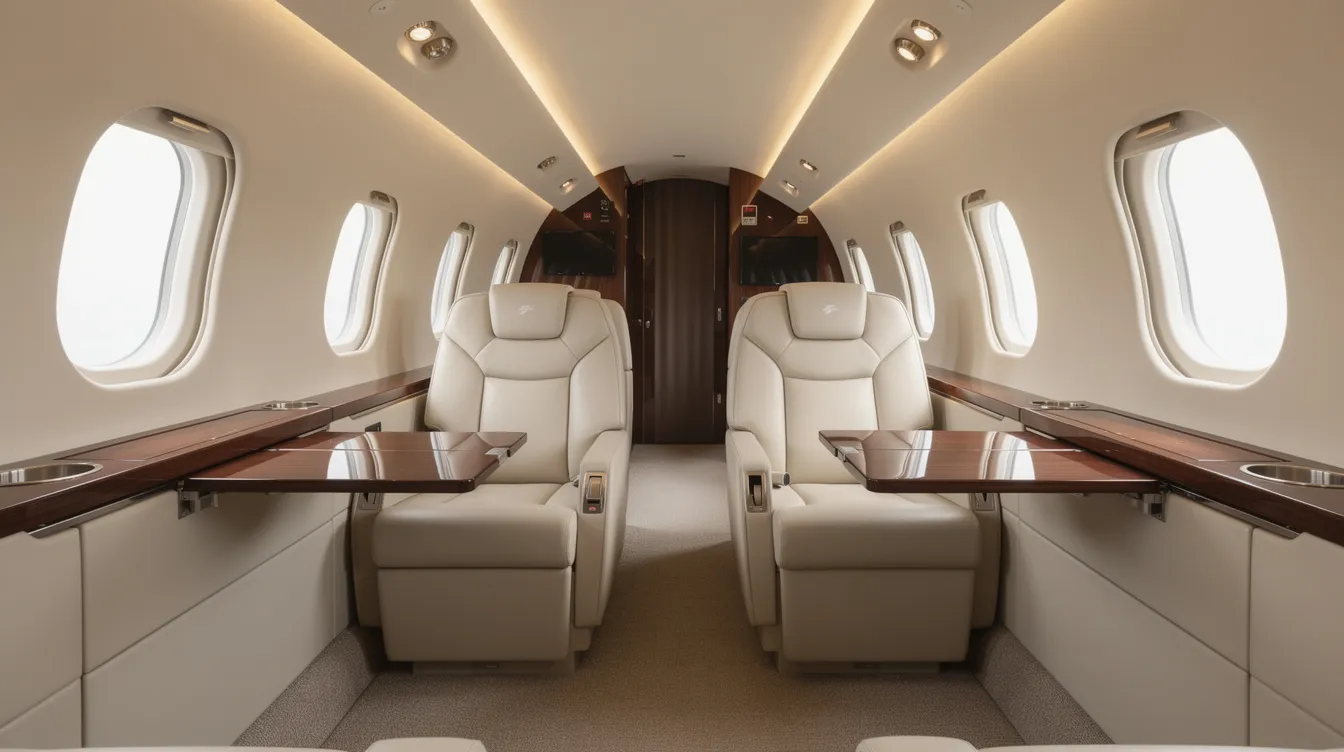
The commercial alternative involves connections, security queues, and a full day consumed by logistics. The light jet cabin seats up to eight, with a lavatory and refreshment center-efficient without compromise, especially for travelers exploring the most affordable private jet options.
Scenario 2: Family Relocation Flight
A family of four departs Congonhas, São Paulo
Enjoys a flat-floor midsize cabin with stand-up headroom and connectivity
Arrives in Miami nonstop
Range and payload make this feasible without fuel stops
The cockpit features fly-by-wire controls and modern avionics that ensure a smooth, quiet ride
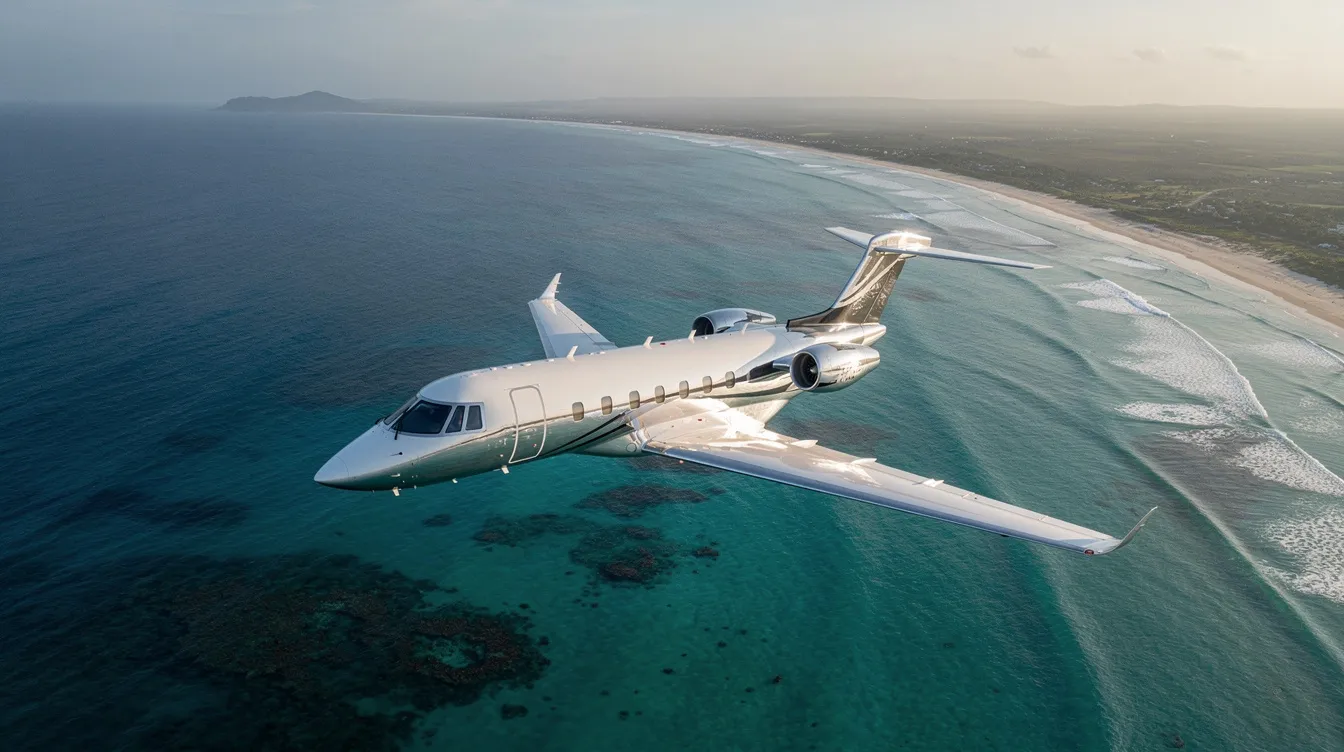
Private access via Jet Card is a strategic advantage rather than a mere luxury-it converts travel time into productive or restorative hours, and understanding how jet card costs are structured helps travelers align their budgets with expected usage.
Safety, Certification, and Operational Reliability
Certification Standards
Embraer's certification process spans three of the world's most rigorous aviation authorities: ANAC (Brazil), FAA (USA), and EASA (EU). The newest Praetor 500E and 600E both achieved triple certification in 2026, reinforcing the manufacturer's commitment to meeting the highest global standards.
Safety Features
Design features that underpin safety in Embraer executive jets include:
Fly-by-wire flight controls in the Praetor family
Redundant systems architecture across avionics and hydraulics
Advanced diagnostic capabilities for predictive maintenance
Modern cockpit displays with enhanced situational awareness
BlackJet Safety Overlay
BlackJet overlays manufacturer-level safety with its own proprietary certification and operator vetting standards, including pilot experience requirements, maintenance verification, and real-time flight monitoring, which are the kind of safeguards savvy travelers look for when comparing the best jet card programs for frequent flyers. Business jets like Embraer's are held to stringent maintenance and operational standards comparable to commercial aviation-a fact that often surprises first-time private flyers.
Sustainability, Biofuels, and New Air Mobility Concepts
Sustainable Aviation Initiatives
The company is focused on technological advancements in sustainable aviation. Embraer manufactures the world's only ethanol-fueled general aviation aircraft-the Ipanema, used in agricultural aviation-demonstrating a willingness to pioneer alternative energy solutions in flight.
Biofuel and Alternative Energy
Embraer's innovative designs contribute to lower emissions and fuel consumption across its product range, placing several of its models among the best-performing private jets in the world. Embraer aims to reduce greenhouse gas emissions through innovation in airframe efficiency, engine partnerships, and sustainable aviation fuel compatibility. The global CORSIA scheme promotes aviation biofuel use, and Embraer's newer models are designed with this future in mind.
Urban Air Mobility
On the air mobility front, Embraer's EVE subsidiary is developing electric vertical takeoff and landing concepts for urban air mobility-ideas that may reshape short-distance travel within the next decade.
BlackJet connects these manufacturer efforts to its own sustainability stance: every flight is carbon neutral by default via verified offset programs, and the efficiency advantages of modern Embraer business jets mean lower residual emissions to offset in the first place, which is an important consideration when you evaluate any comprehensive private jet price list.
Defense, Security, and Special Mission Aircraft
Defense Aviation Overview
Embraer is involved in defense aviation, emphasizing multi-mission capabilities.
C-390 Millennium
The C-390 Millennium is a multi-mission military transport aircraft now attracting interest from military markets in Europe, Latin America, and the Middle East. The company participates in the JAS 39E/F Gripen program for Brazil and is developing the STOUT light military transport concept.
Technology Transfer to Civil Aviation
Defense and special-mission experience feeds directly into the robustness and systems engineering quality of Embraer's commercial and executive jets, benefits that also underpin long-range operations for services such as private jet charters in Lahore. Technologies developed for surveillance, enhanced durability, and extreme-condition operations create knowledge that crosses into civilian manufacturing and maintenance practices-an indirect but real benefit for private travelers.
Frequently Asked Questions About Embraer and Private Aviation
What makes Embraer jets a preferred choice in private aviation?
Embraer jets are favored for their engineering excellence, safety certifications from ANAC, FAA, and EASA, and their passenger-centric cabin designs. Their light to midsize jets like the Phenom and Praetor series offer efficient range and comfort, making them ideal for business and leisure travelers seeking reliability and luxury.
How do Embraer executive jets integrate with BlackJet's Jet Card programs?
BlackJet includes Embraer jets in its Jet Card offerings, providing prepaid access to popular models such as the Phenom 300E and Praetor 600. This integration allows members to enjoy flexible, cost-predictable private flights without the complexities of ownership.
What sustainability initiatives does Embraer pursue in its aircraft?
Embraer leads in sustainable aviation by developing fuel-efficient aircraft, manufacturing the world’s only ethanol-fueled general aviation plane, and supporting biofuel use aligned with the global CORSIA scheme. These efforts reduce emissions and promote greener private aviation.
How does Embraer ensure safety in its private jets?
Embraer’s jets undergo rigorous certification from multiple aviation authorities and feature advanced safety systems such as fly-by-wire controls, redundant avionics, and predictive maintenance diagnostics. BlackJet further enhances safety with proprietary operator vetting and real-time flight monitoring.
Can I manage my Embraer jet bookings in real-time through BlackJet?
Yes. BlackJet offers a 24/7 mobile booking platform with real-time flight support, allowing seamless scheduling, mission customization, and instant access to prepaid jet time on Embraer aircraft.
What are the typical mission profiles suited for Embraer jets?
Embraer jets excel in regional to transcontinental missions. For example, the Phenom 300E suits short to medium trips with up to eight passengers, while the Praetor 600 offers transcontinental range with enhanced cabin comfort for longer flights.
How does Embraer's history influence its current position in aviation?
Founded by the Brazilian government in 1969, Embraer evolved from a regional aircraft producer to a global aerospace leader. Its heritage of innovation, safety, and quality underpins its strong presence in both commercial and executive aviation markets.
What cabin classes are available in Embraer’s executive jets?
Embraer offers light jets like the Phenom 100EV and Phenom 300E, midsize jets such as the Praetor 500, and super-midsize jets including the Praetor 600. The Lineage 1000 VIP jet provides a large-cabin option for up to 19 passengers, though it is no longer in production.
How does Embraer support technological innovation?
Embraer invests nearly 10% of its revenue in R&D, holds around 800 patents, and operates innovation hubs globally. Its initiatives include developing Smart Window™ technology and urban air mobility concepts through its EVE subsidiary.
What are the benefits of choosing a Jet Card over owning a private jet?
Jet Cards offer flexibility, predictable costs, and access to a variety of aircraft without the capital expense, maintenance, and depreciation risks associated with ownership. Embraer jets within BlackJet’s Jet Card programs provide a premium experience with operational reliability and safety.
Embraer Jets Within BlackJet's Private Aviation Ecosystem
Jet Card Integration
Embraer executive jets fit naturally into BlackJet's Jet Card programs across light and midsize aircraft categories, making them popular platforms for travelers evaluating a 100 hour jet card commitment. Members seeking the Phenom 300E for regional efficiency or the Praetor 600 for transcontinental range can access prepaid jet time through the mobile platform without bearing capital risk or managing asset depreciation, whether they are considering a 50 hour jet card option or other membership structures.
Mobile Booking Platform
BlackJet's mobile booking platform provides real-time support for users-24/7 digital booking tools for jet services, real-time flight management, and the ability to filter by aircraft type, mission profile, passenger count, and range, making it simple to enroll in flexible options like the BlackJet 25+ Hour Jet Card. Real-time support enhances customer experience in private aviation, ensuring that every detail from scheduling to ground transport is managed seamlessly.
Membership Benefits
Compared to outright ownership or ad-hoc charter, BlackJet's model delivers predictable hourly rates, access to multiple aircraft categories worldwide, and the peace of mind that comes from rigorous safety standards applied to every flight, underpinned by a transparent jet card pricing structure.
Elevate your travel-effortlessly. With BlackJet, private flight is accessible on your terms through our Jet Card programs, complete with rigorous safety, carbon-neutral performance, and unmatched flexibility. Explore our offerings and discover how refined, meaningful travel becomes your new standard.
Join BlackJet's Jet Card program for seamless, premium private travel-safety, sustainability, and flexibility built in.


 Sign up with google
 Sign up with Apple