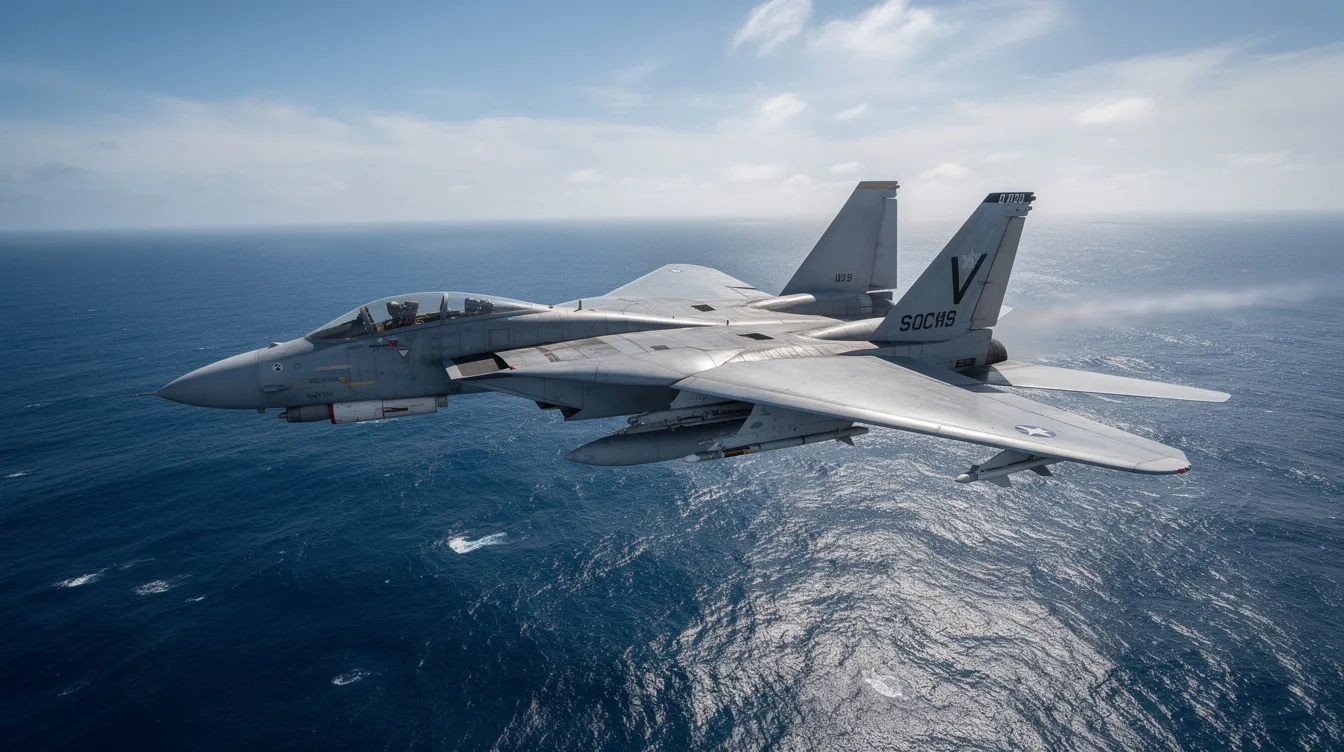
Few aircraft stir the imagination quite like the Grumman F-14 Tomcat. With its variable-sweep wings, twin engines roaring at Mach 2+, and a cockpit built for two crew members trained to dominate air combat, the Tomcat is the ultimate aviation hot rod in the eyes of collectors, enthusiasts, and anyone who ever watched a Navy aircraft scream off a carrier deck. But the question that brings thousands of searchers online every month deserves a straight answer: can you actually find an F-14 fighter jet for sale? The short version is no. Here is the long version-and what you should consider instead.
BlackJet Perspective: Why People Search for an F-14 Fighter Jet for Sale
Let's address it immediately: privately owning a flyable F-14 Tomcat is effectively impossible. United States export laws, Department of Defense demilitarization policies, and International Traffic in Arms Regulations (ITAR) have ensured that no airworthy Tomcat will ever sit in a private hangar. Civilian ownership of the F-14 Tomcat is impossible due to strict regulations that classify it as sensitive military hardware on the U.S. Munitions List.
So why does the search persist?
The allure is easy to understand. Top Gun (1986) turned the Tomcat into a cultural phenomenon, and Top Gun: Maverick (2022) reignited the obsession for a new generation. The F-14 sits at the intersection of raw performance, Cold War drama, and cinematic mythology-making it perhaps the most emotionally charged fighter aircraft in history.
Here is what the fantasy-versus-reality breakdown looks like for anyone searching "F-14 fighter jet for sale":
The fantasy: A gleaming Tomcat, fully restored, parked on your private airstrip, ready to fly whenever the mood strikes.
The reality: Every surviving F-14 is either a gutted museum display, a gate guardian at a naval air station, or a pile of scrap deliberately destroyed by federal agents and defense contractors to prevent spare parts from reaching Iran.
The logistics: Even if a flyable Tomcat existed, operating it requires carrier-grade infrastructure, specialized military maintenance crews, afterburner-capable fuel systems, and a pilot with thousands of hours of proper training in the type.
The legal wall: The F-14 remains listed as a controlled defense article. No broker, no auction house, and no motivated seller can legally transfer one to a private buyer in flyable condition.
From BlackJet's perspective, many high-net-worth individuals drawn to military aircraft ultimately discover that the strategic advantage they actually want-speed, privacy, flexibility, and prestige-is delivered far more effectively through modern private jet access via Jet Cards and premium private jet card programs than through any attempt to own vintage fighters.
Quick Answer: Is There Any F-14 Fighter Jet for Sale Today?
No airworthy F-14 Tomcat is legally for sale to private buyers as of 2026. There are no operational F-14s available for purchase anywhere in the world for civilian use.
The U.S. Navy retired the F-14 in 2006 after 712 were built. Following retirement, the U.S. government systematically destroyed nearly all F-14 airframes to prevent parts proliferation-specifically to block components from being smuggled to Iran.
F-14s were systematically dismantled to prevent components from reaching the Iranian Air Force, the only foreign operator of the type.
Online "F-14 for sale" listings are typically clickbait, scale models, cockpit sections, or unverified "project" listings-not genuine, flyable Tomcats. While fighter jets like the F-14 are often available for auction in name, what is actually sold are static relics, not operational planes.
Serious collectors who want to fly military jets typically purchase other fighters: the Aero L-39 Albatros, MiG-21, F-5, or ex-trainer jets with simpler systems and legal civilian registration paths.
Background: How the F-14 Tomcat Became the Ultimate Vintage Fighter Icon
The F-14 Tomcat was originally designed as a long-range naval interceptor and air superiority fighter to defend carrier battle groups against Soviet bombers and cruise missiles. It replaced the aging McDonnell Douglas F-4 Phantom II in the fleet air defense role, bringing a revolutionary combination of speed, radar capability, and missile reach that no other fighters of its era could match.
The F-14 first flew on December 21, 1970, marking the beginning of a program that would define naval aviation for three decades. The F-14A was the initial variant introduced in 1970, and the type reached initial operational capability in 1973 when squadrons VF-1 and VF-2 began carrier deployments. The U.S. Navy received 558 F-14A aircraft over the production run, with additional airframes going to Iran.
A total of 712 F-14s were built from 1969 to 1991 at Grumman's facilities on Long Island, New York. That number-712-is critical context for understanding why surviving examples are so rare today. Between combat losses, training accidents, structural fatigue, and the deliberate post-retirement scrapping program, the number of intact airframes shrank drastically.
The plane served the US Navy for over three decades before its final retirement on September 22, 2006. By then, rising maintenance costs, engine reliability concerns, and the arrival of the F/A-18E/F Super Hornet had sealed the Tomcat's fate. But its historical significance only grew after retirement, fueled by nostalgia, cinema, and the simple fact that nothing else in the sky looked-or flew-quite like it.
Design Highlights: Variable Geometry Wings and Twin-Seat Combat Power
The F-14's most distinctive feature is its variable geometry wings-massive swing-wing surfaces that sweep from approximately 20° (fully spread for low-speed handling and carrier approaches) to 68° (fully swept for high-speed flight and supersonic dashes). When parked on an aircraft carrier deck, the wings could oversweep beyond 68° to minimize the footprint, allowing more aircraft to be carried in tight hangar spaces.
This variable geometry wing system gave the Tomcat something no fixed-wing fighter of its era could offer: optimized performance across the entire flight envelope. At low speeds, the spread wings generated enormous lift for slow carrier approaches. At high speeds, the swept configuration reduced drag for supersonic intercepts. The mechanical complexity was staggering-massive wing pivots, titanium structural boxes, and hydraulic actuators that had to withstand combat g-loads and thousands of carrier landings.
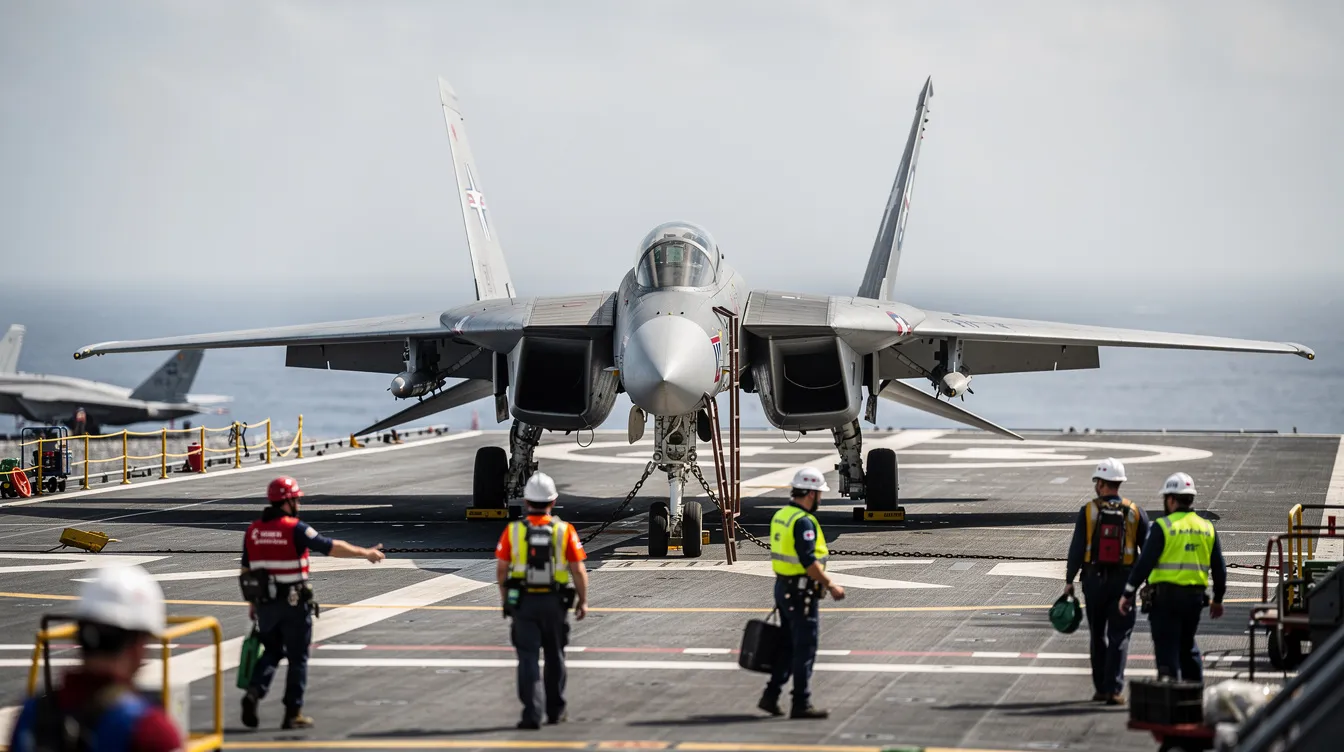
The F-14 was a two-seat, twin-engine turbine military aircraft. The front seat belonged to the pilot; the rear seat housed the radar intercept officer, who managed the weapons systems, radar, and tactical picture. This crew division was essential because the Tomcat's sensor suite was far too complex for a single operator to manage in the heat of air combat.
The heart of that sensor suite was the Hughes AN/AWG-9 radar, capable of tracking 24 targets simultaneously and engaging six at once-an extraordinary capability for the 1970s. The F-14D Super Tomcat, first delivered in 1991, was upgraded to the AN/APG-71 radar and introduced a glass cockpit with advanced avionics, digital flight controls, and improved situational awareness that kept the plane competitive into the 2000s. The F-14D included a glass cockpit and advanced avionics that represented the pinnacle of Tomcat technology.
Compared to other fighters of its generation-the F-15 Eagle (a pure Air Force air superiority platform with fixed wings) or the McDonnell Douglas F-4 Phantom II (which lacked variable geometry entirely)-the Tomcat stood apart in its ability to combine long-range fleet defense with agile dogfighting capability, all from an aircraft carrier.
Powerplant and Performance: Turbine Military Aircraft at Mach 2+
The F-14 is equipped with two Pratt & Whitney TF30 engines in its original A-model configuration. These afterburning turbofans delivered the thrust needed for carrier catapult launches and supersonic intercepts, but they were notorious for compressor stalls during aggressive maneuvering-particularly at high angles of attack. Pilots learned to treat the TF30s with respect; a sudden throttle slam during a hard turn could stall an engine nacelle and send the aircraft into an unrecoverable departure from controlled flight.
The F-14B, which was redesignated from the F-14A+ in May 1991, along with the F-14D, featured the General Electric F110-GE-400 engine. This upgrade dramatically enhanced the Tomcat's capabilities, delivering greater thrust, improved reliability, a faster climb rate, and the ability to perform aggressive maneuvers without the frequent compressor stall problems that affected earlier TF30-powered versions. This engine upgrade revolutionized the Tomcat's performance, providing increased thrust, significantly improved reliability, enhanced climb rate, and the capability to maneuver aggressively without the frequent compressor stall issues that troubled the earlier TF30-powered models. This powerplant transformed the Tomcat: more thrust, dramatically better reliability, superior climb rate, and the ability to maneuver aggressively without the constant threat of compressor stalls that had plagued TF30-powered airframes.
Key performance figures tell the story of a plane built for extremes:
Metric | Specification |
|---|
Maximum speed | Mach 2.34 |
Service ceiling | ~55,000 ft |
Ferry range | ~2,000–2,500 miles (with external tanks) |
Internal fuel capacity | 2,400 US gallons |
Design service life | 6,000 flight hours |
IFR engine start capability | Yes (both TF30 and F110 variants) |
The F-14's design service life is 6,000 flight hours-a number that many airframes approached or exceeded during their Navy service, compounding structural fatigue from catapult launches and arrested landings.
These performance envelopes-extreme g-loads, afterburner fuel consumption, supersonic structural stress-make the Tomcat profoundly unsuitable for anything resembling routine civilian aviation. A plane built to launch off a carrier deck and intercept Soviet bombers at Mach 2+ is not something a casual pilot should consider flying, even hypothetically.
Weapons Systems: From AIM-54 Phoenix to Precision Strike
The F-14 Tomcat was built around its weapons. The airframe was, in many ways, a delivery platform for the AIM-54 Phoenix-the longest-range air-to-air missile in the Western arsenal during the Cold War, capable of engaging targets beyond 100 nautical miles. The F-14A could carry up to six AIM-54 Phoenix missiles simultaneously, giving a single Tomcat the theoretical ability to engage an entire Soviet bomber formation before the enemy even knew it was under attack.
Beyond Phoenix missiles, the standard air-to-air loadout included:
AIM-7 Sparrow: medium-range, semi-active radar-guided
AIM-9 Sidewinder: short-range, infrared homing
M61A1 Vulcan: internal 20 mm rotary cannon for close-in air combat
The F-14 can carry up to 6,700 kg of stores across multiple hardpoints, and in its later career the Tomcat evolved from a pure interceptor into a strike platform. With the addition of LANTIRN targeting pod systems, JDAMs, and laser-guided bombs, the F-14 became a capable attack aircraft-a role it performed in combat over Iraq and Afghanistan.
Original Weapons Capability vs. Demilitarized Display Airframe
Feature | Combat-Ready F-14 | Demilitarized Display |
|---|
M61 Vulcan cannon | Operational, loaded | Removed or welded shut |
Missile rails/pylons | Active, wired | Inert or removed |
Fire control radar | Fully integrated | Stripped entirely |
Weapons wiring | Complete | Cut and removed |
LANTIRN/targeting pod | Integrated | Absent |
Ejection seats | Armed, current | Safed or removed |
Demilitarization is required for any military aircraft to be sold to civilians. For any F-14 that might theoretically reach civilian hands, every weapon system, fire-control circuit, classified avionics box, and ordnance delivery capability must be permanently disabled or removed under strict DoD protocols.
Operational History: United States Navy Service
The F-14 Tomcat saw combat across three decades of US Navy operations, establishing a record that cemented its reputation among the most capable Navy aircraft of the Cold War and post-Cold War eras.
Key operational milestones include:
Gulf of Sidra (1981): Two F-14s from VF-41 "Black Aces" shot down two Libyan Su-22 fighters in the first Tomcat air-to-air kills.
Gulf of Sidra (1989): Two VF-32 Tomcats engaged and destroyed two Libyan MiG-23s, demonstrating the aircraft's continued dominance.
Operation Desert Storm (1991): F-14s participated in Operation Desert Storm in 1991, flying combat air patrols, escorting strike packages, and providing fleet air defense against Iraqi fighters. The Tomcat's TARPS reconnaissance pod made it the Navy's primary tactical photo-recon platform during the campaign.
1990s–2000s evolution: With the LANTIRN targeting pod and precision munitions, the Tomcat transitioned from pure interceptor to multirole strike fighter, dropping bombs in Afghanistan and Iraq alongside its traditional fleet defense duties.
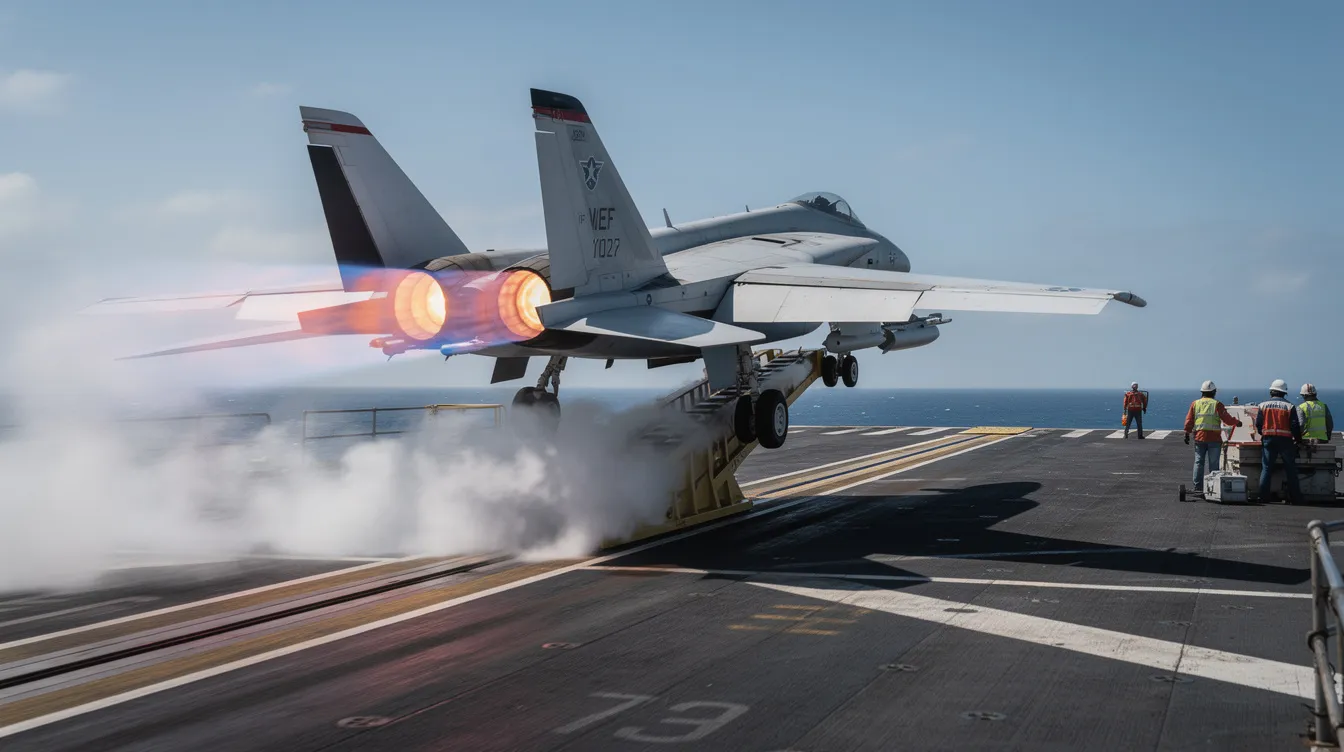
The last F-14 combat mission was on February 8, 2006, flown by aircraft from VF-31 "Tomcatters"-the final operational Tomcat squadron. The formal retirement ceremony followed later that year at NAS Oceana, marking the end of an era.
Why retirement? The airframes were aging. Maintenance costs spiraled. The TF30 engine remained a liability in older airframes. And the F/A-18E/F Super Hornet offered comparable capability in a newer, cheaper, single-type fleet solution. The canceled Super Tomcat 21 concept never materialized, and the Navy moved on.
Iran's F-14 Fleet: The Only Remaining Operational Tomcats
The F-14 Tomcat was sold to Iran in the 1970s under the Shah's regime, making the Iranian Air Force the only foreign operator in history. Iran received 79 F-14A airframes along with hundreds of AIM-54 Phoenix missiles before the 1979 revolution severed all military ties with the United States. Iran is the only nation that historically operated the F-14 outside the U.S.
During the Iran–Iraq War (1980–1988), Iranian F-14s performed remarkably well. Despite losing access to American spare parts, technical support, and crew members trained in the U.S., Iran's Tomcat fleet scored numerous air-to-air kills against Iraqi fighters-often using Phoenix missiles at ranges that no other aircraft in the region could match. The aircraft served as both an interceptor and an airborne early warning platform, its powerful AWG-9 radar detecting threats that ground stations could not.
After decades of sanctions, Iran resorted to cannibalizing airframes for spare parts, reverse-engineering components, and developing indigenous weapons like the Fakour-90 missile as a Phoenix analogue. How many of Iran's F-14s remain airworthy today is a matter of debate, but some are believed to be flown regularly for air defense patrols.
For anyone imagining that "calling Iran for an F-14" is a real acquisition path: it is not. These jets remain state-controlled military assets subject to comprehensive U.S. and international sanctions regimes (OFAC, ITAR, AECA). No legal mechanism exists for a private Western buyer to purchase an Iranian F-14, and attempting to do so would invite prosecution by federal agents.
Why You Can't Buy a Flyable F-14 Tomcat on the Civil Market
The legal barriers are absolute, layered, and deliberate:
ITAR and the U.S. Munitions List: The F-14 and its components are classified defense articles under 22 U.S.C. § 2778. F-14 operational and functional components are heavily restricted by export controls. Transfer without a State Department license is a federal crime.
DoD demilitarization policy: After the 2006 retirement, the Department of Defense ordered the systematic destruction of F-14 airframes, engines, avionics, and spare parts. Wing spars were cut. Engine nacelles were crushed. Classified systems were incinerated. The goal was explicit: ensure that no component could be smuggled to Iran to sustain their Tomcat fleet.
No civil type certificate: The F-14 was never certified for civilian operation. Unlike some older military jets that have pathways to Experimental/Exhibition status, the Tomcat's classification as front-line military hardware means no FAA pathway exists for private operation.
Restoring or operating an F-14 requires specialized military infrastructure-carrier-grade maintenance facilities, ejection seat servicing, variable geometry wing hydraulics expertise, and engine overhaul capabilities that exist only within military or major defense contractor ecosystems.
Even museums receive F-14s only under strict terms: the few remaining F-14 airframes are permanently loaned to accredited museums only, with explicit prohibitions on restoring flight capability.
The distinction matters: surplus trainers like the Aero L-39C or BAe Hawk can sometimes be purchased, demilitarized, and registered under FAA Experimental certificates. Front-line U.S. fighters like the F-14, F-15, or F-22 are in a completely different legal category-one where "for sale" simply does not apply.
What About "F-14 Projects" and Museum Airframes for Sale?
On rare occasions, a museum or government entity may transfer an F-14 hulk to another institution. But these transfers involve:
Extensive paperwork through Defense Logistics Agency channels
Confirmation that the airframe is fully demilitarized (structural cuts, systems removed, engines absent)
Legal agreements prohibiting restoration to airworthy status
Ongoing government oversight of the display aircraft
In practice, "demilitarized" means the aircraft is a shell. Major structural members are physically cut. Avionics bays are empty. Hydraulic systems are drained and disconnected. Engine bays may hold mock-ups or nothing at all. These are not restoration projects-they are artifacts.
The Maverick Act (S.4161), enacted on April 28, 2026, authorized the transfer of some retired F-14D Tomcats to the U.S. Space & Rocket Center Commission in Huntsville, Alabama. Notably, it includes a provision allowing one airframe to potentially be made flyable using existing Navy spare parts-but exclusively for public display, airshows, and commemorative events under governmental oversight. This is not a private sale. The Navy may not procure new parts for this purpose.
Be deeply skeptical of any broker advertising a "restorable F-14 Tomcat" for airshow work or personal flight. Some private collections do legitimately own cockpit sections, nose cones, or instrument panels-these are sometimes purchasable as non-airworthy artifacts with a serial number and provenance documentation. But they will never fly.
Alternatives: Other Fighters and Turbine Military Aircraft You Can Actually Buy
If you genuinely want to own and fly a military jet, here are the turbine military aircraft options that actually exist on the legal market:
Aircraft | Origin | Typical Price (2026) | Notes |
|---|
Aero L-39C Albatros | Czech Republic | $475,000–$975,000 | Most popular civilian warbird jet; ~250 on U.S. registry |
MiG-21 | Soviet Union | $300,000–$800,000 | Requires extensive maintenance; some recently imported examples available |
Northrop F-5 | USA | $1M–$3M+ | Some available for government contract work or private operation |
A-4 Skyhawk | USA | $1.5M–$4M | Limited availability; complex logistics |
BAe Hawk | UK | $1M–$2.5M | Ex-RAF trainers; popular for airshow work |
Fouga Magister | France | $150,000–$400,000 | Entry-level jet warbird |
P-51D Mustang | USA | $2M–$4.5M+ | Piston warbird comparison; fully restored examples command a premium |
Turbine military aircraft can cost from $150,000 to over $6 million depending on type, condition, and whether an aircraft has been fully restored or is in fresh, inspection-ready condition. Some demilitarized warbirds are legal for private ownership, but every one requires FAA Experimental/Exhibition certification, type-specific training, and ongoing maintenance that dwarfs the purchase price over time—often far exceeding the investment required for budget-friendly private aircraft options.
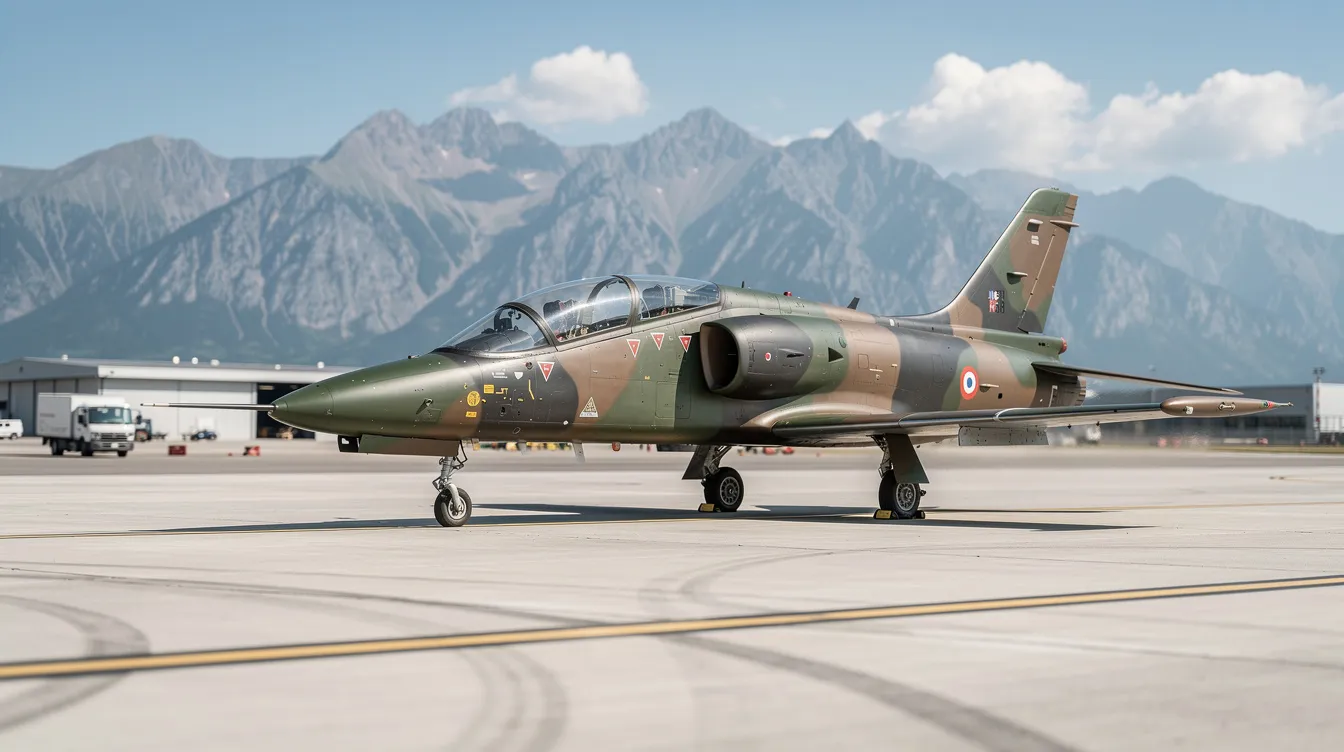
The L-39 Albatros deserves special mention as the only source of affordable, reliable jet fighter-adjacent flying for most private owners. It offers genuine turbine performance-speeds approaching 500 mph, aerobatic capability, and a tandem cockpit-without the regulatory impossibility of front-line fighter aircraft.
Costs and Complexities of Owning a Military Jet vs. Chartering
Even when you can legally buy a military jet, the economics are sobering:
Typical annual ownership costs for an ex-military jet (e.g., L-39 or similar):
Acquisition: $475,000–$2,000,000+
Annual maintenance and inspections: $50,000–$150,000 (inspection cycles are strict)
Fuel (jet-A, ~100–200 hours/year): $40,000–$100,000
Insurance: $15,000–$50,000
Hangar: $12,000–$36,000
Crew/type rating maintenance: $10,000–$25,000
Total annual operating cost: $127,000–$361,000+ (and significantly more for complex types)
And what do you get? A single-purpose aircraft with no cabin, minimal baggage space, one passenger seat (if two-seat), limited range, and severe operational restrictions.
Fighter Jet Ownership vs. BlackJet Jet Card Access
Factor | Ex-Military Jet Ownership | BlackJet Jet Card |
|---|
Upfront cost | $475K–$6M+ | Prepaid hours (flexible tiers) |
Annual operating cost | $127K–$500K+ | Pay only for hours used |
Passengers | 0–1 | Up to 14+ (cabin-dependent) |
Luggage capacity | Minimal | Full cabin amenities |
Safety oversight | Owner's responsibility | Third-party rated operators |
Carbon neutral | No | Yes, built in |
Booking | Complex, weather-dependent | 24/7 digital platform |
Regulatory burden | Extensive (FAA, maintenance, insurance) | Zero for the member |
For many high-net-worth individuals, the "fighter jet fantasy" becomes a short-term novelty. The thrill of a few flights in an L-39 fades when compared to the ongoing, practical value of private business aviation and chartering a private jet that saves hours on every trip.
Experience the F-14 Without Owning One: Museums and Flight Simulators
You don't need to buy a Tomcat to get close to one. Several world-class museums display F-14s in remarkable condition:
National Naval Aviation Museum, NAS Pensacola, FL: Home to one of the finest Tomcat displays, with extensive naval aviation context.
Intrepid Sea, Air & Space Museum, New York City: An F-14 displayed on the flight deck of a decommissioned aircraft carrier-the closest you can get to seeing one in its natural habitat.
National Air and Space Museum, Washington, D.C.: Part of the Smithsonian's unparalleled collection.
Various NAS gate guardians: Many naval air stations preserve Tomcats as static displays and gate guardians, representing important military aircraft heritage.
For those who want to experience the cockpit workload, weapons employment, and variable geometry wings in action, modern flight simulators offer extraordinary fidelity. The DCS World F-14 module, developed by Heatblur Simulations, recreates the full pilot and radar intercept officer experience-including the AWG-9 radar, Phoenix missile employment, carrier operations, and the infamous TF30 engine behavior. It is, for many enthusiasts, the most realistic way to "fly" the F-14 without military service.
BlackJet vs. Military Jets: Strategic Advantages for the Modern Traveler
The F-14 Tomcat embodies Cold War power projection: raw speed, lethal weapons, the ability to dominate the ground and air around a carrier battle group. It is magnificent military hardware. But it is not a travel solution.
Consider a hypothetical comparison:
Scenario: New York to London
F-14 (if it could fly commercially): Single mission profile. No luggage. No cabin. Pilot and RIO only. Fuel burn measured in thousands of gallons per hour at afterburner settings. No Wi-Fi, no connectivity, no ground transportation coordination. Upon arrival, you need a ground crew, specialized fuel, and a military-grade runway.
BlackJet mid-size or large-cabin jet: Depart from your preferred airport. Full cabin with seating for colleagues or family. Luggage space. High-speed Wi-Fi for work or relaxation. Carbon-neutral flight. Land at a convenient airfield with ground transportation arranged. Total time saved versus commercial: hours.
Practical advantages of BlackJet over owning any fighter jet:
Guaranteed access to a curated fleet across multiple aircraft categories
24/7 digital booking and real-time concierge support
No maintenance burden, no hangar lease, no pilot payroll
Carbon-neutral performance on every flight
Flexibility to scale up or down as travel needs change
Safety certification through third-party audits (ARG/US, Wyvern)
A client who once considered buying an L-39 for the thrill of turbine power discovered that a 25-hour Jet Card delivered more value in a single quarter than an entire year of warbird ownership-without the insurance headaches, maintenance anxiety, or FAA paperwork, and with pricing clarity similar to what you’d see in a comprehensive guide to jet card costs.
Safety and Training: Why Fighter Jets Are Not for Casual Pilots
Military jets like the F-14 were designed for highly trained military crews operating within rigid tactical and safety procedures. The training pipeline to fly a Tomcat included:
Undergraduate flight training: 12–18 months of ground school and progressively advanced aircraft
Fleet Replacement Squadron: Type-specific training in the F-14 itself, including radar intercept coordination, weapons employment, and formation flying
Carrier qualifications: Day and night catapult launches, arrested landings, bolter procedures-among the most demanding flying in aviation
Ongoing tactical training: Air combat maneuvering, fleet defense exercises, Marine Corps joint operations, and emergency procedures for ejection seats, engine failures, and hydraulic malfunctions
Even for ex-military jets legally on the civil register, proper training demands are severe. Owners of L-39s or MiG-21s typically need type-specific dual instruction, recurrent check rides, and proficiency in high-performance emergency procedures. Insurance underwriters often require hundreds of hours of jet time before they will cover a private warbird pilot.
BlackJet's model eliminates this burden. Members fly on aircraft operated by fully vetted commercial operators certified under Part 135 rules, with standardized safety protocols and professional flight crews. The passenger's only job is to enjoy the flight.
Sustainability: Carbon-Neutral Private Flights vs. Legacy Fighters
Legacy fighters like the F-14 burn massive quantities of fuel with zero consideration for emissions or noise standards. A Tomcat in afterburner consumes fuel at rates that would make a modern business jet look like a hybrid sedan. There is no emissions compliance, no noise abatement, no sustainability strategy-the plane was built to win wars, not meet environmental standards.
Modern private aviation is a different world:
BlackJet ensures every Jet Card flight is carbon neutral through verified carbon offset or Sustainable Aviation Fuel programs, built in at no extra cost to the member, whether you’re flying domestically or arranging private jet charters in Karachi and other international gateways.
Current-generation business jets are designed for fuel efficiency, with high-bypass turbofans, optimized aerodynamics, and noise profiles that meet or exceed Stage 5 standards.
A typical midsize business jet burns a few hundred gallons per hour in cruise. An F-14 at military power can burn several times that amount per hour.
For today's discerning traveler, aligning travel with sustainability goals is not optional-it is expected. Owning a 1970s military jet optimized for high-altitude supersonic intercepts is the antithesis of responsible travel.
Technology Evolution: From AWG-9 Radar to Connected Private Cabins
In the 1970s and 1980s, the F-14's avionics were revolutionary. The AWG-9 radar could track two dozen targets across hundreds of miles. The analog-digital hybrid cockpit gave the pilot and RIO tools no other Navy aircraft possessed. Later F-14D models added digital flight controls, the AN/APG-71 radar, improved inertial navigation, and electronic countermeasures.
But "revolutionary" is relative to its era. Compare Tomcat-era technology to what flies in BlackJet's network today:
Feature | F-14 Tomcat (1970s–2000s) | Modern Business Jet (2026) |
|---|
Navigation | Inertial + TACAN, manual updates | GPS/WAAS, fully automated |
Communication | UHF/VHF tactical radio | Satellite, high-speed Wi-Fi, secure data |
Cockpit displays | Analog gauges + limited CRT | Full glass cockpit, synthetic vision |
Passenger connectivity | None | In-flight Wi-Fi, streaming, phone |
Cabin environment | Unpressurized to oxygen mask altitudes | Pressurized, climate-controlled, quiet |
BlackJet's digital booking platform and real-time flight support function as a modern counterpart to the command and control the F-14 once provided in battle-now applied to travel logistics. The difference is that today's technology serves comfort, efficiency, and safety rather than weapons delivery.
F-14 Tomcat as a Collectible: Models, Memorabilia, and Branding
For most enthusiasts, the most realistic way to "own an F-14" is through the vibrant collectibles market:
Scale models: Brands like Hasegawa and Tamiya produce exquisitely detailed 1/48 and 1/72 scale F-14 kits, some commanding hundreds of dollars for limited editions.
Squadron patches and nose art: VF-84 "Jolly Rogers," VF-2 "Bounty Hunters," VF-1 "Wolfpack"-these Tomcat squadrons produced iconic imagery that remains in high demand.
The "Anytime, Baby!" emblem: Perhaps the most recognizable unofficial motto in naval aviation, this logo became a pop culture symbol after the 1986 Top Gun film boosted Navy recruitment.
Cockpit instruments and artifacts: Genuine F-14 instrument panels, throttle quadrants, and other components occasionally surface at aviation auctions, documented with serial numbers and provenance.
High-fidelity simulators: Home sim setups running DCS World can replicate the full pilot and RIO experience, from radar scope to carrier trap.
The legendary Nelson Ezell, known among Tomcat preservation circles, represents the kind of dedicated historian who ensures these artifacts survive for future generations. Collecting is a legitimate-and legal-way to channel an F-14 obsession.
Legal and Regulatory Landscape for Warbirds and Ex-Military Jets
Understanding the regulatory framework is essential for anyone considering military aircraft options:
FAA Experimental/Exhibition certificates: Acquiring certain retired military jets requires FAA Experimental/Exhibition certification, which limits the aircraft to specific purposes (airshows, exhibitions, pilot proficiency) and restricts commercial passenger operations. Advisory Circular AC 20-96 warns that surplus military aircraft often cannot meet civilian type certification standards.
What you can buy: Ex-training jets (L-39, T-33, Fouga Magister), some foreign-built fighters (MiG-21, MiG-23), certain decommissioned air force types, and a wide range of small private jets for luxury travel where GST applies to the transaction in relevant jurisdictions.
What you cannot buy: Heavy front-line U.S. fighters (F-14, F-15, F-16, F-22). These remain controlled defense articles under ITAR and the Arms Export Control Act. International Traffic in Arms Regulations (ITAR) prohibit civilian ownership of sensitive military hardware like the F-14.
Import considerations: Some military aircraft options involve recently imported airframes from Eastern Bloc countries. These require compliance with both the exporting country's laws and U.S. import regulations, plus FAA registration.
BlackJet clients bypass every one of these regulatory complexities. Flights are operated by fully certified commercial operators in compliance with Part 135 (or equivalent international) rules. No Experimental certificates, no restricted airspace negotiations, no maintenance headaches.
Comparing Vintage Fighters and Private Business Jets as Status Symbols
The psychology is understandable: arriving at an event in a vintage fighter jet would be spectacular. The noise, the imagery, the sheer audacity of it. But spectacle and strategy are different things.
Consider the reality:
A warbird arrival requires a compatible airfield, ground crew, and hours of pre-flight coordination. You cannot land an L-39 at most metropolitan airports.
A private business jet delivers you to the closest airport to your destination, with full luggage, connectivity, and the ability to conduct business en route.
Vintage fighters offer novelty. Private jets offer time-the only resource that cannot be manufactured.
For the discerning traveler, private jet access via a Jet Card program backed by clear jet card pricing and benefits is the smarter, more strategic expression of aviation passion. It transforms appreciation for turbine power and aeronautical engineering into everyday advantage rather than occasional, impractical spectacle.
How BlackJet Jet Cards Work (for Those Who Love Aircraft, Not Just Destinations)
BlackJet's Jet Card programs offer prepaid blocks of flight hours-typically in 25-hour or 50-hour increments comparable to industry-standard 50-hour jet card options-that provide on-demand access to a range of aircraft categories and cabin classes.
How it works in practice:
Book: Request a flight via mobile app or concierge. Select aircraft class, departure time, and preferred airport.
Confirm: Rapid confirmation from BlackJet's curated operator network, with aircraft matched to your mission.
Fly: Board a certified, modern business jet with professional crew, full cabin amenities, and carbon-neutral performance.
Repeat: Hours deduct from your prepaid balance. No maintenance bills, no hangar fees, no regulatory filings.
Every flight includes safety oversight from operators meeting rigorous third-party audit standards. Carbon neutrality is built in, not bolted on. And for someone passionate about aircraft, you still get to appreciate turbine power, cutting-edge avionics, and high-performance engineering-without the complexity of operating your own fighter jet or managing the nuances of small private aircraft options on your own.
Putting It All Together: The Smart Way to Channel an F-14 Obsession
No legal, airworthy F-14 fighter jet for sale exists for private buyers today. That is unlikely to change. The combination of ITAR restrictions, DoD demilitarization policy, and the deliberate destruction of airframes and spare parts has ensured that the Tomcat remains in museums and memory-not in private hangars. The only recent legislation, the Maverick Act of 2026, aims to preserve historical artifacts for public education, not to open a marketplace.
For serious aviation aficionados, the realistic path forward involves three options: owning accessible turbine military aircraft like the L-39 Albatros, experiencing the F-14 through high-fidelity simulators and museum visits, or channeling aviation passion into practical advantage through private jet access.
BlackJet sits at the intersection of passion and practicality. Our Jet Card programs deliver the thrill of aviation-speed, precision, and exclusivity, combined with safety, sustainability, and strategic time savings that no fighter jet can provide, and can complement or even replace more complex structures like long-term private jet leasing arrangements. The Tomcat earned its place in history. Your travel deserves something built for the future.
FAQ: F-14 Fighter Jet for Sale, Ownership, and Private Jet Alternatives
Can a civilian legally buy an F-14 Tomcat in 2026?
No. All U.S. F-14s are retired and demilitarized. ITAR, the Arms Export Control Act, and DoD disposal policies prevent the sale of any combat-capable or restorable F-14 to private citizens. Civilian ownership of the F-14 Tomcat is impossible due to strict regulations.
Are there any F-14 Tomcats for sale to private buyers?
No. The few surviving airframes are permanently loaned to accredited museums as static displays. The 2026 Maverick Act authorizes limited transfer for public display purposes only-not private ownership.
Could an F-14 ever fly again in the United States?
Potentially one, under very narrow conditions. The Maverick Act allows restoration of a single F-14D to flyable condition using existing Navy spare parts, but only for public display and commemorative events under government oversight.
What fighter jets can civilians actually own?
Ex-military trainers and older fighter types are commonly available: L-39 Albatros, MiG-21, F-5, A-4 Skyhawk, BAe Hawk, and similar demilitarized aircraft. These require FAA Experimental/Exhibition certification and significant ongoing investment, often far exceeding the outlay for the cheapest private jet options that still deliver practical, modern travel utility.
How much does it cost to operate a former military jet per year?
Operating costs for trainers or light jet fighters typically run $127,000–$500,000+ annually, covering maintenance, fuel, insurance, hangar, and crew. Complex types cost considerably more.
How does a Jet Card compare to owning a jet or warbird?
A Jet Card eliminates ownership burdens-no maintenance, no hangar, no crew payroll, no regulatory filings. You pay for hours used, with guaranteed access to certified operators, modern aircraft, and carbon-neutral flights. For frequent travelers, it delivers superior value with zero operational complexity, similar to the advantages outlined in guides to the best jet cards for frequent flyers.
Is the F-14's airworthy Tomcat inventory the only source of legal civilian Tomcat access?
There are no airworthy Tomcats in civilian inventory. The only source of Tomcat experience for civilians is museum displays, authorized cockpit exhibits, and high-fidelity flight simulators.
Can I import an ex-military jet from abroad?
Potentially, but it requires compliance with the exporting country's laws, U.S. import regulations, ITAR (if U.S.-origin components are involved), and FAA registration. For front-line fighters, the hurdles are typically insurmountable, which is why many prospective owners instead explore ways to buy a seat on a private jet rather than dealing with complex import pathways.
What makes BlackJet different from other Jet Card providers?
BlackJet combines rigorous safety certification, carbon-neutral performance on every flight, a curated operator network, and seamless digital booking—positioning itself as a compelling alternative for travelers comparing NetJets jet card costs and programs with other leading providers, and designed specifically for discerning travelers who value flexibility and substance over marketing noise.
Call to Action: From Tomcat Daydreams to Tailored Private Jet Access
The F-14 Tomcat is one of the greatest fighter aircraft ever built. It earned its place in aviation history through decades of military service, from carrier decks to combat zones around the world. But for those who want to turn a love of aviation into something they can use every week-not just admire behind a museum rope-there is a better path.
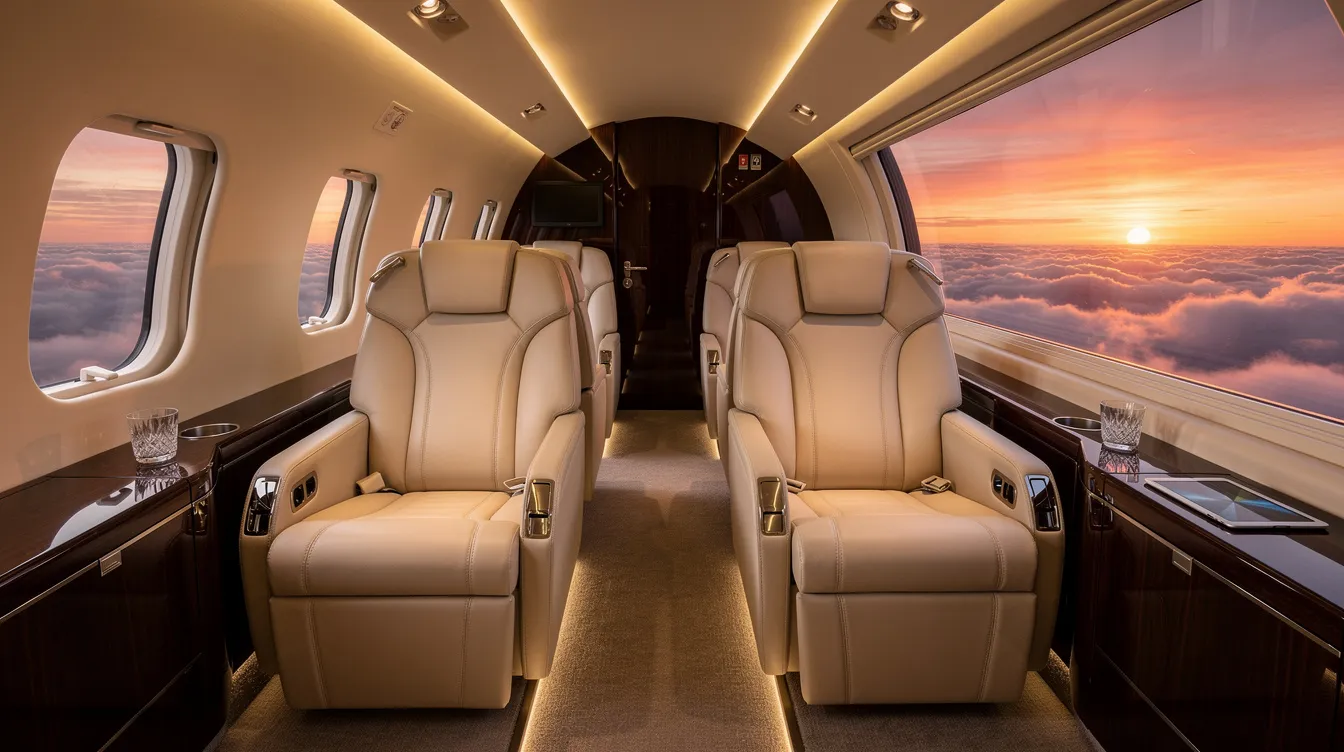
Elevate your travel-effortlessly. With BlackJet, private flight is accessible on your terms through our Jet Card programs, complete with rigorous safety, carbon-neutral performance, and unmatched flexibility. Explore our offerings and discover how refined, meaningful travel becomes your new standard.
Discover how BlackJet can reshape your travel →


 Sign up with google
 Sign up with Apple