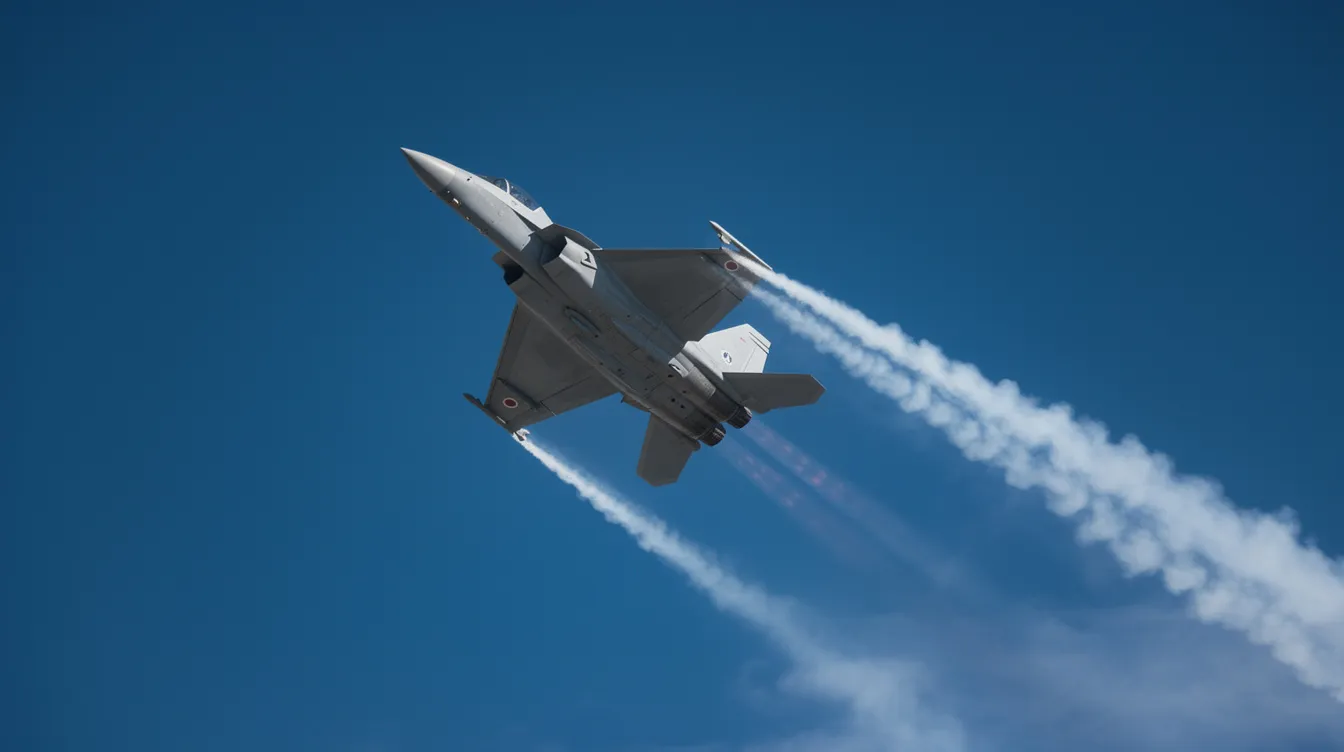
Introduction: Why the Fastest Fighter Jets Still Matter Today
The fastest fighter jets ever built didn't just break records — they redefined what aircraft could survive, where they could fly, and how quickly they could get there. From the Cold War skies above 80,000 feet to today's stealth-dominated battlespace, the competition for dominance in speed, altitude, and power reshaped aerospace engineering, materials science, and avionics across generations. The fastest operational U.S. fighter jets achieve supersonic speeds as a baseline capability, and the technology that makes that possible has filtered into every dimension of modern aviation.
This article focuses on the fastest US fighter jets and their respective air force lineage, while comparing them to other leading military jets in the world—from the MiG-25 Foxbat to experimental rocket planes. While BlackJet clients don't fly at Mach 3, the safety standards, precision engineering, and efficiency pioneered by these platforms ultimately benefit high-end private aviation. For those who already appreciate performance and strategic advantage, the history of these fighter planes speaks a language worth understanding.
Defining "Fastest Fighter Jets": Records, Categories, and Criteria
Different sources rank the fastest fighter jets differently because criteria vary — level flight versus dive speed, operational service versus test flights, and whether an aircraft qualifies as a fighter, interceptor, or reconnaissance platform all change the answer.
This article counts primarily US-designed fighter and interceptor aircraft, measuring top speed in level flight. Key categories include:
Fighter jets: air superiority and multirole combat aircraft like the F-15 Eagle and F 22 Raptor
Interceptors: high-speed point-defense platforms optimized for altitude and rapid climb, like the YF-12
Reconnaissance jets: platforms like the SR-71 that aren't classic fighters but hold the fastest records among jets in the world
For context, Mach 1 equals roughly 767 mph (1,235 km/h); Mach 2 approaches 1,535 mph; Mach 3 exceeds 2,300 mph. Altitude optimization significantly affects fighter jet top speeds by reducing aerodynamic drag at higher elevations. The North American X-15 reached 7274 km/h, but as a rocket plane it falls outside jet-powered definitions. Soviet benchmarks like the MiG-25 Foxbat at 3500 km/h and the MiG-31 Foxhound remain among the fastest military jets globally. Low wing loading contributes to improved high-altitude agility in fighter jets, a principle that applies across these categories.
Military performance envelopes stand far beyond what's acceptable in civil aviation, which is why private jets prioritize comfort, range, and safety-certified reliability over extreme speed.
SR-71 Blackbird: The Fastest US Air-Breathing Jet Aircraft
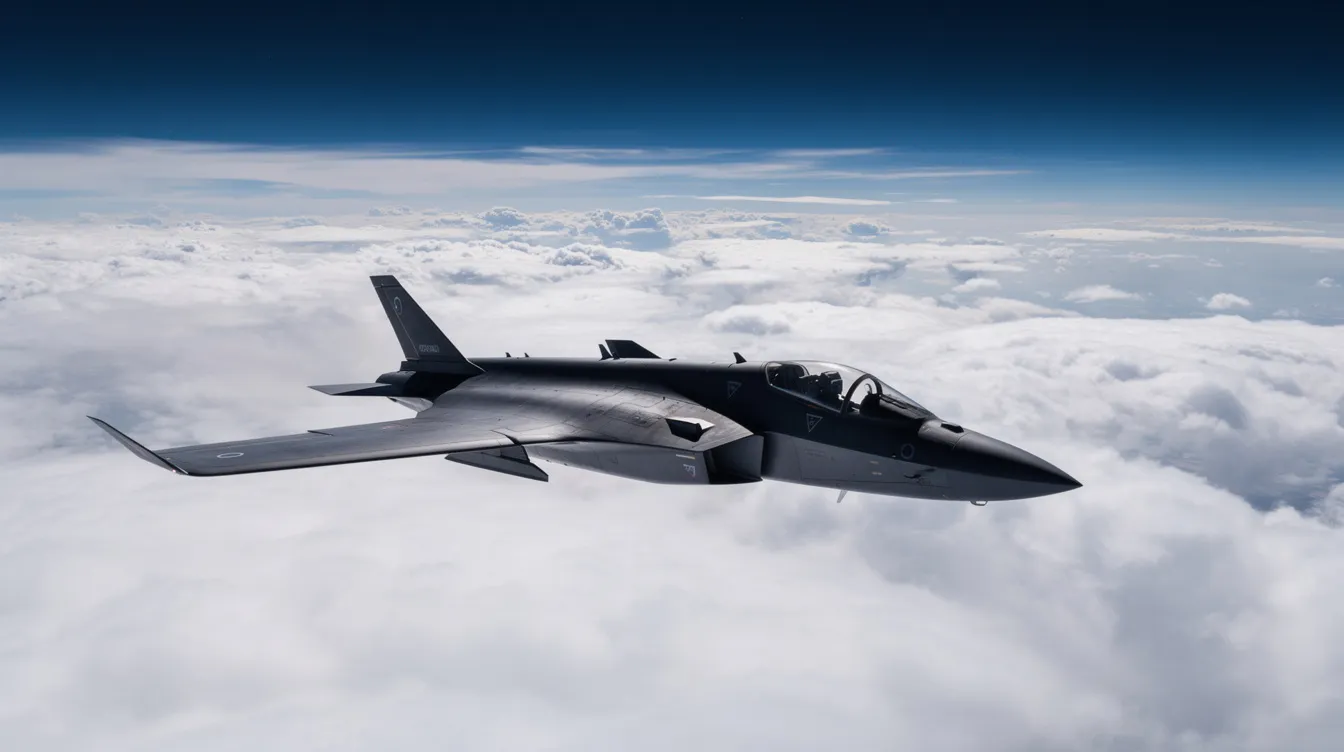
The Lockheed SR-71 Blackbird remains the fastest air-breathing manned jet in history. First flown in 1964 and entering service in 1966, the SR-71 surpassed 3500 km/h, recording an official speed of approximately 2,193 mph (Mach 3.3) and a sustained ceiling of 85,069 feet. It was built for strategic reconnaissance, not air combat, but any discussion of the fastest military jets must include it.
What made sustained Mach 3+ flight possible was a streak of engineering breakthroughs: a titanium alloy airframe designed to hold under skin temperatures exceeding 500°F, Pratt & Whitney J58 engines that functioned as turbojet-ramjet hybrids at high speed, and specialized JP-7 fuel ignited by triethylborane. These innovations in materials, avionics, and redundancy delivered capabilities no other aircraft has matched in decades of service.
Even today, no operational fighter or supersonic concept approaches sustained Mach 3. The cost, structural stress, and fuel consumption are simply too extreme. Yet the Blackbird's emphasis on reliability under punishing conditions helped shape the safety certifications and maintenance regimes now standard in private aviation.
YF-12 and A-12: High-Speed Interceptors at the Edge of Mach 3
The Lockheed YF-12 and its CIA predecessor, the A-12, share the Blackbird family lineage. The A-12 flew first in April 1962, reaching a peak of approximately Mach 3.29 during test flights and sustaining Mach 3.2 at around 90,000 feet for close to 74 minutes. The Lockheed YF-12 exceeded 3500 km/h, recording an official speed of 2,070 mph on a closed course, with a ceiling above 80,000 feet.
These aircraft shaped Cold War interceptor doctrine and introduced early stealth concepts - radar cross-section reduction through airframe shaping and specialized coatings. Their avionics, navigation electronics, and compact sensor systems influenced new generations of conventional military jets.
Neither entered full operational fighter service; the interceptor mission shifted as satellites and missiles changed the threat landscape. Nonetheless, they stand as proof that past engineering pushed limits modern multirole fighters deliberately trade away. Today's jets like the F-22 and F-35 sacrifice some raw speed for stealth, agility, and fuel efficiency—a tradeoff that parallels how top-tier private jets optimize for range, comfort, and scheduling ease rather than chasing maximum Mach numbers.
F-15 Eagle: The Fastest Operational US Fighter Jet
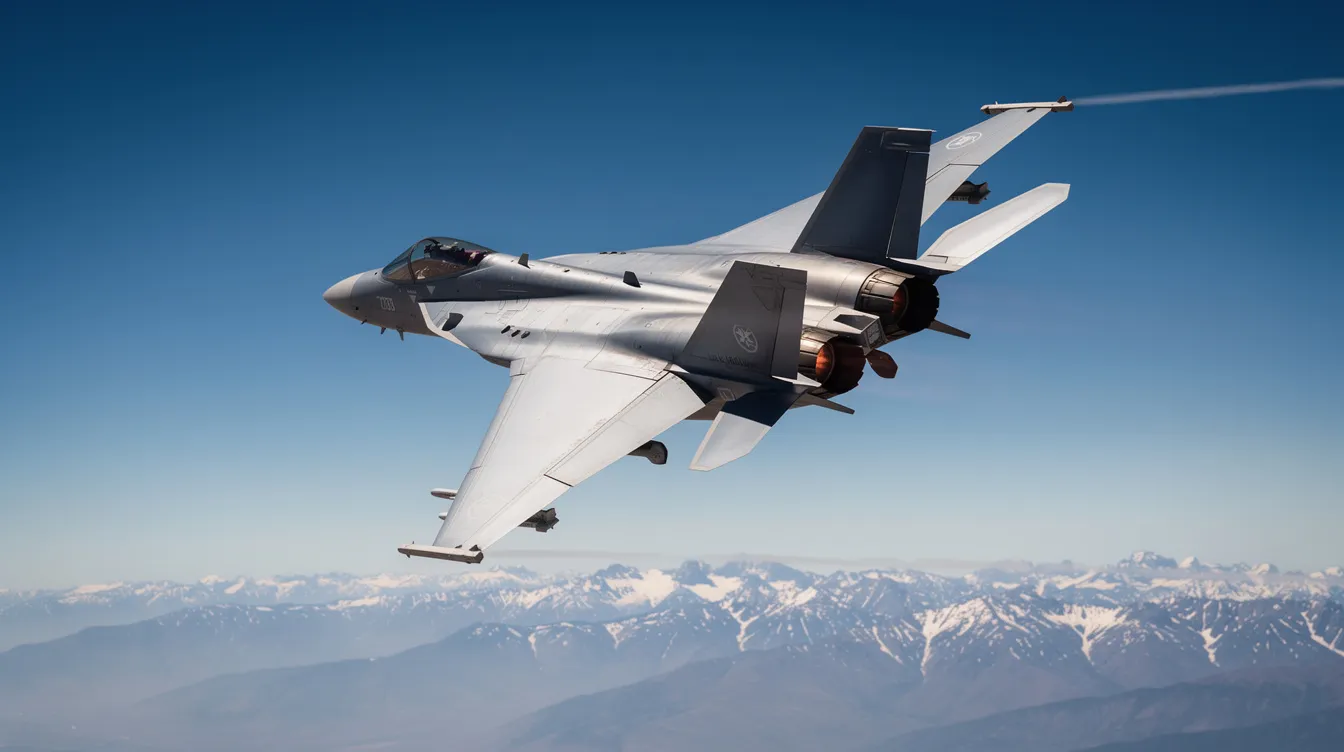
The McDonnell Douglas F 15 Eagle is the fastest true US fighter jet in operational service. The F-15 Eagle possesses a top speed of approximately Mach 2.5 at altitude — roughly 1,875 mph — and has been in Air Force service since 1976.
Its dominance rests on several crucial combined factors:
High thrust-to-weight ratios enable fighter jets like the F-15 to have rapid vertical acceleration, powering time-to-climb records that still hold
Twin Pratt & Whitney F100 engines delivering up to 29,000 lbf thrust each
Large wing area providing maneuverability and adaptability across mission profiles
Robust radar and weapons capability proven in combat from the Gulf War to operations alongside Israel's air force
For comparison, the F-16 Fighting Falcon has a maximum speed of roughly Mach 2.0, and the F/A-18E/F Super Hornet's top speed is approximately Mach 1.6 to 1.8 — the Eagle remains faster than both. Against non-US jets, the MiG-25 and MiG-31 reach Mach 2.8–3.0, but the F-15's superiority in air combat maneuverability, avionics, and mission flexibility — not just raw speed — secured its dominance over decades.
Just as the Eagle offered a blend of speed, range, and mission flexibility, modern private jets balance high cruise speeds (Mach 0.80–0.90) with long-range efficiency and cabin comfort. Civil aircraft are structurally limited to subsonic margins by fuel constraints, aviation speed limits, noise regulations around the sound barrier, and regulatory limits on sonic booms over land, while private jets typically cruise between 35,000 and 51,000 feet to balance speed, fuel burn, and passenger comfort.
Modern US Stealth Fighters: F-22 Raptor and F-35 Lightning II
Today's frontline fighters aren't the fastest ever built, but they are among the most important factors in modern air power — embodying a new balance of speed, stealth, and networked technology.
F-22 Raptor: The F-22 Raptor has a top speed of around Mach 2.25 and features supercruise capability. Supercruise technology allows the F-22 Raptor to sustain supersonic flight without afterburners — cruising near Mach 1.5 in clean configuration, which is more tactically meaningful than peak afterburner speed. Its advanced sensors and agility guarantee air dominance through precision and situational awareness.
F-35 Lightning II: The F-35 Lightning II has a maximum speed of about Mach 1.6. Its power lies not in being faster but in sensor fusion, multirole flexibility, and network-centric operations across three variants (F-35A, B, and C), each designed for different basing concepts. Even platforms like the Sukhoi Su-57 cannot match its electronics integration on deck.
Both jets illustrate a future doctrine where "fast enough" is combined with stealth, data, and precision. This mirrors how premium private aviation leverages technology — jet card services typically provide 24/7 digital booking tools, real-time flight monitoring, and safety certification frameworks informed by the same systems-engineering culture driving fifth-generation fighters. The experience BlackJet clients expect is seamless and highly managed — minus the G-forces and afterburners.
From Military Speed Records to Private Jet Travel: What Actually Matters for High-End Flyers
While the headlines go to the fastest fighter jets, high-net-worth travelers and executives answer a different question: what matters is dependable high cruise speed, range, cabin comfort, and scheduling flexibility. Frequent travelers prioritize flexibility and luxury in private jet services above all else.
Most private jets cruise between Mach 0.75 and 0.90 because, as outlined in comprehensive private jet price and performance overviews and detailed guides to types of private jets:
Fuel efficiency and range drop sharply beyond transonic speeds
Structural and noise limitations constrain the flight envelope
Passenger comfort improves with smoother ride profiles at optimized altitudes
Private aviation companies offer Jet Card programs for prepaid access to private jets, giving clients consistent access to fast, modern aircraft without the cost and weight of ownership, while savvy travelers analyze Jet Card cost per hour and broader Jet Card cost and pricing guides to benchmark value across providers. Unlike rigid military tasking, members choose on-demand departures, aircraft category (light jet, super-mid, large-cabin), and routes tailored to their schedules, often comparing the best small private aircraft for specific missions and private jet sizes and cabin classes when deciding how to fly.
Example: A business leader flying New York to Los Angeles using a 25-hour Jet Card, or even evaluating a 100-hour Jet Card cost structure, such as the BlackJet 25+ Hour Jet Card, saves roughly 4–5 hours door-to-door versus commercial first class, at cruise speeds around Mach 0.85 — with no security lines, no layovers, and total privacy.
On safety: while military jets fly at the edge of the envelope, BlackJet focuses on rigorous safety audits, proprietary certification, experienced pilots, and strict maintenance oversight, comparable to standards upheld by top private jet companies worldwide. Carbon-neutral flights are an objective within the private aviation industry, and BlackJet delivers this through verified carbon offset programs — contrasting sharply with the fuel-intensive nature of high-Mach military flight. Cost-conscious flyers can also explore the cheapest private aircraft and access models and strategies to fly private more cheaply that pair efficiency with sustainability. Explore how green private jet travel turns advanced aviation into responsible aviation.
FAQ: Speed, Military Jets, and Private Jet Access with BlackJet
What is the fastest US fighter jet ever built? The SR-71 Blackbird holds the record at Mach 3.3+ (over 2,193 mph), though it was a reconnaissance platform. The fastest true fighter in operational service is the F-15 Eagle at approximately Mach 2.5. The answer depends on whether you count interceptors and recon jets or only air combat fighters.
How fast do modern private jets fly compared to military jets? Most private jets cruise between Mach 0.80 and 0.90 - roughly 530 to 610 mph at altitudes often reaching 45,000–51,000 feet, as detailed in guides to how high private jets fly versus commercial planes. That's a fraction of a fighter's top speed, but optimized for range, fuel efficiency, and distance covered comfortably. Military jets vary from Mach 1.6 (F-35) to Mach 2.5 (F-15).
Can private jets break the sound barrier? Nearly all civil jets are subsonic. The Concorde was a historic exception, but sonic booms over land and regulatory limits effectively ended supersonic civilian travel. New supersonic business jet concepts are in development, but none are yet certified, and even today the best private jets in the world focus on range, luxury, and efficiency more than outright speed records.
Does higher speed always mean less safety? No. Safety is a function of design, certification, maintenance, and operations — not speed alone. BlackJet's approach to safety includes ARGUS-rated operators, experienced crews, and continuous flight monitoring, aligning with independent analyses that show private jets are extremely safe when properly operated.
How does a Jet Card work compared to on-demand charter? A Jet Card provides prepaid flight hours with predictable pricing and priority access — learn how Jet Cards work. On-demand charter is booked ad hoc, often with variable pricing and less scheduling certainty. Comment from frequent flyers consistently favors the Jet Card model for its reliability and ease, especially when comparing the best Jet Cards for frequent flyers on benefits and total cost.
Conclusion: The Legacy and Future of Speed in Aviation
The fastest US fighter jets represent the pinnacle of aerospace innovation, blending speed, power, and cutting-edge technology to achieve unmatched performance in military aviation. From the legendary SR-71 Blackbird’s record-breaking Mach 3+ flights to the operational dominance of the F-15 Eagle and the advanced stealth capabilities of the F-22 and F-35, these aircraft have shaped not only military strategy but also the evolution of aviation safety and technology.
For discerning travelers and executives, the lessons from these high-speed marvels translate into a premium private aviation experience that prioritizes safety, efficiency, and seamless access over sheer velocity. BlackJet’s premium private Jet Card programs embody this philosophy, offering flexible, reliable, and sustainable private jet travel that meets the demands of today’s fast-paced world without compromising on comfort or environmental responsibility.
Finally, while the era of extreme supersonic military jets may be behind us, their legacy drives ongoing innovation in private aviation, where speed is balanced with luxury, safety, and sustainability. Discover how BlackJet can elevate your travel experience by combining the best of aviation’s past and future, delivering premier access to the skies on your terms.


 Sign up with google
 Sign up with Apple