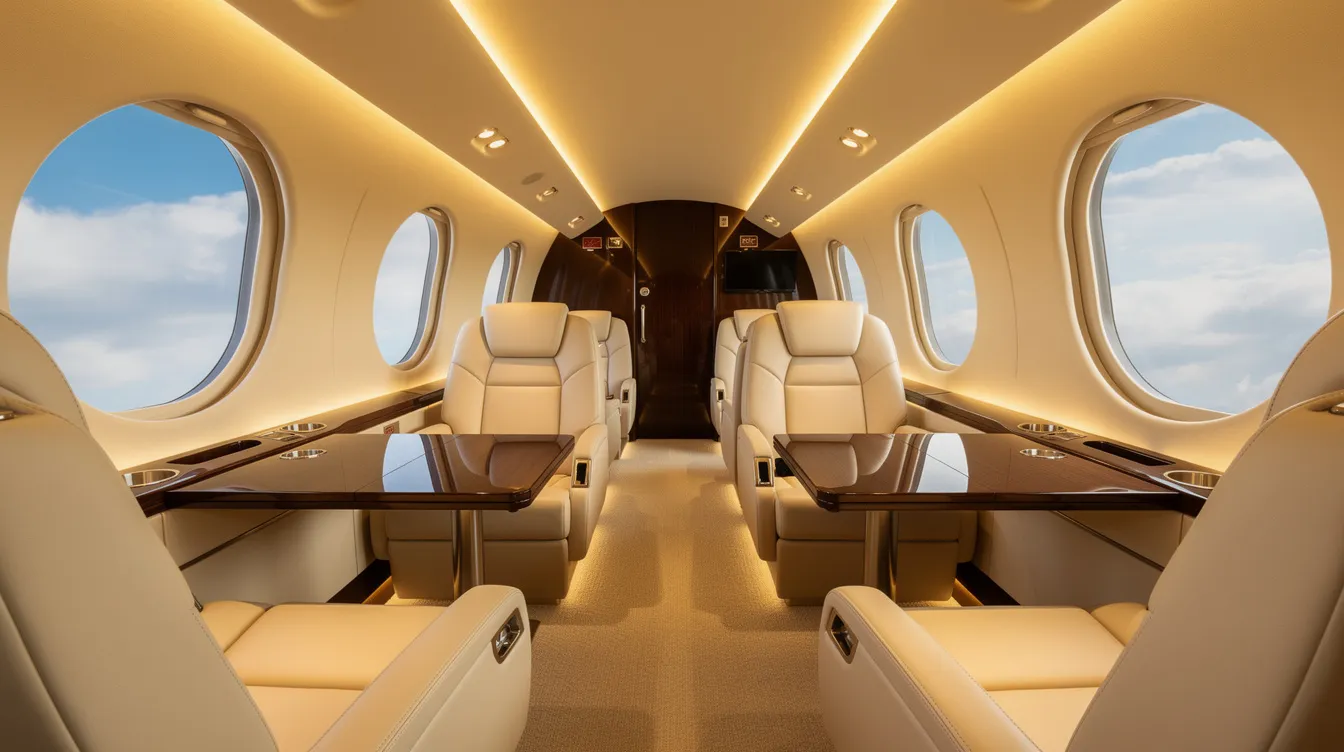
For decades, first-class flights represented the pinnacle of air travel. A wider seat, a glass of champagne before takeoff, and priority boarding formed the apex of what it meant to fly well. For corporate executives and high-net-worth travelers, first and business class were the default - and for good reason.
But the calculus has shifted. Flying first class on a commercial airline still means navigating TSA lines, arriving 90 minutes early, and surrendering your schedule to an airline's timetable. Consider a New York–to–Los Angeles trip: even with a first-class ticket, you're looking at roughly two hours of ground time on each end, plus the flight itself. A BlackJet Jet Card member flying the same route arrives at a private terminal 20–30 minutes before departure, bypasses security queues entirely, and, by cruising higher than most commercial aircraft, as explained in how high private jets fly compared to airlines, saves an estimated three to four hours door-to-door.
BlackJet isn't positioned as a direct competitor to American Airlines, Delta, or United Airlines. It's a strategic alternative - designed for travelers who've outgrown the constraints of even the most premium commercial cabins and want control over when, where, and how they fly.
What "First Class" Really Buys You on Commercial Airlines
When you purchase a first-class ticket on a major carrier, you're paying for a meaningfully enhanced experience compared to business class. On most airlines, first-class passengers enjoy priority check-in and boarding, access to exclusive airport lounges, and complimentary alcoholic beverages as standard.
The typical first-class service package on US airlines includes:
Dedicated check in desk and priority boarding
Complimentary gourmet meals and drinks, often with multi-course options
The ability to check in up to two free bags at no extra cost
A smaller, quieter class section with a higher ratio of flight attendant attention
Better food and beverage service than any other cabin, including premium economy
First class offers a more enhanced experience than business class on virtually every metric, though some airlines offer more exceptional premium features than others - from seat width to dining to lounge access. First class passengers typically have access to exclusive airport lounges where they can work, shower, or dine before their flight. First class typically includes gourmet meals and premium drinks, and complimentary alcoholic beverages are standard across different airlines.
Domestic First Class vs International First & Business Class
The term "domestic first class" can mislead travelers. On domestic flights within the U.S., the first class section typically refers to a premium recliner cabin - wider seats with extra legroom, early boarding, and an upgraded beverage service, but rarely anything approaching what international travelers associate with the word "first."
Here's the distinction:
Domestic first class on US airlines offers more space, a better meal on longer routes, and priority check-in services. However, business class seats on these routes often recline but do not lie flat. Domestic first class is often branded as regional business class and generally offers fewer amenities than international business class.
International first class on carriers like Singapore Airlines, Emirates, or Air France features enclosed class suites, lie flat beds, and chef-curated dining. It's a fundamentally different product.
A transcontinental flight like JFK–LAX or JFK–SFO represents a middle ground. Delta and American offer special services on these routes, sometimes deploying lie-flat seats and enhanced amenity kits that approach international standards.
Some carriers lack first class entirely. When there is no first class cabin, business class becomes the top offering - creating confusion between first and business class across different markets. United Polaris business is one example where Polaris business serves as the airline's flagship international product. US discount carriers do not have first class cabins at all.
First Class Seats, Cabins, and Service: What You Actually Get
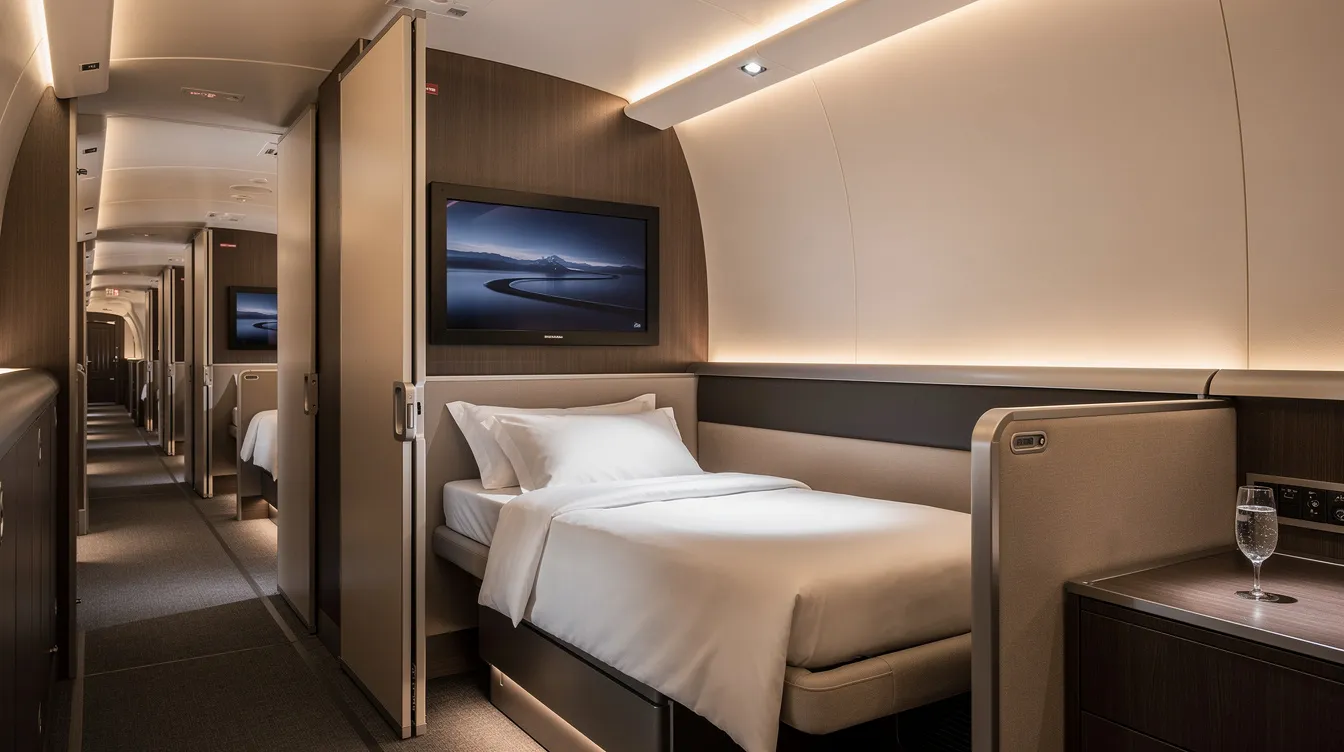
First class seats on long-haul international flights are engineered for rest and privacy. First class seats often recline further and offer more legroom - Emirates' A380 first class cabins, for example, offer a pitch of approximately 86 inches and seat widths around 23 inches. First class seats can include lie-flat beds on long-haul flights, transforming into full beds that often exceed 6'6" in length.
On the most premium products, you'll find features that mirror those on the top 10 private jets in the world:
Enclosed suites with sliding doors and, in some configurations, a double bed option when two adjacent suites are combined
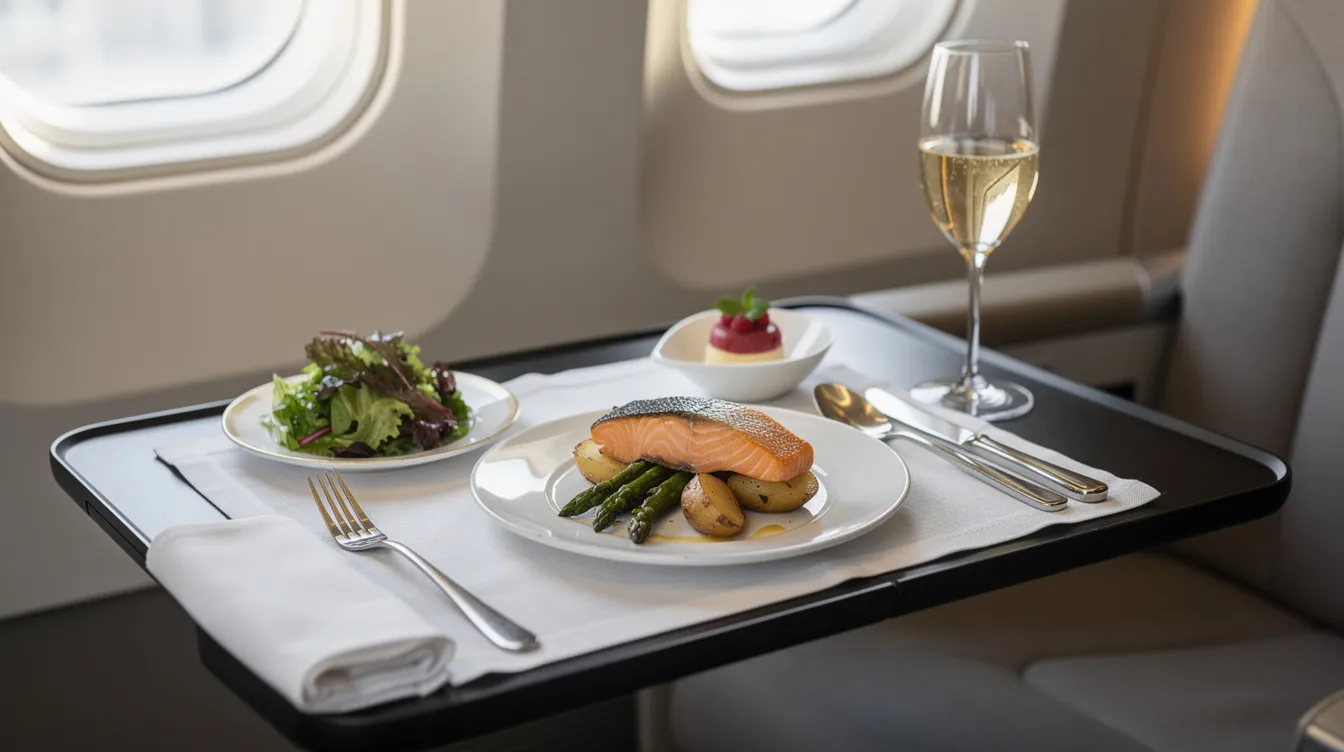
First class meals that include multi-course dining and top-tier wines, with menus often designed by leading chefs
Premium amenity kits from brands like Lalique or Bulgari
Dedicated first-class cabins housing as few as six to fourteen passengers
Yet the gap between first and business is narrowing. Qatar Airways' Qsuites, for instance, offer business class seats with full privacy doors and lie flat capability - a product that rivals or surpasses many airlines' first class service. Many airlines now invest more heavily in business class tickets as the volume product, making premium cabins increasingly competitive—much like the spectrum of 10 million dollar private jet options reshapes expectations in private aviation.
First class passengers usually have access to exclusive lounges and in-flight service that remains a tier above, but the hard-product distinction is shrinking on various airlines.
First Class vs Business Class vs Economy: Choosing the Right Cabin
Understanding the hierarchy of class flights helps clarify what you're actually paying for:
Cabin | Typical Seat | Key Perks | Price Range (U.S. Transcon, One-Way) |
|---|
Economy class seats | 17–18" wide, 30–32" pitch | Basic meal, standard boarding process | $250–$400 |
Premium economy | 18–19" wide, 36–38" pitch | Extra legroom, premium select meal | $500–$800 |
Business class | 20–22" wide, lie flat on long haul | Lounge access, lie-flat bed, priority boarding | $800–$1,500 |
First class | 22–28" wide, enclosed suite | Full suite, multi-course dining, dedicated attendant | $2,000–$5,000+ |
For long-haul routes, first-class tickets can exceed $10,000 for a round trip - and on premium carriers flying routes like New York to Dubai or Singapore, one-way fares can reach $15,000–$25,000. Business class tickets on the same routes typically fall between $3,000 and $8,000.
When does upgrading to first and business make sense? Overnight long-haul international flights, where rest is critical. Business meetings immediately after landing. Special occasions. Otherwise, for most flights in the main cabin or economy seats, the cost per incremental comfort rises steeply.
How Frequent Flyers Earn Points and Find the Best Deals on First Class
Flying first class doesn't always require paying full fare. Loyalty programs allow travelers to earn points through flights, co-branded credit cards, and transferable points ecosystems that can be redeemed for premium-class ticket upgrades.
Common strategies include:
Accumulating miles through airline-specific or general travel rewards cards
Monitoring fare sales and using flexibility and strategic timing, which are crucial for snagging cheap first-class flights
Booking flights from alternative departure cities, which can lead to cheaper first-class fares
Leveraging last-minute upgrades offered at online check-in or at the gate
The trade-off is real: chasing the best deals across multiple loyalty programs requires significant time and attention. You can earn points and secure occasional upgrades, but the process is inherently unpredictable. For travelers who fly premium routinely, the question becomes whether optimizing airline loyalty delivers more value than a predictable, on-demand private aviation solution built around the best jet cards for frequent flyers.
Where Commercial First Class Stops - And Private Jets Take Over
Even the finest first-class experience has structural limitations. You're bound to an airline's schedule, a specific plane, and a commercial airport's infrastructure. Flying first on a commercial flight still means navigating crowds, fixed departure windows, and the possibility of a tight connection.
Consider this scenario: a New York–based executive needs to be in London for a 9:00 a.m. meeting. The commercial route means an overnight first-class or business-class flight departing around 7:00–10:00 p.m., arriving at Heathrow around 7:00 a.m., then clearing immigration and transferring into the city, arriving with perhaps 30 minutes to spare, having slept in a lie-flat bed but without full control over rest or timing.
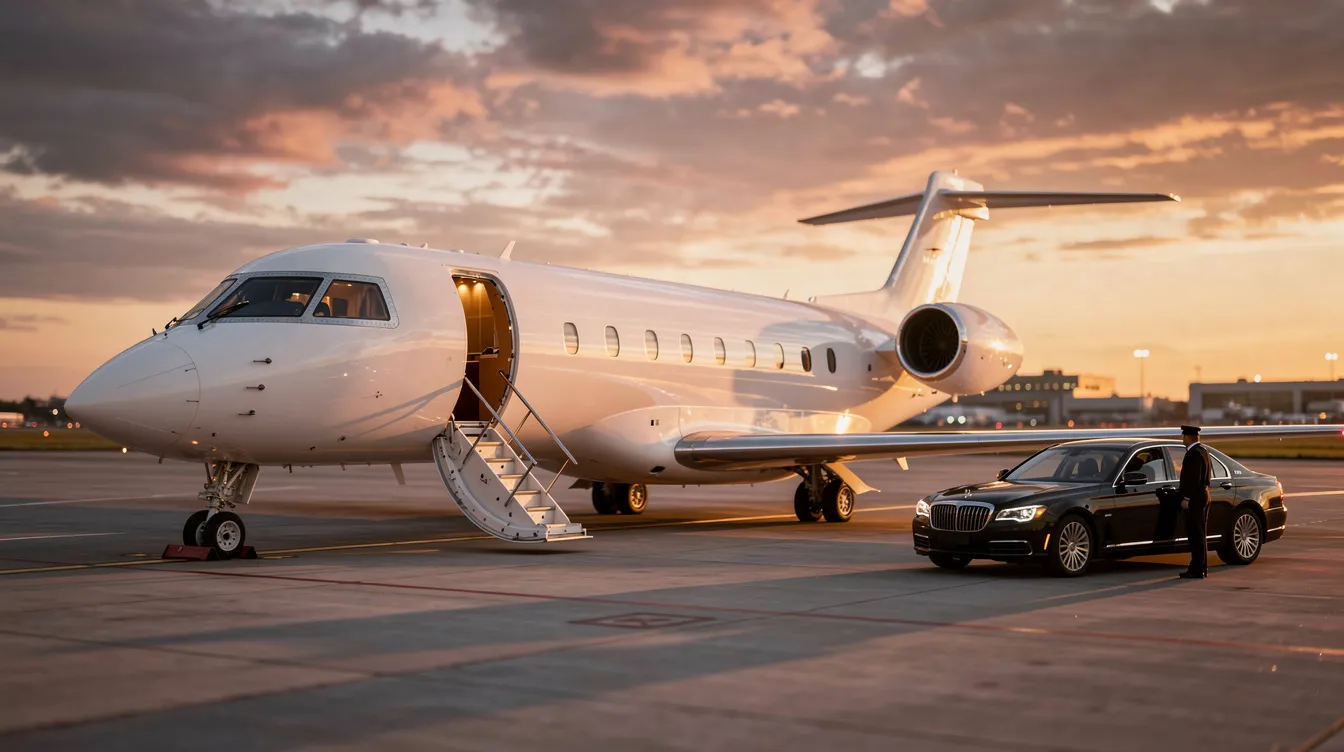
With a BlackJet Jet Card, the same executive can depart in the afternoon on one of the largest private jets for long-haul travel, arrive in the evening London time, sleep at a hotel, and show up rested. Or depart overnight on a large-cabin private jet configured for sleep, landing at a closer airfield like Farnborough, with a car waiting on the tarmac - no immigration queue, no baggage carousel.
Private jets eliminate friction that even first-class passengers cannot avoid: no standard security lines, arrivals 20–30 minutes before departure, direct routing to secondary airports closer to final destinations, and full cabin privacy for confidential work or rest, whether you're booking a whole aircraft or simply buying a seat on a private jet. BlackJet's Jet Card programs and private jet services are built around the traveler's schedule, not the airline's.
Inside BlackJet's Jet Card: An Alternative to First and Business Class
A Jet Card is prepaid access to private jet hours - not aircraft ownership. BlackJet offers 25-hour jet card programs and 50-hour programs that allow members to fly across multiple aircraft categories with fixed hourly rates.
Here's how it works in practice:
Members deposit a block of hours and book via BlackJet's digital platform or 24/7 concierge
Guaranteed availability within specified notice windows on common routes
Choose from small and light private jets (ideal for shorter flights under 2–3 hours), midsize, super-midsize, or large cabin aircraft, depending on distance, passenger count, and luggage.e
Average Jet Card hourly rates in 2025 sit around $11,578/hour across categories, with rates often locked for 12–24 months, making it essential to understand overall Jet Card membership pricing. Understanding the overall Jet Card cost per hour helps compare programs effectively.
BlackJet's pillars extend beyond convenience. Every flight is carbon-neutral at no extra cost to the member. Operators undergo rigorous third-party safety vetting, and clients can benchmark options against a broader private jet price list and access models. And real-time flight support means changes, weather adjustments, and itinerary shifts are handled seamlessly - a contrast to rebooking a first-class ticket through an airline's call center.
Safety, Certification, and Sustainability in High-End Air Travel
When you travel internationally or domestically on a commercial airline, safety is regulated under stringent frameworks like FAR Part 121. Private aviation operates under Part 135, with additional voluntary certifications distinguishing elite operators from the rest.
BlackJet works exclusively with operators holding recognized safety certifications, comparable to the standards maintained by the top private jet companies:
IS-BAO (International Standard for Business Aircraft Operations) - a tiered audit system requiring formal Safety Management Systems
ARG/US and Wyvern ratings - independent assessments of operator history, crew qualifications, aircraft maintenance, and insurance
Fewer than 35% of U.S. charter operators meet the internal certification standards used by leading Jet Card providers.
On sustainability, BlackJet ensures every journey is carbon-neutral through verified offset programs while also leveraging innovations seen in the newest private jet models. Emissions are calculated per flight hour and aircraft type, then offset through certified projects. For corporate clients, this supports ESG reporting. For individual travelers, it means flying private without ignoring environmental responsibility - something commercial first class gives passengers almost no control over.
Booking Experience: From Airline Check-In to Seamless BlackJet Access
The commercial first-class journey, even at its best, follows a fixed sequence: online booking, airport check-in, baggage drop at the check-in desk, security screening, lounge, boarding process, flight, arrival, baggage claim, ground transport. Even with priority check and early boarding, you're navigating shared infrastructure.
BlackJet's flow is fundamentally different. Members arrive at a private terminal (FBO) 20–30 minutes before departure. There's no boarding process in the traditional sense - you walk from your car to the aircraft.
For example, suppose a client needs to change a short-notice trip from Chicago to Dallas. Rebooking a first-class ticket on most airlines involves fare differences, availability constraints, and potential fees. Adjusting a BlackJet Jet Card flight means contacting the concierge or using the mobile platform - the change is handled in minutes, not hours, with no fare-class gymnastics.
The on-the-day experience is where private aviation separates most clearly from even the finest commercial premium seating: direct ramp access, luggage loaded directly into your car on arrival, and no time lost to the systems designed for hundreds of passengers.
When to Keep Flying First Class - and When to Switch to BlackJet
Commercial first class and business class remain strong options for certain travel patterns. If you fly premium once or twice a year for leisure - a honeymoon, a milestone trip - the experience aboard Singapore Airlines Suites or Qatar Airways Qsuites is genuinely memorable.
But tipping points exist:
Frequency: More than 8–10 premium round-trip flights per year shifts the math toward a Jet Card
Privacy: Board meetings, investor calls, or confidential work in transit demand a private cabin, not a shared first-class section.
Group travel: A family of four or other small groups flying on private jets for 20 passengers on domestic routes can approach per-person parity with commercial first-class fares
Access: Routes underserved by first-class - regional circuits between Palm Beach, Asheville, and Charleston, for example, are where private jets deliver outsized value.
Consider a European investor visiting U.S. portfolio companies quarterly. Four transatlantic trips plus regional legs between meetings: commercial first class means dozens of hours in airports, fixed airline schedules, and overnight connections. A BlackJet Jet Card consolidates that into direct flights on the investor's terms.
FAQs: From First Class Flights to Private Jet Cards
What's the difference between first and business class?
First class offers a more enhanced experience - enclosed suites, multi-course dining, and higher service ratios. Business class provides lie-flat seats on long-haul routes, but typically with less space, fewer amenities, and shared cabin sections. On airlines that don't offer first class, business class serves as the top cabin.
Is private jet travel safer than commercial first class?
Safety depends on the operator. Commercial aviation is heavily regulated. Private jet safety varies - which is why BlackJet requires all operators to hold independent certifications like IS-BAO, ARG/US, or Wyvern, ensuring standards that meet or exceed commercial benchmarks.
How does a Jet Card compare to an ad-hoc charter?
A Jet Card locks in hourly rates and guarantees availability, whether you're considering a flexible 100-hour jet card cost structure or a smaller commitment. Ad-hoc charters are priced per trip and subject to market demand, positioning fees, and scheduling constraints. For frequent travelers, Jet Cards provide cost predictability and priority access.
Can I still earn points when using private jets?
Private jet travel doesn't integrate with commercial airline loyalty programs. The value proposition is different: predictable scheduling, time savings, and privacy replace points accumulation.
How far in advance do Jet Card members need to book?
Lead times vary by aircraft category - light jets may require as little as several hours' notice, while large cabin aircraft on peak days may need 48 hours or more.
How are carbon-neutral flights calculated?
Emissions are estimated based on fuel burn per flight hour and aircraft type. Offsets are then purchased from verified projects - reforestation, renewable energy, or carbon capture - certified by recognized standards for credibility and corporate reporting.
Will I feel a step up from first-class lounges and service?
The experience is different rather than directly comparable. You trade airline lounge access and in-flight service formality for total privacy, schedule control, and a streamlined door-to-plane experience, similar to what established providers like those detailed in our NetJets jet card cost overview emphasize. Most travelers who make the switch describe it as a fundamentally different category of travel.
Conclusion: Elevating Beyond First Class with BlackJet
Commercial first-class flights deliver genuine luxury - from lie-flat beds to chef-designed meals to exclusive lounges. For occasional premium travel, they remain a compelling choice. But for travelers who fly premium regularly, the constraints of airline schedules, airport infrastructure, and shared cabins become strategic costs, not just inconveniences.
BlackJet's Jet Card programs offer what even the finest class cabins cannot: control over your schedule, privacy for your work and conversations, access to thousands of airports, and the confidence that every flight meets rigorous safety and sustainability standards.
Explore how BlackJet can reshape the way you travel. Discover our Jet Card programs, speak with an advisor about your most-flown routes, or request a tailored comparison against your current first-class and business-class spending. The next level of air travel isn't a better seat - it's a better system.


 Sign up with google
 Sign up with Apple