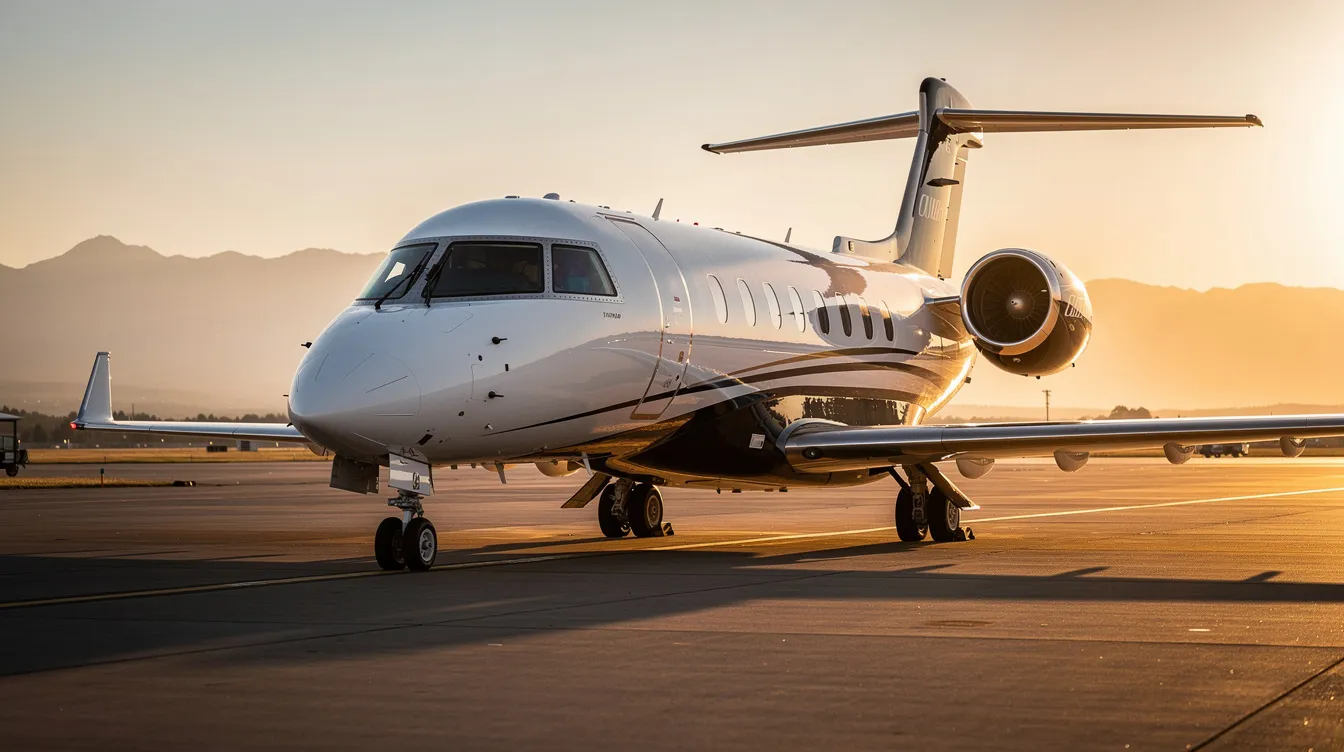
Why the HondaJet Elite S from Honda Aircraft Company Matters for Discerning Private Fliers
Private jet access is not a luxury in the abstract - it is a measurable strategic advantage. For executives, frequent business fliers, and high-net-worth travelers who make regional trips multiple times per month, the HondaJet Elite S is an advanced very light business jet introduced by Honda Aircraft Company in 2021 that turns dead transit time into productive hours, with about 1,500 nautical miles of range, a 422 KTAS maximum cruise speed, and seating for up to 8 passengers in certain configurations. Accessed through a BlackJet Jet Card, it replaces airline unpredictability with precise schedule control, efficient regional lift, and private charter flexibility without the responsibilities of ownership.
Consider a New York–Chicago trip: commercial business class involves two hours of ground logistics at each end, security queues, and rigid departure windows. The same flight on a HondaJet Elite S accessed through a BlackJet Jet Card means departing Teterboro on your timeline, arriving Midway or DuPage ninety minutes later, and stepping straight into a waiting car - no connections, no compromises. That combination of speed, fuel efficiency, cabin comfort, and on-demand access is exactly why the Elite S matters to travelers who need regional missions to work around their schedule rather than the other way around.
The HondaJet Elite S is an advanced light business jet, introduced on May 26, 2021, by Honda Aircraft Company as an upgraded iteration of the HA-420 platform. It sits precisely between the original HondaJet Elite and the newer HondaJet Elite II. In the sections that follow, we break down its performance specifications, cabin experience, Garmin avionics and safety technology, differences versus other HondaJet variants, operating economics and Jet Card access through BlackJet's premium private jet programs, the mission profiles it fits best, and the safety and sustainability factors that matter when choosing it over larger light jets or turboprops across our network.
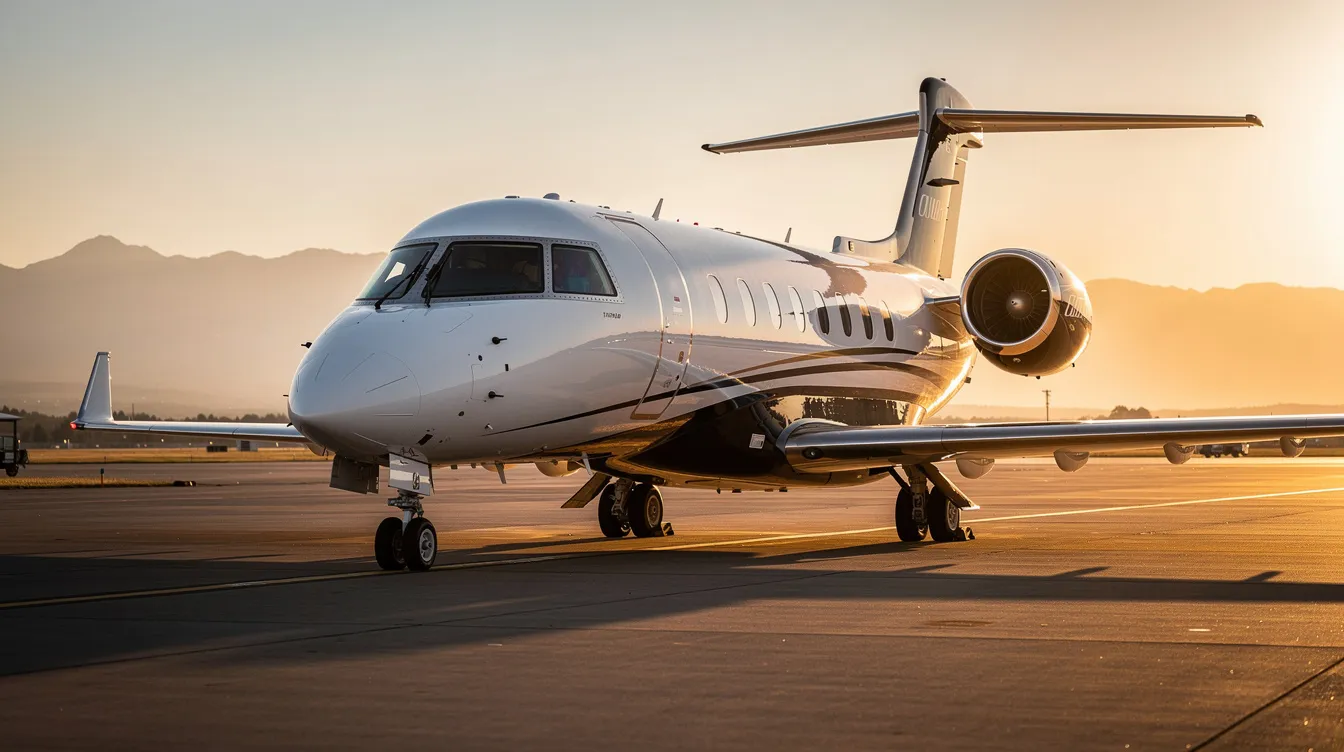
HondaJet Elite S at a Glance: Key Specifications & Performance
Before evaluating cabin comfort or economics, it helps to understand what the HondaJet Elite S can actually do. Here is the performance snapshot that matters most when selecting an aircraft for a regional mission.
The Elite S is a very light jet produced by Honda Aircraft Company in Greensboro, North Carolina, evolving from the original HondaJet whose first delivery came in December 2015. It is powered by two GE Honda HF120 engines producing approximately 2,050 lbf of thrust each, and its aerodynamic design has been optimized to reduce fuel consumption through Natural Laminar Flow technology on the nose and wing, plus the Over-The-Wing Engine Mount (OTWEM) design that minimizes aerodynamic drag. The aircraft features a carbon composite fuselage for weight reduction, further boosting efficiency.
Core metrics that define its superior performance in the very light jet class:
Specification | Details |
|---|
Range | 1,437 nautical miles with 4 occupants; up to 1,500 nm typical |
Maximum Cruise Speed | Approximately 422 KTAS, class-leading speed |
Service Ceiling | 43,000 feet, higher than many competitors |
Takeoff Distance | Roughly 3,639 feet at maximum gross weight |
Maximum Takeoff Weight | 10,900 lbs (200 lbs increase over earlier Elite) |
Passenger Capacity | Up to 8 passengers in high-density configuration |
Engines | Two GE Honda HF120 engines, 2,050 lbf thrust each |
Fuselage | Carbon composite for weight reduction |
Aerodynamic Features | Natural Laminar Flow technology; Over-The-Wing Engine Mount |
The Elite S features a 200-pound increase in maximum takeoff weight over the earlier Elite, raising gross weight to 10,900 lbs. This increase allows flying up to 120 nautical miles further or carrying an additional passenger with equivalent fuel. These technological innovations make the HondaJet Elite S notably fuel efficient compared to many older light jets of similar speed and range, keeping operating costs and emissions lower for travelers evaluating the cheapest private aircraft options in the market. For BlackJet members, these specs translate directly into regional business hops, same-day out-and-back trips, and high-frequency shuttle patterns where speed, short takeoff distance, and small-field capability matter more than a cavernous cabin.
Cabin Experience: Comfort, Layout & Signature Features
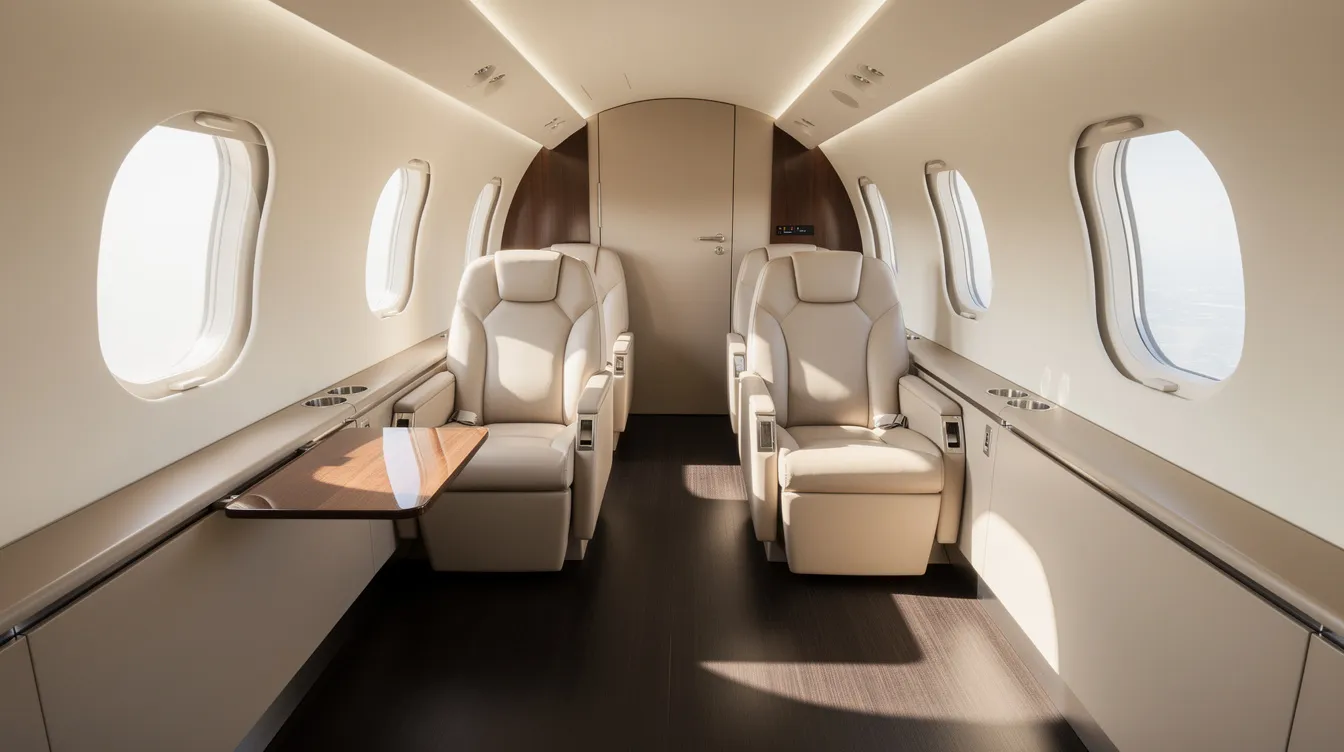
Do not let the "very light jet" designation mislead you. The HondaJet Elite S cabin is the largest in its class, and it delivers an experience that rivals larger aircraft for flights up to about three hours - offering features often associated with larger business jets at a fraction of their operating cost, especially when you understand private jet sizes and categories across the broader market.
The typical executive club seating layout features four contoured, two-toned executive leather seats facing each other that swivel, track, and recline. The cabin is configurable for up to 7 passengers with an optional side-facing seat or belted lavatory seat, and can carry a maximum of 8 passengers in high-density arrangements. The unique engine placement - mounted over the wing rather than on the aft fuselage - maximizes cabin space and reduces noise, creating a remarkably quiet environment.
Among the standout cabin features: the Elite S features a fully enclosed private lavatory and kitchenette at the rear, complete with a hard door, sink option, and skylight. This is a genuine differentiator in the VLJ category, particularly meaningful for families or longer flights. It provides approximately 66 cubic feet of externally accessible luggage capacity across aft and nose compartments - generous for the class.
Premium touches extend to an immersive in-cabin sound system: the aircraft includes a Bongiovi sound system, an industry first for this category. Adjustable lighting, a cabin management system for climate control, and easily accessible power outlets at each seat round out the passenger technology. Later aircraft may also include Wi-Fi options.
In practice, these details matter. A family of four flying Miami to Nassau enjoys short boarding, complete privacy, and a lavatory their children can use without awkwardness. A legal team of three flying Dallas to Denver works continuously on confidential documents in a low-noise cabin, arriving prepared rather than fatigued. Tall passengers over 6′2″ may find headroom limited on longer legs - a midsize jet would suit them better - but for the majority of travelers and typical VLJ missions, the Elite S cabin delivers beyond expectations, particularly for those comparing it with small private plane charter costs for similar regional routes.
Cockpit, Avionics, Advanced Steering Augmentation System & Safety Technology
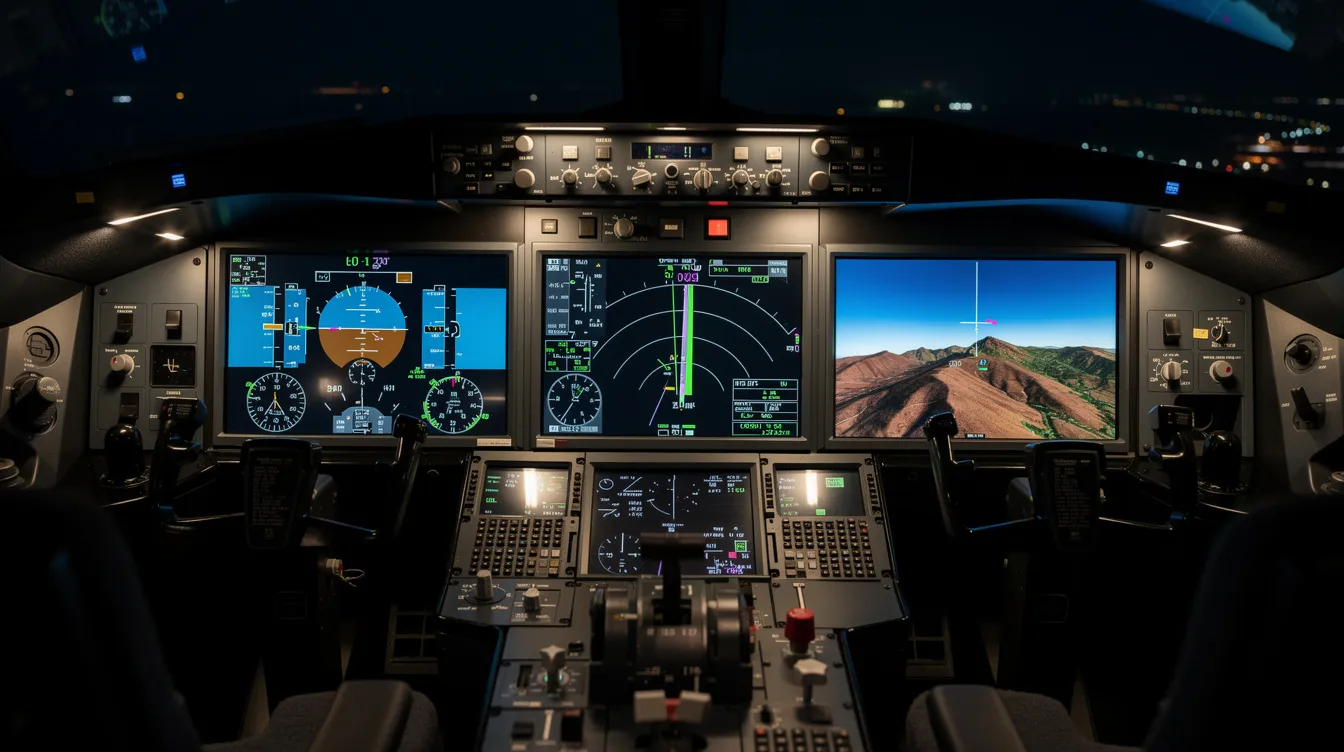
The HondaJet Elite S cockpit is engineered around a single principle: reduce pilot workload so crews can focus on decision-making and safety, echoing the broader realities outlined when asking whether private jets are safe. The aircraft is certified for single-pilot operation, though many operators fly with two pilots for complex or longer missions.
At its core, the HondaJet Elite S features a Garmin G3000 avionics suite - three large displays, dual touch-screen controllers, synthetic vision, integrated flight management, and advanced flight director modes. It features enhancements designed to reduce pilot workload and expand operational capability across varied environments. Automated anti-ice, lighting, and pressurization systems operate without pilot intervention, while automated ground spoilers optimize landing performance.
A key innovation is the advanced steering augmentation system (ASAS), which enhances handling precision and reduces pilot workload during taxi, crosswind takeoffs, and landings under specific weather conditions. This functionality, intended for low-speed ground operations, enhances safety margins considerably.
The aircraft integrates text-based FAA DataComm and ACARS for communication efficiency, a significant step to improve flight operations. The FAA DataComm system enables text-based messaging between pilots and both air traffic services and operations centers, supporting several functionalities: departure clearance, enroute services, terminal information, terminal weather updates, and position reporting. Operating in datalink mode, these systems replace traditional voice commands with digital exchanges, dramatically increasing clarity and helping increase dispatch reliability. The system also supports flight plan upload directly from the cockpit, streamlining flight plan management and dispatch reliability across supported routes.
These capabilities represent leading-edge technology that directly aligns with BlackJet's safety standards. Lower pilot workload, better situational awareness, and comprehensive automation mean the HondaJet Elite S meets the strict operator vetting and third-party safety ratings - including ARG/US and Wyvern where applicable - that BlackJet requires of every aircraft in our network.
Elite S vs. HondaJet Elite, Elite II & APMG: What's Different?
When booking through BlackJet or researching aircraft options, you may encounter several HondaJet variants. Understanding the differences helps you make an informed request - and ensures the right aircraft matches your mission.
The original HondaJet and the HondaJet APMG upgrade package represent the platform's early evolution. The APMG (Advanced Performance Modification Group) brought aerodynamic tweaks, increased useful load, a fifth fuel tank, and avionics enhancements to earlier airframes. The HondaJet Elite, delivered from 2018 onward, built on that foundation with increased fuel capacity, a quieter cabin, and incremental performance gains that became the fleet baseline.
The HondaJet Elite S introduced several upgrades: increased maximum gross weight allowing an additional passenger or more fuel per flight, extended typical mission range by up to about 120 nm, and new avionics software including DataComm and ACARS, placing it among top private jets that blend performance and luxury in the very light jet class. Visual identity updates include a new Elite S logo, new exterior paint schemes, and a special paint scheme series with color options such as deep sea blue, luxe gold, and bold red - part of broader exterior paint schemes reflecting the company's continued commitment to design distinction.
The HondaJet Elite II, introduced in 2022, extends range to roughly 1,547 nm with increased takeoff weight of approximately 11,100 lbs, and adds standard autothrottle and Emergency Autoland as a standard offering. BlackJet may offer both types of private jets depending on availability, drawing from a full spectrum of private jet sizes to fit each journey.
All variants share Honda Aircraft's core innovation: OTWEM engine mounts, natural laminar-flow nose and wing, and composite fuselage construction. The aircraft's environmental performance is superior compared to similarly sized twin-engine jets across every generation. Choose the Elite S for cost-effective regional missions with 2–4 passengers; step up to the Elite II when slightly more payload, range, or the added safety of autoland justifies the premium.
Operating Economics, Ownership Costs & Jet Card Access
Understanding costs is essential whether you own aircraft shares, charter ad hoc, or use a Jet Card, and a clear view of Jet Card pricing structures helps frame those decisions. The HondaJet Elite S sits at an attractive economic point in private aviation - efficient enough for frequent use, capable enough to eliminate compromises.
Published estimates put the annual operating cost for HondaJet Elite S at approximately $966,775 for high-utilization owner-operators flying 250–400 hours per year. That figure bundles fuel burn for the twin HF120 engines, maintenance reserves, crew salaries, insurance, hangar fees, and periodic inspections - though actual prices vary with utilization and region.
Acquiring an Elite S outright means committing to purchase prices commonly in the $3.4–$3.9 million range on the pre-owned market, plus carrying all fixed overhead regardless of how often you fly. Through BlackJet, members access similar aircraft via 25-hour or 50-hour Jet Card blocks, where hourly pricing bundles aircraft, crew, maintenance, insurance, and positioning into a single predictable rate - eliminating surprise bills and long-term asset risk; the BlackJet 25+ Hour Jet Card extends these benefits to larger cabin categories as well.
The benefits are clear in a real scenario: a CEO flying 80 hours per year regionally would spend roughly $1 million annually to own and operate an Elite S. A Jet Card from BlackJet covers those same hours without capital commitment, depreciation exposure, or crew management, following the economic logic outlined in our broader guide to Jet Card membership costs. BlackJet flights are also carbon-neutral by default via verified offsets, which is particularly meaningful given the Elite S's already efficient fuel burn in the light jet category.
Mission Profiles: When a HondaJet Elite S Can Expand Operational Capability and Is the Ideal Choice
The HondaJet Elite S is the sweet-spot aircraft for a typical mission of 300–1,000 nm with two to four passengers. Routes like Los Angeles–Aspen, New York–Toronto, or Miami–Nassau showcase its efficiency: nonstop under normal conditions, above weather at 43,000 feet, and completed in well under two hours.
Short takeoff distance and favorable landing performance open doors to secondary and business airports - Teterboro instead of JFK, Scottsdale instead of Phoenix Sky Harbor - cutting ground transfer time by thirty minutes or more at each end across hundreds of supported airports, similar to how private plane rideshare services leverage smaller fields to save time.
Two scenarios illustrate the value: three attorneys fly New York–Toronto for a same-day meeting, working on confidential briefs the entire way in a quiet cabin with no eavesdroppers. A family of four departs Atlanta for a long weekend in the Bahamas, children comfortable in the enclosed lavatory-equipped cabin and bags stowed in 66 cubic feet of external luggage space. In both cases, the Elite S outperforms turboprops on speed and matches or beats larger light jets on per-seat cost for smaller groups, making it a compelling choice alongside other budget-friendly private aircraft options.
Limitations exist and deserve mention: baggage volume, while generous for its class, restricts bulky sporting equipment on longer group trips, which is where a dedicated charter for 100 passengers or other large-group solutions may be more appropriate. Passengers taller than 6′2″ may prefer a midsize jet for legs exceeding two hours or explore the cheapest private jet options that still provide greater headroom and cabin volume. Knowing these boundaries helps BlackJet's operations team assign the right aircraft when you book through our digital platform.
Safety, Sustainability & Booking a HondaJet Elite S with BlackJet
For BlackJet clients, safety and sustainability carry equal weight with speed and comfort. The HondaJet platform has logged 98,000 hours with 99.7% reliability. Transparency matters: as of August 2025, six hull-loss accidents occurred across the global fleet, with five fatalities - the first fatal accident occurred on November 5, 2024. Separately, operator Jet It grounded its HondaJet fleet after a runway excursion. These events underscore why operator selection is paramount, and why BlackJet partners only with vetted operators meeting or exceeding FAA and EASA standards, prioritizing ARG/US and Wyvern-rated fleets with type-rated, highly experienced crews.
Honda Aircraft's own safety culture - reflected in FAA AMT Diamond Award wins, a global service network, and continuous upgrades from APMG through Elite II - aligns with BlackJet's uncompromising maintenance and operator quality expectations, and mirrors broader industry practices described when examining private jet safety standards and risks. Every flight in our fleet is carbon-neutral: we calculate emissions per segment and invest in verified offset programs, and the Elite S's class-leading fuel efficiency further reduces environmental impact.
Booking is seamless. Log into BlackJet's mobile or web platform, enter your route and dates, select your preferred cabin size, and confirm a quote where an Elite S or comparable VLJ is offered based on your mission and payload, much like the process outlined in our guide on how to buy a seat on a private jet. No fleet management. No crew scheduling. No hangar bills — just the predictable access and pricing structure associated with the best Jet Card programs for frequent flyers.
Frequently Asked Questions About the HondaJet Elite S
Q1: What makes the HondaJet Elite S stand out among very light jets?
The HondaJet Elite S combines advanced aerodynamic features like Natural Laminar Flow technology and Over-The-Wing Engine Mounts with a spacious cabin—the largest in its class. It offers superior fuel efficiency, a fully enclosed lavatory, and cutting-edge Garmin G3000 avionics, making it ideal for regional business and leisure travel.
Q2: How does the HondaJet Elite S improve pilot workload and safety?
Equipped with the Advanced Steering Augmentation System and automated systems for anti-ice, lighting, and pressurization, the Elite S reduces pilot workload significantly. Its FAA DataComm and ACARS integration streamline communication, enhancing operational safety and efficiency.
Q3: What are the typical mission profiles suited for the HondaJet Elite S?
The Elite S excels on trips ranging from 300 to 1,000 nautical miles with 2 to 4 passengers, such as New York to Toronto or Los Angeles to Aspen. Its short takeoff distance allows access to smaller airports, saving valuable ground time.
Q4: Can I access the HondaJet Elite S through BlackJet’s Jet Card program?
Yes, BlackJet offers access to the HondaJet Elite S via flexible Jet Card programs, providing prepaid flight hours without ownership responsibilities. This enables seamless booking, predictable costs, and carbon-neutral flights.
Q5: How does the HondaJet Elite S address sustainability concerns?
With its fuel-efficient design and carbon composite fuselage, the Elite S emits fewer greenhouse gases than similar jets. BlackJet complements this by offsetting all flights, making each journey carbon neutral at no extra cost to travelers.
Conclusion: Elevate Your Regional Travel with the HondaJet Elite S and BlackJet
The HondaJet Elite S exemplifies how private aviation transcends luxury to become a strategic asset for discerning travelers. Its combination of cutting-edge technology, fuel efficiency, spacious cabin, and advanced safety features positions it as a leader in the very light jet category. When accessed through BlackJet’s Jet Card program, the Elite S offers unparalleled convenience, cost predictability, and carbon-neutral travel—without the burdens of ownership.
Whether you are a business executive seeking to maximize productivity on regional trips or a family desiring comfort and privacy, the HondaJet Elite S delivers a seamless, premier experience. Its challenging spirit of innovation and thoughtful design ensure every flight is not just a journey, but a step forward in efficient, sustainable private aviation.
Discover how BlackJet can reshape your travel with exclusive access to the HondaJet Elite S and a network of meticulously vetted operators. Elevate your next trip—explore premium jet access today by learning more about our Jet Card programs, understanding the benefits of carbon-neutral flights, and seeing how we maintain the highest private aviation safety standards. For those interested in comparing aircraft, explore our guide on private jet sizes and discover the best small private planes for your next journey.


 Sign up with google
 Sign up with Apple