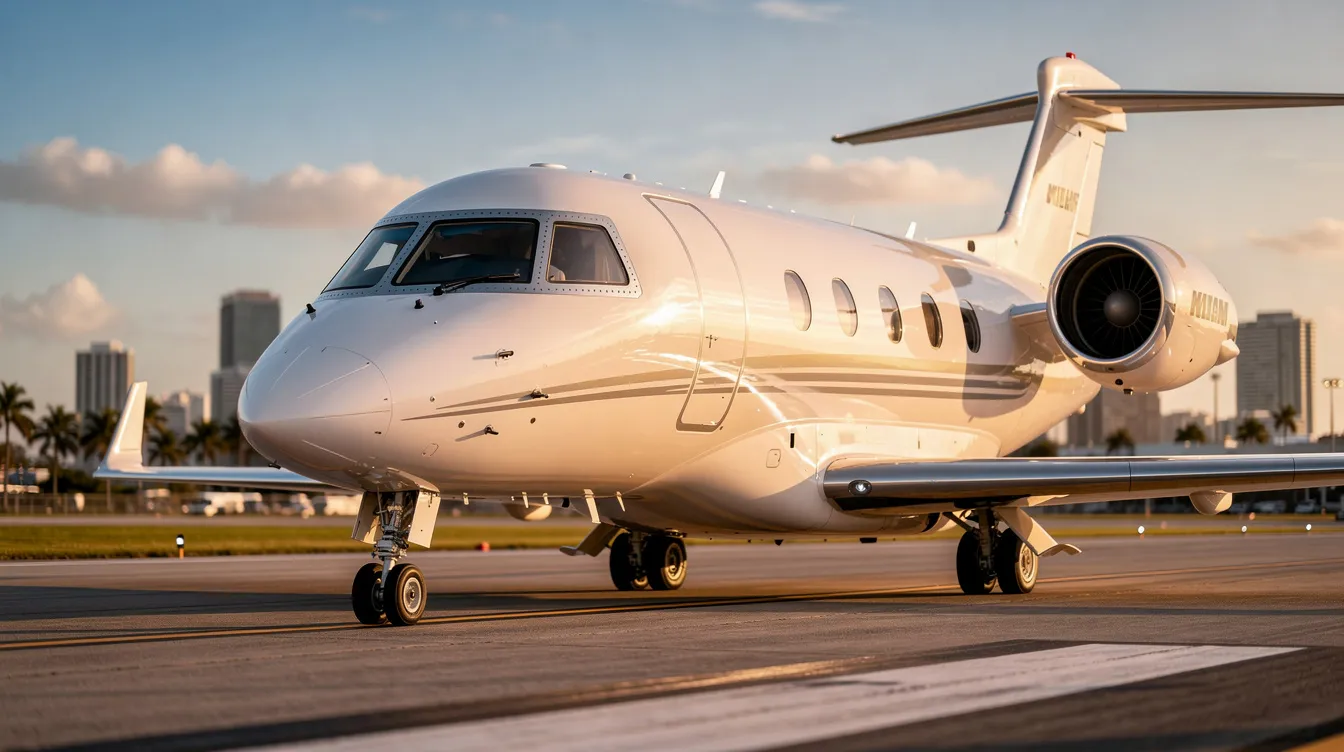
Long-range private jets, often classified as business aircraft designed for private, corporate, or VIP transportation, fundamentally transform global travel from a logistical endurance test into a strategic advantage. While commercial aviation requires multi-leg routing, extended layovers, and circadian disruption, ultra-long-range jets enable nonstop city pairs that compress travel time dramatically—turning what would be an 18-hour ordeal into a productive journey.
Consider concrete examples: New York to Hong Kong in approximately 15.5 hours, Los Angeles to Dubai in 14 hours, or London to Singapore without refueling. These missions, spanning 6,000 to 7,700 nautical miles, represent the true capability of modern business aviation. Ultra-long-range jets can fly up to 8,000 nautical miles non-stop, connecting city pairs like Dubai to Houston or Singapore to Los Angeles. BlackJet Jet Card members access these aircraft on demand without the burden of ownership, crew management, or maintenance exposure.
The time savings versus commercial first class are substantial. Even premium commercial passengers experience 2-3 hours of pre-flight procedures, plus 1-2 hours of post-flight processing. A BlackJet member on the same route departs from a private terminal 15-30 minutes before departure, lands at a business aviation facility, and is ready for work within minutes. For intercontinental routes, this efficiency multiplier compounds to 4-8 hours recovered per journey time, which translates directly to business agility or personal recovery.
What Counts as a Long-Range Private Jet?
The private aviation industry distinguishes between several jet categories—light jet, mid-size jets, super midsize, large cabin jets, long range, and ultra long range—based on nautical miles capability, passenger capacity, and amenities. Light jets typically accommodate 6–8 passengers and have a maximum range of about 1,953 nautical miles, making them a cost-effective option for longer-range regional travel. Mid-size jets balance range, passenger capacity, and airport flexibility, often seating 7–9 passengers and capable of significant distances, including some transoceanic flights, though they may require refueling stops. Large cabin jets are known for their extended-range capabilities and can complete long, nonstop intercontinental flights, making them ideal for long-haul international travel with seating for 10–18 passengers and luxurious amenities.
Long-range jets achieve approximately 3,500–5,500 nautical miles of nonstop flight, suitable for transatlantic crossings and most intercontinental missions. Ultra long-range jets extend to 6,000–7,700+ nautical miles, opening transpacific routes and complex global triangulations.
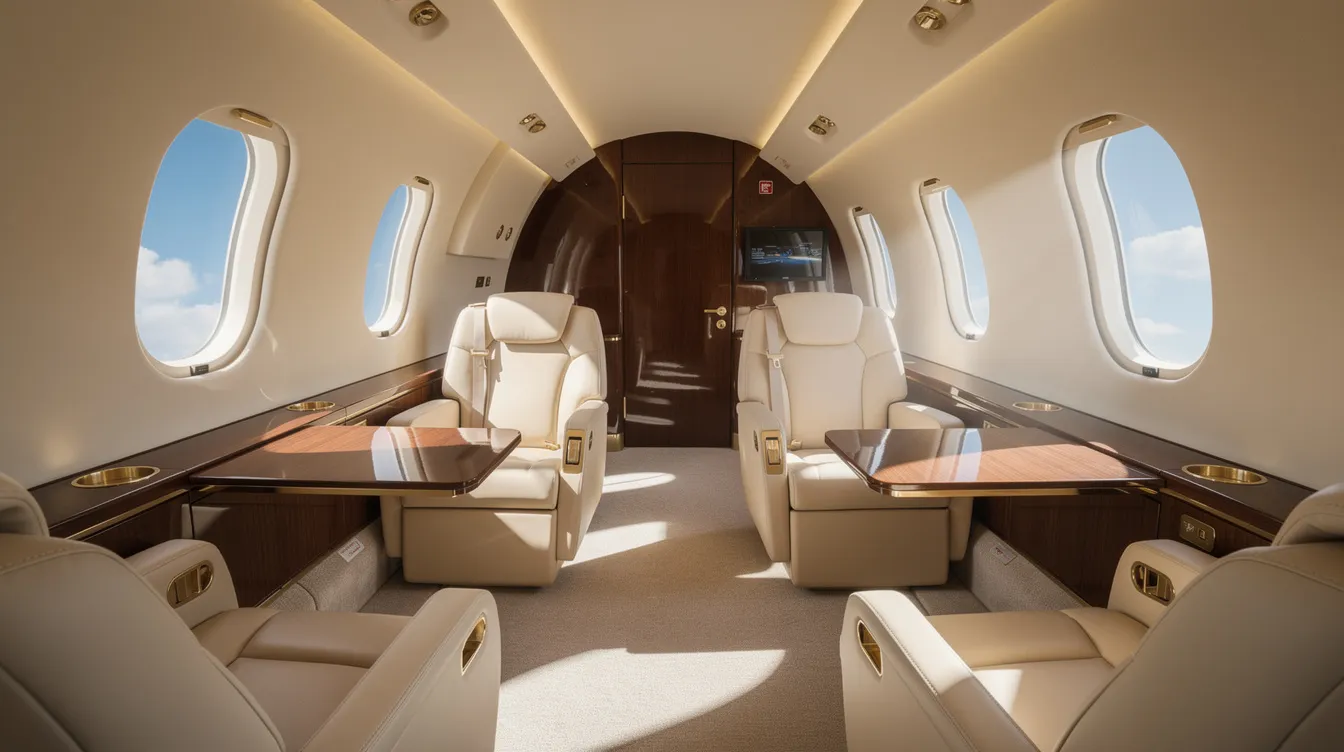
Concrete examples anchor these categories: the Bombardier Global 6000 achieves roughly 6,000 nautical miles with a full cabin; the Bombardier Global 7500 reaches approximately 7,700 nautical miles, making it among the longest range production business jets in service; the Gulfstream G650ER delivers about 7,500 nautical miles; and the Dassault Falcon 8X covers approximately 6,450 nautical miles. These large cabin aircraft typically seat 10–18 passengers with fully flat beds, distinct zones for working and resting, and dedicated crew rest areas.
When considering your travel needs, compare different jet classes—light jet, mid-size jets, large cabin jets, and ultra long range—to find the best fit for your mission profile, passenger count, and comfort preferences.
Range specifications are typically measured under ISA conditions (standard atmosphere, no wind, no temperature extremes), which provides a consistent basis for comparing aircraft capabilities.
BlackJet provides access to long-range and ultra-long-range categories through its upper-tier Jet Card options, while also offering super midsize jets for 3,000–4,000 nautical mile missions when intercontinental reach isn’t required, complementing broader insights into types of private jets for every traveler.
Category | Typical Range | Typical Seats | Example Models |
|---|
Long Range | 5,000–6,000 nm | 10–14 | Global 6000, Falcon 7X, G550 |
Ultra Long Range | 6,000–7,700 nm | 12–18 | Global 7500, G650ER, Falcon 8X |
Super Midsize | 3,000–4,000 nm | 8–10 | Bombardier Challenger, Citation X |
Very light jets (VLJs) have a maximum takeoff weight (MTOW) of less than 10,000 pounds, are designed for single-pilot operation, accommodate 6–7 passengers, and have an average range of 1,174 nautical miles
How Range Works in Private Aviation
Range in private aviation represents the maximum distance an aircraft can fly without refueling, calculated from takeoff to landing while maintaining fuel reserves for alternate airports and contingency procedures as mandated by regulations. This is where published specifications diverge from practical mission planning.
The difference between the advertised maximum range and the real-world capability matters significantly. A Bombardier Global 7500 publishes 7,700 nautical miles of range, but when planning a New York to Hong Kong mission, operators account for jet stream headwinds (reducing ground speed by 3-8%), alternate airport requirements (adding 500-800 nautical miles of planning distance), passenger and luggage weight (each additional 50 pounds reduces range by 10-20 nautical miles), and regulatory reserves. The practical mission range becomes 7,000-7,200 nautical miles.
Key factors influencing flight range include payload (passenger count and cargo weight), cruise speed selection (Mach 0.85 optimizes fuel efficiency versus Mach 0.90+ for speed), weather patterns including seasonal jet streams, and runway length at departure and arrival airports. Additionally, specific aircraft features such as fuel capacity and aerodynamics play a crucial role in determining both range and overall performance.
When a BlackJet member books a Teterboro to Hong Kong mission on a Gulfstream G650ER, the operations team analyzes current winds, manifests, and alternates to confirm nonstop feasibility—or recommends a brief fuel stop in Anchorage if conditions warrant. The power of the aircraft’s engines also enables it to maintain high cruise speeds and handle strong headwinds, supporting robust long-range performance.
Flagship Long Range and Ultra Long Range Jets (Examples You Can Fly)
BlackJet’s network includes many of the same long-range planes and platforms used by Fortune 500 flight departments and heads of state. These planes combine maximum range capability with cabin amenities that transform long distances into productive travel time.
Bombardier Global 7500
The Global 7500 represents the current benchmark for ultra-long range capability, achieving approximately 7,700 nautical miles—sufficient for city pairs like New York to Hong Kong, Los Angeles to Sydney, or London to Singapore nonstop. Flight time on these missions spans 14-16 hours.
The cabin architecture is divided into four distinct zones: a forward lounge with club seating, a mid-cabin conference or dining area, an entertainment and office space, and a private aft suite with a fully flat bed and ensuite lavatory with shower facilities. Seating accommodates up to 14 passengers in comfort. Advanced technology includes smooth ride systems that automatically reduce turbulence response and high-speed international Wi-Fi suitable for video conferencing at cruise altitude.
Gulfstream G650ER
The G650ER achieves approximately 7,500 nautical miles with a cruise speed reaching Mach 0.925—faster than most competing platforms. Common nonstop routes include New York to Dubai, Los Angeles to Shanghai, and London to Buenos Aires.
Its widest cabin in the industry (approximately 102 inches) creates spacious seating and walk paths. The cabin pressure system maintains low altitude equivalent (3,000-3,500 feet even at cruise altitudes exceeding 43,000 feet), with enhanced oxygen and humidity control that demonstrably reduces fatigue. This combination of speed and endurance makes the G650ER popular among global CEOs requiring rapid transcontinental access.
Dassault Falcon 8X
The Falcon 8X delivers approximately 6,450 nautical miles of range, connecting New York to Jeddah or Paris to Tokyo. Its tri-jet configuration offers enhanced redundancy and short-field performance—capable of operating from runways as short as 5,000 feet, including steep approaches into airports like London City that exclude larger jets.
The quiet cabin reflects European engineering heritage, with advanced avionics and flexible airport access that larger ultra-long-range planes cannot match.
Other Notable Long-Range Jets
The Global 6000 and 6500 achieve 5,900-6,500 nautical miles, ideal for most intercontinental missions. The Gulfstream G550 reaches approximately 6,975 nautical miles, while the Falcon 7X covers about 5,840 nautical miles. These planes offer similar luxury at somewhat lower operating costs.
Cabin Experience on Long-Range Private Jets
Spending 12-15 hours in a purpose-built long-range cabin differs fundamentally from commercial widebody travel. A private aircraft cabin is precisely that—private—where conversations, work conduct, entertainment choices, and sleep patterns are entirely self-determined. Long-range private jets often feature up to four distinct living spaces, including private bedrooms, conference areas, and dedicated lounges, providing owners—whether high-net-worth individuals or corporations—with unmatched flexibility and privacy.
Typical long-range cabin layouts include multiple zones: club seating for meetings or collaboration, conference and dining areas with expandable tables, lounge spaces for relaxation, and private suites with fully flat beds measuring approximately 6.5 feet long. These jets typically include full-service kitchens with ovens and a specialized crew to manage multi-course gourmet dining. Dedicated galleys and crew rest areas separate service functions from passenger spaces. With significantly more cabin volume, long-range jets offer premium amenities such as fully lie-flat beds, dedicated staterooms, full-service galleys, and extra lavatory space. The massive, low-altitude cabins, high-speed cruise at around Mach 0.90+, and advanced amenities ensure maximum comfort for owners and their guests.
The spacious layout of long-range jets also allows for confidential negotiations and meetings in a secure, controlled environment, ideal for business travelers requiring privacy and discretion.
BlackJet members can expect high-speed international Wi-Fi supporting video conferencing, 4K entertainment systems with personal device streaming, Bluetooth audio integration, and customized catering menus sourced weeks in advance—specific wines, preferred cuisine, and dietary accommodations arranged by the member’s travel coordinator rather than selected from predetermined airline menus. Advanced satellite Wi-Fi and video conferencing systems allow for a continuous workflow across oceans, while the spacious layout enables confidential negotiations and meetings in a secure, controlled environment.
Health and comfort factors matter significantly on long flights. Many modern long-range jets feature lower cabin altitudes, which significantly reduce jet lag and fatigue. The cabin altitude maintained at 5,000-5,500 feet (versus commercial cabins at 8,000 feet) reduces hypoxia effects and fatigue. Humidity levels of 40-60% prevent dehydration. Advanced noise insulation creates an environment 3-6 decibels quieter than commercial first class. A BlackJet member departing Los Angeles at night on a Global 7500 might work for three hours in the conference area, sleep six hours in the private suite, then shower and prepare during the final approach to London—arriving ready for morning business meetings rather than depleted from a commercial journey.
Jet Cards vs Ownership and Charter for Long-Range Missions
Three primary paths exist for accessing long-range private jets: full ownership, on-demand charter, and Jet Cards. Each carries distinct economics and operational realities.
Full ownership of an ultra-long-range business aircraft, such as the Global 7500 or G650ER, requires $60-75 million for a new jet, plus annual operating costs of $3-5 million covering fuel, pilots, maintenance, hangar, and insurance, considerations explored in depth when evaluating the best long-range private jet for sale. Owners—typically high-net-worth individuals, corporations, or entities—possess or operate these business aircraft to meet demanding travel needs. Ultra Long Range Jets offer the largest cabin interiors of traditional business aircraft, enabling travel between continents on a single tank of fuel. Ownership typically justifies itself only at 300-400+ hours of annual utilization—impractical for most high-net-worth individuals outside corporate flight departments.
On-demand charter offers flexibility without asset ownership, but long-range missions expose its limitations: a New York to Hong Kong charter booked 30-60 days ahead might quote $180,000-$280,000, while short-notice bookings incur 20-50% premiums. Aircraft type varies by availability, repositioning costs add $40,000-$80,000 when no jet is nearby, and fuel stops may be inserted to reduce quoted prices while extending total mission time.
BlackJet Jet Cards occupy the economic sweet spot for frequent global travel. Members purchase prepaid 25- or 50-hour blocks at fixed rates for specified categories (large cabin or ultra long range), making structures like a 25-hour jet card and its features a practical entry point for many global travelers. This structure guarantees aircraft availability with defined notice periods, eliminates pricing uncertainty, and removes all ownership overhead. A 50-hour large cabin Jet Card enables two or three annual intercontinental round-trip flights (New York to London, Los Angeles to Sydney) plus several shorter legs—with predictable total spend and consistent cabin experience across missions. Jet cards often include additional benefits such as 24/7 digital booking tools, real-time support, and safety certifications, enhancing the overall travel experience for users, all of which are core themes in a broader overview of jet card pricing, costs, and benefits.
Safety and Certification on Long-Range Flights
Safety and operational rigor matter even more on 10-15 hour oceanic flights than on short regional hops. Operating over remote regions with limited emergency diversion options—8-10 continuous hours across the Pacific with the nearest airport 400-600 nautical miles away—demands systematic planning. Business aircraft used for these missions are equipped with advanced avionics and technology, enhancing navigation, communication, and overall operational safety.
Private jet travel benefits from cutting-edge avionics systems that improve navigation precision, communication reliability, and operational safety. Many private jet operators implement safety management systems (SMS) that include risk assessment and safety reporting processes to continuously improve safety standards and practices across the business aircraft industry.
BlackJet requires all partner operators to maintain ARGUS or Wyvern safety audit certifications (the gold standard in business aviation risk assessment), Part 135 certification with long-haul and international experience, and specific operating rules for extended oceanic operations including ETOPS planning, RVSM approval, and NAT HLA certifications for transatlantic routing, standards comparable to those emphasized by top private jet companies for luxury travel. Many private jet operators also implement safety management systems (SMS) that include risk assessment and safety reporting processes to continuously improve safety standards and practices across the business aircraft industry.
Flight crews on long-range missions hold specific type ratings for each aircraft and recent oceanic experience. On ultra-long flights exceeding 12 hours, dual-crew operations—two captains and two first officers alternating duty—ensure no individual operates continuously for more than 8 hours, maintaining alertness throughout the mission.
BlackJet’s operations team monitors flights in real time via datalinks, coordinates alternates and weather reroutes, and communicates status updates through digital tools. If conditions change mid-flight—stronger headwinds or weather system development—the team proactively identifies options and keeps members informed, prioritizing safety margins over schedule precision.
Real-time flight support services in private aviation enhance the travel experience by providing immediate assistance and information to travelers, ensuring smooth operations and timely updates during flights. Private jet companies often utilize advanced technology to offer real-time flight tracking, allowing passengers to monitor their flight status and make informed decisions about their travel plans. Real-time support also includes access to dedicated flight attendants and customer service representatives who can address passenger needs and preferences throughout the journey.
Sustainability and Carbon-Neutral Long Range Private Jet Travel
Long-range private flights carry a substantial carbon footprint that responsible operators must address transparently. A single 14-hour transpacific mission consumes approximately 10,000-12,000 gallons of jet fuel, producing roughly 100-120 metric tons of CO2 equivalent emissions, a reality that also shapes decision-making around the cheapest private jet options, where efficiency and operating costs are central.
The European Commission has set a target for a 55% net reduction in greenhouse gas emissions by 2030, which includes measures for the aviation sector. Projects tracking the movements of private jets have gained attention due to their disproportionate carbon footprint compared to commercial flights, highlighting the environmental impact of private aviation.
BlackJet’s commitment to carbon-neutral flights means every mission—including intercontinental journeys—is automatically offset to net-zero CO2 emissions at no additional cost to members. The company absorbs offset costs, sourcing verified carbon credits from projects adhering to standards like Verra or Gold Standard, including reforestation, renewable energy, and efficiency initiatives.
Where operationally feasible, BlackJet arranges sustainable aviation fuel through partner FBOs at major airports, including Van Nuys, Teterboro, London, and Geneva. SAF can reduce lifecycle emissions by 50-80% compared to conventional jet fuel without requiring aircraft modifications.
This proactive stance aligns with growing regulatory requirements—EU Fit for 55 mandates escalating SAF blending minimums through 2050—positioning BlackJet members as travelers who take environmental impact seriously while valuing efficiency and privacy, even when evaluating budget-friendly private aircraft options where sustainability is increasingly part of the value equation.
Technology and Real-Time Support for Global Missions
Technology underpins every stage of a long-range trip, from initial quoting through in-flight connectivity and ground coordination.
BlackJet’s digital platform provides 24/7 mobile and web access for requesting flights, checking aircraft options by cabin class and range, and confirming itineraries, similar to the app-based workflows described in this guide on how to buy a seat on a private jet. Mobile booking platforms for private jet services allow users to book flights quickly and conveniently from their smartphones or tablets, enhancing the overall travel experience. These platforms typically feature user-friendly interfaces that enable customers to view available aircraft, compare options, and make reservations in real-time, and they are increasingly central to managing unlimited private jet flight memberships and other innovative access models. Many mobile booking platforms also provide additional functionalities such as flight tracking, in-flight service requests, and customer support, all accessible through the app.
A practical scenario: a London-based executive uses the BlackJet app to book a London to São Paulo round trip on a G650ER, receiving live updates on slot times, ground transfers arranged at both ends, and catering preferences synchronized across legs—arriving prepared for business meetings without coordination friction.
Choosing the Right Long-Range Jet for Your Mission
The optimal long-range private jet depends on your mission profile rather than maximum range numbers alone, and for some travelers, flexible structures like leasing a private jet can complement or substitute outright ownership. To find your ideal aircraft, compare different jet options based on range, passenger amenities, and overall capabilities to ensure the best fit for your travel needs, and align those choices with an understanding of the broader private jet price list and cost structures. Several factors guide the decision:
Long-range jets can travel 4,000–7,000+ nautical miles, enabling direct intercontinental travel without time-consuming refueling stops. By eliminating refueling stops, these jets reduce the risks of logistical delays, making them ideal for complex, time-critical itineraries. Flying non-stop also significantly reduces door-to-door travel time by bypassing the 45–90 minutes typically lost per technical stop for refueling and ground handling. Long-range private jets provide superior efficiency and comfort for business or personal travel by enabling non-stop, long-haul, or international flights, removing the need for fuel stops. They offer an unmatched range for non-stop, transoceanic travel between major global cities and often operate at higher cruise speeds and altitudes than smaller jets or commercial planes, while even larger aircraft capable of carrying up to 50 private jet passengers extend these benefits to sizable groups.
Route and required range determine baseline capability—North America to Europe (3,500-4,500 nautical miles) differs from North America to Asia (7,000+ nautical miles). Passenger count and cabin layout preferences matter—whether you need a separate bedroom, conference area, or can fly nonstop with a larger group affects model suitability. Airport access plays a role if your destinations include smaller airports with runway constraints. Budget and preferred Jet Card tier influence whether large cabin or ultra-long range pricing makes sense.
A family of six flying from Miami to Rome twice yearly, plus Caribbean leisure trips, likely benefits from a large cabin jet like the Global 6000 or Falcon 7X via BlackJet’s large cabin Jet Card. A multinational CFO shuttling New York to Singapore or Los Angeles to Hong Kong several times annually may require ultra-long-range access to the Global 7500 or G650ER through a higher-tier card.
BlackJet advisors map members’ upcoming 12-24 months of travel needs and translate patterns into the most efficient aircraft category and Jet Card structure—right-sizing access to actual mission requirements rather than over-committing to capability that won’t be fully utilized, much like the evaluation frameworks outlined in this guide to the best jet cards for frequent flyers.
FAQs About Long-Range Private Jets and BlackJet Jet Cards
Which private jets have the longest range?
The Bombardier Global 7500 achieves approximately 7,700 nautical miles, followed by the Gulfstream G650ER at roughly 7,500 nautical miles, and the Dassault Falcon 8X at about 6,450 nautical miles. The newer Bombardier Global 8000 reaches 8,000 nautical miles with reduced passenger loads.
How far can a long-range private jet fly without refueling?
Ultra long-range jets routinely achieve 6,000-7,700 nautical miles nonstop, corresponding to flight times of 12-16 hours depending on cruise speed and winds. Practical planning typically applies 5-15% margin for headwinds and reserves.
How does BlackJet pricing work for ultra-long-range flights?
BlackJet Jet Cards are prepaid hourly blocks at fixed rates for specified aircraft categories. Members purchase 25- or 50-hour blocks, with flight hours deducted at the same rate regardless of mission length. Fuel surcharges indexed to market prices may apply.
Can I fly nonstop from New York to Tokyo or Los Angeles to Sydney with BlackJet?
Yes, with suitable aircraft like the G650ER or Global 7500. Operations teams conduct real-time weather and wind analysis to confirm nonstop feasibility. If conditions are marginal, a brief fuel stop may be recommended to maintain safety margins.
How many passengers can large jets accommodate?
Ultra long-range jets typically seat 10-18 passengers depending on configuration. Aircraft configured for maximum comfort with fully flat beds seat fewer passengers; business travel configurations accommodate more.
Are BlackJet flights carbon neutral?
Yes. Every flight is automatically offset to net-zero CO2 emissions at no additional cost to members, with sustainable aviation fuel available at select airports where operationally feasible.
What notice period do I need to book an intercontinental flight?
Standard notice for planned missions is 48-72 hours. Urgent 24-hour bookings are often possible, though holiday periods and major conferences may require 5-7 days' advance notice due to elevated fleet demand.
Conclusion: Extend Your Reach with BlackJet Long Range Access
Long-range and ultra-long-range jets compress the globe for business leaders and discerning leisure travelers, enabling productive arrivals across continents where commercial alternatives would leave you depleted. BlackJet combines rigorous safety standards through third-party audits and certified operators, carbon-neutral flights by default at no extra cost, and seamless digital booking with real-time support—delivering the strategic advantage of global mobility without ownership burden. Explore BlackJet’s large cabin and ultra-long range Jet Card options to discover how private aviation can reshape your travel, and speak with an advisor about matching your specific patterns to the most efficient aircraft access.


 Sign up with google
 Sign up with Apple