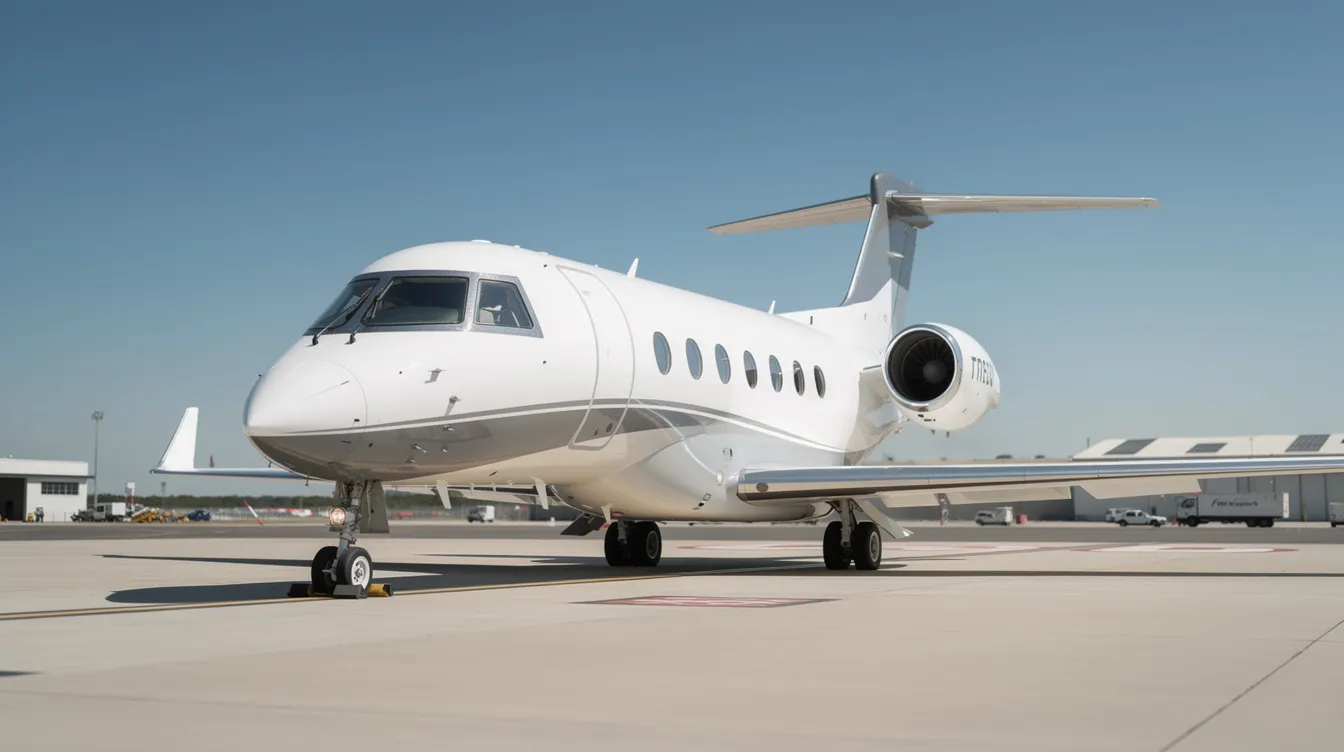
The short answer: most aircraft financing terms run between 5 and 20 years. The number you qualify for depends on the airplane's age, type, intended use, and your financial profile.
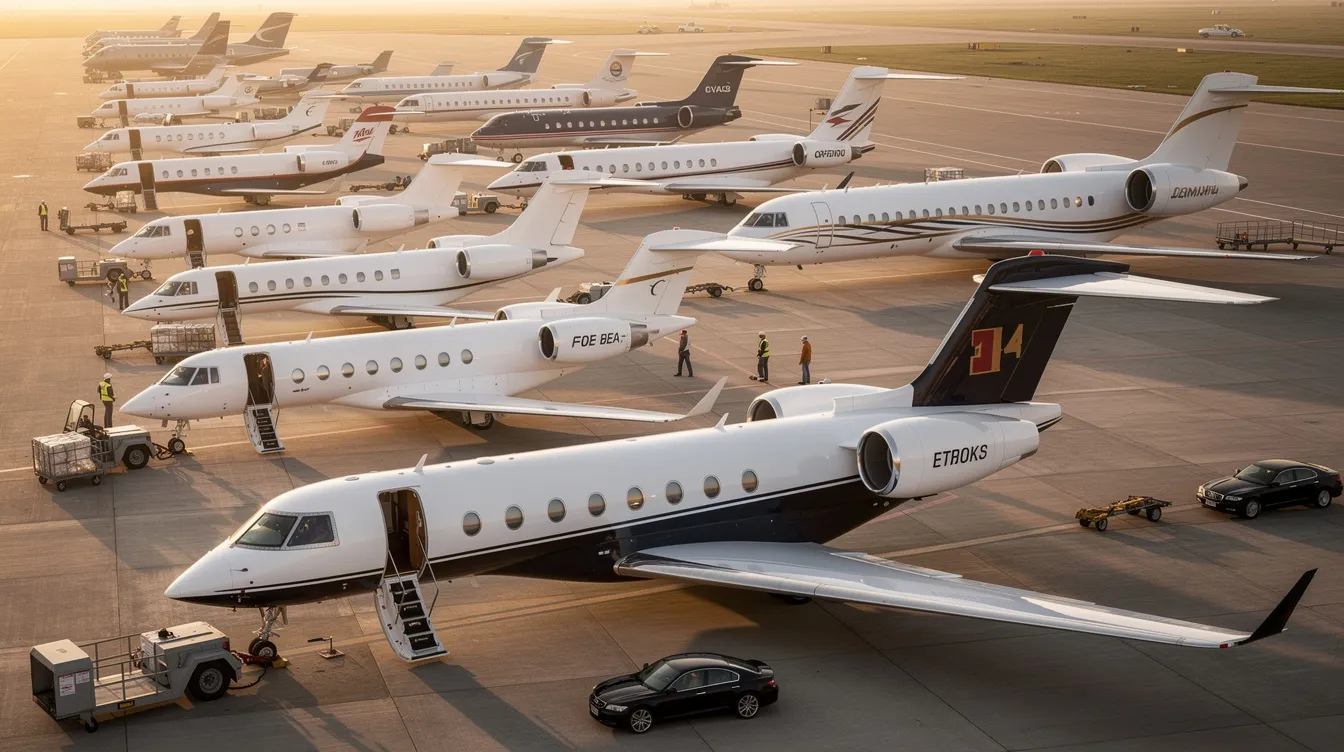
How long can you finance a plane? (Direct answer up front)
Private aircraft loan terms commonly span 5 to 20 years. Newer turbine aircraft, including turboprops and business jets, typically qualify for financing periods of up to 20 years, while older or specialty airframes are often capped at 10 to 12 years. The maximum amortization period for most certified aircraft is 20 years.
Lenders apply an "age plus term" rule: the aircraft's age plus the loan term cannot exceed 30 years. A 2012 light jet, for example, would be 14 years old in 2026 and could qualify for a potential loan term of up to 15 years under that cap.
In practice, high-net-worth individuals and family offices often select shorter terms (7 to 12 years) to reduce interest cost and build equity faster, even when a longer period is available. The typical financing period for an aircraft purchase ranges from 10 to 20 years in most cases.
For frequent travelers who don't need full ownership, BlackJet Jet Card programs offer a flexible alternative: prepaid flight hours, access to multiple cabin classes, and zero long-term debt.
Key factors that determine how long you can secure aircraft financing
Think of the following as the lender's checklist. Each item can affect your loan amount, rate, and maximum term.
Aircraft age and type. Aircraft type and intended use are the first factors lenders evaluate. A 2020 Pilatus PC-12 or 2018 Citation CJ4 can often secure a 15- to 20-year term. Piston aircraft financing terms range from 5 to 20 years based on age and value. Lenders consider aircraft age when determining loan rates, and engine programs are often required for turbine aircraft financing, especially if you are weighing the cheapest private aircraft options across categories.
Usage and ownership structure. Commercial aircraft operations carry different risk profiles compared to personal use. Placing the airplane in a Part 135 charter program shortens allowable terms. Complex ownership structures such as LLCs or a trust may require more documentation but do not necessarily reduce the term. Fractional ownership financing terms often last 3 to 5 years, and understanding the broader private jet price list and access options can help you align structure with budget.
Financing model. Common financing options include traditional loans, operating leases, and capital leases. Operating leases typically last 5 to 10 years; sale-leaseback agreements fall in the same range, and a comprehensive guide to leasing a private jet can help clarify how lease structures compare to long-term loans.
Loan amount and collateral. Larger loan amounts on well-maintained jets qualify for more competitive aircraft financing. Smaller loan amounts often come with shorter maximum term limits. Most aircraft loans require a 15% down payment for standard transactions; lenders typically expect between 15% and 20%. Borrowers must provide a larger down payment to secure more favorable loan conditions, particularly when evaluating premium private jets for sale in the UK or similar high-value aircraft.
Credit strength. Lenders evaluate the borrower's credit score, liquidity, and financial profile, which also affects the interest rate. Strong balance sheets support 20-year amortization; weaker profiles may be limited to 7 to 10 years. Lenders also consider previous aircraft ownership when approving loans.
Lender policy. Some banks cap "age + term" at 25 years, others at 30, and each may impose its own condition on the financing structure or borrower obligations. It is important to have formal lender approval, because approval letters indicate potential loan terms, but the deal is not final until you close. Regulatory and country factors (U.S. vs. EU vs. emerging markets) also affect appetite for long-dated aircraft loans.
How term length affects your monthly payment and total cost in aircraft financing
The loan term is different from the amortization period. Terms may include balloon payments, where the amortization is spread over a longer period than the actual loan maturity. Aircraft loans often require amortization schedules of 15 or 20 years.
Consider a $10M business jet. With a $2M down payment and an $8M loan amount at a fixed interest rate around 6.37%, a key pricing input (turboprop and jet aircraft rates start at 6.37%):
10-year amortization: monthly payment near $90,000; total interest roughly $2.8M
20-year amortization: monthly payment closer to $59,000; total interest roughly $6.2M
Shorter loan terms result in higher monthly payments but cut total interest by millions. Balloon loans have lower monthly payments but leave a large lump sum due at maturity, at which point borrowers refinance, sell, or pay cash. Fixed rates remain constant throughout the loan term, while floating rates change based on market conditions, leading some high-frequency travelers to compare long-term debt with unlimited private jet flight membership models that convert capital cost into a predictable subscription.
Loan terms typically range from 5 to 20 years. Sophisticated buyers model scenarios at 120, 180, and 240 months, making it easy to see the tradeoff between payment size and total interest while aligning the monthly payment with their business cash flows and anticipated exit date. If you are considering large-cabin aircraft capable of carrying sizeable teams, resources on the best private jets for 20 passengers can further refine your assumptions. Your local bank or an aviation-focused lender can assist with this process.
Financing vs. accessing private jets through Jet Cards and charter
Financing ties your capital to a single asset for 7 to 20 years. The purchase price is only the start; you also pay for hangar, crew, insurance, and maintenance reserves, and you carry residual value risk at resale. For pilots and executives who fly fewer than 150 hours annually, the cost per hour can be difficult to justify.
A BlackJet Jet Card works differently: prepaid hours in 25-hour or 50-hour Jet Card blocks, access to light, midsize, or large-cabin aircraft, and 24/7 digital booking through BlackJet’s premium private jet card programs. No aircraft loan, no goods depreciation, no maintenance oversight.
A New York-to-London executive flying 80 to 100 hours per year, for example, would face hundreds of thousands in monthly payments on a financed large-cabin jet they use part-time. A Jet Card aligned to actual hours, informed by a clear view of Jet Card pricing and hourly cost and even 100-hour Jet Card cost structures, eliminates that difference between committed debt and real usage while helping you compare overall Jet Card pricing models.
BlackJet partners only with operators that meet strict safety and audit standards, and every flight is carbon neutral through emissions offsets included at no extra charge. For frequent flyers who value guaranteed aircraft access and predictable spend, exploring the best Jet Cards for frequent travelers alongside small private aircraft options for different missions can clarify whether financing or access programs are the better fit.
Frequently Asked Questions (FAQs)
Q1: How long can I finance a private plane?
Most aircraft financing terms range from 5 to 20 years. Newer turbine aircraft often qualify for up to 20 years, while older or specialty aircraft may have shorter maximum terms.
Q2: What factors influence the length of an aircraft loan?
Loan length depends on aircraft age and type, usage, ownership structure, loan amount, credit strength, and lender policies.
Q3: What is the typical down payment for financing a plane?
Most lenders require a down payment between 15% and 20% of the purchase price, with higher down payments often securing better loan terms.
Q4: Can I finance fractional ownership of an aircraft?
Yes, fractional ownership financing terms usually last between 3 and 5 years.
Q5: How do loan terms affect monthly payments and total interest?
Shorter loan terms result in higher monthly payments but lower total interest paid over the life of the loan, while longer terms reduce monthly payments but increase total interest.
Q6: What alternatives exist to financing an aircraft?
Jet Cards, such as BlackJet’s prepaid flight hour programs, offer flexible access to private jets without long-term debt or ownership responsibilities.
Q7: How do lenders evaluate my eligibility for an aircraft loan?
Lenders assess credit score, liquidity, financial profile, previous aircraft ownership, and the intended use of the aircraft.
Q8: Are there risks associated with aircraft financing?
Yes, including residual value risk, maintenance costs, insurance, and operational expenses that owners must manage beyond monthly loan payments.
Q9: What is an amortization period in aircraft financing?
Amortization is the schedule over which the loan principal is paid down, often 15 or 20 years, which may differ from the loan term.
Q10: How do fixed and floating interest rates differ in aircraft loans?
Fixed rates remain constant throughout the loan term, while floating rates vary based on market conditions.
Choosing the right ownership structure: own, finance, or stay asset-light with BlackJet
The right aircraft financing horizon is dependent on your situation: mission profile, annual hours, liquidity, and appetite for operational work.
Financing makes sense when you fly 200 to 400+ hours per year on consistent routes, need a customized interior, or operate a corporate fleet where the aircraft is central to business operations.
Jet Cards are more efficient when you fly 25 to 150 hours per year, want to sample different aircraft categories based on each trip, and prefer to keep your balance sheet free of multi-decade debt, especially through structured products like the BlackJet 25+ Hour Jet Card and by understanding Jet Card cost per hour.
We recommend that you consult your CFO, family office, or wealth advisor to gather the right information before comparing options and to assess after-tax economics: interest deductibility, depreciation, Jet Card tax deductions, and the opportunity cost of capital each turn the finding one way or another.
BlackJet offers a home for discerning travelers who want private aviation without the questions and complexity of fleet management, whether you are exploring the cheapest private aircraft and budget-friendly access models, learning how to buy a seat on a private jet, or evaluating the most affordable private jet options. Contact our team to learn how a tailored Jet Card comparison can give you clear information on whether financing or asset-light access is the better fit for your travel profile and start reshaping the way you fly.


 Sign up with google
 Sign up with Apple