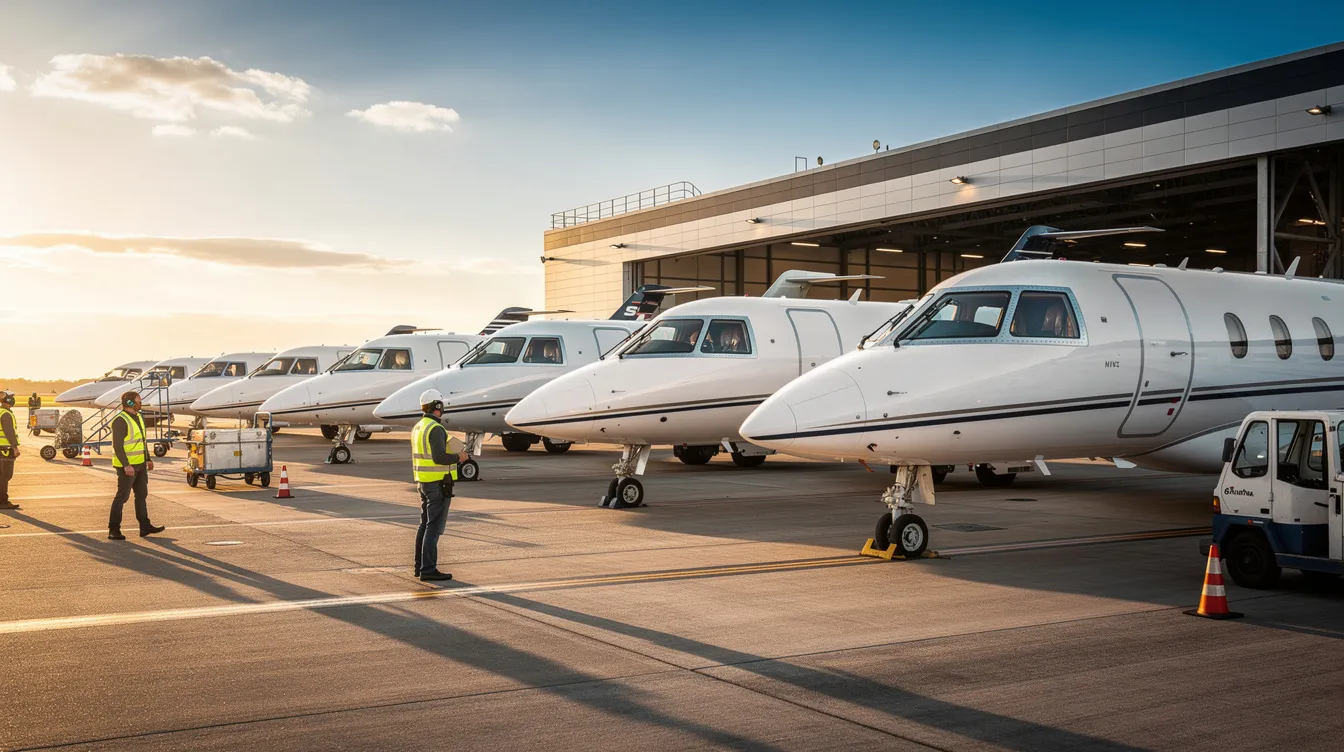
The US private jet fleet is the largest concentration of business aviation assets on the planet, with more than 15,000 private jets in service and roughly 14,000 to 16,000 registered business jet aircraft in the United States as of early 2026. For frequent business travelers and high-net-worth leisure flyers who want flexible, convenient, and safe private air travel without owning an aircraft, that scale translates into real access. This guide is for business travelers, aviation enthusiasts, and anyone interested in the scale and structure of private aviation in the US. Here is exactly how many private jets fill American skies, what types they are, who owns them, where they are concentrated, how the fleet is growing, what safety and sustainability standards shape private aviation, and how travelers use options like BlackJet Jet Cards to book private flights without the costs of ownership.
Quick Answer: How Many Private Jets Are in the US Today?
The US has over 15,000 private jets. As of January 2026, AMSTAT data reported by Corporate Jet Investor counted approximately 16,685 business aircraft registered in the United States. That figure represents roughly 67% of the global fleet of about 24,864 business aircraft. When turboprops are excluded and only jet aircraft are counted, the number falls between 14,000 and 16,000 registered private jets.
The global private jet fleet is approximately 24,000 aircraft. The United States holds the largest private jet market globally, accounting for 62% to 68% of the entire fleet.
Why does the US dominate so heavily?
Geography: the continental US spans four time zones and over 3,000 miles coast to coast, making air travel between business hubs a daily necessity rather than an occasional event.
Economic density: the US GDP exceeds $27 trillion, and decentralized corporate headquarters across dozens of metro areas generate constant demand for point-to-point air travel.
General aviation infrastructure: the Federal Aviation Administration estimates approximately 213,800 active general aviation aircraft for 2024 in the US. There are over 210,000 to 220,000 active general aviation aircraft total, and more than 90% of US aircraft belong to the general aviation sector. Within that broader fleet, single-engine piston planes account for over 138,000 active aircraft; the 15,000+ jets are a smaller but high-value segment.
BlackJet's premium Jet Card programs give members prepaid, on-demand access to this vast US fleet without owning a single aircraft.
Global vs US: How Many Private Jets Compared to the Rest of the World?
There are over 22,000 private jets in operation worldwide, with newer tallies placing the count closer to 24,800 to 25,500 as of early 2026 per JETNET's Market Monitor and complementary global private jet fleet overviews. North America holds the overwhelming majority. The US dominates private aviation, holding a clear majority compared to Europe and Latin America.
The scale differences between countries are stark:
United States: approximately 15,000 to 17,000 private jets, depending on whether business turboprops are included.
Brazil: roughly 1,500 to 2,000 business aircraft, the second-largest registry in the Americas.
Mexico: approximately 1,300 to 1,500 business aircraft.
Europe: around 3,000 to 5,000 private jets across the continent, with the UK, Germany, and France holding the highest number. Europe has around 3,000 private jets by narrower definitions.
Rest of world: Asia, the Middle East, and Africa collectively hold fewer business jets than the US alone.
The US accounts for about 60% of global private jet flights. North America as a whole generated roughly 71% of all business jet departures in the trailing twelve months through April 2026. The US market sets pricing benchmarks, safety standards, and availability norms for much of the private aviation industry worldwide.
What Counts as a "Private Jet" in These Numbers?
The figure of 15,000+ private jets refers to business jet aircraft used under FAA Part 91 (private operations) and Part 135 (charter and on-demand services). This includes light jets, midsize jets, super midsize jets, and heavy or ultra long range aircraft.
What is included:
Corporate-owned jets registered to companies or LLCs
Aircraft owned by high-net-worth individuals
Fractional ownership fleets (NetJets, Flexjet, and similar programs)
Jet aircraft operated by Part 135 charter companies
What is excluded or counted separately:
Piston-engine planes, which make up roughly 138,000 active aircraft in the US general aviation fleet and are covered in detail in our guide to the best small private aircraft
Turboprops such as the Pilatus PC-12 or King Air (sometimes bundled into broader "business aircraft" counts) and other budget-friendly private aircraft options
Helicopters, government aircraft, and military planes
The US general aviation fleet peaked around 230,000+ aircraft in the late 2000s. The current count of roughly 213,800 active general aviation aircraft models reflects retirements of older piston and turboprop planes, while the jet segment has grown steadily.
Many private jets are registered to corporations, LLCs, or individual and family owners but still enter the charter and jet card market through management agreements. Being registered does not mean reserved for one party's exclusive use, since some aircraft are also placed into charter availability by their owners.
Who Owns All These Private Jets in the US?
The number of private jets in the US is distributed across several ownership categories, each feeding the accessible fleet in different ways.
Corporations and flight departments: A large share of the 15,000+ jets belongs to Fortune 500 companies, mid-market firms, and family offices that operate dedicated flight departments. Full ownership requires significant maintenance and operational responsibilities, including crew salaries, hangar costs, insurance, and scheduled inspections.
Ultra-high-net-worth individuals: Private jet ownership by individuals often runs through LLCs or trusts. High-net-worth individuals often choose fractional ownership or jet cards rather than outright purchase, unless they fly 300+ travel hours per year.
Fractional ownership firms: Companies like NetJets and Flexjet own fleets of new-production jets. Fractional ownership provides a set number of flying hours annually under long-term contracts. These fleets tend to have the newest aircraft and highest utilization rates.
Charter operators (Part 135): In 2016, over 3,400 fixed-wing turbojet airplanes were authorized under Part 135, according to an FAA study of Part 135 operators. Charter options allow on-demand access without aircraft ownership. Many corporate-owned jets are also placed with fleet managers and offered for charter flights when the owner is not using them.
This pooling effect is why travelers do not need to own jets to fly private. Jet card programs offer prepaid hours for flexible private jet travel, tapping into this shared national fleet. BlackJet aggregates access to vetted aircraft from this broader pool, ensuring consistent safety and service standards for its clients.
Private Jets in the US by Aircraft Category (Light Jets to Long-Range)
US private jets span four primary cabin categories, each serving a distinct mission profile. GlobalAir data from 2026 shows super-midsize jets logging approximately 462,000 flight hours year-to-date (about 26% of total hours), with light jets close behind at roughly 405,000 hours (22.7%).
Light jets: The most numerous category in the US fleet. Aircraft like the Cessna Citation CJ series and Embraer Phenom 300 seat 2 to 7 passengers, have small cabins, and handle regional hops of 2 to 3 hours. Light jets are ideal for short-distance business travel, such as New York to Boston or Dallas to Houston, and private jets operate efficiently from regional or less congested airports on these routes.
Midsize jets: Aircraft like the Citation XLS+ and Hawker 800XP offer larger cabins and longer legs. Medium jets can fly up to 5 hours and offer more comfort, covering routes like Chicago to Miami or Atlanta to Denver.
Super midsize jets: The Challenger 350 and Citation Longitude sit in this class. Super-mid jets have stand-up cabins and are suitable for transatlantic flights, making them popular for cross-country trips like Los Angeles to New York or for reaching Las Vegas from the East Coast nonstop.
Heavy and ultra long range aircraft: Fewer in number but essential for coast-to-coast and international missions. The Gulfstream G550, G650, and Bombardier Global 6000 fall here. Heavy jets provide ultra-long range and luxurious cabin space with large private jets designed for luxury travel and aircraft configurations seating up to 16 passengers.
BlackJet's Jet Card members can move between these cabin classes depending on passenger count, flight range, and route, rather than being locked into one owned jet of a single size.
How Many Private Jets vs Commercial Aircraft in the US?
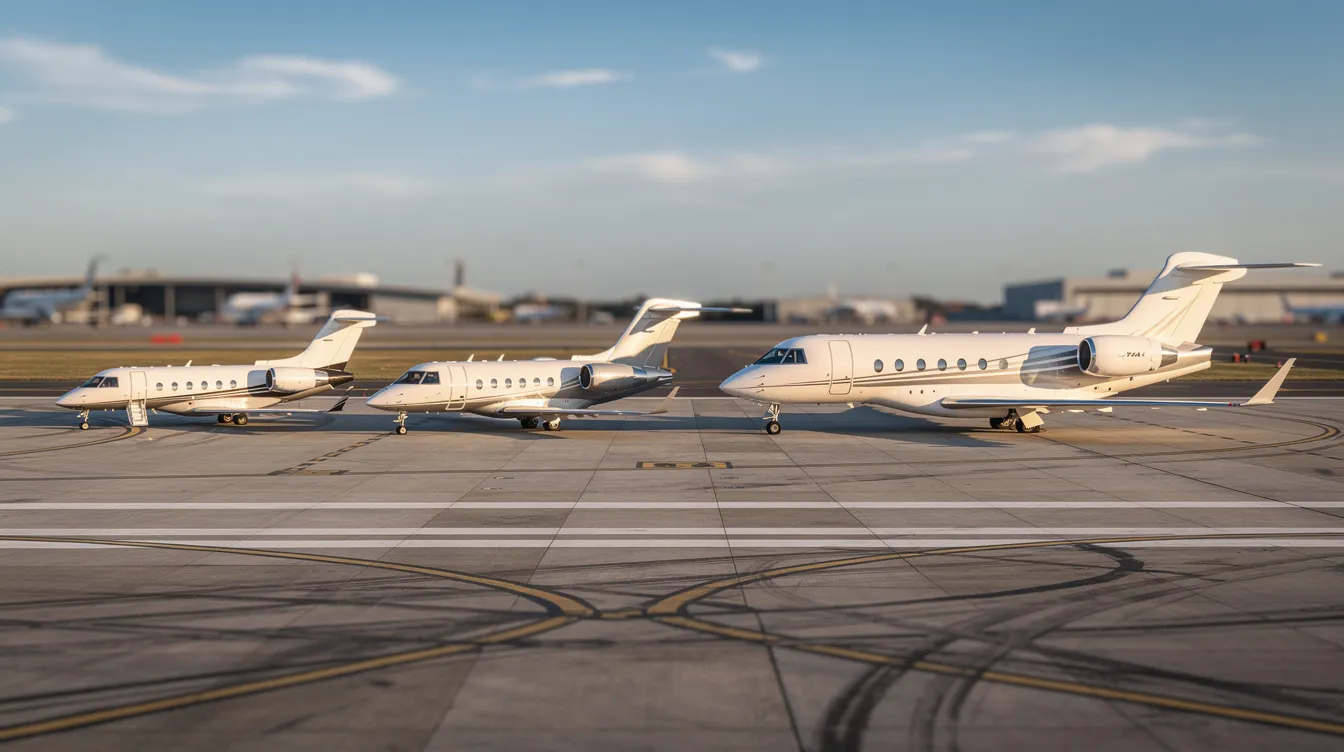
The number of private jets in the US is closer to the commercial aircraft fleet than most people assume. According to Congressional Research Service data, US commercial airlines operate roughly 6,800 jets combined (mainline passenger carriers, regional airlines, and cargo carriers). The private and business aviation fleet of 15,000+ registered jets outnumbers the commercial jet fleet by more than two to one in raw aircraft count, though commercial planes carry far more passengers per flight, even though private jets remain extremely safe compared with most other forms of transportation.
60% of all private jet flights are domestic within the US. Private jets provide access to remote airports not served by commercial airlines; the US has over 5,000 public-use airports, while commercial flights serve fewer than 500 regularly.
The strategic advantage for business travelers:
Skip major hub congestion and TSA screening lines
Fly point-to-point into smaller airports closer to final destinations
Depart on your schedule rather than an airline's timetable
Reach cities in a single day that would require an overnight stay with commercial connections
These advantages hold even against commercial first class, where passengers still face hub routing, delays, and fixed schedules. BlackJet's model converts the dense US private jet network into fixed-hour, predictable Jet Card access that consistently outperforms commercial flights on time savings and convenience.
Where Are Most US Private Jets Based? Key States and Regions
Although the US has over 15,000 private jets, they cluster in specific states and metro corridors driven by business density, wealth concentration, and climate.
According to Sky Duty's 2026 FAA registry snapshot, Texas leads all states in general aviation registrations with 29,153 aircraft. Within private jet flights specifically, the concentration is clear from 2020 data:
State/Airport | Share or Volume |
|---|
Florida | 11.9% of US private jet flights |
Texas | 10% of US private jet flights |
California | 9.8% of US private jet flights |
Teterboro Airport (NJ) | Busiest private jet airport in 2020 |
Dallas Love Field | 29,809 private jet flights |
Palm Beach Airport | 27,781 private jet flights |
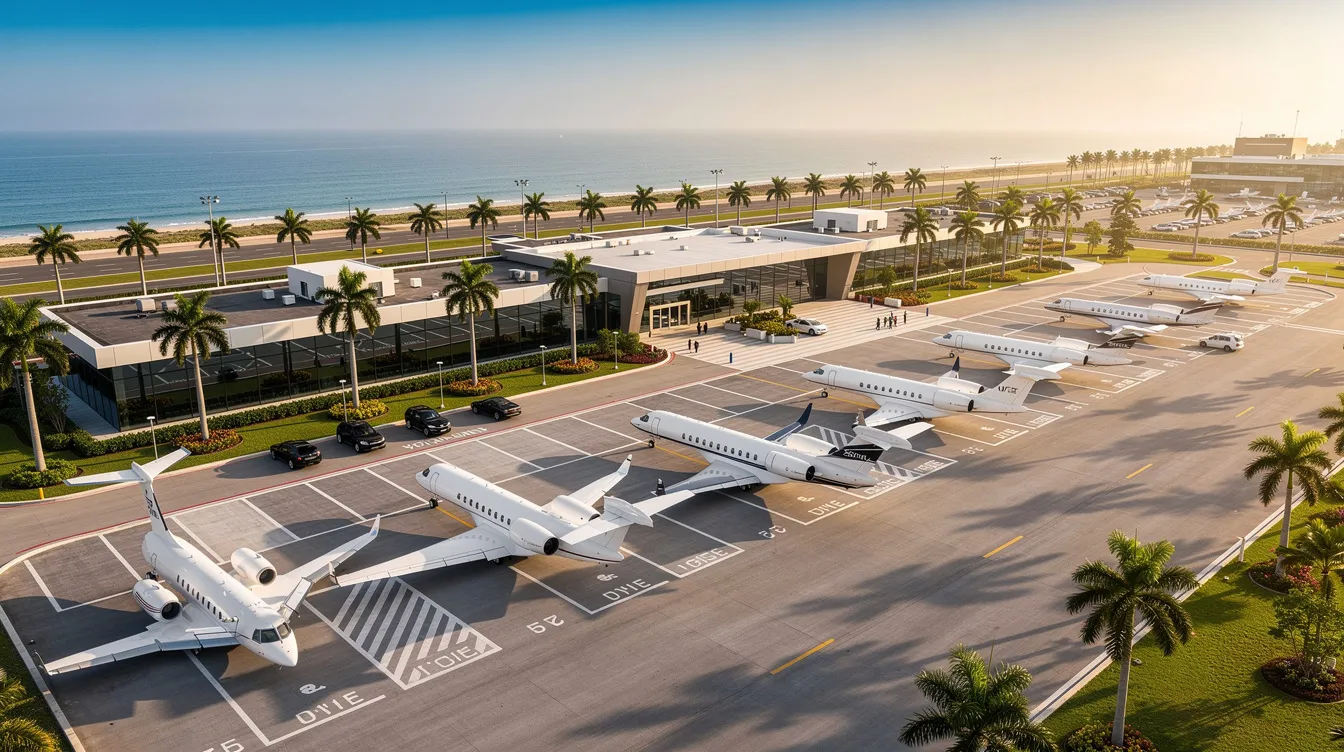
The busiest business aviation corridors run between New York and South Florida, intra-Texas routes (Dallas to Houston, Austin to San Antonio), and California coastal routes (San Francisco to Los Angeles). Dense local fleets in these regions mean better pricing and availability on short notice.
In less saturated regions or smaller cities, early planning and flexible timing help secure the right aircraft, especially during peak holidays. BlackJet's nationwide network and 24/7 digital technology tools help members see available options across regions rather than relying on a single local operator.
Fleet Growth: Are There More Private Jets in the US Each Year?
The US private jet fleet has grown steadily over the past two decades. The global installed business jet fleet expanded from about 20,000 aircraft in the early 2010s to roughly 25,500 by April 2026, reflecting a compound annual growth rate of about 3.4% over 25 years, according to JETNET, and this expansion is mirrored in the broader private jet price landscape as more aircraft types and access models enter the market.
Demand accelerated over the past two years. Private jet flights were 32% above 2019 levels as of June 2021. Post-pandemic, travelers prefer private jets for safety and control, a shift that persisted well beyond the initial health crisis and was tracked in broader market research, including reports from fortune business insights, used to monitor business jet demand and investment trends.
On the supply side, new business jet deliveries rose to 764 units in 2024, up from 730 in 2023, per GAMA data. Honeywell's forecast projects roughly 8,500 new jets globally over the next decade, valued at about $283 billion. Private jet companies have responded with more deliveries, fleet planning, and investment in newer aircraft. Approximately 70% of those deliveries will go to North America.
The active fleet can fluctuate; some jets are retired, reconfigured, or moved to other countries. Older aircraft that do not meet current avionics or emissions mandates exit the fleet. But net fleet growth continues upward.
For travelers, a growing fleet size means more choice in cabin size, aircraft age, and amenities. It also means more variation in quality. BlackJet Certified operators and aircraft meet defined safety, maintenance, and crew experience thresholds, so members benefit from fleet growth without compromising on standards.
How the US Private Jet Fleet Is Used: Ownership, Charter, and Jet Cards
Many private jets in the US operate under one of three models. Each involves different costs, commitment levels, and flexibility.
Full ownership: The owner controls scheduling, configuration, and crew selection. Fixed costs include pilot salaries, hangar fees, insurance, and maintenance. Ownership makes financial sense only when utilization exceeds roughly 300 hours per year. For fewer hours, the per-hour cost of ownership rises steeply, particularly if you opt for what many consider the cheapest private jet options but still face significant ongoing operating expenses.
On-demand charter: Pay-per-trip access to private aircraft through Part 135 operators. Pricing fluctuates with demand, season, and aircraft availability. Charter flights offer maximum flexibility on a trip-by-trip basis, including the ability to buy a seat on a private jet in certain shared or semi-private models, but costs are less predictable than prepaid models.
Fractional ownership: Buying a share (typically 1/16 to 1/2) of an aircraft for a contractual number of hours per year. Capital outlay is lower than full ownership, but contracts run multiple years and include monthly management fees on top of occupied hourly rates, as seen in programs like NetJets jet card and fractional options.
Jet Cards: BlackJet's core model. Members purchase prepaid blocks of flight hours; for example, the 25-Hour Jet Card or 50-Hour Jet Card. Pricing is fixed per hour by cabin class, and members can switch between light, midsize, and large cabin aircraft as each trip demands. Travelers comparing membership models often start with a detailed look at jet card cost and pricing structures. Learn more about how jet cards work.
BlackJet converts the large, fragmented US fleet into a curated, on-call resource for members, combining the flexibility of charter with the pricing predictability of fractional programs.
Safety and Certification Across the US Private Jet Fleet
With over 15,000 private jets and thousands of operators in the US market, safety standards vary. Not every aircraft or operator meets the same bar, which makes curation and due diligence essential for travelers who fly private regularly, especially when evaluating the top private jet companies and their differing safety cultures and service models.
All commercial private jet flights operate under FAA regulations. Part 135 operations face stricter requirements than Part 91 for crew duty time, maintenance intervals, and passenger safety equipment. Beyond FAA minimums, third-party audit programs such as ARGUS, Wyvern Wingman, and IS-BAO provide independent assessments of operator quality, while detailed jet card pricing guides help travelers align safety expectations with realistic budget planning.
BlackJet's safety approach narrows the accessible fleet to a subset of aircraft that meet defined thresholds:
Operator certifications verified before any aircraft enters the network
Pilot experience and training records reviewed
Maintenance history and aircraft age evaluated
Avionics and safety equipment checked against current standards
This curation ensures members access the advantages of many private jets in the US while maintaining the rigor and reliability expected from a premier private jet charter service.
Sustainability: Managing the Environmental Impact of Many Private Jets
A growing number of private jets and private jet flights raise legitimate concerns about carbon footprint. Private aircraft carry fewer passengers per flight than commercial planes, resulting in higher CO₂ emissions per passenger mile.
Two primary tools address this in the private aviation industry today:
Sustainable Aviation Fuel (SAF): Drop-in replacement for conventional jet fuel that reduces lifecycle carbon emissions by up to 80%. Availability is expanding at major US airports but remains limited at smaller airports.
Verified carbon offsets: Third-party registries certify emission reduction projects (reforestation, methane capture, renewable energy) that counterbalance flight emissions.
Newer business jets from Gulfstream, Bombardier, Textron, and Embraer also burn less fuel consumption per hour than their predecessors, thanks to more efficient engines, aerodynamic improvements, and lighter composite airframes, all of which factor into how providers like Flexjet structure their jet card costs and environmental commitments.
BlackJet ensures every flight is carbon neutral through verified carbon offsets at no extra cost to members. As SAF availability grows, BlackJet works with operators who adopt it where supply allows. This approach lets clients fly private while aligning with personal or corporate ESG commitments.
FAQs: How Many Private Jets in the US and Related Insights
How many private jets are there in the US?
The US has over 15,000 private jets, representing roughly 62% to 68% of the global private jet fleet, which totals approximately 24,000 to 25,000 aircraft worldwide.
What types of private jets are most common in the US?
Light jets are the most numerous, ideal for short regional trips. Midsize, super midsize, and heavy jets serve longer ranges and larger passenger groups.
Who owns most private jets in the US?
Ownership is split among corporations with flight departments, ultra-high-net-worth individuals, fractional ownership firms, and Part 135 charter operators.
How is the US private jet fleet growing?
The fleet has grown steadily over recent years, with increasing demand post-pandemic and new jet deliveries rising, reflecting a compound annual growth rate of about 3.4% over 25 years.
What are the busiest states and airports for private jets in the US?
Florida, Texas, and California lead in private jet flights. Teterboro Airport (NJ), Dallas Love Field, and Palm Beach Airport are among the busiest private jet airports.
How do jet cards provide access to private jets?
Jet cards offer prepaid hours on private jets, allowing flexible, on-demand access to a wide range of aircraft without ownership responsibilities.
Are private jets safer than commercial flights?
Private jets operate under stringent FAA regulations and third-party certifications, often exceeding commercial airline safety standards.
How is the private aviation industry addressing sustainability?
The industry uses sustainable aviation fuel (SAF), verified carbon offsets, and invests in fuel-efficient aircraft to reduce environmental impact. BlackJet ensures every flight is carbon neutral at no extra cost.
Can I fly private without owning a jet?
Yes, through options like on-demand charter, fractional ownership, and jet card programs, travelers can access private jets without full ownership.
Why does the US dominate the global private jet market?
The US leads due to its vast geography, economic density, developed general aviation infrastructure, and high concentration of business and leisure travelers requiring flexible air travel.
How Many Private Jets Do You Really Need Access To? (Choosing the Right Model)
You do not need to own one of the many private jets in the US. You need reliable, flexible access to the right aircraft for each mission.
Consider two scenarios that illustrate how a 25 hour jet card program can cover typical annual flying patterns:
Regional executive: An executive based in New York flies to Miami most weeks for half-day meetings. A BlackJet Jet Card loaded with 25 hours on light jets covers roughly 12 to 15 round trips per year. When a quarterly board meeting requires flying to San Francisco, the same card can book a super midsize jet for the longer leg, using the same principles outlined in our guide to the best jet cards for frequent flyers.
International traveler: A family office principal in Los Angeles needs occasional nonstop flights to London or Zurich. A 50 hour jet card with access to heavy or ultra long range aircraft through BlackJet's international travel network handles those trips without the $60M+ capital outlay of owning a Global 7500, and a separate 100 hour jet card cost analysis can help determine whether scaling up hours would be more efficient for truly global users.
A curated network lets members move between light jets, midsize, and large cabin aircraft depending on passengers, route, and mission, including occasions that call for the best private jet for 20 passengers or even large-group jets for up to 50 travelers. No hangars. No crew payroll. No maintenance invoices.
The advantages over commercial flights compound with each trip: time saved at the airport, direct routing through smaller airports, privacy, and bespoke service with real-time support and digital booking through BlackJet's technology platform.
The US has the world's largest private jet fleet. The question is not how many private planes exist; it is how many you can reach when you need one. Explore BlackJet's Jet Card programs to turn that fleet into a personal, on-demand extension of your business and lifestyle.


 Sign up with google
 Sign up with Apple