Getting a private jet does not require buying one. Most travelers get private jet access through on-demand charter, Jet Card memberships such as BlackJet’s prepaid 25-hour or 50-hour options, or, less commonly, fractional ownership or full aircraft ownership, with charter and Jet Cards making the most sense for most flyers. For frequent business travelers and high-net-worth leisure flyers who want privacy, speed, flexibility, and safety without the financial and operational weight of owning an aircraft, private aviation can save hours, simplify scheduling, and deliver a far more controlled travel experience than commercial flying.
This guide breaks down the options step by step, from charter and Jet Card access to aircraft categories and cabin classes, booking, safety and certification, cost comparisons, onboard experience, sustainable aviation, and how BlackJet simplifies private jet access.
Why Getting a Private Jet Is a Strategic Advantage (Not Just a Luxury)
A commercial flight from New York to Miami involves arriving at JFK or LaGuardia at least 90 minutes early, clearing TSA, navigating a crowded terminal, and hoping your connection holds. A private jet departing from Teterboro lands at Opa-locka Executive Airport in roughly 2.5 hours. You check in just 15 minutes before departure and drive onto the tarmac. Door-to-door, private jet travel can cut the total trip time in half.
Private jets save time that compounds over dozens of annual trips. Onboard wi fi supports video calls, file transfers, and confidential meetings that would be impossible in a commercial airline cabin. An executive flying private can hold a board call at 30,000 feet, close a deal before landing, and return home the same evening. The entire aircraft is yours; no middle seats, no overhead-bin negotiations, no delays caused by other passengers.
The phrase "getting a private jet" usually refers to access, not ownership. Most travelers who fly private do so through on-demand charter flights, jet card memberships, or fractional programs. BlackJet, a private jet company focused on frequent travelers, offers 25-hour and 50-hour Jet Card programs across multiple cabin classes, pairing fixed hourly rates with guaranteed availability and carbon-neutral flights.
Here is how private jets compare to commercial first class on a point-by-point basis:
Time: Private flyers arrive 15 to 20 minutes before departure at an FBO (fixed-base operator); commercial passengers face 60 to 120 minutes of check-in, security, and boarding.
Privacy: A private cabin seats only your group; a commercial first-class cabin shares space with dozens of strangers.
Flexibility: Departure times adjust to your schedule, not an airline's timetable. Flexible scheduling means you can shift a flight by hours without a change fee.
Comfort: Larger seats, personalized catering, controlled cabin temperature, and quiet cabins designed for work or rest.
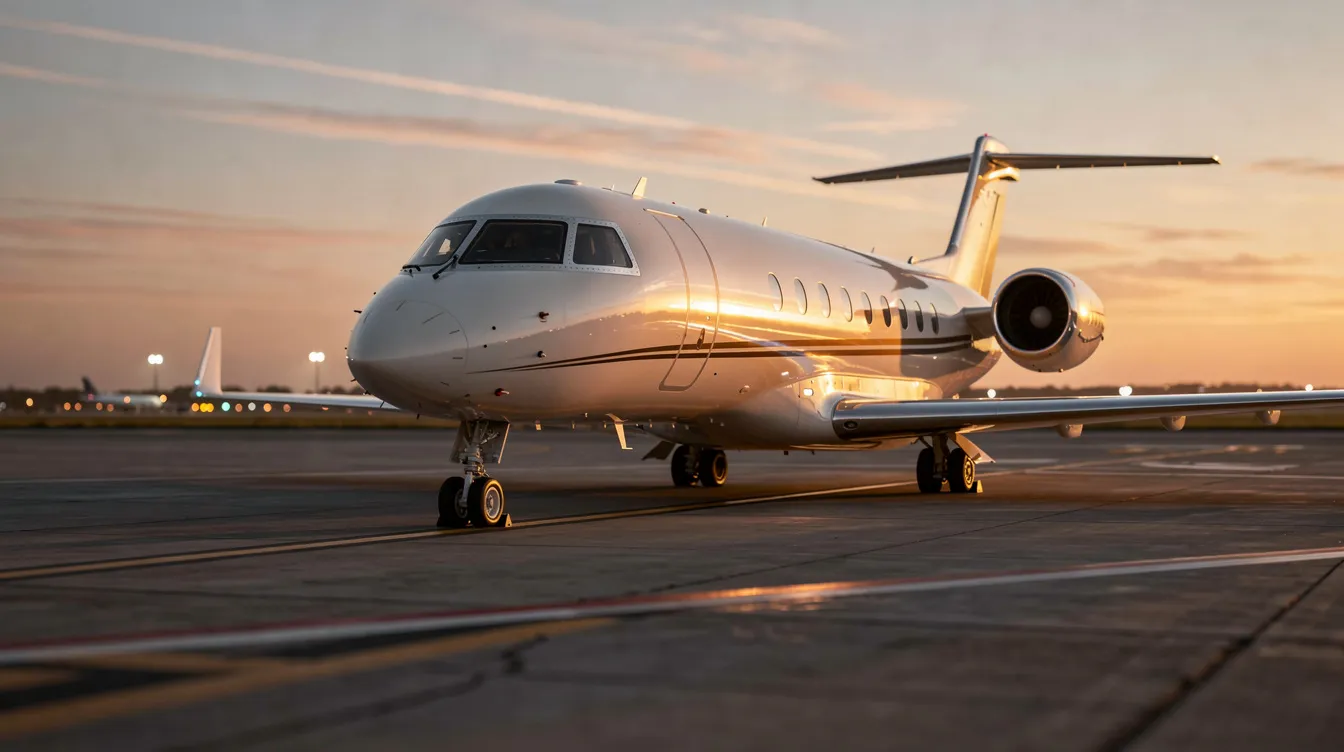
First Decision: Do You Need to Own, Charter, or Join a Jet Card Program?
There are three paths to flying private. Each fits a different frequency of travel, budget, and tolerance for operational complexity.
Full ownership: Buying a private jet requires careful financial and operational planning. Acquisition costs for a used light jet range from $5.5 to $10.5 million, though pricing can be lower for older aircraft; midsize aircraft run $16 to $21 million; heavy jets start around $32 million. Beyond the purchase price, aircraft owners carry crew salaries, hangar fees, insurance, maintenance, and depreciation. Private aircraft ownership generally operates under Part 91 regulations. Aviation professionals recommend hiring an aviation attorney and an independent aircraft broker when buying; you will also need to conduct a pre-purchase inspection at a maintenance facility to uncover hidden mechanical issues, then finalize the purchase agreement and register the aircraft. Resources such as curated UK private jets for sale can help buyers benchmark options and pricing. Ownership makes financial sense only above roughly 150 to 200 flight hours per year.
On-demand private jet charter: Best for occasional trips; say, 3 to 6 flights a year between New York and Aspen or Los Angeles and Cabo San Lucas. You pay per flight based on hourly rates, repositioning, and taxes. No upfront commitment. If flying fewer than 50 to 100 hours annually, chartering is usually more economical than ownership. For many travelers, understanding whether chartering a private jet is worth it starts with comparing the time savings, flexibility, and privacy to commercial first class. Chartering is the fastest way to fly privately, and private jet charters can accommodate last-minute trips within three hours.
Jet card / membership: Ideal for travelers flying 20 to 75 hours per year who want guaranteed access, fixed rates, and no daily surprises. BlackJet's Jet Card programs let members prepay for a block of hours, select a cabin class, and book flights through a mobile app or concierge. No repositioning negotiation, no fuel surcharges, no re-quoting every trip. If you want to dig into how different programs structure hourly rates and fees, a detailed guide to jet card pricing can help you compare options. For a deeper look at whether a Jet Card fits your travel patterns, see Is a Jet Card the Perfect Match for Your Travel Style.
Assess your annual flight hours first. That single number drives the right decision.
Step-by-Step: How to Get a Private Jet for Your Next Trip in 24-48 Hours
Here is a chronological process you can follow this week to fly private; for example, New York to Miami on Friday.
Define your route and dates. Pin down departure city, destination, date, and time. Include any multi-city legs or return flights.
Choose an aircraft category. Match the flight distance and passenger count to a cabin class: light jet for regional hops, midsize or super midsize for coast-to-coast, heavy jet or ultra long-range for international flights.
Contact brokers or a private jet charter service for trip details and request quotes. Include BlackJet if you want fixed-rate Jet Card pricing alongside ad-hoc quotes. The booking process involves a dedicated charter specialist who walks you through your flight options.
Review safety credentials and total cost. Check operator ratings (ARGUS, Wyvern), confirm the hourly rate, and ask about additional fees like repositioning, taxes, and landing charges.
Sign the contract and pay. For Jet Card members at BlackJet, this step is replaced by logging into the mobile or web platform, entering departure (Teterboro) and destination (Opa-locka), choosing aircraft size, and confirming within minutes.
Arrange extras. Request catering preferences, confirm wi fi availability, book ground transportation at the destination, and notify the operator about pet travel or oversized luggage.
Arrive at the FBO 15 to 20 minutes before departure and board.
Booking a private jet often requires arriving at an FBO just 15 to 20 minutes before departure; no security lines, no boarding groups.
Understanding Private Jet Access Options
Private jets span a wide range of aircraft types, from turboprops and very light jets to heavy jets and ultra-long-range cabin aircraft. Each type varies in range, cabin size, speed, and cost. For travelers focused on budget, understanding the cheapest private aircraft options across these categories can make private aviation more accessible. You can choose from over 20,000 aircraft worldwide through various providers, brokers, and membership programs. These access models reflect the breadth of the private aviation market.
The main access models:
On-demand charter: You rent an entire aircraft for a specific trip. No long-term commitment. Pay per flight. Best for infrequent or unpredictable travel needs.
Jet card / membership: Prepaid blocks of flight hours (25, 50, or 100 hours) with fixed rates. Priority access, consistent service standards, and predictable costs. BlackJet fits here, providing access to multiple aircraft classes through its Jet Card programs.
Fractional ownership: Purchase a share (1/16 or 1/8) of a specific airplane. You pay a proportional share of fixed and variable costs. Involves management overhead and minimum usage commitments.
Full ownership: Complete control of a private plane. Highest cost, greatest flexibility, and full operational responsibility.
Some travelers mix methods. A founder might use a Jet Card for predictable weekly San Francisco-to-Los Angeles flights, then book a separate private charter for a family vacation to the Caribbean. Exploring a provider like BlackJet’s premium Jet Card programs can clarify how membership, charter, and even ownership support different use cases. The right combination depends on your schedule, route profile, and demand patterns.
Key Questions to Answer Before You Fly Private
Before requesting a quote, answer these questions. They determine which access model, aircraft, and provider fit your travel needs.
How many passengers? Two executives, a family of six, or a group of twelve? Choosing the right aircraft size is based on range and passenger capacity.
How many trips per year? Three leisure getaways call for a charter. Twenty business legs call for a Jet Card.
What are your typical routes? Dallas to Vail is 800 miles (light jet territory). New York to London is 3,400 miles (heavy jet or ultra-long-range). London to Dubai is 3,400 miles as well, but with overflight permits and customs logistics.
What is the flight distance? Regional hops under 1,000 miles differ from transcontinental trips or ultra-long-range international flights exceeding 6,000 miles, and shorter segments are often well served by affordable very light jets and turboprops that keep overall trip costs down.
Any special requirements? Pets on board, ski or golf equipment, in-flight wi fi for video calls, overnight returns, or same-day multi-city meetings.
What matters more: time or budget? A stand-up cabin with lie-flat seats on a super midsize jet costs more per hour than a compact light jet. Your preferences around cabin height, privacy for confidential work, and more space on longer flights shape the choice.
Private Jet Company or Broker: Who Actually Gets You the Aircraft?
An operator holds the legal authority to fly the aircraft. In the U.S., valid charter operators operate under FAA Part 135 authority. The operator owns or manages the aircraft, employs the crew, and handles maintenance. Operators are directly responsible for safety and regulatory compliance.
A broker or private jet company does not own aircraft; instead, it sources options across the air charter ecosystem while the operator still provides the aircraft, crew, and regulatory authority to fly. It curates options across multiple operators and fleets, negotiates rates, coordinates logistics, and manages the charter experience on the client's behalf. BlackJet acts as a private jet company that secures vetted aircraft from certified operators under one Jet Card and charter umbrella. Members get a single point of contact for charter services, safety checks, trip coordination, and in-flight standards.
Hiring a turnkey management company can help with the management of aircraft operations for those who own planes but want someone else handling crew, maintenance, and compliance. For travelers who simply want access, a company like BlackJet removes that operational layer entirely.
A broker-style company is especially valuable for complex missions: multi-city itineraries across several time zones, trips that require repositioning an aircraft at a moment's notice, or last-minute bookings where access to a global network of operators increases the odds of finding the right aircraft.
Choosing the Right Aircraft Type for Your Mission
The ideal aircraft is the one that matches your flight distance, passenger count, luggage volume, and budget. Defaulting to the biggest jet wastes money. Picking one too small creates discomfort or forces a fuel stop.
Here are the main aircraft types, their typical ranges, and sample routes:
Turboprops: Cost-efficient for distances of 600 to 1,000 miles. Slower than jets but economical for short hops. Sample route: Aspen to Jackson Hole. Best explored through our guide to turboprop private jets.
Very light jets (VLJs): Range up to roughly 1,200 miles. Sample route: New York to Charleston.
Light jets: Up to approximately 1,800 miles. Light jets usually seat four to eight passengers. Sample route: New York to Chicago. Popular aircraft in this class include the Citation CJ series and Phenom 300.
Midsize jets: Midsize jets typically fly 2,450 miles nonstop. Sample route: Atlanta to Los Angeles. Stand-up cabins, enclosed lavatories, and a full galley.
Super midsize jets: Up to 3,800 miles. Transcontinental with room for more passengers and luggage. Sample route: New York to San Francisco nonstop. For larger executive teams, reviewing the best private jets for around 20 passengers helps match cabin size to group travel needs.
Heavy jets: Heavy jets can fly up to 7,000 miles. Multiple cabin zones, lie-flat seating, large baggage holds. Sample route: New York to London. When headcounts approach several dozen travelers, dedicated guides to the best private jets for 50 passengers show how VIP airliners compare to traditional heavy jets.
Ultra-long-range jets: Private jets can fly up to 7,000 miles nonstop, and ultra-long-range jets can fly for over 10 hours. Aircraft like the Gulfstream G650 and Bombardier Global 7500 connect Los Angeles to Tokyo or New York to Dubai. These are the only realistic options for true intercontinental, nonstop private flights.
Amenities scale with size. VLJs may have minimal galleys and compact lavatories. Super midsize and heavy jets offer conference-table seating, full-service galleys, advanced wi fi systems, and lie-flat beds. You can find flights by aircraft type to match the right aircraft to your mission.
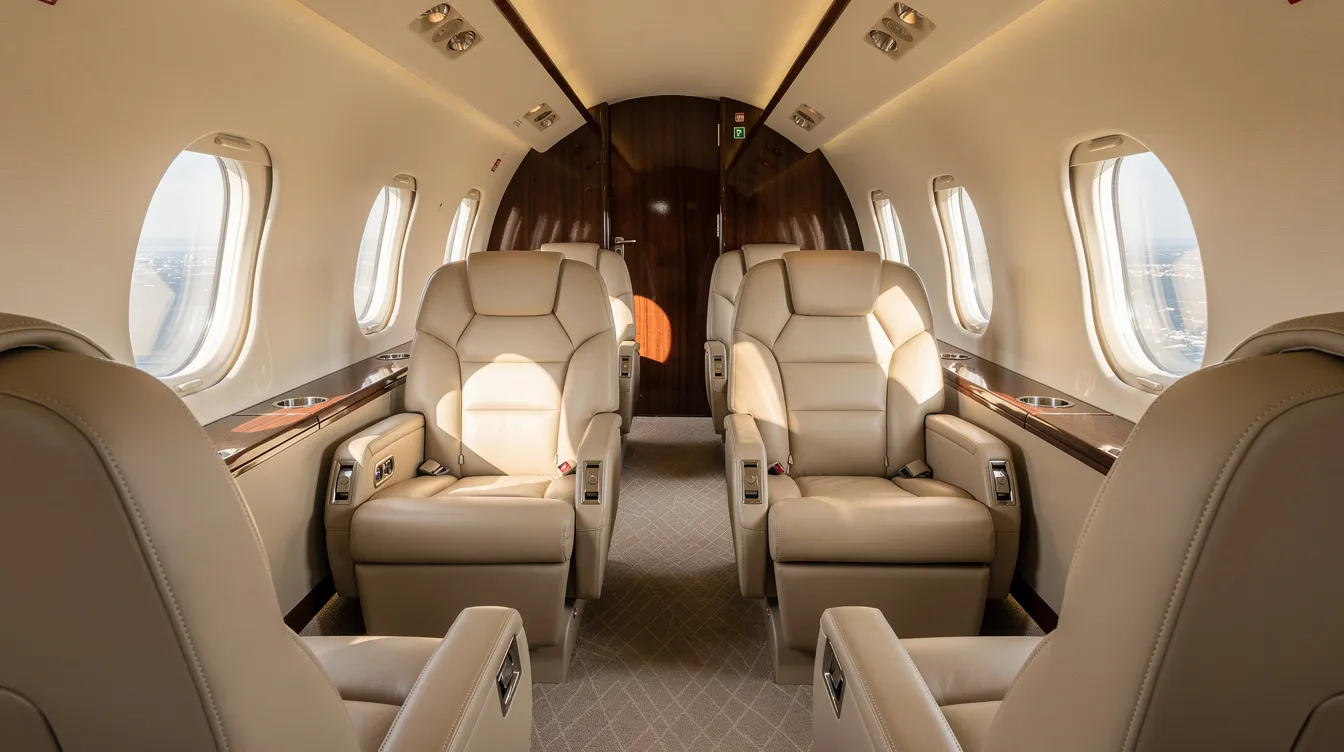
What It Really Costs to Get a Private Jet (Without Owning One)
Private-jet pricing is based on the aircraft and trip rather than individual ticket costs. You are renting the entire aircraft, not buying a seat. The hourly rate multiplied by flight time, plus taxes and ancillary charges, gives the total private jet charter cost; a detailed guide on how much it costs to rent a private jet can help you benchmark quotes on popular routes.
Approximate hourly charter rates in 2026 give a snapshot, but a broader private jet price list overview explains how purchase prices, charter rates, and ownership costs fit together across aircraft categories:
Turboprops: A turboprop charter starts at around $2,000 an hour, ranging up to $3,800.
Light jets: $3,000 to $5,000 per hour.
Midsize jets: $5,000 to $7,500 per hour.
Super midsize jets: $7,500 to $9,500 per hour.
Heavy jets: Heavy jet charters can cost closer to $10,000 an hour, and ultra-long-range aircraft reach $15,000 to $20,000+.
Private jet rental costs range from $2,000 to over $14,000 per hour, depending on cabin class. A two-hour private jet flight can range from $8,000 to $37,000 based on aircraft type.
The total trip cost includes more than the flight time. Airport landing fees can range from $100 to $1,500 per flight. Factor in repositioning legs (if the jet must fly empty to your departure airport), Federal Excise Tax (~7.5% in the U.S.), crew overnight charges, deicing, and catering. These additional fees can add 10-25% to the base charter costs.
Sample trip: New York (Teterboro) to Miami (Opa-locka), light jet
Flight time: ~2.5 hours
Charter rate at $5,000/hr: $12,500
Federal Excise Tax (~7.5%): $938
Catering, ground handling, fuel surcharges: $500-$1,000
Estimated total: $14,000 to $16,000
A BlackJet Jet Card member flying the same route draws hours from their prepaid block at a fixed rate with no fuel surcharges or repositioning surprises. For a detailed breakdown, see Understanding Jet Card Cost and our broader guide to jet card cost per hour, which shows how aircraft type, provider, and fees affect the all-in rate.
How Jet Cards Work: The Simplest Way to "Have a Jet on Call"
A jet card is a prepaid block of flight hours, commonly 25, 50, or 100 hours; valid for a set period. You choose a cabin category (light, midsize, heavy), and every flight you book draws from that balance at a fixed hourly rate.
BlackJet's model works as follows: a member selects a deposit tier (25 or 50 hours), picks a cabin class, and gains access to the booking platform. Flights are confirmed via the mobile app or through a concierge. After each trip, the corresponding hours are deducted. The dedicated BlackJet 25+ Hour Jet Card spells out fixed hourly rates, included amenities, and cabin options in detail. There are no daily minimums hidden in the fine print of well-structured programs, and members avoid the renegotiation cycle that comes with ad hoc charters.
Jet Card vs. on-demand charter: if you fly regularly, comparing the best jet cards for frequent flyers alongside ad-hoc charter options helps clarify which model aligns with your schedule and risk tolerance for availability.
Fixed rates vs. market-fluctuating quotes
Guaranteed availability during peak periods (holidays, major events) vs. first-come, first-served
Consistent safety and service standards vs. variable operator quality
No fuel surcharges on a fixed-rate card vs. potential surcharges on ad-hoc bookings
Jet Card vs. full ownership: travelers who outgrow ad-hoc charter but are not ready to buy outright sometimes explore leasing a private jet as a middle ground between membership and ownership.
No crew salaries, hangar leases, insurance premiums, or depreciation
No aircraft management burden
Flexible across multiple aircraft types vs. locked into one airplane
Jet cards are a flexible travel option for executives who fly the same routes repeatedly: Los Angeles to Silicon Valley, New York to Washington, or London to Geneva. For higher-usage flyers, a detailed look at 100-hour jet card costs shows how larger blocks can drive down the effective hourly rate. For travelers flying 25 hours per year, the economics and convenience of a card often outperform both charter and ownership.
Booking Process: From Quote to Takeoff
The typical booking process for a first-time private charter follows a clear sequence.
Inquiry: You contact a private jet company or broker with your route, dates, passenger count, and preferences. For BlackJet members, this starts with logging into the platform and entering flight details.
Options presented: The provider returns aircraft options matched to your trip. These include departure times, aircraft type, cabin layout, and total cost. Members see instant pricing and live availability on the platform.
Contract and payment: You review terms (cancellation policy, included services, repositioning fees), sign the charter agreement, and pay the required deposit or draw from your Jet Card balance. For corporate events or tours moving dozens of guests, it is worth understanding charter plane costs for 100 passengers before committing to group travel terms.
Final itinerary: The provider confirms the departure FBO, arrival FBO, catering, and ground transportation. Required details include passenger names and dates of birth (for international travel customs), departure airport, luggage dimensions, and pet information if applicable.
Timing: For standard domestic flights, 24 to 72 hours of lead time is typically sufficient. Private jet charters can accommodate last-minute travel requests; some providers confirm within hours. For ultra-long-range or holiday-period flights, booking weeks ahead secures better aircraft selection. You can walk through the full flow in our guide on how to book a private jet.
Private jet travelers can check in just 15 minutes before departure at most FBOs, making the experience from quote to take-off remarkably compact. Travelers who do not need the whole aircraft can also buy a seat on a private jet through shared flights and semi-private services, trading full control for lower per-person costs.

Safety and Certification: How to Vet a Private Jet Provider
Safety should be the first filter when you choose a private jet company, not something you check after comparing prices.
In the U.S., charter operators must adhere to FAA Part 135 regulations for on-demand services. This is the legal minimum. Beyond that, third-party safety organizations provide independent verification:
ARGUS: Rating tiers include Gold, Gold+, and Platinum. Operators must have safety credentials like Argus Platinum, which requires an on-site audit, a documented Safety Management System, and an emergency response plan.
Wyvern: Tiers include Registered, Wingman, and Wingman PRO. Wingman PRO involves continuous monitoring, current audits, and fleet oversight. Aircraft safety verification includes checking these third-party ratings.
IS-BAO: An audit program emphasizing operational safety culture, flight operations standards, and maintenance protocols.
Questions to ask any provider before you board:
How many total flight hours do your captains have? (Look for 3,000+ hours minimum.)
When was the last on-site safety audit?
Does the operator maintain a documented Safety Management System?
What are the maintenance intervals and engine overhaul programs?
What is the hull and liability insurance coverage?
BlackJet works only with operators who pass strict safety and maintenance audits. Every flight is coordinated with safety oversight built into the procurement and trip management process.
Comfort, Connectivity, and Onboard Experience
Cabin standards vary with aircraft size, and the private travel experience scales accordingly.
Light jets: Club seating for 4 to 8, a small galley with snacks and beverages, and a compact lavatory. Suitable for flights under 3 hours.
Midsize and super midsize: Stand-up cabins with 5'8" to 6'+ headroom, full galleys for hot meals, enclosed lavatories, and seats configurable for conference-style meetings or dining.
Heavy and ultra-long range: Multiple cabin zones (work area, lounge, sleeping quarters), full-service galleys, crew rest areas, and the largest baggage compartments. Some aircraft seat 12 to 16 passengers in lie-flat configurations.
Wi fi is available on most modern private jets, with satellite-based connectivity (Ku/Ka-band) supporting video calls, file transfers, and streaming. For business travelers running back-to-back calls, confirm the bandwidth and satellite coverage on your specific route and aircraft before booking.
Tailoring the onboard experience is standard in private aviation. Catering menus can reflect dietary restrictions, regional cuisine, or celebratory meals. Preferred wines and spirits are stocked to order. Pet-friendly accommodations, child safety seats, and other features are arranged during booking. BlackJet coordinates with operators to ensure consistent cabin standards, including wi fi availability, clean interiors, and amenity provisioning, across its partner fleet.
Comparing Flying Private to First Class on a Commercial Airline
The gap between flying private and flying a commercial airline goes beyond seat width.
Door-to-door time: Consider New York City to Jackson Hole. A commercial flight routes through Denver or Salt Lake City, adding a connection, a second boarding process, and a potential ground transfer. Total: 7 to 9 hours door-to-door. A private jet flies directly into Jackson Hole Airport. Total: roughly 4.5 hours, including ground time. Private jets allow departure just 15 minutes before takeoff, and they fly to thousands of regional airports that commercial carriers do not serve.
Access to smaller airports: Private jets provide access to over 20,000 airports worldwide and can fly to thousands of regional airports, avoiding crowded terminals. A weekend trip to wine country (Napa, Sonoma) from Los Angeles is a 75-minute flight into a small regional airport with no commercial service of comparable convenience.
Group economics: A light or midsize jet chartered for 6 to 8 passengers can cost less per person than purchasing multiple first-class tickets on the same route, especially when accounting for hours of productivity lost in commercial terminals.
Privacy and flexibility: Private flights operate on your schedule. No boarding queues, no delays caused by other passengers, no shared cabins. High-profile travelers benefit from discreet boarding and arrival through private terminals. Private jet travel offers flexibility in choosing departure airports closest to your home or office.
Sustainability and Carbon-Neutral Private Aviation
Private aviation faces scrutiny for per-passenger carbon emissions. Modern travelers increasingly ask about sustainability before they fly private, and providers are responding with measurable programs.
The primary tools for reducing the environmental impact of private flights:
Sustainable Aviation Fuel (SAF): Produced from feedstocks like used cooking oil and waste biomass, SAF reduces lifecycle emissions by approximately 80% compared to conventional jet fuel. Supply remains limited, and costs are higher, but adoption is accelerating.
Carbon offsets: Some providers offset 100% of CO2 emissions; others go further. Programs rated by organizations like 4AIR assign levels of sustainability performance, from carbon neutral to emissions neutral beyond CO2.
Optimized routing: Reducing unnecessary flight segments, coordinating repositioning, and selecting closer departure airports all lower total fuel burn.
BlackJet makes every flight carbon neutral by including high-quality offsets at no additional cost to members. These offsets fund verified projects such as reforestation initiatives and renewable energy development. Where SAF is available, BlackJet can arrange its use on member flights, adding another layer of emissions reduction.
Use Cases: How Different Travelers Get a Private Jet
CEO commuting New York to London monthly: This executive flies roughly 80 hours per year on a single route of 3,400 miles. A heavy jet or ultra-long-range aircraft is required for nonstop service. A 50-hour Jet Card in the heavy cabin class, supplemented by additional charter hours, provides fixed-rate pricing, guaranteed availability during peak demand, and consistent cabin standards. Onboard wi fi supports work during the 7-hour crossing, and the stand-up cabin allows movement and rest.
Family skiing in Aspen: A family of five with ski equipment needs a midsize jet with sufficient baggage capacity. From Dallas (1.5 hours) or Los Angeles (2.5 hours), this is a regional hop. If the family takes three or four ski weekends per season, totaling 20 to 30 hours, a 25-hour Jet Card on a light or midsize cabin keeps rates fixed and eliminates the scramble of booking ad-hoc charters during peak ski-season demand.
Founder touring investors in San Francisco, Los Angeles, Seattle, and New York: Four cities in three days. A super midsize jet covers the coast-to-coast legs nonstop, while a light jet handles the shorter West Coast hops. A Jet Card provides priority access and lets the founder book each leg within minutes on the app. Booking 48 hours out is sufficient for domestic travel on most cabin classes.
Couple planning a last-minute weekend in Napa: A very light jet or turboprop from Los Angeles reaches wine country in about 75 minutes. This is a specific trip where charter makes sense for a one-off getaway. If the couple flies private several times a year, a Jet Card's fixed rate and guaranteed access at a moment's notice would reduce per-trip costs compared to last-minute charter quotes. The only problem with an ad hoc charter for spontaneous trips is that availability can be thin during peak weekends.
International and Ultra Long Range Flights
Ultra-long-range travel covers flights exceeding approximately 6,000 miles; routes like Los Angeles to Tokyo, New York to Dubai, or London to Singapore. Aircraft capable of these missions include the Gulfstream G650, Bombardier Global 7500, and Dassault Falcon 8X.
International flights introduce logistics that domestic travel does not:
Overflight permits: Negotiated with each country whose airspace the aircraft crosses. Lead times vary by jurisdiction.
Customs and immigration: Handled at private terminals, but documentation (passports, visas, passenger manifests) must be complete well before departure.
Crew duty limits: International regulations cap crew flight and duty hours. Longer flights may require an augmented crew or planned rest stops.
Fuel stops: Routes at the edge of an aircraft's range may require a technical stop for fuel, adding 30 to 60 minutes.
Slot availability: Destination airports may require advance slot reservations, especially during major events or holiday peaks.
A private jet company like BlackJet coordinates with operators to manage every layer: international documentation, slot times, ground handling, and safety oversight across jurisdictions. For ultra-long-range missions, booking further in advance is critical. Two to four weeks of lead time is a reasonable minimum; during Davos, Cannes, or major sporting events, earlier is better.
Frequently Asked Questions About Getting a Private Jet
What is the minimum notice needed to book a private jet?
For standard domestic flights, 24 to 72 hours is common. Private jet charters can accommodate last-minute travel requests; some operators confirm flights within three hours. Jet Card members with BlackJet often receive priority, reducing notice requirements on available cabin classes.
How do luggage limits work on private jets?
Limits vary by aircraft type. Light jets accommodate carry-on and a few checked bags per passenger. Heavy jets handle golf clubs, skis, and multiple large suitcases. Operators ask for baggage dimensions and weight during the booking process. There are no standardized "bag fees"; luggage capacity is an inherent feature of the aircraft.
Are pets allowed on private jets?
Most operators welcome pets in the cabin. Policies differ on crate requirements and pet fees. Notify the operator during booking so accommodations (blankets, water bowls, cabin temperature adjustments) are prepared.
What identification is required?
A government-issued photo ID is sufficient for domestic flights. International flights require a valid passport and, depending on the destination, a visa. Passenger names and dates of birth are collected in advance for customs documentation.
Is there a dress code?
No formal dress code applies. The cabin is yours. Most private flyers dress for comfort, though discretion and cleanliness are expected.
Charter or Jet Card for someone flying 20 to 30 hours a year?
At 20 to 30 hours per year, a Jet Card often makes more sense. Fixed rates eliminate the variability of ad hoc charter quotes, and guaranteed availability during peak periods protects against being shut out when demand spikes. A focused guide to 50-hour jet card costs can help you model real-world spend against your route map. If your flights are unpredictable in timing and destination, charter retains some advantage in flexibility.
How do I ensure wi fi works on my flight?
Ask the operator whether the specific aircraft assigned to your flight has Ku or Ka-band satellite connectivity. Confirm satellite coverage on your route (transoceanic routes may have gaps on older systems). Some operators include connectivity; others charge an additional fee.
What cancellation policies apply?
Jet Card programs typically offer more flexible cancellation windows than ad hoc charters. Many charter agreements require a non-refundable deposit, with cancellation fees increasing as the departure date approaches. If you are comparing providers, understanding NetJets jet card costs and terms alongside boutique programs like BlackJet clarifies how cancellation rules and fees differ. Review the terms before signing.
How BlackJet Makes Getting a Private Jet Effortless
BlackJet is a private jet company built around one idea: providing access to private aviation without the complexity of ownership or the inconsistency of one-off charter. The Jet Card membership model (25-hour and 50-hour blocks) covers light, midsize, and heavy cabin classes. Members book flights through a mobile app or web platform with instant pricing and live availability, 24/7. Every flight is carbon neutral at no extra cost, and every operator in the network meets strict safety and maintenance standards.
The typical member journey starts with a consultation. Aviation experts review your routes, frequency, and cabin preferences, then recommend a Jet Card tier. After onboarding, you gain access to the platform, enter your next journey's departure and destination, select your cabin class, and confirm. Hours draw down with each flight. No fuel surcharges, no repositioning surprises, no re-quoting. For clients considering full ownership down the line, BlackJet can even facilitate private jet purchases with cryptocurrency, streamlining high-value transactions with digital assets.
Whether your first flight is a two-hour hop to wine country or a transatlantic crossing, the path from commercial terminals to private tarmacs starts with a single conversation.
Explore BlackJet's Jet Card programs and discover what 25 or 50 hours of private jet access looks like for your routes.
Request a tailored charter quote for your next trip and experience the difference a dedicated private jet company makes.


 Sign up with google
 Sign up with Apple