BlackJet Fleet Access, Availability & Service Areas
May 13, 2026
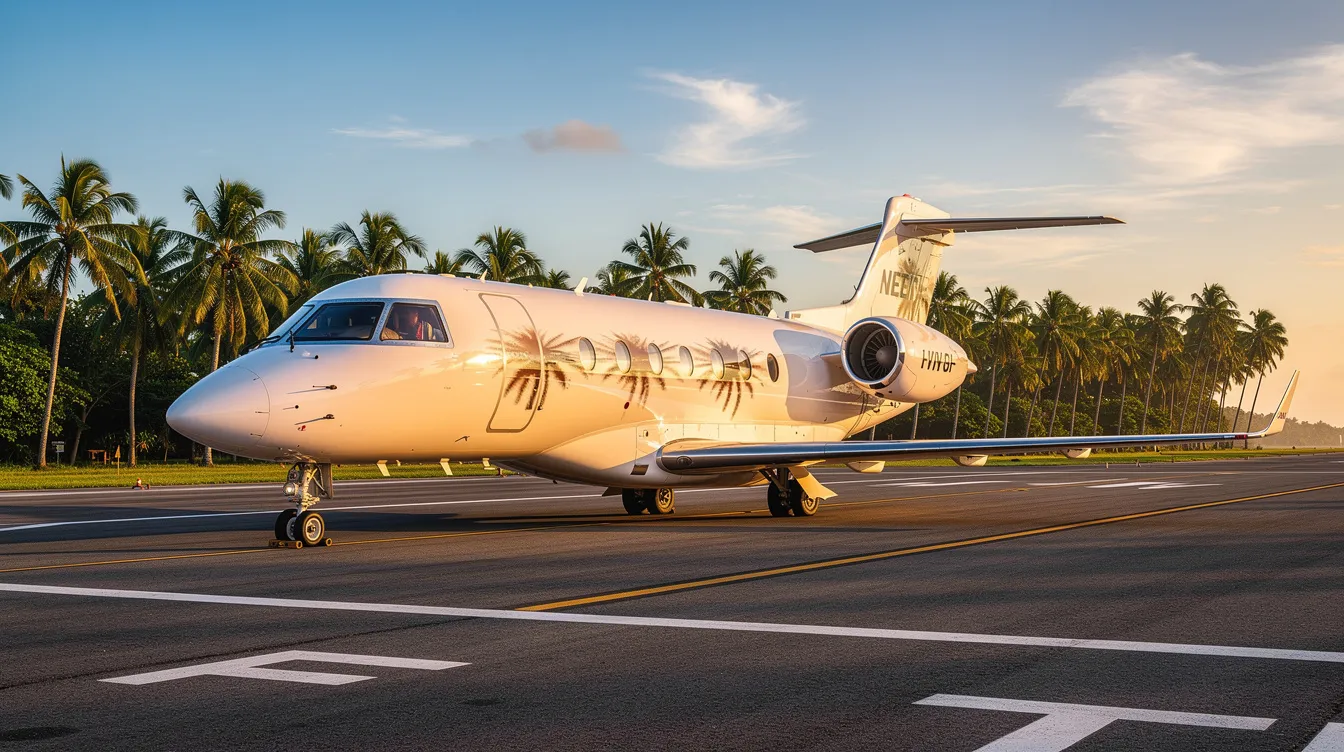
BlackJet cardholders access light, midsize, super midsize, and large cabin jets—every aircraft BlackJet Certified for safety, maintenance, crew standards, and cabin quality. This guide is for private aviation clients, frequent travelers, and business users evaluating jet card fleet availability and access options. This guide explains exactly what you can book, where you can fly (US, Caribbean, Mexico, Europe), and how guaranteed availability works in practice. The BlackJet private jet card is a membership-based aviation service, offering fixed, all-inclusive hourly rates and a seamless, predictable travel experience for discerning travelers.
BlackJet operates as a jet card provider using fixed hourly rates with guaranteed aircraft availability inside defined service areas, with a broader suite of premium private jet card programs designed for travelers who value predictability and service. Jet card programs are prepaid memberships that grant access to private jet flights on a pay-as-you-go basis, allowing members to purchase a specific number of flight hours for private jet travel. Jet card membership with BlackJet features no membership fees, flexible entry options such as starter cards, and tailored services to suit both occasional and frequent flyers. Jet card hours are flexible, non-expiring, and provide predictable, on-demand private aviation access without ownership commitments, with options tailored to specific cabin classes and travel needs. The jet card model has gained popularity as a flexible alternative to traditional private jet ownership and charter services, providing predictable costs and often guaranteed availability on a wide range of aircraft. For travelers with predictable, high-volume needs, jet card programs often offer better value than on-demand charter for extensive flight hours, with benefits such as locked-in rates.
BlackJet jet card programs cover private jet travel across multiple cabin classes, enabling both short regional flights on light jets and long-haul international flights on large cabin and ultra-long range aircraft. Jet card fleet availability is determined primarily by the company’s sourcing model, which dictates whether you fly on a standardized, owned fleet or a broader network of third-party aircraft and how consistently different types of private jets are available for your missions. This article covers BlackJet Certified aircraft vetting, guaranteed availability mechanics, one-way pricing, repositioning fee policy, and pet travel rules.
What Is BlackJet Certified? (and why it matters for fleet access)
BlackJet Certified is a proprietary fleet-vetting process layered on top of third-party safety certifications, including ARGUS Platinum and Wyvern Wingman. This is not marketing language—it’s a documented operational system that determines which aircraft and operators can serve jet card members.
Reputable private jet providers adhere to stringent safety standards and maintain appropriate certifications, such as those from the FAA or IS-BAO. Providers certified by independent safety auditing firms, such as Argus or Wyvern, indicate they meet or exceed industry safety standards. BlackJet requires ARGUS Platinum or Wyvern Wingman rating as baseline, then adds proprietary verification layers.
Aircraft-age requirements: BlackJet prioritizes private aircraft under approximately 20 years, with stricter scrutiny on anything approaching that limit. The average fleet age can vary significantly between jet card providers, and many jet card programs have specific policies for older aircraft—BlackJet excludes aircraft that don’t pass cabin and maintenance standards regardless of age.
Maintenance-record review: The operations team audits FAA Part 135 or EASA Part-CAT operators for continuous airworthiness records, engine programs (such as GE OnPoint), time-between-overhaul compliance, and documented adherence to manufacturer maintenance schedules.
Operator safety verification: It is essential to research each provider’s accident history, insurance coverage, and pilot experience requirements to ensure reliable and secure travel. BlackJet requires active Part 135/AOC status, no recent major incidents per NTSB/FAA logs, and insurance levels meeting or exceeding $100M+ liability coverage.
Crew certification standards: PIC minimum total time of 3,500+ hours, type ratings on the specific aircraft category, 500+ hours on type, recurrent simulator training, and background checks verified at onboarding and annually. This applies safety management system principles to crew qualification.
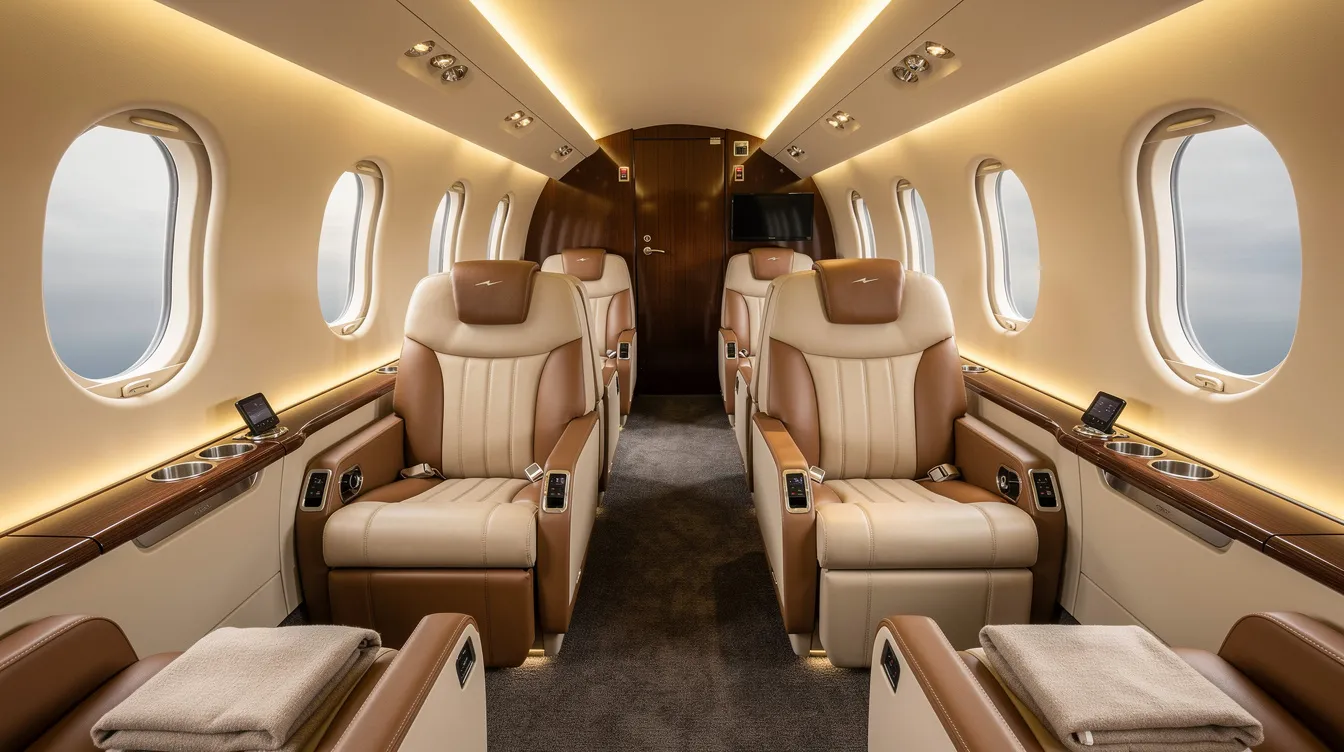
Cabin-quality inspection: Interior condition assessment, seating configuration verification, working Wi-Fi on most midsize and above, galley capability on super midsize and heavy jets, and enforcement of minimum cabin standards across all BlackJet Certified aircraft.
Ongoing re-verification: Quarterly operator checks, incident-report monitoring, random post-flight quality audits from client feedback, and removal or suspension of operators that fall below documented thresholds. Industry data suggests 20-30% of initially qualified operators lose Wyvern status within 24 months due to lapses—BlackJet’s monitoring catches these changes.
BlackJet Certified restricts the fleet: only a small percentage of available marketplace private aircraft meet the combined ARGUS Platinum/Wyvern Wingman plus BlackJet internal standards. This directly supports more reliable aircraft availability and a consistent cabin experience for jet card members.
What Aircraft Can You Access with a BlackJet Card?
BlackJet cardholders can access four core categories: light jets, midsize jets, super midsize jets, and large cabin jets—all under fixed hourly rates by category. Flexibility regarding interchange of aircraft sizes can be critical, with some jet card programs allowing customers to trade hours between different jet sizes.
The 25-hour jet card programs typically cover light through super midsize aircraft for US, Mexico, and Caribbean private travel. The Large Cabin card is optimized for international and transatlantic missions. The average cost for a 25-hour jet card in 2026 ranges from $150,000 to $250,000 for a light jet, and between $200,000 and $350,000 for midsize jets, reflecting an all-inclusive hourly rate, while 50-hour jet card costs scale with higher usage but often deliver better effective value for frequent flyers.
Light jets — models available, range, cabin specs
Very light jets (VLJs) are ideal for short regional trips, typically seating up to four passengers and known for their cost-effective pricing and ability to operate from smaller airports, making them among the best small private aircraft options for short-range missions. Light jets can seat up to seven passengers and are suitable for trips up to three hours, providing a balance between cost and comfort for both business travelers and leisure travelers, and often feature prominently among budget‑friendly private aircraft options for those focused on value.
BlackJet Certified light jet inventory includes models such as the Embraer Phenom 300 (1,971 nm range, 460 kts cruise), Cessna Citation CJ3/CJ3+, Citation CJ4, and Learjet 45XR, where operators meet safety and age criteria. These aircraft access shorter runways that increase airport choice for frequent travelers.
Cabin details include enclosed lavatory standards, 4-6 club and forward-facing seats, limited baggage compared with midsize jets, and Wi-Fi availability on a portion of the fleet (confirm at booking). Light jets are available on BlackJet’s 25-hour and 50-hour cards with fixed hourly rates and guaranteed availability inside the core US, Mexico, and Caribbean service area.
Midsize jets — models available
Midsize jets comfortably seat up to eight passengers and offer additional amenities like Wi-Fi, making them well-suited for cross-country flights and a core category in many of the best jet cards for frequent flyers. Missions up to approximately 4 hours non-stop—such as New York–Dallas or Los Angeles–Chicago—work well in this cabin class.
Example BlackJet Certified models include: Cessna Citation XLS/XLS+ (2,100 nm range), Hawker 800XP/850XP (2,500 nm), Learjet 60XR, and Embraer Legacy 45,0 where available via certified operators, with their hourly economics fitting within typical jet card cost per hour benchmarks for midsize categories. These aircraft offer stand-up or near stand-up cabins in some models, larger luggage holds, and more robust performance from higher-elevation airports.
Midsize jets maintain fixed hourly rates in BlackJet jet card programs and generally include Wi-Fia, a small galley, and an enclosed lavatory as standard for cardholders. Guaranteed aircraft availability applies when booked within published call-out windows and service areas.
Super midsize jets
Super midsize jets suit 6-9 passengers on longer missions—typically 5-6 flight hours—such as New York–Los Angeles, Miami–San Francisco, or Toronto–Cabo San Lucas non-stop.
Cabin attributes include near full stand-up height, flat floors on certain types, a full galley on many airframes, a larger lavatory, and high-speed Wi-Fi on the majority of BlackJet Certified super midsize jets. This category is frequently chosen by jet card members for coast-to-coast US missions and longer-range flights into Mexico and the northern Caribbean, and is a central focus of the BlackJet 25+ Hour Jet Card structure. Super midsize is available on both standard 25/50-hour cards and cross-available within the Large Cabin international programme for shorter overseas routes.
Large cabin jets — the international programme
The Large Cabin programme is a dedicated BlackJet jet card product focused on long-range aircraft and international flights, especially transatlantic routes between North America and Europe. Heavy jets are designed for intercontinental flights, accommodating up to 16 passengers with features like separate living areas and spacious seating, ideal for lengthy journeys and forming the core of large‑cabin private jets for around 20 passengers. Ultra-long-range jets provide the highest levels of comfort and can operate non-stop for thousands of miles, making them suitable for the longest flights and, in their largest configurations, relevant to private jets for up to 50 passengers on bespoke group charters.
Representative aircraft types include: Gulfstream G450, G500, G550, G600; Bombardier Challenger 604/605/650 and Global 5000/6000; Dassault Falcon 2000LXS and Falcon 7X/8X, where operators meet ARGUS Platinum/Wyvern Wingman and BlackJet Certified criteria.
Typical performance spans 4,000–6,500+ nautical mile ranges supporting nonstop routes such as New York–London, Boston–Paris, Miami–São Paulo, and Dallas–Lisbon. Cabin configuration includes 10-16 passenger seating, divided zones (club seating, conference group, divans), lie-flat sleeping arrangements, full galley capabilities, and a dedicated cabin attendant required on Large Cabin flights.
Large Cabin cardholders receive fixed hourly rates for defined zones (North America–Western Europe, intra-Europe, intra-US) with clearly published minimums, fuel assumptions, and de-icing treatment specified in programme documents. Guaranteed availability for transatlantic routes requires longer booking lead time (72-120 hours notice), specific departure airport requirements, and defined handling of high-season events.
International operations include “contactless” travel coordination: pre-arranged ground transportation, direct ramp access where allowed, digital pre-trip documentation, and minimized terminal dwell time. EU access includes primary business and leisure airports such as London Luton, Farnborough, Paris Le Bourget, Nice, Geneva, and Zurich, ch using BlackJet Certified operators with local experience and permits.
The following table summarizes what aircraft categories BlackJet cardholders can access, with example models, seating, range, and card eligibility. Every aircraft listed is sourced only from BlackJet Certified operators—safety and cabin-quality criteria are consistently applied across the global fleet.
Aircraft Category
Example Models
Seats
Typical Range
BlackJet Certified
Available On 25hr Card
Available On 50hr Card
Available On Large Cabin Card
Light Jet
Phenom 300, Citation CJ3+
4–7
~1,800 nm
Yes
Yes
Yes
Limited
Midsize Jet
Citation XLS+, Hawker 800XP
6–8
~2,100 nm
Yes
Yes
Yes
Limited
Super Midsize Jet
Challenger 350, Gulfstream G280
8–9
~3,200 nm
Yes
Yes
Yes
Yes
Large Cabin Jet
Gulfstream G450/G550, Global 6000
10–16
~4,500–6,000 nm
Yes
No
Select
Yes
“Limited” or “Select” indicates occasional cross-access by approval, while primary access is driven by the matching card type. Jet card providers in the private aviation industry source their fleets through three main models: owned/fractional fleets, managed fleets, and broker-based/network models, each with different implications for a client reviewing a comprehensive private jet price list and access options. BlackJet’s Broker-Based/Network Model utilizes a networked approach, sourcing aircraft from a curated list of vetted operators, allowing for greater flexibility and broader geographical availability.
Is Guaranteed Availability Offered on a BlackJet Card?
BlackJet offers guaranteed access within defined call-out windows and service areas, provided the member’s request meets operational conditions, aligning with broader jet card cost and membership structures that trade higher predictability for firm availability. Core conditions include: correct regional service area, requested aircraft category included in the member’s programme, booking made within the published minimum hours notice window, and no force majeure or airport/airspace closure issues.
Jet card programs typically allow members to book flights with as little as 24 hours’ notice, offering a seamless booking process that appeals to frequent flyers who closely track jet card cost per hour when evaluating convenience versus price. Notice periods for booking among jet card programs typically range from 10-12 hours, though some provide shorter notice options.
Guaranteed availability differs from “best efforts” broker access and is backed by contracted capacity with BlackJet Certified operators. If BlackJet cannot secure a matching aircraft type, options include offering an upgrade/downgrade at the same rate or alternative timing, with escalation to client management for time-sensitive situations.
What guaranteed availability means and what it doesn’t
When a cardholder requests a flight within the card’s service area and respecthe ts minimum call-out time, BlackJet commits to supplying a BlackJet Certified aircraft in the booked specific aircraft category (or better) at the contracted hourly rate. This is the guarantee.
The guarantee does not promise a specific tail number or exact aircraft model, does not override airport curfews or slot restrictions, and does not cover extraordinary disruptions like weather, ATC delays, or government restrictions. Some jet card programs may have blackout dates where you cannot use your card benefits, while others may have none. BlackJet structures its programme to avoid traditional blackout restrictions.
During high-demand periods, guaranteed availability may require longer notice windows and may entail flexible departure times within a defined range agreed upon at confirmation. If the exact category is unavailable, BlackJet’s policy is to offer a comparable or upgraded aircraft at the same hourly rate where feasible.
BlackJet’s availability guarantee — exact terms
Owned/Fractional Fleet companies operate their own aircraft and often guarantee access, with tiered structures prioritizing fractional ownership holders over cardholders during peak times, as seen in models such as NetJets jet card programs. BlackJet’s network model avoids this tiering.
Standard domestic guarantee: Aircraft availability for light/midsize/super midsize jets with a minimum of 24-48 hours’ notice within the contiguous US service area. Most jet card programs require between 24 and 72 hours’ notice for domestic flight bookings, and these notice windows are a key variable in overall jet card pricing structures.
Extended domestic/near-international guarantee: 48-72 hours for US–Caribbean–Mexico missions.
Large Cabin international guarantee: 72-120 hours’ notice for North America–Europe sectors. Many jet card providers identify 10-50 days a year as “peak days” where required notice periods increase significantly, and availability may be restricted—with peak travel days extending this window to 120 hours or more.
Guaranteed availability applies only if departure and arrival airports are within the published programme service map and operationally suitable for the requested aircraft type (runway length, customs availability). Some jet card programs guarantee aircraft availability without peak day surcharges, while others may impose additional fees during high-demand periods—BlackJet’s fixed rate structure addresses this concern.
If BlackJet cannot fulfil a guaranteed request due to fleet constraints, options include upgrading the category at the same rate, shifting departure within an agreed window, or crediting additional flight hours if no acceptable solution is found. Escalation path includes a dedicated account manager, access to operations leadership, and documented incident handling.
Where Can You Fly? BlackJet’s Service Area
BlackJet’s service area is structured in clear geographic zones: domestic US, near-international (Caribbean, Mexico, parts of Canada), and international/transatlantic (primarily via the Large Cabin programme). One-way pricing and guaranteed availability are anchored to these zones—flights outside them may still be arranged, but under separate on-demand charter terms.
Domestic US flights
The core service area covers the contiguous United States, with frequent use cases including New York–Florida, California–Texas, Chicago–West Coast, round-trip, and intra-California or Northeast city pairs. Business travelers and discerning travelers commonly fly these routes.
Light, midsize, and super midsize jets are all available within this zone under one-way pricing with guaranteed availability per programme terms. Large cabin jets can also be chartered domestically when required. Some smaller airports may have operational limitations (runway length, hours of operation, noise restrictions) that guide aircraft selection—BlackJet’s operations team handles these details, whether you’re flying between major hubs or arranging private jet charters in Karachi and other regional markets. This personalized service approach avoids the complications of crowded commercial airports.
Caribbean and Mexico
BlackJet cards support frequent routes between the US and major destinations in Mexico and the Caribbean: New York–Nassau, Miami–Tortola, Dallas–Cabo San Lucas, Los Angeles–Puerto Vallarta, subject to current regulatory and customs requirements.
Light and midsize jets work well for shorter sectors (Florida–Bahamas), while super midsize aircraft handle longer legs (Northeast–deep Caribbean or West Coast–Mexico) for range and payload reasons. Near-international private travel may require slightly longer booking lead times than purely domestic flights to allow for overflight permits, slots, and customs coordination—planning that becomes especially important for high‑utilization travelers evaluating a 100‑hour jet card cost scenario.
Cardholders should expect international handling fees or overnight crew requirements at certain islands. BlackJet maintains relationships with FBOs and handlers in key Caribbean and Mexican airports to streamline ground operations, minimizing landing fees and other fee complications.
International and transatlantic (Large Cabin card)
Transatlantic operations and intercontinental flights are handled through the Large Cabin card and on-demand Large Cabin solutions. Typical city pairs include New York–London, Boston–Paris, Washington DC–Geneva, Miami–Lisbon, Toronto–Dublin—many flown nonstop with BlackJet Certified large cabin aircraft.
BlackJet coordinates flights into major European private aviation hubs: London Luton/Farnborough, Paris Le Bourget, Nice, Geneva, Zurich, plus key Mediterranean destinations during summer. Non-European international travel (US–Middle East or US–South America) may also be available under the Large Cabin programme on a case-by-case basis.
Global travelers should note that international operations require more advance notice, additional documentation (passports, visas, APIS), and coordination with local ground teams—all managed through BlackJet’s operations center. This unparalleled service approach serves private flyers seeking seamless international travel.
Is One-Way Pricing Included in BlackJet Rates?
Yes. BlackJet’s jet card rates are structured as one-way pricing within published service areas, meaning repositioning flights within those zones are included in the contracted hourly rates for cardholders.
For typical domestic US and many US–near-international missions, members pay only for occupied flight time (plus any clearly defined surcharges like international fees), not for ferry legs required to position the aircraft, which compares favorably with ad‑hoc options like buying a seat on a private jet through shared or semi‑private services. Hourly rates for jet card programs can vary significantly depending on the provider, aircraft type, and flight duration, with some programs offering fixed hourly rates and others using unbundled pricing models. BlackJet uses fixed rates with fuel assumptions built in, avoiding hidden fees while remaining competitive with the cheapest private jet options available via charter or entry‑level aircraft.
Exceptions include remote or out-of-network departure/arrival airports that fall outside the standard one-way grid, and certain rare reposition-heavy routings where additional costs may be quoted upfront.
Practical example: New York–Miami one-way on a super midsize jet billed at the standard hourly rate with no extra repositioning fee when both airports are inside the core grid. A one-way flight from a small mountain airport with limited traffic may require custom pricing due to unusual positioning.
Minimum daily or hourly use policies can affect the cost of short flights, potentially leading to higher expenses than anticipated. BlackJet’s programme terms address minimum hour requirements transparently. Many jet card programs require an upfront membership fee or initiation cost to join, which can range from a few thousand dollars to over $100,000, depending on the provider and membership level. BlackJet publishes these costs clearly in its pricing materials.
Repositioning Fees — BlackJet’s Policy
Repositioning fees are charges that apply when an aircraft must fly empty legs outside the standard one-way grid to reach the departure point or return to base. For most jet card members booking flights inside BlackJet’s primary service area and route network, repositioning is already factored into fixed fuel rates and hourly rates—no additional repositioning fee applies.
Common trigger conditions where repositioning fees may be charged:
Departures or arrivals at airports significantly outside BlackJet’s normal coverage pattern
Multi-day layovers with aircraft held in low-demand regions, causing extra reposition flights
Positioning for international legs outside standard North America–Europe or North America–Caribbean corridors
Approximate repositioning cost impacts may equal additional occupied-hour equivalents or flat fees—exact numbers will be quoted in advance for transparency and cost control.
Concrete examples:
A 3-day ski trip starting from a small regional airport with limited traffic may incur a repositioning fee because the aircraft must ferry in from a larger base. A one-way Large Cabin flight from Europe to a remote Middle Eastern airport may require extra positioning off the standard transatlantic grid.
BlackJet’s operations team identifies and communicates any repositioning-related costs before trip confirmation—jet card holders are never surprised after the fact with unexpected expenses. This transparency around flight costs and additional costs is a key differentiator versus generic fleet pages and eliminates the financial burden of surprise charges. Unlike some leading providers such as Sentient Jet, Magellan Jets, or Jet Linx that may have varying policies, BlackJet’s approach prioritizes predictable costs and avoids additional fees wherever possible.
Are Pets Allowed on BlackJet Flights?
Yes, pets are generally allowed on BlackJet flights, subject to operator rules, size/weight considerations, destination regulations, and advance disclosure during booking.
Basic policy elements:
Declare pets (species, size, weight) at time of request
Documentation needs for international flights: vaccination records, microchips, and import permits.
Responsibility for any cleaning or damage beyond normal wear—no surprise fuel surcharges or cleaning fees when disclosed properly
Size and weight guidance:
Small pets (under 20-25 lbs) are typically suitable for most light jets and midsize jets, often in carriers or on the owner’s lap with restraints. Medium to large dogs are more comfortably accommodated on midsize, super midsize, and large cabin jets with more floor space.
Crate and restraint expectations: Soft- or hard-sided carriers recommended, leashes on during boarding/disembarking, and use of blankets or pet covers on seats and floor to protect cabin surfaces.
Best aircraft categories by pet size:
Light jets for short hops with one small pet
Super midsize and large cabin jets for longer flights or multiple/larger animals, due to increased cabin volume and easier movement
Certain operators or specific aircraft may have stricter pet policies. Some international destinations have quarantine or arrival restrictions that may limit pet carriage or require routing adjustments. Cardholders should coordinate pet travel with BlackJet support in advance so that aircraft selection, catering, and cleaning plans align with pet comfort and operator requirements. This eliminates long-term commitments to unsuitable aircraft and avoids unused hours due to pet-related booking complications.
Frequently Asked Questions
This FAQ addresses the most common operational questions about BlackJet fleet access, guaranteed availability, one-way pricing, pets, and international service. Jet card programs often provide flexibility in booking, allowing members to request flights with as little as 24 hours’ notice, although this can vary by provider.
What aircraft can I book with a BlackJet card?
Members can book light, midsize, super midsize, and large cabin jets—all BlackJet Certified. Specific examples include Phenom 300, Citation XLS+, Challenger 350, and Gulfstream G450-class aircraft, depending on card type. Selection is by category rather than specific tail, with some flexibility for model requests when available. Most jet card programs require a commitment but offer access to an extensive fleet.
What is BlackJet Certified?
BlackJet Certified is a proprietary fleet-vetting system layered on top of ARGUS Platinum and Wyvern Wingman standards, covering aircraft age, maintenance history, operator safety record, crew training and experience, and cabin condition with ongoing re-verification. Only aircraft passing this process are offered to BlackJet jet card members—ensuring consistent quality without ownership responsibilities.
Does BlackJet include one-way pricing?
Yes, one-way pricing is included across BlackJet’s core jet card service areas. Repositioning within those grids is built into fixed hourly rates. Unusual or remote routings may trigger additional positioning costs, always quoted in advance. Unlike pay-as-you-go charter options, jet card members benefit from predictable pricing.
Can I take my pet on a BlackJet flight?
Yes, for most domestic and many international routes, subject to operator and destination rules. The best experience is achieved by matching the aircraft category to pet size and trip length. BlackJet operations guides members on documentation and aircraft choice for pet-friendly private jets.
Does BlackJet fly internationally?
BlackJet supports international private travel, particularly transatlantic flights and EU destinations via its Large Cabin international card and on-demand large cabin access. International flights require more notice (how much notice depends on destination) and additional documentation, and are typically operated on BlackJet Certified large cabin jets.
Conclusion
BlackJet’s jet card fleet access combines operational rigor, transparent policies, and comprehensive service coverage to deliver reliable private aviation for discerning travelers. The BlackJet Certified vetting process ensures every aircraft meets stringent safety, maintenance, and cabin standards, providing peace of mind beyond typical marketplace listings. With guaranteed availability tied to clear booking windows and service areas, members can confidently plan domestic, near-international, and transatlantic flights across light, midsize, super midsize, and large cabin jets.
One-way pricing is included within core service zones, eliminating hidden repositioning fees for most trips, while BlackJet’s repositioning fee policy remains transparent and practical. Pet travel is accommodated thoughtfully with size and aircraft category considerations to ensure comfort and compliance. The Large Cabin international programme uniquely supports transatlantic and EU routes with fixed rates and contactless travel logistics, differentiating BlackJet from competitors.
For travelers seeking operational clarity, safety assurance, and dependable access to a rigorously vetted fleet, BlackJet’s jet card offerings deliver unmatched value and reliability. Explore BlackJet Certified fleet access and experience private aviation tailored to your exact travel needs.
For complete details, explore BlackJet’s jet card pricing, business travel solutions, sustainability commitments, safety standards, and Large Cabin programme information.


 Sign up with google
 Sign up with Apple