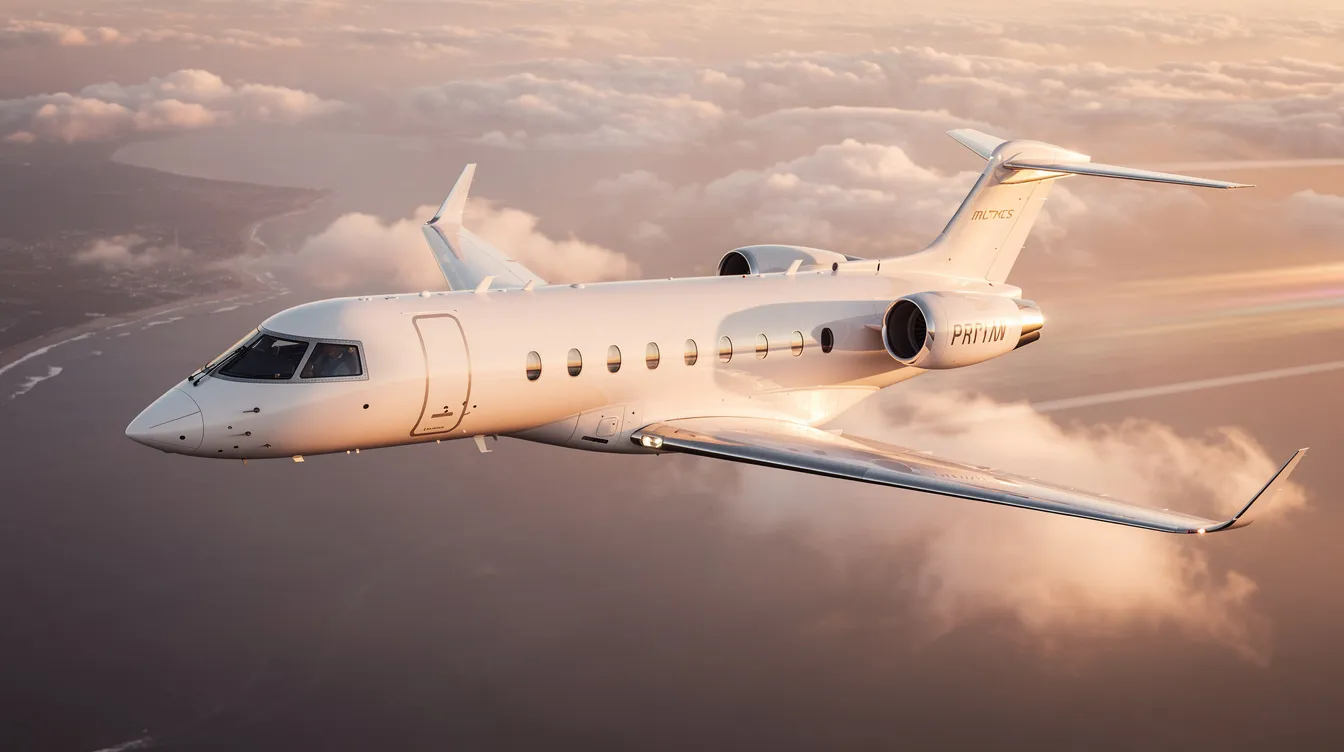
Private jet operating costs represent every ongoing annual and hourly expense required to keep an aircraft flying—entirely separate from the initial purchase price. These costs encompass everything from crew salaries and fuel to hangar fees and unscheduled maintenance. Operating costs for private jets vary significantly by category, with very light jets costing approximately $700–$1,800 per hour, light jets ranging from $1,800–$3,200 per hour, and heavy jets commanding $4,000–$7,600+ per hour. Heavy jets such as the Gulfstream G650 and Bombardier Global 7500 have operating costs that can exceed $1 million annually, with hourly rates ranging from $4,000 to over $7,600, depending on model and usage.
Based on industry data from 2024–2025, total annual budgets range from approximately $500,000 for very light jets flown modestly to over $4–6 million for heavy, long-range aircraft used frequently. Hourly operating costs span from about $661.53 per hour for the Cirrus Vision SF50, which is noted as one of the most economical private jets and the least expensive option among various private jets, to $7,600+ per hour for large cabin business jets like the Airbus ACJ320 or Boeing BBJ. Business jets, a category of private aircraft designed for corporate travel, are distinguished by their size, range, and luxury features, making them suitable for long-distance and executive purposes.
This guide answers the cost question upfront, then unpacks the details that matter for informed decision-making. Whether you’re evaluating aircraft ownership or considering alternatives like charter and BlackJet Jet Cards, understanding private jet operating costs is essential. For many frequent travelers, Jet Card programs offer a cost-effective approach to private aviation, providing access without shouldering full operating expenses—delivering flexibility without the substantial operating costs of ownership.
How Jet Operating Costs Are Structured
Total aircraft operating costs break into two buckets: fixed costs (paid whether the jet flies or not) and variable costs (paid per flight hour or trip).
Fixed costs include:
Crew salaries and benefits — typically ranging from $85,000 to $300,000 annually per person depending on aircraft type and experience level, representing a significant fixed cost in private jet operations
Hangar or tie-down fees — which can range from $30,000 to over $200,000 per year depending on location and facilities
Insurance premiums — generally ranging from 1% to 3% of the aircraft’s total insured value annually
Management fees
Regulatory compliance and training
Variable costs include:
Fuel expenses — the largest variable cost in private aviation, typically accounting for 25–35% of total operating costs, with hourly fuel costs ranging from $700 for light jets to over $2,500 for heavy jets and fuel consumption varying significantly by aircraft type
Maintenance and engine reserves
Landing fees and handling charges
Navigation fees and catering
De-icing and ground transport
Utilization dramatically affects your effective cost per flight hour. The formula is straightforward: Total Annual Operating Costs ÷ Annual Flight Hours = Cost Per Hour. Spreading fixed costs over more flight hours improves ownership economics, as more flight hours mean each hour carries a smaller share of the fixed expenses.
Consider a midsize jet with $1 million in annual costs. At 200 flight hours, you’re paying $5,000 per hour. Increase to 400 hours, and that drops to $2,500. This fixed cost dilution explains why ownership economics favor higher utilization—and why lower-hour flyers often find charter or Jet Cards more cost-effective. In fact, private jet ownership typically becomes more cost-effective at 200–400 annual flight hours, depending on aircraft category and operational requirements, while below 150 hours annually, charter or fractional ownership programs often provide better economics.
Fixed Operating Costs: What You Pay Every Year
Fixed costs function like a subscription fee for jet ownership—they recur annually regardless of whether your aircraft ever leaves the hangar.
Insurance represents a significant line item:
Very light jets: $15,000–$25,000 annually
Midsize jets: $40,000–$80,000
Heavy jets: $80,000–$200,000+
Typically calculated at 1–3% of insured hull value
Hangar and storage vary sharply by location:
Basic outdoor tie-down (smaller markets): ~$2,400/year
Enclosed heated hangars (major hubs like New York, London): $5,000–$10,000/month
Crew costs reflect 2024–2025 market realities:
Captains: $120,000–$300,000+
First officers: $85,000–$180,000
Flight attendants (heavy jets): $60,000–$120,000 each
Recurrent training and simulator checks: $20,000–$50,000 per crew member
Additional ongoing costs include navigation subscriptions ($3,000–$5,000/year), dispatch staff, accounting, legal fees, and safety management software.
Example annual fixed cost totals:
Jet Category | Annual Fixed Costs |
|---|
Very Light Jets | $150,000–$250,000 |
Midsize Jets | $300,000–$600,000 |
Heavy Jets | $800,000–$1.5 million |
Variable Operating Costs: What You Pay Every Flight
Variable costs drive the “sticker shock” per hour and scale directly with usage. These operating expenses can surprise private jet owners who underestimate their true cost per trip.
Fuel typically represents 25–35% of total spend:
Jet Class | Burn Rate | Hourly Fuel Cost (at $6.50/gal) |
|---|
Very Light | 120–200 gal/hour | $780–$1,300 |
Midsize | 200–250 gal/hour | $1,300–$1,625 |
Heavy | 400–500+ gal/hour | $2,600–$3,250+ |
Maintenance and engine reserves follow a rule of thumb: budget 5–10% of aircraft value annually, or calculate reserves at $300–$800/hour for midsize jets and $1,000+/hour for heavy jets. This covers routine inspections, parts, and eventual engine overhauls.
Fees and handling add up quickly:
Landing fees: $150–$600 (regional airports) to $1,000+ (major international hubs)
Navigation charges: $100–$500 per trip
De-icing: $500–$2,000 in winter months
Catering: $50–$150 per passenger standard; $500+ for bespoke menus
Aggregate hourly operating costs by category:
Very light jets: $700–$1,800/hour
Light and midsize jets: $1,800–$3,200/hour
Heavy and ultra-long-range: $4,000–$7,600+/hour
Jet Categories and Typical Cost Profiles
Jet size, range, and age drive operating economics more than any other factor. Larger aircraft typically offer greater range, passenger capacity, and amenities, but come with higher operating costs compared to smaller or midsize jets. Owners should select a category matching their most common missions rather than aspirational ones.
The following breakdowns assume approximately 200 flight hours per year in North America or Europe, around 2024–2025 fuel prices. Significant deviations in utilization or region will shift these figures.
Operating costs for private jets vary significantly by category: very light jets cost approximately $700–$1,800 per hour, light jets range from $1,800–$3,200 per hour, and heavy jets command $4,000–$7,600+ per hour. Many BlackJet Jet Card flights utilize well-maintained light, midsize, and super-midsize aircraft—striking the optimal balance between cost efficiency and capability for most members, similar to the trade-offs outlined in a comprehensive private jet price list.
Very Light and Light Jets: Entry-Level Ownership
Very light jets seat 4–6 passengers with ranges of 800–2,000 nautical miles, ideal for regional hops and same-day business trips, and often represent the cheapest private jet options for travelers prioritizing budget.
Representative models
VLJs: Cirrus Vision SF50, Cessna Citation Mustang, Eclipse 500
Light jets: Citation CJ3+, Embraer Phenom 100/300
Hourly operating costs: $700–$1,800 (VLJs); $1,500–$2,500+ (light jets)
Annual costs at 200 hours: $140,000–$360,000 (VLJs); $250,000–$500,000 (light jets)
Many very light jets are certified for single-pilot operation, reducing crew expenses substantially. Insurance and hangar requirements run lighter than midsize alternatives. For owners flying mostly short legs, small private jets offer solid cost efficiency—though BlackJet members access similar aircraft on demand without funding fixed ownership costs.
Midsize and Super-Midsize Jets: Cost–Capability Balance
Midsize jets seat 6–8 passengers; super-midsize accommodate 9–10 with ranges from 2,000 to 3,500 nautical miles—enough for New York to Los Angeles nonstop.
Representative models
Midsize: Embraer Phenom 300, Cessna Citation XLS+, Hawker 900XP
Super-midsize: Bombardier Challenger 350, Gulfstream G280, Embraer Praetor 600
Hourly operating costs: $1,800–$3,200 (midsize); $3,000–$4,500 (super-midsize)
Annual costs at 200 hours: $500,000–$800,000 (midsize); $700,000–$1.1 million (super-midsize)
These jets require two pilots and may include cabin crew on longer legs, with correspondingly higher hangar fees and liability insurance. This segment often delivers the best combination of comfort, range, and cost for frequent business travelers—precisely the profile BlackJet designs its Jet Card programs around.
Heavy and Ultra-Long-Range Jets: Global Capability at a Price
Heavy jets seat 12–16 passengers with ranges of 5,000–
Hidden and Often Overlooked Private Jet Operating Costs
Many ownership projections omit smaller but recurring or unexpected costs that can total six figures annually, especially when you factor in opportunities like jet card tax deductions for business-related use and the full burden of private jet pilot cost and compensation.
Navigation and software updates
Modern avionics suites require $3,000–$5,000 per year in subscription updates for IFR and international operations—plus periodic avionics upgrades to maintain regulatory compliance.
Unscheduled maintenance and AOG events
A single unexpected repair can run $20,000–$50,000. Unexpected mechanical issues with engines cross into six-figure territory. Aircraft downtime compounds losses through missed trips and repositioning costs.
International operations
Overflight permits, handling fees, customs charges, and foreign taxes add thousands per long-haul trip—costs that catch domestic-focused private jet owners off guard.
Weather and diversions
Extra landings, unexpected hangarage, crew hotels, and repositioning flights from diversions create unpredictable additional costs.
Budget 10–15% above projected annual operating costs as contingency reserves for these hidden expenses.
New vs. Pre-Owned Jets: Impact on Operating Costs
The choice between new and used aircraft affects both purchase price and ongoing operational economics.
New aircraft advantages
Comprehensive warranties covering the initial years
Modern, next-generation engines (e.g., PW800 series, Honeywell HTF) with 10–15% fuel efficiency gains, reduced fuel consumption, and extended maintenance intervals
Latest avionics reducing unscheduled maintenance
Higher insurance premiums tied to greater hull value
Pre-owned aircraft trade-offs
Purchase discounts of 20–50% versus new
Potential needs for interior refurbishment and avionics modernization
Catch-up maintenance requirements
Older engines may reduce fuel consumption efficiency
A 10–15-year-old midsize jet might be cheaper to acquire but costs $300–$500 more per hour to operate than a newer, fuel-efficient model. Prospective buyers comparing private jets for sale under 10 million dollars should weigh these lifecycle operating costs carefully. These operating economics explain why many private fliers sidestep the trade-off entirely by using charter and Jet Card programs—letting operators shoulder acquisition, upgrade, and residual-value risk while they focus on comparing jet card cost per hour across providers.
Cost Optimization Strategies for Jet Owners
For owners and flight departments committed to managing costs without compromising safety, several strategies deliver meaningful cost savings. Effective cost management—optimizing aircraft operating costs such as fuel, maintenance, and other expenses—requires strategic planning and the use of advanced technology, as well as evaluating affordable private plane options for cost-conscious travelers and the cheapest private aircraft options or access models that better match your flying profile.
Fuel optimization
Tankering fuel from lower-cost airports saves 10–15% on purchasing fuel expenses
Join fuel-buying consortiums for volume discounts
Optimize cruise altitude and routing with digital planning tools
Fuel management represents a significant opportunity for cost savings, as fuel typically accounts for 25–35% of total operating costs in private aviation, and understanding jet card pricing structures can further clarify how fuel and other inputs are passed through in hourly rates while you remain confident in overall private jet safety standards and practices
Maintenance planning
Schedule heavy checks during low-demand periods
Leverage predictive maintenance analytics
Negotiate hourly maintenance programs with OEMs or MROs for predictable maintenance costs
Scheduling routine maintenance during planned downtime can help reduce overall maintenance expenses and avoid unnecessary aircraft downtime
Crew and basing strategy
Base aircraft at airports with lower hangar fees and labor rates
Balance savings against repositioning flight costs
Consider crew management through professional management companies
Management companies
Typical management fees run 10–15% of total operating costs, which is why many frequent flyers instead evaluate the best jet cards for their needs or compare programs like Flexjet jet card cost and benefits to lock in predictable costs
Engaging professional management companies can provide volume purchasing discounts for fuel, insurance, and maintenance services, helping to offset management fees through negotiated rates
Volume discounts on fuel, insurance, and training often offset fees
Reduced administrative burden on the owner
For individuals who prefer not to build an in-house aviation department, programs like BlackJet’s Jet Card embody many of these optimizations into a single, predictable price per flight hour.
When Does Ownership Make Sense vs. Charter or Jet Cards?
The breakeven between full jet ownership and alternatives depends primarily on annual flight hours and required aircraft size.
Indicative thresholds
Below ~150 hours/year: Ad-hoc charter and Jet Cards are typically more economical
200–400 hours: Fractional ownership or full ownership can start making sense
400+ hours: Ownership delivers maximum control and potential cost advantage
Example comparison: A midsize jet owner flying 300 hours annually might spend $1.2–$1.5 million in ownership costs, similar to what many evaluate when comparing that spend to a 100-hour jet card cost, including well-known programs where understanding NetJets jet card cost and structure is key. Charter or Jet Card rates in the $2,000–$3,000+ per hour band—with zero fixed costs—may total less while eliminating crew expenses, unexpected repairs, and management headaches, especially when using products like the BlackJet 25+ Hour Jet Card.
Private aircraft ownership delivers maximum customization and control but demands capital, risk tolerance, and management time. For executives and families valuing predictability, BlackJet’s membership structure provides guaranteed availability, transparent hourly rates, and carbon-neutral flights without asset risk.
Honestly assess your true flight hours, flexibility needs, and capital plans before committing to any path.
Alternatives to Ownership: How BlackJet Helps You Avoid Operating Costs
BlackJet is a private aviation provider offering Jet Card membership programs with prepaid flight hours across multiple cabin classes—from light jets to large cabin configurations, including popular 25-hour jet card options for travelers who want a modest initial commitment.
Core benefits
No aircraft purchase or depreciation concerns
No responsibility for crew hiring, pilot salaries, or crew management
Zero hangar fees, insurance premiums, or management fees
Members pay only for access and flight time
BlackJet curates operators and aircraft through rigorous vetting for safety certifications (FAA, ARGUS, Wyvern), maintenance standards, and modern cabins. Jet Card products—including 25-hour and 50-hour jet card blocks—provide predictable hourly rates that roll all fixed and variable operating costs into a single transparent price.
Additional features include 24/7 digital booking, real-time flight support, concierge-style trip planning, and guaranteed carbon-neutral flights through included offsets, which together can resemble aspects of certain unlimited private jet flight memberships but with more focused hour-based pricing. For members traveling domestically and internationally multiple times per year, Jet Cards deliver the private jet lifestyle while keeping aircraft operating costs off their personal balance sheet.
Building a Realistic Jet Operating Cost Budget
Whether self-managing or using a management company, structured budgeting is essential for successful private jet ownership.
Key budget categories
Fuel (plan for $7+/gallon conservatively)
Maintenance and engine reserves
Crew salaries, benefits, and training
Insurance (hull and liability insurance)
Hangar and storage
Navigation/communications subscriptions
Catering and trip expenses
Management fees
Contingency reserves (10–15% of total)
Maintain 6–12 months of operating costs in reserve to cushion fuel price volatility, unscheduled maintenance, and unexpected costs. Online operating cost calculators help with estimates but often omit soft costs like owner time, tax advisory, and opportunity cost of capital.
Consult aviation accountants or advisors to integrate operating costs with tax planning and depreciation strategies—particularly for business use under current U.S. and EU rules. Many BlackJet clients ultimately realize that outsourcing lift through Jet Cards proves more cost-efficient than managing the true cost of ownership, especially when they previously experimented with other access models like buying a seat on a private jet or leasing a private jet through structured programs.
Conclusion: Control Your Jet Experience, Not Its Operating Costs
True jet operating costs are substantial—ranging from hundreds of thousands to several million dollars annually once all fixed and variable expenses are counted. Aircraft type, annual costs, fuel efficiency, and strategic planning determine whether ownership delivers value or becomes a financial burden.
Private aviation’s worth lies in time savings, flexibility, privacy, and productivity. These benefits don’t require owning an aircraft outright or managing tens of thousands in monthly ongoing costs.
BlackJet offers a modern alternative: Jet Card memberships and managed private charter access provide the comfort and control of private jet travel with predictable pricing—without the complexity of managing crew, hangars, maintenance, and regulatory compliance.
Ready to explore your options? Visit blackjet.com to compare Jet Card programs, understand the full cost of ownership versus membership, and speak with a BlackJet advisor about crafting a private aviation plan that matches your travel profile and budget.


 Sign up with google
 Sign up with Apple