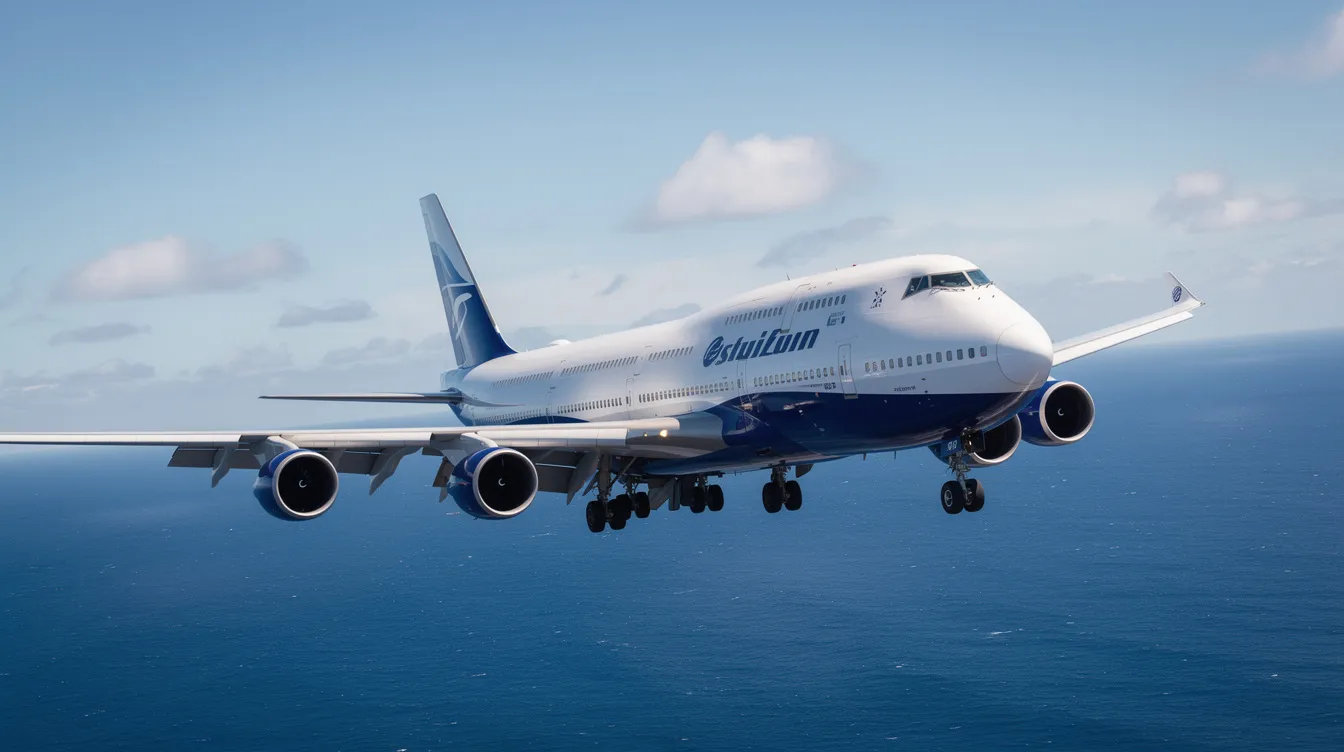
The Boeing 747 defined what it meant to fly long-haul for over half a century. Its final evolution, the 747-8, pushed the boundaries of size, range, and engineering further than any Boeing aircraft before it. But in an era where discerning travelers increasingly value privacy and control over cabin square footage, the story of the largest 747 raises a compelling question: does bigger always mean better?
This deep dive explores the engineering, history, and operational reality of Boeing's largest passenger aircraft, and why travelers who once sought out the world's biggest jets are now choosing a different path entirely.
Quick answer: What is Boeing's largest passenger aircraft?
Boeing's largest passenger aircraft is the Boeing 747-8 Intercontinental, known as the 747-8I. It represents the final generation of the iconic Boeing 747 family and stands as the pinnacle of Boeing's half-century jumbo jet lineage. The aircraft stretches 76.3 meters (250 ft 2 in) in length, with a wingspan of 68.4 meters (224 ft 7 in) and a height of approximately 19.4 meters. Its maximum takeoff weight is 975,000 lb (approximately 442,000 kg), and the 747-8 can carry up to 467 passengers in a typical three-class layout.
The 747-8 family, produced by Boeing Commercial Airplanes, encompasses two variants: the 747- 8 Intercontinental for passengers and the747-8FF for freight. Together, they form the largest commercial aircraft built in the United States. While the Airbus A380-800 carries more passengers and offers a wider cabin, the 747-8 is the longer aircraft. It is also substantially larger than Boeing's 777 and 787 families in overall dimensions and gross weight.
Yet for all its impressive scale, a 467-seat jumbo remains a shared experience: fixed schedules, crowded terminals, and communal cabins, even in first class. For travelers who prize exclusivity over capacity, the conversation shifts from the world's largest passenger aircraft to private aviation, where every flight is tailored to one passenger's agenda.
From "Jumbo Jet" to giant: Short history of the Boeing 747
The original Boeing 747 reshaped commercial aviation in ways few aircraft have matched. It was the world's first twin-aisle wide-body airliner to enter commercial service, and its sheer size unlocked economies of scale that made affordable intercontinental travel possible for millions. The story of the largest 747 begins with this revolutionary aircraft and the decades of evolution that followed.
Pan American World Airways placed the launch order for the 747-100 in 1966. Boeing rolled out the prototype at its Everett, Washington facility on September 30, 1968, and the first flight took place from Paine Field in February 1969. The aircraft entered airline service on January 22, 1970, flying the New York–London route and immediately rewriting the economics of long-haul routes.
With over 350 seats in early configurations and its signature upper deck "hump," the 747 became the defining large aircraft of its era. Successive generations followed: the 747-200 extended range, the 747-300 stretched the upper deck, and the Boeing 747-400 became a dominant model in the late twentieth and early twenty-first centuries. The 747-400 introduced winglets, which helped reduce aerodynamic drag and improve fuel efficiency on transoceanic routes.
Between 1968 and early 2023, Boeing discontinued the production of the 747 after building approximately 1,574 aircraft across various models at Boeing's Everett factory, making it one of the most successful very large aircraft programs in history.
Overview of the largest 747: Boeing 747-8 program
The Boeing 747-8 program was launched on November 14, 2005, with the goal of extending the 747's relevance into an era increasingly dominated by efficient twinjets. Boeing announced the program as a third-generation 747 that would incorporate advanced technologies from the Boeing 787 Dreamliner, including a redesigned wing, raked wingtips, and new engines to achieve lower fuel burn and reduced noise.
The program included two variants: the 747- 8 Intercontinental passenger aircraft and the 747-8 Freighter, a large cargo aircraft designed specifically for cargo operations. Under chief executive JimMcNerneyy, Boeing committed significant engineering resources to bring both versions to market, even as some analysts questioned demand for a new quad-engine widebody.
Key milestones unfolded rapidly. Final assembly of the first freighter began at Boeing's Everett factory in 2008. The first 747-8F flight occurred in February 2010, and the passenger version completed its first flight on March 20, 2011. First deliveries followed in 2011 and 2012.
Despite its innovative new technologies, the 747-8 arrived at a moment when airlines were shifting decisively toward long-range twin-engine jets. The aircraft sat at the top of Boeing's lineup by physical size, but its four-engine economics limited its appeal to a narrower set of operators.
The stretch: How the 747-8 became the largest 747
The most visible change that made the 747-8 the largest 747 is its longer fuselage. The 747-8 is 18 ft 3 in (5.6 m) longer than the 747-400, giving it a total length of approximately 250 ft 2 in (76.3 m) and making it the longest passenger aircraft in the world at its entry into commercial service.
Boeing achieved the stretch through two fuselage plugs: approximately 13 ft 4 in (4.06 m) ahead of the wing and 5 ft (1.52 m) aft. The basic structure of the fuselage remained recognizable, but these insertions increased both passenger and cargo volume significantly. The freighter version offers 26% more cargo volume than the 747-400, while the passenger variant accommodates a typical capacity of up to 467 seats versus around 416 in comparable 747-400 layouts.
The Boeing 747-8 Freighter is designed for cargo transport, with a maximum payload capacity of 308,000 lb and a nose-opening cargo door for oversized freight. Its high capacity makes it indispensable for heavy cargo operations. While the passenger version's shortened fuselage upper deck retained the iconic hump, its proportions changed: the stretched body and lengthened main deck create a noticeably different silhouette from any earlier 747.
The wing and aerodynamics of the largest 747
The new wing on the 747-8 represents the single largest engineering change between the 747-400 and its successor. It was also a primary reason for the aircraft's improved performance across the board.
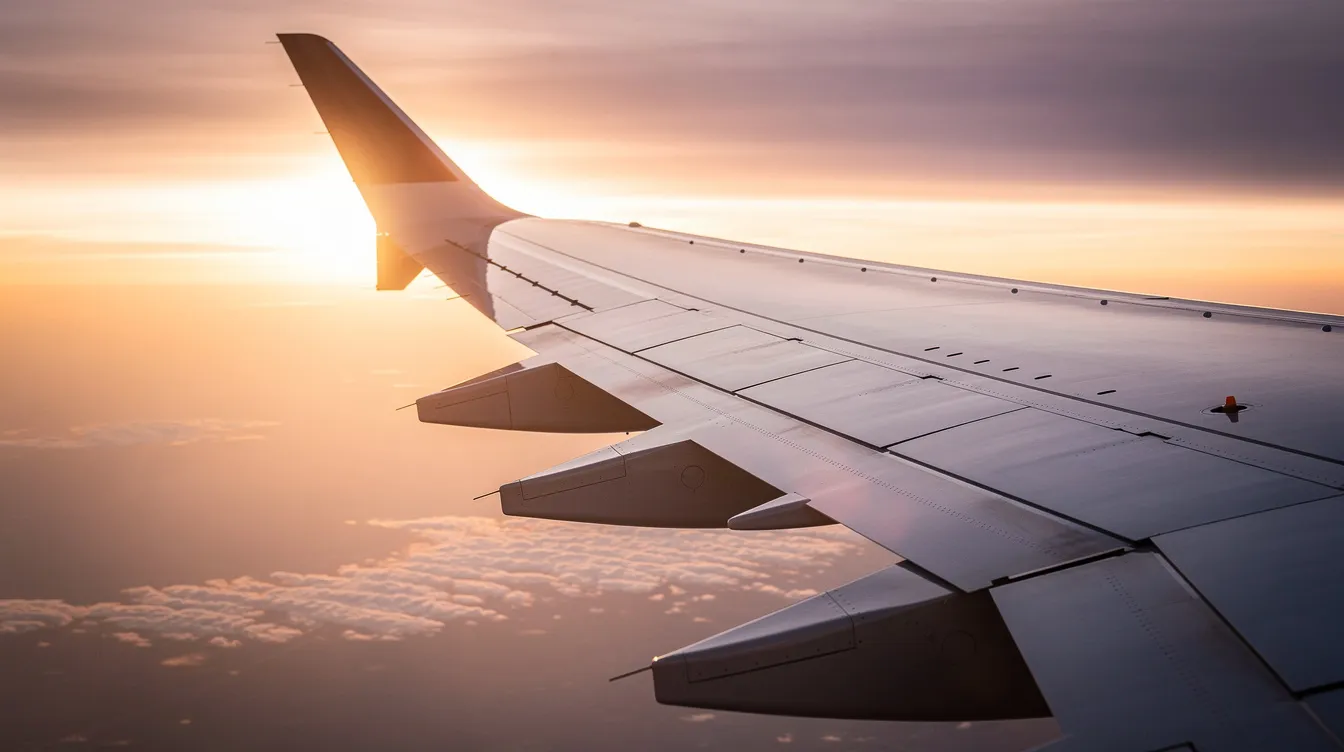
Boeing designed a thicker, deeper wing profile with recontoured leading and trailing edges, updated high-lift devices including double slotted inboard flaps, and raked wingtips modeled after those on the 787. These changes, particularly along the lateral edges of the wing, reduce induced drag and improve the lift-to-drag ratio at cruise altitudes.
The redesigned wing also eliminated the need for fuel tanks in the horizontal stabilizer, a feature used on earlier 747s. Greater internal fuel volume within the wing itself simplified fuel management and improved weight balance. The wingspan grew to 68.4 m (224 ft 7 in), with the vertical tail reaching roughly 64 ft 2 in (19.6 m).
In practical terms, these aerodynamic improvements contributed to an estimated 15–16% reduction in fuel burn per seat compared to the 747-400. Noise was also substantially reduced, thanks to smoother nacelle integration and quieter airflow over the wing. These gains align with the broader aviation industry's drive toward more sustainable large aircraft operations.
The engines: GEnx power for Boeing's largest passenger aircraft
The 747-8 is powered by four General Electric GEnx-2B67 turbofan engines, purpose-built derivatives of the GEnx family that also powers the 787 Dreamliner, a level of performance that informs expectations for modern $15 million private jets. Each engine produces approximately 66,500 lbf of thrust with a high bypass ratio, composite fan blades, and advanced combustor materials that reduce both fuel consumption and emissions.
General Electric was the only engine supplier for the 747-8 program, a notable departure from earlier 747 models that offered options from Pratt & Whitney and Rolls-Royce. This exclusivity simplified maintenance logistics and certification. The GEnx-2B67 features a smaller fan diameter than its 787 counterpart, engineered specifically to provide adequate ground clearance beneath the 747's lower-slung wing.
Combined with the new wing design, the engines deliver roughly 15–16% better fuel burn than the 747-400's powerplants. Boeing later introduced additional performance improvement packages through Project Ozark that squeezed out approximately 1.5–1.8% more efficiency via engine software and flight management optimizations. Even so, the economics of running four engines could not fully offset the advantages of newer twin-engine widebodies on most routes.
Flight testing and certification of the 747-8
The flight test program for the 747-8 was among the most rigorous Boeing had undertaken for a derivative aircraft, reflecting the high safety and regulatory standards required by both FAA and EASA.
Engine runs began in December 2009 at Paine Field. High-speed taxi tests followed in early 2010, culminating in the first 747-8F test flight on February 8, 2010, from Paine Field to Boeing Field in a flight lasting approximately three and a half hours. The passenger version's first flight occurred on March 20, 2011. Flight testing across the combined programs accumulated well over 1,600 flight hours, spanning hot-weather, cold-weather, high-altitude, and structural flutter evaluations.
During the process, engineers identified several technical issues. Turbulence over landing gear doors required aerodynamic modifications, and fuselage longeron stress points demanded structural reinforcement before certification could proceed. Boeing implemented corrective fixes, illustrating the demanding safety thresholds that apply to any aircraft of this scale.
The 747-8F received FAA and EASA certification in early August 2011 and entered service with Cargolux in October 2011. The 747-8I passenger variant was certified by December 2011, entering commercial service with Lufthansa in June 2012.
Into service, production, and the end of the largest 747 era
The commercial rollout of the largest 747 began with the first freighter delivered to Cargolux on October 12, 2011. The 747-8F entered service that same day, marking the start of a new chapter in heavy cargo operations. The first 747-8 Intercontinental was delivered to Lufthansa on May 5, 2012, and entered service on routes including Frankfurt–Washington and Frankfurt–Los Angeles.
Boeing delivered 107 units of the 747-8F and 48 of the passenger version, for a total of 155 Boeing 747-8 aircraft built. The freighter variant found its niche with operators like Cargolux-the largest operator of the type-UPS Airlines, and Atlas Air. The passenger version attracted fewer buyers, with Lufthansa as the primary airline customer and Korean Air as essentially the only other airline customer to operate it alongside Air China. Citing limited availability of profitable routes suited to a quad-engine widebody, most airlines chose efficient twinjets instead.
Boeing introduced performance improvements through Project Ozark starting around 2013, yielding roughly 3–3.5% better fuel burn through aerodynamic tweaks, engine software updates, and weight reductions—an efficiency focus mirrored in evaluations of the best $10 million private jet options. Production rates declined steadily from initial targets of about 1.5 aircraft per month to 0.5 per month by 2016 as the production line wound down.
The final aircraft, a 747-8F for Atlas Air, rolled off the line in December 2022. The last 747-8 was delivered on January 31, 2023, formally closing more than fifty years of Boeing 747 manufacturing and ending the last Boeing jumbo jet program.
Passenger experience on the 747-8 Intercontinental
The 747-8 Intercontinental serves as Boeing's flagship long-range passenger aircraft, deployed on premium, high-demand routes where airlines can fill both decks with revenue passengers. Airlines typically configure the 747-8 with 350 to 467 seats depending on the balance between density and passenger comfort.
The upper deck is often reserved for premium seating. Lufthansa, for instance, places its first and business class cabins on the upper level, accessed via a graceful curved stairway that has become one of the aircraft's signature features. The cabin includes LED mood lighting for improved ambiance and features larger windows than the 747-400, creating a brighter, more open environment. Sculpted sidewalls and improved overhead bins add to the sense of modernity.
Lufthansa deploys its fleet of 747-8Is from Frankfurt to destinations including Los Angeles, Mexico City, Tokyo, and Washington. Korean Air and Air China also operate the passenger version on high-capacity long-haul routes connecting major airports in Asia with North America and Europe.
Yet even a premium first-class suite on the 747-8 shares the aircraft with several hundred other passengers. Schedules are fixed. Connections through hub airports add hours. Check-in, security, and boarding queues remain unavoidable. For travelers who measure value in time and privacy rather than cabin grandeur alone, the equation begins to shift.
Military, VIP, and special-mission roles for the largest 747
The size and range of the 747-8 make it attractive far beyond airline service. Governments and military organizations worldwide have selected this aircraft for missions requiring endurance, space, and the ability to serve as airborne command centers or flying state residences.
The U.S. Air Force selected the 747-8 platform to replace its aging VC-25A fleet-the aircraft known publicly as "Air Force One." Two modified 747-8s are being converted as the VC-25B, with deliveries projected around 2028. Separately, the Survivable Airborne Operations Center program has contracted Sierra Nevada Corporation to convert ex-Korean Air 747-8Is into hardened airborne command-and-control aircraft, with a fleet eventually totaling approximately nine airframes.
VIP 747-8I operators include governments of Kuwait, Oman, Brunei, Turkey, and Qatar, where interiors are fitted with state suites, conference rooms, lounges, and private bedrooms. These conversions transform the heaviest aircraft in Boeing's commercial lineup into ultra-long-range flying residences.
Such configurations parallel the privacy and customization that high-net-worth individuals seek in private aviation-though at state-level budgets. For most executives and entrepreneurs, the same impulse toward personalized, private flight finds a more accessible expression through Jet Card programs.
Technical specifications of the 747-8 Intercontinental
The technical specifications of the 747-8 confirm its position as a true globe-spanning large aircraft. Here are the key metrics:
Length: 76.3 m (250 ft 2 in)
Wingspan: 68.4 m (224 ft 7 in)
Height: approximately 19.4 m (63 ft 7 in)
Maximum takeoff weight: 975,000 lb (approximately 442,000 kg)
Operating empty weight: approximately 485,300 lb (220,100 kg)
Fuel capacity: approximately 63,034 U.S. gallons (238,610 liters)
Engines: four General Electric GEnx-2B67 turbofans, each producing roughly 66,500 lbf of thrust
Cruise speed: Mach 0.855–0.86 (approximately 920 km/h)
Range: over 8,000 nautical miles with a full passenger load
Typical capacity: up to 467 passengers in a three-class configuration
The 747-8F freighter version has a range of 4,390 nautical miles at maximum payload and a maximum takeoff weight matching the passenger variant. These specifications position both versions among the most capable aircraft connecting major hubs nonstop on long-haul routes.
How the largest 747 compares with other giants of the sky
Setting the 747-8 alongside other very large aircraft reveals a nuanced picture. Size alone does not determine dominance in modern aviation.
The Airbus A380-800 is the obvious comparison. It offers higher typical passenger capacity-the Airbus A380 can carry up to 853 passengers in an all-economy configuration, though most airlines seat 500–600. Its double-deck cabin is wider than the 747-8's. However, the 747-8 is physically longer, and the A380 also relies on four engines with similar operating-cost challenges. Both aircraft types face pressure from efficient twinjets.
The Antonov An-225 Mriya, once the world's longest and heaviest aircraft, was purpose-built for outsized cargo rather than passengers. Its destruction in Ukraine in 2022 leaves the 747-8F among the most capable heavy freight aircraft still in active cargo operations. The Stratolaunch ROC holds the record for the widest wingspan but serves an entirely different purpose-air-launching spacecraft-making it irrelevant to passenger or freight comparisons.
Within Boeing's own portfolio, the technology connection runs to the 777-9 (777X family), a very large aircraft that will be almost as large in dimensions but powered by just two engines. With long-range capabilities and significantly lower fuel burn per seat, the 777-9 represents the future direction for airlines on high-capacity routes, while the 747-8 holds its place as the largest commercial aircraft Boeing has ever produced.
Why the largest 747 still matters in modern aviation
The 747-8 occupies a unique position in modern aviation: a final aircraft type from an era when four-engine widebodies ruled the skies, now operating alongside designs that have rendered its configuration largely obsolete, yet still indispensable in specific roles.
The freighter version remains dominant in the nose-loading, heavy-freight niche. Operators such as UPS Airlines, Cargolux, and Atlas Air depend on the 747-8F for dense cargo corridors and outsized shipments that no other Western-built freighter can handle as efficiently. Boeing delivered 107 units of the freighter version, and these aircraft continue flying high-volume routes worldwide, just as leading providers like NetJets and its Jet Card programs dominate premium private travel corridors.
Airlines including Lufthansa and Korean Air still deploy the 747-8I on select long-haul routes where premium cabins sell at high margins and slot-constrained hubs justify consolidating demand onto one large aircraft rather than scheduling multiple smaller jets. The approximately 15–16% fuel burn improvement over the 747-400 ensures the 747-8 remains competitive enough to operate profitably on the right routes.
For enthusiasts and aviation historians, the 747-8 holds irreplaceable value as the last "hump-backed" jumbo jet ever built. As production rates dropped to zero and the production line closed in January 2023, flights on the 747-8 have become a bucket-list experience-a chance to travel aboard the last Boeing jumbo before retirement claims the remaining fleet.
Flying on the largest 747 vs flying private with BlackJet
There is something undeniably impressive about boarding a 467-seat Boeing 747-8 and climbing the curved stairway to the upper deck. The scale is breathtaking. But scale and personal experience are different things, and for travelers who measure a journey's value in hours saved, privacy gained, and stress avoided, the comparison with private aviation is stark.
On a 747-8, even first-class passengers share the aircraft with hundreds of others. Schedules are fixed by the airline, unlike flexible models that even allow you to simply buy a seat on a private jet. Routes connect major airports through hub-and-spoke networks, often requiring layovers. Check-in, security screening, customs, and boarding procedures consume hours before wheels even leave the ground.
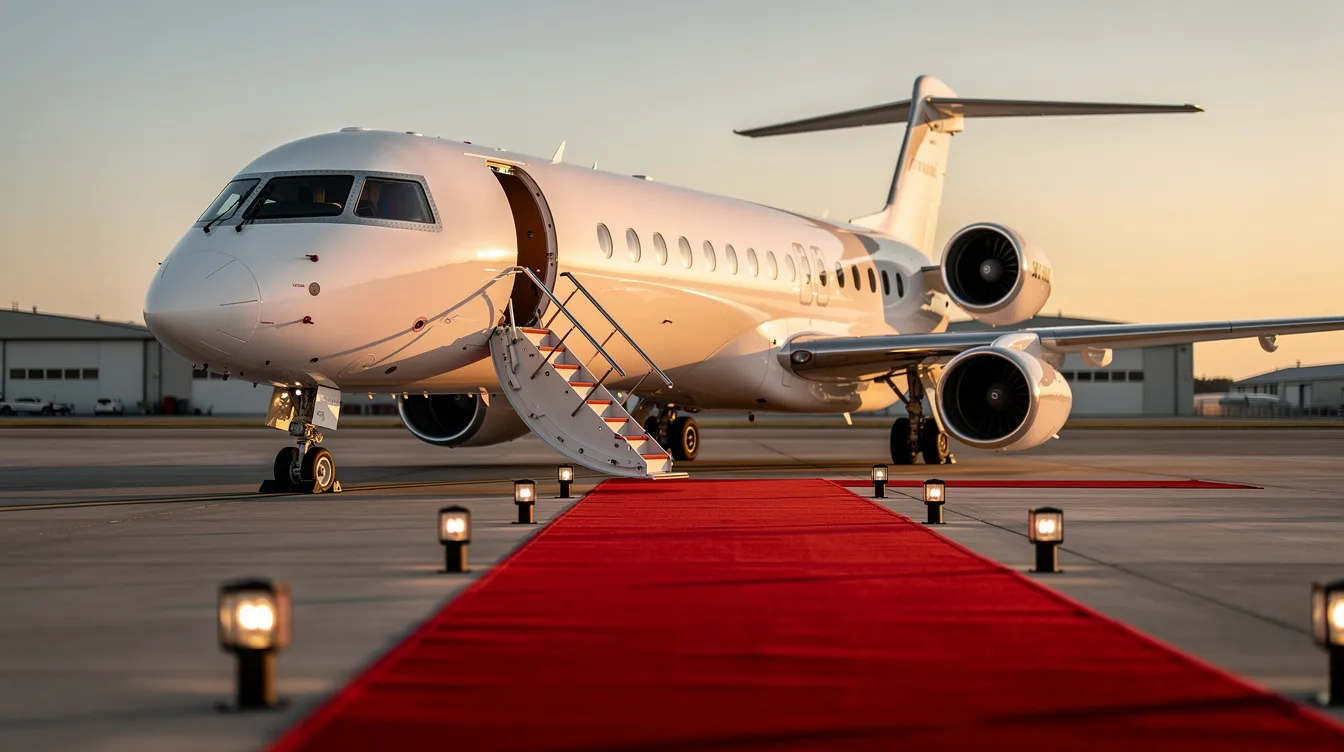
A BlackJet Jet Card transforms the equation entirely. Passengers depart from private terminals or FBOs, arriving as little as twenty minutes before departure. Routes are point-to-point, tailored to the traveler's agenda rather than an airline's network map. Departure times flex around business meetings, not the other way around.
Consider a concrete scenario: an executive flying from New York to Frankfurt. On a 747-8, the total door-to-door time, including ground transport, check-in, boarding, and arrival procedures,s easily exceeds twelve hours. With a BlackJet-arranged transatlantic private jet, the same executive departs on their own schedule from a private terminal, lands at a European FBO, and is in a car headed to meetings within minutes of touchdown—an approach that aligns with guides to the cheapest private jet options for maximizing value. The time savings alone can justify the cost for frequent travelers.
While the largest passenger aircraft offers impressive engineering, BlackJet provides what no jumbo can: exclusivity, confidentiality, and productive time that belongs entirely to you.
Safety, sustainability, and technology: From the largest 747 to BlackJet standards
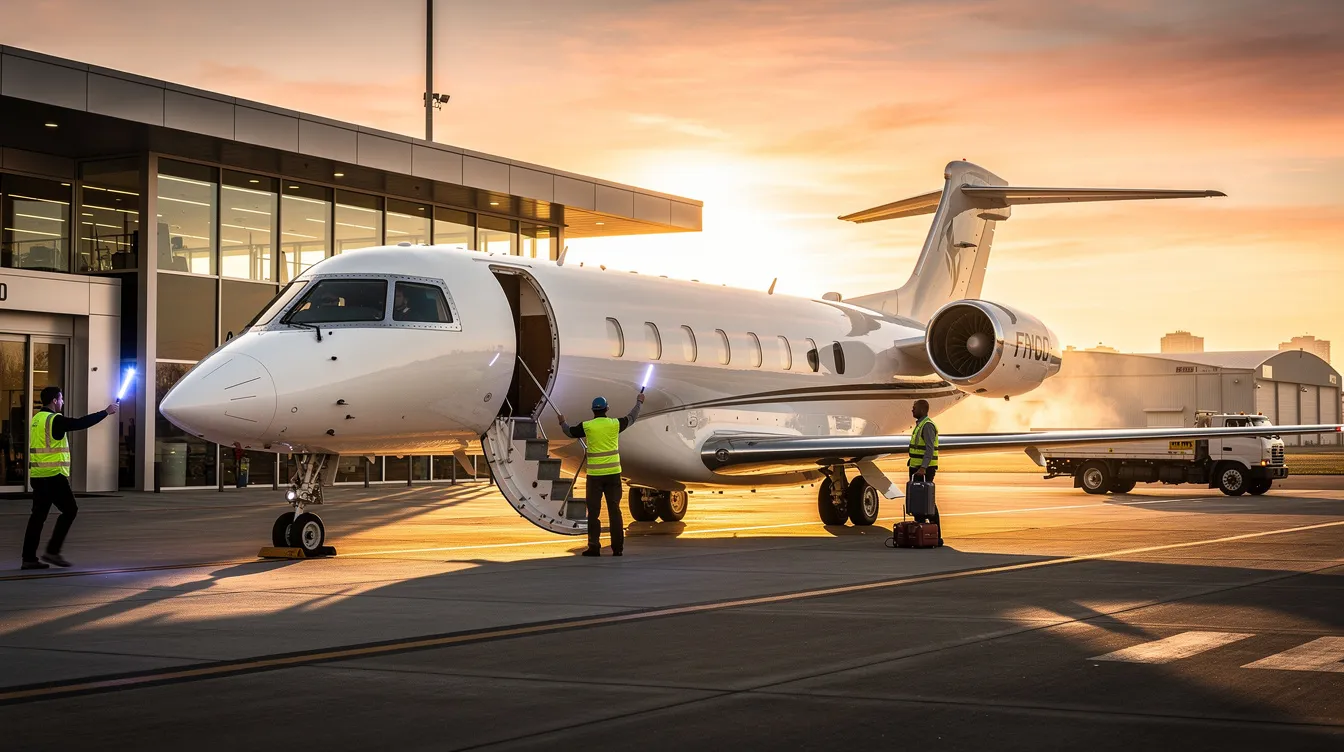
The rigorous flight testing and certification process behind the 747-8 demonstrates what it takes to earn regulatory trust for a large aircraft carrying hundreds of lives. That same uncompromising approach to safety informs how BlackJet selects and monitors its operator network.
Large aircraft like the 747-8 achieve safety through redundancy: multiple engines, duplicated hydraulic and electrical systems, and thousands of hours of testing before a single passenger boards. BlackJet applies an analogous philosophy by working exclusively with operators that meet the aviation industry's highest safety certifications, including ARG/US Platinum ratings, Wyvern Wingman standards, and IS-BAO compliance.
On sustainability, the 747-8's improved fuel burn and noise footprint represent meaningful progress for a quad-engine aircraft, and Boeing even tested the 747-8F on biofuel blends during a 2011 transatlantic flight—advances that parallel strategies to fly private more affordably without sacrificing efficiency. BlackJet goes further by ensuring all flights are carbon-neutral through verified offsets at no additional cost to the member, making private travel aligned with environmental accountability.
The technology parallels extend to the passenger experience. Advanced avionics and flight-management systems on the 747-8 keep the aircraft at peak efficiency. BlackJet's 24/7 digital booking platform, real-time disruption management, and personalized trip support make it easy whether you're chartering an entire aircraft or simply buying a seat on a private jet, creating a similarly seamless experience on the ground and in the air. For discerning travelers who once flew exclusively on flagship jumbo jets, these pillars-safety, sustainability, and smart technology-are now non-negotiable, regardless of aircraft size.
FAQs about the largest 747 and private jet alternatives
One of the most common questions about the Boeing 747 family is straightforward: what is Boeing's largest passenger aircraft? The answer is the Boeing 747-8 Intercontinental. At 76.3 meters in length with a wingspan of 68.4 meters and a typical capacity of up to 467 passengers, it is the largest commercial aircraft Boeing has ever manufactured.
Readers also frequently ask how many Boeing 747s have been built and whether they are still flying. Boeing built approximately 1,574 747s of all variants between 1968 and 2023, including 155 of the 747-8 series. As of mid-2026, dozens of 747-8s remain in active service with cargo airlines and a handful of passenger carriers, while others serve in VIP and military roles.
Another common question: can I choose to fly on a Boeing 747 when booking a commercial ticket? Some booking platforms allow filtering by aircraft type, but operational changes can substitute a different plane without notice. This uncertainty is one reason travelers seeking specific experiences prefer private aviation, where the aircraft category is confirmed at booking and pricing models like Flexjet’s Jet Card programs provide additional clarity.
For those debating whether a large passenger aircraft or a private jet better suits their needs, resources like a dedicated guide to Jet Card costs and pricing make the trade-offs clear. A 747-8 first-class product offers exceptional onboard comfort and the romance of flying a jumbo. A Jet Card program like BlackJet's delivers total privacy, schedule control, and tailored service—advantages that compound for anyone who flies frequently or values time above all else, especially once you understand the broader private jet price landscape and access options.
How BlackJet leverages large-aircraft capabilities with private-jet flexibility
Aircraft like the 747-8 conquer intercontinental distances in a single leap, connecting continents nonstop over 8,000 nautical miles, a range now matched by many of the best long-range private jets for sale. BlackJet gives individuals similar global reach through a curated network of private jets spanning multiple cabin classes—with options ranging from traditional Jet Cards to unlimited private jet membership flights—without the constraints of fixed schedules or shared cabins.
BlackJet's 25-hour Jet Card programs, available in 25-hour and 50-hour options, provide prepaid access to light, midsize, super-midsize, and large-cabin jets capable of regional, transcontinental, and transatlantic missions. These cover many of the same routes flown by the largest 747, but with the flexibility to depart when and where you choose.
Consider an itinerary: a European client flying from London to New York, then continuing to Aspen for a weekend. On commercial aircraft, this requires two separate bookings, a connection through a major hub, and hours of layover time. With BlackJet, the entire journey is arranged as a seamless multi-leg trip with private flights to Europe and back, using strategies similar to those for flying private as affordably as possible, with each segment departing on the traveler's schedule.
Operational advantages compound quickly: 24/7 access to booking and support teams, real-time disruption management, vetted operators meeting strict safety and service criteria, and transparent pricing through the Jet Card model. For travelers who once chose flagship jumbo jets for status and comfort, BlackJet represents the logical evolution: the same ambition to travel without compromise, now expressed through control, privacy, and sustainability rather than sheer aircraft size, much like the offerings from the top private jet companies for luxury travel.
FAQs about Boeing's Largest 747 and Private Aviation
What is Boeing's largest passenger aircraft?
The Boeing 747-8 Intercontinental (747-8I) is Boeing's largest passenger aircraft. It measures 76.3 meters (250 ft 2 in) in length and can carry up to 467 passengers in a typical three-class configuration.
How many Boeing 747-8 aircraft were built?
A total of 155 Boeing 747-8 aircraft were built, including 107 freighters and 48 passenger versions.
Who was the only one airline customer for the 747-8 passenger version?
Lufthansa was the primary airline customer for the 747-8 Intercontinental, with Korean Air and Air China also operating the type but in smaller numbers.
When did Boeing discontinue the 747 production?
Boeing ended production of the 747 family in early 2023 after building approximately 1,574 aircraft across all variants.
What engines power the Boeing 747-8?
The 747-8 is powered exclusively by four General Electric GEnx-2B67 turbofan engines, designed specifically for this aircraft.
How does the 747-8 compare to the Airbus A380?
While the Airbus A380-800 carries more passengers (up to 853 in all-economy configuration) and has a wider cabin, the 747-8 is longer and remains the largest commercial aircraft built in the U.S.
What are the main benefits of flying private versus on a 747-8?
Private jet travel with BlackJet offers flexibility in scheduling, privacy, direct point-to-point routes, and significantly reduced total travel time compared to commercial flights on large aircraft like the 747-8.
Who is Boeing's chief executive associated with the 747-8 program launch?
Jim McNerney was the chief executive of Boeing when the 747-8 program was launched and played a key role in advancing the program.
Are 747-8 aircraft still in service?
Yes, many 747-8 freighters and passenger aircraft remain active with cargo operators and select airlines, while others serve in VIP and military roles.
How does BlackJet ensure safety and sustainability in private jet travel?
BlackJet partners only with operators meeting stringent safety certifications and offsets all flights to be carbon neutral, aligning with the industry’s highest standards in safety and environmental responsibility.
Elevate your long-haul travel beyond the largest 747
The Boeing 747-8 remains one of aviation's most impressive engineering achievements. Its size, range, and capability wrote the final chapter of a lineage that transformed how the world travels. But for the discerning traveler, the question is no longer how big the aircraft is. It is how well the journey serves you.
BlackJet offers a strategic alternative: Jet Card access to long-range private jets that match the long-range capabilities of the world's largest aircraft while eliminating queues, layovers, and crowded cabins. Every flight comes with rigorous safety oversight, carbon-neutral performance as standard, and a digital-first booking experience backed by human expertise.
Discover how BlackJet can reshape your next transatlantic journey. Explore our Jet Card programs and turn every long-haul trip into a private, purposeful experience.


 Sign up with google
 Sign up with Apple