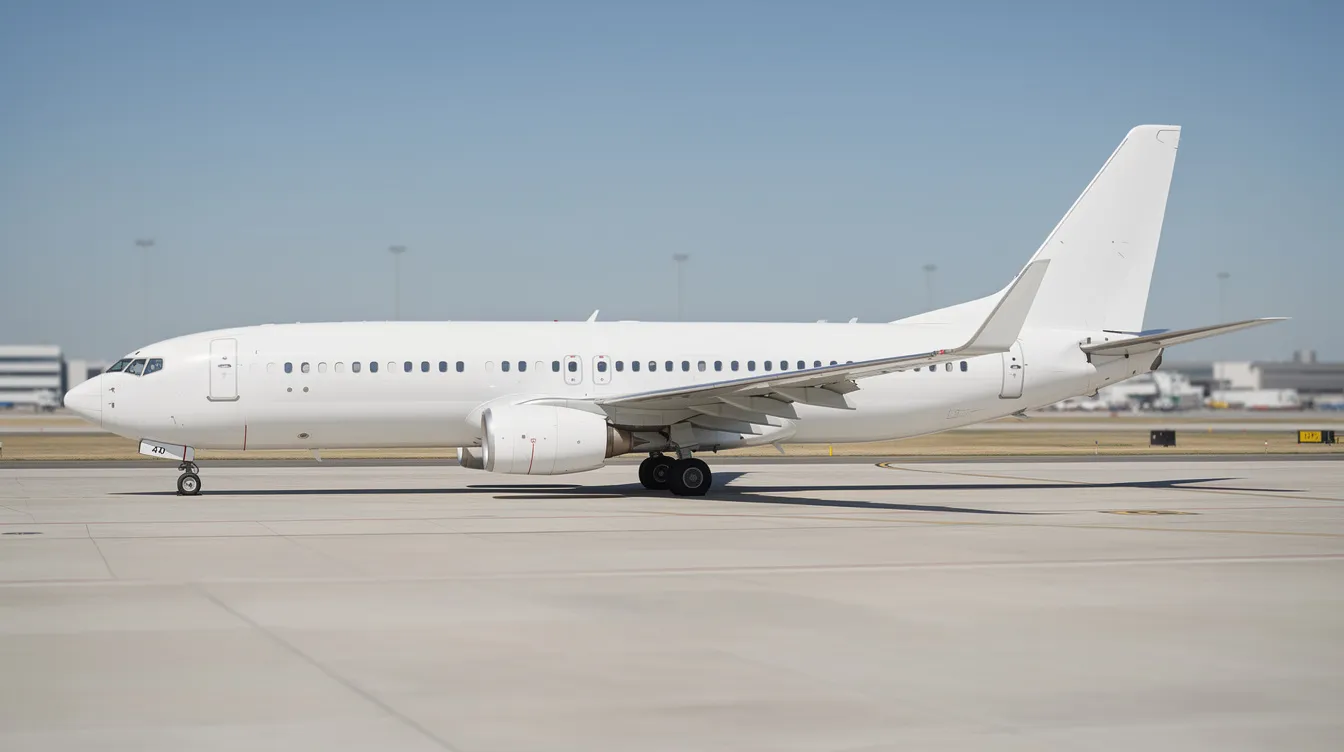
Quick Answer: Exact Length of the Boeing 737-800
The overall length of the Boeing 737-800 is 129 feet 6 inches, which converts to approximately 39.47 meters. Some Boeing technical manuals and airline references round this to 39.5 m, but 39.47 m remains the commonly cited manufacturer figure.
This measurement refers to the nose-to-tail ground outline of the airframe—not the interior cabin length or the wingspan. It defines how much apron, gate, and runway space the aircraft occupies when parked or taxiing.
The Boeing 737- 800 belongs to the 737 Next Generation family, a series that entered commercial service in the late 1990s and quickly became the backbone of short-to-medium-haul commercial aviation worldwide. The 737-800 entered commercial service in April 1998, and its length matters for three practical reasons:
Determines how many passengers the plane can seat (up to 189 in high-density layouts)
Dictates which airports, gates, and runways can accommodate the aircraft
Influences aerodynamic performance, fuel burn, and range
For context, the 737-800 is roughly three meters longer than the 737-400 it replaced and almost identical in length to its modern successor, the 737 MAX 8.
Where the 737-800 Fits in the Boeing 737 Family
The 737 Next Generation series—often abbreviated as 737 NG—includes four primary variants: the -600, -700, -800, and -900ER. Among these, the 737-800 occupies the mid-long fuselage position, frequently described as the "workhorse" of the next-generation lineup. It is the most-produced model in the generation series.
Here is how the overall length compares across variants:
737-700: approximately 33.6 m - optimized for shorter regional routes and smaller passenger loads
737-800: approximately 39.5 m - the stretched version designed for high-demand trunk routes
737-900ER: approximately 42.1 m - the longest NG variant, adding roughly 2.6 m to the -800
This extended fuselage allows the 737-800 to seat between 162 and 189 passengers, depending on configuration. A typical two-class layout yields around 162 seats, while a high-density single-class arrangement can accommodate up to 189 passengers. Seating configurations can vary by airline, with carriers like American Airlines, United Airlines, and Alaska Airlines each deploying their own cabin layouts on the same airframe.
The 737-800 replaced the 737-400 model on many routes, offering approximately 20 to 30 additional seats and improved fuel economy. Its length made it the natural choice for airlines needing more seating capacity on busy city pairs without stepping up to a wide-body aircraft, primarily serving routes in the two-to-five-hour range.
Detailed Dimensions: Length, Wingspan, and Height
Key External Dimensions
Length is just one piece of the Boeing 737-800's technical specifications. The aircraft's external dimensions collectively determine its airport compatibility, hangar requirements, and gate assignments.
Dimension | Imperial | Metric |
|---|
Overall length | 129 ft 6 in | 39.47 m |
Wingspan (without winglets) | 112 ft 7 in | 34.32 meters |
Wingspan (with blended winglets) | ~117 ft 5 in | 35.8 meters |
Height (at tail) | ~41 ft 2 in | 12.5 meters |
Fuselage diameter | ~12 ft 4 in | 3.76 meters |
Cabin width | ~11 ft 7 in | 3.54 meters |
While the fuselage length influences capacity and ground handling, the wingspan—particularly when equipped with blended winglets—affects which gates and taxiways the aircraft can use. Winglets reduce drag and improve fuel efficiency, but they widen the aircraft's footprint on the ramp.
The 737-800 retains the classic 148-inch cabin width inherited from earlier Boeing 737 designs, constraining the cabin to a standard six-abreast seating arrangement across all variants.
Comparison Table: 737 Variants
Spec | 737-700 | 737-800 | 737 MAX 8 |
|---|
Length | ~33.6 m | 39.47 m | ~39.52 m |
Wingspan (std) | ~34.3 m | 34.32 m | ~35.9 m |
Typical seats (two-class) | ~126 | ~162 | ~162 |
Max seats | ~149 | 189 | ~210 |
Impact of Dimensions on Operations
The external dimensions of the 737-800 affect airport compatibility, hangar requirements, and gate assignments. The wingspan, especially with winglets, can limit which gates and taxiways the aircraft can use, while the fuselage length determines passenger capacity and ground handling needs.
How Fuselage Length Affects Capacity and Layout
Seating Configurations
The 39.47 m overall length of the 737-800 directly enables its seating capacity. In a two-class configuration, airlines typically install around 162 seats with a modest business section forward and economy aft. In high-density layouts favored by low-cost operators, the aircraft features a standard 3-3 seating arrangement that can push the count to 189—the maximum passenger capacity certified for this model. Typical seating capacity across the global fleet is around 160 passengers.
Cabin Layout Flexibility
The added length over earlier models allowed Boeing to:
Insert additional seat rows in the cabin without reducing seat pitch below regulatory minimums
Add extra exit doors to meet evacuation time requirements for larger groups of passengers, including overwing exits and door placement on the left side
Distribute galleys and lavatories across the cabin for better service flow
Structural Considerations
A longer fuselage section must be structurally reinforced to handle greater bending loads during turbulence, maneuvers, and firm landings. The 737-800's fuselage frames, stringers, and lap joints are engineered for these forces—a critical design consideration for any extended-fuselage airliner.
Many airlines use the 737-800's cabin space for mixed configurations: business class forward with lie-flat or wider seats, extra-legroom economy in the mid-cabin, and standard economy toward the rear. This flexibility is a direct benefit of the aircraft's length, giving operators the ability to match cabin layout to route demand, while large groups seeking more privacy may prefer 16-seat private jet options instead of high-density airline cabins.
Length and Fuel Efficiency: Balancing Size and Economics
Performance Figures
Aircraft length influences empty weight, which in turn affects fuel efficiency and range. A longer fuselage means more structural material, more skin area exposed to drag, and a heavier airframe. Boeing offset these penalties on the 737-800 by pairing the stretched fuselage with redesigned next-generation wings and CFM56-7B engines, achieving competitive fuel economy on a per-seat basis.
Cruise speed: approximately Mach 0.79 / 453 knots (about 523 mph)
Maximum range: 3,377 nautical miles when fully configured for passengers
Fuel burn: approximately 4.88 US gallons per seat per hour
These numbers made the 737-800 an airline favorite for cost-effectiveness on short-to-medium-haul routes. When fully loaded, its per-seat fuel burn rivals or beats many competing models in commercial aviation.
Private Jet Comparison
For BlackJet clients, fuel efficiency is measured differently. A midsize or super-midsize private jet burns more fuel per seat, but the time savings—skipping connections, security lines, and congested hubs—often make the private option far more productive per hour, especially when compared with the best small private aircraft selected for specific regional missions. The priority shifts from per-seat cost to per-minute value: privacy, schedule control, and direct routing to smaller airports that no 737-800 can reach.
Cabin Features Enabled by the 737-800's Length
Standard Cabin Features
The 129 ft 6 in fuselage allows for a longer cabin with more cabin features distributed across multiple zones, giving airlines flexibility that shorter narrow-body models simply cannot match.
Seating: six-abreast, 3-3 layout with seat pitch ranging from about 28 inches in tight economy to 32 inches or more in premium sections
Galleys: dual galley positions (forward and aft), enabling simultaneous service from both ends of the cabin
Lavatories: multiple units distributed along the cabin length, reducing congestion during flight
Emergency exits: additional overwing and door exits to meet evacuation standards for up to 189 passengers
Cabin Layout Flexibility
Modern 737-800 interiors often feature the Boeing Sky Interior, which introduced sculpted sidewalls, LED mood lighting, and larger overhead bins. These enhancements are easier to appreciate in a longer cabin, where the visual effect of better lighting and sleeker surfaces extends across more rows, though some travelers instead opt for private jets that can seat around 20 passengers when they need both space and exclusivity.
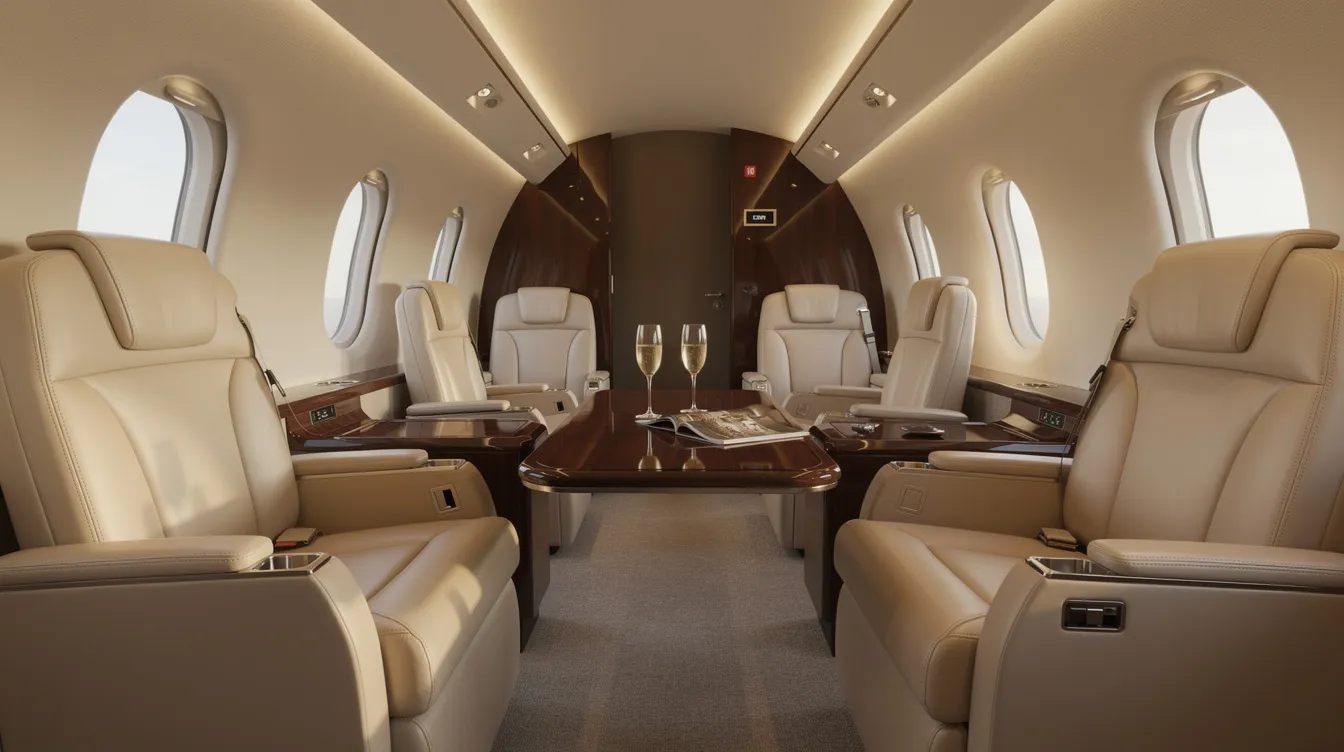
By contrast, BlackJet's typical private jet cabins seat four to sixteen passengers in configurations designed around passenger comfort rather than density. Fewer seats, custom catering, noise-dampened cabins, and the freedom to choose your departure time create an experience that no commercial cabin can replicate—regardless of how long the fuselage is, particularly on small private jets designed for luxury travel.
Technical Specifications Beyond Length
Beyond length, the Boeing 737-800's performance profile explains why it dominates global fleets. Here is a compact overview:
Specification | Value |
|---|
Maximum takeoff weight (MTOW) | ~79,000 kg (~174,700 lbs) |
Engines | 2× CFM56-7B |
Thrust per engine | Up to 27,300 lbf |
Cruising speed | ~453 knots / 523 mph (Mach 0.79) |
Service ceiling | 41,000 feet |
Extended range (max) | 3,377 nautical miles |
Fuel capacity | Sufficient for 5,600+ km missions |
The two CFM56-7B engines from CFM International were sized specifically to support the longer fuselage and higher takeoff weights of the -800 model. Their thrust output in the 24,000 to 27,300 lbf range provides strong takeoff performance even from high-altitude airports.
These specifications make the 737-800 a strong performer on routes of two to six hours in duration. It is equipped with modern avionics systems, redundant hydraulic and electrical architectures, and advanced navigation aids that keep it competitive despite being a production design from the 1990s.
While BlackJet clients usually will not charter a 737-800 directly—charter rates for a Boeing 737-800 range from $11,000 to $18,000 per hour, with rates depending on route, season, and repositioning costs—understanding these numbers helps compare large airliners with midsize and large-cabin private jets. For smaller missions, it can be useful to understand how much it costs to charter a small plane. Chartering typically includes occupied flight hours plus additional fees for crew, equipment, and positioning. Empty-leg flights can significantly reduce charter costs, and charter pricing varies based on aircraft equipment and crew costs.
Impact of Length on Takeoff, Landing, and Airport Access
Longer aircraft require more attention to runway length, rotation angle, and tail clearance during takeoff and landing. The 737-800's fuselage length creates a slightly higher tail-strike risk compared with shorter 737 variants, managed through specific rotation-rate limits and pilot training protocols.
Operational field lengths:
Takeoff distance at MTOW (sea level, 30°C): approximately 2,230 m (~7,330 ft)
Landing field length (max landing weight): approximately 1,630 m (~5,360 ft)
Many regional airports with shorter or high-altitude runways cannot support a heavily loaded 737-800. Pilots must calculate performance margins carefully, especially in hot or high conditions where air density reduces engine thrust and wing lift.
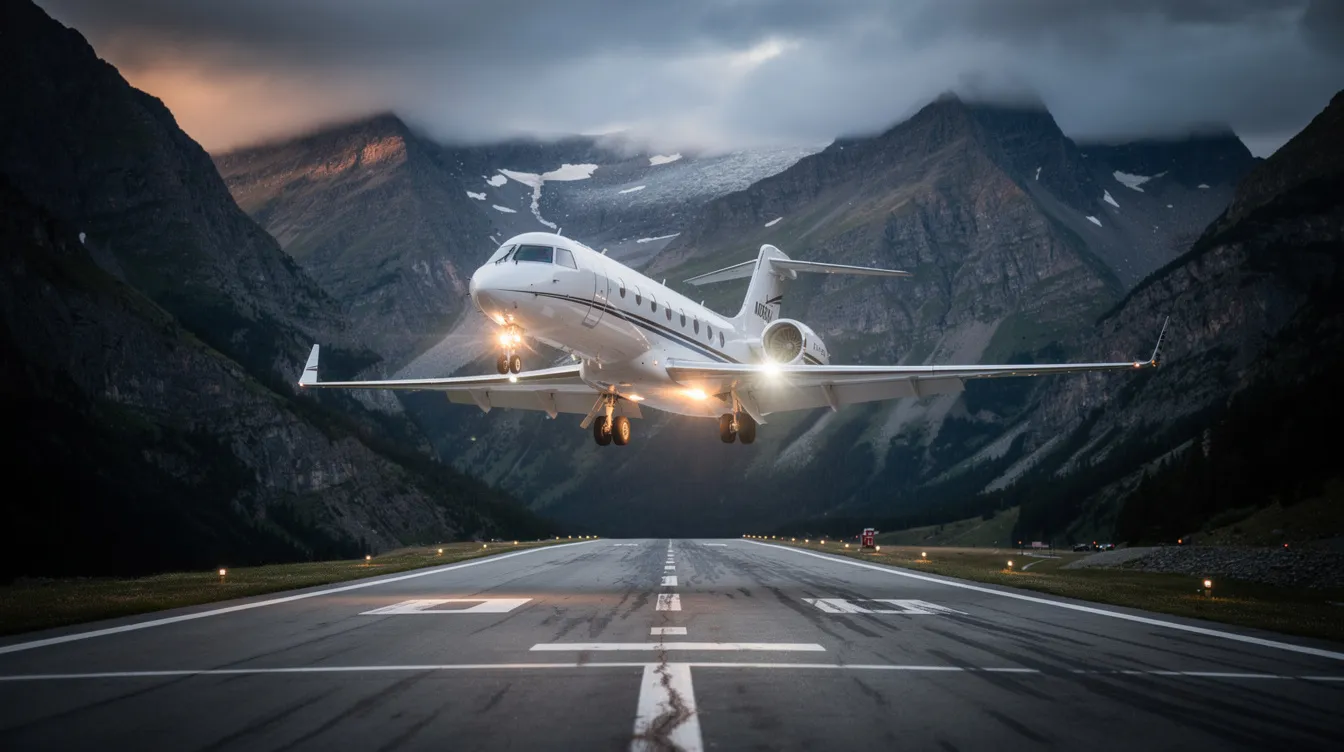
By contrast, private jets used by BlackJet are generally shorter and capable of operating from smaller regional airports and private airfields. A light jet at 15 meters can land on runways half the length needed by a 737-800, opening access to thousands of additional airports worldwide. The main wheels on private jets also handle shorter taxiways and tighter ramp layouts without issue.
Airport stand and gate length constraints can limit where 737-800s park. A gate designed for regional jets may not accommodate the 39.5 m fuselage, while shorter private jets enjoy more parking and hangar flexibility at virtually any facility, especially when you consider private jet options for 30 passengers that combine group capacity with access to a wider range of airports.
Evolution in Length: From Early 737s to the 737 Next Generation
The Boeing 737's fuselage has grown steadily since the original model debuted in the 1960s. Understanding this progression clarifies why the 737-800 sits where it does:
737-100 / -200 (Original series): approximately 28–30 m, optimized for 85–120 passengers on short segments
737-300 / -400 / -500 (Classic series): stretched to roughly 33–36.5 m, adding capacity and range
737-800 (Next Generation): approximately 39.5 m, the largest step-change in fuselage length within the family
The 737-800 was launched in September 1994 as Boeing responded to airline demands for more seats and improved fuel efficiency on existing narrow-body routes. It first flew on July 31, 1997, and began entering service with launch operators in April 1998.
Airlines had been stretching their 727-200 and 737-400 fleets to the limit on high-frequency business routes—city pairs like New York to Chicago, London to Madrid, and Los Angeles to Seattle. The 737-800's additional 20 to 30 seats over the -400, combined with redesigned wings and modern systems, gave carriers the capacity they needed without moving to larger, costlier wide-body aircraft.
737-800 vs 737 MAX 8: Similar Length, Different Technology
The 737 MAX 8 has a fuselage length very close to the 737-800—approximately 39.52 m versus 39.47 m. In practical terms, the two aircraft are nearly interchangeable in terms of gate compatibility, ramp space, and runway requirements.
Key differences lie beneath the surface:
Feature | 737-800 (NG) | 737 MAX 8 |
|---|
Engines | CFM56-7B | LEAP-1B |
Fuel efficiency gain | Baseline | 14–20% improvement over NG |
Winglet type | Blended winglets | Advanced split-tip winglets |
Range | ~3,377 nm | ~3,500+ nm |
Noise footprint | Standard | Reduced |
The MAX 8 introduces LEAP-1B engines, advanced technology winglets that further reduce drag, and improved fuel efficiency per seat. For a traveler choosing commercial flights, the cabin experience—width, length, and general layout—feels broadly similar, but the newer model is quieter and more environmentally efficient.
BlackJet's carbon-neutral private flights can match or exceed these sustainability gains on a per-trip basis thanks to mandatory offsetting and efficient routing. Every BlackJet flight is offset by default through the company's sustainability commitment, regardless of which aircraft category a member selects.
Business and VIP Variants: BBJ2 and Extended-Cabin Concepts
The Boeing Business Jet 2 (BBJ2) is a VIP derivative of the 737-800, retaining the same overall length of approximately 39.5 m but dedicating the interior to luxury rather than seat count.
Inside the BBJ2, the fuselage can be segmented into:
Executive boardrooms and conference areas
Private lounges with full-size sofas and entertainment systems
Bedrooms with en-suite showers
Dedicated crew quarters and full-service galleys
The cabin floor area in a typical BBJ2 layout spans roughly 67 m² (721 ft²), with a cabin length of about 21.7 m. This spacious interior accommodates 19 to 50 VIP passengers depending on configuration, transforming the aircraft into what operators call an "airborne residence."
The longer cabin allows multiple distinct zones—work, dining, and rest—that would not be possible on shorter narrow-body jets. Consider a global CEO conducting a multi-city roadshow across four continents: the BBJ2 provides boardroom-grade connectivity in the air, a private bedroom for overnight legs, and the extended range to fly nonstop between major hubs. For agile regional hops between those cities, a BlackJet jet card provides access to smaller, faster aircraft that can land at private airfields minutes from the meeting venue, with programs like the BlackJet 25+ Hour Jet Card tailored to frequent travelers who value predictable pricing.
Most BlackJet membership options involve lighter, more nimble private jets, but the BBJ2 illustrates how the 737-800 platform scales up when capacity gives way to customization, similar to private jets configured for up to 50 passengers that serve large groups without sacrificing comfort.
Length, Comfort, and Passenger Experience
Fuselage length shapes how crowded or spacious a cabin feels, but seat pitch and density matter most. Two airlines operating the same 737-800 can deliver wildly different passenger experiences simply by choosing different seat counts.
Many low-cost carriers use the 737-800's length to maximize seat rows, with seat pitch as tight as 28 inches. The result: 189 passengers seated in a cabin that feels compressed. Premium airlines take the opposite approach, leveraging the extra cabin length for larger business-class sections or extra-legroom rows, improving comfort on three-to-five-hour flights.
Metric | 737-800 Economy | BlackJet Midsize Jet | BlackJet Large-Cabin Jet |
|---|
Seat pitch | 28–32 in | 50–60+ in | 60–80+ in |
Seat width | ~17 in | 20–22 in | 22–24+ in |
Total passengers | 162–189 | 6–9 | 10–16 |
Group size flexibility | Fixed schedule | On-demand | On-demand |
Privacy | Minimal | High | Very high |
BlackJet's approach inverts the commercial model entirely: far fewer seats on a smaller aircraft translate to lounge-like cabin space, quiet cabins, and full privacy. The aircraft may be shorter overall, but per-passenger space is incomparably greater. For different types of private jets and their cabin layouts, the dimensions serve the individual—not the airline's yield management — and understanding jet card cost per hour helps quantify the value of that extra space.
Length and Safety: Structural Considerations
A longer fuselage must withstand greater bending moments, especially during turbulence and firm landings. The 737-800's structure—including its center wing box, fuselage frames, and skin panels—is designed to handle these loads while meeting strict FAA and EASA certification standards.
The 737-800's safety record is supported by redundant systems across hydraulics, electrics, and flight controls. The aircraft has a hull loss rate of 0.17 per million departures, and the broader Next Generation series has a hull loss rate of 0.18 per million departures. Since 1998, the 737-800 has been involved in 22 hull-loss accidents. The entire 737 family has been involved in 529 aviation accidents as of November 2023—a figure that must be weighed against the enormous number of flights operated over six decades.
Regulatory bodies have issued airworthiness directives for fuselage inspections on aging NG airframes, including checks for skin cracks along crown panels and frame splice areas. These inspections are part of lifecycle management, not indications of inherent weakness. Length itself is not a safety concern when design and maintenance meet certification standards.
BlackJet goes beyond regulatory baselines by working exclusively with ARGUS-rated and WYVERN-certified operators, conducting its own safety reviews regardless of aircraft size or length, while transparent jet card pricing structures help clients align safety, flexibility, and budget.
From Trunk Routes to Private Legs: Using the 737-800 in a Hybrid Strategy
Many BlackJet clients still fly commercial 737-800 flights on dense trunk routes where the airliner's length, capacity, and frequency offer strong value. On city pairs like Los Angeles to Denver, London to Rome, or New York to Miami, a 737-800 departs every hour or two—efficient, affordable, and well-suited for the long leg of a multi-segment journey.
The hybrid strategy works like this:
Long leg (commercial): Fly a 737-800 from a major hub to the destination city—efficient, frequent, predictable.
Final leg (private): Transfer to a BlackJet private jet for the last segment to a smaller airport closer to a meeting, resort, or private residence.
Sample itinerary: A New York-based executive flies a 737-800 from JFK to Denver (about 4 hours), then boards a BlackJet light jet from Centennial Airport to Aspen (35 minutes). Total door-to-door time: roughly 6 hours. The alternative—connecting through Denver International to Aspen on a regional carrier—adds 2 to 4 hours of layover, security, and baggage delays.
This blend captures the cost-effectiveness of a full airliner on the trunk route and the speed and access of private aviation for the time-critical final leg. Booking the private segment takes minutes through BlackJet's 24/7 digital platform, and frequent flyers can further streamline trips by comparing the best jet cards for regular travelers.
Private Jet Categories vs a 737-800: Size and Use Cases
The 737-800 is an airliner-sized narrow-body jet. BlackJet primarily arranges light, midsize, super-midsize, and large-cabin private jets—all significantly shorter and designed for a fundamentally different mission, including alternatives to well-known programs such as those detailed in NetJets jet card cost guides.
Category | Typical Length | Typical Passengers | Key Advantage |
|---|
Light jet | ~14–17 m | 4–7 | Speed, small-airport access |
Midsize jet | ~17–20 m | 7–9 | Balance of range and comfort |
Super-midsize jet | ~20–21 m | 8–10 | Stand-up cabin, coast-to-coast range |
Large-cabin jet | ~26–30 m | 10–16 | Long-range capability, full amenities |
For travelers comparing these categories with airliners like the 737-800, it can be helpful to understand what a 12-seater private jet costs across ownership, leasing, and charter options. | | | |
Boeing 737-800 | 39.47 m | 162–189 | Maximum capacity, trunk-route efficiency |
For groups that might otherwise fill a 737-800, exploring the best private jet options for 15 passengers can unlock a more tailored balance of space, privacy, and nonstop range.
Private jets use their length for more generous seating per passenger, dedicated meeting areas, and onboard amenities—not for hundreds of seats. Their shorter dimensions deliver operational advantages: access to more airports, faster ground handling, fewer runway constraints, and the ability to fly into destinations that no 737-800 can reach, making it important to understand private jet sizes and how to choose the right one.
A BlackJet jet card is the smart alternative for frequent travelers who value control and flexibility over the sheer capacity that drives the 737-800 design, and some members may even explore unlimited private jet flight programs when their schedule demands constant travel.
Sustainability: Length, Load Factor, and Carbon Footprint
Aircraft size and length tie directly to environmental impact. Emissions depend on fuel burn, distance, and—critically—how many passengers share the load.
A fully loaded 737-800 achieves strong per-passenger CO₂ efficiency because 162 to 189 passengers split the fuel burn of its two engines. When half-empty, however, the advantage from length and capacity diminishes sharply, making route planning and load factor critical to sustainability.
Private jets carry fewer passengers and burn more fuel per seat, but BlackJet addresses this through:
Mandatory carbon offsetting: every BlackJet flight is carbon-neutral by default, at no additional cost to the member
Efficient routing: direct flights eliminate the extra fuel burned on connections, holding patterns, and circuitous commercial airways
Sustainable aviation fuel (SAF): both commercial 737-800 operations and private jets are beginning to incorporate SAF blends where available, reducing lifecycle carbon intensity
BlackJet's commitment to eco-friendly private aviation means that environmental responsibility is built into every journey, not treated as an optional add-on, which is especially relevant when evaluating longer-term options like a 100-hour jet card and its cost structure.
To learn more about how aircraft efficiency compares across the industry, explore our guide to the most fuel-efficient airplanes or review how Flexjet Jet Card pricing stacks up against other efficiency-focused private aviation solutions.
FAQs About the Length of the Boeing 737-800
What is the exact length of the 737-800?
The overall length is 129 feet 6 inches (39.47 meters). Boeing sometimes rounds this to 39.5 m in published materials.
How does the 737- 800's length compare to the Airbus A320?
The Airbus A320 measures approximately 37.57 m, making the 737-800 about 1.9 m longer. Both aircraft compete directly on similar routes, but the 737-800's extra length translates to a slight capacity advantage in many configurations.
Does fuselage length affect turbulence comfort?
Passengers seated near the center of gravity—typically over the wing—experience less motion regardless of fuselage length. However, passengers seated at the far front or rear of a longer aircraft may feel amplified movement during turbulence due to the greater distance from the aircraft's pivot point.
Is a longer plane safer or less safe than a shorter one?
Length alone does not determine safety. Certification standards require all aircraft—regardless of dimensions—to meet identical structural, evacuation, and systems-redundancy requirements. The 737-800's hull loss rate of 0.17 per million departures reflects a strong safety record.
How does a 737-800's size compare to a typical BlackJet private aircraft, and why might I choose one over the other?
A 737-800 is approximately 39.5 m long and seats up to 189 passengers. A typical BlackJet midsize private jet is about 18 m long and seats 7 to 9 passengers. You would choose the 737-800 for affordable, high-capacity trunk routes and a private jet for time-critical legs, smaller airports, privacy, and schedule flexibility—or combine both in a hybrid strategy.
How BlackJet Complements Your 737-800 Travel
The Boeing 737-800 is a benchmark for efficient commercial air travel—reliable, high-capacity, and well-suited to the world's busiest routes. But it was designed for the mass market, not for the traveler who measures value in minutes saved and meetings kept.
BlackJet delivers what no commercial aircraft can, with offerings such as the 25+ Hour Jet Card program:
Jet card membership through 25-hour and 50-hour programs that guarantee access to multiple aircraft categories without the commitment of ownership, complementing more detailed insights into 50-hour jet card cost and value
24/7 digital booking tools and real-time flight support, so plans adjust as your schedule shifts
Safety beyond the baseline: BlackJet partners exclusively with operators meeting or exceeding FAA, ARGUS, and WYVERN standards
Carbon-neutral flights by default: every journey is offset, providing an environmentally conscious complement to commercial segments on aircraft like the 737-800
The 737-800's 39.47 meters of airframe redefined what a narrow-body airliner could deliver. But for the moments when time, privacy, and precision matter most, a shorter aircraft with your name on the manifest changes everything.
Explore BlackJet's membership options to pair the efficiency of 737-800 trunk routes with the speed and convenience of private aviation for the most important parts of your journey.


 Sign up with google
 Sign up with Apple