If you're evaluating private jet travel for regional business trips, weekend getaways, or multi-city executive itineraries, one question dominates the conversation: what does it actually cost to charter a light jet in 2026? The answer involves more than a single hourly rate. It depends on the aircraft type, route, season, airport selection, taxes, and whether you're booking on-demand or through a jet card program. This guide breaks down every variable so you can plan with precision-and avoid the surprise line items that catch first-time charter clients off guard.
Quick Answer: Typical Light Jet Charter Cost in 2026
In 2026, the light jet charter cost for most domestic U.S. flights falls between roughly $2,500 and $5,000 per billable flight hour at the base aircraft rate. Hourly rates for light jets typically range from $2,500 to $5,000, depending on the specific model, its age, configuration, and market demand at the time of booking. Very light jets (VLJs) occupy the lower end of that spectrum, while newer, higher-performance light jets like the Embraer Phenom 300E push toward the upper boundary. Once you factor in the 7.5% federal excise tax, segment fees, handling, and any repositioning, total trip cost typically runs 20% to 40% above the base hourly rate. Private jet charter costs range from $2,000 to $14,000 per hour when you consider the full spectrum from turboprops to ultra-long-range jets, but light jets consistently represent the most accessible category for regional missions.
Here are three concrete trip examples to anchor your expectations:
New York–Boston round trip (light jet, ~4 billable hours): Approximately $13,000–$17,000 all-in, including the 7.5% federal excise tax and per-segment fees. Private jet rental prices include a 7.5% Federal Excise Tax on domestic legs, which adds roughly $900–$1,200 to this particular route.
Los Angeles–Las Vegas same-day return (~3 billable hours): Roughly $10,000–$13,000 all-in on a standard light jet. Shorter flight distance keeps fuel and time charges contained.
Chicago–Nashville one-way (~2 billable hours): Around $7,000–$10,000 depending on aircraft availability and whether repositioning is required.
A critical distinction: private jet charter prices are quoted per aircraft, not per passenger. Light jet charters generally hold 6–8 passengers, meaning a party of six splitting a $15,000 New York–Boston round trip pays roughly $2,500 per person-competitive with last-minute first-class commercial fares on the same route, with none of the terminal delays. For BlackJet Jet Card members, light jet pricing is fixed and predictable, insulating frequent flyers from the rate volatility that characterizes on-demand charter services during peak periods.
Why Light Jets Are the Strategic "Sweet Spot" of Private Jet Travel
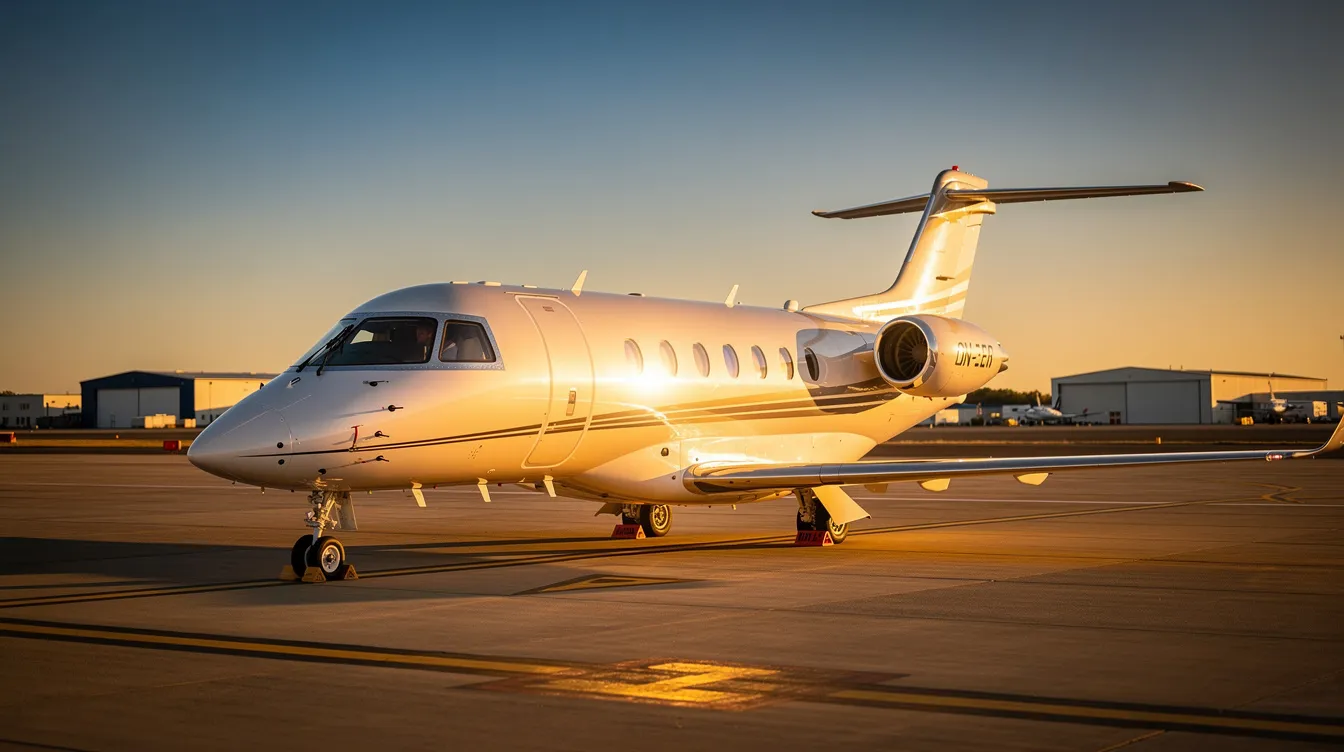
Light jets occupy a unique position in private aviation: large enough to carry four to seven passengers comfortably on regional legs of 1.5 to 3 hours, yet efficient enough to keep charter costs well below midsize and heavy categories. For business travelers running tight schedules and leisure travelers prioritizing flexibility, this category delivers an outsized return on every dollar spent.
Consider a common corridor like New York to Chicago. A commercial flight takes roughly 2.5 hours in the air, but factor in the ride to a major hub, the recommended 90-minute early arrival, security screening, boarding, taxiing, baggage claim, and ground transportation on the other end, and you're looking at 6 to 7 hours door-to-door. A light jet charter from Teterboro to Chicago Executive cuts that to approximately 3.5 hours total, including the drive to and from the airports. Private jet travel saves time by avoiding security lines, eliminating connections, and letting you depart on your schedule rather than the airline's. Light jets typically have a flight duration of 2–3 hours for most regional routes, which is precisely the sweet spot where the time savings justify the cost.
Private jets access over 5,000 airports in the U.S., compared to roughly 500 served by commercial airlines. That means a light jet can land at regional airports minutes from your final destination-whether that's a client office in suburban Connecticut, a lakehouse in northern Michigan, or a ski resort in Colorado-dramatically reducing ground transfers. Private jets offer flexibility to set your own schedule, and they provide a secure environment for sensitive conversations, making them a strategic tool rather than a pure luxury.
For a team of 4–6 travelers, the per-person economics can be striking. When four executives share a $14,000 light jet charter, each pays $3,500-often comparable to or less than last-minute business-class seats, especially on peak-demand routes. Private jet charters can reduce travel time significantly, turning what would be an overnight trip into a same-day mission.
BlackJet specializes in matching business travelers and families to the right light jet for their mission, with premium private jet card programs, safety certification, digital booking technology, and carbon-neutral sustainability built into every flight.
Key Cost Drivers for Light Jet Charters
The advertised hourly rate is only the starting point for understanding the true private jet charter cost. Several variables-some within your control, some not-determine the final invoice. Here are the primary and secondary cost drivers you should evaluate before booking any private jet flight.
Primary cost drivers:
Aircraft type and age: A newer Phenom 300E commands a higher hourly rate than a legacy Citation CJ2. VLJs are the least expensive; "super light" crossover jets cost more but deliver better range and cabin space.
Route length and duration: flight distance significantly affects charter costs due to fuel consumption. Longer flights require more fuel and may incur additional landing fees at the destination.
Airport choices: Landing and handling fees at a major hub like JFK can be several times higher than at a nearby reliever airport like Teterboro.
Peak vs. off-peak timing: Charter prices can increase during holidays or major events such as Art Basel Miami, the Super Bowl, or ski-season weekends.
Secondary cost drivers:
Crew positioning and aircraft positioning fees when a jet must fly empty to reach your departure point.
Overnight expenses for pilots on multi-day itineraries.
Minimum daily flight hours (often 1.5–2.0 billable hours), which inflate cost on very short hops.
Fuel surcharges are triggered when fuel prices exceed operator-set thresholds.
Deicing charges in winter climates, which can add $1,500–$5,000 depending on airport and conditions.
Taxes and fees-notably the 7.5% federal excise tax and per-segment fees in the U.S.-are frequently layered on top of the base charter quote, sometimes as a surprise. BlackJet's Jet Card structure is designed to flatten many of these variables into a predictable hourly light jet rate, giving frequent flyers budget certainty that on-demand charter rarely provides; understanding jet card cost per hour is key to comparing programs accurately.
Aircraft Type: VLJ vs Classic Light Jet vs Super Light
Not all light jets are created equal. The category spans three distinct sub-classes, each with different passenger capacity, range, and cost profiles. Choosing the right one for your mission is the single most effective way to control private jet costs, and understanding the best small private aircraft for different missions helps align your choice with range, comfort, and budget.
Very light jets (VLJs): Models like the Embraer Phenom 100EV and Cessna Citation M2 Gen2 seat 3–5 passengers with a typical charter range of up to roughly 1,000–1,100 nautical miles. Very Light Jets accommodate four to seven passengers depending on configuration. Hourly rates generally fall between $2,500 and $3,200. These smaller private jets are ideal for short regional flights under 2 hours where cabin size and baggage capacity aren't critical. They represent the most cost-effective option for couples or small groups on routes like New York–Washington, D.C., or Dallas–Houston.
Standard light jets: The workhorses of the category. Aircraft like the Cessna Citation CJ3+, Learjet 45XR, and Embraer Phenom 300E carry six to nine passengers with ranges of 1,500–2,200 nautical miles. Hourly rates run $3,200–$4,500 depending on vintage and configuration. Light Jets can seat six to nine passengers, making them the default choice for executive teams and families who need meaningful cabin space and coast-to-coast capability with one fuel stop.
"Super light" or crossover jets: Aircraft like the Citation XLS+ and Pilatus PC-24 blur the line between light and midsize territory. They offer improved baggage capacity, slightly taller cabins, and better short-field performance, but hourly rates edge above $4,500. These make sense when you need the operational flexibility of a light jet but carry luggage for a ski weekend or golf trip.
The smartest cost-control strategy is simple: select the smallest aircraft that safely and comfortably fits your party, luggage, and route requirements.
Route Length, Flight Time, and Daily Minimums
Charter companies charge by billable flight hours, which can differ from actual "wheels-up to wheels-down" time. Flight duration usually dictates the billable flight time for charters, but the total includes taxi time and, critically, any repositioning required to get the aircraft to your departure airport.
The basic formula: (estimated flight time + taxi time + repositioning legs) × hourly rate + taxes and fees = total charter cost. It's straightforward in theory but has nuances that materially affect your bill.
Minimum daily flight time charges are often around 2 billable flight hours. This means a 45-minute hop from New York to Washington, D.C. may still bill at 1.5–2.0 hours once the daily minimum and any positioning are factored in. Short leg fees offset increased fuel consumption during take-offs and landings, making very short hops relatively expensive on a per-mile basis. If you're considering a private plane for a sub-one-hour mission, run the numbers carefully-you may be paying for time you don't use; reviewing a guide on how much it costs to charter a small plane can clarify when these shorter hops make financial sense.
BlackJet's network and planning tools are engineered to minimize deadhead and positioning time. By maintaining relationships with operators across major metro areas, BlackJet reduces wasted billable hours for Jet Card members-a meaningful advantage on short, frequent regional trips.
Airport Selection, Positioning, and Ground Time
Where you take off and land directly shapes both cost and convenience. Average aircraft fees can vary significantly depending on the origin and destination airports, and the gap between a well-chosen reliever airport and a congested commercial hub can be thousands of dollars per trip.
Major commercial airports (JFK, LAX, ORD) impose higher landing fees, extended taxi times, and premium FBO handling charges. Landing fees can vary from $100 to $1,500 per flight at these facilities, and slot restrictions may limit scheduling flexibility.
Reliever and regional airports (Teterboro, Van Nuys, Palwaukee) are purpose-built for private aviation. Landing fees can range from $100 to $1,500 per flight depending on the facility, but reliever airports typically fall at the lower end. They also sit closer to business districts in many metro areas, cutting ground transportation time.
Aircraft positioning is one of the most overlooked cost drivers, and it often determines whether chartering a private jet is truly worth it compared with commercial ones, once time savings and flexibility are factored in. When a private jet must fly empty to your departure point-or return to base afterward-those legs are usually billed at the same hourly rate. Chartering a light jet from a smaller city where no jet is based can add 1–2 hours of positioning cost, whereas a BlackJet network hub may already have aircraft nearby, trimming or eliminating that charge.
Reducing unnecessary overnight ground holds helps too. Every night a jet and crew members sit idle generates ramp fees, hangar fees, and crew per diem charges that flow directly to your invoice.

What's Included (and Not Included) in a Light Jet Charter Price
Reputable charter quotes should be transparent and itemized. But "all-in" can mean different things depending on the private jet operator. Here's what you should expect to see on a standard light jet charter invoice-and what might appear as extras.
Typically included in the base quote:
Aircraft rental (the hourly block rate)
Two pilots and standard crew members
Standard fuel for the planned route
Basic in-flight catering (water, light snacks, soft drinks)
Standard aviation insurance
Core operating costs (maintenance reserves, navigation fees)
Usually included or clearly itemized:
The 7.5% federal excise tax on domestic flights
Per-segment fees (approximately $4–$5 per passenger per leg)
Standard FBO handling at origin and destination
Common add-ons billed separately:
Premium in-flight catering (fine dining, wine, custom menus)-additional services like catering can increase overall charter costs meaningfully
In-flight Wi-Fi surcharges on certain aircraft types
Deicing in winter
Pet cleaning fees or post-event deep-cleaning
International handling, customs, and immigration fees for cross-border trips
Ground transportation arrangements
Standard add-ons for private jets generally include catering and Wi-Fi at a basic level, but anything beyond the basics is priced à la carte, and a solid grasp of jet card pricing structures and inclusions helps you anticipate which extras will appear on your invoice. BlackJet Jet Card members benefit from transparent, contractually defined inclusions for light jet flights, reducing the surprise line items that plague ad-hoc charter bookings.
Taxes, Surcharges, and Federal Excise Tax (FET)
Even after you've locked in an hourly rate, taxes can meaningfully shift the final number. For domestic flights in the U.S., understanding the tax layer is essential to accurate budgeting.
Federal Excise Tax adds 7.5% to domestic charter flights. This tax applies to the total charter charge on most private jet charter flights within the United States. On a $15,000 base fare, that's an additional $1,125. A 7.5% Federal Excise Tax applies to domestic flights and is non-negotiable-it's a federal obligation collected by the operator and remitted to the government.
Per-segment fees add roughly $4.50 per passenger per leg. For a party of six on a round-trip (two segments), that's an additional ~$54-modest individually but part of the cumulative cost structure.
International flights may avoid FET on the international portion but pick up other charges: international head taxes, foreign landing fees, overflight permits, and customs/immigration handling that can add $1,000–$3,000 depending on the destination.
Fuel surcharges are triggered when market fuel prices exceed operator thresholds-often around $5.00–$5.50 per gallon. When fuel prices spike, surcharges of 3–12% on the base flight time are common. These fuel surcharges are typically passed through transparently, but not always.
BlackJet's digital booking interface clearly breaks out FET, fuel surcharges, and all ancillary charges before you confirm a flight, so there's never ambiguity about the true cost to charter.
Operational Extras: Overnights, Deicing, and Special Requests
Not every light jet trip incurs these costs, but when they apply, they can add substantially to the private charter bill. Understanding them upfront prevents post-flight sticker shock.
Crew overnight charges: When your light jet and flight attendants or pilots must remain with you on a multi-day itinerary, crew overnight expenses add $200 to $600 per person per night. Crew expenses may include hotel accommodations and meals for multi-day trips, typically governed by per diem rates set by the operator.
Deicing: In winter climates-particularly at airports like Aspen, Teterboro in January, or Chicago Midway-deicing a light jet parked outside can run $1,500–$5,000 depending on the severity of conditions, the aircraft size, and the airport's deicing infrastructure.
Premium extras: Fine-dining catering, vintage wines, pet accommodations, and bespoke ground transportation (chauffeured SUV, Mercedes Sprinter van) are all available but priced as premium additions. For high-net-worth travelers hosting clients or celebrating occasions, these touches elevate the experience-but they should be quoted and approved in advance.
BlackJet's trip support team secures up-front approvals on all discretionary costs, ensuring that members are never surprised by a line item after the wheels have touched down.
Sample Light Jet Charter Scenarios and Realistic 2026 Pricing
Theory only goes so far. Here are four specific trip scenarios with realistic 2026 pricing bands to illustrate how jet charter costs materialize in practice. Peak travel seasons can increase private jet charter prices by 15–30% above these baseline estimates, so travelers focused on value often look to the cheapest private aircraft options and access models to keep costs in check.
Scenario 1: New York (Teterboro) → Miami (Opa-Locka), One-Way
Aircraft: Embraer Phenom 300 or Citation CJ3+
Flight time: ~2.5–3.0 hours occupied
Estimated all-in cost: $14,000–$19,000 including FET, handling, and airport fees
Notes: One of the most popular private jet charter flights in the U.S. During Art Basel or holiday weekends, charter prices can increase during holidays or major events-expect rates at or above the high end.
Scenario 2: Los Angeles (Van Nuys) → Aspen (ASE), Round Trip Weekend
Aircraft: Citation CJ4 or comparable light jet
Flight time: ~3.5–4.0 billable hours round trip, plus potential positioning
Estimated all-in cost: $22,000–$28,000 depending on season and aircraft availability
Notes: Aspen's challenging approach and high-demand weekends push costs up. Overnight expenses for crew and hangar fees in Aspen add to the total.
Scenario 3: Chicago (Palwaukee) → Toronto (Pearson), Same-Day Return
Aircraft: VLJ like Phenom 100
Flight time: ~1.5–2.0 hours each way, ~4 billable hours total
Estimated all-in cost: $11,000–$15,000 including cross-border handling, customs, and international fees
Notes: FET is typically exempted on the international portion, but foreign landing and handling charges add $1,000–$2,000.
Scenario 4: Dallas (Addison) → Houston (Hobby), Same-Day Round Trip
Aircraft: VLJ or standard light jet
Flight time: ~1 hour each way, but minimum daily flight charges apply
Estimated all-in cost: $8,000–$12,000
Notes: Short enough that daily minimums and positioning can exceed actual flight time in the cost breakdown.
Commercial comparison: Four business-class seats on New York–Miami might cost $4,000–$6,000 total on a commercial carrier. The $14,000–$19,000 light jet charter looks expensive-until you add a fifth or sixth passenger (bringing per-seat cost to $2,300–$3,200), factor in 3–4 hours saved each way, and consider the value of direct flights to Opa-Locka rather than the chaos of MIA. For time-sensitive travelers, the private jet charter rates often justify themselves through reclaimed productivity.
Use BlackJet's private jet charter cost estimator to model your own routes with current 2026 pricing.
Chartering a Light Jet vs Other Aircraft Categories
Light jets sit at one point on a spectrum that ranges from turboprops to ultra-long-range jets. Each aircraft type carries a distinct cost profile, and understanding where light jets fit helps you avoid both overspending on unnecessary capacity and underestimating what your mission requires.
Turboprops (King Air 350, Pilatus PC-12): Turboprop charters start at around $2,000 per hour, with turboprop charters typically costing $2,000 to $3,000 per hour. They're slower (250–330 knots vs 400–480 for light jets) but can access very short runways. For trips under 400 miles where speed isn't paramount, turboprops are the most cost-effective option. Private jet hourly rates range from $2,000 to $14,000+ across the full aircraft spectrum, and understanding the different types of private jets for every traveler helps you pinpoint where light jets sit on that curve.
Midsize jets (Citation Latitude, Hawker 800XP): Midsize Jets typically accommodate seven to nine passengers with stand-up cabins and coast-to-coast nonstop flight capability. Hourly rates run $5,000–$7,500. For routes like New York–Dallas or Atlanta–Denver where light jets would need a fuel stop, midsize jets eliminate that delay.
Super midsize jets (Citation Sovereign+, Challenger 350): Super Midsize Jets offer seating for eight to ten passengers with full stand-up cabins, enhanced baggage, and transcontinental range. Rates run $7,000–$9,500/hr.
Large cabin jets and heavy jets (Gulfstream G450, Falcon 900): Large Cabin Jets can carry nine to sixteen passengers. Heavy jet charters can cost $8,500 to $15,000 per hour, or heavy jet charters can cost $10,000 per hour or more for newer frames. These are purpose-built for long-haul flights and larger aircraft requirements.
Ultra-long-range jets (Gulfstream G700, Global 7500, Boeing Business Jet): Ultra-Long-Range Jets seat ten to nineteen passengers and handle intercontinental missions nonstop. A Boeing business jet or comparable ultra-long-range aircraft is vastly more aircraft than any regional mission requires-and the costs reflect it.
For a deeper breakdown across all categories, see BlackJet's complete private jet price list and a companion guide to private jet sizes and ideal use cases to ensure you’re matching aircraft class to mission.
BlackJet advisors help clients choose the smallest category that comfortably meets cabin space, range, and luggage needs-avoiding unnecessary spend on larger aircraft when a light jet will do.
Light Jets vs Commercial Flights: Cost vs Time Trade-Off
The real competition for a light jet isn't another private aircraft-it's commercial flights, and comparing those options to the full cost of chartering a small plane or light jet is essential to understanding where private aviation delivers the best return. Here's how the comparison plays out on a practical executive itinerary.
Consider a three-city day trip: Los Angeles → Sacramento → San Diego → Los Angeles. On commercial airlines, this itinerary requires at minimum two overnight stays, three separate bookings, and roughly 14–16 hours of total travel time spread across two days. On a light jet, the same three-city circuit is completed in under 9 flight hours with all meetings attended the same day.
The all-in cost for the light jet: approximately $30,000–$40,000 for the full day, depending on aircraft type and exact routing. Four last-minute commercial business-class tickets across those three segments, plus two hotel nights, ground transportation, and meals: roughly $12,000–$18,000 total. The light jet costs more in absolute dollars, but saves an entire business day. For senior executives billing $500–$1,000+ per hour, the marginal cost of the private jet flight pays for itself in reclaimed productive time.
Qualitative advantages compound the math. A private cabin enables confidential calls and working meetings in flight. No security lines. No boarding groups. No missed connections. The ability to depart after a late dinner rather than staying overnight at an airport hotel. For domestic flights on high-frequency corridors, these factors often matter as much as the dollar figure.
BlackJet Jet Cards: Predictable Light Jet Pricing vs On-Demand Charter
A Jet Card is a prepaid block of flight hours-typically 25 or 50 hours-that locks in a fixed hourly rate across a defined fleet category. BlackJet's 25-hour Jet Card and 50-hour Jet Card programs are structured specifically to give frequent travelers budget certainty that on-demand charter simply cannot match, and they sit among the best jet cards for frequent flyers when you balance cost, flexibility, and availability.
On-demand light jet charter pricing fluctuates with demand, routing, fuel prices, and aircraft availability. During a peak holiday weekend, you might see rates spike 20–40% above normal. With a Jet Card, your rate is fixed at purchase-regardless of when you fly or how competitive the market is on that particular day. Jet card memberships offer fixed hourly rates for predictable budgeting, which is why CFOs and family offices increasingly favor this model.
BlackJet's light jet Jet Card tier includes fuel at standard levels, FET, standard handling, insurance, and 300% carbon offset coverage within the hourly rate. There are no hidden fuel surcharges when you're flying within program parameters. For understanding complete jet card pricing and how membership structures impact your total cost of flying, BlackJet publishes transparent rate cards by aircraft category and offers a broader guide to jet card pricing, costs, and benefits.
Key membership benefits relevant to cost control:
No repositioning fees within defined service areas
Capped or waived peak-day surcharges
Daily minimums structured to favor frequent regional trips
24/7 digital booking with real-time pricing visibility
Hours that do not expire
A practical example: a client flying 30–40 hours per year on light jets may save 10–20% versus ad-hoc charter while gaining priority access, guaranteed aircraft availability, and seamless digital booking through BlackJet's platform.
When a Jet Card Makes More Financial Sense Than Pay-As-You-Go
Jet card programs are optimal once a traveler crosses a specific annual usage threshold, and for very frequent flyers, a100-hourr Jet Card cost analysis can clarify when moving to a larger block of hours makes financial sense. Below that line, on-demand charter works fine. Above it, fractional ownership or dedicated aircraft management enters the conversation.
The general rule of thumb:
Under 20 hours/year: On-demand charter or empty leg charter flights when schedules align. The flexibility of pay-as-you-go outweighs the commitment of a Jet Card.
20–50 hours/year: The sweet spot for jet card programs. Fixed rates protect you from seasonal spikes, and volume brings the effective per-hour cost below what you'd pay for booking individual charter flights.
50–100 hours/year: Strong Jet Card economics, potentially with a larger hour block (like BlackJet's 50-hour card) for additional per-hour savings.
100–150+ hours/year: Fractional ownership or dedicated aircraft management may become competitive, though Jet Cards still offer operational simplicity.
Where Jet Cards deliver the most pronounced savings is during peak demand. When charter costs surge during Art Basel, ski season in Aspen, or Super Bowl weekend, private jet charter services on the open market can command premium pricing. Jet Card holders fly at their locked-in rate.
BlackJet advisors can run side-by-side scenario analyses-Jet Card vs. straight charter-using a client's actual 12-month travel pattern, and may recommend solutions like the BlackJet 25+ Hour Jet Card when fixed-rate access to larger cabins becomes attractive. For CFOs and family offices seeking predictability and expense control in private aviation, this analysis often makes the decision clear.

Safety, Sustainability, and Technology: Value Beyond the Hourly Rate
The true cost of chartering a private jet extends beyond the invoice. Risk management, environmental responsibility, and the ease of booking and managing flights are all part of the value equation-and they vary dramatically between providers, as any deep dive into private jet safety standards and realities will underscore.
Safety: Not all private jet companies operate at the same standard. BlackJet partners exclusively with operators holding third-party safety certifications from organizations like ARGUS, Wyvern, and IS-BAO. Every crew undergoes rigorous vetting, and aircraft maintenance records are audited before any mission is approved. The Federal Aviation Administration sets the regulatory floor, but premium providers operate well above it, aligning with best practices described in analyses of how safe private jets really are. For travelers entrusting their families and executive teams to a private aircraft, this distinction is non-negotiable.
Sustainability: Private aviation carries a meaningful carbon footprint. BlackJet's sustainability commitment includes 300% carbon and emissions-neutral coverage on all Jet Card flights-at no extra cost to members. This is achieved through verified carbon offset programs and Sustainable Aviation Fuel (SAF) initiatives where available. Many competitors either charge separately for offset services or don't offer them at all. For environmentally conscious travelers, this is a material differentiator built into every private jet service interaction.
Technology: BlackJet's 24/7 digital booking platform and real-time flight support tools allow members to see live private jet pricing, track aircraft, manage itineraries, and approve costs from a mobile device. This reduces the friction, phone calls, and back-and-forth emails that traditionally accompany private jet rental. When you can see the true cost before confirming, there are no surprises-and no wasted time.
For discerning travelers, these pillars often matter as much as shaving a few hundred dollars off the hourly rate with a lesser-known private jet operator.
FAQ: Light Jet Charter Cost & Practical Considerations
How much does it cost to charter a light jet for a 2-hour flight?
For a standard 2-hour leg flight on a light jet in 2026, expect a base cost of roughly $5,000–$10,000 for the aircraft time. Add the 7.5% federal excise tax ($375–$750), per-segment fees, and FBO handling, and the all-in total for a 2-hour private jet flight typically lands between $7,000 and $12,000. Airport selection matters: flying into a congested commercial airport with high landing fees and handling charges pushes you toward the top of that range, while using a reliever airport keeps costs contained. The aircraft type-VLJ vs. standard light jet-also creates a meaningful spread.
Is it cheaper to charter a light jet or own one?
For travelers flying under roughly 150 hours per year, chartering or holding a Jet Card is almost always more financially sound than ownership, a point echoed even in discussions of billionaire private jet price trends and access models. Owning a private plane involves acquisition cost (or financing), insurance, hangar fees, scheduled and unscheduled maintenance, crew salaries on standby, and regulatory compliance-fixed costs that run regardless of whether the aircraft flies. A light jet might cost $600,000–$900,000 per year just to keep operational before a single flight hour is logged, while chartering larger aircraft for events or roadshows can reach the charter plane 1100-passengercost levels that only make sense for very specific group missions. Private jet rental costs through charter or Jet Card programs convert that fixed overhead into variable cost, so you only pay when you fly, which aligns with broader strategies for accessing the cheapest private jet options without full ownership. For most high-net-worth travelers who don't need daily access, charter and jet card programs deliver the experience of ownership without the financial weight.
Can light jets fly internationally?
Yes, many night jets handle short international flights comfortably. Routes like U.S.–Caribbean, U.S.–Canada, and intra-European missions are well within the range of most standard light jets. A Phenom 300E can fly New York–Bermuda or Miami–Nassau nonstop. However, light jets are not built for long intercontinental sectors like New York–London or Los Angeles–Tokyo; those missions require super midsize jets at minimum, or more commonly, heavy or ultra-long-range jets, especially when you need the best private jet for 15 passengers or even aircraft capable of carrying 20 passengers in comfort. Cross-border private flights also involve customs handling, international head tax, and foreign airport fees that can add $1,000–$3,000 to the base cost.
Are empty leg flights available on light jets, and do they really save money?
Empty leg flights are discounted one-way flights that occur when a jet repositions without passengers-for example, flying back to base after dropping off a charter client, or heading to a pickup point for the next booking. These flights occur when a jet repositions without passengers, and they offer significant cost savings for flexible travelers. Empty-leg flights can offer discounts of roughly 30%–60% off standard charter rates, and in the best cases, empty-leg flights can save customers up to 75% on charter costs, often making them one of the most budget-friendly private aircraft access options when schedules align.
The catch: availability of empty leg flights depends on other customers' travel plans. You can't choose your exact departure time, and routes are fixed by the operator's scheduling needs. If your schedule and destination align with an available leg flight opportunity, the savings are substantial. BlackJet may alert Jet Card members to compatible empty-leg flights on light jets within their typical travel corridors, adding another layer of value to the membership. However, empty leg charter flights shouldn't be your primary planning strategy-they're a bonus when the stars align.
How does the cost of a light jet flight compare to first-class commercial flights?
The comparison depends entirely on group size. A one-way light jet charter from New York to Miami at $14,000–$19,000 is roughly 3–4× the cost of a single first-class commercial ticket on the same route. But private jet charter rates are per aircraft, not per passenger. With six passengers, the per-seat cost drops to $2,300–$ 3,200, approaching or undercutting last-minute first-class fares, especially during peak demand. Factor in time saved (often 3–4 hours per direction when you account for the full commercial airport experience), the ability to work productively in a private cabin, the access to nonstop flights between regional airports that commercial airlines don't serve, and the elimination of overnight expenses on tight schedules, and the value proposition sharpens further. For groups of four to seven passengers on popular business routes, chartering a private jet in the light jet class frequently matches or beats the commercial alternative on a per-person, per-hour-of-productivity basis.
Conclusion: Choosing the Right Light Jet Solution with BlackJet
Light jets consistently represent the most strategically efficient entry point into private aviation for regional missions. Whether you're flying New York–Boston for a board meeting, Los Angeles–Aspen for a weekend, or running a three-city executive itinerary in a single day, this aircraft category delivers the core benefits of private flight-time savings, privacy, schedule control, and access to thousands of airports-without the cost profile of midsize, heavy, or ultra-long-range jets.
The key to managing light jet charter cost effectively in 2026 is understanding every layer of the price: base hourly rates ($2,500–$5,000 for light jets), the 7.5% federal excise tax on domestic legs, airport fees, positioning, fuel surcharges, crew overnights, and the operational extras that can quietly add 20–40% to a base quote. Transparent quotes, rigorous safety standards, and a clear-eyed understanding of your actual travel patterns are what separate a smart private aviation strategy from an expensive guessing game.
BlackJet's Jet Card model is built for travelers who refuse to guess. Fixed, predictable light jet pricing. Carbon-neutral private flights at no additional cost. 24/7 digital booking that puts real-time costs and aircraft availability at your fingertips. And advisory support that can model your exact routes to determine whether a Jet Card or on-demand charter best fits your 2026 travel profile.
Explore BlackJet's Jet Card programs, request a tailored light jet cost analysis for your most-traveled routes, or speak with a BlackJet aviation advisor to reshape the way you travel this year.


 Sign up with google
 Sign up with Apple