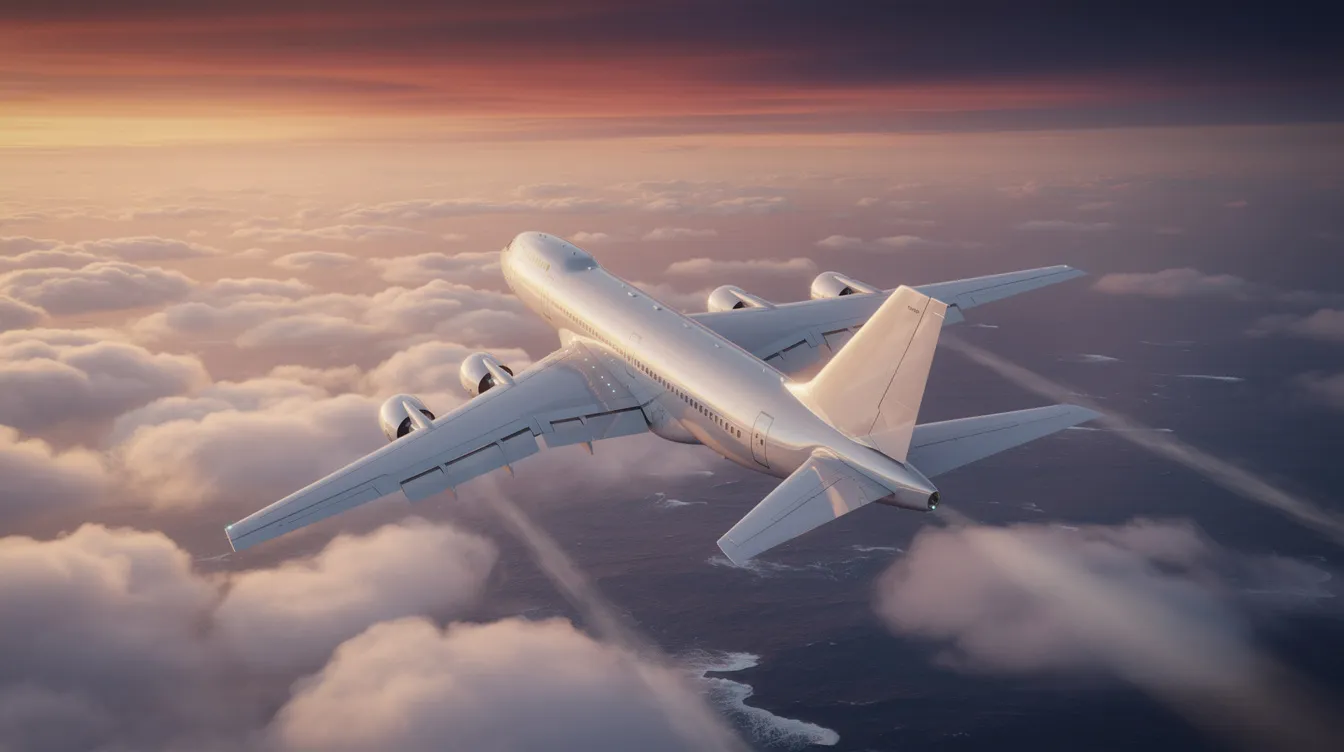
The race to build the longest passenger plane has shaped commercial aviation for more than half a century. From the original Boeing 747 jumbo jet to the forthcoming Boeing 777-9, each generation of wide-body aircraft has pushed the boundaries of fuselage length, passenger capacity, range, and fuel efficiency. For travelers who value their time and privacy, understanding how these aircraft compare—and how private aviation offers an alternative—can reframe the way you think about long-haul routes entirely.
This article ranks the longest commercial aircraft in history, explains the engineering and market forces behind their evolution, and contrasts that experience with the precision and flexibility of private jet travel through programs like BlackJet's Jet Card.
Executive overview: what is the longest passenger plane today?
The longest passenger aircraft currently in commercial service is the Boeing 747-8 Intercontinental. At 250 feet 2 inches (76.25 meters) from nose to tail, it surpasses every other passenger aircraft flying scheduled routes today.
Close behind—and poised to claim the title—is the Boeing 777-9. At 251 feet 9 inches (76.73 meters), the 777-9 is projected to be longer than the 747-8 and will become the longest commercial aircraft ever once it enters airline service, now expected around early 2027 after a series of certification delays.
It's important to distinguish "longest" from "largest." The Airbus A380-800, at 239 feet 6 inches (73 meters), is shorter than both the 747-8 and the A340-600, yet it remains the largest passenger aircraft ever built by overall size and maximum capacity-certified to carry up to 853 passengers.
While this article focuses on commercial aircraft, BlackJet clients typically experience comparable cabin comfort and superior range flexibility on long-range private jets—without the crowds, queues, or fixed timetables of commercial aviation. The sections that follow rank and explain each of the longest commercial aircraft, trace the shift from four-engine airliners to efficient twinjets, and contrast those experiences with the private jet alternative.
Why aircraft length matters (and what it doesn't change for premium travelers)
Fuselage length directly relates to seating capacity and cabin layout flexibility, but it's only one factor among wingspan, range, and fuel efficiency.
Longer aircraft like the Boeing 747-8 and Airbus A340-600 allowed commercial airlines to add more premium cabins—first-class suites, business-class lie-flats, and premium economy—on long-haul routes such as London–Hong Kong or New York–Tokyo.
Very long airframes come with trade-offs: tighter airport gate clearances, wider turning radii on taxiways, and steeper rotation angles on takeoff, all of which influence runway requirements and airport compatibility.
BlackJet clients choose aircraft by cabin class (light, midsize, super-midsize, large-cabin) and range rather than raw fuselage length, drawing on a clear understanding of private jet sizes and categories. For a high-net-worth traveler flying New York to London, total door-to-door time, privacy, and direct access matter far more than whether a commercial airliner is three or four meters longer, especially when considering how private jet cruising altitudes compare to commercial flights.
How we define the "longest commercial aircraft"
Rankings in this article are based on certified overall fuselage length of passenger variants, measured nose to tail. Wingspan, height, and cabin volume are noted where relevant but do not determine rank.
Scope: jet-powered commercial aircraft designed to carry fare-paying passengers, including both current and past production models.
Status categories: aircraft currently in scheduled airline service; aircraft that have flown commercially but are largely retired; and upcoming passenger models like the Boeing 777-9 that have completed their maiden flight but not yet entered routine passenger service.
Exclusions: cargo-only derivatives (e.g., the 747-8F freighter model) and military transports are excluded, even though some may match or exceed these lengths.
Units: measurements appear in both feet/inches and meters.
1. Boeing 747-8: the world's longest passenger aircraft in service
The Boeing 747-8 Intercontinental is the current record-holder for the longest passenger airliner in commercial operation. The Boeing 747-8 is 250 feet 2 inches long (76.25 meters), making it the undisputed longest plane in scheduled passenger service today.
Development and milestones
Boeing launched the 747-8 program in 2005 as a stretched variant of the iconic Boeing 747 family. The freighter version completed its first flight in February 2010, followed by the passenger variant's first flight in March 2011. The Boeing 747-8 entered service in October 2011 with Lufthansa as the launch customer.
Technical highlights
Specification | Value |
|---|
Length | 250 ft 2 in (76.25 m) |
Wingspan | 224 feet 7 inches |
Engines | Four General Electric GEnx-2B67 turbofans |
Passenger capacity | Up to 467 passengers (typical configuration) |
Range | Approximately 8,000 nautical miles |
Maximum takeoff weight | 975,000 pounds |
The 747-8 features improved aerodynamics with 787-inspired raked wingtips, a quieter cabin, lower fuel burn compared to the Boeing 747-400, and a high maximum speed for long-range operations. For a deeper look at how Boeing's commercial fleet compares in size, see our guide to Boeing aircraft sizes.
Operators and legacy
Key commercial operators include Lufthansa, Korean Air, and Air China. Several Boeing 747-8 aircraft also serve in VIP and government roles, including aircraft ordered to replace the current U.S. presidential fleet. Boeing ended overall 747 production in December 2022, making the 747-8 the final chapter of the "Queen of the Skies." Twin-engine aircraft have since largely replaced four-engine airliners on long haul routes, driven by better fuel efficiency and relaxed ETOPS regulations.
2. Boeing 777-9: the upcoming longest commercial passenger aircraft
The Boeing 777-9 measures 251 feet 9 inches (76.73 meters) in length, making it the longest commercial aircraft ever built once it enters airline service, surpassing the 747-8 by about 1.5 meters.
Key milestones
Boeing company announced the 777X program around 2013. The aircraft completed its first flight in January 2020. Boeing confirmed that certification flight testing has now exceeded 4,800 flight hours and nearly 1,700 flights, with more than 50% of certification tests complete. First deliveries are targeted for early 2027 after delays related to testing and regulatory scrutiny, though Boeing would still need enough interest from airlines to support any further stretched development beyond the current 777-9.
Engineering innovations
Composite folding wingtips that reduce wingspan on the ground for gate compatibility while maximizing aerodynamic performance in flight
Advanced GE9X engines from General Electric—the highest-thrust production engines currently available
A cabin designed to rival or exceed the comfort standards of the Airbus A350 and existing Boeing 777
Planned operators and routes
Launch customers include Emirates (the largest operator of current 777 variants), Qatar Airways, Lufthansa, and Cathay Pacific, with expected deployment on ultra-busy routes such as Dubai–London, Doha–New York, and Frankfurt–Singapore. Despite its record length and passenger capacity of 375–450 in two-class layouts, the 777-9 remains a twinjet, underscoring the aviation industry's decisive shift away from quadjets like the Airbus A380 and Boeing 747.
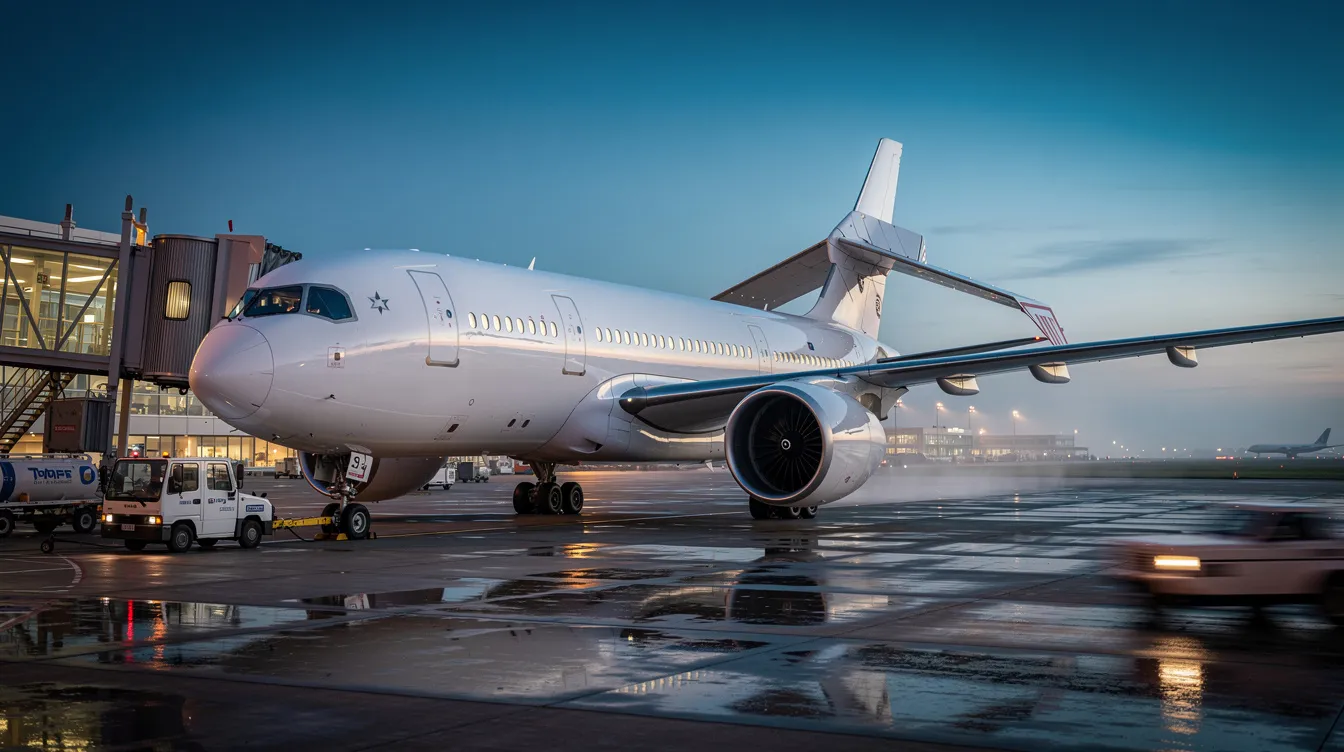
3. Airbus A340-600: the former record-holder
The Airbus A340-600 was previously the longest passenger aircraft in the world before the 747-8 claimed the title. The Airbus A340-600 measures 247 feet long (75.36 meters).
Design and capacity
Powered by four Rolls-Royce Trent 500 engines, the A340-600 was a stretched variant of the A340-300, achieved by adding fuselage plugs ahead of and behind the wings. In high-density configurations, the aircraft could seat up to around 475 passengers. It completed its first flight in 2001 and entered service in 2002.
Typical roles
The Airbus A340 excelled onultra-long-haull routes such as Europe–South America and Europe–Asia. Airlines like Lufthansa, Virgin Atlantic, Iberia, and Air France operated the type during its peak years as a direct competitor to large Boeing widebodies.
Decline and retirement
The A340-600 and other Airbus A340 variants declined due to high fuel consumption, greater maintenance costs compared to modern twinjets, and regulatory changes (ETOPS/EDTO) that allowed two-engine aircraft to safely fly long overwater routes. Production of the A340 family ended in 2011. Lufthansa is scheduled to operate its last A340-600 scheduled flight on October 25, 2026, marking a symbolic end to the type in mainline service. Small carriers like Mahan Air and Rossiya Airlines continue limited operations with remaining A340 variants.
4. Boeing 777-300 and 777-300ER: twin-engine long-haul workhorses
The Boeing 777-300 has a length of 242 feet 4 inches (73.9 meters), making it one of the longest commercial aircraft in regular use since its entry into service in 1998.
The 777-300ER (Extended Range) became one of Boeing's best-selling widebodies, with over 800 deliveries. Its blend of range (up to around 7,370 nautical miles) and high passenger capacity made it the default choice for many long-haul operators.
Major operators and routes
Emirates, Qatar Airways, Cathay Pacific, Air France, American Airlines, and Turkish Airlines deploy 777-300ERs on dense routes like Dubai–Sydney, Doha–Los Angeles, and Hong Kong–London. Before the A340-600 and 747-8 arrived, the Boeing 777-300 held or challenged for the world's longest commercial airliner title among twinjets, demonstrating how far two-engine aircraft had progressed.
The Boeing 777-200LR, while shorter, still holds records for ultra-long-range performance and influenced the design of today's longest nonstop flights. Together, these passenger variants solidified the Boeing 777 family as the most versatile long-haul platform in commercial aviation.
5. Airbus A350-1000: the long, efficient modern airliner
The Airbus A350-1000 is Airbus's longest current widebody, with a length of 242 feet 5 inches (73.79 meters) —a similar range of dimensions to the original 777-300 but shorter than the 747-8 and A340-600.
Technology and efficiency
Powered by Rolls-Royce Trent XWB engines and built largely from carbon-fiber-reinforced polymers, the A350-1000 represents the modern airliner philosophy: lower weight, better fuel efficiency, and reduced operating costs compared to previous-generation large aircraft. Typical seating runs 350–410 passengers in a three-class layout, with a maximum capacity around 480 in higher-density configurations—making it a direct competitor to the Boeing 777-9 in capacity terms and a useful benchmark for buyers exploring premium private jets for sale in the UK.
Operators
Qatar Airways served as launch customer for the A350-1000. Other operators include Cathay Pacific, British Airways, and several carriers exploring ultra-long routes like Doha–Auckland. The Airbus A350-1000 exemplifies the trend toward fuel-efficient, long-range twinjets dominating commercial aviation, and sits within the broader A350XWB family alongside the popular variant A350-900.
6. Airbus A380-800: the largest passenger aircraft ever built
The Airbus A380-800 is the largest passenger aircraft in history by overall size and passenger capacity, but it is not the longest. The Airbus A380-800 is 239 feet 6 inches long (73 meters) — shorter than several aircraft covered above. The Airbus A380 is shorter than the Boeing 747-8 but the largest by passenger capacity: the Airbus A380 can accommodate a maximum of 853 passengers, though typical three- or four-class layouts seat around 500–550.
Design
A full-length double-deck fuselage, four high-thrust engines (Engine Alliance GP7200 or Rolls-Royce Trent 900), and onboard amenities including showers and bars on some configurations set the Airbus A380 apart as the ultimate very large aircraft in the aviation industry's history.
Operators and signature routes
Emirates is the largest operator with approximately 120 aircraft. Singapore Airlines, Qantas, and British Airways also fly the type on routes such as Dubai–London, Dubai–Sydney, and Singapore–London.
End of production
Airbus ended A380 production in 2021, driven by changing demand patterns, airline preference for smaller, flexible twinjets, high operating costs, and airport infrastructure challenges. For BlackJet's clientele, the A380 experience—while impressive—remains a mass-premium product fundamentally contrasting with the bespoke privacy and speed of private jet charter or Jet Card flights for transcontinental and intercontinental travel.
7. Other notable long commercial aircraft
Several additional airliners deserve mention for their contribution to widebody development and long-haul flight:
Aircraft | Approximate Length | Key Role |
|---|
Boeing 747-400 | 231 feet 10 inches (70.66 m) | Workhorse jumbo for Pan American Airways, United Airlines, and others from 1989 onward |
Boeing 787-10 | 224 ft 1 in (68.3 m) | Longest Boeing 787 Dreamliner variant; fuel-efficient on dense regional/intercontinental routes |
Airbus A340-500 | 222 ft 10 in (~67.9 m) | Ultra-long-range quadjet; once operated the world's longest nonstop service (Singapore–Newark) |
Airbus A350-900 | 219 ft 2 in (66.8 m) | Versatile long-haul twinjet; a larger version of Airbus's composite widebody family |
Ilyushin Il-96-400 | ~212 ft 5 in (~64.7 m) | Russian long-range quadjet; limited production, flown by Rossiya Airlines and in government service |
Singapore Airlines and United Airlines are key operators of the Boeing 787-10, while Singapore Airlines, Qatar Airways, and Air France fly the Airbus A350-900 on intercontinental routes serving cities like San Francisco, Paris, and Doha.
Even though many of these aircraft carry 300–400 passengers, premium travelers increasingly compare commercial business class on these jets with the value and time savings from using a private jet via a Jet Card program, weighing overall Jet Card membership pricing and value.
8. Evolution from early commercial airliners to today's giants
The story of the longest passenger aircraft begins long before the jet age. The Wright Brothers' first aircraft carried a single person a few hundred feet. Within decades, flying boats carried a handful of passengers across oceans in relative luxury—slow, expensive, and exclusive. Early commercial airliners like the Douglas DC-3 transformed passenger service in the 1930s and 1940s but carried only about 30 people.
The widebody revolution arrived in the late 1960s. The Boeing 747's first flight in 1969 and entry into service in 1970 with Pan American Airways created the original "jumbo jet," making intercontinental air travel accessible to the mass market and transforming the economics of commercial aviation.
Subsequent decades saw a push toward larger, longer commercial airliners to increase capacity and reduce seat-mile costs. This culminated in types like the Boeing 747-400, the Airbus A340-600, and the Airbus A380. But advances in aerodynamics, composite materials, and engine technology—pioneered by companies like General Electric and Rolls-Royce—allowed the industry to shift from four-engine jumbos to long-range twinjets like the Boeing 777, Boeing 787, and Airbus A350 without sacrificing safety.
In parallel, as cabins grew larger and more standardized, demand grew for personalized aviation. Executives and high-net-worth individuals sought on-demand and membership-based private jet options, fueling the rise of companies like BlackJet’s premium Jet Card and private charter services and the modern Jet Card model.
9. Longest passenger planes versus longest passenger flights
The longest passenger aircraft are not always the ones operating the world's longest routes. Range and fuel efficiency often matter more than raw length.
Singapore Airlines operates the world's longest nonstop service—Singapore to New York JFK—using the Airbus A350-900ULR, not a 747-8 or A380.
Historical ultra-long flights, including Singapore–Newark and Air Tahiti Nui's Papeete–Paris, operated by a Boeing 787-9, relied on aircraft optimized for fuel load and payload rather than maximum fuselage length.
The Boeing 777-200LR, which is not among the longest by size, performs better on extreme-distance routes due to a similar range advantage and optimized cabin configuration.
Commercial ultra-long-haul routes routinely last 16–19 hours. BlackJet clients can often break complex journeys into optimized segments or fly directly to closer, secondary airports to cut total travel time door-to-door. Private aviation sidesteps many constraints of scheduled ultra-long-haul non-stop flights by offering flexible departure times, less ground time, and routes tailored to individual schedules. Explore how this works for international itineraries.
10. Inside the cabin: how size and length shape passenger experience
A longer fuselage allows airlines to configure multiple cabins—first, business, premium economy, and economy-plus — lounges, bars, or showers on aircraft like the Airbus A380 and some Boeing 747 variants. But the largest passenger aircraft can carry over 500 people, leading to crowded boarding, slow deplaning, and congested baggage claim.
Innovations like higher cabin humidity, lower cabin altitude, and larger windows on the Boeing 787 and Airbus A350 help reduce jet lag and fatigue on long flights, even in economy. These are genuine improvements in the modern airliner experience.
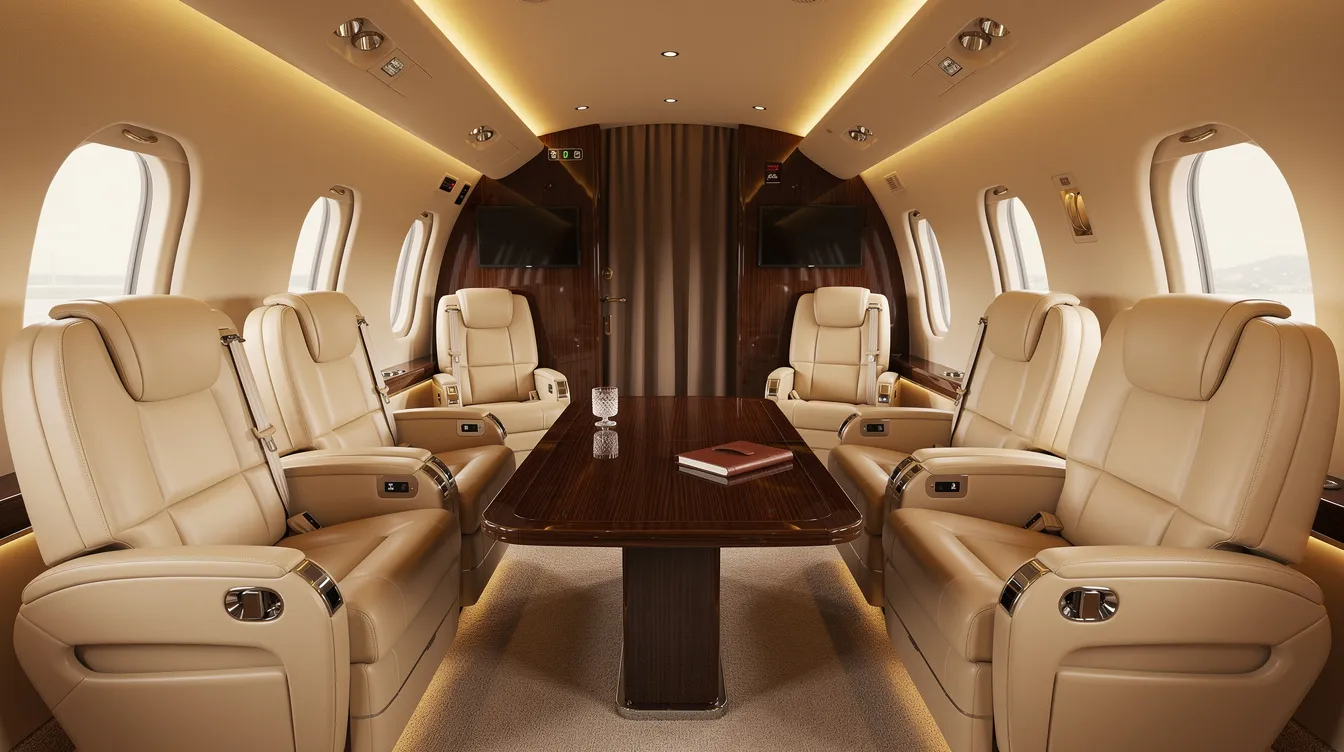
The private jet experience operates on different principles entirely:
Fewer passengers (often 4–14)
Bespoke seating with lie-flat divans or club configurations
Customized catering
Private terminals (FBOs) that eliminate queues
For BlackJet's audience, cabin experience is judged less by the numerical size of the commercial airliner and more by control, privacy, and consistency. Discover what that looks like in practice through the BlackJet Experience.
11. Safety, certification, and technology on the world's longest airliners
Every major commercial aircraft—Boeing 747-8, Boeing 777 family, Airbus A340, Airbus A350, Boeing 787—goes through rigorous flight testing and certification by authorities like the FAA and EASA before carrying a single fare-paying passenger.
Key safety frameworks include:
ETOPS/EDTO: Extended-range twin-engine operations standards now allow modern twinjets to fly routes once reserved for four-engine aircraft, maintaining high safety margins on transoceanic and polar routes.
Fly-by-wire controls: Standard on Airbus types from the A320 onward and on the Boeing 777/787, these systems improve reliability and situational awareness on long sectors.
Advanced engine monitoring: Digital systems from engine manufacturers like General Electric and Rolls-Royce provide real-time health data, enabling predictive maintenance.
BlackJet partners only with operators that meet strict safety audits and third-party certifications, mirroring or exceeding the standards applied to large commercial fleets. Every aircraft type in the program is vetted by category, age, and maintenance record. Learn more about this process through BlackJet Certified.
Private aviation clients can also request specific aircraft categories with known safety pedigrees—certain Gulfstream, Bombardier, or Dassault models—similar to how airlines standardize on proven airliner families, reinforcing the realities outlined in our guide on private jet safety and risk.
12. Environmental impact: jumbo jets, modern twinjets, and sustainable private aviation
Earlier very large aircraft like the Boeing 747 and Airbus A340 had higher fuel consumption per flight than newer twinjets, motivating airlines to upgrade to aircraft like the Boeing 787, Boeing 777, and Airbus A350. Despite high total emissions per flight, modern widebodies can be comparatively efficient per seat-mile when fully loaded—a key reason airlines still deploy large jets on heavily traveled routes.
The aviation industry is also pursuing sustainable aviation fuels (SAF) and fleet renewal to reduce the carbon footprint of the longest flights. McDonnell Douglas aircraft of earlier eras and aging quadjets are being replaced by modern twinjets that burn 20–25% less fuel per passenger.
BlackJet's commitment to carbon-neutral flights operates by default through offsets and direct climate initiatives, which factor into any detailed private jet price list and cost comparison. Newer private jet models can be optimized for fuel efficiency on a per-passenger basis—especially when flights are well-matched to group size. A right-sized private jet using SAF and offsets can compare favorably to a half-empty commercial first-class cabin on a very large aircraft, especially when you prioritize budget-friendly private aircraft and access models.
13. Longest passenger planes versus private jet categories
How do the world's longest commercial aircraft compare to private jet categories?
Factor | Commercial Widebody (e.g., Boeing 777-300ER) | Large-Cabin Private Jet (e.g., Gulfstream G650) |
|---|
Fuselage length | ~242 ft | ~100 ft |
Typical passengers | 300–400+ | 8–14 |
Cabin space per person | Shared; varies by class | Entire cabin to your party |
Airport access | Major hubs only | 5,000+ airports, including smaller fields |
Boarding time | 60–90 min before departure | 15 min or less |
Schedule flexibility | Fixed timetable | On your schedule |
While the largest passenger aircraft can carry 400–800 passengers, typical BlackJet clients travel in parties of 2–8, making a private jet more practical and efficient for many long-distance business or family trips, with larger-group needs covered by private jets that comfortably seat around 20 passengers.
Scenario: An executive team of six traveling from New York to London could book business class seats on a Boeing 777-300ER—or charter a large-cabin jet through a 25-hour Jet Card, a structure explained in depth in our 25 hour jet card guide to features and costs. The private option saves roughly 3–4 hours of ground time each way (security, boarding, customs, transfers) and allows confidential conversations throughout the flight.
Private jets also operate to and from smaller airports inaccessible to the world's longest commercial aircraft, positioning travelers closer to homes, offices, or resort destinations, and can be tailored from among multiple types of private jets for every traveler. BlackJet's digital booking tools and real-time support make selecting the right jet category as straightforward as choosing a preferred cabin on a commercial airliner—but with far greater flexibility.
14. How jet cards and on-demand charter complement (or replace) long-haul airline travel
A Jet Card is a prepaid program—typically available in 25-hour or 50-hour increments—that gives guaranteed access to private aircraft at set hourly rates and service standards, without owning or leasing a jet.
High-frequency travelers who currently rely on long-haul commercial flights-often on aircraft like the Boeing 777, Airbus A350, or Boeing 787—can shift their most time-critical or privacy-sensitive trips to BlackJet's Jet Card model, using insights from our overview of the best jet cards for frequent flyers.
Example itinerary: A business leader flies from Los Angeles to New York for meetings via private jet, then continues to London on a commercial business-class flight aboard an A350-1000, then returns directly via private charter from London City Airport, potentially choosing from the best small private aircraft for specific missions. This hybrid approach can reduce overall travel fatigue significantly.
Operational advantages of a Jet Card: Frequent users can also benchmark these benefits against the cost structure of a 100-hour jet card.
Guaranteed aircraft availability within set notice periods
Consistent service standards regardless of route
24/7 support to handle last-minute itinerary changes
Carbon-neutral flights at no additional cost
The decision between commercial and private often comes down to trip length, group size, schedule flexibility, and need for privacy. When those factors align, a Jet Card or charter can be superior to even the best first-class seat on the world's longest passenger planes, particularly when you understand the pricing and value of a 50-hour jet card.
15. Choosing your ideal way to fly long-haul: key considerations
When comparing commercial flights on the biggest and longest airliners versus private jet solutions, consider this checklist:
Total journey time (door-to-door): Commercial flights on aircraft like the Airbus A380 or Boeing 777 require arriving 2–3 hours early. Private jets cut that to minutes.
Airport access and security: Commercial hubs mean long queues. Private terminals are streamlined.
Privacy: Confidential work or family travel is easier on a private jet than in a shared cabin of 300+ passengers.
Flexibility: Late changes to a commercial itinerary often mean rebooking fees and lost time. Jet Card programs offer built-in flexibility.
Group cost efficiency: For parties of 4–8, the per-person cost of a private jet can approach or beat commercial first class, with vastly better time efficiency.
Commercial aircraft like the Boeing 747-8 or Airbus A380 can offer excellent premium cabins, but they still require adapting to fixed timetables and hub airports. With BlackJet, you design your own schedule and fly point-to-point, often saving hours on the ground—even when the in-air flight time is comparable to that of a large commercial aircraft — and you can even explore options to buy just a seat on a private jet when full aircraft charter isn’t necessary.
Aircraft size and length are fascinating aviation facts. But your personal travel strategy should be built on control, comfort, and productivity.
16. FAQs about the world's longest commercial aircraft and private jet alternatives
What is currently the longest commercial passenger aircraft? The Boeing 747-8 Intercontinental, at 250 feet 2 inches (76.25 m), is the longest passenger aircraft in commercial service. The Boeing 747-8 can carry 467 passengers over 8,000 nautical miles and has a maximum takeoff weight of 975,000 pounds. The Boeing 777-9, at 251 feet 9 inches, will surpass it once deliveries begin.
Is the largest passenger aircraft the same as the longest? No. The Airbus A380 is the largest by capacity (up to 853 passengers) and overall size, but at 239 feet 6 inches, it is shorter than the Boeing 747-8, the Airbus A340-600, and several other types.
Why are four-engine jumbos being replaced by twinjets? Four-engine airliners like the 747 and A340 have higher operating costs, greater maintenance requirements, and higher fuel consumption per flight. Modern twinjets certified under ETOPS/EDTO rules can safely fly the same transoceanic routes with two engines, offering better fuel efficiency and lower total cost of ownership.
Which modern airliner is best for ultra-long flights? Aircraft like the Airbus A350-900ULR (used by Singapore Airlines on the world's longest nonstop service) and the Boeing 777-200LR are optimized for extreme-distance routes. Neither is the longest by fuselage, but both excel at maximum range efficiency.
How does flying privately compare to commercial first class on a Boeing 777 or Airbus A350? Commercial first class offers excellent in-flight comfort, but the private jet experience adds door-to-door time savings, complete privacy, flexible scheduling, access to thousands of additional airports, and a cabin reserved entirely for your party. BlackJet's Jet Card programs make this level of access predictable and cost-effective, and can be weighed against alternatives like NetJets jet card pricing and structure.
Can I fly transatlantic or transcontinental on a private jet with a Jet Card? Yes. Large-cabin and ultra-long-range private jets—such as the Gulfstream G650 or Bombardier Global 7500—can fly nonstop from New York to London or Los Angeles to Tokyo. BlackJet's Jet Card provides guaranteed access to these aircraft categories with 24/7 support, comparable in many ways to the capabilities of the top private jets in the world.
Are private jets as safe as large commercial aircraft? When operated by certified Part 135 carriers with rigorous maintenance and crew training standards, private jets maintain safety records comparable to commercial aviation. BlackJet partners exclusively with operators that meet or exceed industry benchmarks, verified through third-party audits and BlackJet Certified standards.
How does BlackJet handle carbon-neutral flights? Every BlackJet flight is carbon neutral at no extra cost to the client, through verified carbon offsets and direct climate initiatives. Learn more about our approach to sustainable private aviation and how it intersects with the most affordable private jet options available today.
17. Conclusion and next steps: from largest passenger aircraft to your next private flight
The Boeing 747-8 currently holds the crown as the longest passenger plane in service at 250 feet 2 inches, with the Boeing 777-9 set to surpass it once it begins airline deliveries. The Airbus A380 remains the largest by capacity, even as its fleet shrinks. Across the industry, the trend is clear: commercial aviation is moving from large quadjets—Boeing 747, Airbus A340, Airbus A380—to long, efficient twinjets like the Boeing 777, Boeing 787, and Airbus A350 that deliver similar range with better economics.
For BlackJet's audience, knowing these aircraft provides valuable context. But the real strategic advantage comes from accessing private aviation—where the aircraft is chosen to fit the traveler, not the other way around.
Whether you fly 10 times a year or 50, BlackJet's Jet Card programs—available in 25-hour and 50-hour options—offer guaranteed access to private jets across every cabin category, carbon-neutral flights at no extra charge, and 24/7 digital booking with real-time support, including access to large private jets for groups of up to 50 passengers.
Discover how BlackJet can turn your next long-haul journey—from New York to London or beyond—into a seamless, private, carbon-neutral experience tailored entirely to you.


 Sign up with google
 Sign up with Apple