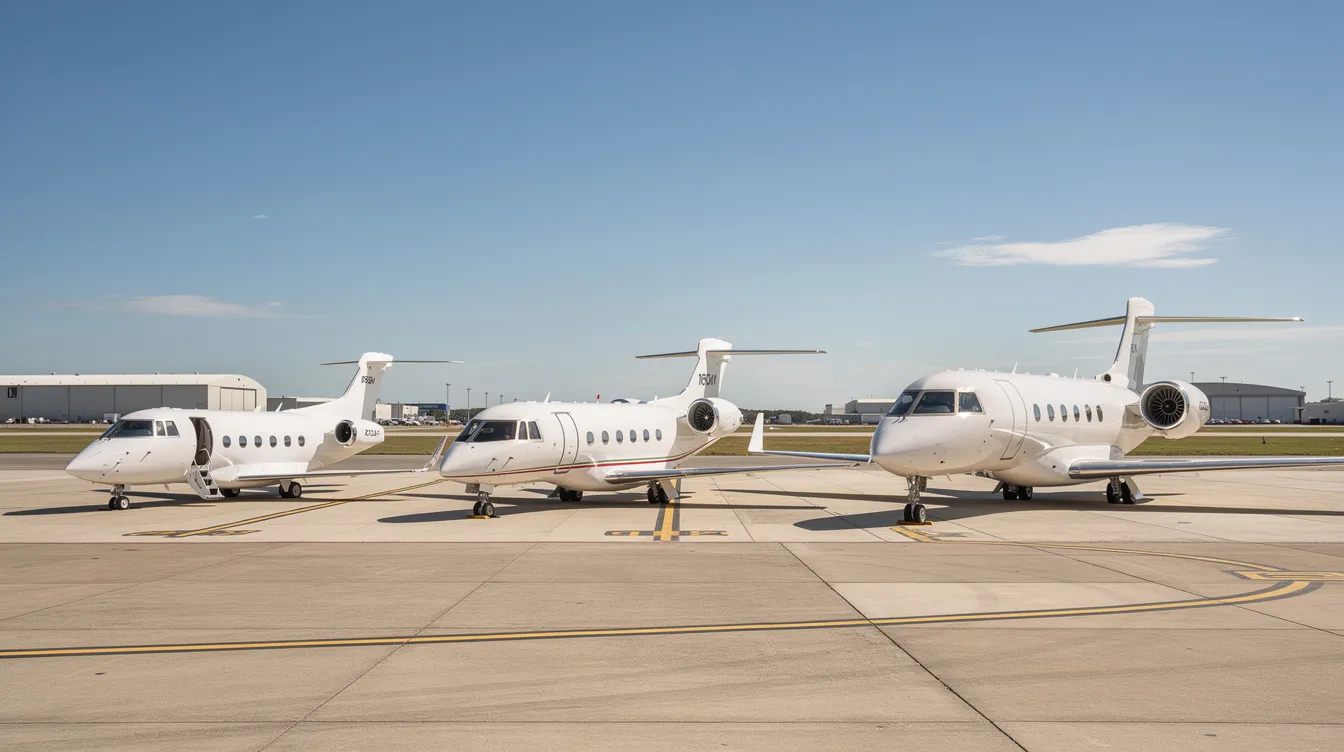
For executives and high-net-worth travelers who treat time as a non-renewable asset, understanding midsize jet cost is not optional - it is strategic. Whether you are weighing private jet ownership against chartering a private jet, or simply trying to decode private jet pricing across access models, the numbers matter. This guide breaks down every cost layer so you can make the decision that fits your travel life, not just your ambition.
Quick Answer: What Does a Midsize Jet Cost Right Now?
In 2026, midsize jets cost between $5 million and $30 million to purchase, with pre-owned jets in the 5–15-year range trading for $5 million to $12 million. New models typically land between $9 million and $25 million. Annual operating costs for midsize jets range from $700,000 to $1.5 million, depending on utilization, crew structure, and base location.
Chartering a midsize jet costs about $4,000–$6,500 per flight hour, while a super midsize jet commands $5,500–$9,000 per flight hour. Charter rates depend on aircraft type, distance, and demand.
A BlackJet 25+ Hour Jet Card membership reframes these economics. Prepaid 25- or 50-hour blocks lock in stable hourly rates across midsize jets and super midsize categories, absorbing many line items - repositioning, basic in-flight catering, and standard handling - into a single, predictable number.
Consider a concrete example: a New York–Los Angeles round trip on a midsize jet totals roughly 10–12 flight hours. At on-demand private jet charter rates, that trip might run $60,000–$90,000 depending on peak-season surcharges and aircraft positioning fees. A BlackJet Jet Card member flying the same route sees contracted rates insulated from demand spikes and repositioning premiums.
For travelers flying under roughly 250–300 annual flight hours, chartering and jet cards typically beat full private jet ownership once all ongoing costs are included.
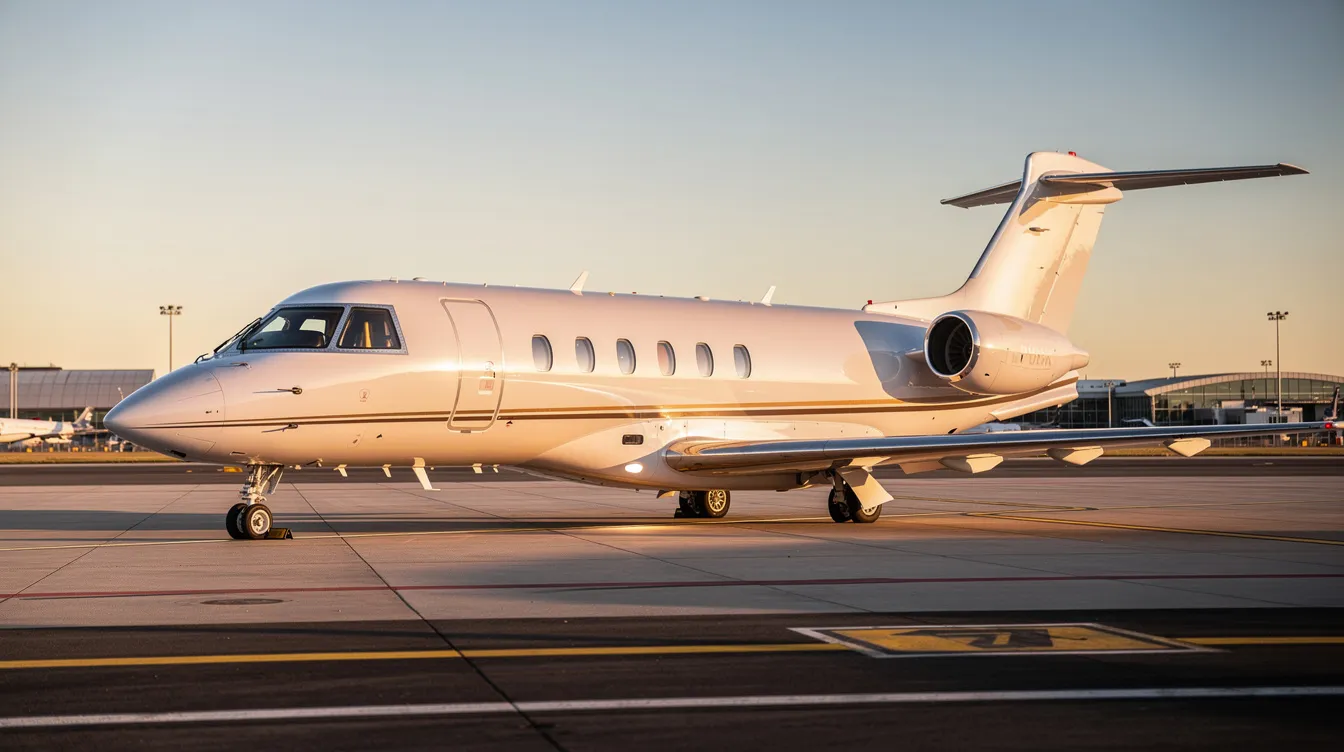
What Counts as a Midsize Jet (and When "Super Midsize" Matters)?
If you are deciding between light jets, midsize jets, or a heavy jet for your most frequent routes, it helps to know exactly what each category delivers, especially if you are also considering the cheapest private aircraft options at the entry level.
Midsize jets typically accommodate 6 to 9 passengers, with ranges of 2,000 to 3,500 nautical miles. They feature partial to full stand-up cabins with enough cabin space for productive work, and can handle nonstop routes like New York–Dallas, London–Marrakesh, or Los Angeles–Chicago. Examples include the Cessna Citation XLS+ and Hawker 800XP.
Super midsize jets extend those capabilities: 8–10 passengers, true stand-up cabins, larger baggage holds, and ranges of 3,500–4,000+ nautical miles. Aircraft like the Embraer Praetor 600, Bombardier Challenger 350, and Gulfstream G280 serve missions such as New York–London or transcontinental flights with ease.
Light jets - think Cessna Citation CJ3+ - are less expensive per flight hour but offer tighter cabins and shorter range. They often require fuel stops on longer legs, which adds flight time and sometimes cost. Very light jets like the Cirrus Vision Jet sit even further down the spectrum, best suited for short regional hops with 1–3 passengers.
Many BlackJet members naturally graduate from light jets to mid-size or super midsize as trip lengths, passenger counts, and productivity needs increase. The midsize category represents the strategic sweet spot: enough range and luxury amenities for coast-to-coast travel without the capital weight of large cabin jets or ultra-long-range aircraft.
Private jets in this class can also access smaller airports that commercial carriers cannot serve, saving ground transfer time at both ends.
Midsize Jet Purchase Prices in 2026: New vs Pre-Owned
Any serious private jet cost analysis starts with the purchase price - and the capital you lock into a depreciating asset versus deploying through a jet card or charter model.
Midsize jet acquisition costs range from $2 million to $25 million in 2026. Here is how that breaks down:
Segment | Typical Price Range |
|---|
Pre-owned midsize jets (5–15 years old) | $5M–$12M |
Late-model / factory-new midsize | $9M–$25M |
Super midsize (new, fully equipped) | $17M–$30M |
Concrete examples with approximate 2026 pricing:
Cessna Citation XLS+: $6 million to $10 million pre-owned
Cessna Citation Latitude: ~$19M new, $12M–$16M pre-owned
Bombardier Learjet 45XR: ~$2.5M–$3.2M depending on year and programs
Gulfstream G200: ~$3.5M–$4M pre-owned
Embraer Praetor 500/600: $17M–$24M new at the upper midsize/super midsize range
Pre-owned midsize jets typically cost 20–50% less than new models, but they may carry higher flight hours and require avionics or interior upgrades. Enrollment in maintenance programs like MSP or JSSI significantly affects both resale value and buyer confidence, particularly for buyers who first entered the market by exploring the cheapest private jet options.
For context, ultra-long-range and large-cabin jets - the Gulfstream G650, G700, or Bombardier Global 7500 - list at $50M–$80M+. That price gap is precisely why so many private jet ownership decisions cluster around the midsize tier: it delivers serious capability without the capital exposure of a large jet acquisition, though some buyers still seek premium UK private jets for sale at the top end of the market.
Operating Costs of Owning a Midsize Jet: The Ongoing Bill
Fixed Costs Overview
For anyone who decides to own a private jet outright, the purchase price is only the opening move. The real midsize jet cost emerges over years of operation through fixed and variable expenses that never stop accruing.
Annual operating expenses for midsize jets range from $700,000 to $1.5 million, depending on aircraft model, utilization, and geography. At 200–300 flight hours per year, a typical modern business jet in the midsize class will generate operational costs across these categories:
Fixed costs - crew salaries, hangar fees, private jet insurance, management contracts, and software subscriptions - persist whether the aircraft flies 50 hours or 500.
Variable Costs Breakdown
Variable costs include fuel, hourly maintenance reserves, landing fees, navigation charges, catering, and deicing, all of which increase with each flight.
Routine maintenance often costs around $250,000 per quarter depending on usage, and heavy maintenance events like C-inspections or engine overhauls create lumpy, six-figure expenses that private jet owners must reserve for in advance.
Fuel is often the single largest variable cost, especially on longer sectors or in high-fuel-price regions. Higher fuel costs at premium FBOs can push per-hour burn well above budget.
Jet card and charter clients with BlackJet avoid these unpredictable spikes entirely. Instead of carrying each line item on a personal balance sheet, they convert the complexity into a predictable all-in hourly rate - and reclaim the time otherwise spent managing vendors, compliance, and maintenance scheduling.
Maintenance and Fuel Considerations
Routine and heavy maintenance, as well as fluctuating fuel prices, are significant contributors to the ongoing bill. Maintenance programs can help smooth out costs, but require continuous funding. Fuel costs, which can account for 25–35% of total operational expenses, are subject to market volatility and airport-specific pricing.
Fixed Annual Costs: Crew, Hangar, Insurance, and Management
Annual fixed costs persist whether the private aircraft logs five flights or fifty, which is why utilization is the decisive variable in determining whether jet ownership pencils out.
Crew salaries represent the largest fixed line item. Two pilots - captain and first officer - are standard for midsize and super midsize jets, with an optional flight attendant on longer missions. Crew salaries for pilots training often exceed $200,000 annually per pilot, and total crew costs including benefits, recurrent training, and Level-D simulator checks commonly reach $250,000–$400,000+ per year.
Hangar fees vary dramatically by location:
Airport Type | Annual Hangar Cost |
|---|
Major business jet hubs (Teterboro, Van Nuys) | $80,000–$120,000+ |
Smaller regional airports | $40,000–$80,000 |
Insurance - hull and liability coverage - typically runs $40,000–$250,000 annually. Premiums depend on hull value, coverage limits, pilot experience, and whether the private plane operates under Part 91 (corporate/private) or mixed-use regimes. Incident history also moves premiums significantly.
Management fees for third-party aircraft management companies run $75,000–$250,000 per year, covering dispatch, Part 135 compliance, crew scheduling, and maintenance oversight.
Fixed costs for midsize jets can reach up to $1.5 million annually when all these categories are combined - a figure that BlackJet's Jet Card structure absorbs at the fleet and network level for its members, rather than passing through as individual owner obligations.
Variable Costs per Flight Hour: Fuel, Maintenance, and Fees
Variable Costs Breakdown
The true marginal cost of each flight hour on a midsize jet typically falls between $2,500 and $4,000, depending on age, aircraft model, and mission profile. Variable costs for midsize jets typically range from $2,000 to $5,000 per flight hour at the extremes.
Fuel dominates. Midsize jets burn approximately 200 to 300 gallons of Jet A fuel per hour. At 2026 average FBO fuel prices of $6–$8 per gallon, that translates to roughly $1,200–$2,400 per flight hour in fuel alone. Fuel costs account for 25–35% of total operational costs across most mid-size operations.
Maintenance accrues per flight hour and per cycle (each takeoff-and-landing pair). Engine maintenance programs like MSP Gold or JSSI smooth costs into predictable hourly reserves but increase the per-hour charge. Engine overhaul reserves must be funded continuously to cover major events that can exceed $500,000 per engine.
Typical Variable Fees per Sector
Landing fees: $150–$1,000+ depending on airport and aircraft weight
Navigation and handling charges: $100–$800 per stop
Deicing (winter operations): $1,500–$15,000 per event
In-flight catering for business-class service: $200–$1,500+ per leg
Compare these individual line items with the all-inclusive hourly rates embedded in BlackJet Jet Cards. Members see a single number rather than managing each cost component across every private jet flight.
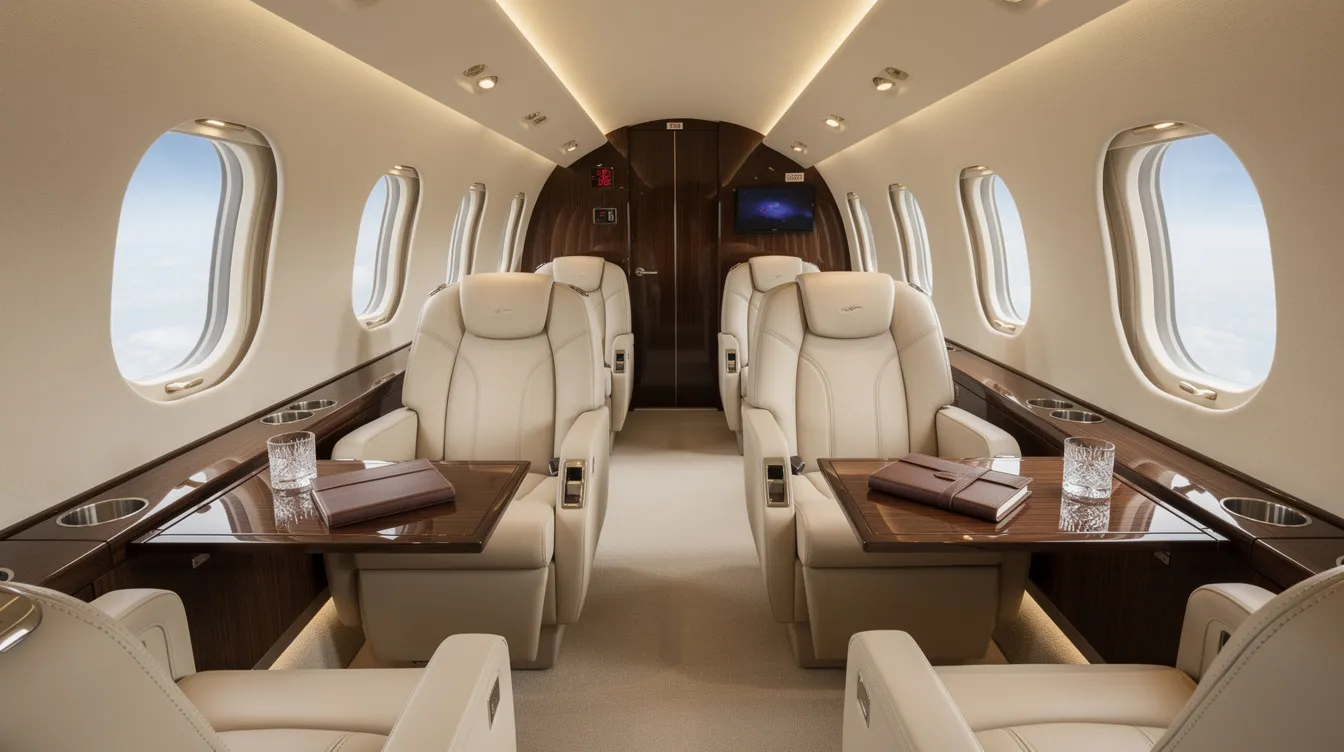
How Flight Hours Change the Math: When Ownership Starts to Work
Because fixed costs are locked in regardless of activity, cost per flight hour decreases as utilization increases. But only beyond a specific threshold does owning a midsize jet reliably beat charter or jet cards.
Here are three scenarios for a modern midsize jet with approximately $700,000 in annual fixed costs and $3,000 per hour in variable operating costs:
Annual Flight Hours | Fixed Cost per Hour | Variable Cost per Hour | All-In Cost per Hour |
|---|
100 hours | ~$7,000 | ~$3,000 | ~$10,000 |
200 hours | ~$3,500 | ~$3,000 | ~$6,500 |
300 hours | ~$2,333 | ~$3,000 | ~$5,333 |
At 100 hours per year, the effective hourly cost often exceeds $9,000–$10,000. At 200 hours, it may drop to roughly $6,000–$7,000. At 300+ hours, it approaches $5,000–$6,000.
Midsize jet ownership becomes economical around 200–300 flight hours annually - a threshold that favors corporations or family offices with predictable, heavy travel schedules and a desire for full customization and control.
For under 200 flight hours, chartering is generally more economical. And for many BlackJet clients flying 50–250 hours per year across multiple cabin classes - light jets for short hops, midsize for cross-country, ultra-long range when needed - jet cards and on-demand charter remain structurally more efficient and far simpler to manage than carrying a single asset, especially once you compare jet card cost per hour to true ownership economics.
Chartering a Midsize Jet: 2026 Hourly Rates and Real Trip Examples
Chartering a private jet remains the primary alternative to ownership for midsize missions, ideal for travelers not ready to commit to full private jet charter costs or fleet management complexity.
Midsize jet charter rates average $4,000–$6,500 per hour in 2026. Super midsize jets charge $5,500–$9,000 per flight hour. Private jet charter rates vary by region, with European and Middle Eastern routes often carrying premiums over U.S. domestic sectors, which feeds directly into whether chartering a private jet is worth it for specific trips.
What is typically included in advertised rates: aircraft, crew, standard catering, basic handling, and fuel. Common extras that inflate the bill include deicing, repositioning fees when the aircraft flies empty to your departure point, and out-of-position crew overnight costs.
Three real trip examples with ballpark all-in pricing:
New York–Miami (2.5–3 hours): A New York to Miami midsize jet flight costs $12,000–$18,000 one-way
Los Angeles–Chicago (3.5–4 hours): $18,000–$24,000 one-way
New York–Los Angeles (5–6 hours): $30,000–$45,000 one-way on a midsize or super midsize jet
Midsize jet charter costs can increase by 20–40% during peak demand - holidays, major events, and seasonal migration routes.
Empty leg flights can offer discounts of 25–50% when repositioning schedules align with your route, though availability is unpredictable; they are a common tactic when assessing the cost to charter a small plane on a budget. BlackJet Jet Card members, by contrast, enjoy stable contracted hourly rates and priority access during peak periods, reinforcing a predictability advantage that ad-hoc private jet hire simply cannot match.
Understanding Taxes, FET, and Hidden Fees on Midsize Jet Flights
Even seasoned fliers can be surprised by how taxes and ancillary fees layer onto midsize jet cost, especially on U.S. and international flights.
U.S. Federal Excise Tax (FET): A 7.5% tax applies to most domestic charter and jet card flights operated under Part 135, plus per-segment fees of approximately $5.00–$5.30 per passenger. These charges appear as line items on invoices and are unavoidable for commercial private jet travel.
Airport-imposed costs:
Landing fees: $150–$1,500 based on aircraft weight and airport profile
Ramp and handling charges: $100–$800 per stop
Parking or hangar protection during extended stays or winter conditions
Common "surprise" add-ons that impact the total jet cost:
Deicing charges in cold climates ($1,500–$15,000 per event)
Fuel surcharges during price spikes
Overnight crew expenses ($200–$600 per crew member per night)
International head taxes, overflight permits, and landing permits ($500–$5,000+)
These fees apply in both ad-hoc charter and some jet card models, and they are central to understanding how much it costs to rent a private jet on a truly all-in basis. BlackJet's private jet pricing is positioned to be transparent and largely all-inclusive, with clear disclosure when route-specific extras - such as unusual deicing events, specialty catering, or long-haul flights requiring special permits - will apply. No hidden arithmetic.
Midsize vs Light vs Heavy Jets: Cost and Use-Case Comparison
Choosing the right aircraft type for your most frequent missions is as important as understanding private jet costs within any single category. Here is how the categories compare:
Category | Passengers | Range (nm) | Charter Cost/Hour | Best For |
|---|
Very light / Light jets | 4–7 | 1,000–2,000 | $2,600–$4,000 | Regional hops, small groups |
Midsize jets | 6–9 | 2,000–3,500 | $4,000–$6,500 | Cross-country, 2–6 hr missions |
Super midsize jet | 8–10 | 3,000–4,000+ | $5,500–$9,000 | Coast-to-coast, transatlantic |
Heavy / Ultra long range | 10–16+ | 4,000–7,500+ | $8,000–$12,000+ | Nonstop intercontinental |
Midsize jets generally deliver the best balance of cost per seat-mile versus comfort for trips of 2–6 hours with 5–9 passengers. Light jets shine on shorter regional hops - a Cirrus Vision Jet or similar very light jets work well for 1–3 passengers on sub-two-hour routes. Larger aircraft in the heavy jet or ultra-long-range aircraft class become essential for nonstop international flights like New York–Tokyo and for missions where you are effectively choosing a 12-seater private jet or larger to match headcount and range.
A concrete comparison: Flying a 6-passenger Boston–Palm Beach trip on a light jet saves roughly $1,000–$2,000 versus a midsize, but the midsize offers more cabin space, better Wi-Fi for productivity, and a larger baggage hold. On a flight distance of 1,200+ miles with a full passenger count, the midsize jet is often the smarter call.
BlackJet members routinely mix categories through the same premium private jet card programs or membership interface: light jets for quick day trips, midsize or super midsize for coast-to-coast, and larger aircraft for when the mission demands it. No separate contracts, no separate operators.
Ownership vs Jet Card vs On-Demand Charter: Finding Your Break-Even Point
This decision is ultimately a capital-allocation question: when does it make sense to own private jet access through full ownership, and when does a jet card or chartering a private jet deliver more value?
Rough utilization thresholds:
Full private jet ownership: starts making financial sense above ~250–300 flight hours per year
Fractional ownership program or leasing: often appealing in the 150–300-hour band, especially if you understand fractional jet ownership depreciation
Jet cards and on-demand charter: ideal below ~250 hours or where flexibility across aircraft categories is needed
Three traveler profiles:
80 hours/year - A family office principal flying privately for personal trips. On-demand charter or a BlackJet Jet Card is the clear winner; the total ownership cost of a midsize jet at this utilization would exceed $10,000 per hour all-in.
200 hours/year - A corporate team using a single aircraft for domestic and occasional international routes. Fractional ownership or a heavy-use Jet Card becomes competitive. Owners can use Part 135 operators to charter their jets to offset costs during downtime, but managing that adds administrative complexity and invites comparison with branded solutions such as NetJets jet card costs and similar third-party programs.
400+ hours/year - A multinational company with predictable, high-volume schedules. Full ownership makes economic sense, especially if the corporation values total schedule control and heavy interior customization.
Beyond the math, non-financial factors still matter: the desire to avoid managing crew and routine maintenance, the preference for guaranteed availability on 24–48 hours' notice, and the ability to switch between light jets, mid-size jets, and ultra-long-range aircraft for different trips, whether you are booking the whole aircraft or simply buying a seat on a private jet.
Regardless of how many private jets are available in a fleet, BlackJet positions itself as the ownership alternative for high-frequency, high-expectation travelers who want predictable pricing and safety oversight without tying up $10M–$30M+ in a single depreciating asset.
Popular Midsize and Super Midsize Models and Their Cost Profiles
Understanding specific aircraft helps make sense of pricing: some business jet models command higher jet charter costs or resale values due to brand prestige, range, or cabin design.
Representative midsize jets (2026 indicative data):
Cessna Citation XLS+: 8–9 seats, 2,100 nm range, $6M–$10M pre-owned, ~$4,000–$5,000/hour charter. The workhorse of the mid-size category and a representative of what a $5 million jet offers.
Bombardier Learjet 45XR: 8 seats, ~2,000 nm range, $2.5M–$3.2M used. Competitive charter rates make it popular among cost-conscious operators.
Cessna Citation Latitude: 9 seats, 2,700+ nm range, ~$19M new, $12M–$16M pre-owned. A modern, popular choice for corporate departments.
Key super midsize jets requested by executives:
Cessna Citation Sovereign+: costs around $18 million new, with a 3,200 nm range that covers most domestic missions nonstop
Bombardier Challenger 300/350: 3,100–3,200 nm range, widely available in the same class of premium charter fleets
Embraer Praetor 500: ranges around 3,340 nautical miles, bridging the gap between midsize and super midsize
Embraer Praetor 600: ~4,000 nm range, $21M–$24M new, capable of transatlantic crossings
Gulfstream G280: ~3,600 nm range, favored for its cabin ergonomics and fuel efficiency
Avionics upgrades, engine programs, and connectivity packages - Gogo AVANCE, Starlink - can increase both charter rates and resale value but often improve reliability and in-flight productivity for business users. Pre-owned aircraft with outdated avionics may trade at lower prices but face higher upgrade costs down the road.
BlackJet's network includes vetted operators across these popular types, allowing members to prioritize either cost efficiency (a slightly older Learjet 45XR) or top-tier comfort and technology (Praetor 600, Challenger 350) without being locked into a single aircraft.
Safety, Certification, and Sustainability: The "Invisible" Cost Drivers
For serious travelers in private aviation, the cheapest midsize jet is not automatically the best choice. Safety standards, crew training, and sustainability commitments are integral to real value.
Safety certifications like ARGUS, Wyvern, and IS-BAO influence midsize jet charter pricing. Providers that insist on higher standards may appear slightly more expensive per flight hour but deliver meaningfully lower risk, which matters even more on complex group missions like chartering a plane for 100 passengers. The cost behind rigorous maintenance oversight, pilot training in Level-D simulators, and robust Safety Management Systems is real - and BlackJet insists on these when curating its operator network.
Sustainability is no longer optional for many corporate travelers aligned with ESG expectations. Offsetting emissions for midsize flights adds a modest per-hour cost, and Sustainable Aviation Fuel (SAF) currently runs 20–40% more than conventional Jet A. BlackJet ensures every journey is carbon neutral at no extra complexity to the client - the offset is built in, not bolted on.
These factors are not always visible line items on an invoice. But they are built into the private jet cost structure and should be weighed carefully when comparing budget charter brokers with premium, safety-led Jet Card providers. Flying private should never mean compromising on the standards that protect passengers and crew.
Technology and the BlackJet Advantage: Controlling Midsize Jet Cost Without Compromise
BlackJet is a tech-enabled, membership-based private aviation company built to give midsize jet flyers better control over cost, safety, and convenience than traditional charter brokers or the complexity of private plane ownership.
Jet Card programs - available in 25-hour and 50-hour blocks - cover multiple cabin types including midsize jets and super midsize jets, with fixed or capped hourly rates similar in structure to a 50-hour jet card. In most cases, repositioning and peak-day surcharges are absorbed into the membership, eliminating the arithmetic that makes ad-hoc charter unpredictable.
Digital booking tools and the mobile platform provide instant route estimates, aircraft-category comparisons (light jets vs midsize vs ultra long range), and real-time availability. Members can see within seconds whether a particular private jet flight is more efficient on a Citation XLS+ or a Challenger 350 - and book accordingly.
Operational support runs 24/7: real-time flight support, proactive route optimization to avoid unnecessary positioning flights, and transparent, itemized billing so clients see precisely what drives each midsize jet cost line.
A real-world scenario: A CEO flies a monthly New York–Dallas round trip plus several shorter regional flights. Using a BlackJet Jet Card, she standardizes pricing across midsize and light jets, eliminates the time her assistant spent sourcing three separate charter quotes per trip, and benefits from contracted rates that don't surge during holiday weekends. Her total annual spend on jet cards is predictable to within a single-digit percentage variance - a level of control that neither ad-hoc chartering a private jet nor the ongoing costs of full jet ownership can match.

FAQs: Midsize Jet Cost, Flight Hours, and Choosing the Right Access Model
How much does it cost to fly a midsize jet from New York to Los Angeles?
In 2026, expect approximately $30,000–$45,000 one-way depending on aircraft model, date, and airports. Flight time is roughly 5–6 hours. A BlackJet Jet Card can lock in predictable rates on this high-demand route, avoiding the 20–40% peak-demand markups common in ad-hoc charter.
Is buying a pre-owned midsize jet cheaper in the long run than chartering?
Pre-owned jets offer lower acquisition prices, but operational costs remain unchanged. Annual operating expenses still run $700,000–$1.5 million. Under roughly 250–300 flight hours per year, charter and jet cards often remain more economical when you factor in the total ownership cost, depreciation, and management burden.
Do midsize jet owners pay Federal Excise Tax (FET) like charter clients?
Private flights under Part 91 - purely non-commercial, owner-operated - are generally not subject to FET. However, any payment or reimbursement arrangement, or operating under Part 135 for charter revenue, triggers the 7.5% excise tax. Potential private jet owners should consult aviation tax advisors about depreciation schedules and business-use deduction rules, and many also evaluate the tax benefits of fractional jet ownership as an alternative structure.
Can I reduce midsize jet cost by choosing a light jet instead?
Yes, for small groups on short routes, a light jet will cost less per flight hour. But midsize jets may still be more efficient on longer sectors where the flight distance demands it, or when baggage capacity, meeting-friendly layouts, andstand-upp cabins matter. BlackJet's platform lets members compare categories instantly before booking.
What about fractional ownership as a middle ground?
A fractional ownership program lets you purchase a share (typically 1/16 to 1/4) of a specific aircraft, guaranteeing a set number of hours per year. It reduces the purchase price burden and some fixed costs, but you still face management fees, monthly occupancy charges, and hourly usage rates. For many travelers, jet cards offer similar benefits with greater flexibility across aircraft types and no residual-value risk.
Conclusion: Making Midsize Jet Cost Work for Your Travel Strategy
Midsize jets deliver a powerful blend of range, comfort, and efficiency - the ability to fly 6–9 passengers coast-to-coast with truestand-upp cabins, luxury amenities, and direct access to smaller airports that commercial carriers cannot serve. But the smartest financial approach for most flyers is charter or Jet Card access rather than full ownership, especially below 300 hours per year.
Understanding every component of private jet costs - acquisition, annual fixed costs, variable per-flight-hour expenses, taxes, and hidden fees - equips you to decide rationally between buying, leasing, fractional ownership, and membership models. The numbers are clear: owning a midsize jet incurs fixed costs of $700,000 annually before the aircraft flies a single mile, while operating costs for midsize jets are $2,500 to $4,000 per flight hour on top of that.
BlackJet exists as the strategic partner for high-net-worth individuals and corporate teams who want seamless access to midsize and other jet categories, carbon-neutral flights, rigorous safety standards, and transparent technology-driven pricing - without the capital exposure or management burden of full jet ownership, positioning its products among the best jet cards for frequent flyers.
Explore BlackJet's Jet Card programs and speak with an advisor about tailoring midsize jet access around your specific routes, flight hours, and travel patterns. Discover how BlackJet can reshape the way you fly.


 Sign up with google
 Sign up with Apple