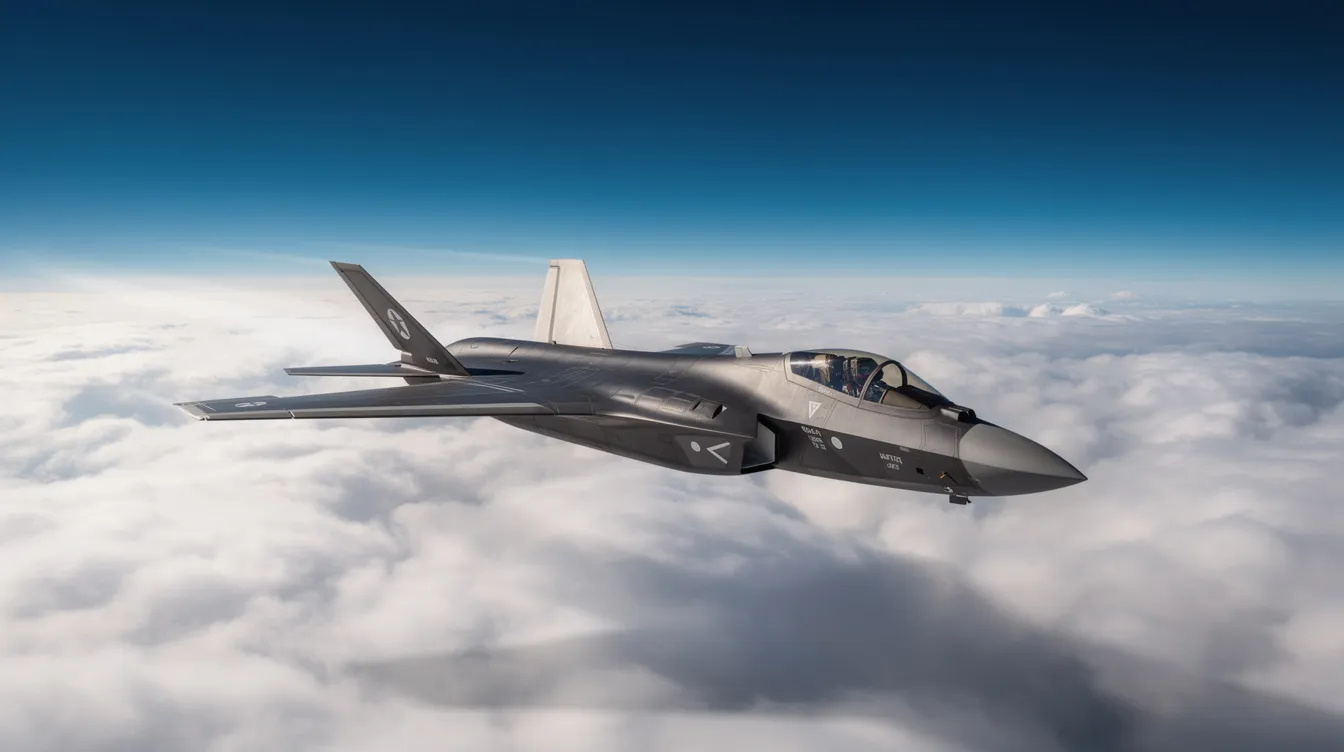
The world's most advanced air forces are fielding aircraft that would have been science fiction a decade ago. From stealth bombers that slip through layered air defenses to autonomous drones that fly wingman for crewed jets, the newest military planes entering service between 2020 and 2027 are fundamentally changing how nations project power, deter adversaries, and respond to crises at the speed of sound. For anyone who follows aviation - including the executives and high-net-worth travelers who rely on private jets to navigate the same global airspace - understanding what's flying overhead in 2027 is not just fascinating. It's strategic context.
Why the Newest Military Planes Matter for Global Air Power in 2027
Between 2020 and 2027, a generation of military aircraft has moved from classified hangars to flight-test campaigns, weapons integration, and in some cases, operational readiness. New military aircraft emphasize extended-range strike and hypersonic capabilities, while modern military aircraft focus on networked sensor fusion and autonomous combat systems. The result is a world where fewer, more capable airframes can accomplish what once required entire fleets.
Consider the contrast with commercial and private aviation. Military jets push the envelope in speed - often supercruise or high-supersonic - in stealth through low-observable materials and shaping, and in autonomy via AI-assisted decision-making. Private jets, by comparison, emphasize comfort, flexibility, and long-range efficiency. Yet BlackJet clients often fly into the same strategic hubs - Washington, D.C., London, Warsaw, Tokyo - where military standards for radar identification, secure routing, and air traffic control directly influence the safety infrastructure that underpins every private flight.
Modern military aviation is shifting toward sixth-generation stealth designs. These 5th- and 6th-generation platforms, combined with new unmanned fighter jets, allow an air force to control the air domain with dramatically fewer aircraft. Major advancements in military aviation include the integration of AI and automation, enabling a single pilot to coordinate multiple autonomous wingmen in real time. The military mindset has evolved: securing air superiority no longer depends solely on numbers. It depends on information dominance, stealth, and the ability to operate unmanned systems at scale.
As of 2027, the United States, Europe, and China are simultaneously fielding or testing new fighter jets and unmanned platforms, creating what defense analysts call a new "arms race in the sky." Here are the crucial milestones anchoring that race:
Program | Milestone | Date |
|---|
B-21 Raider | First flight | November 10, 2023 |
B-21 Raider | Weapons release test | November 2026 |
B-21 Raider | First operational base (Ellsworth AFB) | 2027 |
NGAD / F-47 | Full-scale demonstrator flight | September 2020 |
NGAD / F-47 | Boeing EMD contract awarded | March 2025 |
CCA (YFQ-42A / YFQ-44A) | First unmanned fighter jet flights | Summer 2025 |
Europe FCAS / NGF | Demonstrator phase | 2027 |
China J-20A | WS-15 engine integration, public appearance | 2025 |
For BlackJet's audience - executives, founders, and discerning travelers - understanding these developments provides essential context. The airspace management, routing protocols, and safety standards shaped by modern air forces are the same infrastructure that makes premium private aviation reliable, safe, and seamless. When you fly privately across the North Atlantic or into a restricted corridor near a capital city, you benefit from systems originally designed for aerial warfare at the highest level.
Newest American Military Planes and Programs (USAF & US Navy Focus)
The United States Air Force and Navy remain at the leading edge of next-generation combat aviation. Even while operating upgraded Cold War-era platforms - the B-52 Stratofortress, the F-15EX Eagle II - the USAF is investing tens of billions of dollars in 6th-generation fighters, autonomous wingmen, and stealth long-range strike aircraft that represent a new chapter in airpower innovation.
Next Generation Air Dominance (NGAD) / F-47
The NGAD program is not a single fighter jet. It is a 6th-generation, stealth-focused system of systems that integrates a manned fighter - now designated the F-47 - with unmanned Collaborative Combat Aircraft. Sixth-generation fighters are designed to operate in contested environments, and sixth-generation aircraft aim for greater autonomy in operations and system adaptability.
The USAF tested a full-scale NGAD demonstrator in September 2020, an exciting announcement that demonstrated incredible progress in classified development timelines. By June 2023, multiple demonstrators were flying. In March 2025, the Air Force announced that Boeing had won the Engineering and Manufacturing Development contract, and USAF chief of staff General David Allvin signed off on the program's direction as a cornerstone of the Air Force's position in future conflicts.
The USAF plans to spend over $28.48 billion on NGAD and related collaborative combat aircraft through the 2020s. In FY2026 alone, the USAF requested over $5 billion for F-47 development, with first flight projected for 2028. Next-generation military aircraft are transforming through software-driven capabilities - the F-47 is increasingly built to be upgradeable through modular software systems, allowing rapid adaptation as threats evolve. Adaptive-cycle engines adjust airflow for combat and cruising modes, giving the aircraft unprecedented flexibility in mission profiles.
USAF's New Unmanned Fighter Jets and CCA
In March 2025, the Air Force announced new unmanned fighter jets would be ready to fly that summer. This was not rhetoric. The USAF's YFQ-42A and YFQ-44A jets - built by General Atomics and another contractor,r respectively - represent the first unmanned fighter jets in history to receive a mission design series designation as fighter aircraft. These jets are part of the Collaborative Combat Aircraft program and will enhance air superiority for the Joint Force.
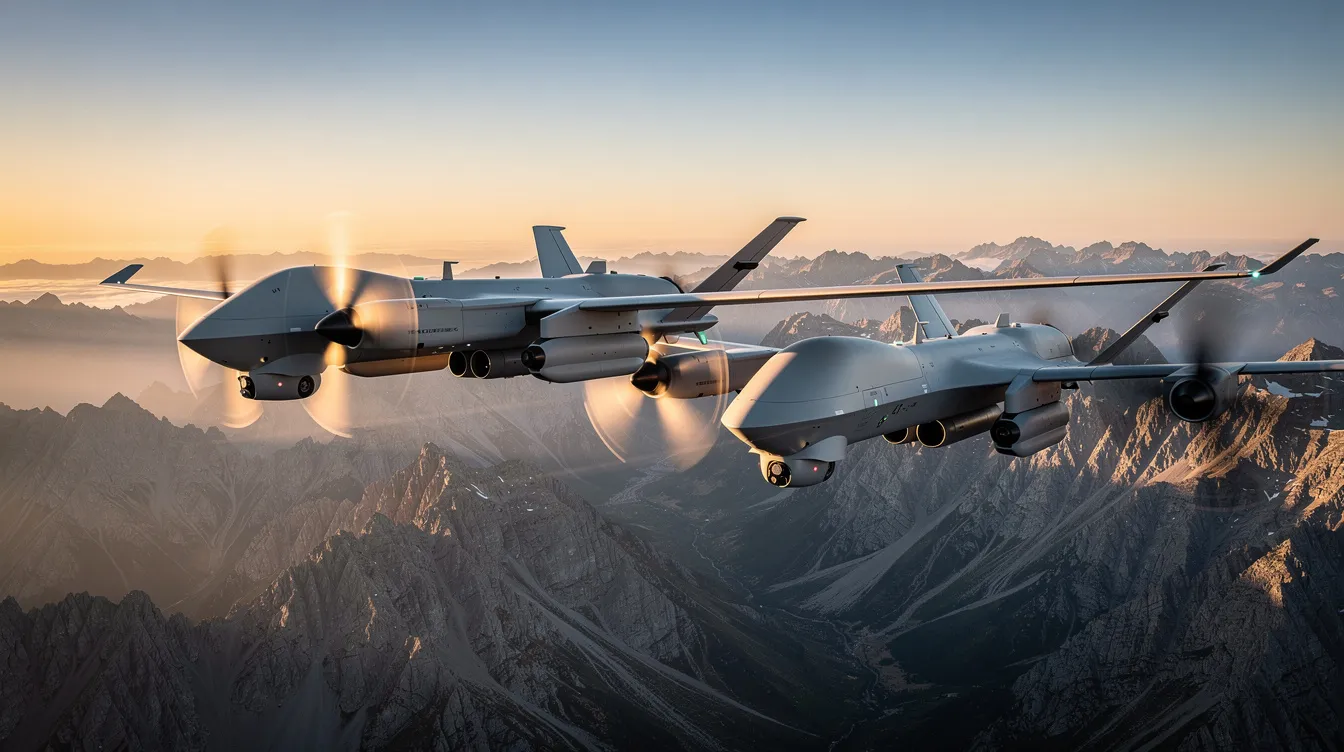
The YFQ-42A and YFQ-44A are unmanned fighter jets that were ready to fly in summer 2025, and by fall of that year, two unmanned fighter jets had completed initial flight-test campaigns alongside crewed platforms like the F-35 and F-15E. The CCA program demonstrates incredible progress in developing capabilities that allow new military aircraft to combine flight operations with autonomous combat support. Collaborative Combat Aircraft direct swarms of autonomous drones for various missions - from electronic warfare to strike - reducing pilot risk and augmenting limited fighter fleets.
What does this mean in plain English? Manned-Unmanned Teaming involves crewed jets controlling autonomous drones, letting a single pilot utilize crewed-unmanned teaming to manage two or more loyal wingmen in high-threat environments, much as sophisticated jet card providers like Flexjet structure their programs and costs to give travelers flexible, multi-aircraft options without owning an entire fleet themselves. Autonomous combat aircraft can operate alongside conventional fighters, absorbing the most dangerous missions - putting warheads on targets, suppressing enemy air defenses - while keeping human pilots safer.
As USAF Gen. Allvin wrote in guidance to the force, these new steps represent a big step toward the most badass air force the world has seen. The insights gained from two prototypes and ongoing flight tests will undergo rigorous testing before full-rate production, but the trajectory is clear: fighter jets prepared for the future will not fly alone.
Elizabeth Pritchett, a senior defense analyst, noted that the CCA program's pace of development is unlike anything seen in previous generation acquisition efforts.
Lockheed Martin and Legacy Fleet Upgrades
Lockheed Martin remains central to American air power. The company built the F-22 Raptor - the last, 195th aircraft was delivered on May 2, 2012 - and continues producing the F-35 Lightning II across all variants. Its deep involvement in conceptual work for NGAD and future platforms reflects a career-spanning commitment to air superiority.
Newer military aircraft feature advanced avionics and digital engineering, and the F-22 upgrade program exemplifies this. The USAF has invested roughly $19.5 billion (2023–2028) in F-22 upgrades - enhanced sensors, improved survivability, better range, and modernized interoperability - to match threats while NGAD matures. These historic aircraft continue to serve, and their ongoing modernization ensures that historic aircraft let the Air Force bridge to the next generation without capability gaps.
B-21 Raider and T-7A Red Hawk
The B-21 Raider stealth bomber is the newest long-range strike aircraft in the American arsenal. Unveiled in December 2022 and conducting its maiden flight on November 10, 2023, the Raider has since completed weapons release testing in November 2026 and is expected to arrive at its first operational base - Ellsworth AFB, South Dakota - in 2027. The Air Force plans a minimum procurement of 100 aircraft, at an average unit cost of approximately $692 million (2022 dollars).
New airframe designs prioritize low observability across radar and infrared, and the B-21 exemplifies this philosophy. Digital engineering accelerates production timelines and reduces lifecycle costs - the program used thousands of hours of digital twin modeling to predict weapon trajectories and validate flight characteristics before physical testing.
The T-7A Red Hawk, developed by Boeing and Saab, is the USAF's advanced trainer replacing the aging T-38 Talon. With USAF acceptance underway in the mid-2020s, it prepares pilots for 5th and 6th generation cockpits through integrated simulation and high-performance handling.
Technology That Filters Into Private Aviation
Technological breakthroughs from these fighter jets - composite materials, advanced flight control software, situational awareness systems - regularly migrate into business and private jets over time. BlackJet specifically selects modern aircraft types with the latest-generation avionics, terrain-awareness systems, and datalink connectivity derived from military-grade best practices. The efforts that make a fighter jet lethal in contested airspace also make a private jet safer, more efficient, and more reliable for the travelers who depend on it.
Global Landscape: European, Russian, and Chinese Newest Fighter Jets and Unmanned Systems
By 2027, the world beyond America is engaged in its own sprint toward next-generation air power. Several major powers are actively fielding or testing their own newest military planes, with a focus on stealth, autonomy, and new unmanned fighter jets that can operate in denied airspace. Stealth technology is increasingly integral to the overall aircraft design across every program, regardless of nation.
Europe's Next-Generation Fighter Efforts
Europe is pursuing two separate 6th-generation fighter programs, each representing a new generation of aerial warfare capability:
FCAS / NGF (Future Combat Air System): A joint effort by France, Germany, and Spain, FCAS centers on the New Generation Fighter and remote carriers - unmanned escorts designed to accompany crewed jets. The demonstrator phase is expected to begin in 2027, with full fighter development starting around 2029 and service entry targeted for approximately 2040. France alone is increasing FCAS funding from €1.2 billion in 2026 to €2.74 billion in 2027, though Dassault has warned that delays could push the NGF into the 2050s. At the Forces Association Warfare Symposium and other defense events, European leaders have stressed that this program is crucial for maintaining defense autonomy.
GCAP (Global Combat Air Programme): The British-led partnership with Italy and Japan targets an advanced 6th-generation fighter jet around 2035, featuring AI-driven avionics, optional manning, and integrated drones. Next-generation aircraft emphasize broadband low observability and AI-assisted sensor fusion, and GCAP's design philosophy reflects this across every subsystem.
European air forces continue using updated legacy platforms - the BAE Systems Hawk trainer, the Eurofighter Typhoon - as a bridge. Continuous avionics and radar upgrades keep these aircraft relevant, but they are not a substitute for the focus on true next-generation capability.
Russia's Newest Fighter Jet Developments
Russia fields the Sukhoi Su-57 Felon as its newest operational stealth fighter, with initial operational capability achieved in the late 2010s to early 2020s. Upgraded batches were delivered in February 2026, featuring improved avionics (101KS-U suite), new radar systems, and enhanced electronic warfare capabilities. Numbers remain modest compared to Chinese and American production.
The Su-75 Checkmate - a lighter, single-engine stealth fighter - remains under development. Originally expected to fly by 2023–2025, international sanctions on microelectronics and machining tools have created supply chain risks that pushed back the timeline. Initial deliveries were planned for 2026–2027, but the aircraft's IOC remains uncertain as enemies of progress - procurement challenges, funding constraints - continue to slow the effort.
China's J-20 and Expanding Stealth Fleet
China's Chengdu J-20 Mighty Dragon is the most advanced fighter in the People's Liberation Army Air Force. By mid-2025, the PLAAF operated approximately 300 J-20s across at least 13 air brigades, with production rates reportedly reaching 120 mature variants per year. The J-20A features indigenous WS-15 engines - delivering increased thrust and range - along with a redesigned canopy that reduces both drag and radar signature. The twin-seat J-20S variant, which made its public appearance in 2025, is designed to operate unmanned loyal wingmen, reflecting China's parallel investment in crewed-uncrewed teaming.
Advanced stealth designs eliminate vertical tail fins for better radar scattering, a principle visible in several Chinese stealth concepts. Military aircraft are evolving toward integrated command-and-control systems featuring manned-unmanned operations, and China is pursuing this aggressively. The GJ-11 Sharp Sword stealth UAV - China's answer to loyal wingman concepts - has been publicly displayed and tested, intended to accompany the nation's newest fighter jets in future conflicts.
Additionally, the FC-31 / J-35 carrier-capable stealth fighter is progressing toward naval service, though details remain opaque.
Unmanned Systems Worldwide
Autonomy, swarming tactics, and AI decision-support are common threads tying together new unmanned fighter jets worldwide:
Europe: The Dassault nEUROn and the UK's Taranis demonstrators laid foundational steps toward fully operational UCAVs. These programs inform the remote carrier concepts within FCAS and GCAP.
China: The GJ-11 Sharp Sword and other loyal wingman concepts represent lethal, low-cost force multipliers designed to fly alongside two fighter jets or more in contested airspace.
Global trend: Every major air force is working to match threats with autonomous platforms that can absorb risk, extend sensor reach, and multiply combat power without additional crewed aircraft.
A World BlackJet Clients Navigate
Many BlackJet clients routinely travel to financial, political, and industrial centers - London, Paris, Berlin, Washington, Tokyo, Abu Dhabi - and regional hubs such as Karachi for bespoke private jet charters that also serve as bases for these advanced air forces. While military airspace is tightly controlled, understanding where and how these newest military planes operate helps travelers appreciate the airspace management, routing, and safety infrastructure that BlackJet navigates seamlessly on every private flight. A couple of hours' notice is often all it takes to arrange a trip through corridors where the world's most advanced jets patrol.
From Battlefield to Business Jet: What Next‑Gen Military Tech Means for BlackJet Travelers
If you're an executive, founder, investor, or ultra-high-net-worth traveler, breakthroughs in fighter jets and unmanned aircraft matter to your private flights in 2027 and beyond - not because you'll be flying a stealth bomber, but because the technology, safety systems, and airspace infrastructure developed for these platforms directly improve the aviation ecosystem you rely on, just as understanding the broader private jet price landscape and access models helps you navigate that ecosystem on the business side.
Technology Transfer and Safety
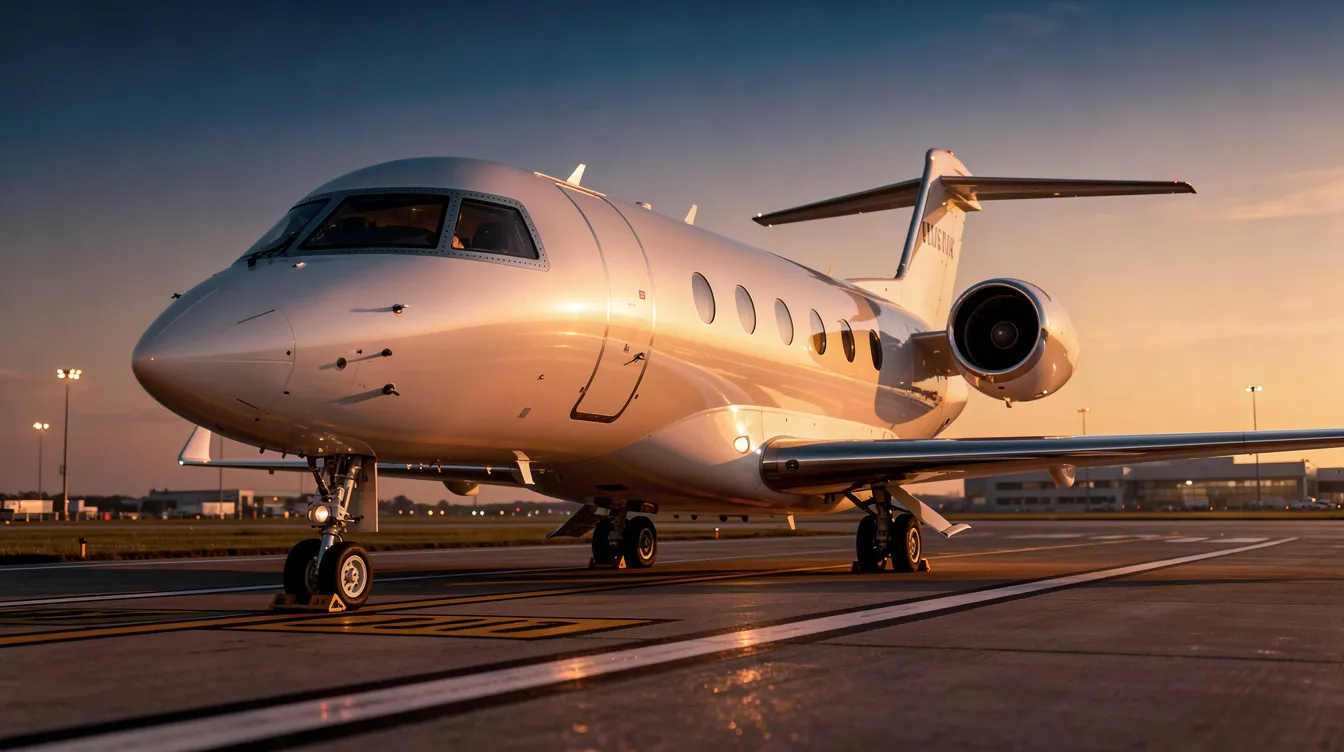
Innovations pioneered for a fighter jet - fly-by-wire controls, predictive maintenance algorithms, radar-absorbing materials, enhanced cockpit ergonomics - routinely migrate into high-end business jets over a 10- to 15-year cycle. The same digital engineering that the B-21 program uses to simulate thousands of flight scenarios before physical testing is now being adopted by business aviation manufacturers to accelerate certification and improve reliability.
BlackJet specifically prefers aircraft with the latest-generation avionics, terrain-awareness systems, and datalink connectivity derived from military-grade best practices, similar to the capabilities found on top-tier luxury private jets worldwide. Every aircraft in the BlackJet fleet meets or exceeds rigorous testing and certification standards - strengthening private travel safety with the same seriousness that a staff gen applies to mission planning, comparable to leading standards upheld by top private jet companies worldwide.
Autonomy, AI, and Real-Time Support
The same AI routing and sensor fusion that allow new unmanned fighter jets to execute complex missions - autonomous takeoff, mid-flight retasking, formation flying - are, at a civilian level, transforming how private jet operations handle weather avoidance, route optimization, and real-time flight support.
BlackJet's digital booking tools and 24/7 real-time flight support echo the command-and-control sophistication seen in modern air forces, particularly valuable for frequent flyers evaluating whether a 100-hour jet card commitment and cost structure aligns with their operational tempo. When LiveNow's Mike Pache spoke about the pace of innovation in defense aviation, the parallels to private aviation technology were striking: both domains are moving toward predictive, AI-assisted operations that prioritize safety and efficiency above all, much like the way best-in-class jet card programs for frequent flyers emphasize reliability and streamlined decision-making.
Sustainability and Efficiency
Fuel efficiency goals in the newest military planes - long-range, low-drag, optimized mission profiles - parallel the business aviation industry's push toward lower emissions and smarter routing, encouraging many travelers to consider more affordable, entry-level private jet options that balance cost with efficiency. Military programs invest heavily in aerodynamic refinement and propulsion efficiency because every pound of fuel saved extends range and capability. The same logic applies to private aviation.
BlackJet offers carbon-neutral private flights through integrated carbon offset programs - at no extra cost to members- while many travelers also explore budget-friendly private aircraft options as they compare ways to access the skies. Continuous improvements to aircraft performance, sometimes inspired by military research into advanced composites and engine efficiency, help reduce environmental impact across the fleet.
Travel Scenarios That Bring It to Life
Scenario 1: New York to London for a Board Meeting. A BlackJet member flies the North Atlantic corridor on a carbon-neutral private jet, departing Teterboro and arriving at Farnborough within hours, similar to the way large executive teams might choose the best private jet for 20 passengers when traveling together for high-stakes meetings. That same corridor is a strategic lane for USAF and NATO aircraft - deconflicted airspace and rigorous ATC coordination keep private travel smooth and punctual, even as military operations occur in adjacent flight levels. The member arrives rested, prepared, and on time - no security lines, no delays, a level of comfort and coordination that scales up to private jets configured for around 50 passengers when boards or extended teams travel as a group.
Scenario 2: Los Angeles to Seattle on Short Notice.e A tech founder needs to be in Seattle by evening for a funding meeting and already understands how to buy a seat on a private jet in ways that maximize value and minimize friction. Using a BlackJet Jet Card or the flexible BlackJet 25+ Hour Jet Card, she schedules a flight within hours - the kind of flexibility that parallels an air force's ability to scramble fighter jets. But instead of a cockpit designed for 9G maneuvers, she steps into a cabin designed for comfort, privacy, and productivity, landing at a private terminal and heading directly to her meeting.
Elevate Your Travel
The world's newest military planes operate in an aviation ecosystem built on precision, safety, and relentless innovation. BlackJet exists within that same ecosystem - applying the same standards of rigor and excellence to every private journey.
Elevate your travel - effortlessly. With BlackJet, private flight isn't reserved for a few - it's accessible on your terms through our Jet Card programs and broader premium private jet cards and membership options, complete with rigorous safety, carbon-neutral performance, and unmatched flexibility. Explore our offerings and discover how refined, meaningful travel becomes your new standard.
Whether you hold a 25-hour or 50-hour Jet Card, every flight is managed with the same seriousness that the most badass air force in the world applies to its mission planning. The difference? Your mission is comfort, your destination is success, and your aircraft is waiting.
Key Takeaways
The newest military planes of 2027 - from the B-21 Raider to the F-47 NGAD to China's J-20A - represent a generational leap in stealth, autonomy, and networked warfare.
Unmanned fighter jets like the YFQ-42A and YFQ-44A mark an unprecedented shift toward AI-driven air combat, with Collaborative Combat Aircraft changing how every major air force approaches contested environments.
Technology transfer from military aviation continuously improves the safety, efficiency, and performance of private business jets.
BlackJet leverages this shared aviation ecosystem to deliver carbon-neutral, safety-first private travel through flexible Jet Card membership pricing and structures - the same airspace, the same standards, an entirely different experience.
Frequently Asked Questions About the Newest Military Planes
What are the newest military planes in 2027?
The newest military planes include developing and recently tested platforms such as the B-21 Raider, the F-47 under the Next Generation Air Dominance program, and Collaborative Combat Aircraft such as the YFQ-42A and YFQ-44A. Their capabilities and service timelines vary, and many remain subject to testing and development.
What makes sixth-generation fighters different?
Sixth-generation fighters are designed as part of connected systems rather than stand-alone aircraft. They emphasize low observability, advanced sensor fusion, adaptable software, extended range, and the ability to coordinate with uncrewed aircraft. Specific features and operational capabilities remain program-dependent.
What are Collaborative Combat Aircraft?
Collaborative Combat Aircraft, or CCAs, are uncrewed aircraft developed to operate alongside crewed fighters. They may support missions such as surveillance, electronic warfare, or strike, extending a force’s reach while allowing human crews to direct or coordinate operations.
Are the YFQ-42A and YFQ-44A operational fighter jets?
The YFQ-42A and YFQ-44A are prototype uncrewed aircraft in the U.S. Air Force’s CCA program. They were announced as expected to begin flying in summer 2025, but prototype flights and testing do not mean that an aircraft is fully operational or in widespread service.
How does military aviation technology relate to private aviation safety?
Military and civilian aircraft have different missions, certification requirements, and operating procedures. Some broader advances in avionics, digital engineering, flight controls, and predictive maintenance can influence civil aviation over time. For private travelers, the practical priorities are properly certified aircraft, qualified crews, rigorous operator safety standards, and coordinated air traffic management.
Can private jet travelers benefit from these developments?
Not by flying military aircraft, but by traveling within an aviation system shaped by advances in navigation, communications, and airspace coordination. BlackJet members can access private flights through Jet Card programs, with digital booking, 24/7 flight support, safety standards, and carbon-neutral flights at no additional cost to members. For frequent trips, a Jet Card can provide flexibility without the cost and responsibility of aircraft ownership.
Conclusion: What the Newest Military Planes Mean for 2027 and Beyond
The newest military planes are reshaping air power through stealth, extended range, networked sensors, adaptable software, and crewed-uncrewed teaming. Programs such as the B-21 Raider, NGAD/F-47, and Collaborative Combat Aircraft illustrate a broader shift: future capability will depend not only on individual aircraft, but on how securely and intelligently they work together. Their timelines and capabilities remain subject to testing, funding, and operational development, making careful distinction between demonstrated milestones and future goals.
For business and private aviation, the connection is practical rather than military. Modern airspace relies on disciplined coordination, certified aircraft, capable crews, and dependable technology. BlackJet brings those priorities to private jet access, with flexible Jet Card programs, 24/7 booking and flight support, and carbon-neutral flights at no additional cost to members. Travelers can also review BlackJet’s safety standards and explore modern aircraft options. Whether planning a short-notice regional meeting or a transatlantic journey, travelers can choose private aviation for its time-saving convenience and flexibility—without the responsibilities of owning an aircraft.
Explore BlackJet’s Jet Card programs to discover a more seamless way to travel, with safety, sustainability, and access built into every journey.


 Sign up with google
 Sign up with Apple