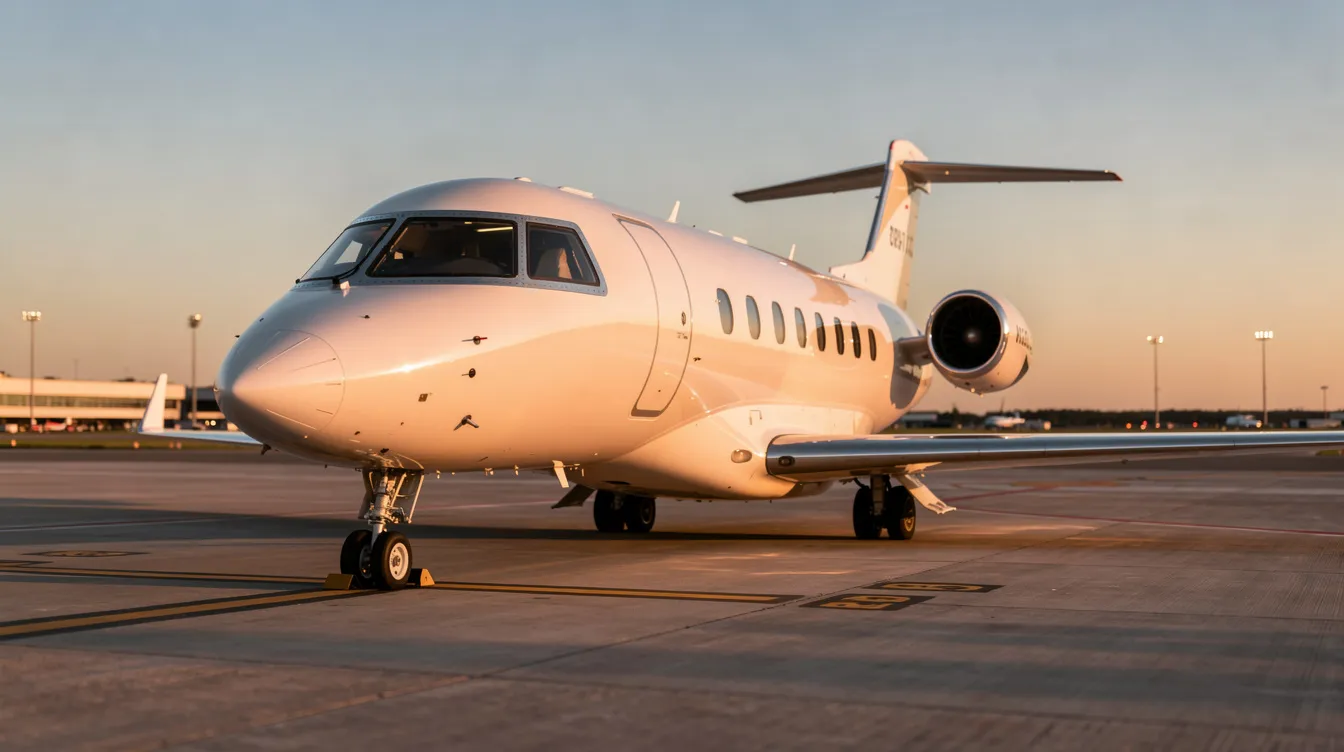
How many people are actually on your next domestic flight? This guide is for travelers, aviation enthusiasts, and anyone curious about how many people share a domestic flight. Knowing these numbers helps you make informed choices about comfort, efficiency, and the value of different flight options. The answer ranges more widely than most travelers realize—from a handful of executives in a private jet to nearly 200 passengers packed into a narrow-body airliner. Understanding these numbers shapes how you think about comfort, efficiency, and the strategic value of how you fly.
Domestic Flight Passenger Numbers: Quick Answer
A typical domestic flight carries 130 to 170 passengers, depending on the aircraft type and how full the plane is that day. Domestic flight capacities range from small regional jets to large wide-body aircraft, so there is no single answer to the question of how many passengers share a cabin with you.
Narrow-body jets like the Boeing 737 or Airbus A320 usually accommodate 150 to 190 seats and dominate most domestic routes in the U.S., Europe, and large countries like India. Regional jets serving smaller city pairs typically seat 70 to 90 travelers. On the other end of the spectrum, off-peak flights and repositioning legs can carry as few as a handful of people.
Private jets typically seat between 4 and 19 passengers, and most domestic private flights carry just 2 to 8. At BlackJet, we approach this differently: rather than filling every seat, we match aircraft type and cabin layout to your group size and mission, ensuring every domestic trip is right-sized for comfort, privacy, and efficiency.
Passenger Capacity Overview Table
Aircraft Type | Typical Passenger Capacity | Common Use Case | Example Models |
|---|
Private Jets (Light) | 4–8 | Short domestic hops, small groups | Embraer Phenom 300, Citation CJ3+ |
Private Jets (Mid-size) | 7–9 | Regional and transcontinental flights | Citation Latitude, Hawker 800XP |
Private Jets (Large) | 10–19 | Executive teams, long-range missions | Gulfstream G600, Bombardier Global 7500 |
Regional Jets | 50–90 | Smaller city pairs, feeder routes | Embraer E175, Bombardier CRJ900 |
Narrow-Body Jets | 120–200 | Domestic mainline routes | Boeing 737-800, Airbus A320 family |
Wide-Body Jets | 250–450+ | High-demand domestic or international | Boeing 777-300ER, Airbus A380 |
What Is a Domestic Flight and Who Flies on It?
A domestic flight is any air travel that departs and arrives within the same country's borders—New York to Los Angeles, London to Edinburgh, Mumbai to Delhi. These flights form the backbone of aviation networks in every major market around the world.
Domestic flights can be operated by commercial airlines, regional carriers, and private aviation operators using business jets. In the U.S. alone, thousands of domestic departures occur daily across routes like LAX to JFK, ATL to ORD, and DFW to MIA. Large domestic markets in India, China, and Brazil see similar volumes, and carriers like Air India serve extensive domestic networks connecting dozens of cities across the country.
Passenger profiles vary widely. Business travelers dominate weekday morning and evening flights, leisure tourists fill seats on weekends and holidays, and high-net-worth individuals or executive teams often fly by private jet for flexibility and privacy. Demand and route characteristics affect aircraft type used on flights, meaning the plane you board—and the number of passengers around you—depends heavily on where and when you fly.
Within a single domestic route, the passenger mix also shifts by cabin class. Economy class fills the majority of seats, premium economy offers more room at a moderate upgrade, and first class or business class cabins provide a more refined experience. Private jet layouts eliminate class divisions, offering a complete cabin dedicated to a small group.
Passenger Capacity on Typical Domestic Commercial Flights
Passenger capacity refers to the maximum number of seats a single aircraft is certified to carry safely. Most domestic air travel operates on narrow-body jets and regional jets. Wide-body aircraft appear only on select high-demand domestic routes.
Narrow-body jets are single-aisle aircraft generally seating 120 to 200 passengers (see facts: 3, 8, 7). Wide-body jets are twin-aisle aircraft typically seating 250 to 450 or more passengers (see facts: 2, 13, 12). Regional jets are smaller aircraft usually accommodating 50 to 80 passengers (see facts: 4, 5, 6).
How many seats are available on a given flight depends on how the airline has configured its cabins. Airlines adjust seating based on operational strategy and market demands, trading seat count for comfort or density depending on the route.
Narrow-Body Workhorses on Domestic Routes
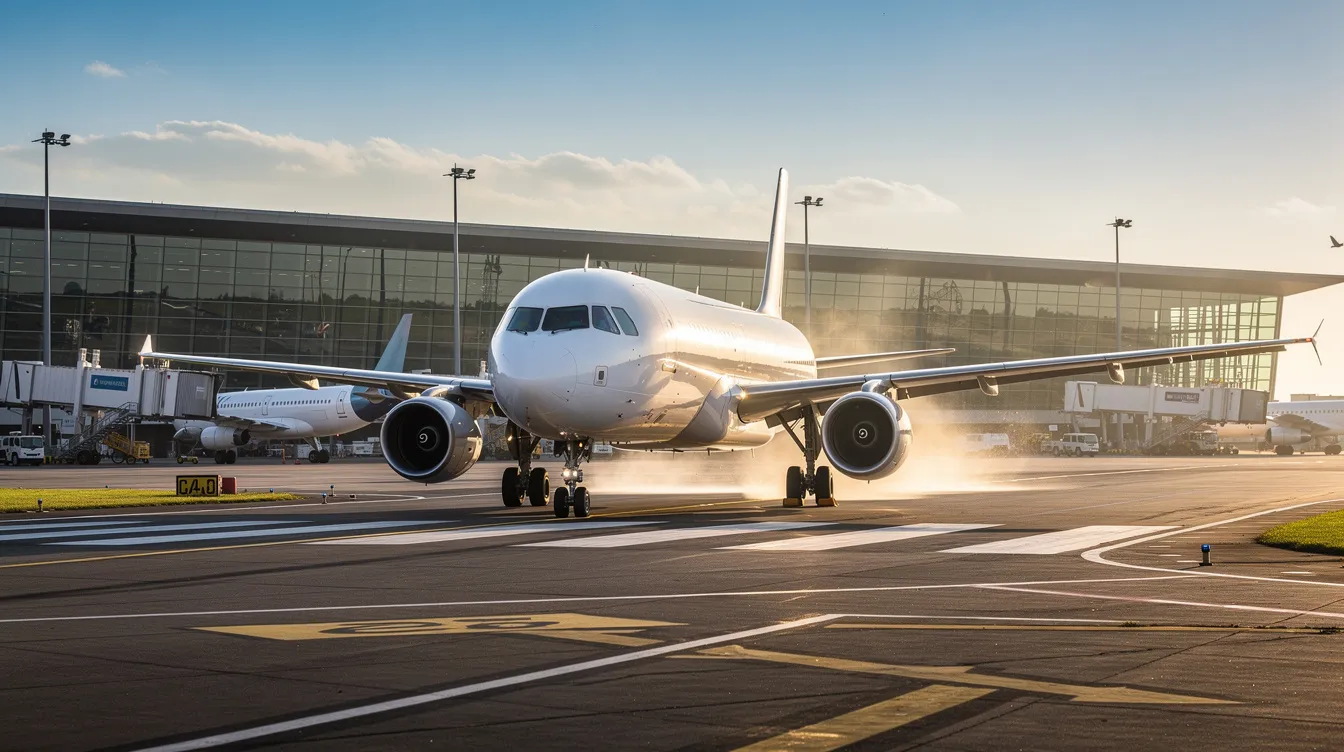
Narrow-body aircraft dominate domestic flight networks. Narrow-body jets generally have 120 to 200 seats and are the default choice for most airlines flying within the U.S., Europe, and other large domestic markets.
The Boeing 737-800 and 737 MAX 8 are among the most common, with mainline narrow-body jets averaging around 150–175 seats on domestic flights. Delta Air Lines, United Airlines, American, and several airlines globally rely on Boeing 737 variants configured with two-class cabins. In high-density configuration, low-cost carriers push passenger numbers on narrow-body jets to 180 or more. Southwest, for example, operates 737-800s with 189 seats. Low-cost carriers maximize capacity by minimizing legroom and removing premium cabin sections.
The Airbus A320 family seats 150–240 passengers depending on configuration. A standard A320 typically carries 150–186 in mixed domestic layouts, while the A321neo can reach 190–240 in high-density arrangements. American's A321ceo "Oasis" cabin is configured to around 190 seats, including first class rows and extra-legroom economy. Narrow-body jets commonly hold 150–175 passengers when full-service carriers operate them with premium sections.
Mainline carriers in the U.S. typically use aircraft with an average capacity of 166 seats. Aircraft production continues to favor these narrow-body models, and airlines are actively increasing seat density on newer deliveries.
Regional Jets and Small Mainline Aircraft
Regional jets feed major hubs and serve smaller cities where demand does not justify a full-size narrow-body. Regional jets typically accommodate 50–70 passengers, with typical seat counts including regional jets with 50 to 80 seats, depending on the model, and some can even be configured as private jets for 30 passengers on specialized charters.
The Embraer E175 is a workhorse on U.S. domestic routes, seating around 76–88 passengers in configurations used by Delta Connection and United Express. The Bombardier CRJ700 typically holds 65–76 passengers, while the CRJ900 seats 76–90. Regional and commuter jets typically have a capacity of 70 to 80 seats in standard layouts. Regional airlines utilize smaller planes averaging around 64 seats on thinner routes and shorter domestic sectors, while larger charter configurations can serve as private jets for up to 50 passengers on bespoke high-capacity missions.
Airlines have reduced the number of smaller planes to increase aircraft size, reflecting a strategy where airlines focus on higher frequency flights instead of large,r less frequent aircraft. Other carriers still deploy turboprops and very small regionals carrying 30–50 passengers in remote areas.
Occasional Wide-Bodies on Domestic Routes
Wide-body jets are rarely seen on domestic routes, but they appear on very high-demand city pairs. Wide-body jets on high-demand domestic routes can carry 250 to over 350 passengers. Wide-body jets typically have 250 to 350 or more seats, and wide-body jets can seat 250–450 or more passengers in extreme configurations.
Concrete examples include the Boeing 787 Dreamliner on Los Angeles to Honolulu, and the other Boeing 777-300ER on transcontinental U.S. routes. The Boeing 777-300ER usually carries about 550 passengers in single-class configuration, though domestic versions fly with far fewer seats in multi-class layouts. In Japan, wide-bodies regularly serve Tokyo to Sapporo.
When discussing the largest passenger aircraft in the world, the Airbus A380 is certified for 853 passengers—though no airline operates it at that density. The Airbus A380 can seat up to 853 passengers in a theoretical single-class configuration. Emirates operates the A380 on select high-traffic routes internationally. The Boeing 747-8 accommodates up to 605 passengers in a two-class configuration, and the Boeing 747-8 can accommodate up to 605 passengers at maximum density. These aircraft are not standard for domestic service but illustrate the upper limits of seat capacity in aviation.
How Many People Are Actually on a Domestic Flight?
The number of passengers physically on board rarely equals the plane's maximum capacity. Airlines maximize efficiency by filling more seats on flights, but the load factor—the percentage of seats occupied—determines the real count.
Post-pandemic, U.S. domestic load factors often hover between 80% and 90% on popular routes. A 180-seat Boeing 737 at 85% load factor carries about 153 passengers on a typical domestic flight. Airlines use Available Seat Miles to maximize revenue potential, and an industry survey of recent performance shows most airlines hit mid-80s on trunk routes.
Patterns matter. Peak Monday-morning and Thursday-evening business flights frequently approach 90% or higher. Mid-day departures and off-peak routes can fall to 60–70%, meaning a plane with 160 seats may carry only 100 passengers. Some regional and repositioning legs fly with fewer than 20 people on board, and travelers seeking a similar small-group experience often explore buying a seat on a private jet via shared or semi-private models.
Full-service carriers balance capacity with premium seating and higher seat pitch, which means fewer total passengers but higher revenue per seat. This trade-off is central to how airlines manage their domestic networks.
Cabin Layout and Class Mix on Domestic Flights
Airlines divide passenger capacity between economy, extra-legroom economy, and premium cabins. A typical domestic Boeing 737 might carry 16 first-class seats, 30 extra-legroom rows, and roughly 114 standard economy-class seats for a total of around 160.
Legacy carriers include larger premium sections, reducing total seat count on the same model compared to an all-economy layout. Airlines adjust seating layouts based on route demands—a high-yield route like JFK to LAX may carry fewer passengers overall but far more premium economy and first class travelers paying higher fares.
Private jet layouts take this comfort-first approach to the extreme, with seat count intentionally kept low to maximize room and productivity per traveler, a key consideration when comparing major providers such as NetJets jet card programs.
Private Jets on Domestic Routes: How Many People Fly Together?
Private aviation redefines the question of how many people share a domestic flight. Most private domestic flights carry between 2 and 8 passengers. Unlike commercial flights, private clients book the complete aircraft regardless of how many seats are physically available.
BlackJet specializes in helping clients match aircraft category and seat count to each domestic mission through our 25+ Hour Jet Card programs. Whether it is a CEO and two executives flying Dallas to Chicago, a family of five heading from Miami to the Bahamas, or a legal team shuttling LAX to SFO for a same-day return, the aircraft fits the group—not the other way around.
Light Jets: 4–8 Passengers on Short Domestic Hops
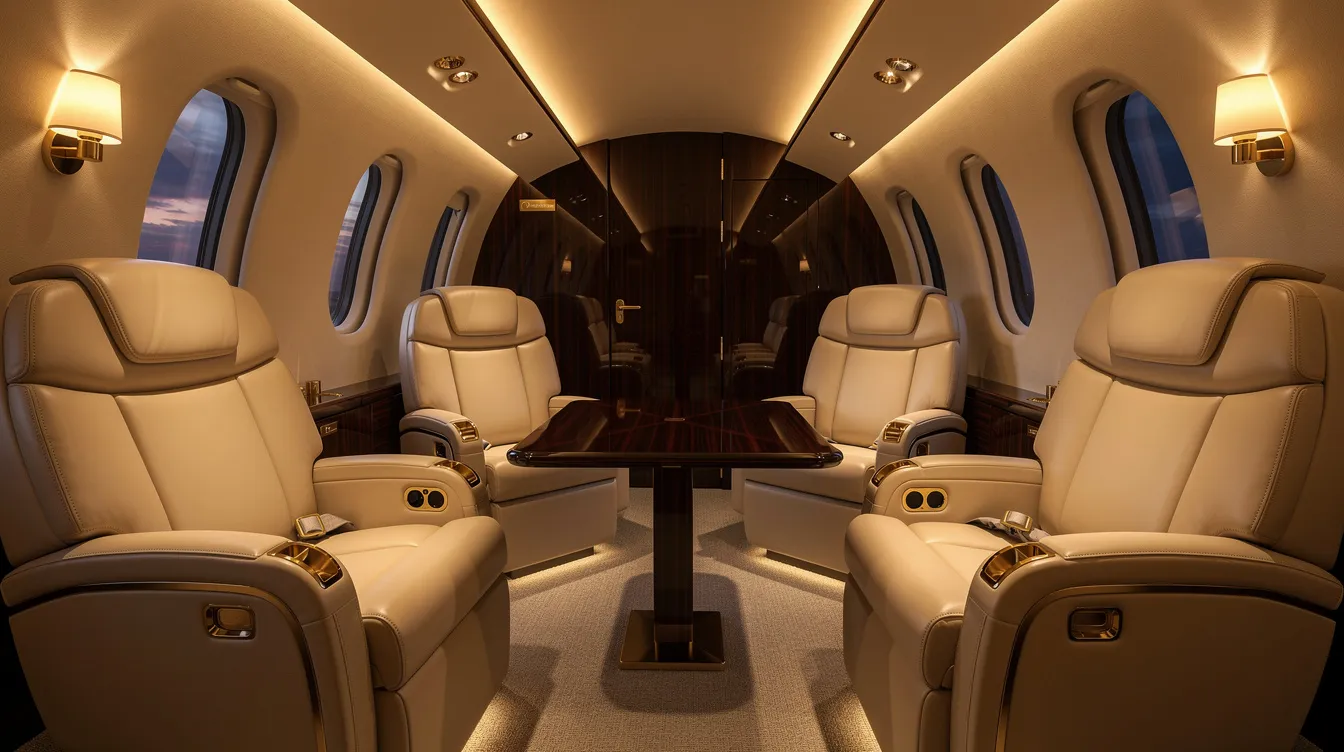
Light jets dominate short domestic routes of one to three hours. These small private aircraft typically seat 4 to 8 passengers in a club-style cabin layout. The Embraer Phenom 300 accommodates 6–8 passengers, the Citation CJ3+ carries 6–7, and the Learjet 75 offers 8–9 physical seats but is often flown with fewer for enhanced comfort.
Compared to commercial first class on a similar domestic leg, light jets offer direct routing, 20–30 minute pre-departure arrival at the airport, privacy, and schedule flexibility. BlackJet Jet Card members frequently use light jets for recurring domestic business routes with 2–4 executives.
Mid-Size and Super Mid-Size Jets: 7–12 Passengers Across the Country
For coast-to-coast domestic flights—Los Angeles to New York, São Paulo to Manaus—mid-size and super mid-size jets are the answer. Mid-size jets accommodate 7–9 passengers, while super mid-size aircraft handle 8–12.
The Cessna Citation Latitude seats 7–9, the Hawker 800XP carries 8–9, and the Challenger 350 is equipped with seating for 8–10. Passengers enjoy more headroom, wider cabins, and often conference-style seating configured for productive domestic segments—illustrating how different private jet sizes serve specific mission profiles. BlackJet's Jet Card programs let members step up from light jets to super mid-size when group size or range demands it.
Large-Cabin and Ultra-Long-Range Jets on Domestic Routes
Some domestic trips call for large-cabin jets seating 10–19 passengers, even when range is not the primary factor. The Gulfstream G500 and G600, Bombardier Global 7500, and Dassault Falcon 8X feature 16-seat private jet cabin layouts with boardroom-style space.
Typical domestic missions include executive leadership teams visiting multiple cities in one day, management flights for sports organizations, or high-profile client roadshows, and some groups may even consider private jets for around 20 passengers when capacity requirements increase. These jets may not always fly full; any domestic legs carry 6–10 passengers in cabins certified for up to 16–19 seats. BlackJet can arrange these aircraft for domestic itineraries requiring in-flight connectivity, privacy, and room to work.
What Really Limits Passenger Capacity on a Domestic Flight?
Three constraints govern the number of passengers on any domestic flight: safety regulations, aircraft weight and balance, and chosen cabin layout. These safety limits apply equally to commercial domestic flights and private jets.
Safety and Emergency Exit Rules
The FAA in the U.S. and EASA in Europe certify an aircraft's maximum number of passenger seats based on rigorous safety tests. Passenger capacity is determined by the aircraft manufacturer's certified limit, and safety regulations cap passenger counts based on emergency exits.
The critical benchmark: aircraft must evacuate all passengers in 90 seconds using only half of the available emergency exits. A domestic-configured Boeing 737 cannot simply add extra rows indefinitely because exit count and aisle width set non-negotiable limits. Private jets, though smaller, undergo the same certification process, with door size, emergency equipment, and exit paths determining legal capacity.
BlackJet works only with operators whose crew and pilot teams meet or exceed these requirements through robust safety management systems and regular third-party audits, reflecting industry-wide standards that answer the question of whether private jets are safe.
Weight, Fuel, and Range Trade-Offs on Domestic Routes
Maximum takeoff weight limits affect passenger capacity on every flight. The total includes aircraft weight, fuel, passengers, and baggage, and airlines or operators may reduce passenger count on some legs to carry more fuel or cargo.
On a long domestic route like New York to Los Angeles, a fully booked cabin with heavy baggage requires careful fuel management. Short domestic sectors generally allow full passenger capacity, while flights from high-altitude airports may impose practical limits. Private jet operators sometimes cap seating below certified maximum to account for range and baggage needs—for example, BlackJet might advise a client to fly 8 instead of 10 passengers on a hot-and-high departure to avoid a fuel stop.
Cabin Layout Choices and First Class vs Economy
Airlines trade seat count for comfort. Consider two hypothetical domestic Airbus A320 layouts: one all-economy with roughly 186 seats versus a mixed cabin with 1 first-class seat and approximately 150–160 total seats. The same plane, dramatically different passenger capacity.
Private jets take this to the extreme, often flying with well under 20 seats in aircraft that could theoretically accommodate more. BlackJet's clientele values space, privacy, and productivity over squeezing the maximum passenger capacity out of a cabin. Fewer passengers mean quieter cabins, better conditions for work or rest, and a fundamentally different domestic flight experience.
Choosing the Right Aircraft Size for Your Domestic Trip
Rather than asking how many passengers fit on a plane, the more helpful question is: what aircraft best fits your group size and mission? Factors to consider include passenger count, baggage volume, flight length, need for in-flight Wi-Fi, privacy for calls or meetings, and preferred airport of departure.
From Solo Traveler to Full Executive Team
1–2 travelers: Light jets on domestic hops offer maximum flexibility for a solo founder flying Miami to Atlanta or a pair of executives on a day trip.
3–6 travelers: Light or mid-size jets accommodate a legal team flying Los Angeles to San Francisco for a same-day return, with room for luggage and materials.
7–12 travelers: Super mid-size jets suit cross-country missions like a product team flying New York to Denver for a multi-day offsite.
12–19 travelers: Large-cabin jets serve a 14-person leadership retreat flying from New York to Aspen, with boardroom space and complete privacy.
BlackJet's Jet Card model lets members select the right aircraft category per trip instead of committing to one jet size, similar in structure to many jet card pricing and membership guides. This means you never overpay for empty seats on a domestic route or compromise comfort when your group grows. Compared to commercial domestic first class, door-to-door time savings of one to three hours per trip add up across a month of travel—resources you can redirect toward what matters.
Safety, Sustainability, and Technology in Domestic Private Aviation
BlackJet's approach to domestic private aviation rests on three pillars: safety, carbon-neutral flights, and technology-enabled booking, all core elements of our premium private jet card programs. These factors directly intersect with passenger numbers and cabin choices—even small-group domestic flights can be both safer and more sustainable when planned correctly.
Private Travel Safety Standards Across Aircraft Sizes
All BlackJet partner operators meet rigorous safety certifications, including experienced crew requirements, modern safety management systems, and regular maintenance protocols. Safety standards do not change just because a domestic flight has only 3 passengers instead of 150—the process remains equally strict.
The perception that smaller aircraft might be "less safe" is a misconception. Third-party audits and pilot experience thresholds are non-negotiable for every aircraft in BlackJet's domestic operations. On a winter domestic flight, for example, de-icing procedures, alternate airport planning, and conservative passenger loads all reflect safety-first decisions regardless of how many people are on board.
Sustainability and Carbon-Neutral Domestic Flights
Per-passenger emissions are influenced by aircraft type, seat density, and how many seats are actually occupied on a domestic leg. BlackJet offsets 100% of CO₂ emissions from member flights, ensuring every domestic private jet trip is carbon-neutral at no extra cost to you, while also highlighting pathways to more affordable private jet options that don’t sacrifice sustainability.
Modern, fuel-efficient aircraft reduce the environmental footprint compared to older jets. For a typical domestic route like New York to Chicago, offset calculations are based on actual fuel burn and retired through certified programs. Clients can fly with low passenger counts without ignoring their environmental responsibilities, and many also weigh budget-friendly private aircraft options when planning regular domestic trips.
Technology: Matching Passenger Count to the Right Jet
BlackJet's digital platform and mobile booking tools allow members to input passenger numbers, dates, and domestic routes for instant aircraft recommendations. Features include real-time pricing, aircraft category filters covering all major types of private jets, and the ability to see cabin layouts and passenger capacity before booking.
Around-the-clock human support handles complex domestic itineraries with multiple legs, changing passenger lists, or tight schedules. A member adjusting from 4 to 9 passengers for a domestic business trip can seamlessly upgrade aircraft type via the app—no phone tag, no delays, no guesswork, and clear visibility into jet card pricing structures for each category.
FAQs: Domestic Flight Passenger Numbers and Private Jets
How many passengers are on a typical domestic flight?
A typical domestic flight carries 130 to 170 passengers on a narrow-body jet operating at normal load factors. Regional jets carry fewer (50–90), and private jets carry 2–1, depending on aircraft size.
What is the maximum passenger capacity of a domestic plane like a Boeing 737 or Airbus A320?
The Boeing 737-800 typically seats 160–189 passengers. The Airbus A320 family seats 150–240 depending on configuration. In high-density configuration, some variants push beyond 200 seats on a single aircraft.
How many people can fly on a private jet for a domestic trip?
Private jets typically seat between 4 and 19 passengers. Light jets carry 4–8, mid-size jets carry 7–9, super mid-size jets accommodate 8–12, and large-cabin jets handle 10–19 travelers, making jet cards for frequent flyers an attractive option when you repeat similar domestic missions month after month.
Is it ever just a few people on a domestic commercial flight?
Yes. Off-peak flights, repositioning legs, and lightly booked regional routes sometimes carry fewer than 20 passengers. This is not uncommon on weekday mid-day departures or in smaller domestic markets.
How does BlackJet help choose the right private jet size for my domestic route?
BlackJet's Jet Card membership gives you access to expert advisors and digital tools that match your group size, baggage needs, and route to the ideal aircraft category, whether you’re starting with a 50-hour jet card program or a larger commitment. This helps optimize both comfort and cost across the international and domestic trips you fly each month.
Conclusion: From 4 Seats to 200+ - Choosing the Right Domestic Flight Experience
Domestic air travel spans a remarkable range—from 4 passengers in a light jet to 200 or more on a commercial narrow-body, with every configuration in between. Actual passenger numbers depend on cabin layout, safety limits, load factor, and how each airline or operator chooses to configure their aircraft.
The contrast between mass-market domestic flights and private jet solutions is not just about seat count. It is about time saved at the airport, privacy during the flight, and the ability to tailor capacity exactly to your group—without compromise.
Elevate your travel—effortlessly. With BlackJet, domestic private flight is accessible on your terms through our Jet Card programs, complete with rigorous safety, carbon-neutral performance, and unmatched flexibility, whether you’re flying regional hops or arranging private jet charters in Karachi and beyond. Explore our offerings and discover how refined, purposeful air travel becomes your new standard.


 Sign up with google
 Sign up with Apple