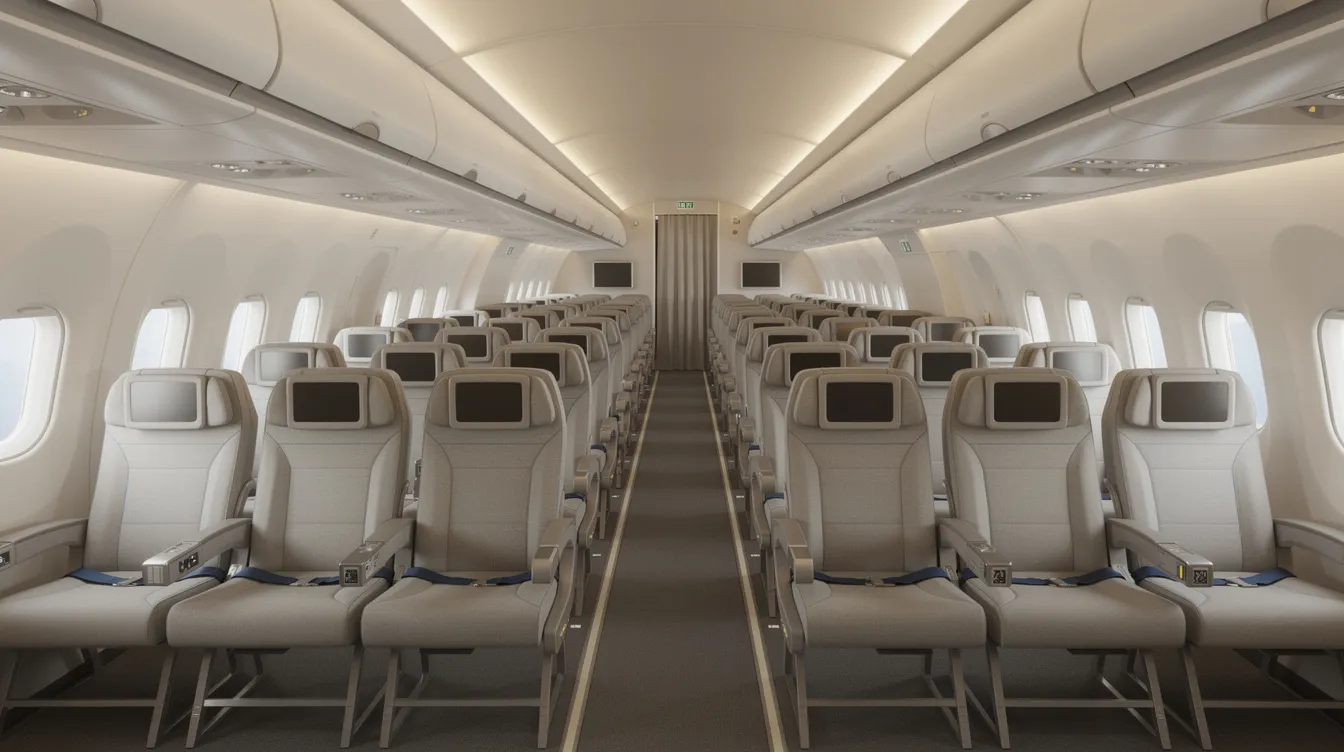
The passenger airplane has transformed the world in less than a century. From open cockpit biplanes carrying four passengers on short mail runs to wide-body airliners crossing oceans nonstop, the evolution of air travel is one of the most remarkable stories in modern history. This guide is intended for aviation enthusiasts, travelers, and anyone interested in how passenger airplanes have shaped modern transportation. Understanding the evolution and operation of passenger airplanes reveals how air travel has become an essential part of global connectivity and economic growth. A passenger airplane is designed for the mass transportation of paying passengers. This guide covers the full arc—from the first aircraft built to carry paying passengers through today's most advanced jet aircraft—and explains where private aviation fits into the picture.
Overview of Passenger Airplanes and Modern Airliners
A passenger airplane is designed for the mass transportation of paying passengers between cities and across continents. Since the 1950s, jet airliners have dominated the sky, carrying people and cargo between hubs like New York, London, and Tokyo on fixed schedules. Passenger airplanes can range from smaller regional jets to wide-body long-haul aircraft. How many passengers can they carry? The answer spans a huge spectrum: small turboprops seat about 19, while the Airbus A380—the world's largest passenger aircraft—can hold over 500 in a typical three-class layout.
Commercial vs. Private Aviation
Commercial aircraft operate on published schedules, selling individual seats to the public. Private jets and business aviation work differently: flexible departure times, varied routing, and luxury cabins tailored to a handful of travelers, with multiple private jet sizes available to match different trip lengths, passenger counts, and budgets. BlackJet's premium private jet card programs provide prepaid access to private jets across multiple cabin classes—a fundamentally different model than booking a seat on a scheduled commercial airliner.
The modern airliner flight experience involves arriving at the airport hours early, passing through security, boarding with hundreds of other passengers, and sharing overhead bins and cabin space. On a private jet, travelers skip long security lines, board at private terminals, and enjoy customized service with personal luggage areas—no overhead bin competition required, especially on small private jets optimized for luxury travel.
Key Features of Modern Airliners
Key features of a typical modern airliner:
Speed: ~800 km/h (approximately 500 mph)
Cruising altitude: ~35,000 ft
Fuel type: Jet-A kerosene, burned in turbofan engines
Range:
Short haul (~1,000–2,500 km)
Medium-haul (~2,500–6,000 km)
Long-haul (~6,000–15,000 km)
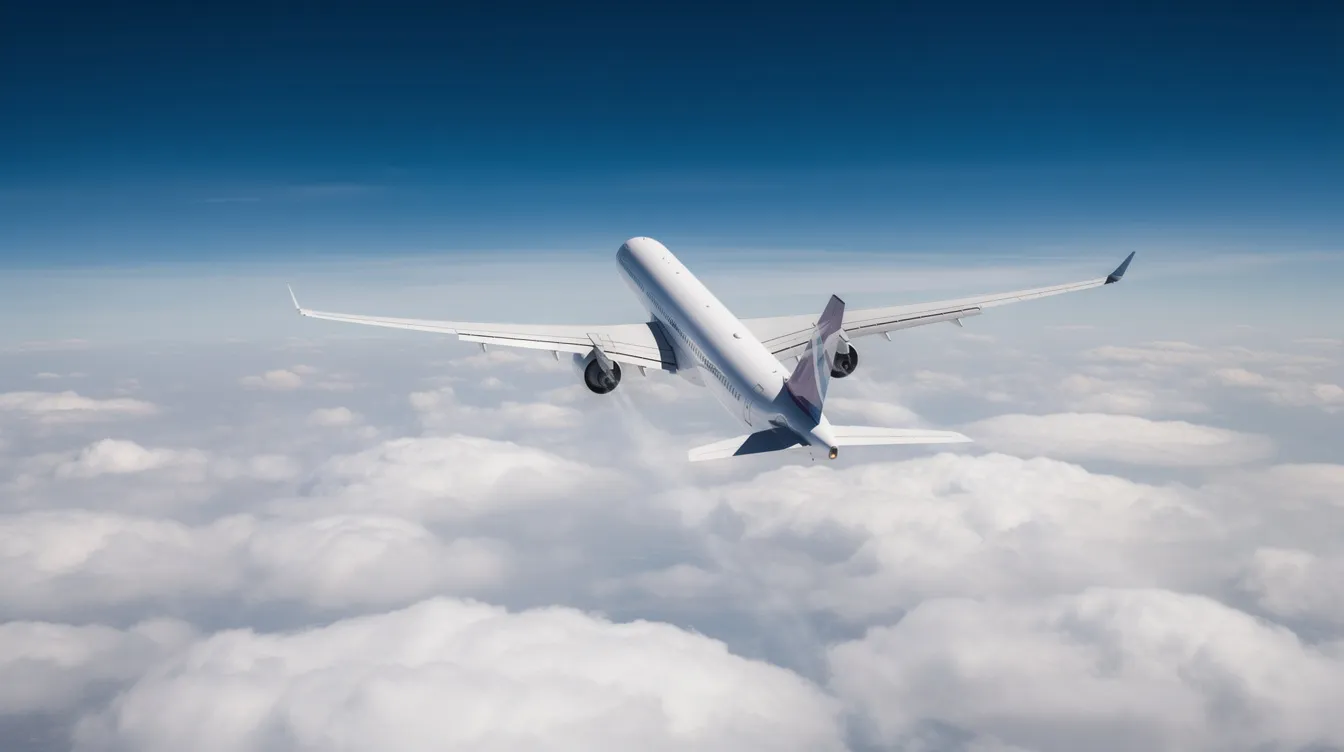
Turbofan jet engines provide high thrust while being fuel-efficient and quieter than older designs, and modern passenger airplanes are designed for operational reliability, featuring durable structures that can withstand decades of service.
Early Commercial Airliners and the First Flights
Before any jet aircraft took to the sky, the 1920s and 1930s saw aircraft manufacturers like de Havilland in Britain and Boeing and Douglas in the United States evolving from building mail planes to carrying passengers. Government air mail contracts were instrumental in the U.S.—the Post Office funded routes like the York Chicago route and New York–Washington, and early airlines piggybacked paying passengers onto these mail runs. Some of the earliest airplanes carried only four passengers alongside sacks of mail, with pilots sitting in an open cockpit exposed to the elements.
These early airlines faced steep challenges:
Low reliability: Frequent breakdowns and primitive maintenance
Small cabins: Unpressurized, cramped fuselage designs with minimal comfort
High ticket prices: Flying was a luxury relative to ground transport
Limited infrastructure: Short runways, poor navigation aids, unreliable weather forecasting
The first commercial flying boat was the Martin M-130, introduced in the 1930s. Flying boats like the M-130 opened transpacific routes—Pan American Airways operated them between San Francisco and Manila—making long-range passenger flight possible over water before adequate runways existed at remote destinations. These "first flight" milestones set the stage for the revolution that the jet age would soon bring.
Pioneering Propeller Airliners Before the Jet Age
Large piston-powered airliners created the first reliable global airline networks before 1950. Aircraft with all-metal construction replaced earlier wood-and-fabric designs, enabling planes that could fly farther, carry more, and survive rougher conditions.
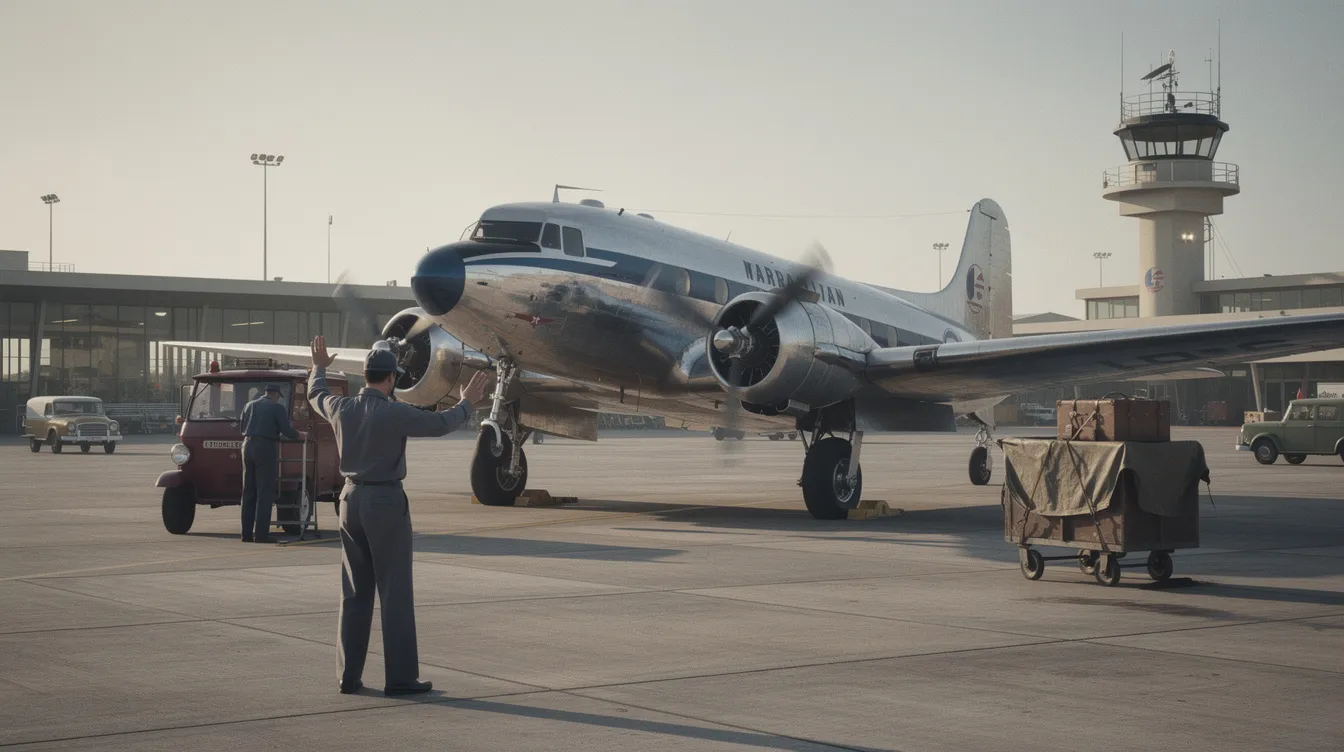
The Douglas DC-3 revolutionized air travel in 1936, enabling coast-to-coast flights for American Airlines on its "Skysleeper" service. It carried about 21–24 passengers at roughly 170 mph, and it was the first airliner that allowed airlines to turn a profit purely from passenger fares. The DC-3 later saw extensive military service during World War II—thousands were built as C-47 transports—and returned to civilian duty afterward. Other airliners like the Douglas DC-4 and the Lockheed Constellation introduced pressurized cabins and longer range, with the Constellation carrying 60–90 passengers on transcontinental U.S. flights and early transatlantic crossings.
Cabin layouts on these propeller planes were simpler: often 2–2 seating across a narrow fuselage, with sleeper berths available on overnight flights. The flying experience was noisy—piston engines and propeller vibration made conversation difficult—but cabins felt more intimate than later jets, with fewer seat rows and more personal attention from every flight attendant on board.
These planes proved that sustained transatlantic passenger service was commercially viable, building the airports, maintenance networks, and customer demand that the jet age would inherit; today, even private jets for up to 50 passengers can tap into that global infrastructure for bespoke group travel.
The Jet Age Begins: First Jet Airliners
The introduction of jet aircraft for passenger flight was nothing short of revolutionary. Jets could fly faster and higher than any propeller plane—at roughly twice the speed of late piston-engine airliners—slashing a New York–London crossing from over 12 hours to about 7.
The de Havilland Comet was the world's first commercial jet airliner. Its maiden flight came in July 1949, and BOAC launched the first scheduled service in May 1952 on the London–Johannesburg route. The Comet revealed both the promise and risks of jet aviation technology: structural fatigue around its square window corners caused catastrophic failures in 1953–54, grounding the fleet and prompting major engineering lessons.
The first passenger jet to achieve sustained commercial success was the Boeing 707, debuting in 1958. Pan American Airways operated the first Boeing 707 passenger flight on October 26, 1958, flying from New York Idlewild (now JFK) to Paris. The Douglas DC-8 followed shortly. These aircraft seated roughly 140–189 passengers depending on class configuration and variant, and they launched the era of affordable long-distance air travel. British Airways, Air France, and many airlines worldwide quickly adopted jet fleets.
Jets versus Late Propeller Aircraft
Feature | Jet Airliners | Late Propeller Aircraft |
|---|
Speed | ~800 km/h | ~400 km/h |
Altitude | 30,000–40,000 ft | 15,000–25,000 ft |
Engines | Turbofan/turbojet with fewer moving parts | Complex piston engines |
Comfort | Smoother ride above weather, pressurized cabins, less vibration | More vibration, less comfort |
Early jet airliners also drove airport development: longer runways, jet-capable terminals, and expanded fuel infrastructure at major hubs. Meanwhile, the Concorde first flew on January 21, 1976, achieving supersonic travel—the only supersonic airliner to enter regular passenger service, operated by British Airways and Air France until its last flight in 2003.
Evolution of Wide-Body and Narrow-Body Commercial Airliners
The distinction between narrow-body and wide-body aircraft shapes virtually every aspect of commercial aviation: route economics, passenger experience, airport gate requirements, and fleet strategy—just as understanding the different types of private jets available is key to planning efficient private itineraries.
Narrow-Body Aircraft
Narrow-body (single aisle) aircraft feature one aisle between seat banks, typically arranged 3–3. Narrow-body airliners typically seat 100 to 240 passengers. Examples include the BAC One-Eleven, Boeing 727, and the dominant families today: the Boeing 737 and the Airbus A320 family. These smaller aircraft serve dense short haul and medium-haul corridors—think New York–Chicago, London–Paris, or intra-Asia routes operated by airlines like United Airlines and Korean Air.
Wide-Body Aircraft
Wide-body (twin-aisle) aircraft feature two aisles with layouts like 2–4–2 (Airbus A330), 3–3–3 (Boeing 777), or the A380's double-deck configuration. Wide-body airliners are used for long-haul flights: New York–London, New York–Tokyo, or Dubai to Singapore routes flown by Singapore Airlines and carriers across the Middle East. The Boeing 747, first flown in 1970, was the first wide-body passenger aircraft—the original jumbo jet that made mass intercontinental flying economically viable for airlines and passengers alike.
Modern airliners are mostly powered by two engines for efficiency and lower maintenance costs. Only a few four-engine designs remain in passenger service, notably the A380 and some legacy 747s. Airlines like Korean Air and other airlines have increasingly retired four-engine types in favor of efficient twin-engine wide-bodies like the Boeing 787 and Airbus A350.
Most Delivered Aircraft and the Global Fleet
In commercial aviation, "delivered aircraft" refers to units a manufacturer hands over to an airline after completing production and acceptance testing—often including a demonstration flight before the buyer signs off. The most delivered aircraft models matter because they define maintenance infrastructure, pilot training pipelines, and route economics worldwide.
The Airbus A320 is the world's best-selling single-aisle aircraft family, with over 12,600 units delivered by mid-2026 and a backlog exceeding 7,000. The Boeing 737—a popular narrow-body aircraft—has seen approximately 12,486 deliveries from roughly 17,336 orders. Together, these two families form the backbone of the global fleet on short- and medium-haul routes, from the New York–Chicago corridor to Paris–Rome and dense intra-Asia networks.
Regional airliners typically seat fewer than 100 passengers and feed traffic into major hubs, while specialized private jets for around 30 passengers serve corporate, sports, and entertainment groups that need flexible point-to-point service. Embraer E-Jets, the Airbus A220, and turboprops like the ATR 72 and De Havilland Canada Dash 8 serve thinner routes and shorter distances where larger planes aren't economical.
In 2018, there were 29,398 airliners in service globally. The COVID-19 pandemic temporarily shrank the active global fleet in 2020, with thousands of aircraft placed into storage. Supply chain bottlenecks have since constrained delivery rates: expected deliveries between 2019–2026 were about 16,000, but actual deliveries reached only about 10,700, pushing average fleet age to historic highs.
Major Manufacturers of Passenger Airplanes
Airbus and Boeing dominate the narrow-body and wide-body markets. Boeing's product line includes the 737 MAX, 777, 787 Dreamliner, and the legacy 747. Airbus covers the A320neo family, A330neo, A350, and A380. These aircraft manufacturers compete intensely on fuel efficiency, range, cabin flexibility, and total cost of ownership.
Regional and Niche Manufacturers
Regional and niche players include:
Embraer (Brazil): E-Jet E2 family for regional and short-haul routes
ATR (France–Italy): ATR 42/72 turboprops for thin, short-distance routes
De Havilland Canada: Dash 8 series turboprops
COMAC (China): C919 narrow-body, an emerging competitor to the A320 and 737
Airlines evaluate certification (FAA, EASA), global support networks, spare parts availability, dispatch reliability, and resale value when choosing aircraft. These factors explain why Boeing and Airbus maintain such dominant market share—their support ecosystems are unmatched.
In private aviation, manufacturers like Gulfstream, Bombardier, and Dassault focus on smaller aircraft with luxury cabins optimized for privacy and speed, and travelers weigh these options against a detailed private jet price list of ownership and charter costs. BlackJet operates within this segment, offering jet card programs that give clients access to these aircraft types without the capital commitment of ownership; understanding jet card membership pricing and costs helps travelers compare this model to on-demand charter or ownership.
Cabin Layouts, Classes, and Overhead Bins
Airliners typically have first, business, and economy classes, and how many passengers any given plane can carry depends heavily on how the cabin is configured. A Boeing 777 in a dense economy layout might seat over 400; the same airframe with generous business class and first class sections might hold 280.
Concrete Seating Arrangements
Concrete seating arrangements across popular aircraft:
Aircraft | Typical Layout | Seats (3-class) |
|---|
Boeing 737 / A320 | 3–3 (single aisle) | 150–189 |
Airbus A330 | 2–4–2 | 250–300 |
Boeing 777 | 3–3–3 | 300–400 |
Airbus A380 (double-deck) | 3–4–3 / 2–4–2 | 500–575 |
The Airbus A380 can carry up to 853 passengers in a maximum-density all-economy configuration, though no airline currently operates this layout, while in private aviation a large private jet for about 20 passengers offers a very different, highly customized cabin experience for group travel.
Overhead Bins and Passenger Service Units
Overhead bins have evolved significantly. Older center-hinge designs gave way to pivot bins that hold larger carry-on bags and reduce boarding time. Passenger Service Units contain reading lights and air vents, along with call buttons and sometimes USB power ports, mounted above each seat row.
In private jets—like those available through BlackJet's programs or other budget-friendly private aircraft options—there are no overhead bins at all. Luggage goes in dedicated baggage compartments or closets, and every passenger has personal space that far exceeds even first class on a commercial airliner. The A350 features the world's quietest twin-aisle cabin, but even the best commercial cabin can't match the privacy and customization of a large cabin jet.
Life Cycle of a Commercial Airliner: From Delivery to Recycling
Passenger airplanes are built to rigorous civil aviation standards for safety and certification, and their journey from factory floor to recycling yard typically spans 20–30 years.
Aircraft Delivery
On delivery day at Boeing or Airbus facilities, the airline's crew flies acceptance flights to verify all systems. The aircraft then ferries to the airline's base for livery painting, cabin finishing, and crew familiarization before entering revenue service.
Operational Service
Throughout its operational life, the plane undergoes scheduled maintenance checks—from routine A-checks every few hundred flight hours to comprehensive D-checks every 6–12 years that essentially strip the aircraft to its nose section and fuselage frame.
During downturns, airlines park aircraft at desert storage facilities where dry conditions preserve airframes. Reactivation requires extensive inspections.
Retirement and Recycling
When maintenance costs exceed operational value, airlines retire aircraft—some are converted to freighters for cargo operations, others are parted out for spares, and increasingly, materials (aluminum, titanium, composites) are recycled.
Typical Life Cycle Timeline
Years 0–2: Design, prototype, first flight, certification
Year 2–3: Production, delivery, entry into revenue service
Years 3–15: Active front-line service, regular A/B/C checks
Years 15–25: Mid-life heavy maintenance, possible cabin refurbishment, some operators begin retirement
Years 25–30+: Last flight, storage, conversion to freighter, or scrapping and recycling
Passenger Safety, Regulations, and Cabin Systems
Modern airliners are engineered around safety from the ground up, with oversight from regulators like the FAA in the United States and EASA in Europe, and while typical jets cruise around 35,000 ft, private jets often fly even higher than commercial flights to avoid congestion and turbulence. Advanced avionics in passenger airplanes improve safety and navigational accuracy, while fly-by-wire control systems use computers to optimize flight stability and safety—replacing manual cable-and-pulley controls with electronic precision.
Key Safety Systems
Key safety systems passengers interact with:
Seat belts: Required during takeoff, landing, and turbulence
Emergency exits: Number determined by passenger capacity
Oxygen masks: Deploy automatically during cabin depressurization
Life vests: Stowed under or between seats for over-water routes
Reinforced cockpit doors: Standard since the early 2000s
Passenger airplanes feature pressurized cabins and multiple safety systems for comfort and safety. Cabin pressurization allows safe high-altitude flights—compressed bleed air from engines maintains cabin equivalent altitude at roughly 6,000–8,000 ft even when flying at 35,000 ft. This is why windows are small (structural integrity under pressure) and why cabin humidity stays low (10–20%).
Fatal accident rates per million flights have dropped by orders of magnitude since the 1960s, driven by better pilot training, stricter maintenance regimes, GPS navigation, and modernized air traffic control.
Private jet operations follow similar or higher standards. BlackJet's partner operators maintain third-party safety audits (ARGUS, Wyvern, IS-BAO), modern avionics, and strict maintenance programs that meet or exceed commercial aviation benchmarks, reflecting the broader reality that private jets are a very safe way to fly.
Passenger Experience: From Check-In to Landing
A typical passenger service journey on a commercial airliner starts with booking a ticket online, selecting a seat and class, and arriving at the airport 1–3 hours before departure. Then comes check-in, baggage drop, security screening, gate waiting, boarding via jet bridge, in-flight service, and finally disembarkation with baggage claim.
Commercial Airline Process
Short-haul flights (like New York–Chicago, roughly 2.5 hours) might offer a simple snack and beverage. Long-haul flights (New York–London at about 7 hours, or Singapore–Sydney at about 8) include full meal service, in-seat entertainment screens, and lie-flat beds in business class. Jet lag management becomes critical when crossing multiple time zones.
Private Jet Experience
How this compares to flying via a jet card program like BlackJet or by buying an individual seat on a private jet:
Ground time: 15 minutes at a private terminal vs. 2+ hours at a commercial airport
Airport access: Fly from secondary airports closer to your origin and destination
Cabin: Fully customizable service, no shared space, personal luggage access
Scheduling: Depart when you're ready, not when the airline says
Tips for a More Comfortable Experience
Tips for a more comfortable experience on commercial airplanes:
Select seats early—exit rows and bulkheads offer extra legroom
Stay hydrated—low cabin humidity and caffeine both dehydrate
Use noise-canceling headphones—even the quietest cabin is still a cabin shared with hundreds
Environmental Impact and Sustainable Aviation
Aviation accounts for roughly 2–3% of global CO₂ emissions, with most of that coming from the chemical reaction of burning jet fuel—kerosene combusting with oxygen to produce CO₂ and water vapor. Large passenger airplanes are naturally a focus of climate discussions because of their scale and growth trajectory.
Fuel Efficiency and Sustainable Aviation Fuel
Manufacturers and airlines are attacking fuel consumption from multiple angles. Composite materials reduce the weight of passenger airplanes while improving fuel efficiency—the Boeing 787 and Airbus A350 use carbon-fiber composites extensively. The A350 uses 25% less fuel than previous-generation aircraft. Winglets, advanced flight management systems, and higher-bypass-ratio engines all contribute to lower fuel burn per seat-mile.
Sustainable aviation fuel (SAF) is emerging as the most impactful near-term solution. Sustainable aviation fuel can reduce CO₂ emissions by up to 80% compared with conventional jet fuel. All Airbus aircraft can fly using a 50% SAF blend, and Airbus aims for 30% SAF in its global fuel mix by 2030. However, SAF currently covers less than 1% of total aviation fuel use—scaling production remains the biggest challenge.
Future Innovations
Beyond SAF, research continues into hydrogen propulsion, hybrid-electric aircraft for shorter routes (hybrid-electric propulsion can reduce fuel consumption by up to 5%), and new aerodynamic configurations like blended wing bodies. These innovations will take years to mature, but they point toward a fundamentally different aviation landscape.
Private jet providers contribute to sustainability too. BlackJet offers carbon-neutral flight options, provides clear guidance on how much it costs to rent a private jet, encourages fleet modernization toward newer, more efficient aircraft types, and supports verified carbon offset programs—giving clients a way to fly privately while managing their environmental footprint.
Commercial Airliners vs Private Jets: When to Choose Which
Commercial airliners deliver the lowest cost per seat on high-demand routes with full planes—especially long-haul intercontinental flights operated by airlines. The economics are clear: a single seat on a New York–London flight costs a fraction of chartering a private jet for the same route.
But cost per seat isn't the only metric that matters. Chartering a private jet can be worthwhile in many scenarios, and private jets—accessed through jet card programs—shine when:
Time is the priority: An executive team of 6 needs to visit three cities in two days with no direct commercial connections between legs
Access matters: Flying into secondary airports near New York, avoiding connections, and cutting door-to-door travel time in half
Privacy and security are non-negotiable: Sensitive business discussions, celebrity travel, or medical transport.
For many travelers, commercial airliners and private jets are complementary, and with the right tactics you can fly private more cheaply than many people expect. A long-haul flight on a widebody aircraft from New York to London makes economic sense, while a light jet or midsize jet handles the regional legs efficiently. The smartest travel strategies use both, matching the right mode to each trip's profile and priorities.
Frequently Asked Questions about Passenger Airplanes
Here are answers to common questions about passenger airplanes, jet aircraft, and the flying experience.
How many passengers can a modern airliner carry?
It depends on the type. Regional airliners seat fewer than 100. Narrow-body airliners like the Boeing 737 or Airbus A320 typically carry 150–220. Wide-body jets like the Boeing 777 carry 300–400. The Airbus A380 can carry up to 853 passengers in a maximum-density layout, though typical three-class configurations seat around 500–575.
What is the difference between a jet aircraft and a turboprop?
A jet airliner uses turbofan engines that accelerate exhaust gases to generate thrust, enabling speeds around 800 km/h and cruising altitudes above 30,000 ft. A turboprop uses a jet engine to spin a propeller, which is more fuel-efficient at lower speeds (400–550 km/h) and altitudes. Turboprops are common on shorter routes where jets would be inefficient. Learn more about propeller planes and how they compare.
Which passenger aircraft are the most delivered?
The Boeing 737 and Airbus A320 families are the two most delivered aircraft in commercial aviation history, with each surpassing 12,000 deliveries. They dominate the global fleet on short- and medium-haul routes.
Can I charter a commercial airliner instead of booking tickets?
Yes—chartering private aircraft for around 100 passengers is possible, and group charters of commercial aircraft exist for large parties (sports teams, corporate events, weddings). But for groups of 4–14 travelers, a private jet solution through a jet card program like BlackJet is typically more flexible and cost-effective than chartering an entire airliner.
Future Trends in Passenger Airplane Design and Travel
Passenger airplanes will continue to evolve over the next two decades, driven by advances in aviation technology, materials science, and digital connectivity.
Cabin and Connectivity Improvements
Expected improvements include quieter cabins (building on the A350's benchmark as the world's quietest twin-aisle cabin), larger overhead bins accommodating bigger carry-on bags, more flexible seating configurations, and real-time health and safety monitoring systems. Advanced digital connectivity will make in-flight Wi-Fi as reliable as ground networks, fundamentally changing the passenger flight experience.
Next-Generation Aircraft
Next-generation models are already taking shape. The Boeing 777X promises greater range and fuel efficiency with composite wings and new GE9X engines. The Airbus A321XLR extends single aisle range to enable transatlantic routes on a narrow-body—potentially reshaping how airlines serve mid-demand long-haul markets. COMAC's C919 is entering service, challenging Boeing and Airbus in the world's fastest-growing aviation market.
Supersonic and Personalized Travel
The potential return of commercial supersonic travel remains a tantalizing prospect. Since the Concorde's retirement, several companies have pursued concepts that could fly faster than today's jets while addressing the cost, noise, and sustainability challenges that grounded the original supersonic airliner. None have yet entered passenger service, but the ambition persists.
For travelers watching these trends, the future of flying looks increasingly bifurcated: commercial airliners will get more efficient, comfortable, and connected, while private aviation will mirror those gains with even greater personalization. Services like BlackJet aim to bridge these worlds—offering airline-level reliability with on-demand flexibility, whether you're boarding a light jet for a two-hour hop or planning a cross-country itinerary that no single airline schedule can match.
The planes in the sky keep getting better. The question isn't whether to fly—it's how to fly smarter.


 Sign up with google
 Sign up with Apple