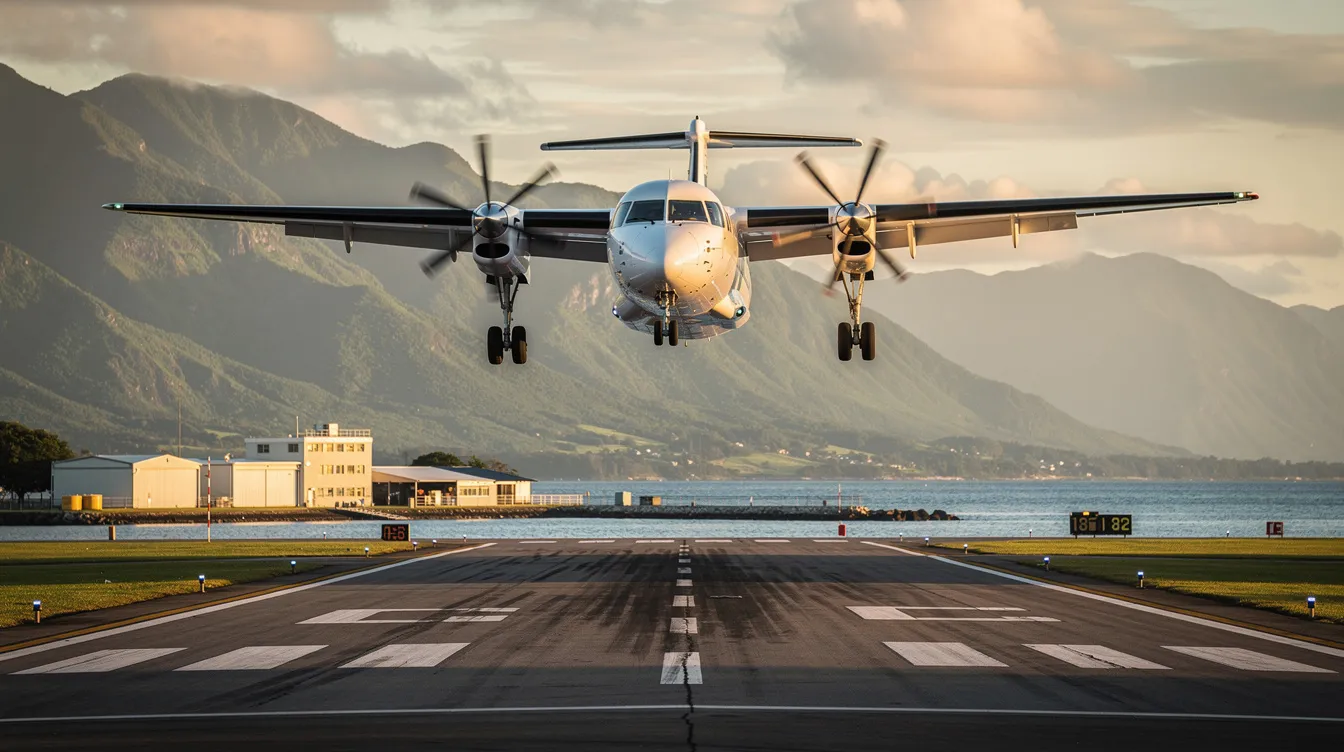
In a world that measures prestige in Mach numbers, propeller planes continue to earn their place in the most sophisticated private travel portfolios. For BlackJet members who value strategic advantage over convention, understanding when and why a propeller aircraft outperforms a jet is not trivia - it is a competitive edge.
Propeller Aircraft and High-End Travel in 2026
Private aviation is often reduced to a single image: a sleek jet climbing steeply over a major hub. But the reality of efficient, high-end travel in 2026 is more nuanced. Propeller-driven aircraft - particularly turboprop aircraft - remain indispensable for time-sensitive travelers on regional routes, remote destinations, and missions where jets simply cannot operate.
Consider a concrete example. A business executive flying from New York to Nantucket faces a commercial itinerary that routes through Boston Logan, followed by a drive or ferry - totaling five to six hours door to door. A turboprop departing from a closer regional airport lands directly on Nantucket's short runway in under three hours, including ground transfers. That is not a compromise; it is a strategic win.
Propeller planes are ideal for regional routes under 1,500 km, and for good reason, especially when compared with the most affordable private jet and turboprop options available to cost-conscious travelers. Approximately 34% of airports globally rely on turboprop aircraft as their primary form of air service. That translates to thousands of airfields - resort strips, island runways, mountain approaches - that jet planes cannot reach under normal conditions. For BlackJet members, this means access where others face dead ends.
The economics reinforce the logic. Turboprop engines can burn up to 50% less fuel than comparable light jets on short legs, aligning precisely with BlackJet's carbon-neutral positioning. Propeller planes typically cruise at around 300 knots (550 km/h), which on legs under 800 nautical miles results in only a modest time difference once ground transfers and airport proximity are factored in, especially when you benchmark overall value against jet card cost per hour across aircraft categories.
BlackJet primarily sells jet access through its premium private Jet Card programs, but strategically integrates propeller aircraft via carefully vetted partners for specific missions. Think of this article as a strategic guide: when does a turboprop make you faster, lighter on cost, and closer to your destination?
How Propeller Planes Work: From "Spinning Wings" to Thrust
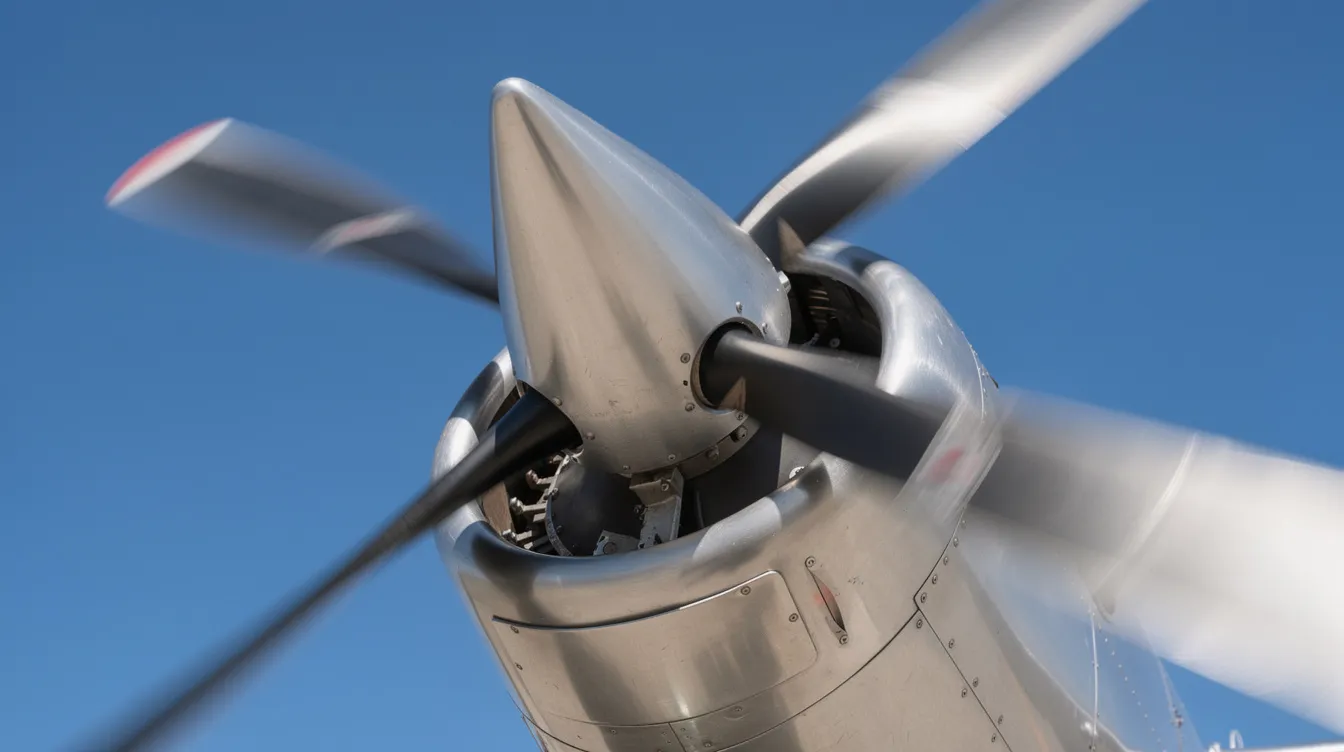
At their core, propellers are spinning wings. Each propeller blade is an airfoil - shaped, twisted, and angled to generate thrust in the same way a wing generates lift, except the force is directed forward rather than upward. Propeller planes use a spinning propeller to create thrust, and propellers generate thrust by pushing a large volume of air backward at lower speeds, which is inherently efficient for regional flight profiles.
The history of this idea runs deep. The Wright brothers pioneered the twisted airfoil shape in 1903, achieving a propeller efficiency of about 82% - remarkable for an era of wood and fabric. Even before them, Alberto Santos Dumont designed propellers for airships, exploring the rotary motion that would define powered flight. The first practical turboprop engine was patented in 1929, setting the stage for a propulsion category that would prove extraordinarily durable.
Modern Propeller Technology
Modern propeller blades are far more refined. They are shaped with a precise twist along their entire length so that each section - from root to blade tips - maintains an efficient angle of attack even as the outer sections move at high speeds, supporting high efficiency at cruise. This is why modern propeller engines remain efficient at cruise speeds of 250–350 knots.
What keeps performance consistent across flight phases is propeller control. Variable pitch propellers and constant speed propellers allow pilots - or automated systems - to adjust blade pitch for each phase of flight. Some specialized systems also account for front-and-rear propeller arrangements or rear-facing blade interactions as part of how thrust is managed. Low pitch at takeoff maximizes thrust; higher pitch at cruise optimizes fuel burn and reduces noise. On modern turboprop aircraft, digital systems like FADEC manage propeller RPM and engine output, improving both reliability and efficiency with minimal pilot workload.
A concrete example: the Pilatus PC-12 NGX, a single-engine turboprop, can achieve takeoff in under 2,600 feet thanks to precise constant speed propeller control combined with a powerful gas turbine engine. That short-field performance opens airports that most light jets cannot use.
For passengers, the experience is smoother than many expect. Modern soundproofing and cabin engineering have narrowed the comfort gap considerably. On flights under 90 minutes, most travelers report propeller noise as background ambiance rather than a distraction.
Types of Propeller Aircraft: Piston vs Turboprop for Private Travelers
The term "propeller aircraft" covers a broad category - from light piston engine trainers to pressurized executive turboprops capable of carrying eight or nine passengers in comfort. Understanding the distinction matters because it determines what level of service, speed, and safety a propeller-driven aircraft can deliver.
Piston Engine Aircraft
Piston engines power smaller, lighter aircraft, typically cruising under 200 mph. Models like the Cessna 172 - which has a propeller efficiency of about 73.5% - or the Cirrus SR22 are workhorses for pilot training and personal flying. They operate at lower altitudes and lower speeds, with limited range, unpressurized cabins, and generally less redundancy. These are not the aircraft BlackJet uses for member missions.
Turboprop Aircraft
Turboprop engines represent a fundamentally different class. A turboprop uses a gas turbine engine - compressor, combustion, turbine stages - connected to a propeller via a reduction gearbox. Turboprop engines cruise at around 300 knots (550 km/h), with ranges of 1,000–1,800 nautical miles depending on model and load. Modern turboprop engines improve fuel efficiency by 3% over previous models, a margin that compounds across hundreds of annual flight hours.
The lineage is proven. The Vickers Viscount became the first successful turboprop airliner in the 1950s. The C-130 Hercules, a military aircraft and transport aircraft icon, has been in service since 1956 as a turboprop aircraft - a testament to the durability of the design.
Within the turboprop category, BlackJet distinguishes between different classes that also appear in broader guides to the best small private aircraft:
Single-engine turboprops (e.g., Pilatus PC-12, Daher TBM 960): cost-effective for executive hops, capable of operating from runways as short as 1,100 meters. Single-engine turboprops are often used for private travel where missions are regional and runway access is critical.
Twin-engine turboprops (e.g., Beechcraft King Air 260/360): higher payload, engine redundancy, and broader dispatch flexibility, including over water and remote terrain.
Feature | Piston (e.g., Cessna 172) | Turboprop (e.g., King Air 350) | Light Jet (e.g., Phenom 300E) |
|---|
Cruise Speed | 120–180 knots | 250–330 knots | 380–460 knots |
Range | 300–600 nm | 1,000–1,800 nm | 1,500–2,200 nm |
Min. Runway | ~1,500 ft | ~2,500–3,500 ft | ~4,000–5,000 ft |
Cabin Experience | Basic, unpressurized | Executive, pressurized | Executive, pressurized |
BlackJet's Jet Card focuses on jets, but partner-operated turboprops are selected exclusively from premium executive models - not basic prop planes used for training, and are matched carefully against member missions using an understanding of private jet sizes and categories.
Turboprop Engines and Modern Safety Standards
Turboprop engines dominate premium propeller aircraft for a reason: they combine the proven reliability of turbine propulsion with the efficiency of propeller-driven thrust. For BlackJet members, understanding the safety architecture behind these engines builds justified confidence.
Engine Fundamentals
In non-technical terms, air enters the engine's intake, is compressed, mixed with fuel, and ignited in a combustion chamber, then expanded through turbine stages. That energy spins the reduction gearbox, which turns the propeller at controlled RPM. The result: smooth, reliable power with fewer moving parts than piston engines and far greater energy efficiency at the altitudes and speeds where turboprops operate.
The Pratt & Whitney Canada PT6A family is one of the world's most widely used propeller engines in business aviation. Typical Time-Between-Overhaul intervals range from 3,000 to 3,600 flight hours, with Hot Section Inspections at roughly the halfway mark. A global MRO network ensures parts availability and standardized maintenance - critical for operating aircraft across diverse regions.
Avionics and Safety Systems
Modern turboprops integrate advanced avionics - glass cockpits with real-time engine monitoring, terrain awareness and warning systems, weather radar, and traffic collision avoidance. These are not aftermarket additions; they are standard equipment on the executive turboprop models BlackJet partners employ.
By contrast, jet engines become efficient only at higher altitudes above 30,000 feet, and jets require longer paved runways - making turboprop engines more efficient at low speeds and altitudes where short-haul missions unfold. The safety gap between the two categories is not about the engine type but about the operator's standards.
BlackJet's standards are unambiguous: partner operators must hold certifications from organizations such as ARGUS, Wyvern, or IS-BAO. Pilots must be experienced on type with recurrent training covering short-field operations, adverse weather procedures, and - for single-engine turboprops - enhanced safety protocols that match the dispatch standards expected for mission-critical flights.
Where Propeller Planes Excel: Short Runways, Remote Airports, and Seasonal Destinations
The defining advantage of prop planes is access. Turboprops unlock airports and airstrips that are entirely inaccessible to most jets due to runway length, elevation, surface type, or approach geometry. For BlackJet members, this translates directly into reaching destinations that other aircraft categories cannot serve.
Operational Advantages
Turboprops can operate from runways as short as 1,100 meters - including grass and gravel strips serving ranches, island runways with water on three sides, or high-altitude ski destinations with steep approaches. Their strong low-speed climb capability, efficient operation at lower altitudes, and ability to generate significant drag for rapid descents on short approaches make them uniquely capable for these environments.
Propeller planes are more fuel-efficient at lower altitudes, which is precisely where short-leg missions unfold. Even military applications demonstrate the durability of this approach: C-130s can deliver cargo without needing fully-built runways, a testament to what propeller-powered aircraft design achieves when runway infrastructure is limited.
Route Examples
Dallas to a Texas ranch airstrip: A 200-mile hop to a private 3,000-foot strip that no light jet can safely use. A King Air 350 handles it routinely with passengers, luggage, and equipment aboard.
Geneva to Sion or Courchevel: Alpine approaches requiring steep descents and short runways. Turboprop aircraft are often the only practical choice for these seasonal ski destinations, where other aircraft face operational restrictions.
Miami to smaller Caribbean islands: Many out-island strips in the Bahamas, Turks and Caicos, or the Grenadines measure well under 1,500 meters. A PC-12 or TBM 960 delivers passengers directly, bypassing hub connections entirely.

BlackJet's flight support team routinely combines a jet segment into a major hub - Teterboro, Luton, Zurich - with a turboprop "last mile" to a remote final destination. This hybrid approach means members fly faster on the long leg and arrive closer on the short one, with seamless coordination from a single service team.
Economics, Sustainability, and When a Prop Plane Is the Smart Choice
Cost and Fuel Efficiency
For discerning travelers, choosing a turboprop over a jet on the right mission is not a concession - it is a calculated decision that improves cost efficiency, reduces environmental impact, and often delivers comparable door-to-door times.
Propeller aircraft are much more economical on shorter flights, a fact that becomes even clearer when viewed through the lens of jet card pricing structures and how hourly rates vary by aircraft type and mission profile. Indicative hourly operating costs for executive turboprops range from roughly $2,000 to $3,500 per flight hour, compared with $2,400 to $4,000 or more for comparable light jets. Turboprops can use up to 50% less fuel than jets on legs under 800 nautical miles, and those savings flow directly to the member when missions are properly matched.
Propeller planes typically cruise between 200 and 300 mph, depending on model - slower than jets, which are optimized for high-speed long-distance travel. But on a 400-nautical-mile leg, the block-time difference between a turboprop and a light jet may be only 30–40 minutes. Factor in closer airport access and shorter ground transfers, and the door-to-door gap narrows further.
Environmental Advantage
The emissions math is compelling. Per-seat CO₂ emissions for a fully occupied executive turboprop are roughly 170–190 grams per passenger-kilometer, versus 380–580 grams for light jets with fewer seats filled on short flights. Turboprops also produce fewer contrails - a factor increasingly recognized for its climate forcing impact.
Many modern turboprop aircraft are certified for Sustainable Aviation Fuel blends. BlackJet's 100% carbon-offset policy means every turboprop and jet flight is carbon neutral for the member, with emissions calculated from actual fuel consumption - including climb, descent, and taxi phases - and neutralized through verified environmental projects.
Decision Guidelines for Members
Under ~700 nm with short-runway access needed: Turboprop is generally the optimal choice - lower cost, lower emissions, closer airports, and often a better match than committing an entire 100-hour jet card allocation to short regional segments.
Over ~1,000 nm or between major hubs: Jets deliver meaningful speed advantages and higher-altitude comfort, especially for travelers structuring access through a 25-hour jet card program.
Multi-stop itineraries: Combine both - jets for continental legs, turboprops for regional positioning, while balancing usage across a 50-hour jet card strategy to keep costs predictable.
Choosing Between a Jet and a Prop Plane: Scenarios for BlackJet Members
Aircraft selection is mission-driven. Speed, runway constraints, passenger count, schedule, and even weather conditions shape every decision. Propeller planes generally fly at lower altitudes and slower speeds compared to jets - but that matters far less than most travelers assume on the right routes.
Scenario 1: Executive Commuting
A fund manager flies Zurich–Milan weekly. The distance is roughly 150 nautical miles. A turboprop covers it in approximately 45 minutes; a light jet in perhaps 30, illustrating how different types of private jets align with specific mission profiles. After factoring in airport positioning, the turboprop departs from a closer field - the door-to-door difference is negligible. The fuel savings, however, accumulate to significantly less fuel burned over a year of weekly commutes, along with measurably lower emissions.
Scenario 2: Family Vacation
A family departs Miami for a private island in the Exumas. The first leg - Miami to Nassau - runs on a midsize jet. From Nassau to the out-island strip (a 2,800-foot runway surrounded by water), a turboprop takes over. The jet cannot safely operate there. The turboprop handles the short runway, the crosswind, and the weight of luggage and dive equipment without issue. This is where reverse thrust and short-field capability prove their value.
Scenario 3: Multi-Leg Business Roadshow
A CEO conducts meetings in London, Edinburgh, and the Isle of Man over three days. Jets handle the London–Edinburgh leg. The Isle of Man's Ronaldsway Airport, while jet-capable, is more efficiently served by a turboprop for the short positioning flight from Edinburgh, reducing cost and keeping the schedule tight. Counter-rotating propellers on certain twin-engine models provide stable handling in the crosswinds common at island and coastal airports.
Common Member Questions
Are turboprops meaningfully slower?
On legs under 500 nm, the block-time difference is typically 20–40 minutes. Door-to-door, it is often less. Jet aircraft fly much faster and generally have higher cruise speeds, but top speed matters most on longer segments.
How does cabin noise feel?
On flights under 90 minutes, modern executive turboprops are quieter than many expect. Soundproofing has improved dramatically; the experience is comfortable, not jarring.
Single-engine vs twin safety?
Under BlackJet standards, single-engine turboprop operations meet enhanced dispatch criteria - pilots are type-rated, recurrently trained, and missions are evaluated for terrain and weather. Jets can fly above most weather, providing a smoother ride on longer legs, but short-haul turboprop flights typically remain below the altitude where that distinction is most felt.
BlackJet's Approach to Safety, Technology, and Carbon-Neutral Propeller Operations
Safety is the non-negotiable foundation for every aircraft type operated for BlackJet members - from heavy jets to single-engine turboprop aircraft. There is no tier system for safety. The standard is absolute.
Partner Vetting and Pilot Standards
Every partner operator for propeller aircraft must meet BlackJet's certification requirements: third-party audits from organizations such as ARGUS, Wyvern, or IS-BAO, whether they are flying workhorse turboprops or one of the best private jets in the world. Pilots must hold current type ratings, demonstrate logged experience on the specific airframe, and complete recurrent training that includes short-field operations, adverse-weather procedures, and energy management in the world of propeller-driven flight. Human-powered aircraft are a footnote in aviation history; modern turboprops are among the most rigorously tested machines airborne.
Technology and Transparency
The role of advanced avionics - glass cockpits, satellite communication, real-time weather and terrain data - ensures consistent safety standards whether a member is aboard a Gulfstream or a King Air. Digital engine monitoring tracks temperature, vibration, and pressure in real time, giving pilots and maintenance teams actionable data before issues develop. These are the same standards that govern airlines operating far larger fleets.
Carbon-Neutral Commitment
BlackJet's carbon-neutral commitment applies equally to propeller and jet flights, whether a member is flying a nimble turboprop drawn from the best small private aircraft segment or leveraging a jet card whose hourly pricing model has been carefully evaluated against alternatives like Flexjet jet card programs, other top jet cards for frequent flyers, and even the tax implications covered in our guide to maximizing jet card deductions. For larger cabin missions, some members compare BlackJet solutions with NetJets jet card costs or explore when a 16-seat private jet, a 30-passenger private jet, or even a 50-passenger private charter is most efficient, all within the broader framework of jet card pricing, benefits, and structures. Emissions are calculated from actual fuel burn - accounting for climb, cruise, descent, and taxi - and offset through verified environmental projects including forestry and renewable energy initiatives. Every flight, every aircraft type, every member.
Are Propeller Planes "Less Premium"?
Executive turboprops like the King Air 350 and PC-12 NGX feature pressurized cabins, climate control, lavatories, and cabin layouts designed for business productivity or leisure comfort. BlackJet's service standards - catering, ground handling, concierge coordination - are identical regardless of whether propellers or jet engines power the aircraft. The experience is seamless.
Propeller planes are not a step backward. They are a precision tool in a well-designed travel portfolio - and BlackJet ensures every option meets the same exacting standard.
Explore how BlackJet 25+ Hour Jet Card solutions integrate turboprop flexibility into your travel strategy. Speak with a BlackJet advisor to discover how propeller aircraft can unlock destinations, savings, and a lower carbon footprint on your next journey.
Frequently Asked Questions About Propeller Planes in Private Aviation
What types of propeller planes does BlackJet use for member flights?
BlackJet partners with operators flying executive turboprops, primarily single-engine models like the Pilatus PC-12 NGX and twin-engine aircraft such as the Beechcraft King Air series. These aircraft meet stringent safety and service standards, offering pressurized cabins and efficient performance for regional missions.
Are turboprop flights included in BlackJet’s Jet Card programs?
Yes. While BlackJet’s Jet Card programs focus on jet access, turboprop flights are seamlessly integrated through vetted partners when mission requirements call for short runways or remote airport access, ensuring consistent safety and luxury standards.
How do turboprops compare to jets in terms of speed and travel time?
Turboprops typically cruise around 300 knots, slower than jets cruising between 400 and 470 knots. However, on flights under 800 nautical miles, the door-to-door time difference is often minimal due to faster boarding and closer airport access, as detailed in our regional travel strategy.
Are propeller planes safe for private travel?
Absolutely. Modern turboprops operated by BlackJet partners adhere to rigorous safety certifications, pilot training, and maintenance protocols. Single-engine turboprops meet enhanced operational standards, and twin-engine models provide redundancy for added safety. Learn more about private aviation safety on our blog.
Can turboprops operate from unpaved or short runways?
Yes. Turboprop aircraft can safely operate from runways as short as 1,100 meters, including grass, gravel, or compacted earth surfaces, enabling access to destinations inaccessible to most jets. This operational flexibility is a key advantage discussed in our propeller plane advantages article.
How does flying a turboprop affect my carbon footprint?
Turboprops burn up to 50% less fuel than comparable jets on short routes, resulting in lower CO₂ emissions. BlackJet offsets 100% of emissions for all flights, including turboprop segments, at no extra cost to members. Read about our carbon-neutral flights commitment.
Is the cabin noise of a turboprop significantly louder than that of a jet?
Modern turboprops feature advanced soundproofing and scimitar-shaped propeller blades that reduce noise. On flights under 90 minutes, most passengers find the cabin environment comfortable and quiet. For more on cabin comfort, see our private jet cabin classes guide.
When should I choose a turboprop over a jet for my trip?
Turboprops are ideal for regional routes under approximately 700 nautical miles, especially when accessing airports with short or unpaved runways. Jets are preferable for longer distances, faster travel, and higher-altitude comfort. Our jet vs turboprop comparison provides detailed insights to help you decide.
Conclusion: The Strategic Role of Propeller Planes in Private Aviation
Propeller planes, particularly turboprops powered by advanced gas turbine engines, remain a vital component of the modern private aviation landscape. For BlackJet members, they offer unmatched access to remote and regional destinations, operational flexibility on short and unpaved runways, and high cost and environmental advantages on short-haul missions. While jets dominate long-distance, high-speed travel, turboprops excel where speed is balanced with efficiency, runway constraints, and sustainability priorities.
Choosing the right aircraft type is about aligning mission requirements with performance, safety, and convenience. BlackJet’s integration of turboprop partners into its Jet Card programs ensures members benefit from the best of both worlds—seamless access to jets for transcontinental flights and precision turboprops for last-mile connectivity. This strategic approach elevates private travel beyond luxury, delivering real-world advantages in time savings, carbon neutrality, and destination reach.
Discover how incorporating propeller aircraft into your travel portfolio can unlock new possibilities, reduce your carbon footprint, and optimize your journey from door to destination. Connect with a BlackJet advisor today to tailor your private aviation experience with the perfect balance of speed, safety, and sustainability.


 Sign up with google
 Sign up with Apple