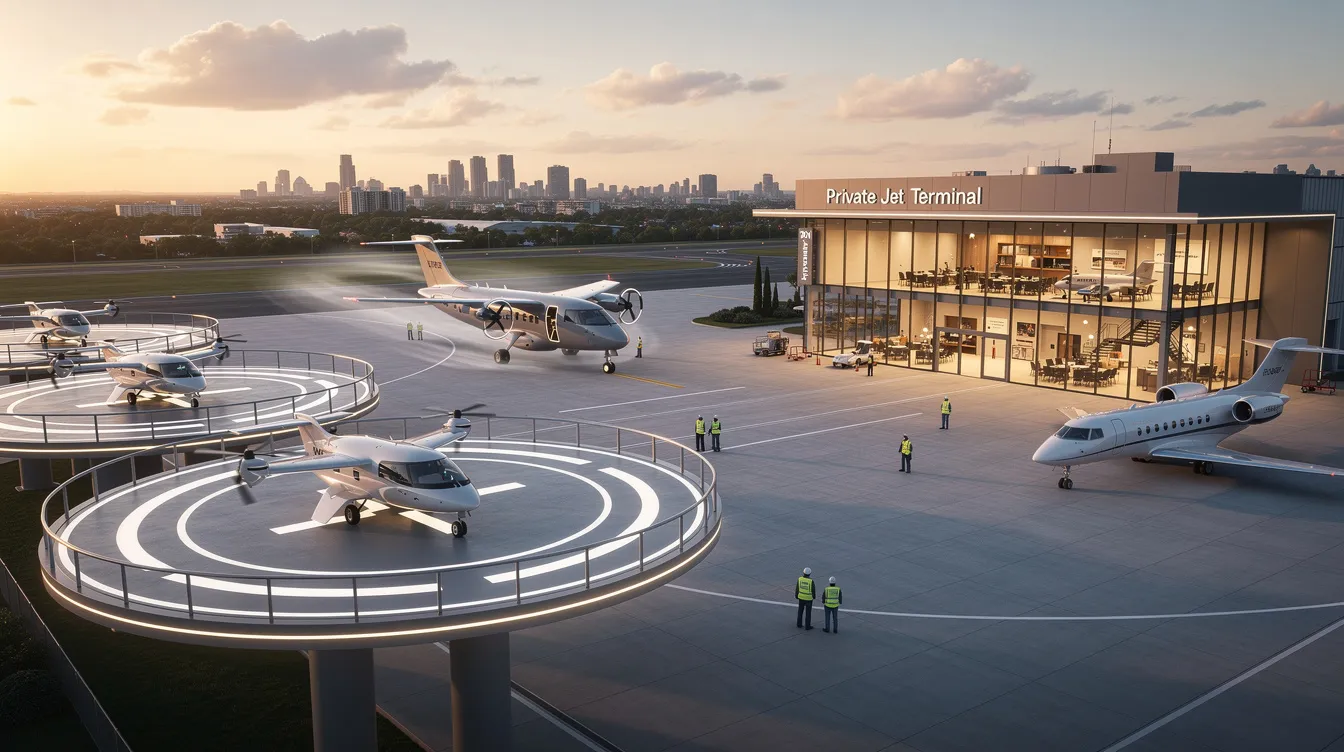
The flying car industry is accelerating faster than most people realize. As private aviation demand surges among executives and high-net-worth travelers, a new category of vehicles is emerging at the intersection of automobile and aircraft-roadable machines that drive on public roads and take to the sky. For anyone who has ever searched "plane car for sale," this guide delivers concrete models, real pricing, test flight milestones, and an honest comparison to the private jet access that already powers elite travel today.
Why "plane cars" matter for elite travelers today
The phrase "Where's my flying car?" has long reflected unmet futuristic expectations. In 2026, the answer is finally taking shape. Several roadable aircraft and eVTOL vehicles are now accepting deposits, completing test flights, and inching toward certified production-just as private jet charter demand reaches record highs.
Consider a short regional hop: Los Angeles to Palm Springs, roughly 120 miles. Commercial aviation consumes two to three hours once you factor in airport transit and security. A traditional private jet cuts that to about an hour. A flying car capable of vertical takeoff near your home and landing close to your destination could compress it further, eliminating the drive to and from the airport entirely. Similar door-to-door advantages exist on routes like Milan to St. Moritz, Dubai to Muscat, or New York to the Hamptons.
At BlackJet, we don't sell flying cars. But as a premier private aviation company offering Jet Card programs and a global charter network, we already deliver many of the benefits these early vehicles promise-flexibility, luxury, safety, and carbon-neutral flights-without the experimental risk. This article gives you the full picture: what's genuinely for sale, what the numbers look like, and how these options stack up against proven private jet access.
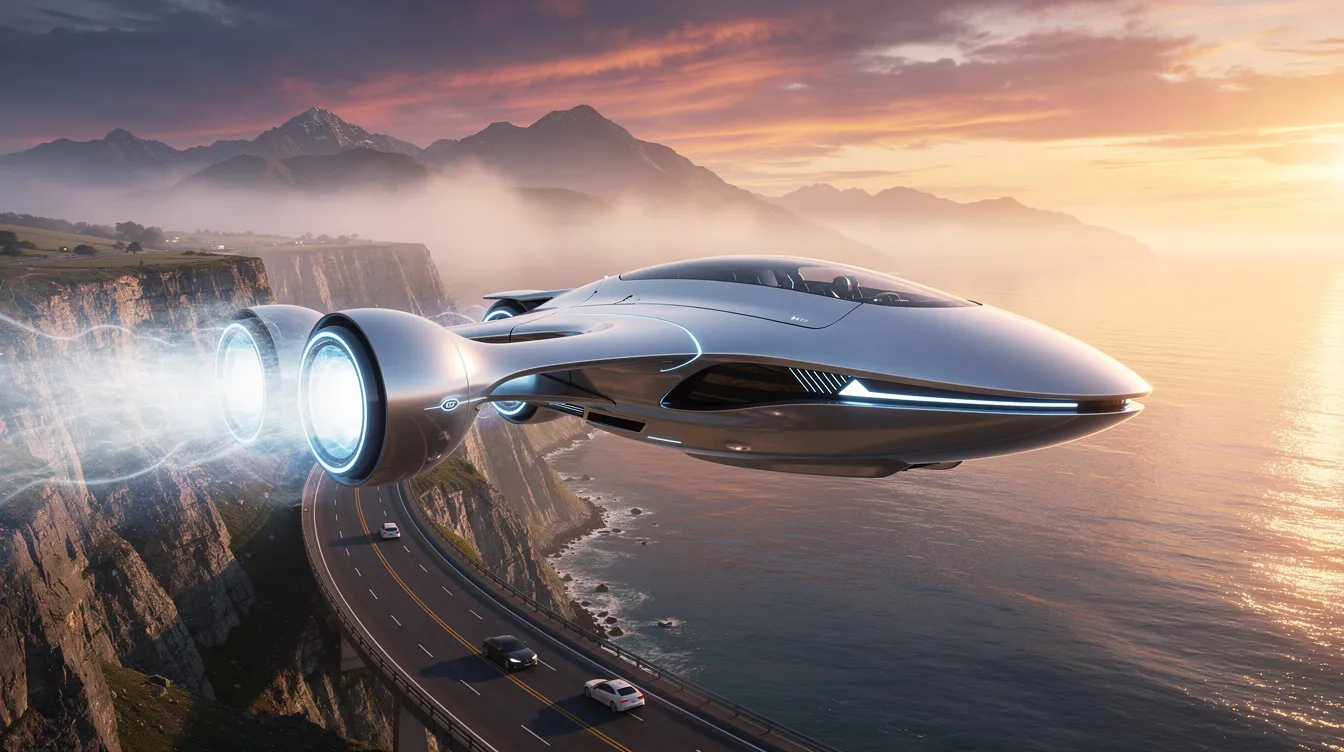
What is a "plane car"? Defining flying cars vs private jets
A "plane car" is an informal term for any vehicle designed to operate both on the ground and in the air. Sometimes called a flying car, roadable aircraft, or drive-and-fly machine, these craft blur the line between automobile and aircraft. Three distinct categories have emerged:
Runway-based roadable aircraft. These vehicles drive on roads but require a runway for takeoff and landing. Historical examples include the Taylor Aerocar and early Terrafugia prototypes. The PAL-V Liberty, a gyroplane that converts between road and flight modes, fits here as well.
eVTOL flying cars. Models like the Alef Model A and ASKA A5 combine road driving with vertical takeoff and landing using electric or hybrid propulsion. They aim to eliminate the need for a runway entirely.
Pure eVTOL air taxis. Vehicles like Jetson ONE fly but do not drive on public roads. They are frequently marketed as flying cars to capture public imagination, though they function more like personal helicopters.
Unlike private jets-which cruise at 400–600 mph, carry six to nine passengers, and cover 1,500–3,000+ nautical miles-most flying cars are limited to one to four passengers, cruise speeds of 100–200 mph, and maximum range under 300 miles. Weather tolerance is narrower, and cabin comfort is modest. For BlackJet clients, the question isn't really about ownership; it's about guaranteed on-demand access, which is precisely what a Jet Card delivers.
From the first flying car, Taylor Aerocar, to Alef Model A: a brief history of flying cars
The dream of combining a car and a plane is over a century old. Every generation has produced its own "first flying car" moment, yet none achieved mass adoption-until now.
Glenn Curtiss unveiled the Autoplane in 1917, a winged automobile that hopped off the ground but never sustained true flight. Henry Ford predicted a flying car in 1940, envisioning personal air transportation for the general public. Norman Bel Geddes promoted a flying car concept in 1945, and Ford's Volante Tri-Athodyne was publicized in the late 1950s as Detroit's futuristic answer to highway congestion. Between 1949 and 1956, the Taylor Aerocar became the most serious roadable aircraft of its era-it actually flew, but certification, cost, and infrastructure barriers killed any path to production.
Later efforts in the 1990s and 2000s-AeroMobil prototypes, the Terrafugia Transition-pushed the concept further. Each stalled against the same barriers: dual certification for both road and air use, pilot training requirements, prohibitive cost, and no supporting infrastructure.
What changed? Battery technology, lightweight composites, distributed electric propulsion, and advances in autonomous control systems finally make modern flying cars commercially plausible. The history of failed attempts is giving way to vehicles that are, for the first time, earning real certifications and attracting real customers.
Modern plane cars for sale in 2026: key models, price points, and the flying car industry
Several concrete plane car models are either for sale or in advanced pre-order stages right now. Here are the vehicles a serious shopper will encounter, with verified specs and pricing.
Alef Model A Two seats. The Alef Model A costs $300,000 and has a range of 110 miles in flight, with a road range of approximately 200 miles. Top speed in the air reaches about 110 mph; road mode operates as a low speed vehicle at up to 25 mph. Eight electric motors power the craft, and its custom-made wheels are part of the transformable design, serving for road use and converting to support flight function. The Alef Model A received FAA airworthiness certification in June 2023, and initial deliveries are expected in 2026.
PAL-V Liberty Two seats. The PAL-V flying car is priced at $322,000 and has a range of 310 miles in single-occupant flight at sea level. Cruise speed is around 112 mph. It operates as a gyroplane in the air and a three-wheeled automobile on the ground. The Pioneer edition is limited to 90 units, with U.S. and UAE deliveries expected in 2026–2027.
Samson Switchblade Developed in Oregon, the Switchblade flying car costs $170,000 and has a range of 450 miles. Wings and propeller fold for road driving. Its first flight occurred November 9, 2023, and the model is sold as an amateur-built aircraft. Claimed top speed in flight approaches 190 mph.
ASKA A5 Four seats-one of the few plane cars built for multiple passengers. The ASKA eVTOL can reach speeds of 150 mph in the air, with a flight range of up to 250 miles. Hybrid power (electric plus range extender). Road-legal with SUV dimensions. Price is approximately $800,000, with deliveries expected by 2028.
Doroni H1-X Two seats. Cruise speed around 95 mph, top speed approximately 120 mph. Flight endurance about 45 minutes, covering roughly 60 miles. Price starts at $350,000 with production targeting 2028.
Helix by Pivotal Single seat. The Helix flying car by Pivotal costs $190,000 and has a range of 20 miles. Classified under ultralight or light sport aircraft rules, it requires no pilot's license in some configurations under specific U.S. regulations.
AeroMobil Two seats with a luxury sports car aesthetic. The AeroMobil can reach speeds of 240 mph in the air and can transform from car to aircraft in under three minutes. Pricing has been quoted in the range of €1.2–1.5 million. Still in advanced prototype and pre-order stages.
Other notable concepts. SkyDrive (developed in Japan), XPeng HT Aero, and the FusionFlight Axion VTOL-which can achieve over 200 mph top speed-are in various stages of development. Some accept deposits; others remain in testing.
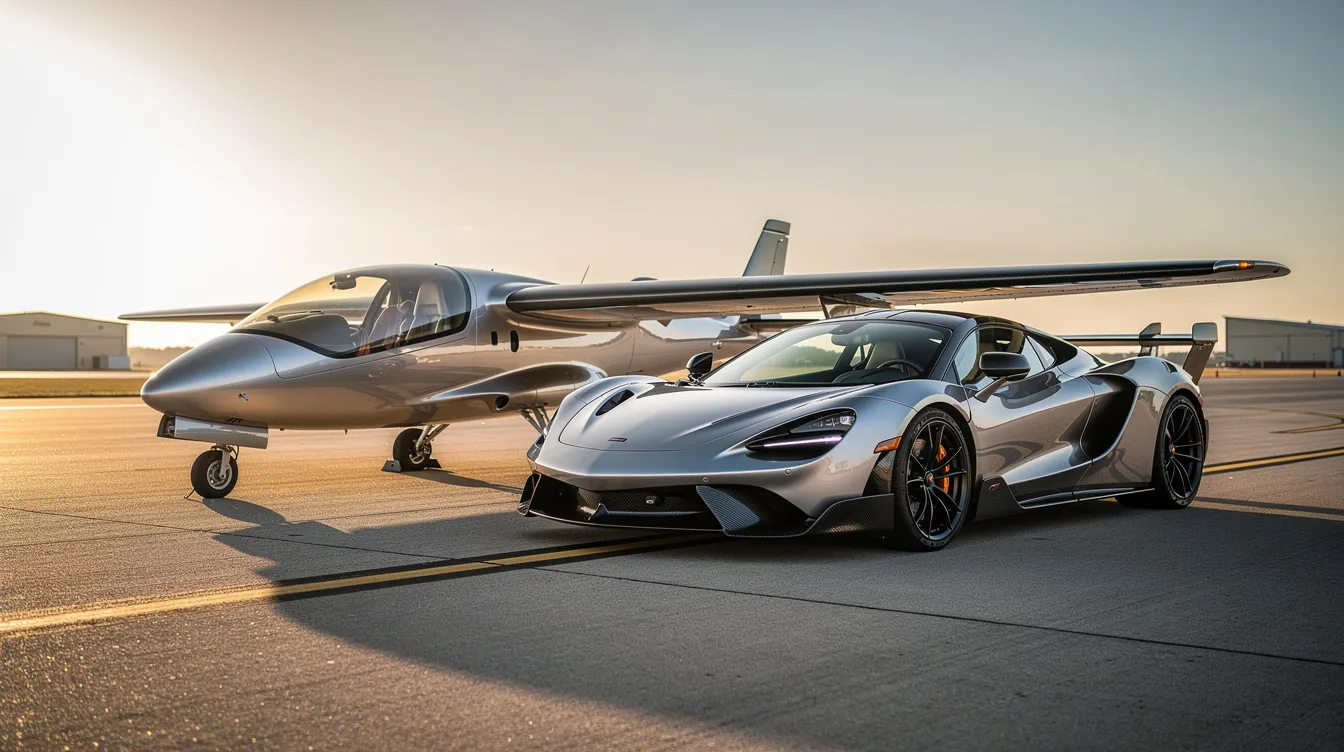
Alef Model A and other headline makers
The Alef Model A has become one of the most searched plane car for sale options in the world, and it symbolizes a moment when flying cars are genuinely making history. With over 3,300 pre-orders representing more than $1 billion in purchase commitments, it's the closest thing to a mainstream flying car the market has seen.
Key details: the two-seat layout features a carbon fiber shell with eight motor-controlled propellers enabling vertical takeoff. During flight, the cabin remains upright while the vehicle transitions between hover and forward cruise. Road mode keeps it under standard speed limits at 25 mph-functional for short ground segments, not highway driving. The first flight milestone and FAA Special Airworthiness Certification in June 2023 made Alef the world's first road-legal flying car with VTOL capability to earn such approval.
Other headline makers include the PAL-V Liberty-the world's first production-intent gyroplane flying car, blending rotorcraft reliability with ground driving-and the Airspeeder Mk4, the first crewed flying racing car, which brings motorsport glamour to the category with a top speed of 225 mph. The Airspeeder Mk3 can exceed speeds of 75 mph, having demonstrated competitive racing capability.
These vehicles share the status-symbol appeal of owning a supercar or a light jet. But the tradeoffs matter: limited range, emerging safety frameworks, and regulatory constraints mean that for most trips, booking a BlackJet charter remains more practical and far more versatile.
Sports car in the sky: performance & design of flying cars
Many plane cars are marketed as the sports car equivalent of the sky-promising the visceral thrill of acceleration with the freedom of flight. And some deliver genuinely remarkable numbers.
The Samson Switchblade's claimed top speed of 190 mph in flight puts it in performance territory that excites enthusiasts and pilots alike. The Airspeeder Mk4 goes further: 0 to 225 mph in 30 seconds, powered by a hydrogen electrified turbogenerator with a range of roughly 188 miles. These are purpose-built machines that create a new category of airborne motorsport.
Design elements across the flying car industry share common threads:
Fold-out wings that stow for ground driving (Switchblade, AeroMobil)
Distributed electric propulsion with multiple rotors for redundancy (Alef, Doroni)
Carbon fiber composite structures to minimize weight
Ducted fans and rear pusher propellers for noise reduction and safety
These craft are capable of impressive performance, but cabin volume is modest-one to four seats with minimal baggage. There is no pressurization, limited altitude capability, and few amenities compared to even a light business jet. The experience is more open-cockpit thrill than private-jet refinement, though both have their place in the life of an aviation enthusiast.
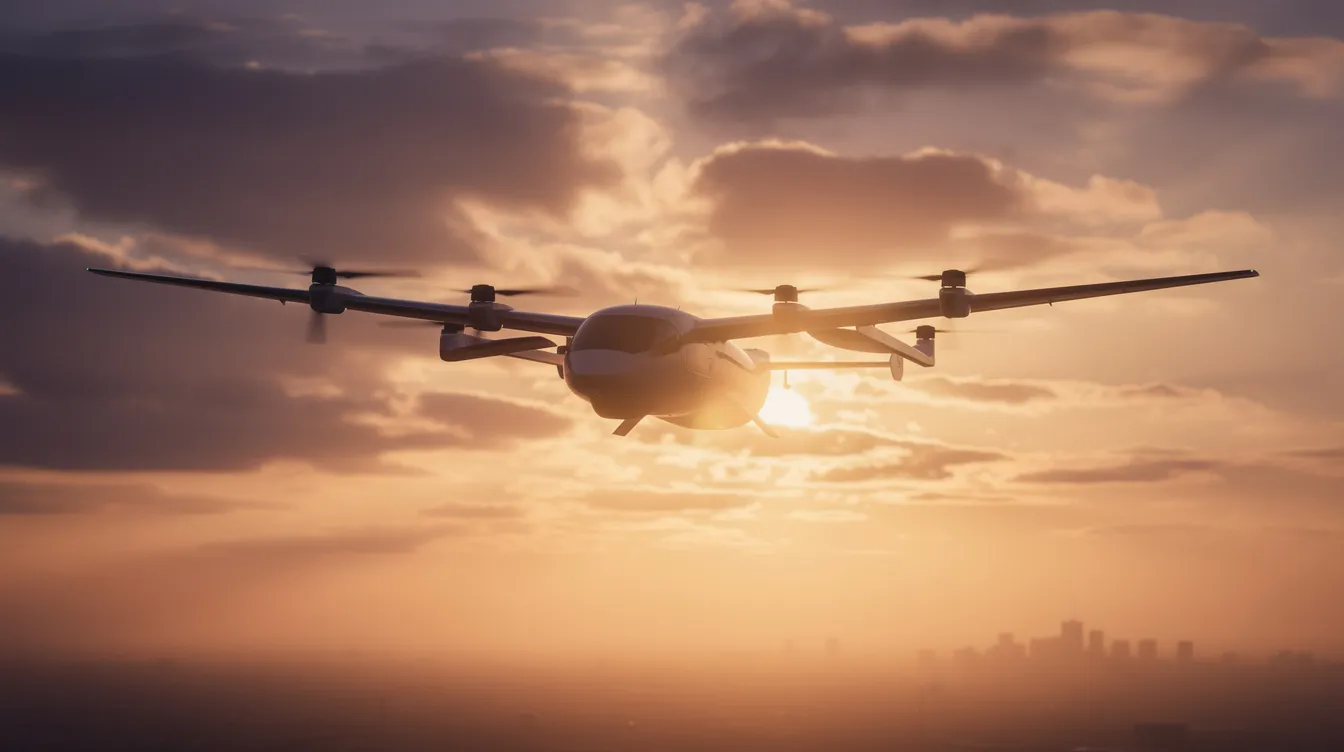
How "plane cars" compare to private jets & Jet Cards
For most BlackJet clients, the central question isn't whether there's a plane car for sale-it's whether buying one makes more sense than having guaranteed access to aircraft through a Jet Card and broader private jet card programs.
To put pricing in perspective, the general aviation market includes a wide variety of aircraft types. Single-engine cross-country planes can cost between $30,000 and $450,000 for used models. Used vintage training planes run $15,000 to $65,000. Very light jets can range from $800,000 to $5 million, while light to midsize business jets can range from $3.8 million to $12 million, as outlined in our broader private jet price list. Flying cars currently sit between the upper end of automobile pricing and the lower end of aviation: $170,000 (Switchblade) to $800,000 (ASKA A5).
For automotive context, the average used car price has topped $26,000, with the national average listing price for used vehicles around $25,000 to $27,000. New vehicle prices average roughly $49,000 or more, and used trucks and SUVs can be priced from $30,000 to over $70,000. Used car prices can range from $5,000 to $19,999 for entry-level models. The automotive market reflects elevated pricing due to tighter inventory and strong demand. Flying cars occupy a radically different bracket-closer to buying an aircraft than buying a car, even when compared with the cheapest private aircraft options.
Factor | Flying Cars | Private Jets (Jet Card) |
|---|
Seats | 1–4 | 6–9+ |
Range | 20–450 miles | 1,500–3,000+ nm |
Cruise speed | 95–240 mph | 400–600 mph |
Licensing | Pilot + driver | None (BlackJet handles it) |
Infrastructure | Garage, hangar, charging | FBO network worldwide |
Weather limits | VFR, daylight, fair weather | Wider envelope, night capable |
Upfront cost | $170K–$800K+ | Prepaid hour blocks |
Operational complexity is significant: a plane car owner needs a pilot's license (and sometimes a driver's license for the road-legal component), a garage or hangar, maintenance of dual systems, and weather planning for every flight. BlackJet's turnkey model-24/7 booking, safety-certified operators, global dispatch-eliminates all of that.
For enthusiasts and early adopters with estate airstrips and a taste for novelty, plane car ownership can be thrilling. For executives who primarily value reliability, safety, and global reach, a Jet Card remains the strategically superior choice, whether it's a 25-hour program or a 50-hour block; our detailed guide to jet card cost and structure explains why this model is so compelling.
Regulation, safety, and certification: what buyers must know
Unlike consumer cars, every flying car is first an aircraft-subject to strict aviation safety and airworthiness rules administered by the FAA in Washington and equivalent authorities in the UK, canada, australia, and across Europe.
There's a critical distinction between an FAA Special Airworthiness Certificate (which Alef holds) and full type certification. A Special Airworthiness Certificate permits limited operations-test flights, exhibitions, experimental use-but not unrestricted commercial or personal transport across all airspace. Full type certification requires exhaustive testing of structural integrity, crashworthiness, system redundancy, and reliability. Most flying cars are years away from this milestone.
Buying an airplane involves FAA regulations and pre-purchase inspections by specialized mechanics. Inspection for planes requires an A&P mechanic with specialized knowledge, and aircraft inspections evaluate the condition and history of a safety-critical machine, especially when selecting among the best small private aircraft for personal or business missions. Maintenance history is crucial when purchasing an aircraft-doubly so for a hybrid vehicle that also drives on roads. The inspection phase for cars often includes a local mechanic check, but aviation demands far more rigor. Cars are primarily a retail transaction, while aircraft involve complex machinery considerations that demand specialized expertise.
Ownership transfer of planes goes through the FAA Aircraft Registry, whereas title transfer for cars is managed through the state's DMV. For a plane car, owners must navigate both systems. Specialized aviation financing is often required for plane purchases in this price range.
BlackJet evaluates every operator in its network against ARGUS and IS-BAO safety standards, with third-party audits, maintenance tracking, and rigorous pilot qualifications meeting Part 135 requirements. These are mature safety frameworks that flying cars simply cannot match yet. Operating costs for aircraft include hangar rent and inspections-costs that plane car buyers should budget carefully before committing.
Buyers should also review insurance availability, local airspace restrictions in states like florida, virginia, and colorado, and how air traffic control integration works for low-altitude operations before pursuing any plane car for sale.
Sustainability & technology: eVTOLs vs business aviation
Many flying cars use electric or hybrid propulsion, and their sustainability promise resonates with environmentally conscious travelers who are also evaluating the environmental footprint of a 20 million dollar private jet. On short hops, battery-electric eVTOLs produce no direct emissions-a significant advantage over turbofan business jets burning conventional fuel.
The Alef Model A operates on an 85 kWh battery with zero direct emissions in flight mode. The Doroni H1-X uses a 65 kWh battery with distributed electric propulsion. On a 150-mile route, an electric flying car could eliminate the carbon footprint entirely-assuming the electricity comes from clean sources. A private jet covering the same distance would burn hundreds of pounds of fuel, though carbon offsets and sustainable aviation fuel (SAF) can neutralize the impact.
BlackJet already delivers carbon-neutral flights through verified offsets and emerging SAF partnerships-offering immediate sustainability benefits today, setting new standards while eVTOL infrastructure matures. The noise footprint of electric flying cars is also notably lower than helicopters or jets, which may help with regulatory and neighborhood acceptance in urban areas across italy, spain, and densely populated regions worldwide.
How to actually buy a plane car: deposits, waitlists, and delivery
Most plane cars for sale in 2026 are not available off the lot. They are sold through pre-order queues with tiered deposit structures and multi-year delivery timelines.
Alef Model A: $150 standard deposit or $1,500 priority deposit. Over 3,300 pre-orders placed. Initial deliveries expected 2026.
PAL-V Liberty: Pioneer edition limited to 90 units. Pricing from $322,000+. European deliveries progressing; U.S. expected 2026–2027.
ASKA A5: Founders Club requires $5,000 deposit. Deliveries targeted for 2028, contingent on regulatory approval.
Doroni H1-X: 600+ pre-orders. Production launch expected 2028.
Jetson ONE: $8,000 deposit on a $148,000 total price, with delivery timelines stretching into 2027.
Buyers should scrutinize pre-order agreements for refund policies, slot transferability, and what happens if certification timelines slip-delays are common in this market. A BlackJet Jet Card serves as an ideal interim or parallel solution: immediate, guaranteed premium flight access while your plane car order matures, with transparent jet card pricing and benefits that keep budgets predictable.
Use cases: when a plane car makes sense vs private jet access
This is practical guidance, not hype. Who should seriously consider a flying car, and who is better served maximizing Jet Card and charter access?
Before deciding, it's worth comparing these scenarios with the economics of chartering a private jet.
Ideal scenarios for plane car ownership:
Owners of rural estates with private strips or adequate ground space
Island hopping in regions like the Caribbean or Mediterranean in fair weather
Short regional commutes where traffic jams are severe-think Bay Area, greater London, or Tokyo corridors
Personal transport where road congestion adds an hour or more to a 50-mile trip
Scenarios where private jets dominate: Frequent flyers might find that a 50 hour jet card captures most of these missions more efficiently than owning a plane car.
Multi-city business tours (New York–Chicago–San Francisco in two days)
Transatlantic and transpacific travel
Night operations or adverse weather, where most flying cars cannot operate
Last-minute schedule changes requiring 24/7 dispatch
Mini case study: A tech founder in Silicon Valley pre-orders an Alef Model A for weekend flights to Napa-bypassing three hours of traffic each way. But for investor meetings in New York, London, and across the continent, she relies on a BlackJet 50-hour Jet Card; heavy users sometimes step up to a 100 hour jet card when their annual flying justifies it. The flying car handles the first and last mile; the Jet Card handles the world.
Future outlook: will flying cars join the BlackJet ecosystem?
In the near future, urban air mobility infrastructure-vertiports, smart charging stations, digital air traffic management-will begin to reshape personal transportation. Over the next decade, flying cars and eVTOLs could integrate with private jet terminals and FBOs, creating seamless intermodal journeys.
Imagine a door-to-runway trip: an eVTOL or plane car covers the first and last 50 miles, feeding into a BlackJet-arranged jet flight for the long haul. BlackJet's digital booking platform could one day route travelers between ground, flying car, and jet legs with a single tap. The infrastructure shifts required-vertiports, regulatory recognition, airspace management-are substantial, but investment from governments and private industry in the U.S., japan, the uk, and australia is accelerating.
The vision is compelling: personal aircraft for short hops, and large-cabin private jets for global reach. While the first flying car owners are already making history, the smartest strategy for most travelers today is to combine emerging technology with proven, safe, globally available private jet access like BlackJet's Jet Cards, using our guide to the best jet cards for frequent flyers as a starting point.
FAQ: plane cars, flying cars, and BlackJet
Are there any plane cars I can buy today? Yes. Several models are accepting deposits and moving toward delivery. The Samson Switchblade and PAL-V Liberty are the furthest along in production readiness, with the Alef Model A close behind. Most require pre-orders rather than immediate purchase-this is not yet a walk-in-and-drive-off market.
Do I need a pilot's license to fly a flying car? For most models, yes. The PAL-V Liberty requires a gyroplane pilot rating. Runway-based roadable aircraft need at least a private pilot certificate. Some single-seat eVTOLs like the Helix by Pivotal operate under ultralight rules and may not require a traditional license, though training is still essential. You'll also need a driver's license for road-legal ground operation.
How much does a flying car cost compared to a private jet? Current plane car for sale prices range from $170,000 (Switchblade) to $800,000 (ASKA A5). Very light jets start around $800,000, and light to midsize business jets range from $3.8 million to $12 million, with some of the cheapest private jet options still sitting well above flying car pricing. A Jet Card, by contrast, converts a fraction of those amounts into predictable, all-in flight hours with zero asset risk.
What is the first flying car to get real certification? The Alef Model A received an FAA Special Airworthiness Certificate in June 2023, making it the first road-capable flying car to earn such a designation. This is not full type certification, but it is a meaningful regulatory milestone that allows the company to conduct test flights and limited operations.
Can I book a flying car through BlackJet? Not at this time. BlackJet specializes in private jet access through our Jet Card programs and global charter network. As the flying car industry matures and safety frameworks meet the standards we require, integration with emerging eVTOL and roadable aircraft services is a possibility we're actively monitoring.
Are flying cars safe? Safety frameworks for flying cars are still developing. Unlike the mature Part 135 and ARGUS-rated infrastructure that governs private jet operations, flying car certification is experimental or limited. Redundant propulsion systems, ballistic parachutes, and advanced sensors are being built into designs, but buyers should understand that these are early-stage vehicles. BlackJet flies only with operators that meet the highest safety standards in the industry.
What about flying cars in countries like Canada, Australia, Spain, or the UK? Regulatory regimes differ significantly. The general public in most countries cannot yet legally operate a flying car without specialized permissions. European EASA regulations, Transport Canada rules, and national aviation authorities each have their own certification pathways. Prospective owners in Britain, for example, often compare plane car concepts with more traditional UK private jets for sale. Check your local regulatory environment before committing.
How can I start traveling privately right now while I wait? A BlackJet Jet Card gives you immediate access to a curated network of safety-certified private jets-no waiting, no certification delays, no experimental risk, and even options to buy a seat on a private jet for more flexible access. Whether you're flying coast to coast or across continents, our programs are designed for travelers who refuse to compromise on time, comfort, or safety.
Conclusion: The Future of Private Travel with Plane Cars and BlackJet
Flying cars represent a transformative evolution in personal transportation, blending the convenience of automobiles with the freedom of flight. While still in early stages of certification and adoption, these innovative vehicles offer exciting possibilities for short regional trips, estate owners, and enthusiasts seeking a new level of mobility. However, the current limitations in range, passenger capacity, regulatory frameworks, and safety standards mean that flying cars complement rather than replace traditional private jets.
For discerning travelers who prioritize reliability, safety, and global reach, BlackJet’s Jet Card programs remain the premier choice. They provide seamless, guaranteed access to a worldwide network of safety-certified private jets without the complexities of ownership or experimental technology risks. As the flying car industry matures and integrates with broader urban air mobility infrastructure, BlackJet is poised to incorporate these advancements, delivering an even more flexible and sustainable private travel experience.
In the meantime, combining emerging flying car technology for first-and-last-mile convenience with BlackJet’s proven private jet access offers the best of both worlds—effortless, luxurious, and strategic travel designed for today’s elite traveler. Explore how BlackJet can reshape your journey and elevate your expectations of private aviation and learn more about our commitment to sustainability in private travel.


 Sign up with google
 Sign up with Apple