For discerning travelers weighing private aviation options, the Cirrus Vision Jet represents one of the most compelling entry points into turbine-powered flight, offering a lower price point compared to other very light jets and making it one of the most affordable options in its class. Understanding both acquisition costs and the full ownership picture is essential before committing capital to this remarkable aircraft.
Key Takeaways
Most 2018–2025 Cirrus Vision Jet SF50 / Vision G2+ aircraft trade between roughly $1.8M and $3.6M as of May 2026, depending on age, hours, and options. The average price for a Cirrus Vision Jet is approximately $2,851,508, indicating a healthy market for this aircraft.
Current market examples span a defined range: Early 2016–2018 Vision SF50 models trade around $1,774,900–$1,799,900, while 2019–2021 G2/G2+ examples fall between $2.30M and $2.85M. Late-model 2023–2025 G2+ aircraft with in-flight Wi-Fi and Safe Return command $3.2M–$3.6M.
The purchase price is only part of the equation: Owners should account for both fixed costs (typically in the high-$100k range per year) and variable operating costs (in the $700+ per flight hour band) when planning their annual budget for Vision Jet ownership. Operating costs for the Cirrus Vision Jet SF50 range from $900 to $1,300 per flight hour when all factors are included.
Safety architecture justifies the investment: The Vision Jet’s single engine, CAPS (Cirrus Airframe Parachute System), and Garmin Safe Return system make it one of the safest and most economical light jets available for owner pilots.
Jet Card access offers a capital-efficient alternative: BlackJet’s Jet Card model provides Vision-class access and similar mission profiles without tying up $2–$3M in capital, hangar costs, and insurance commitments.
Why Vision-Class Jet Access Is a Strategic Asset, Not Just a Luxury
Aircraft like the Cirrus Vision Jet transform regional travel from a multi-leg commercial ordeal into same-day out-and-back missions. For business leaders and high-net-worth travelers, this capability isn’t merely convenient—it’s a strategic advantage that compounds over time.
Consider a New York–based executive with meetings in Chicago. Commercial business class involves airport arrival 90 minutes early, security lines, potential delays, and a return flight that may not align with meeting schedules. A Vision-class jet departs when you’re ready, lands at smaller airports closer to your destination, and returns the same day. The 4–6 hours saved translates directly into productivity, family time, or another meeting altogether.
The Vision Jet is marketed to frequent business or high-net-worth leisure travelers who value flexibility, privacy, safety, and luxury, but some of these travelers simply prefer to buy individual seats on private jets rather than commit to full ownership or a large jet card. Those same buyers often benchmark against leading membership providers by reviewing NetJets jet card costs and program features before committing capital. For many in this category, the real decision isn’t “jet or no jet”—it’s whether to own an aircraft like the Cirrus Vision Jet SF50 or access similar capability through a Jet Card or on-demand charter.
BlackJet offers Jet Card programs that deliver Vision-class capability with carbon-neutral flights and rigorous safety standards, and its comprehensive guide to jet card costs and membership pricing helps travelers understand how these programs compare to traditional ownership. This provides the strategic benefits of private aviation without the complexity of aircraft ownership.
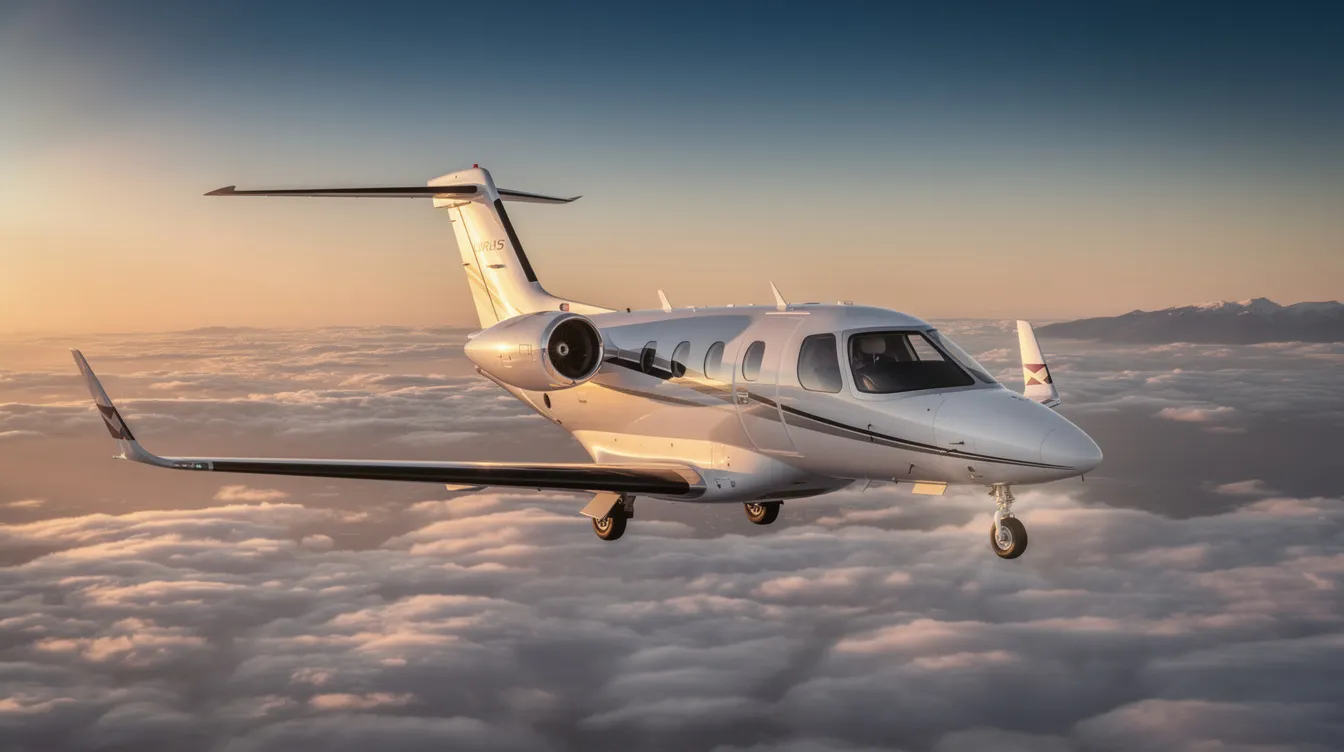
Cirrus Vision Jet Price Today: New vs Pre-Owned
How much does a Cirrus Vision Jet cost in 2026? The current listings for the Cirrus Vision Jet range from $1,774,900 to $3,600,000, reflecting strong market demand among safety-conscious owner-operators. For context, the base price for the Cirrus Vision Jet was initially set at $1 million in 2008, with equipped prices anticipated to be around $1.25 million for 2011 deliveries—a significant evolution reflecting the platform’s maturation.
New aircraft pricing has moved substantially upward. The Vision Jet G3, launched in February 2026, carries a base price of approximately $3.6 million, with as-equipped pricing frequently quoted at $3.68 million. In the 2026 market, newer G2+ models of the Vision Jet are priced between $3.2 million and $3.6 million.
Pre-owned ranges by model year:
Early 2016–2018 Vision SF50: Around $1,770,000–$1,800,000 based on examples like $1,774,900 (2017) and $1,799,900 (2018)
2019–2021 Vision SF50-G2/G2+: Often $2.30M–$2.85M (e.g., $2,299,000–$2,399,000 for 2019 G2, around $2,750,000–$2,849,900 for 2021 G2+)
2022–2024 Vision G2+: Generally $2.95M–$3.49M (examples: $2,949,900 for a 2022 G2+, $3,199,900–$3,349,900–$3,490,000 for 2023–2024 G2+ Arrivée editions)
Latest 2025 Vision G2+: Around $3,599,900–$3,600,000 for low-time aircraft with 0–300 hours
Each Vision Jet is identified by a unique serial number, which allows buyers to track the aircraft's history, upgrades, and specifications.
Key value drivers that move a specific listing up or down include total time, JetStream Concierge coverage remaining, avionics suite (Safe Return, Auto-Throttle, Auto Radar, in-flight wifi), interior edition (Arrivée, Alpine), and whether the aircraft has always been hangared. While asking prices are public, final transaction prices depend on pre-purchase inspections, engine programs, and market demand. Buyers weighing pure ownership against more economical aircraft or access models may also study the cheapest private aircraft and budget-oriented private flying strategies to contextualize Vision Jet pricing.
Cirrus Vision Jet Models: SF50, G2, and G2+ Pricing Differences
The terms “Cirrus Vision Jet,” “Vision SF50,” “Vision G2,” and “Vision G2+” represent generations of the same pioneering single-engine plane from Cirrus Aircraft, each with incremental performance and avionics upgrades that influence price. This innovative plane is notable for its advanced safety systems, such as the whole-aircraft ballistic parachute (CAPS), and serves as a stepping stone from high-performance piston aircraft to turbine power.
Early Cirrus Vision SF50 (2016–2018)
The original Vision SF50 established the very light jet category. The Cirrus Vision Jet SF50 is powered by a single Williams FJ33-5A turbofan engine, producing 1,900 lbf of thrust. These aircraft feature CAPS and early Garmin avionics. Pre-owned pricing around $1.77M–$1.80M appeals to budget-focused pilot owners moving up from SR22-class piston planes. Owning the Vision Jet does not require a multi-engine jet rating, making it accessible for owner-pilots.
Vision Jet G2 (Introduced 2019)
The G2 models of the Vision Jet improved the service ceiling to 31,000 feet and introduced auto-throttle functions. The Vision Jet features a maximum cruise speed of approximately 311 to 317 knots (approx. 360 mph). Additional improvements include modest range increases around 1,200 nm, cabin refinements, and optional FIKI certification.
Concrete examples in the $2.30M–$2.60M range include $2,399,000 for 2019 SF50-G2 and $2,595,000–$2,600,000 for 2020 G2 models, including Arrivée Special Editions.
Vision Jet G2+ (2020 Onward)
The G2+ delivers enhanced takeoff performance through Hot & High upgrades, plus in-flight Wi-Fi, Auto Radar, Garmin Safe Return Autoland, Auto-Throttle, and Arrivée styling. The Vision Jet has a maximum range of 1,275 nautical miles and a maximum cruise speed of 345 knots.
Reference listing prices:
$2,499,900–$2,799,000 for 2019–2020 G2+ with more hours
$2,849,900–$3,099,900 for 2021–2022 G2+
$3,190,000–$3,490,000+ for 2023–2024
Around $3,599,900–$3,600,000 for 2025 low-time aircraft
Which variant fits which buyer:
Early SF50: Best value but with fewer advanced features
G2: Balanced choice for cost vs performance
G2+: Premium choice for those who want Safe Return, in-flight Wi-Fi, and the latest ownership experience, and are willing to pay a higher acquisition price
Cirrus Vision Jet Pricing Snapshot Table
Model Year Range | Typical Price Range (USD) | Key Features & Notes |
|---|
2016–2018 SF50 | $1,774,900 – $1,799,900 | Early models, basic Garmin avionics, CAPS |
2019–2021 G2/G2+ | $2,299,000 – $2,849,900 | Auto-throttle, higher ceiling, FIKI certification |
2022–2024 G2+ | $2,949,900 – $3,490,000 | Safe Return, autoland, in-flight Wi-Fi, and Auto Radar |
2025 G2+ & G3 | $3,599,900 – $3,680,000+ | Latest tech, improved cabin, enhanced performance |
Total Cost to Own and Operate a Cirrus Vision Jet SF50
Vision Jet ownership cost has two parts: acquisition (purchase price) and ongoing operating costs (fixed + variable). Both must be budgeted realistically for an accurate ownership picture.
The estimated annual fixed cost for operating the Vision Jet is approximately $179,657, which includes expenses such as crew salary, training, hangar, and insurance. These costs apply whether the aircraft flies 50 hours or 300 hours annually.
Variable operating costs add to the fixed baseline. The estimated hourly variable cost for operating the Cirrus Vision Jet SF50 is around $732, which varies based on fuel consumption and other operational factors. This covers fuel, maintenance reserves, engine overhaul reserves, crew, and landing and handling fees.
Usage examples:
100 hours per year: Fixed ~$180k + variable ~$73k = roughly $250k–$260k annual budget (excluding financing and depreciation)
200 hours per year: Same fixed + ~$146k variable = roughly $320k–$340k per year
Charter or Jet Card pricing for similar aircraft includes both fixed and variable components plus operator margin, which is why advertised hourly rates appear higher than pure operating costs. Resources that break down jet card cost per hour can clarify how these rates translate into total annual spend. However, Jet Card members avoid the capital commitment entirely, and comparisons with 50-hour jet card pricing and value can highlight just how large that capital difference can be over a multi-year period.
Vision Jet Fixed Costs: Hangar, Insurance, and More
Fixed costs represent the “membership fee” of ownership—they accrue whether the Cirrus Vision functions as your primary transportation or sits idle. These typically total in the high-$100k range annually.
Hangar costs for a smaller aircraft like the Vision Jet vary dramatically by airport. Regional fields might offer climate-controlled hangars for $8,000–$15,000 annually, while major metropolitan airports can exceed $30,000–$50,000. Owners of higher-value G2+ aircraft almost always choose fully enclosed hangars to protect avionics, paint, and interior. Many listings emphasize “always hangared” as a selling point affecting resale value.
Insurance costs comprise two main policies: liability and hull coverage. Hull insurance is tied to aircraft value—premiums for a late-model Vision G2+ valued at $3.5M will be noticeably higher than for early SF50s valued at $1.8M. Optional aviation war risk and crew cover adds expense, especially for aircraft operated under charter certificates.
Crew-related fixed costs depend on your operating model. Many owner operators fly the Vision Jet themselves, incurring only recurrent training and type-rating costs ($3,000–$5,000 annually). Corporate or family operations employing a professional captain face annual salary and training budgets of $60,000–$150,000.
Management and miscellaneous costs include dispatch coordination, maintenance scheduling, regulatory compliance, navigation database subscriptions, charts, connectivity plans, and unforeseen upgrades. Third-party management services typically charge $10,000–$25,000 annually, depending on scope.
Vision Jet Variable Costs: Fuel, Maintenance, and Engine Reserves
Variable costs are “pay-as-you-fly” expenses that scale almost linearly with flight hours for the Cirrus Vision.
Fuel costs represent the single largest variable line item. The Vision Jet burns approximately 100–120 gallons per hour, depending on flight profile and cruise conditions. As a single-engine turbofan, it burns considerably less fuel than twin-engine light jets—often half as much—keeping operating costs attractive for its capability class.
Maintenance and parts follow manufacturer-prescribed intervals, with progressively more involved inspections as time accumulates. Shorter-interval checks apply as hours build. High-time aircraft (greater than 1,500 hours) face different near-term maintenance exposure than low-time examples (under 500 hours), which affects both operating budgets and resale values.
Engine overhaul reserves require disciplined accrual. Owners typically set aside a per-hour reserve to fund future engine overhauls or hot-section inspections. The single-engine design means fewer overhaul events than twin-engine competitors, but each overhaul remains a major expense—estimated at $300,000–$400,000.
Other hourly costs include crew day fees when using contract pilots, landing fees, and handling fees at busier airports (varying from $20 at rural fields to $2,000+ at major hubs), and FBO charges for parking and services. Prospective buyers should build a conservative hourly budget, including a contingency line for unexpected repairs.

How the Cirrus Vision Jet Compares to Other Light Jets
The Cirrus Vision positions as a very light jet or “personal jet” rather than a traditional multi-engine light jet, with its single engine configuration creating a distinct price and operating profile.
Acquisition price comparison: The Vision Jet’s list price historically started around $1.9M and has risen toward the low-$3M range, undercutting many twin-engine light jets like the Citation M2 or Phenom 100-class that sit higher in both purchase and hourly cost. Pre-owned Vision SF50s in the $1.8M–$2.4M band often cost significantly less than comparable-age twin-engine competitors.
Operating cost differentiation: The single-engine design drives lower fuel burn, simpler maintenance, and reduced engine-related reserves. Estimated operating costs around $676–$732 per hour run roughly half that of some larger light jets. When compared to other very light jets and other similar aircraft, the Vision Jet’s single-engine efficiency creates compelling economics. Many buyers also evaluate the cheapest private jet options and other entry-level aircraft as part of this decision set.
Performance and capability trade-offs: The Vision Jet is capable of handling a variety of operational conditions, offering reliable performance and advanced safety features. It typically cruises at lower altitudes and at a slower speed than many traditional light jets, with a maximum speed of approximately 311 knots (358 mph, 575 km/h), which is lower than most twin-engine light jets but suitable for its intended mission profile. The cabin is less spacious, suited for 2–4 adults plus occasional children, and offers a range of around 1,200 nm. It excels for short-to-medium-range regional travel, executive shuttles, and family trips. Travelers with longer-range or ultra-luxury needs may instead compare the top private jets in the world by luxury and performance or evaluate the best private jet options for groups of around 20 passengers, as larger cabin jets serve coast-to-coast or trans-oceanic missions better.
BlackJet’s Jet Card programs span multiple aircraft categories: Vision-class very light jets for short hops, midsize jets for longer business trips, and large cabin jets for transcontinental and international missions. Guides to the best jet cards for frequent flyers explain how this kind of flexibility and guaranteed availability can transform a heavy travel schedule. This lets members match aircraft class to each trip rather than being locked into a single Vision Jet’s capability envelope, a core selection criterion highlighted in many reviews of the best jet cards for frequent private flyers.
Safety, Technology, and the Ownership Experience
Price becomes meaningful only when considered alongside safety and technology—both standout features of the Cirrus Vision Jet and central to BlackJet’s fleet standards. Many prospective owners also compare safety and pricing details of specific competitors, such as Flexjet jet card costs and program structure, when mapping the broader landscape.
Core safety features:
The Cirrus Vision Jet is equipped with the Cirrus Airframe Parachute System (CAPS), which provides a whole-aircraft parachute that can be deployed in emergencies, offering a unique safety feature not found in competing jets. This great airplane offers a safety net unprecedented in the jet category.
The Vision Jet features the Safe Return emergency autoland system, which allows the aircraft to land automatically at the nearest safe airport with the push of a button, enhancing safety for pilots and passengers. Later G2+ aircraft command higher market prices partly because of this capability.
The Vision Jet is certified for Flight Into Known Icing (FIKI), allowing it to operate in conditions where icing may occur—a critical safety feature for pilots flying in varied weather conditions. Auto Radar and synthetic vision further enhance situational awareness.
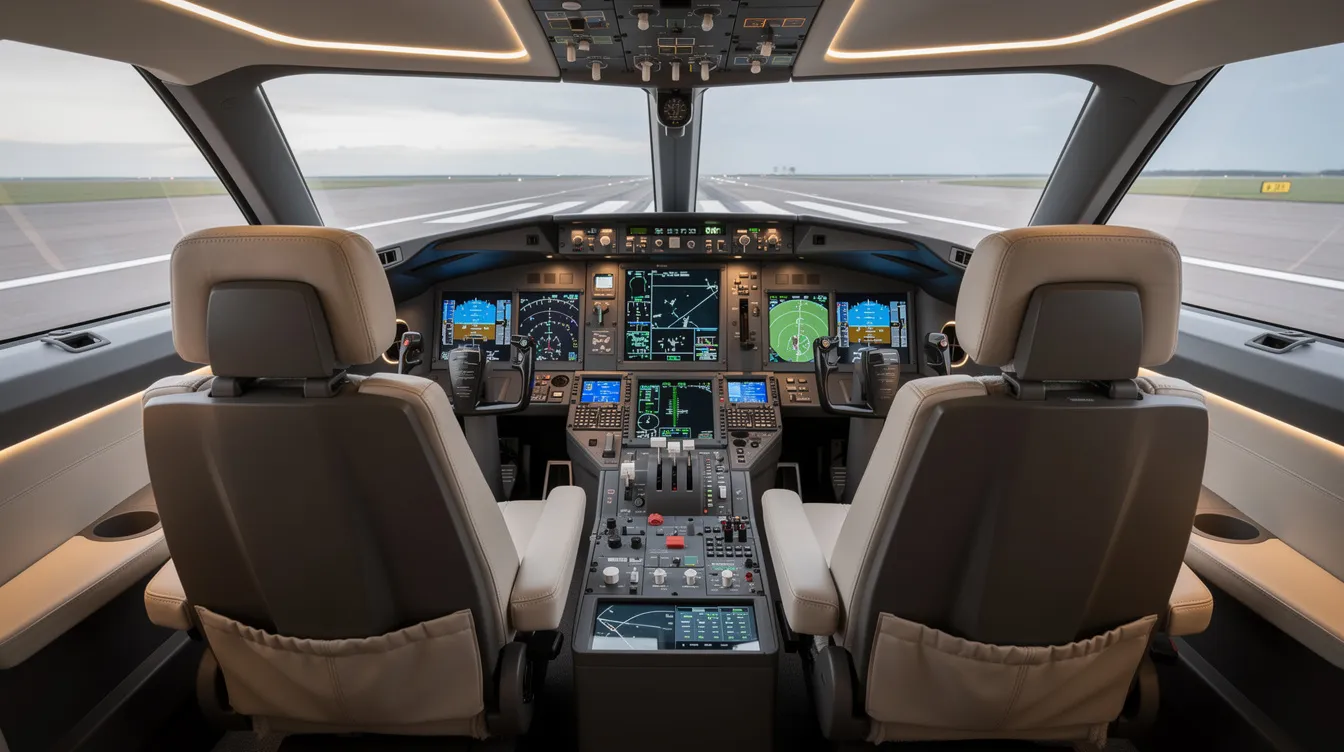
Cockpit and avionics: Cirrus Perspective Touch+ (G3000-based) avionics, autothrottle, and integrated connectivity (Wi-Fi, Cirrus IQ) increase both aircraft value and day-to-day ownership experience. The cockpit integrates advanced automation that reduces pilot workload.
Passenger experience: The aircraft features a cabin height of 4.1 feet and a width of 5.1 feet, accommodating up to seven occupants with an optional third row of seating. The Vision Jet’s cabin is configured with up to seven seats, including plush leather seating with ergonomic design and flexible layouts to suit families or business travelers. The quality of the seats, with stitched interiors and premium materials, enhances comfort and luxury, while the seat count directly relates to the aircraft’s capacity for small groups or family trips. Arrivée special editions feature premium materials, while air conditioning and USB/power outlets appeal to executive and family users.
BlackJet applies similar safety and technology priorities across its network: strict operator vetting, high-spec avionics, and carbon-neutral operation as default. Comparisons of top private jet companies and their service models highlight how these standards vary across the industry. Jet Card members enjoy Vision-class safety without owning the physical aircraft.
Cirrus Vision Jet vs Jet Card Access: Capital vs Flexibility
The core strategic question: should a traveler spend $2–$3.5M to own a Cirrus Vision Jet, or use a Jet Card like BlackJet’s to access similar aircraft categories on demand?
Capital commitment of ownership: Acquisition amounts range from $1.8M–$3.6M plus annual costs in the mid-six-figure range. Capital ties up in a single asset subject to market cycles, depreciation, and technological obsolescence as new Vision models arrive. The first flight feels remarkable; the tenth insurance renewal feels routine.
How Jet Cards work: BlackJet’s Jet Card programs (e.g., 25-hour jet card options or 50-hour jet card programs) allow clients to prepay for a block of flight hours across multiple aircraft categories, with fixed-rate pricing, 24/7 digital booking, and real-time support. Members get the functional benefits of a Vision Jet—short-haul flexibility, privacy, schedule control—plus the option to upsize to midsize or large-cabin jets when needed.
Risk and complexity comparison: Owners' own maintenance, crewing, hangar, and insurance headaches. Jet Card members pay per hour, with all operational tasks handled by BlackJet and its vetted partners. A broader look at private jet price lists and access models reinforces how these different structures shift risk and complexity between owner and operator. For travelers flying under approximately 200 hours annually, a Jet Card or charter proves financially more efficient.
Concrete scenario: A client needing 50–75 hours per year for regional business trips and occasional family holidays would face Vision Jet ownership costs exceeding $280,000 annually (fixed costs dominate at low utilization). That same flying through a Jet Card might cost $275,000–$350,000 with zero capital at risk, no depreciation exposure, and complete flexibility to match aircraft to mission.
Sustainability and Carbon-Neutral Travel with Light Jets
Both individual cirrus owners and Jet Card members increasingly focus on sustainability and environmental impact. The Vision Jet supports a belief in sustainable aviation, with options for carbon-neutral flights available to users, whether they’re flying routine routes or arranging bespoke missions such as private jet charters in Karachi and other key hubs. For travelers who don’t need whole-aircraft access every time, learning how to buy a seat on a private jet can open up additional flexible, lower-footprint options.
Efficiency of the Cirrus Vision Jet: As a single-engine very light jet, the Vision SF50 often achieves lower fuel burn per passenger on short legs than larger jets operated with few passengers. This makes it relatively efficient for solo travelers or small teams on 300–800 nm flights compared to chartering more payload capacity than needed, though frequent flyers might also consider unlimited private jet membership models when evaluating overall travel strategy.
Carbon offsetting: Offset programs work by purchasing verified credits to balance CO₂ emissions through certified projects—reforestation, renewable energy, and methane capture. Vision-class missions can be made carbon-neutral by calculating fuel burn and offsetting corresponding emissions.
BlackJet’s sustainability stance: BlackJet ensures all Jet Card flights are carbon-neutral as standard, at no extra effort for members, and some frequent flyers even explore unlimited private jet flight memberships as another way to align predictable travel patterns with sustainability goals. This lets clients enjoy Vision-like flexibility while aligning travel habits with ESG and sustainability goals, and broader private jet price list overviews show how sustainability considerations are increasingly influencing aircraft and access-model choices. Articles outlining the cheapest private aircraft and budget-friendly access models show how sustainability and cost-efficiency can go hand-in-hand. Sustainability should factor into your decision between sole ownership, fractional programs, and Jet Card access, alongside traditional considerations like safety, service, and brand reputation that many travelers assess when reviewing NetJets jet card cost and program details.
Is the Cirrus Vision Jet Right for You?
The Vision Jet is an outstanding airplane, but the “right” decision depends on mission profile, annual hours, capital preferences, and appetite for operational responsibility.
Key suitability indicators for ownership:
You routinely fly 150–300+ hours per year on regional missions of up to ~1,200 nm
You are a current or aspiring owner-pilot, or plan to employ a dedicated pilot
You value the unique safety suite (CAPS + Safe Return) and want a personal aircraft based near you, under your direct control
The new aircraft experience and customization matter to you
When Jet Card access may be better:
Your flying is 25–100 hours per year, or varies significantly year-to-year
You need flexibility across multiple cabin classes (very light for short hops, midsize or large-cabin for long-range trips)
You prefer to avoid tying millions of dollars in a depreciating asset, along with hangar, insurance, and management obligations
Sophisticated travelers often blend approaches—owning a Vision Jet for predictable regional missions while maintaining a Jet Card for larger aircraft needs, such as a BlackJet 25+ Hour Jet Card tailored to mid and large cabin jets. Others transition from Jet Card to ownership once their flying pattern stabilizes, sometimes starting with a BlackJet 25+ Hour Jet Card to build a clear picture of their true utilization and preferred aircraft categories.
Explore BlackJet’s Jet Card options and speak with advisors who can model Vision Jet ownership versus Jet Card access using your actual flight profile. The right answer emerges from your specific numbers, not general assumptions.

Frequently Asked Questions about Cirrus Vision Jet Pricing
How much does it really cost per hour to fly a Cirrus Vision Jet?
Direct operating costs for the Cirrus Vision Jet SF50 are often estimated in the $676–$732 per flight hour range, depending on fuel prices, maintenance assumptions, and utilization. However, this figure excludes fixed annual costs like hangar, insurance, crew salaries, and management. When these are spread over a small number of annual hours, the “all-in” hourly cost rises significantly—potentially $2,000+ per hour for owners flying only 100 hours annually. Prospective owners should work with an aviation CPA or consultant to build a custom cost model based on their home airport, expected flight hours, and financing structure.
Do features like Safe Return and Wi-Fi significantly increase the price of a Vision Jet?
Yes, late-model Vision Jet G2+ aircraft with Garmin Safe Return Autoland, Auto-Throttle, in-flight Wi-Fi, and Auto Radar typically command a noticeable premium over earlier SF50 and G2 models. Based on 2022–2025 listings, the price gap between early SF50s (~$1.8M) and fully loaded G2+ examples can exceed $1M, with many 2023–2025 G2+ aircraft advertised in the $3.2M–$3.6M range. Buyers should weigh safety and convenience benefits against budget constraints while considering future resale value when choosing between generations.
How do financing and depreciation affect the true cost of a Cirrus Vision Jet?
Financing introduces interest expense that can be substantial on a $2M–$3.5M asset, especially at elevated interest rates. A $3 million acquisition financed at 7% over 10 years generates approximately $315,600 in annual debt service alone. Depreciation represents a non-cash but economically real cost—Vision Jets typically lose 12–15% of value in year one, then 5–10% annually thereafter. Investors or corporate buyers should work with financial advisors to model the after-tax cost of ownership and compare it with Jet Card solutions, especially for fewer than 200 annual hours.
Can I charter out my Vision Jet to offset ownership costs?
Some Cirrus owners place their aircraft on a charter certificate or under management to generate revenue. However, this adds complexity, regulatory oversight, and additional wear and tear. Charter revenue rarely transforms the aircraft into a profit center—it can help offset a portion of fixed costs if managed correctly and flown sufficient hours, but many owners decide after reviewing detailed jet card costs and membership guides that shifting to structured access is more efficient. Many owners find that comparing this hybrid model with simply using a Jet Card shifts utilization and operational risk to professional operators rather than themselves, especially once they understand how jet card pricing bundles hourly rates, fees, and membership costs.
How does BlackJet pricing compare to owning a Vision Jet for 50–100 hours per year?
For travelers flying 50–100 hours annually, Jet Card access typically results in a lower total annual outlay than Vision Jet ownership once acquisition cost, interest, depreciation, hangar fees, and insurance are factored in, a conclusion that aligns with detailed analyses of 100-hour jet card program costs. Detailed breakdowns of 100-hour jet card costs and overall jet card pricing structures can help clarify how these programs compare to whole-aircraft ownership. BlackJet’s Jet Card programs offer fixed, transparent hourly rates that bundle aircraft, crew, maintenance, and support—with no scheduling, regulatory compliance, or resale risk to manage, a structure that contrasts sharply with alternatives like Flexjet’s jet card pricing and options. Request a personalized comparison from BlackJet using your actual routes and hours to determine whether ownership or membership better serves your specific situation.
Elevate your travel—effortlessly. With BlackJet, private flight isn’t reserved for a few; it’s accessible on your terms through our Jet Card programs, complete with rigorous safety, carbon-neutral performance, and unmatched flexibility. Explore our offerings and discover how refined, meaningful travel becomes your new standard.
Conclusion: The Cirrus Vision Jet as a Smart Private Aviation Choice
The Cirrus Vision Jet SF50 stands out as a pioneering personal jet that balances affordability, safety, and advanced technology, making it an attractive option for owner-pilots and discerning travelers seeking regional jet performance without the complexity and cost of larger aircraft. While its less spacious cabin and slightly lower cruise altitude compared to some competitors reflect its unique design philosophy, the Vision Jet’s innovative safety features—such as the Cirrus Airframe Parachute System and Garmin Safe Return autoland—set a new standard in light jet safety.
For those considering the capital commitment and operational responsibilities of ownership, BlackJet offers a compelling alternative through its Jet Card programs. By providing seamless prepaid access to Vision-class jets and a broader range of aircraft, BlackJet delivers the strategic advantages of private aviation—flexibility, privacy, and efficiency—without the burdens of maintenance, hangar, and insurance. BlackJet’s commitment to rigorous safety certification, carbon-neutral flights, and cutting-edge technology ensures members experience premium travel aligned with modern sustainability and safety expectations.
Discover how BlackJet can elevate your travel experience with effortless access to Cirrus Vision Jets and beyond. Explore premium jet card options and embrace refined, meaningful travel on your terms at blackjet.com.


 Sign up with google
 Sign up with Apple


