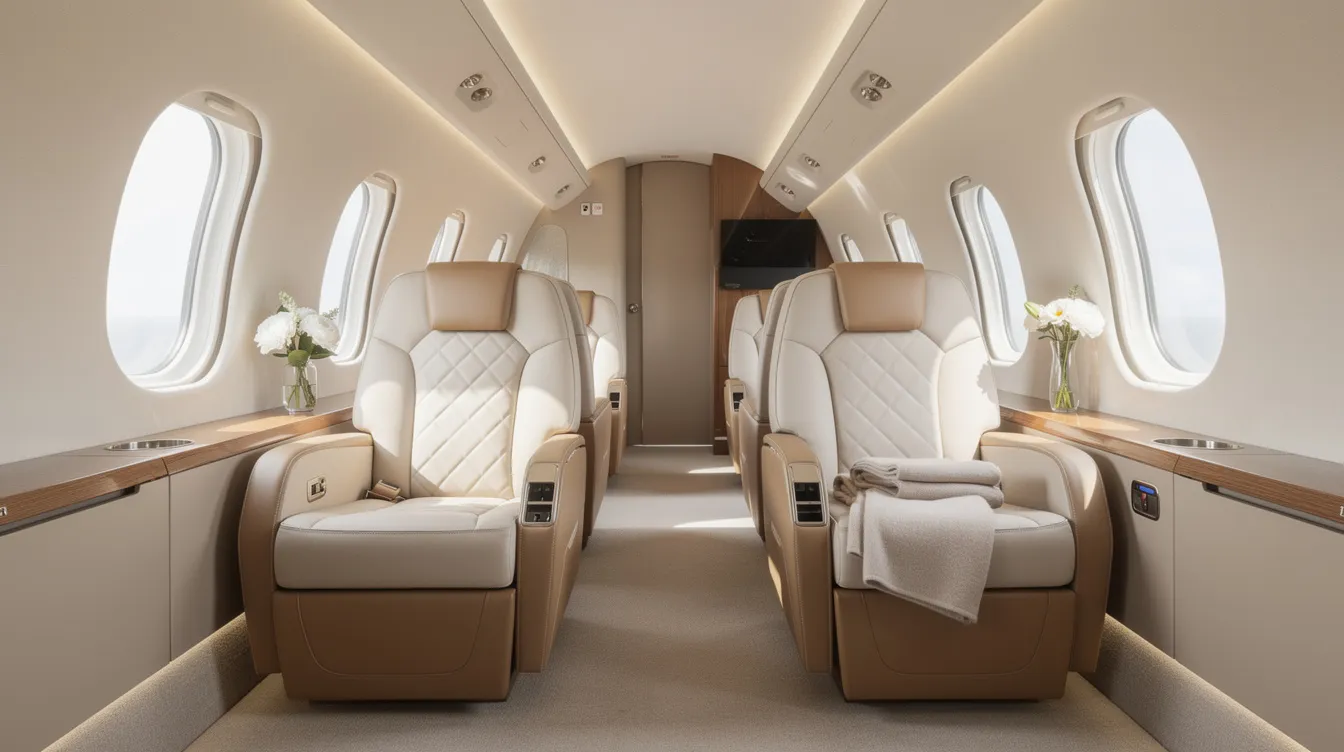
Private jet travel represents the pinnacle of personalized air transportation, offering travelers a level of comfort, flexibility, and convenience that commercial airlines simply can’t match. Whether you’re a business executive needing to maximize productivity, a family seeking privacy and ease, or an individual looking to elevate your travel experience, private jet charter opens up a world of possibilities, especially when you understand that chartering a private jet is worth it. With the ability to rent a private jet for just a few hours or arrange long-term private jet charter solutions, you can tailor every aspect of your journey—from departure times to in-flight amenities.
The private aviation market has seen significant growth in recent years, fueled by increasing demand for luxury, efficiency, and innovative private jet services. Private jets provide access to thousands of airports worldwide, including many that are not served by commercial airlines, allowing you to land closer to your final destination and avoid the congestion of major hubs. Using smaller regional airports often results in lower landing fees and quicker turnarounds, further enhancing convenience. As more travelers discover the advantages of private aviation, understanding the costs, benefits, and options available is essential for making informed decisions about your next private jet travel experience.
Key Takeaways
Private airplane rental costs in 2026 typically range from approximately $2,000 to $14,000 per billable flight hour, with the final cost determined primarily by aircraft size, range, and route complexity. Ultra-luxury VIP Airliners command rates from $16,000 to $23,000+ per hour. The number of passengers is also a key factor influencing private jet rental cost, as it affects the required aircraft size and overall pricing. For example, midsize jets offer standing room and more amenities, accommodating 5–8 passengers, while heavy jets are perfect for long-distance travel, carrying 8–12 passengers. Ultra-long-range jets are used for international flights and can accommodate up to 18 passengers, while VIP airliners serve large groups or high-profile travelers, with capacities ranging from 16 to 50 passengers.
Chartering a private jet sidesteps the substantial fixed costs of ownership—crew salaries averaging $200,000–$400,000 per pilot annually, hangar fees of $50,000–$150,000, maintenance reserves exceeding $500,000, and insurance premiums that scale with aircraft value. For travelers flying fewer than 200 hours per year, renting almost always makes more financial sense. Private jet charter rates are significantly lower than buying your own private plane.
The core cost drivers shaping your quote include aircraft category, flight time and distance, airport and government fees, peak demand periods, and optional services like premium catering and ground transportation. The total cost of renting a private jet includes the base hourly rate, fuel surcharges, landing fees, crew fees, and taxes. Private jet charter pricing fundamentals underscore that you are paying for the entire aircraft and crew, not per seat. Private jet charter costs typically cover the aircraft usage, standard crew, insurance, and taxes.
Tools such as online cost estimators, jet cards, and membership programs allow frequent flyers to lock in predictable hourly rates, often 10-20% below ad hoc charter pricing, and a detailed guide to understanding jet card pricing can clarify how different fee structures compare. A detailed guide to jet card costs can help you evaluate whether these programs fit your flying profile. These programs can also bundle carbon-offset initiatives and guaranteed aircraft availability with 24-48-hour notice.
Why Private Airplane Rental Is a Strategic Advantage
The calculus of private jet travel extends far beyond comfort. Consider the executive flying from New York (Teterboro) to Chicago for same-day meetings. On a light jet, they depart at 7:00 AM, land by 9:30 AM local time, conduct a full day of business, and return home by 8:00 PM—all within a standard workday. The commercial alternative? An early morning departure from JFK with a connection, arriving midday at best, followed by an overnight stay before the return flight. That’s two days consumed instead of one.
This time efficiency compounds across every trip. Bypassing TSA security (often 30-45 minutes), hub-and-spoke layovers (1-2 hours minimum), and rigid airline schedules collectively save 3-5 hours per journey on routes like Los Angeles–San Francisco or Dallas–Houston. For professionals whose time is valuable, private jet rental transforms travel from a productivity drain into a competitive advantage.
Beyond individual time savings, private aviation serves strategic purposes that commercial flights simply cannot match. High-net-worth individuals and corporate teams leverage secondary airports like Van Nuys over LAX or Teterboro over JFK, reducing ground transportation time by 1-2 hours in traffic-heavy regions. The private terminal experience—arriving 15 minutes before departure, boarding directly onto the aircraft, conducting confidential discussions in a secure cabin—creates opportunities impossible in crowded commercial environments.
Real-world applications demonstrate this advantage clearly. A legal team needing to meet with clients in Boston, Toronto, and Chicago executed the entire itinerary in a single day using a midsize jet—an impossibility via commercial airlines due to connection constraints. Similarly, touring musicians regularly charter private jets for routes like New York–Nashville, gaining ample luggage space for equipment and avoiding the chaos of commercial baggage handling.
The pillars supporting this value proposition extend beyond convenience. Rigorous safety standards under FAA Part 135 certification, modern aircraft technology with enhanced vision systems and satellite connectivity, and emerging sustainability initiatives, including carbon offset programs and sustainable aviation fuel adoption, create a foundation of reliability and responsibility. Flying private is not merely about luxury—it’s about precision, privacy, and performance.
How Much Does It Cost to Rent a Private Airplane in 2026?
The typical hourly rate for private airplane rental in 2026 ranges from approximately $2,000–$3,500 for turboprops, to $2,500–$5,500 for light jets, and up to $12,000–$23,000+ for ultra-long-range jets and VIP airliners, aligning with broader private jet price list benchmarks across aircraft types. Your total charter costs depend on the number of flight hours your route requires, multiplied by the hourly charter rate for your chosen aircraft type, a structure explored in depth in this guide to how much it costs to rent a private jet.
Example Route Pricing
To illustrate with specific routes:
Turboprop flying NYC–Boston: $5,000–$8,000 one way (including 1.0–1.5 billable hours)
Midsize jet covering NYC–Miami: $12,000–$20,000
Longer flights like Los Angeles–Honolulu: $45,000–$90,000+ on a super midsize or heavy jet, depending on aircraft and season
What’s Included in Standard Quotes
Standard quotes from reputable aircraft operators typically include:
However, the following are usually itemized separately:
Understanding Billable Flight Time
Your invoice reflects more than just airtime—it includes:
Short-leg fees help offset the fuel burn and maintenance costs associated with take-offs and landings. Short sectors often bill at one-hour minimums regardless of actual flight duration. For example, a 45-minute hop from Dallas to Austin might still appear as 1.0–1.5 billable hours.
Additional Fees and Surcharges
Expect the following additional costs when renting a private jet:
Fuel surcharges
Landing and handling fees
Crew overnight charges (typically $200 to $600 per crew member per night)
Custom catering (ranging from $230 to over $2,000 per leg)
Ground transportation
Deicing fees (may apply in colder climates)
Taxes and Government Fees
For U.S. domestic itineraries, plan for:
International flights add:
Airport landing fees can vary significantly between airports and are an important factor in the overall cost of a private jet charter, ranging from $150 to over $1,500 depending on airport size and congestion. Fixed-base operators charge ramp and handling fees typically between $100 and $500 per visit.
Private Airplane Types and Typical Hourly Rental Rates
Private jets are categorized into different classes based on their size and capabilities. Each class serves a specific mission profile, and understanding these distinctions helps you right-size your charter to actual needs.
Aircraft Class Definitions
Very Light Jet (VLJ): The smallest jet class, typically seating 4–6 passengers, ideal for short flights under two hours.
Light Jet: Slightly larger than VLJs, seating 6–8 passengers, suitable for 2–3 hour flights.
Midsize Jet: Offers stand-up cabin height in many models, accommodates 5–8 passengers, and is suitable for flights up to 3,200 nautical miles.
Super Midsize Jet: Larger cabin and longer range than midsize, typically seats 8–10 passengers, ideal for coast-to-coast or transcontinental flights.
Heavy Jet: Spacious cabins for 8–12 passengers, lie-flat seating, and global range for long-distance travel.
Ultra Long Range Jet: Designed for intercontinental flights, accommodates 12–18 passengers, and offers the longest nonstop range.
VIP Airliner: Converted commercial airliners for private use, seating 16–50 passengers, with ultra-luxury amenities and global reach.
Turboprop: Propeller-driven aircraft, typically seating 6–8 passengers, are most cost-effective for short regional hops and can access smaller airports.
Very Light Jets
Very light jets seat 4-6 passengers and excel on flights under two hours. Aircraft like the Eclipse 550 are ideal for routes such as Dallas–Austin or Zurich–Nice, with hourly rates of $2,500–$3,500. A typical 90-minute flight costs approximately $4,000–$7,000 total. These smaller private jets offer an economical entry point for private jet travel when your party is small and the flight distance is limited.
Light Jets
Light jets represent the sweet spot for 2-3 hour missions carrying 6-8 passengers. Popular models like the Citation CJ3 handle routes such as New York–Chicago and London–Rome at hourly rates of $2,900–$5,500. Sample private jet charter prices for these sectors run $9,000–$14,000 one way. The combination of speed, range, and efficiency makes light jets among the most frequently chartered categories.
Midsize Jets
Midsize jet options like the Citation XLS+ offer stand-up cabin height in many models, accommodating 5–8 passengers in genuine comfort for flights up to 3,200 nautical miles. Hourly rates range from $4,000 to $8,500, translating to $12,000 to $24,000 for routes like New York–Miami or Paris–Marrakesh. The balance of cabin space, range, and charter cost makes this category popular among corporate travelers and family groups.
Super Midsize Jets
For coast-to-coast missions such as Los Angeles–New York or London–Dubai, super midsize jets deliver the range and cabin amenities to make 5+ hour flights productive. Aircraft like the Challenger 300 carry 8-10 passengers at $5,000–$10,500 per hour. A transcontinental U.S. crossing typically runs $25,000–$45,000, positioning these jets as efficient workhorses for serious business travel.
Heavy Jets
Heavy jets, including the Gulfstream G450 and Global 6000, offer 8–12 passenger capacity, lie-flat seating, and true global capability. The hourly rate ranges from $8,000–$14,000, with transatlantic private jet charter flights like New York–London costing $80,000–$120,000+, depending on season and specific aircraft. For teams requiring rest and productivity on longer flights, larger aircraft justify their premium.
Ultra Long Range Jets & VIP Airliners
At the pinnacle of private aviation, ultra-long-range jets such as the Gulfstream G700 and Bombardier Global 7500, along with Boeing Business Jets and Airbus Corporate Jets, command $12,000–$23,000+ per billable flight hour. Flagship routes like Los Angeles–Tokyo or New York–Dubai often total $150,000–$250,000+ one way. These aircraft accommodate 12-18 passengers for ultra-long range jets, and 16–50 passengers for VIP airliners, making any destination reachable nonstop with ultra-luxury amenities.
Turboprops
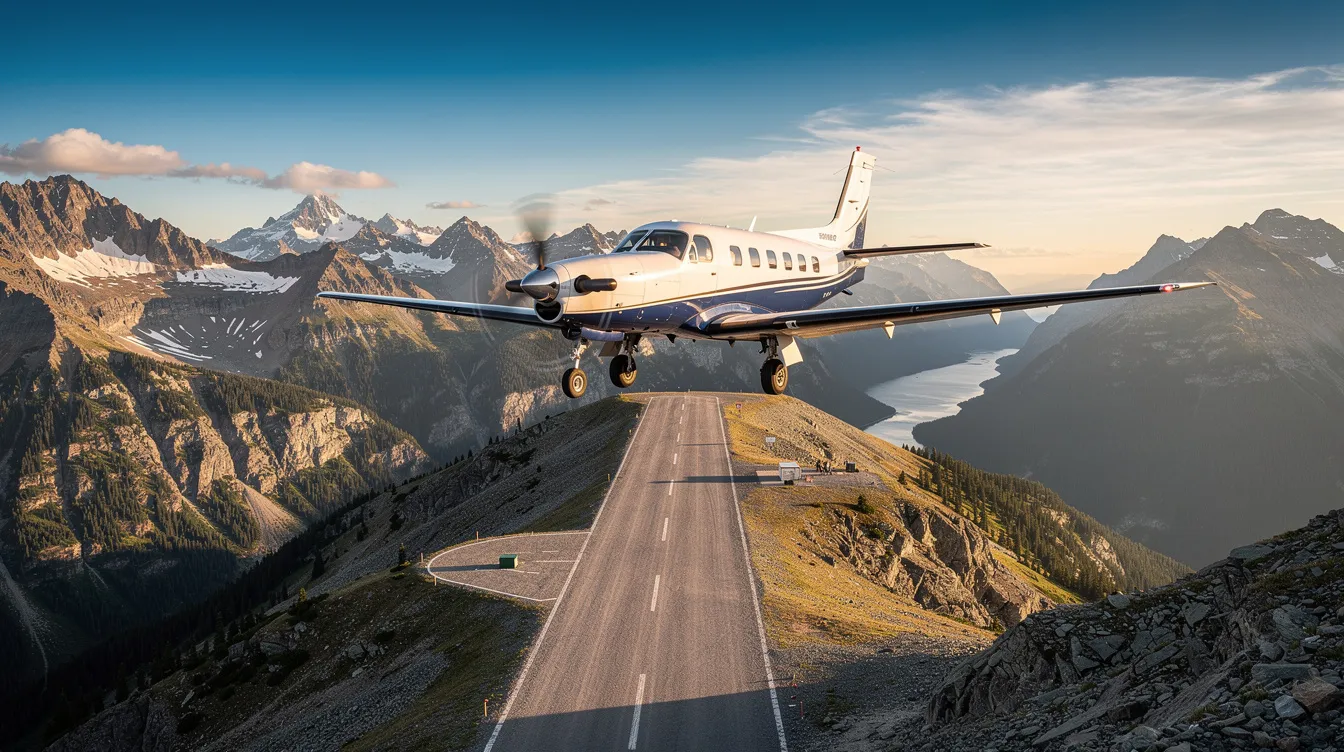
For maximum economy on short sectors under 1,000 nautical miles, turboprops like the Pilatus PC-12 or King Air 350 remain the most cost-effective option at $2,000–$3,500 per hour. While slower than jets, they can access shorter runways and deliver excellent rental-cost efficiency for regional hops—ideal for reaching mountain destinations or smaller private aviation airports.
Core Factors That Drive Private Airplane Rental Cost
Beyond the hourly rate, trip design, seasonality, and logistics can increase or decrease your quote by 20-40%. Understanding these inputs allows you to work with brokers or charter operator teams to engineer more efficient itineraries, whether that means adjusting departure airports, shifting dates, or consolidating legs.
Flight Time and Distance
Private jet pricing is fundamentally time-based. The estimated flight hours—including taxi, climb, and descent phases—multiply by the aircraft’s hourly rate to produce your base charter cost. A 45-minute hop like Los Angeles–Palm Springs typically bills close to 1.0–1.5 hours due to minimums, while a 5-hour Los Angeles–Chicago sector on a super midsize jet at $7,000/hour generates approximately $35,000 in flight charges alone.
Headwinds and routing significantly affect actual flight time. Eastbound transatlantic flights from New York to London often add 30-60 minutes compared to the westbound return due to prevailing winds. Efficient routing and avoiding unnecessary fuel stops reduce total billable hours and associated crew costs.
Destination, Airports, and Availability
Flying into major business airports like Teterboro, Van Nuys, or London Luton incurs higher landing and handling fees than smaller regional airports. Landing fees typically range from $150 at quiet regional airports to over $1,500 at congested hubs, calculated based on maximum takeoff weight. Using smaller regional airports often results in lower landing fees and quicker turnarounds, reducing total trip expenses.
Remote or leisure destinations—Aspen, Mykonos, St. Barts—may require aircraft positioning from another city, adding extra leg flights to reach your departure point or returning the aircraft to base. Slot-controlled airports with curfews, such as London City, or noise-sensitive fields in Southern California, further limit aircraft availability and can occasionally increase costs.
Aircraft Type and Cabin Requirements
Each step up in aircraft size and flight range significantly increases fuel burn and operating costs, reflected directly in hourly charter rates. Specific cabin requirements—such as a fully enclosed conference area, lie-flat beds, or a dedicated flight attendant—often push selection toward more expensive aircraft classes.
Consider a 2.5-hour New York–Nashville route: a light jet efficiently serves the mission, but a midsize jet offers stand-up cabin height and extra luggage capacity essential for touring musicians. The midsize commands higher rates but delivers meaningfully enhanced utility. Similarly, newer aircraft models with advanced avionics may carry premiums versus older but equally safe airframes.
Peak Demand, Seasonality, and Scheduling
Demand spikes around specific windows can raise private jet charter rates by 20-50% while reducing aircraft availability. Christmas and New Year, Presidents’ Day ski weeks targeting Aspen and Vail, Art Basel Miami, the Super Bowl, and Monaco Grand Prix represent peak periods requiring advance planning.
Flying at high-demand times—Friday afternoon departures, Sunday evening returns—costs more than mid-week or midday scheduling. Booking 3-4 weeks ahead for major events prevents premium repositioning fees and short-notice charges. Jet cards and memberships sometimes offer capped rates during peak periods, though surcharges may apply on the heaviest travel days.
Aircraft Positioning and Repositioning Fees
Empty leg flights are discounted one-way trips offered when a private jet is repositioning after dropping off passengers. Booking an empty leg can provide savings of 40% to 75% off the usual rates, delivering substantial cost reductions. However, these flights generally offer less flexibility in scheduling, as they depend on the jet’s predetermined route following passenger drop-off. Positioning charges range from a fraction of an hour to several hours, depending on aircraft availability near your origin. Cost-saving tactics include choosing common departure airports where more aircraft are stationed, flexibility by a day or two, and asking brokers about jets already scheduled near your route.
Optional Services and Onboard Experience
Premium catering represents a common additional cost, ranging from $230 for simple platters to over $2,000 for chef-prepared multi-course meals with vintage wines. Adding a flight attendant on smaller jets, custom entertainment setups, pet accommodations, and specialty ground transportation all carry additional fees.
Technology charges vary—inflight Wi-Fi may bill at $2–$9 per megabyte on certain international aircraft, while newer jets offer flat-rate connectivity. These extras increase the invoice but often prove essential for maintaining the productivity, privacy, and comfort that justify flying private.
Fee and Tax Structure: What’s Included in Private Airplane Rental Cost?
A professional charter quote breaks out not just hourly rates but taxes and operational fees. Understanding these line items prevents surprise charges and enables accurate budget planning.
Invoice structures vary by region, but common categories include government taxes, airport authority charges, handling fees, and operational surcharges. Reputable operators provide fully itemized quotes that show the base charter, taxes, and estimated incidentals.
Government Taxes and Passenger Fees
U.S. domestic private jet charter flights incur a 7.5% federal excise tax on the base transportation portion. Additionally, expect segment fees of approximately $4.50 per passenger per domestic flight leg and international arrival/departure head taxes of nearly $19.70 per person for flights crossing U.S. borders.
Flights to Alaska and Hawaii carry additional per-passenger taxes of around $9.90, in addition to FET. Outside the United States, travelers encounter value-added taxes (20% in the UK and EU), overflight charges, and destination-specific security fees.
Airport Landing, Ramp, and Handling Fees
Landing fees are levied by the airport authority based on maximum takeoff weight. Smaller regional fields might charge $150–$300 per arrival, while major international hubs exceed $1,500. These airport fees apply regardless of charter or ownership status.
Fixed-base operators charge ramp and handling fees typically between $100 and $500 per visit, covering marshaling, baggage handling, lavatory service, and basic lounge access. Many FBOs waive or reduce these fees with minimum fuel purchases. Overnight parking and hangar storage add $200–$1,500+ per night for larger aircraft at busy locations.
Variable Operational Charges
Common variable charges that appear separately include:
Fuel surcharges during price spikes
Deicing for winter operations (ranging from approximately $1,500 for a light jet to $15,000+ for a heavy jet during severe weather)
Short-leg fees for flights below the operator's minimums
Daily minimums—often 1.5–2 flight hours for smaller jets and 3+ hours for larger aircraft—affect multi-day itineraries with limited flying. Review quotes carefully for these items, asking which are fixed versus estimated, especially on winter or international missions.
Crew Overnights and Trip Support
When trips require crews to remain at your destination overnight, hotel, meals, and per diem charges apply. Typical rates range from $200–$600 per crew member per night, with higher prices in expensive cities like New York, London, or Geneva.
Waiting time policies vary—same-day ground time between legs is often included, but extended waits may trigger additional costs or duty time resets. These fees ensure pilots remain within FAA regulatory duty limits and arrive properly rested for safe operations.
Private Jet Rental Process
The private jet rental process is straightforward and highly customizable. Here’s how it typically works:
Initial Consultation: Start by discussing your travel plans, including your dates, destinations, and any special requirements you may have.
Aircraft Selection and Quote: Receive aircraft options and pricing based on your requirements.
Booking Confirmation: Confirm your choice and sign a contract outlining all terms and costs.
Pre-Flight Arrangements: Arrange additional services such as catering and ground transportation.
Day of Flight: Arrive at the private terminal, complete minimal check-in, and board your aircraft.
Private jet rentals can often be arranged on short notice, sometimes within just a few hours, but booking at least 24-48 hours in advance is recommended to ensure aircraft availability and smooth planning.
Ownership vs. On‑Demand Rental vs. Jet Cards
The strategic decision between owning a private airplane, chartering on demand, or using jet cards and memberships depends on annual flight hours and desired flexibility, and platforms like BlackJet’s premium private jet card programs illustrate how membership-based access can streamline that choice. Each model suits different travel patterns and financial priorities.
Cost of Owning a Private Airplane
Capital outlay represents just the beginning. A new midsize jet in 2026 may cost $15–$25 million, while a $20 million private jet or a pre-owned light jet runs several million dollars. These are major capital allocations for any individual or corporation.
Annual fixed costs compound significantly:
Pilot salaries and benefits (40% of annual cost)
Hangar fees
Insurance
Training
Scheduled maintenance (typically total $700,000–$1,500,000+ yearly)
Variable costs, including fuel, engine reserves, and unscheduled maintenance, add several thousand dollars per flight hour.
For travelers flying fewer than 150–200 hours annually, chartering or jet cards provide far more cost-effective alternatives to outright ownership.
On‑Demand Private Airplane Rental (Charter)
On-demand charter offers maximum flexibility—you rent a private jet only when needed, with access to various aircraft types rather than being tied to a single model. Select a turboprop for a weekend ski trip to Jackson Hole, then a heavy jet for New York–London business travel.
No ownership-like liabilities exist, though per-hour rates exceed what heavy users pay through cards or fractional programs. With reputable private jet service providers, ARGUS Platinum or Wyvern Wingman safety audits, pilot currency requirements, and maintenance records, the aircraft's safety is carefully monitored, delivering airline-grade safety with a personalized experience.
Jet Cards, Memberships, and Fractional Ownership
Jet cards represent pre-purchased blocks of flight time—typically 25–50 hours—at locked or capped hourly rates for specific aircraft categories, with options like a 25-hour jet card guide to features and costs helping occasional travelers evaluate value versus on-demand charter. They offer guaranteed aircraft availability with 24–48 hours' notice, simplified booking, and predictable private jet pricing for travelers flying 60–80 hours annually. A comparison of the best jet cards for frequent flyers can clarify which structure delivers the most value for your needs.
Fractional ownership involves purchasing a share (often 1/16 or 1/8) of a specific aircraft, yielding 50–100 annual hours in exchange for upfront investment, monthly management fees, and occupied hourly rates. Understanding fractional jet ownership depreciation and its impact on costs is essential before committing capital. These programs flatten cost volatility and frequently include carbon-offset programs or sustainability initiatives by default, and a comprehensive guide to leasing a private jet further explains how long-term access structures compare with charter and ownership, while a separate analysis of the tax benefits of fractional jet ownership shows how businesses can offset a significant share of their aviation spend.
A business owner flying routes like Los Angeles–Seattle and Dallas–New York 60–80 hours per year may find that jet cards simplify booking and stabilize budgeting compared to pure ad-hoc charter arrangements.

Ways to Optimize and Reduce Private Airplane Rental Cost
While private aviation commands premium pricing, informed choices meaningfully improve cost-efficiency without sacrificing safety or comfort. The strategies below focus on practical adjustments any traveler can implement.
Right-Size Your Aircraft and Itinerary
Match aircraft size to actual passenger count and luggage requirements, as the number of passengers is a key factor in selecting the right aircraft and determining the cost of private airplane rental. Couples or small families on 1–2-hour routes often fit perfectly on a VLJ or light jet, while 8–10 executives crossing the country may find a super midsize jet offers an optimal comfort-to-cost balance.
Slightly adjusting departure locations—using White Plains instead of JFK, or Fort Lauderdale instead of Miami International—can access better aircraft positioning and lower airport fees, and choosing the right 50-hour jet card pricing structure can further stabilize costs for frequent regional flyers. When planning multi-city roadshows, consolidate short legs into efficient loops to reduce repositioning and daily minimum impacts.
Leverage Empty Legs and One‑Way Pricing
Empty-leg flights are discounted repositioning segments where operators recoup costs by offering 40–75% off standard rates, while some travelers instead favor unlimited private jet flight memberships that trade per-trip variability for a fixed recurring fee. These flights have fixed routes and schedules—a jet already flying Los Angeles–Las Vegas or London–Geneva—requiring flexibility from travelers.
Those based near busy private aviation market hubs (New York, South Florida, Southern California, Texas in the U.S.; London, Paris, Geneva in Europe) enjoy the best empty leg opportunities. Alerts through brokers or membership platforms help identify last-minute options for flexible leisure getaways.
Maximize Per-Person Value with Group Travel
Filling more seats shrinks the effective per-traveler cost, sometimes making private charter competitive with premium commercial fares, especially when you consider the cost of a 12-seater private jet and its configurations for larger groups. The number of passengers directly impacts the overall cost efficiency of private jet rental, as larger groups can distribute the total price across more travelers. An $18,000 New York–Miami light jet charter for 6 passengers equals $3,000 per person—comparable to last-minute first-class tickets on peak holiday weekends.
For corporate teams, the additional benefit of private cabins for meetings en route often justifies any premium over multiple commercial tickets. Group charter eliminates risks of team members being split across flights or misconnected, increasing reliability for time-critical events.
Comparison to Commercial Flight
When comparing private jet charter to commercial flights, the differences are striking. Private jet travel is designed around your schedule, not the airline’s, allowing you to depart and arrive on your own terms. Say goodbye to long security lines, crowded boarding areas, and the unpredictability of commercial flight delays. With private jet charter, you enjoy direct access to private terminals, expedited boarding, and the ability to fly into smaller, less congested airports—often reducing total travel time by hours.
The onboard experience is equally elevated. Private jets offer spacious cabins, plush seating, and premium amenities such as gourmet in-flight catering, fine wines, and personalized service. Whether you’re traveling for business or leisure, the privacy and comfort of a private jet create an environment where you can work, relax, or socialize without interruption.
Of course, this exclusivity comes at a price. The cost to charter a private jet is typically higher than flying commercial, with private jet charter rates ranging from $2,000 to $14,000 or more per billable flight hour, depending on aircraft type, route, and additional services. However, for those who value time savings, flexibility, and a superior travel experience, the investment in private jet travel can be well worth it—especially when traveling with a group or on routes underserved by commercial airlines.
Safety, Technology, and Sustainability in the Cost Equation
Private jet flight costs extend beyond dollars—safety certifications, aircraft technology, and environmental responsibility are critical evaluation criteria. Choosing operators with rigorous standards adds value and the peace of mind that no spreadsheet can fully capture.
The Federal Aviation Administration mandates FAA Part 135 certification for charter operations, requiring 100% pilot currency and rigorous maintenance schedules (typically every 200–600 flight hours). Independent audits through ARGUS Platinum or Wyvern Wingman provide additional verification, with 99.9% safety dispatch rates comparable to commercial airlines.
Modern avionics—enhanced vision systems, synthetic vision, infrared cameras—improve reliability in challenging conditions. Satellite connectivity via Ka-band Wi-Fi (50–100 Mbps) enables productivity throughout international flights. Efficient engines on newer aircraft can reduce fuel burn while lowering the noise footprint.
Sustainability initiatives have matured considerably. Carbon offset programs typically cost $5–$15 per ton of CO2, with premium operators including offsets at no extra charge. Sustainable aviation fuel adoption is projected at 10–20% of total fuel use by 2026, adding 20–50% to fuel costs but reducing net emissions by up to 80%. For frequent flyers concerned about environmental impact, these programs provide meaningful mitigation.
Frequently Asked Questions About Private Airplane Rental Cost
These questions address practical concerns not fully detailed above, focusing on money-related issues travelers commonly encounter when planning private jet charter flights.
How far in advance should I book a private airplane to get the best rate?
While emergency flights can be arranged within just a few hours, booking 7–14 days ahead for standard trips and 3–4 weeks ahead for major holidays or events yields better aircraft selection and more stable pricing. Last-minute booking during high-demand windows—Christmas through New Year, Presidents’ Day, summer weekends in Europe—can inflate prices 20–50% compared with advance planning.
Is renting a private airplane ever cheaper than flying commercial first class?
Private rentals typically exceed the price of a single first-class ticket. However, charter becomes competitive when the total cost is divided among 6–10 travelers. A $24,000 charter for 8 passengers from Los Angeles to Aspen equals $3,000 each—similar to last-minute first-class fares while offering direct routing, flexibility, and significant time savings that commercial flights cannot match.
Do I have to pay for the aircraft to wait for me or return empty?
Charter quotes factor in all required flying and waiting time. If the aircraft waits at your destination overnight, crew per diems and parking charges apply. If it repositions back to base, those hours are typically included in your cost. Round-trip pricing often proves more favorable than two independent one-way charters when your itinerary is predictable.
Can I lock in hourly rates if I plan to fly several times per year?
Many providers offer jet cards or membership programs with pre-purchased hours (often in blocks of 25 or more) at fixed hourly rates for specific aircraft categories, and frequent flyers may even evaluate a 100-hour jet card cost structure to lock in pricing over a full year’s worth of trips. These programs typically include guaranteed aircraft availability, simplified quoting processes, and sometimes carbon-neutral flights. Trade-offs include an upfront financial commitment and specific terms on notice periods and peak-day surcharges.
What happens if my schedule changes after I’ve booked?
Most charter agreements allow changes within certain limits, but late adjustments—especially same-day or during peak periods—can trigger change fees, additional repositioning, or higher rates if the original aircraft becomes unavailable. Review charter contract cancellation policies carefully, including cut-off times and percentage penalties relative to trip value. Understanding these terms before booking prevents costly surprises.
Elevate your travel—effortlessly. Private flight isn’t reserved for a select few; it’s accessible on your terms through jet card programs that combine rigorous safety standards, carbon-neutral performance, and unmatched flexibility. The BlackJet 25+ Hour Jet Card is one example of how fixed-rate access can simplify planning and budgeting while preserving premium service. Explore how refined, meaningful travel becomes your new standard.
Conclusion
Private jet rental in 2026 offers more than just luxury—it’s a strategic tool for those who value time, privacy, and efficiency. By understanding the factors that influence private jet charter cost, from aircraft type and flight hours to airport fees and additional services, you can make informed decisions that maximize value and minimize unnecessary expenses. For ultra-wealthy travelers, tracking billionaire private jet price trends also highlights how the very top of the market is evolving. The private aviation market continues to evolve, with new technologies, sustainability initiatives, and flexible programs making private jet travel more accessible than ever.
Whether you’re considering a one-time charter flight or exploring jet card memberships for frequent travel, private jet rental prices are increasingly transparent and customizable. As you weigh the benefits against the costs, remember that flying private isn’t just about reaching your destination—it’s about transforming the journey itself. With the right approach, private jet charter can elevate your travel experience, offering unmatched convenience, comfort, and control every time you take to the skies.


 Sign up with google
 Sign up with Apple