
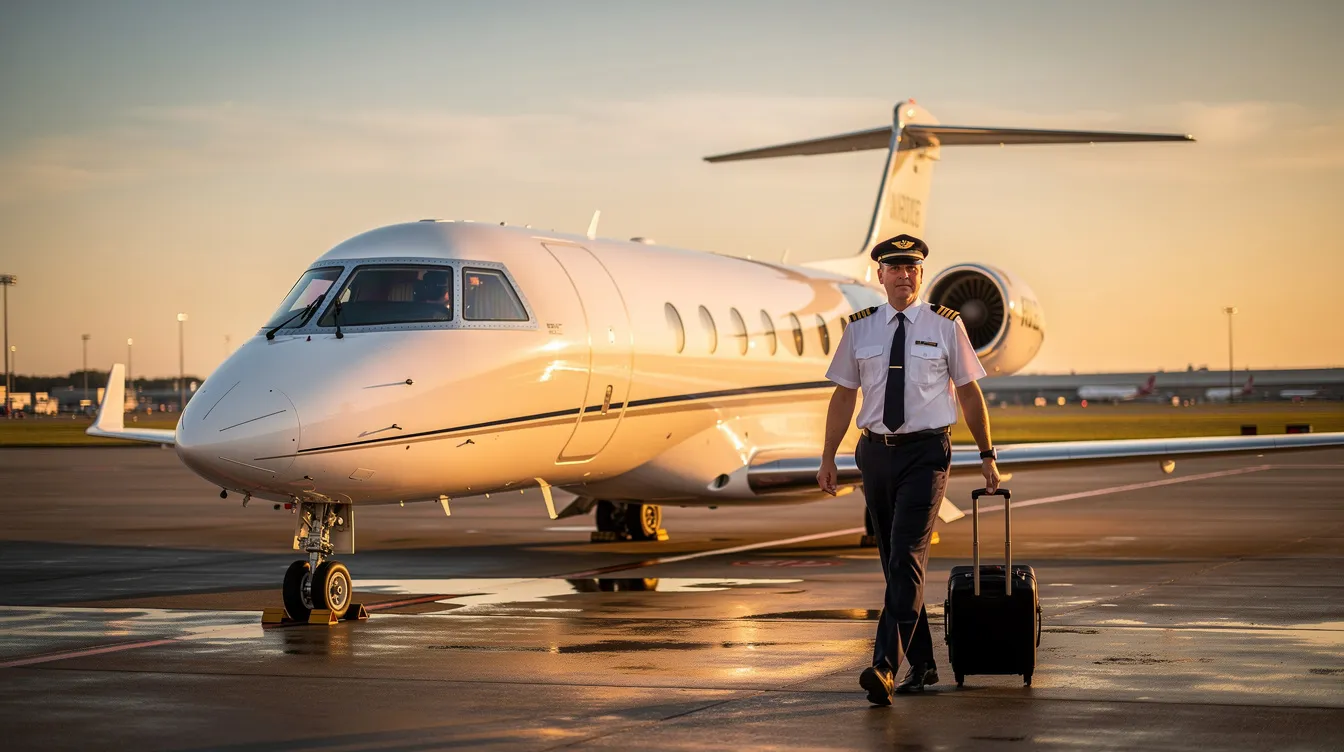
The private plane pilot is far more than the person at the controls. In 2027, as private aviation demand accelerates and commercial airline service contracts, the professionals flying your jet have become the single most important factor in a safe, seamless journey. This guide breaks down the career path, licensing, daily reality, and selection standards behind the pilots who power modern private jet travel.
Why Private Plane Pilots Matter in Modern Luxury Travel
Consider a business executive flying from New York to London. On a commercial first-class ticket, the door-to-door journey typically runs 10–12 hours once you factor in check-in, security, boarding, and ground transport from a large airport. A private jet departing Teterboro cuts that to roughly 7–8 hours, with departure on the traveler's schedule, customs handled planeside, and arrival at a convenient airfield.
Most people only see the cabin experience. Behind it, the private jet pilot manages flight planning, reviews weather forecasts and route analysis, makes real-time safety decisions, and coordinates client preferences from catering to ground transportation. This is a fundamentally different job than flying scheduled flights for an airline.
Business jet departures in the U.S. grew by 417,000 flights between 2019 and 2025, with 78 percent of that increase occurring at leisure-destination airfields. Meanwhile, nonstop commercial routes under 1,000 km fell approximately 4.4 percent globally, sharpening interest in whether chartering a private jet is worth it. These shifts mean more travelers need private aviation-and more highly trained pilots to fly them.
At BlackJet, every Jet Card flight is built around pilots operating under strict safety certification. Jet card programs offer prepaid access to private jets through options like 25-hour or 50-hour cards, with clear, structured Jet Card pricing, 24/7 digital booking tools, and real-time support as standard features.
Private Jet Pilot vs Airline Pilot: Key Differences
Both private jet pilots and airline pilots often hold an Airline Transport Pilot license and share core technical skills. The divergence is in how those skills are applied daily.
Dimension | Private Jet Pilot | Airline Pilot |
|---|---|---|
Schedule | Flexible and unpredictable; on-demand trips | Highly structured schedules and fixed routes |
Airports | Often fly to smaller airports, short runways, mountain airfields | Typically operate at large airports and commercial hubs |
Passenger interaction | Greet guests at the FBO, handle luggage, coordinate catering | Limited passenger interaction; remain behind cockpit door |
Aircraft types | Private jets include light, midsize, and heavy categories; also turboprops | Typically operate larger commercial aircraft |
Operational variety | Last-minute changes, international GA terminals, repositioning flights | Predetermined routes with established procedures |
Regulatory framework | Charter services operate under Part 135; Jet Card programs add safety layers. | Part 121 operations with carrier-level oversight |
Private jet pilots in charter services and Jet Card programs must balance customer service with rigorous safety and regulatory compliance. Light jets are ideal for short trips and smaller groups. Midsize jets offer more space and range. Heavy jets are designed for long-distance travel with larger groups. Turboprops remain efficient for short regional flights, and choosing among the best small private aircraft for your needs is often part of the mission-planning conversation. This greater variety of aircraft and mission types demands versatility that airline pilots rarely encounter.
Minimum Licenses and Flight Hours to Fly a Private Jet
The path follows a clear progression: private pilot license, instrument rating, commercial pilot license, and finally Airline Transport Pilot certification—much like a traveler might progress from ad hoc charters to a structured 25-hour Jet Card program as their flying needs grow.
Under the FAA's 14 CFR Part 61, you need to complete a minimum of 35 to 40 flight hours to earn a private pilot certificate. Most students require 55 to 70 flight hours to become proficient. To become a private pilot in the U.S., you must be at least 17 years old, and past the age requirement, there is no upper age limit. You must also be able to read, speak, write, and understand English for certification. A student pilot certificate is required to start flight training, and a third-class FAA medical certificate is needed before solo flights.
To work as a private jet pilot, pilots must hold a commercial pilot license at minimum-at least 250 total flight hours under FAA rules-plus a multi-engine rating and instrument rating to navigate under instrument flight rules. Pilots also require a valid second-class medical certificate, similar to the standards enforced in programs like Flexjet’s Jet Card offerings.
A Part 135 pilot must log at least 1,200 total flight hours. The highest certification is the airline transport pilot license, which typically requires 1,500 total hours and is necessary to act as captain on many jet operations, including high-end charter and fractional fleets—similar to how frequent travelers often migrate to a 50-hour Jet Card structure when their annual usage climbs.
Premium operators distinguish between total time, pilot-in-command time, and multi-engine jet hours. BlackJet's partner operators look for robust numbers across all three categories.
From First Lesson to Private Jet Cockpit: Step-by-Step Training Path
Student Pilot Phase
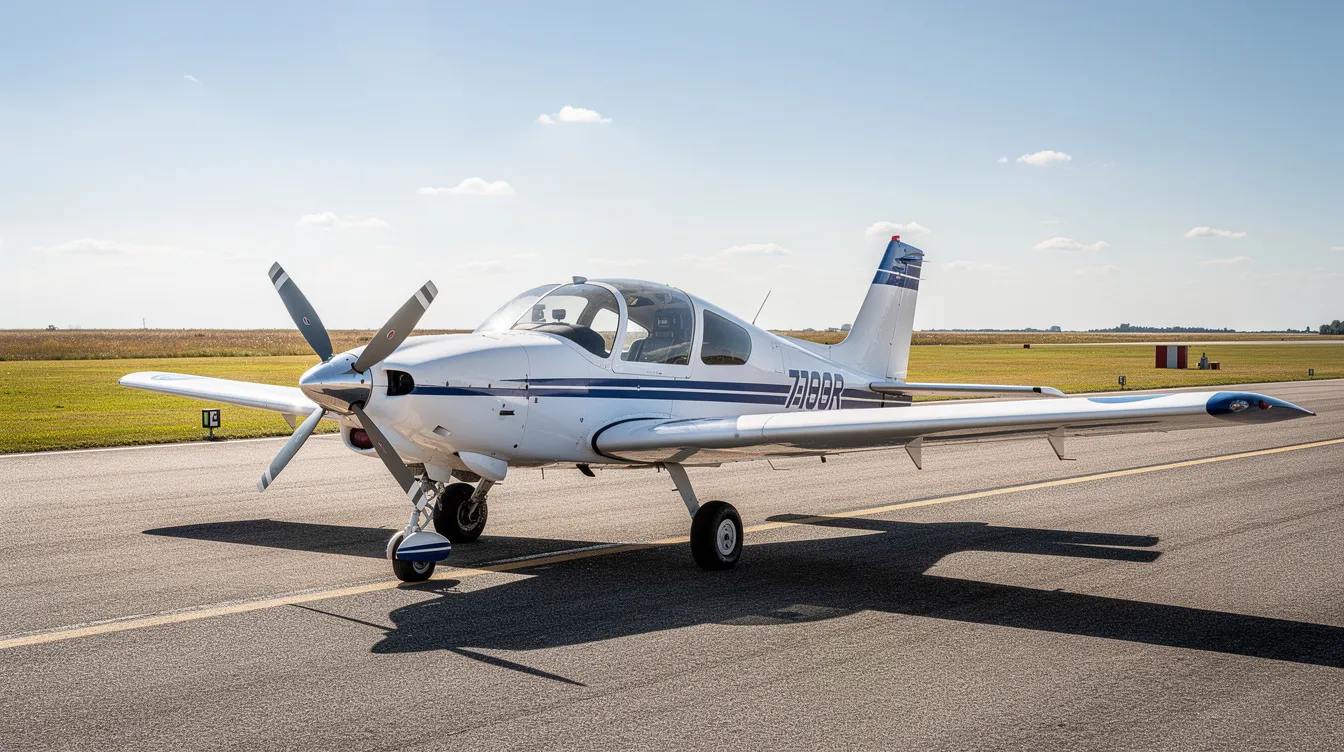
Beginning at age 16–17, a student pilot starts basic flight training in aircraft like the Cessna 172 or Piper PA-28. The typical minimum for solo flying is at least 10 flight hours. First solo usually occurs around 15–25 hours, covering basic aerodynamics, navigation, and radio work.Private Pilot License
After accumulating the required hours and completing cross-country and night requirements, the student takes the practical flight test, which includes both oral and in-flight examinations. You must pass an FAA medical exam to become a private pilot. Most finish the PPL checkride within 4–6 months of consistent flight training.Instrument Rating
Approximately 40+ hours of instrument time, flying solely by reference to instruments in real and simulated low-visibility scenarios. This is essential for any pilot planning to fly in various weather conditions.Commercial Pilot License
Advanced maneuvers, complex aircraft with retractable gear and constant-speed props, precision landings, and building to at least 250 total flight hours. This is where many pilots also begin pursuing type-specific qualifications.ATP Preparation
Multi-engine experience, crew coordination skills, high-altitude and high-speed operations, culminating in an ATP checkride. Pilots learn to work effectively with a co-pilot in a multi-crew environment.Hour Building
Many future private jet pilots build hours as flight instructors, banner towers, or flying air ambulance and survey missions before transitioning to jets. These various roles develop the command experience and airborne decision-making that charter operators require.
Medical Exam, Safety Standards, and Ongoing Checks
A career in private aviation demands ongoing physical and professional fitness:
Medical Certification: A Class 1 medical exam covers cardiovascular health (including ECGs from age 35, annually after 40), vision standards for distant and near acuity, hearing, mental health screening, and medication review. Renewals occur every 6–12 months depending on age. Pilots must maintain a valid second-class medical certificate for Part 135 operations, regardless of whether flights are billed on an hourly charter or structured private jet rental pricing model.
Recurrent Training: Part 135 pilots undergo recurrent training annually for safety, including simulator checks, line checks, and emergency procedure drills. Pilots must complete emergency procedure drills during training. Pilot currency and proficiency require regular training and checkrides-typically every 6–12 months.
Operator Audits: BlackJet only uses operators whose pilots meet or exceed Part 135 standards and hold recognized safety ratings from third-party auditors such as ARG-US and Wyvern.
Specialized Medical Mission Training: Many air ambulance and specialized charter pilots receive additional medical-scenario training, learning to operate alongside medical teams and adapt flight profiles for patient care—skills that also intersect with how a private jet broker’s compensation reflects mission complexity and safety standards.
Specialized Training for Private Jets, Charter, and Air Ambulance Missions
Beyond baseline licensing, private jet pilots pursue specialized training that separates general aviation competency from professional charter readiness, just as high-usage clients evaluate the best jet cards for frequent flyers to match service levels with their travel intensity.
Type Ratings
Type ratings are aircraft-specific certifications required for every turbojet-powered airplane. A pilot wanting to fly a Cessna Citation XLS+, Embraer Phenom 300, or Gulfstream G500 must complete dedicated ground school covering aircraft systems, limitations, and performance, followed by simulator sessions and a practical checkride—the same aircraft families that feature in NetJets Jet Card cost comparisons.
Crew Resource Management
Crew resource management in small, two-pilot cockpits is critical. CRM training for charter environments emphasizes dynamic decision-making, threat and error management, and cockpit discipline when schedules shift or weather deteriorates-a good example of how other pilots in general aviation rarely face this intensity.
Air Ambulance Operations
Air ambulance operations require time-critical routing, coordination with medical teams on board, and patient-sensitive climb and descent profiles. This is just what distinguishes mission-capable pilots from standard charter pilots.
Challenging Airport Training
Challenging airport training prepares pilots for destinations like Aspen, Teterboro, or alpine airfields where short runways, high density altitude, and terrain obstructions demand specialized performance calculations. Night and all-weather operations add advanced instrument procedures, de-icing protocols, and diversion planning—skills that also support the most affordable private jet options operating into smaller, cost-efficient airports.
Jet Card and charter operators that BlackJet partners with require annual or semi-annual simulator sessions for each specific jet type a pilot flies, a standard shared by many of the top private jet companies for luxury travel.
What a Private Plane Pilot's Day Really Looks Like
Here is a scenario-based look at a 2027 BlackJet Jet Card trip-captain and first officer flying a midsize jet from Teterboro (TEB) to Miami-Opa Locka (OPF), similar to what you’d book on the BlackJet 25+ Hour Jet Card:
05:30 – Pre-Flight Preparation: Wake-up. Review weather forecasts and flight permissions. Before every flight, pilots must check weather forecasts and complete route analysis. Emergency preparedness planning begins here-alternate airports identified, fuel contingencies calculated.
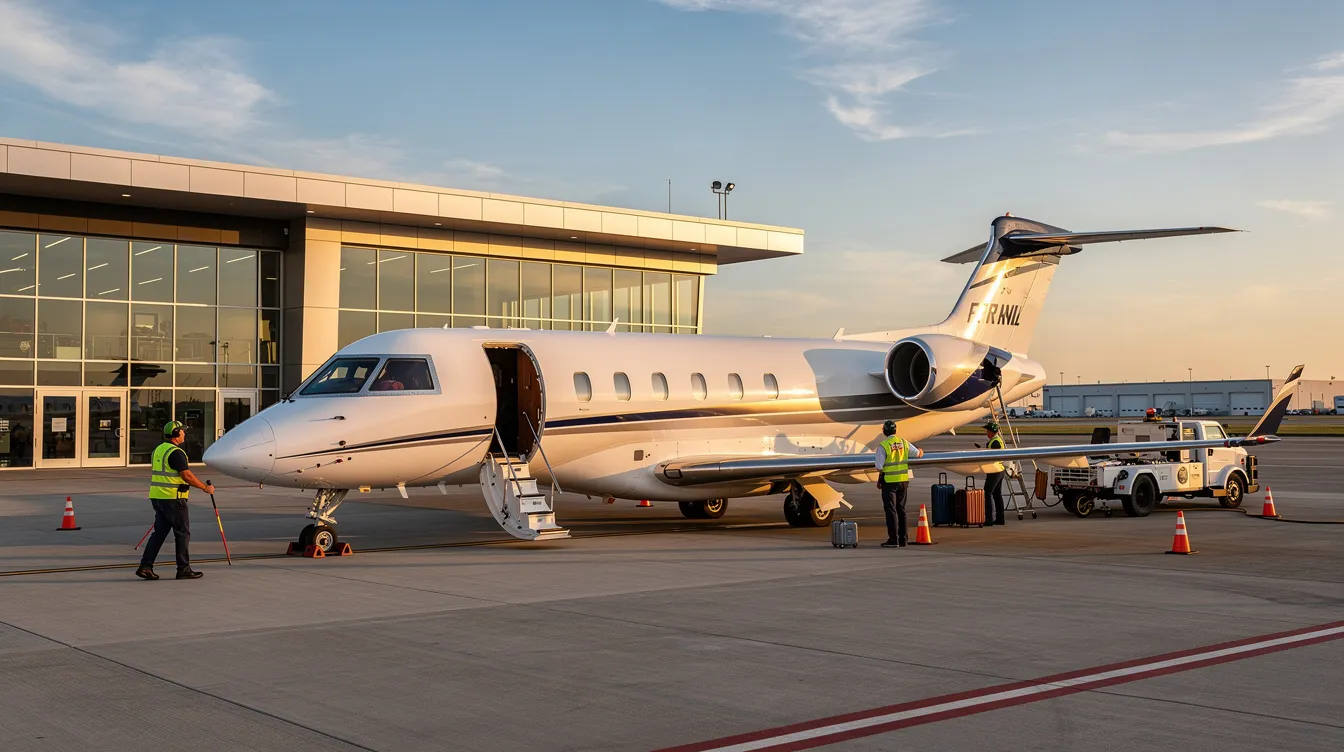
06:45 – Arrival at FBO: Arrive at the FBO. Private pilots must inspect the aircraft before each flight to ensure safety, performing a thorough pre-flight walk-around. Weight-and-balance calculations confirmed. Catering loaded, cabin configured to passenger preferences.
07:15 – Passenger Arrival: Passengers arrive. The captain greets them, confirms flight details and expected arrival time, and ensures privacy and comfort. Maintaining professionalism and discretion is essential when dealing with passengers. Private pilots coordinate additional services such as catering and ground transportation.
07:45 – In-Flight Operations: Airborne. Pilots must maintain robust communication with air traffic control during flights, coordinating altitude changes and routing. En route, the crew optimizes altitude for fuel efficiency, reroutes around convective weather, and monitors aircraft systems continuously.
10:30 – Post-Flight Duties: Land at OPF. Post-flight duties include flight log entries-flight logs must include flight hours and mechanical discrepancies-maintenance write-ups, and crew debrief. Private pilots are responsible for maintaining flight logs and aircraft journey records.
11:30–16:00 – Rest and Preparation: Rest period, preparation for a potential return leg. The schedule remains fluid; a last-minute booking could mean another flight by evening.
Career Paths: From Private Pilot License to Elite Private Jet Cockpit
The journey from first license to elite cockpit typically spans several years and many flights:
Early Stage: After earning a PPL, private pilots can fly family and friends for personal trips after certification, but private pilots cannot accept payment for transporting passengers or cargo. Hour-building begins through flying clubs, rental blocks, or shared ownership.
First Professional Roles: Common jobs after CPL include flight instructor, pipeline patrol, aerial photography, skydiver drops, or tourism flights. Many pilots also fly helicopters or fixed-wing air ambulance missions. These positions build flight time and earn modest but growing salaries compared with the earning ranges outlined in our private jet pilot salary guide.
Transition to Charter: Pilots move into Part 135 charter services and fractional ownership companies, initially as first officer on light jets. Private jet charter services are available throughout the U.S., and booking a private jet can often be done within hours. For a deeper breakdown of how much it costs to rent a private jet, private jet rentals typically range from $7,000 to $250,000 depending on aircraft and trip. You can charter a private jet for one-way trips and choose your departure time.
Advancement: Captain on midsize or super-midsize aircraft, then large-cabin transatlantic jets. Some pilots move into corporate flight departments or pursue a small company owner-operator path, while cabin crew follows parallel tracks into top private plane stewardess jobs.
Alternative Routes: Military backgrounds bring substantial jet and high-altitude experience. Others enter through dedicated flight academies with restricted ATP privileges. Owner-pilot mentorship roles for high-net-worth individuals represent another growing career niche, paralleling the specialized expertise seen in private jet sales careers and salaries.
Private jet pilots with strong customer service skills and impeccable safety records often command higher pay and more stable schedules than many entry-level airline pilots, just as private jet stewardess salary expectations rise with experience, service quality, and safety training. For deeper cost analysis, see How Much Does a Private Jet Pilot Cost?
How BlackJet Selects and Supports Private Jet Pilots
BlackJet works exclusively with vetted operators whose pilots meet stringent experience thresholds-thousands of total flight hours, robust type-rating currency, and documented safety records across many flights.
Captain and first officer pairings are screened for recent jet time, strong safety records, and recurrent training completion within the past 6–12 months.
Pilots receive real-time itineraries, passenger preferences, and operational guidance through BlackJet's digital and mobile booking platform.
Safety certifications include third-party ratings, compliance with Part 135 for charter services, and internal reviews of pilot performance data. Learn more about BlackJet Certified standards.
Every BlackJet flight is carbon-neutral in 2027, with pilots briefed on fuel-efficient profiles and sustainable operating practices.
For Jet Card members, consistency of pilot quality is a core promise- the same safety rigor whether flying 25 hours or 200 hours per year through the BlackJet Jet Card program.
FAQs About Private Plane Pilots and Jet Card Travel
How many flight hours does a private jet pilot typically have?
Captains on midsize and large-cabin jets commonly have 3,000–8,000+ total hours. First officers typically hold 1,500–3,000 hours. Part 135 requires pilots to log at least 1,200 flight hours before operating commercially.
Can a holder of only a private pilot license fly a private jet?
In limited circumstances, certain light jets permit it recreationally, but not for hire. Flying multi-crew jets or for charter requires a commercial pilot license at minimum. See single-pilot jet options for the unique aspects of that category.
Who flies my BlackJet Jet Card flights?
Professional commercial or ATP-licensed pilots employed by certified operators crew every aircraft. Each trip is backed by the safety standards and audits described above.
Are private jet pilots safer than airline pilots?
Comparable training and regulatory standards apply. Private jet operations under Part 135 undergo rigorous audits, and in many cases, Jet Card operators like BlackJet impose requirements that exceed regulatory minimums.
Do private jet pilots also fly air ambulance or special missions?
Yes. Specialized training allows some charter pilots to alternate between mission types, including medical transport, search operations, and VIP travel across the country.
How often do private jet pilots train in simulators?
Most undergo recurrent simulator sessions annually or semi-annually, covering emergency procedures, instrument approaches, and aircraft-specific performance scenarios.
How much does it cost to become a private jet pilot?
From zero hours to ATP, the investment in money and time is substantial—often $80,000–$150,000+ in training costs and several years of hour-building. For a detailed breakdown, see private pilot license pricing and pilot salary expectations.
Choosing Private Jet Access: Why Pilot Standards Should Drive Your Decision
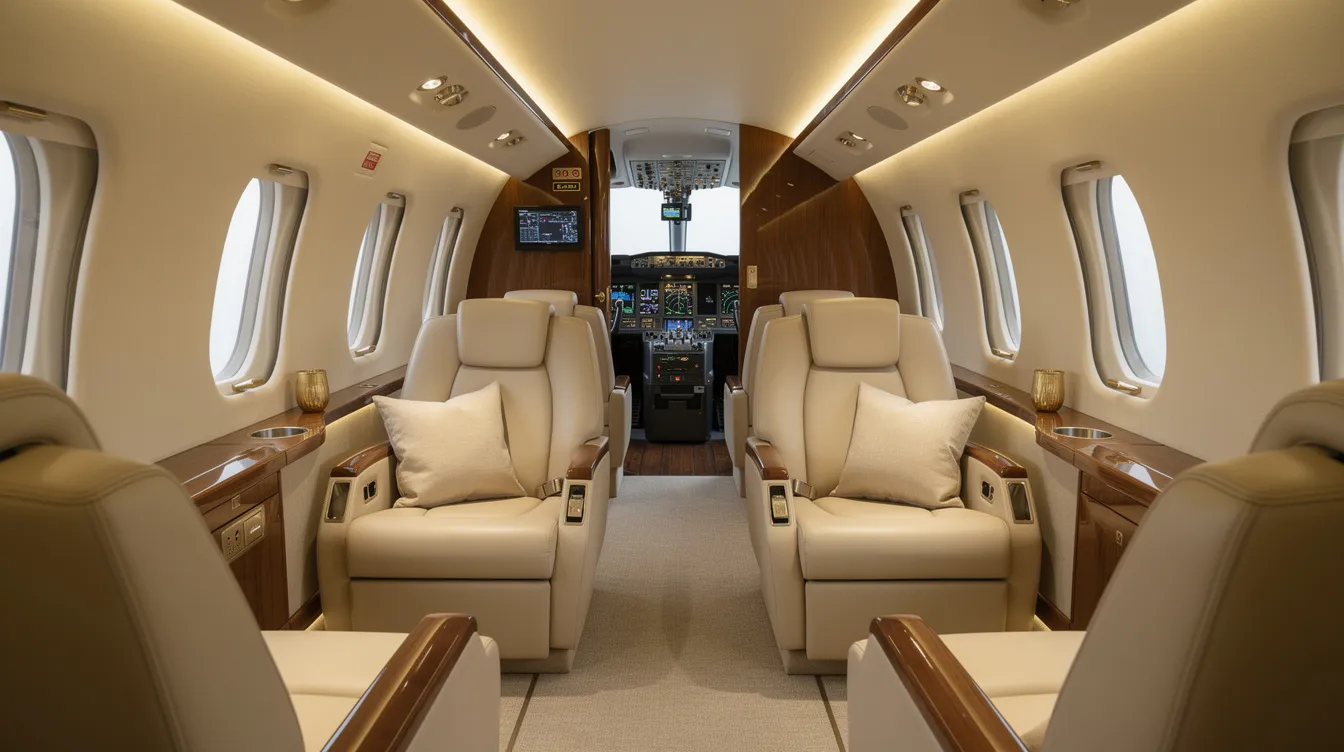
Beyond aircraft interiors and pricing, pilot qualifications and flight training standards are the foundation of safe private aviation. When evaluating any Jet Card or charter provider, ask about pilot licenses, flight hours, medical exam frequency, and specialized training before you board.
BlackJet exists to elevate travel on your terms-curated operators, carbon-neutral flights, advanced booking technology, and elite private jet pilots on every journey, supported by transparent Jet Card membership pricing that aligns with frequent flyers’ needs.
Elevate your travel-effortlessly. Explore BlackJet's Jet Card options and discover how professional pilots, rigorous safety, and seamless flexibility reshape the way you fly in 2027 and beyond.