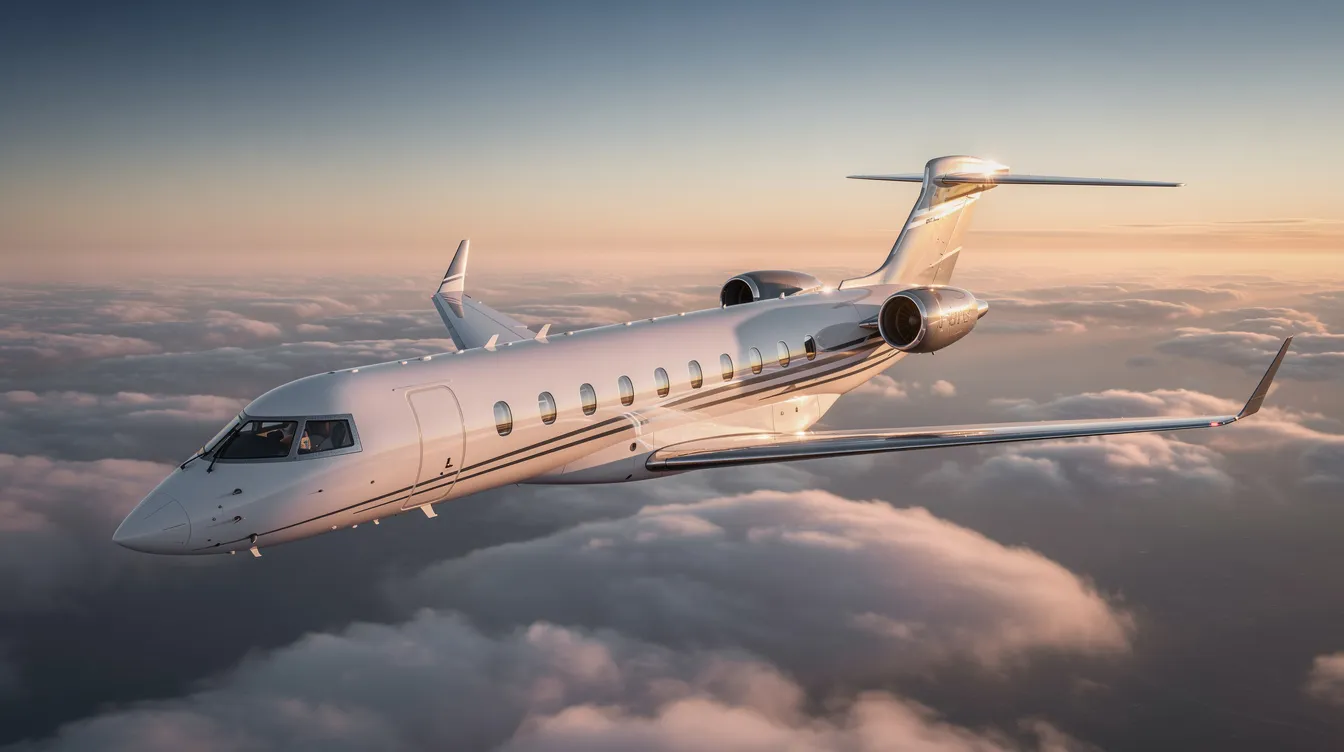
For executives and high-net-worth travelers considering a private plane to buy, the calculus in 2026 extends far beyond the acquisition price. This guide is designed for executives, entrepreneurs, and high-net-worth individuals evaluating whether to buy a private plane or pursue alternative access models in 2026. The process of purchasing a private plane requires careful consideration of various factors, including financial aspects, convenience, and comfort for the intended use. This guide dissects ownership economics against modern access alternatives—helping you decide whether to buy or simply fly.
Key Takeaways
Full ownership of private jets rarely makes financial sense for travelers flying under 200–300 hours annually; annual operating costs often exceed $1 million even for light jets
In 2026, light private jets start around $4–6 million pre-owned and can exceed $70 million new for large-cabin business jets, not including annual operating costs that often run 10–15% of the purchase price
The preowned market for jets for sale can offer 30–50% savings versus new aircraft, but demands expert due diligence, inspection protocols, and ongoing management
BlackJet’s Jet Card delivers prepaid private jet access across multiple aircraft categories, carbon-neutral flights, and rigorous safety oversight—with no capital lock-up or asset risk
Owning a plane outright generally makes financial sense only if flying 200–400 hours annually; otherwise, chartering or fractional ownership may be more cost-effective
Why Private Jet Access Is a Strategic Advantage in 2026
Private aircraft ownership provides significant time savings, allowing owners to avoid long security lines and delays associated with commercial flights. Consider the New York–Chicago corridor: 3–4 hours door-to-door via Teterboro versus 6–8 hours commercial through JFK or O’Hare delays. Owning a private aircraft allows for greater flexibility in travel schedules, enabling owners to depart and arrive at their convenience.
Private aircraft can access more airports than commercial airlines, providing owners with a wider range of travel destinations—over 5,000 U.S. airports versus roughly 500 served by commercial carriers. This matters for executives doing 2–3 city roadshows weekly or families splitting time between New York, Miami, Aspen, and London.
The core question: Do you truly need to buy a private jet, or do you need reliable, flexible private jet access?
BlackJet operates on a membership Jet Card model, positioning ownership as one option among several—not the default. The rest of this guide helps you determine which path serves your travel patterns.
What Does It Really Mean to Buy a Private Jet?
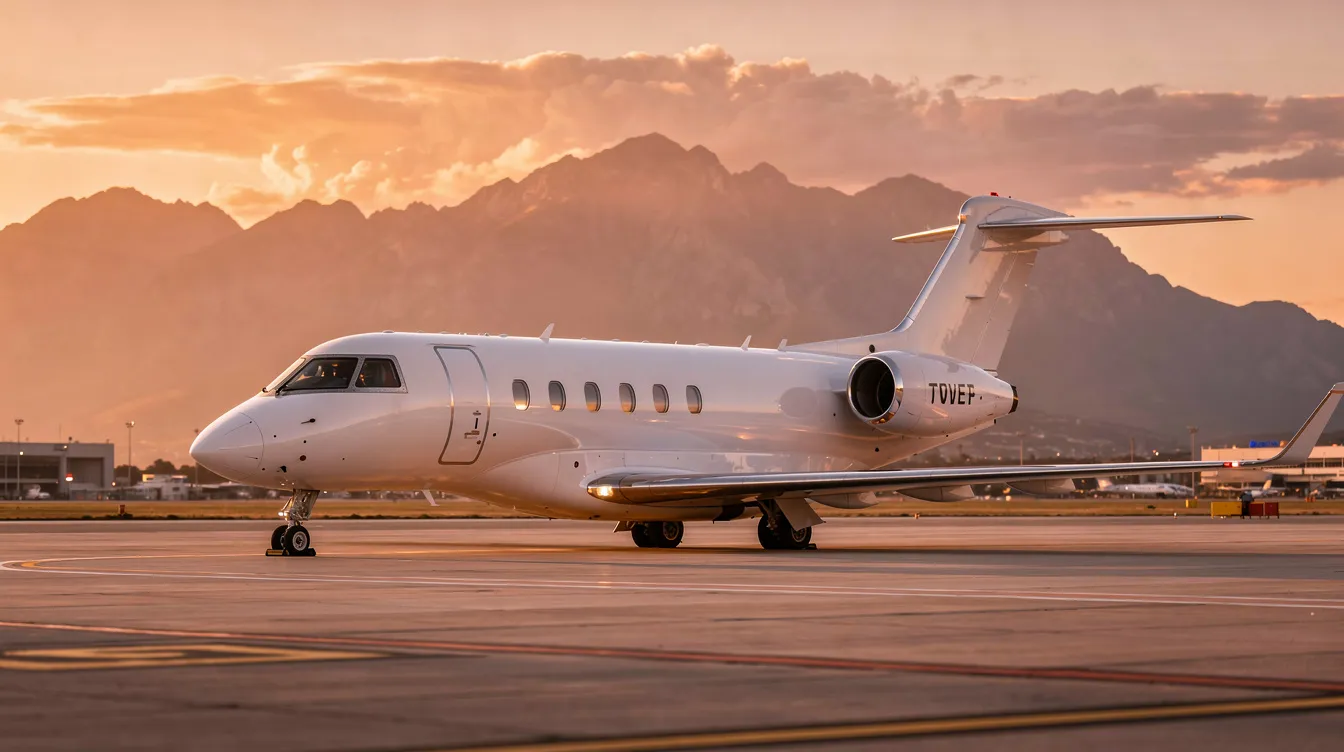
Buying a private plane typically refers to acquiring a business jet—new or pre-owned—registering it with the FAA, securing insurance, and arranging ongoing operation through a management company. Buyers can browse curated aircraft listings on specialized sites, which offer comprehensive inventories and advanced filtering options to help clients find suitable aircraft quickly. Private planes can be categorized by propulsion system (piston, turboprop, or jet) and are further divided by range and cabin size.
Buying a private plane involves evaluating mission requirements, total lifecycle costs, and aircraft management practicalities. Typical aircraft categories include:
Light jets (e.g., Embraer Phenom 300): 6–8 passengers, 1,800–2,300nm range
Midsize jets (e.g., Cessna Citation Latitude): 8–9 passengers, 2,500–3,200nm range
Super-midsize (e.g., Bombardier Challenger 3500): 9–10 passengers, 3,200–4,000nm range
Large-cabin/ultra-long-range (e.g., Gulfstream G650ER): 12–19 passengers, 6,000–7,500nm range
Initial acquisition costs for private planes range from $1.5 million for used light jets to over $75 million for new ultra-long-range models. A 2016 pre-owned Challenger 350 might cost less than half of a factory-new 2026 equivalent.
Cost Breakdown: Purchase Price vs. Full Ownership Economics
The acquisition price represents merely the starting point. Ownership of aircraft incurs heavy fixed costs even when the plane is not in use—including crew salaries, hangar fees, insurance, and management.
Annual fixed costs for a midsize jet typically range from $500,000 to $1.2 million. Common variable costs for operating a private jet include fuel, landing fees, and engine maintenance programs. The choice of engines, such as the advanced Rolls-Royce Pearl 700 engines, plays a significant role in fuel efficiency and overall performance, impacting both operating costs and long-term value.
Ballpark annual operating costs by category:
Aircraft Type | Annual Cost Range | Cost Per Hour (at 200 hrs) |
|---|
Light jet | $700,000–$1.2M | $3,500–$6,000 |
Super-midsize | $1.5M–$2.5M | $7,500–$12,500 |
Large-cabin | $3M–$5M+ | $15,000–$25,000 |
Scenario: A business owner flying 150 hours annually on a large-cabin jet faces approximately $4 million in total costs—roughly $26,700 per hour. Compare this to BlackJet’s Jet Card at fixed rates around $9,000–$12,000 per hour all-in, and review a broader guide to jet card cost and value when assessing membership pricing.
Large-cabin jets, with their highest acquisition costs, represent the pinnacle of private aviation—offering unmatched luxury, performance, and quality.
Often overlooked: engine reserves ($500–$1,200 per hour toward overhauls), cabin refurbishments every 7–10 years ($1–5 million), avionics upgrades for regulatory compliance, and opportunity cost on $10M+ capital.
The Preowned Market: Opportunities and Risks When Buying Used Jets
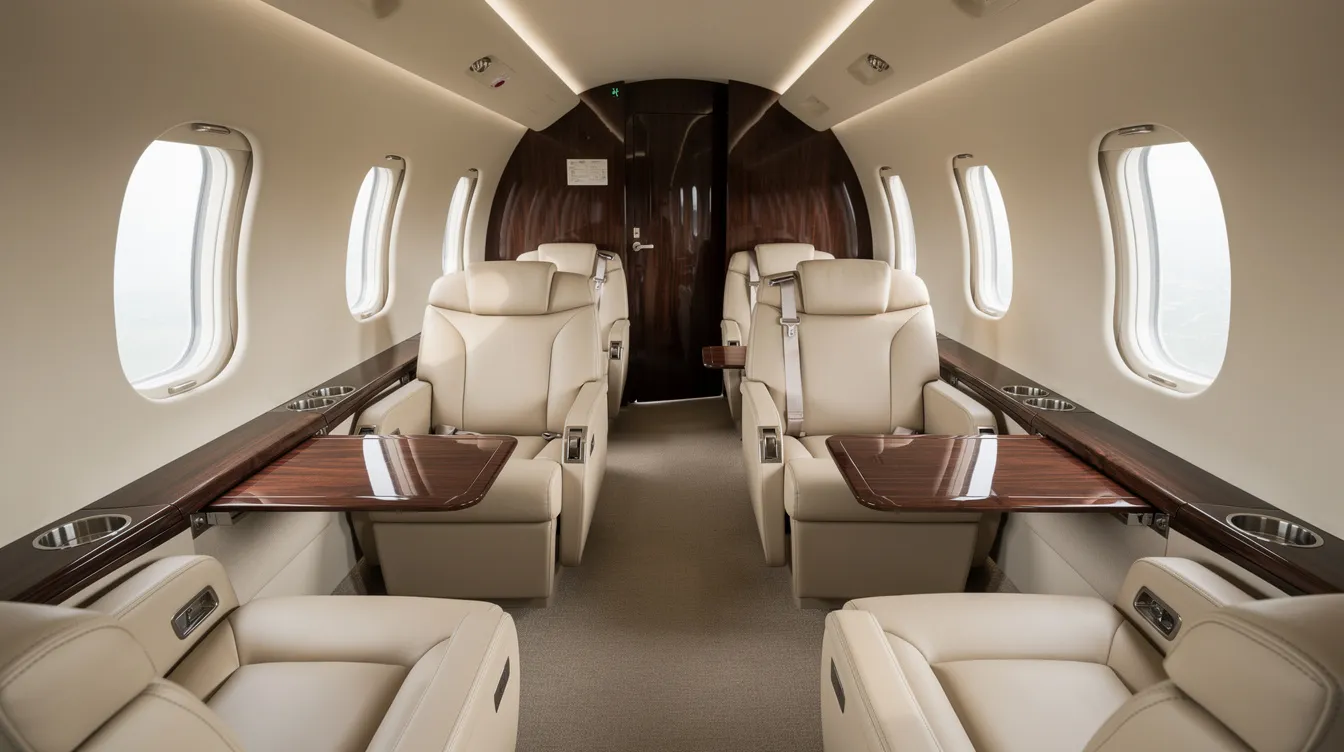
The preowned market comprises 70% of 2026 transactions, offering aircraft with one or more previous owners at 30–50% below new delivery prices. Well-maintained jets for sale can deliver substantial savings—a 2012 Gulfstream G550 trades at $20–25 million versus $50 million new equivalent.
When buying a private aircraft, it is essential to evaluate the aircraft’s maintenance history, operational costs, and potential resale value to make an informed decision. Buying a private aircraft involves a thorough inspection process, where each plane undergoes over 100 checks by expert technicians and aircraft engineers before being listed for sale.
Critical due-diligence steps:
Complete logbook review (missing records can reduce value 20%)
Pre-purchase inspection at independent MRO facilities ($75,000–$250,000)
Assessment of upcoming maintenance events
Verification of programs like Rolls-Royce CorporateCare or APU-enrolled status
Common pitfalls include incomplete records, low-time airframes with corrosion from inactivity, and outdated avionics requiring costly upgrades. Expert advisors are essential when entering this market.
Choosing the Right Type of Private Plane to Buy
Private planes can be categorized by propulsion system (piston, turboprop, or jet) and are further divided by range and cabin size. Light jets are suited for short-to-medium range flights for small groups, offering efficiency and the ability to land at smaller airports. Mid-size jets offer a balance of speed and comfort, accommodating 7-12 passengers with better amenities for longer flights. Turboprops are best for short regional flights and can access airports with short or unpaved runways. Heavy/ultra-long-range jets are designed for long-haul travel, providing maximum luxury with features such as private bedrooms and full kitchens.
Aircraft selection should be mission-driven: average trip length, passenger count, departure airports, and baggage needs.
Light jets (Phenom 300, Hawker 400): Suited for short-to-medium range flights for small groups, offering efficiency and the ability to land at smaller airports. Typical light jets can seat up to 6 passengers.
Mid-size jets (Citation XLS+, Challenger 350): Offer a balance of speed and comfort, accommodating 7–12 passengers with better amenities for longer flights. Ideal for coast-to-coast U.S. travel.
Turboprops (King Air 360): Best for short regional flights and can access airports with short or unpaved runways.
Heavy/ultra-long-range jets (Gulfstream G650ER, Dassault Falcon 10X): Designed for long-haul travel, providing maximum luxury with features such as private bedrooms and full kitchens. The Gulfstream G700 has a maximum range of 7,750 nautical miles, making it one of the longest-range business jets available. It features the largest panoramic oval windows in business aviation and can be configured with multiple living areas—up to five distinct spaces for passengers. Owners can create a personalized cabin interior to enhance the passenger experience, tailoring the space to individual preferences for a more luxurious flight. While heavy jets can accommodate 14 or more passengers, purpose-built private jets configured for 20 passengers are ideal when missions consistently involve larger groups.
Airport consideration: Light jets access 80% of private strips; larger aircraft may face runway restrictions at locations like Aspen or Jackson Hole.
Ownership vs. Jet Card vs. On-Demand Charter
Modern private aviation offers a spectrum: outright ownership, fractional programs, Jet Card memberships, and on-demand charter.
When ownership makes sense: Individuals or businesses flying more than 200 hours annually often prefer ownership over chartering for financial reasons. Consistent mission profiles above 300–400 hours justify the capital commitment and management complexity.
Jet Cards (BlackJet model): Prepaid blocks of hours (25-hour, 50-hour) across multiple cabin types, with fixed hourly rates, guaranteed availability, and 24/7 digital booking. Optimal for 50–250 annual hours, and a dedicated guide to the 50-hour jet card cost can clarify pricing and value at this commitment level.
On-demand charter: Pay-per-trip access suited for under 25–50 hours yearly, though pricing varies and peak availability isn’t guaranteed. Travelers who don’t need whole-aircraft access on every trip can also buy a seat on a private jet via shared and semi-private options.
If you fly 20 hours annually: consider charter. 50–200 hours: Jet Card like BlackJet typically delivers optimal value. 300+ hours with consistent routes: evaluate ownership or fractional.
Safety, Certification, and Sustainability When You Own vs. When You Access
Whether you buy a private plane or use access programs, safety remains non-negotiable.
Owners must manage—directly or via management companies—pilot hiring and recurrent training ($20,000+ per pilot annually), maintenance scheduling, FAA/EASA compliance, and safety audits like IS-BAO certification.
BlackJet centralizes this oversight: only ARGUS Platinum and Wyvern PRO-certified operators qualify, with quarterly audits and 99.9% on-time performance. Understanding how top private jet companies for luxury travel design their safety and service models can further inform your choice of aviation partner.
Sustainability in 2026: Sustainable aviation fuel availability is expanding, though logistics remain complex for individual owners. BlackJet ensures every flight is carbon-neutral through SAF blending and verified offsets—without added complexity or cost to members.
Technology and the Modern Private Aviation Experience
Technology has transformed private jet access from phone-only brokers to seamless digital platforms.
A modern site offers a comprehensive, easy-to-navigate interface with advanced features, allowing clients to browse and filter private aircraft listings quickly and securely. Platforms are increasingly enabling private plane rideshare options that sell individual seats instead of whole-aircraft charters. BlackJet’s proprietary tools enable members to request, confirm, and manage flights in real time—viewing aircraft categories, coordinating ground transportation, and receiving proactive disruption alerts from a single interface. Individual owners typically rely on manual coordination with management companies, which can limit flexibility for ad hoc changes.
Operational enhancements include AI-powered routing optimization, predictive maintenance through programs like Boeing Jeppesen, and in-flight Ka-band WiFi delivering 100Mbps connectivity for continuing business productivity aloft.

Case Studies: When Buying a Private Plane Makes Sense—and When It Doesn’t
Global CEO (Ownership Justified): A multinational CEO flying 500+ hours annually between New York, London, Dubai, and Singapore utilizes a Gulfstream G650ER—comparable in investment level to a 15 million dollar private jet and its features. Consistent ultra-long missions, corporate branding benefits, and productivity gains exceeding $4.5 million annually justify owning the aircraft outright.
PE Partner (Jet Card Optimal): A U.S.-based private equity partner flying 120–180 hours yearly across North America and Europe leverages a 50-hour BlackJet Jet Card, later scaling into a 100-hour jet card cost structure as travel needs grow. Flexible cabin selection—light for short hops, large for transatlantic—delivers $1.35 million annual costs versus $2.5 million for owning a Challenger. Capital remains deployed in core investments.
Leisure Family (Charter/Small Jet Card): A family splitting time between Los Angeles and Aspen flies 30–40 hours annually. A smaller Jet Card or on-demand charter to light and midsize jets provides tailored access at roughly $250,000 yearly with no long-term commitment, making more sense than owning one of the cheapest private aircraft options outright.
Map your actual hours flown, route patterns, and appetite for managing an aviation asset versus prioritizing pure access.
How BlackJet Reframes the “Private Plane to Buy” Decision
BlackJet’s Jet Card model delivers the benefits of private jets—time savings, privacy, safety, flexibility—without capital outlay or operational burden, and the BlackJet 25+ Hour Jet Card is designed specifically for flyers who want predictable pricing across mid, super-mid, and large-cabin jets.
Core features:
For travelers flying 50–250 hours annually, BlackJet frees $10+ million in capital for core investments while delivering a premier, consistent private aviation experience. Buyers comparing full ownership, charter, and membership should also understand the broader private jet price list and access options. Before committing to a private plane to buy, model your real flight hours and explore how a BlackJet Jet Card could reshape your cost and flexibility profile.
FAQ: Private Plane to Buy vs. Private Jet Access
How many flight hours per year justify buying a private jet instead of using a Jet Card?
Full ownership typically begins making financial sense above 300–400 hours annually on a stable route profile. For 50–250 hours, Jet Cards like BlackJet’s generally deliver superior economics. Under 50 hours, on-demand charter often proves most efficient.
Are pre-owned business jets reliable enough compared with new aircraft?
Well-maintained pre-owned jets can be extremely reliable—often with proven operational histories exceeding new aircraft dispatch reliability. This requires complete maintenance records, thorough pre-purchase inspection, and enrollment in reputable programs like Rolls-Royce CorporateCare or APU-enrolled status. Many buyers also weigh pre-owned options against the cheapest private jet choices and their economics before deciding how to enter private aviation.
Can I still use BlackJet if I already own a private jet?
Many owners use BlackJet to supplement their aircraft—when their jet is in maintenance, when they need a different cabin class for specific missions, or for positioning flights that would be inefficient with their owned aircraft. The programs complement rather than replace ownership, and are especially useful when mission profiles temporarily require private jets suitable for 50 passengers or other large-group solutions beyond your usual private jet size category.
How does BlackJet ensure private jet safety if I’m not the aircraft owner?
BlackJet partners exclusively with certified operators meeting or exceeding industry safety benchmarks, including ARGUS Platinum and Wyvern PRO certification. Ongoing audits, performance monitoring, and requirements for professionally trained, recurrently certified crews ensure safety standards match or exceed private ownership.
What makes BlackJet’s Jet Card different from booking ad hoc charters online?
Jet Card membership provides predetermined pricing, priority access during peak periods, curated aircraft quality standards, and dedicated support—advantages not guaranteed with purely transactional online charter bookings where pricing fluctuates, and availability varies significantly.
Elevate your travel—effortlessly. The question isn’t whether you can afford to buy a private plane; it’s whether owning one truly serves your priorities. For most high-frequency travelers, access outperforms ownership. Explore BlackJet’s Jet Card programs and discover how refined, flexible private aviation becomes your new standard.
Discover BlackJet Jet Cards
Conclusion: Making the Right Choice for Your Private Jet Needs
Deciding whether to buy a private plane or opt for smarter access through a Jet Card hinges on your unique travel patterns, financial considerations, and operational preferences. Ownership offers unparalleled customization, branding opportunities, and flexibility for those flying 300+ hours annually, but it comes with high fixed costs, depreciation, and management responsibilities. Conversely, BlackJet’s Jet Card program provides discerning customers with effortless, carbon-neutral private jet access across multiple aircraft categories—without the burdens of ownership, such as maintenance, parts management, or paint upkeep.
Assuming your annual flight hours fall below ownership thresholds, leveraging a Jet Card unlocks premier private aviation benefits while preserving capital and avoiding asset depreciation. With seamless digital booking, 24/7 support, and rigorous safety certification, BlackJet ensures every journey delivers on convenience, comfort, and sustainability.
Ultimately, the right choice places your needs and resources front of mind—whether that means owning a jet as a strategic business asset or enjoying the touch of effortless access through a flexible membership. Explore how BlackJet can elevate your travel experience and redefine what private aviation means for you.


 Sign up with google
 Sign up with Apple