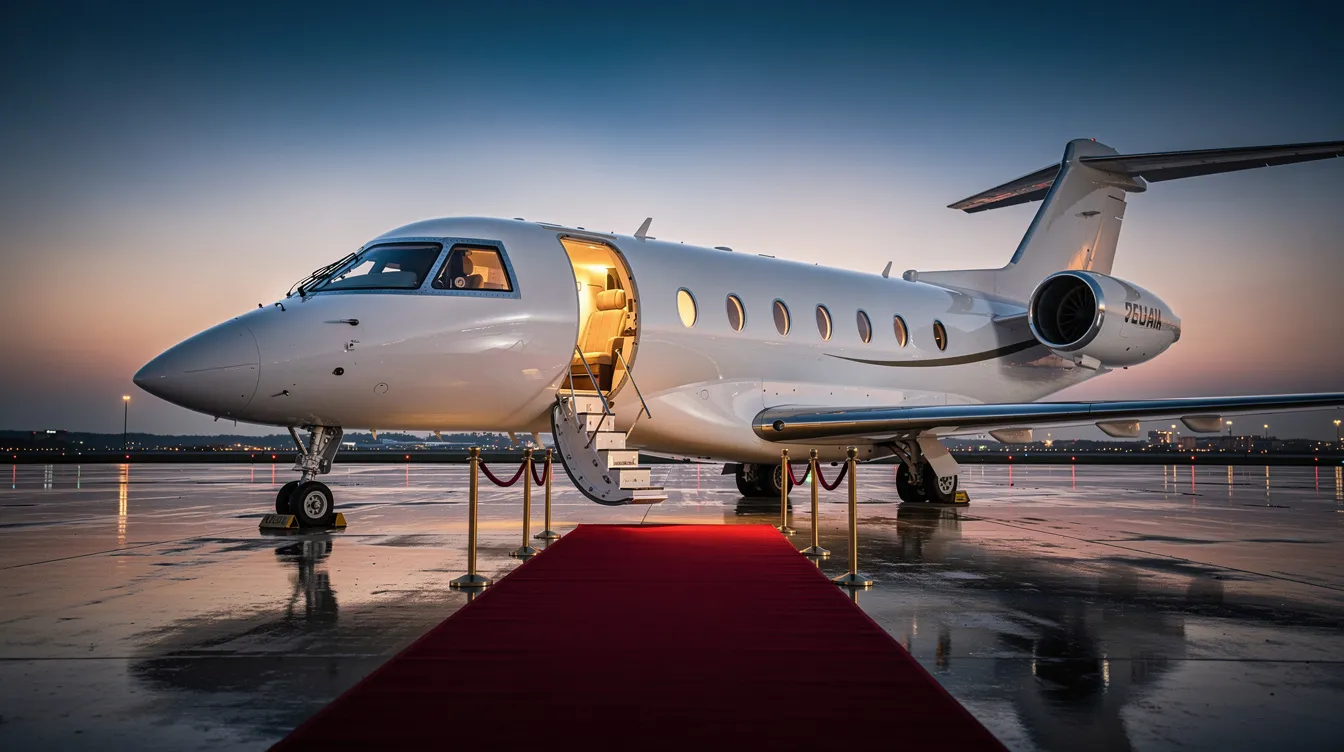
The era of needing to buy an aircraft to fly private is over. Today, public private jet companies make it possible to access the world's leading fleets on your schedule, without the capital risk, crew management, or hangar fees that come with ownership.
Why Public Private Jet Companies Matter in Modern Travel
Public aviation predominantly refers to commercial airlines that serve the general public-scheduled routes, fixed timetables, crowded terminals. Public private jet companies occupy a different category entirely. These are large, branded operators and brokers providing access to private jets for individuals and businesses through memberships, jet cards, private charter, and aircraft management. Membership-based private aviation allows users to secure flight access without owning a jet, turning what was once a billionaire's privilege into a strategic tool available to a much broader range of high-achievers.
The time savings alone make the case. A New York to Miami trip by midsize private jet takes roughly 2 hours 19 minutes of flight time, with total door-to-door time around 3 hours 49 minutes. The same journey via commercial first class-factoring in TSA lines, taxi time, and transfers-averages approximately 6 hours 37 minutes. That is nearly three hours saved each way. Private jets can access over 5,000 smaller municipal airports, and private travel uses private terminals for departures, meaning you arrive 20–30 minutes before takeoff rather than two hours.
Private jet travel is not merely a luxury-it is a strategic advantage. It enables access to secondary airports closer to your destination, the ability to visit multiple cities in a single day, and uninterrupted productivity while airborne. Private flights allow scheduling on the customer's timetable, and flexibility is a key benefit of private jet travel compared to commercial airlines. The private aviation market includes fractional ownership and jet card programs, and the private jet market is projected to grow significantly by 2033 as more travelers recognize these advantages.
BlackJet is a modern private aviation company using premium private jet card programs to provide predictable, prepaid access to private jets with guaranteed availability, carbon-neutral flights, and 24/7 digital support. This article will compare private and commercial travel, as well as key models-jet ownership vs. jet card vs. private charter-and show how to fly private efficiently, safely, and more sustainably.
How Public Private Jet Companies Work
The Four Primary Business Models
There are four primary business models in private aviation: on-demand private charter (book one trip at a time), jet cards and memberships (prepay for flight hours), fractional ownership (buy a share of an aircraft), and full aircraft ownership.
Aggregating Demand and Fleet Access
Public private jet companies aggregate demand from thousands of clients, allowing them to operate or coordinate fleets across a wide range of aircraft-from light jets to ultra-long-range aircraft-spanning North America, Europe, and beyond. There are over 20,000 unique aircraft available worldwide, and these companies tap into that global network to match the right aircraft to each mission, including passenger and baggage capacity, reflecting broader trends in how many private jets operate worldwide.
Operators, Brokers, and Membership Platforms
The industry distinguishes between operators, brokers, and membership platforms. Operators hold FAA Part 135 certificates, own or control aircraft, and employ pilots directly-NetJets is the clearest example, operating over 800 aircraft globally. Brokers source lift from independent operators and act as intermediaries. Membership platforms like BlackJet focus on jet card programs that secure aircraft access at fixed hourly rates, with carbon-neutral flights and full-trip support built into every journey. Private jet companies charge for the entire aircraft rather than per seat, and private jet pricing includes hourly rates based on the entire aircraft use-a fundamental distinction from commercial travel, where travelers buy individual tickets.
Safety and Digital Evolution
These companies vet private jets, crews, and maintenance providers through rigorous safety audits and certification processes. The digital evolution has been equally transformative: real-time pricing, mobile booking apps, and 24/7 operations centers now coordinate private flights globally, replacing the phone-only brokerage model of the past.
Key Services Offered by Public Private Jet Companies
Most major private aviation brands cluster services into three pillars: membership and jet card programs, on-demand private charter, and aircraft management for owners, and frequent flyers often compare the best jet cards for regular travelers to decide which structure fits their patterns. Each serves a different traveler profile, from the frequent private flyer who wants locked-in rates to the occasional traveler seeking a single trip solution.
Jet Card & Membership Programs
A jet card is a prepaid block of flight hours on private jets at fixed hourly rates, typically sold in 25-hour or 50-hour options across aircraft categories. Jet cards provide prepaid access to private jets with guaranteed availability, eliminating the pricing uncertainty of one-off bookings. Publishing guaranteed availability for jet cards usually requires a contractual commitment, but the trade-off is predictability in both cost and access.
Well-known programs include Wheels Up's Signature Membership (deposit tiers from $200,000+), Sentient Jet Cards, and the NetJets Marquis Jet Card. BlackJet's Jet Card programs differentiate through flexibility across multiple cabin classes-light, midsize, super-midsize, and large-cabin-with 24/7 digital booking tools and carbon-neutral flights included at no extra cost, and travelers should understand jet card cost and membership pricing before committing. Jet cards cater to high-net-worth leisure and business travelers flying roughly 20–50+ hours per year who can expect more predictability than ad hoc charter without the capital lock-in of fractional ownership.
Key details to review before committing: minimum flight times (often 1–2 hours per leg), peak-day surcharges, cancellation policies, and hour expiration or rollover rules.
On-Demand Private Charter
Private charter means booking trip by trip, with dynamic pricing based on route, date, aircraft type, and market demand. On-demand charter pricing fluctuates based on market demand, making it less predictable than a jet card but potentially a more affordable option for infrequent flyers, whereas jet card cost per hour is typically standardized within each aircraft category. Private jet charters offer flexibility for various travel needs-last-minute leisure trips, unique routes, or oversize groups requiring VIP airliners-, whether for U.S. travelers or localized solutions such as private jet charters in Karachi.
Empty leg flights can save travelers 50% to 80% on standard charters, making them one of the most affordable ways to access private jet travel when schedules are flexible, and particularly attractive on off-peak or repositioning routes, especially for those buying a seat on a private jet rather than chartering the entire aircraft. BlackJet complements its jet card offerings with bespoke private charter solutions for special missions: sports teams, corporate roadshows, and family events that fall outside typical jet card parameters.
Aircraft Management for Owners
Aircraft management is the service through which operators handle crew, maintenance, regulatory compliance, scheduling, dispatch, and loading oversight to protect the aircraft's center of gravity and flight safety for private jet owners. Revenue-generating management adds an owner's jet to a charter or jet card fleet to offset ownership costs when the owner is not flying.
Key functions include maintenance planning, crew oversight, flight operations, regulatory compliance (FAA/EASA), and 24/7 dispatch, all of which underpin the reality that private jets are extremely safe when operated by top-tier providers. BlackJet coordinates with top-tier aircraft management partners to ensure jet card clients fly on rigorously managed, professionally crewed, and safety-certified private jets. Aircraft management is best suited to individuals or companies flying 150–300+ hours per year who have determined full or fractional ownership is justified.
Types of Private Jets and Cabin Classes You Can Access
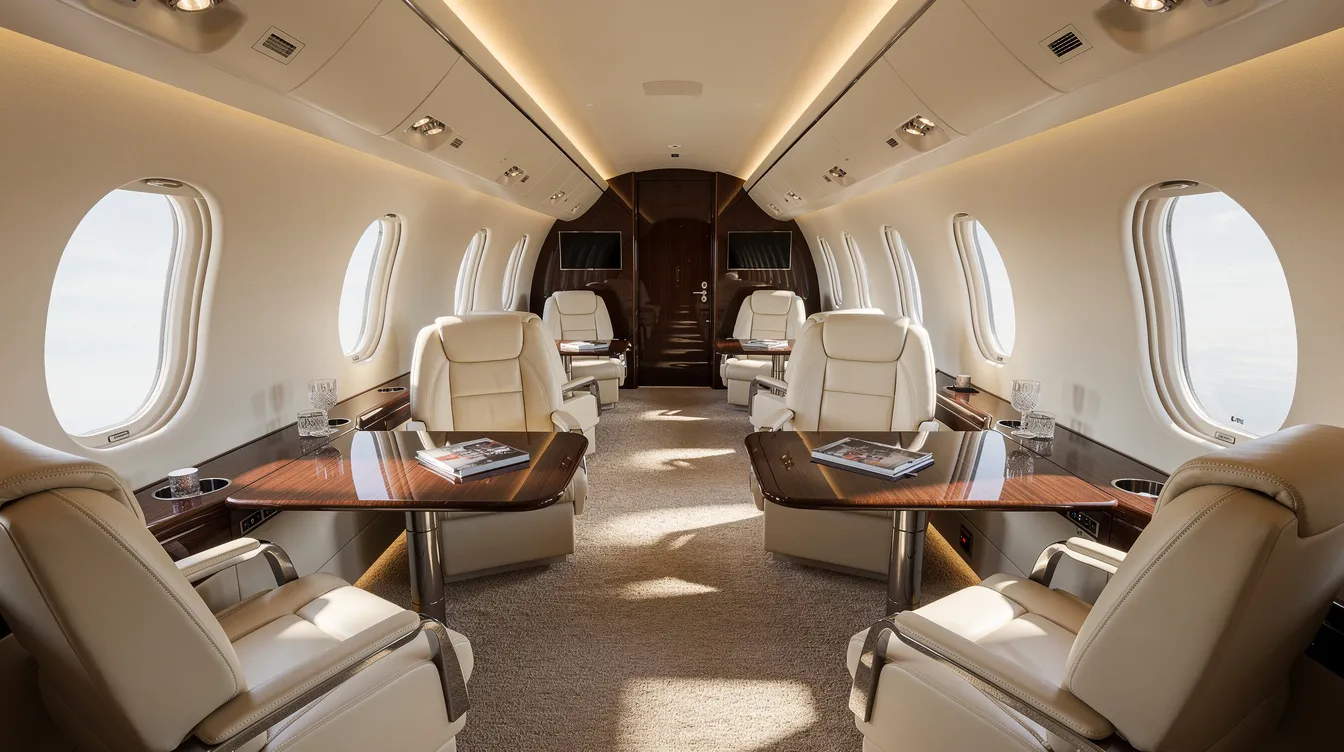
Public private jet companies give members access to multiple aircraft categories, from turboprops to ultra-long-range jets. Private jets include turboprops, light jets, and heavy jets, with VIP airliners that can accommodate 18 to 200 passengers for large group missions.
Here is a summary of the main categories and a deeper dive into the types of private jets for every traveler, which can help align aircraft choice with each mission:
Category | Example Aircraft | Passengers | Typical Range |
|---|
Turboprop | King Air 350 | 4–8 | ~1,000 nm |
Very Light Jet | Phenom 100 | 4–6 | ~1,200 nm |
Light Jet | Phenom 300, Citation XLS+ | 6–8 | ~1,500–2,000 nm |
Midsize Jet | Citation Latitude | 7–9 | ~2,000–2,500 nm |
Super-Midsize | Challenger 350, Praetor 500 | 8–10 | ~2,500–3,500 nm |
Large-Cabin / Heavy | Gulfstream G450, G550 | 10–16 | ~5,000–6,750 nm |
Ultra-Long-Range | Global 7500, Global 8000 | 12–18 | ~6,500–7,700+ nm |
The Gulfstream G550 has a range of approximately 6,750 nautical miles, making it a benchmark for intercontinental missions, while heavy jets and VIP airliners are often the best private jets for around 20 passengers when larger groups need to travel together. The Bombardier Global 8000 reaches speeds of Mach 0.94, setting the standard for speed in ultra-long-range travel, and certain VIP airliners can be the best private jets for up to 50 passengers on high-capacity missions.
BlackJet's jet card programs let members select a cabin class per trip rather than locking into a single aircraft type-light for a short regional hop, large-cabin for a transatlantic crossing. Some public private jet companies operate company-branded fleets, while others draw from a vetted network of independent operators, which is BlackJet's approach.
Private Aviation Safety and Certification Standards
In private aviation, safety is foundational to the company's culture—not a feature. Private aviation is statistically safer than commercial flying, and leading companies maintain safety standards that exceed regulatory requirements.
Third-party safety audit standards provide the framework:
ARG/US Platinum: The highest tier, covering pilot experience, training, maintenance programs, and operational control
IS-BAO Stage II/III: International safety management systems with rigorous risk management
Wyvern Wingman: Certification covering training, maintenance, and operational oversight
BARS Gold: A global aviation risk standard
Private jets undergo rigorous safety audits by third-party companies to verify these standards, and understanding NetJets jet card cost and structure provides a useful benchmark when comparing leading operators. Jet Linx is among the top 1% of private jet operators for safety, and the industry's annual Safety Summit, held since 2017, brings teams together to improve safety practices across the organization.
BlackJet only partners with operators that maintain high safety certifications and proven operational track records. Clients can request safety documentation before any flight.
Before booking any private charter, always ask about safety ratings, pilot minimum hours, insurance coverage, and safety management systems.
Sustainability and Carbon-Neutral Private Flights
There is a genuine tension between the convenience of flying private and the environmental expectations of discerning travelers. Private aviation companies are increasingly adopting carbon-neutral flights as a core commitment, not a marketing afterthought.
The practical tools are clear: sustainable aviation fuels can reduce carbon emissions by 80% compared to conventional Jet-A. Carbon offset programs help mitigate the environmental impact of flights by funding verified environmental projects. Sustainable aviation fuel certification is essential for eco-friendly operations and ensures the integrity of SAF supply chains.
BlackJet ensures every jet card flight is carbon neutral by default, while some travelers also look at the cheapest private jet options and how efficient aircraft choices can further reduce total emissions per passenger. The company offsets 300% of CO₂ emissions to account for non-CO₂ climate forcers-water vapor, aerosols, and nitrous oxide-at no additional cost to clients. SAF is prioritized on routes where supply is available.
When evaluating any provider, ask:
Is SAF available at your home and destination airports?
Are carbon offsets included or charged separately?
How is emissions data calculated and disclosed?
Sustainability is an integrated pillar of modern private aviation, and the companies that treat it as standard rather than optional are setting the direction for the industry.
Technology, Digital Booking, and Real-Time Flight Support
Technology has transformed private aviation from phone-only brokers into integrated digital platforms that help travelers navigate booking, pricing, and support more easily in real time.
Mobile booking platforms simplify private jet reservations, allowing users to search available aircraft, compare cabin classes, and receive instant pricing across thousands of aircraft worldwide. Platforms like Jettly connect users to over 20,000 private jets and Jettly offers instant pricing for private jet bookings, reflecting the industry's shift toward transparency. Digital platforms enhance flexibility in private jet travel by putting control directly in the traveler's hands.
Behind the scenes, 24/7 operations centers use real-time data to manage aircraft availability, weather routing, crew duty limits, a, nd global logistics. Real-time flight support enhances private jet travel efficiency, and real-time support helps manage flight changes and delays effectively. Private aviation companies offer real-time updates on flight status, and real-time flight support improves customer satisfaction rates to 98%.
BlackJet's platform provides 24/7 digital booking tools that give members instant access to flights-fast quoting, itinerary management, and in-flight support via chat or a dedicated advisor-, leveraging a portion of the global private jet fleet counted worldwide. Frequent travelers benefit from features like mobile booking tools and real-time support, and in-flight connectivity (including Starlink Wi-Fi and VPN-friendly internet) ensures business travelers remain productive while airborne.
Premium technology is always paired with human expertise: account managers, concierge services, and trip planners who add a layer of hospitality to every detail of the journey.

Comparing Private Jet Ownership, Fractional, Jet Cards, and Charter
The primary difference in flying private is access to aircraft based on flexible scheduling, underpinned by nuanced jet card pricing structures that determine how and when you can fly at fixed rates. Here is how the four main models compare:
Model | Upfront Cost | Hourly Cost | Best For | Key Trade-Off |
|---|
Full Ownership | Millions (purchase + hangar + crew) | Lowest at high utilization | 200–300+ hrs/year | Capital risk, admin burden |
Fractional (1/16–1/8 share) | Significant share price + monthly fees | Moderate; occupation fees apply | 150–250+ hrs/year | Multi-year lock-in, resale complexity |
Jet Card / Membership | Prepay 25–50 hrs ($2,000–$24,000/hr by class) | Fixed hourly rate | 25–150 hrs/year | Hours expire; peak surcharges possible |
On-Demand Charter | None | Dynamic; market-rate per trip | <20 hrs/year | Least predictability; higher per-flight cost |
Private jet hourly rates range from $2,000 to $24,000 depending on aircraft class, and a comprehensive private jet price list overview helps put these costs in context across aircraft types and access models. Costs for private jets can be substantially higher compared to commercial airlines, but the value proposition-time, privacy, productivity-changes the equation for frequent private flyers.
BlackJet's 25-hour and 50-hour Jet Cards sit in the middle of this landscape: no ownership, fixed hourly rates, guaranteed availability across multiple cabin types, and built-in safety and sustainability standards; frequent flyers analyze 50-hour jet card cost and value before deciding how many hours to commit. For travelers who fly private between 25 and 150 hours per year, this model delivers the optimal balance of predictability, flexibility, and value, while ultra-frequent users may consider a 100-hour jet card cost guide to evaluate higher-hour programs.
Use Cases: How High-Achievers Actually Fly Private
The travelers who rely on public private jet companies are not a single profile. They include CEOs who need to connect three cities before dinner, families who value complete privacy and luxury during school holidays, and corporate teams executing time-sensitive roadshows. Private jets provide complete privacy and luxury experiences that simply cannot be replicated in commercial travel.
Consider a business executive using a 25-hour Jet Card with BlackJet: monthly New York–Chicago flights on a light or midsize jet, plus a quarterly New York–London trip on a super-midsize or large-cabin aircraft. The jet card's cross-cabin flexibility means the right aircraft for each mission, without separate contracts.
A family use case looks different: last-minute weekend getaways, multi-generational trips to destinations without strong commercial coverage, and the convenience of arriving at private terminals with children and luggage without navigating a busy commercial city airport; large family groups sometimes benefit from aircraft designed as the best private jets for 20 passengers.
For corporate groups, a leadership team visiting three manufacturing plants across different states in one day is only possible with private aviation's flexible scheduling and access to secondary airports, and some providers can also support teams traveling across multiple countries on time-sensitive schedules. Group travel-roadshows, sports teams, film productions-may call for VIP airliners or 30-seat cabin buyouts, which BlackJet can source through bespoke charter when jet card hours are not the right fit, similar to the large-group missions described in guides to private jets for 50 passengers.
How to Choose the Right Public Private Jet Company
Not all private aviation providers are equal. Brand reputation, safety, financial stability, and transparency matter as much as fleet depth and pricing.
Evaluate providers against these factors:
Safety ratings and certifications (ARG/US, IS-BAO, Wyvern)
Years in operation and financial viability
Fleet depth and aircraft types available
Transparency of fees, including repositioning, peak surcharges, and cancellation policies
Sustainability commitments (included or optional)
Technology and support infrastructure
Conduct due diligence: read independent reviews, request safety certificates, review sample contracts, and query peak-day and cancellation policies. Travelers interested in consistent pricing and service often prefer a jet card or membership structure over ad hoc charter, and some evaluate unlimited private jet flight memberships that trade higher upfront spend for maximum usage flexibility.
Red flags include:
Vague answers on safety
Missing operator information
Unusually low pricing that may signal cut corners
No mention of environmental practices or modern booking technology
BlackJet is positioned for travelers who want predictable, high-standard private aviation with safety, carbon-neutral flying, and always-available support as standard features rather than upsells, and comparisons with top private jet companies for luxury travel help clarify how different brands stack up.
FAQs About Public Private Jet Companies and Jet Cards
What does it cost to fly private on a light jet vs. a midsize jet?
Private jet hourly rates typically range from $2,000 to $24,000, depending on aircraft category, and understanding jet card cost per hour is key to comparing that pricing with membership models. Light jets fall toward the lower end; large-cabin and ultra-long-range aircraft command the highest rates. There are over 20,000 unique aircraft available for charter worldwide, so pricing varies by location, date, and demand.
How much notice do I need to book with a Jet Card?
Most jet card programs require 24 to 96 hours' advance notice for guaranteed availability. BlackJet aims for 24-hour notice when possible, depending on cabin class and location.
Can I bring pets on board?
Most private aviation companies accommodate pets in the cabin-no cargo hold required. Confirm pet policies with your provider before departure.
How do I know my private jet is safe?
Ask for third-party safety certifications (ARG/US Platinum, IS-BAO, Wyvern Wingman), pilot minimum experience hours, and evidence of a formal safety management system. Private jets undergo rigorous safety audits, and private jet safety should be transparent and verifiable.
What is carbon-neutral private aviation?
Carbon-neutral private aviation means the provider offsets all flight emissions-typically through verified environmental projects and, where available, sustainable aviation fuel-so the net climate impact is zero.
How is a Jet Card different from private charter or fractional ownership?
A jet card gives you prepaid access to private jets at fixed hourly rates without owning anything, governed by specific jet card pricing structures and terms. Charter is pay-per-trip with dynamic pricing. Fractional ownership involves buying a share of an aircraft with multi-year commitments. For travelers flying 25–150 hours per year, a jet card program typically offers the best balance of cost control, availability, and freedom.
Can I save money on empty leg flights?
Yes. Empty leg flights can save 50% to 80% on standard charter rates. These are repositioning flights where the aircraft would otherwise fly without passengers, and many travelers pair them with the cheapest private jet options to keep total trip costs as low as possible. Availability is unpredictable, but they represent significant savings for flexible travelers.
For tailored guidance based on your annual flight hours and preferred routes, contact BlackJet's aviation experts directly.
Elevate Your Travel with BlackJet
Access to private aviation through public private jet companies is more strategic and attainable than ever. BlackJet delivers three core promises: safety-first operations via rigorously vetted operators, carbon-neutral private flights as standard, and technology-enabled 24/7 support that keeps every journey seamless.
BlackJet is built for executives, entrepreneurs, and high-net-worth individuals flying 25–150+ private hours per year who want to discover the benefits of private flight without the complexity of ownership. Explore BlackJet's 25-hour and 50-hour Jet Card programs-guaranteed availability across multiple cabin types, predictable fixed hourly rates, and sustainability built into every departure.
Schedule a short consultation or request a bespoke comparison showing how a BlackJet Jet Card would have performed against commercial business class and ad hoc charter on your last three to five trips. Elevate your travel-effortlessly.


 Sign up with google
 Sign up with Apple