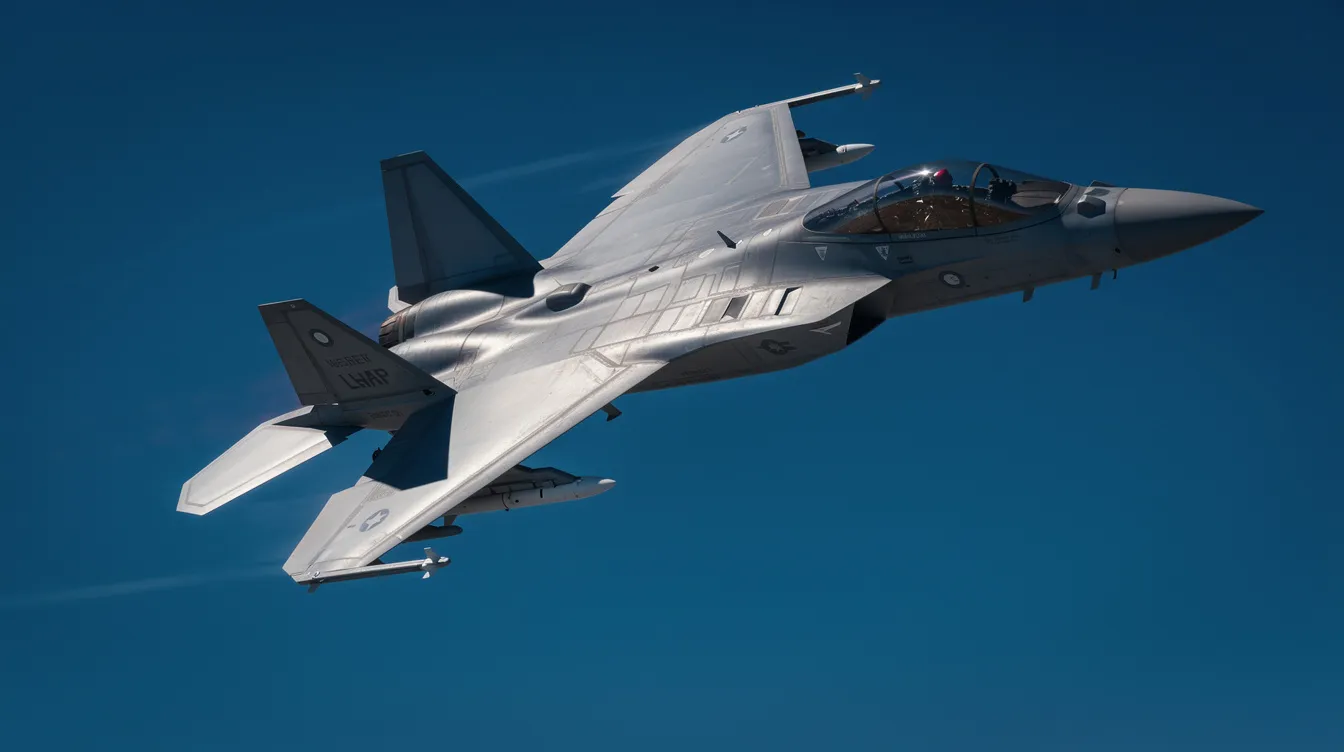
In a world of hypersonic missiles, autonomous drones, and cyber warfare, one question persists: does the manned super fighter plane still matter? The answer, proven across every major conflict of the past three decades, is an unequivocal yes.
Why Super Fighter Planes Matter Today
Despite rapid advances in unmanned systems and anti-access/area denial technology, the fighter jet remains the single most versatile instrument of national air power in the world today. No other platform combines rapid reaction, offensive reach, precision strike, situational awareness, and deterrence in one airframe. A modern fighter aircraft operates at supersonic speeds exceeding Mach 2, carries precision-guided weapons across a combat radius of over a thousand kilometers, and fuses data from dozens of sensors into a single tactical picture-capabilities that would have seemed science fiction to the pilot of a WWII Spitfire or even a Cold War-era interceptor.
To put the performance gap in perspective, a commercial airliner cruises at roughly Mach 0.8. A 5th-generation fighter jet can sustain flight above Mach 1.5 without afterburners and sprint well beyond Mach 2 when the mission demands it. That speed advantage, paired with stealth, agility, and networked weapons, is what separates air dominance from mere air presence.
History confirms that air superiority determines the outcome of modern combat. In the 1991 Gulf War, coalition fighters dismantled Iraqi air defenses in days, enabling ground forces to operate with near-total freedom. In the ongoing Ukraine conflict (2022–2026), neither Russia nor Ukraine has achieved full control of the skies-analysts describe the situation as air parity rather than air superiority-and the consequences are stark: constrained ground campaigns, heavy reliance on missile strikes, and elevated risk for both sides.
Private aviation, including companies like BlackJet, operates in an entirely different domain-luxury, privacy, and tailored schedules rather than contested airspace, whether you're learning how to book a single seat on a private jet or arranging bespoke private jet charters in Karachi. Yet the core pillars overlap: advanced avionics, uncompromising safety standards, and mission-driven performance. Understanding what makes a super fighter plane extraordinary illuminates why precision and technology matter in every corner of aviation.
What Defines a "Super Fighter Plane"?
A super fighter plane is a cutting-edge, multirole combat aircraft designed to dominate air superiority, ground attack, and electronic warfare simultaneously. It represents the pinnacle of aerospace engineering-built from inception around capabilities that older generations could only approach through extensive modification.
Key criteria that separate a true super fighter from other aircraft include:
Advanced stealth – signature management across radar, infrared, and visual spectrums, allowing the aircraft to deflect radar waves and maintain low radar visibility
Sensor fusion – integrating data from multiple sources into a unified tactical picture for pilots, turning raw information into actionable awareness
Supercruise – the ability to sustain supersonic flight without using afterburners, extending range and reducing vulnerability
Agility – supermaneuverability achieved through advanced aerodynamics and thrust vectoring, enabling dynamic maneuvering at extreme angles
Weapons flexibility – internal weapon bays for stealth missions, external hardpoints for maximum payload
Networked operation – a modern fighter operates as part of a larger military network, improving situational awareness across the entire battlespace
Fifth-generation fighters represent a significant technological leap from fourth-generation aircraft. While upgraded 4.5-generation jets like the Su-35 or F-16V incorporate AESA radars and improved avionics, they lack the fully integrated stealth, sensor fusion, and information dominance built into designs from the US Air Force, China's PLAAF, and other leading air forces. Fifth-generation fighters prioritize information, stealth, and integrated systems over speed and agility alone.
True super fighter status, however, is determined by real-world integration into air force doctrine-training, maintenance, logistics, and tactics-not just raw specifications on paper.
From Early Fighters to 5th & 6th Generation Jets
The history of fighters traces a relentless arc of innovation. WWII's piston-engined aircraft-Spitfires, Mustangs, Zeros-gave way to the first jet fighters in the war's final months: the German Me 262 and British Gloster Meteor broke the sound barrier of what was possible, even if they never literally exceeded Mach 1 in level flight.
The Cold War supersonic era produced legendary interceptor and air superiority designs. The MiG-21, F-4 Phantom II, and F-104 Starfighter introduced swept wings, afterburning engines, and the first beyond-visual-range missiles in the late 1950s and 1960s. These weapons promised that air-to-air combat would shift from dogfighting to long-range missile exchanges-a prediction that proved premature.
The Vietnam War and Arab–Israeli wars taught hard lessons: missiles were unreliable, electronic countermeasures were primitive, and close-in agility and guns still mattered. Fourth-generation multirole jets like the F-16 Fighting Falcon and Su-27 Flanker, originally designed for high-agility dogfighting, responded with look-down/shoot-down radars, fly-by-wire controls, and dramatically improved pilot situational awareness.
Today's 5th-generation fighters-the F-22 Raptor, F-35 Lightning II, Chengdu J-20, and Sukhoi Su-57-were initially designed around stealth geometry, internal weapons bays, and deep sensor fusion. They entered service over several years beginning in 2005 (F-22) through 2017 (J-20) and 2020 (Su-57).
The transition to sixth-generation fighters is now underway, with the US NGAD program (designated F-47), Japan/UK/Italy's GCAP, and China's rumored J-36 and J-50 prototypes signaling the next super fighter plane era.
Core Missions: Air Superiority and Ground Attack
Every super fighter plane exists to fulfill a handful of decisive missions: achieving air superiority over contested skies, defending national airspace, escorting bombers and other aircraft, and conducting precision ground attack against defended targets.
Air superiority fighters like the F-22 and Eurofighter Typhoon are optimized for air-to-air combat with powerful AESA radars, long-range air-to-air missiles such as the AIM-120 AMRAAM and MBDA Meteor, and kinematics that allow them to control engagements at both beyond-visual-range and close-in distances.
Modern "swing-role" and "omnirole" concepts blur the line between air superiority and ground attack. The Dassault Rafale, for example, can seamlessly transition from engaging enemy fighters to delivering precision-guided bombs on the same sortie. The F-35 Lightning II carries such capabilities by design: its sensor fusion and internal weapon bays allow it to perform air-to-air, strike, reconnaissance, and electronic warfare missions without external modification.
Ground attack missions today rely on:
JDAM and Small Diameter Bomb (SDB) precision munitions delivered from medium altitude
Stand-off cruise missiles launched from beyond enemy air defense range
SEAD/DEAD (Suppression/Destruction of Enemy Air Defenses) using anti-radiation missiles
Close air support for ground forces operating under contested conditions, including at low altitude
Modern fighter jets now employ network-centric warfare for coordinated missions among multiple platforms, meaning a single fighter aircraft can direct fires, share targeting data, and synchronize effects across an entire strike package.
Speed, Mach Numbers, and Why Top Speed Isn't Everything
Mach 1-the speed of sound-equals approximately 1,225 km/h at sea level and decreases at altitude as temperature drops. Supersonic speeds above Mach 1 define the operating envelope of every modern fighter, but top speed alone tells an incomplete story.
The extreme high speed record holders of aviation history include:
The NASA/USAF X-15, an experimental aircraft that reached a record speed of Mach 6.72
The fastest fighter jet is the MiG-25 Foxbat at Mach 3.2, a Cold War interceptor built to chase high-altitude bombers
The F-15 Eagle has a top speed of Mach 2.5, still among the fastest operational fighters
Yet modern super fighter planes deliberately trade maximum speed for more decisive advantages. The shift from dogfighting to beyond-visual-range combat emphasizes data processing and network superiority over raw velocity. The F-35, for example, tops out around Mach 1.6-substantially slower than the F-15-but its advanced stealth, sensor fusion, and networked avionics make it far more survivable and lethal in contested environments. Supercruise enables aircraft to sustain supersonic flight without using afterburners, conserving fuel, reducing infrared signature, and extending the fighter's effective range-a quality the F-22 exploits at roughly Mach 1.8.
The lesson: speed matters for interception and survivability, but in 2026, the fighter that sees first, shoots first, and remains unseen wins-regardless of whether it's the fastest in a straight line.
Stealth: The Invisible Edge
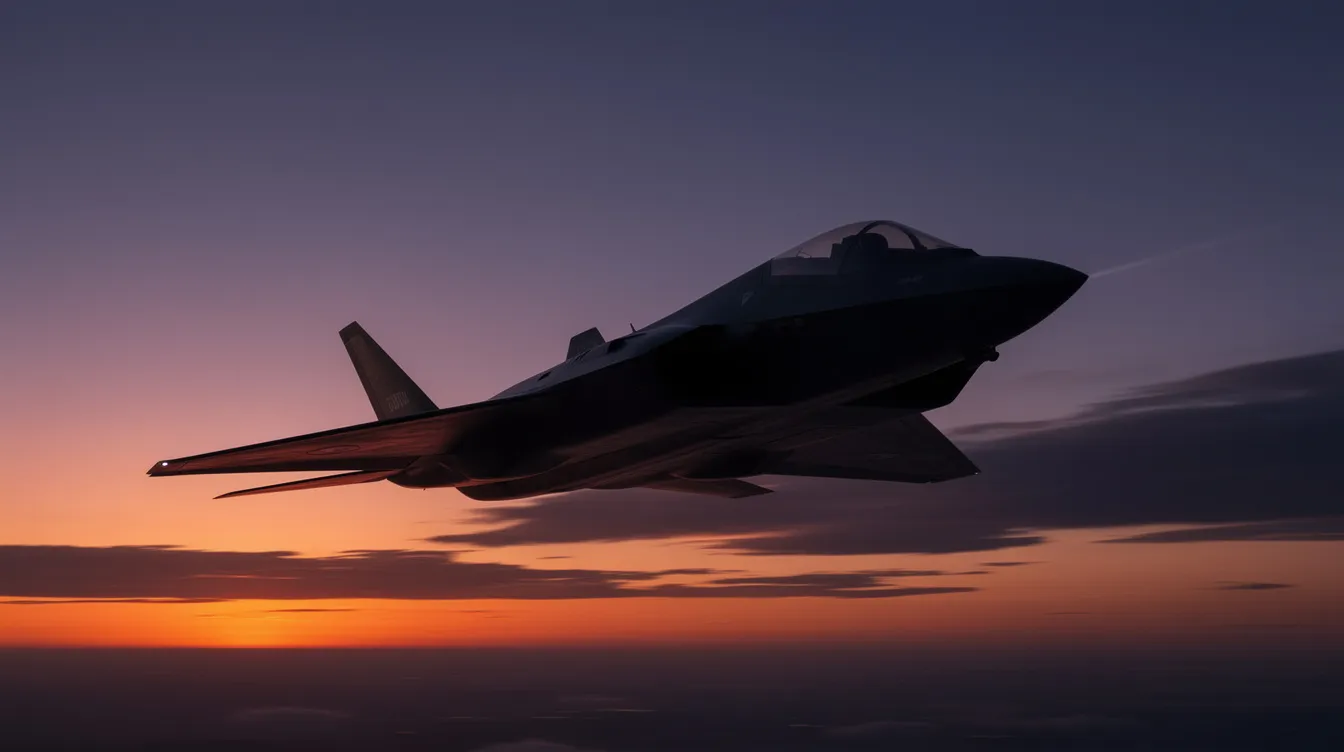
Stealth is the central pillar separating 5th-generation super fighter planes from everything that came before. Advanced stealth allows aircraft to deflect radar waves and maintain low radar visibility, dramatically shifting the balance of air-to-air combat before an adversary even knows they're being engaged. Fifth-generation fighters emphasize all-aspect stealth for superior survivability-meaning reduced signatures from every angle, not just head-on.
Concrete examples illustrate the scale of the advantage:
The F-22 Raptor's frontal radar cross-section is often compared to a marble (roughly 0.0001 m²)
The F-35 Lightning II's RCS is likened to a golf ball (roughly 0.005 m²)
A non-stealth fighter like the F-15 presents an RCS of approximately 25 m²-over 200,000 times larger than the F-22's
China's J-20 and Russia's Su-57 represent alternative stealth philosophies, each making different trade-offs in exhaust signature management, weapons bay volume, and aerodynamic compromise. Fifth-generation fighters utilize internal weapon bays to enhance stealth capabilities, though this limits total payload compared to external carriage.
The trade-offs are significant: radar-absorbent coatings require intensive maintenance, stealth shaping can increase drag, and internal bays constrain weapons size and quantity. Cost is substantial in both production and sustainment.
Non-stealth 4.5-generation jets-the Eurofighter Typhoon, Rafale, and Super Hornet-compensate through advanced electronic warfare suites, tactical flying at low altitude, and stand-off weapons that keep them outside the engagement envelope of enemy surface-to-air systems.
Avionics, Sensor Fusion, and the "Smart" Cockpit
Modern super fighters function as flying sensor hubs. Their cockpit is less about manual flight control and more about managing information warfare. Advanced radar systems like AESA enhance target detection and tracking capabilities across hundreds of kilometers. Infrared search and track (IRST) systems detect heat signatures passively-without emitting any signal. Electronic warfare suites identify, classify, and jam enemy radars. Data links like Link-16 and MADL share real-time information across the battlespace.
Sensor fusion integrates data from multiple sources into a unified tactical picture for pilots. Rather than monitoring separate radar, IR, and EW displays, the pilot sees a single synthesized view where threats are prioritized and identified automatically. Advanced avionics enable fifth-generation fighters to act as flying command nodes sharing real-time data with allied fighters, ground stations, and naval vessels. The F-35's combination of AN/APG-81 AESA radar, Distributed Aperture System, and Electro-Optical Targeting System is frequently cited as the benchmark.
Helmet-mounted displays like the F-35's HMD project 360-degree situational awareness, targeting cues, and flight data directly before the pilot's eyes-even allowing them to "look through" the airframe using distributed cameras. Low-Probability-of-Intercept radar technology allows stealthy tracking during combat, enabling a fighter to scan without revealing its position. Artificial intelligence assists in processing combat data and decision-making for pilots, managing sensor prioritization and threat identification faster than any human could alone.
In private aviation, advanced digital tools serve a parallel purpose: creating situational awareness, safety, and efficiency for passengers and crew without, of course, any combat application.
Weapons: From Dogfight Missiles to Stand-Off Strikes
The weapons a super fighter plane can carry define its lethality. Modern loadouts span four broad categories:
Short-range IR missiles – AIM-9X Sidewinder, ASRAAM, R-74, and PL-10 for close-in air to air combat
BVR radar-guided air to air missiles – AIM-120 AMRAAM, MBDA Meteor, PL-15, and R-37M for engagements beyond 100 km
Precision-guided bombs – JDAM, SDB, laser/GPS-guided munitions for ground attack
Stand-off missiles – air-launched cruise missiles, anti-ship weapons, and anti-radiation missiles for SEAD
Concrete loadout examples demonstrate the diversity: the F-15EX Eagle II can carry over 20 air-to-air missiles in a mixed configuration. The Eurofighter Typhoon pairs Meteor long-range missiles with IRIS-T for close defense. The Super Hornet loads JDAMs and HARM missiles for combined strike and SEAD missions.
Trends in 2026 point toward stand-off engagement ranges beyond 150–200 km, reducing the need to penetrate enemy air defenses. Internal versus external carriage remains a key trade-off: stealth fighters sacrifice total weapons volume for reduced radar signature, while 4.5-generation platforms can carry substantially more ordnance externally at the cost of increased detectability.
Top Super Fighter Planes in Service (2026)
Here are the world's most capable fighters currently in service or entering production, each contributing uniquely to their countries' air power:
Lockheed Martin F-35 Lightning II – the most widely delivered 5th-generation stealth multirole fighter, operated by the US and over a dozen allied nations, featuring unmatched sensor fusion and the ability to operate from conventional runways, short strips, and carriers across its A, B, and C variants.
Lockheed Martin F-22 Raptor – the USAF's dedicated air superiority fighter, combining stealth, supercruise at approximately Mach 1.8, and thrust vectoring for unrivaled kinematic performance; limited to US service only and produced in small numbers.
Sukhoi Su-57 – the Sukhoi Su-57 is a fifth-generation multirole stealth fighter developed by Russia, featuring thrust vectoring, internal weapon bays, and a top speed around Mach 2.0, though Western analysts assess its stealth and sensor integration as less mature than American designs.
Chengdu J-20 "Mighty Dragon" – the Chengdu J-20 is China's first fifth-generation stealth fighter, a large twin-engine platform with a claimed range of approximately 5,500 km, designed for long-range escort, strike, and air superiority missions.
Eurofighter Typhoon – Europe's premier 4.5-generation fighter, capable of Mach 2, continuously upgraded with new radars and weapons for air superiority and deep-strike roles across multiple countries.
Dassault Rafale – France's agile omnirole fighter, combat-proven across several theaters, with strong avionics and the flexibility to carry diverse air-to-air and air-to-ground payloads.
Boeing F/A-18E/F Super Hornet – the US Navy's primary carrier-based multirole fighter, with Block III upgrades delivering improved radar, conformal fuel tanks, and enhanced network integration for carrier-based operations.
Boeing F-15EX Eagle II – a non-stealth but extremely high-speed and high-payload platform that complements stealth assets in mixed fleets, capable of carrying the largest weapons loads of any Western fighter.
Upgraded 4.5-gen platforms – the Su-35 with thrust vectoring and advanced radars, and the F-16V with AESA radar upgrades, remain capable and cost-effective fighters for countries that need to mass airpower without full 5th-generation investment.
The Eurofighter Typhoon and Super Hornet in Detail
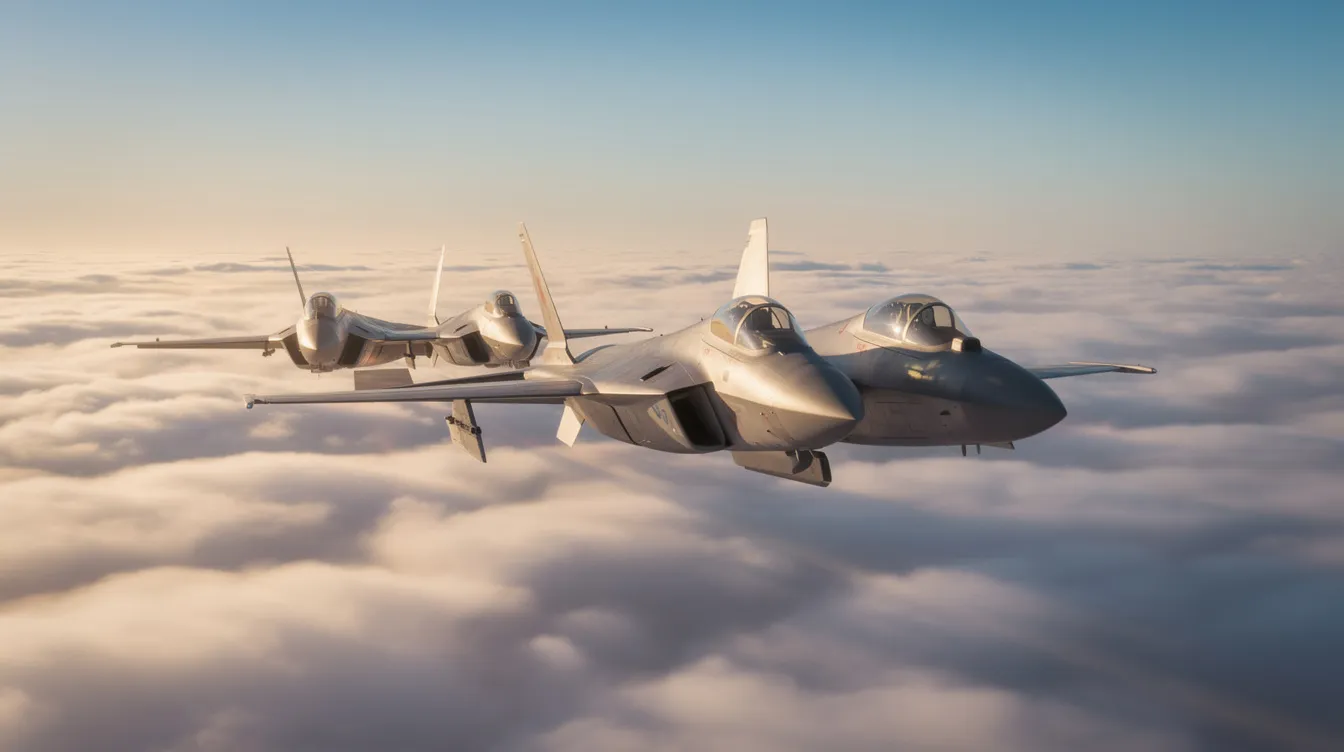
Two of the Western world's most important "super fighters" are not 5th-generation stealth platforms at all. The Eurofighter Typhoon and Boeing F/A-18E/F Super Hornet demonstrate that 4.5-generation designs, continuously upgraded, remain formidable in 2026.
The Eurofighter Typhoon emerged from a multinational collaboration among the UK, Germany, Italy, and Spain. Its prototype first flew in 1994, and the type entered service in 2003. Initially designed as a pure air superiority fighter, it has evolved into a deep-strike and integrated air defense platform with the addition of Meteor missiles, Brimstone ground-attack weapons, and a next-generation AESA radar known as ECRS Mk2. With a top speed near Mach 2 and supercruise capability around Mach 1.2, the Typhoon remains agile enough for demanding air-to-air combat while carrying substantial ordnance.
The Super Hornet entered service with the US Navy in the late 1990s as a significantly enlarged evolution of the legacy F/A-18C/D Hornet. Its folding wings and reinforced landing gear make it ideal for carrier-based operations, while its multirole avionics support maritime strike, SEAD, fleet defense, and reconnaissance. Block III upgrades bring conformal fuel tanks, an advanced cockpit display system, and improved networking that allow the Super Hornet to operate seamlessly alongside the F-35C in carrier air wings.
Both aircraft remain competitive because their manufacturers continue investing in new radars, electronic warfare suites, and weapons integration-proving that airframe longevity, when paired with modernization, can keep a fighter relevant for decades.
Future Concepts: 6th-Generation Super Fighter Planes
Sixth-generation fighters are expected to integrate AI, directed-energy weapons, and drone swarms into a single combat ecosystem that redefines what a super fighter plane can achieve.
Major programs currently in development include:
US NGAD (F-47) – intended to succeed the F-22 as the USAF's air dominance platform, incorporating adaptive-cycle engines for superior range and efficiency, with initial operating capability targeted for the early 2030s
GCAP – a joint UK, Japan, and Italy program (formerly Tempest) aiming for a mid-2030s fielding date, with emphasis on AI-assisted decision-making and loyal wingman integration
European FCAS – a Franco-German-Spanish concept emphasizing manned-unmanned teaming and cloud-based combat management
Chinese successors – the J-36 and J-50, both in prototype or early development, suggesting China is pursuing parallel 6th-generation paths
Key technologies under development include adaptive cycle engines that optimize performance across subsonic cruise and supersonic dash, directed energy weapons (lasers and high-power microwaves), and the concept of a "mothership" fighter controlling multiple unmanned combat air vehicles as loyal wingmen. These future jets will push super fighter plane capabilities far beyond existing 5th-generation standards, particularly in autonomous operation, networking, and the ability to operate in heavily jammed electromagnetic environments.
The challenges are equally significant: extreme cost, proving AI reliability in life-or-death decisions, managing supply chains for advanced materials, and ensuring these complex systems can actually be maintained at scale during sustained combat.
Pilots, Training, and the Human Factor
Even the most advanced fighter jet depends on pilot skill, training, and split-second decision-making under forces exceeding 9G. Technology amplifies human capability-it does not replace it.
Modern fighter jet flight training follows a demanding pipeline: basic flight school, transition to advanced jet trainers like the T-7A Red Hawk or L-39 Albatros, then conversion to frontline fighters over several years of progressively more complex flying. Full-motion simulators and VR/AR training systems allow pilots to rehearse complex missions-including networked exercises like Red Flag at Nellis AFB-before risking aircraft or lives.
Agility in modern fighters is enhanced by thrust vectoring technology for dynamic maneuvering, but exploiting that agility safely requires hundreds of hours of dedicated training. Recurrent simulator sessions, medical checks, and tactical evaluations ensure that every pilot maintains peak readiness throughout their career.
This commitment to training mirrors what happens in private aviation. Both military and private jet pilots undergo rigorous recurrent training, medical evaluations, and simulator time. Certified pilots conduct all private jet flights, and aircraft maintenance follows strict aviation authority regulations-standards that BlackJet upholds through its proprietary certification program.
Inside the Cockpit vs. Luxury Private Jets
The cockpit of a single-seat fighter jet is a study in purposeful austerity: a narrow ejection seat, multi-function displays within arm's reach, a side-stick or center-stick controller, and life-support equipment designed to keep the pilot conscious through violent maneuvering. Every surface, switch, and readout exists for combat efficiency. Comfort is not a design consideration.
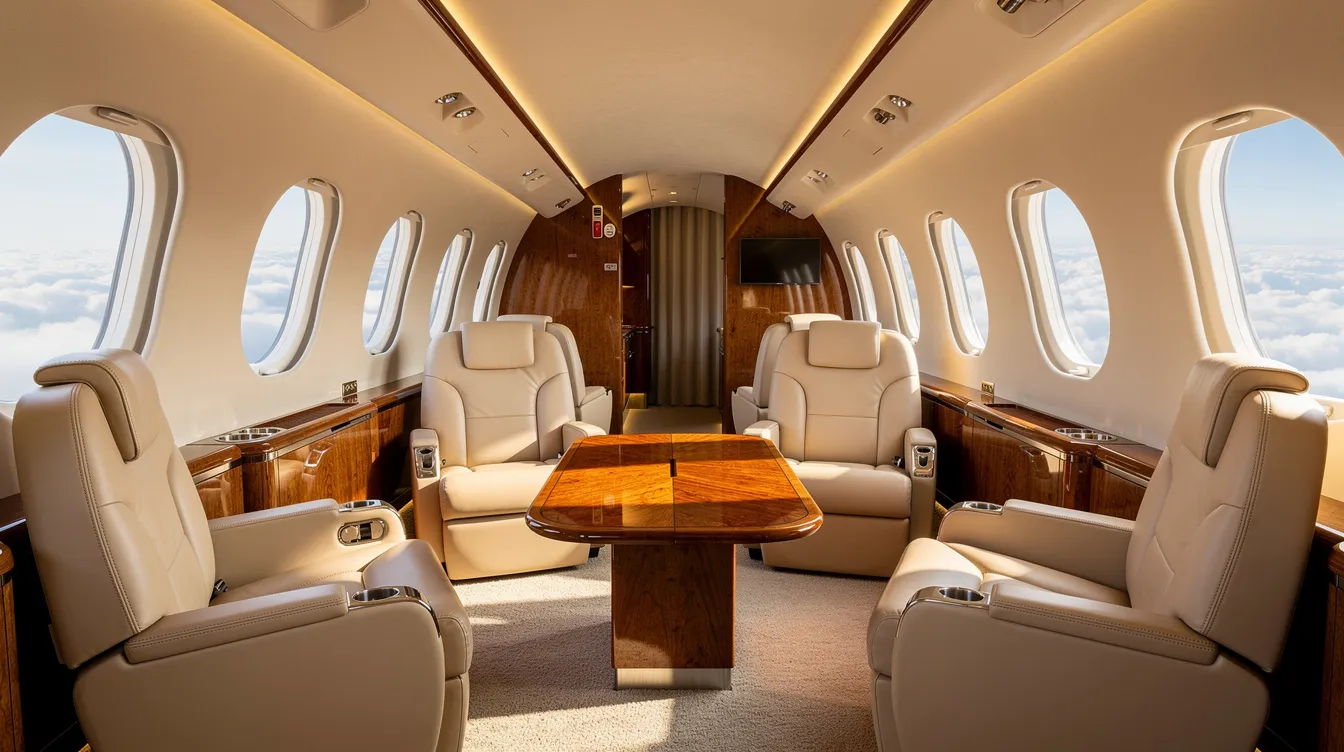
A private jet cabin exists for the opposite purpose. Private jets offer multiple cabin classes for different needs, and cabin classes vary in size, luxury, and amenities offered, scaling all the way up to private jets that can carry around 50 passengers for large groups. Common cabin classes include light, midsize, and large jets-each tailored to different mission profiles, mirroring the broader range of private jet sizes available for any journey. Luxury cabin classes often feature fully reclining seats and gourmet meals, while some jets provide private bedrooms and bathrooms in larger cabins. The interior is pressurized for comfort at lower cabin altitudes, acoustically insulated, and designed around productivity, rest, and privacy for executives and high-net-worth travelers, whether they're flying solo or aboard large private jets for 20 passengers on group missions.
BlackJet's aircraft categories reflect this philosophy: while we don't fly fighter jets, our fleet and premium private jet card programs leverage modern avionics, safety systems, and carbon-offset programs to offer a refined, purpose-driven travel experience where the mission is your comfort, your schedule, and your peace of mind.
Technology Crossovers: Military Innovation and Private Aviation
Many technologies that define today's private aviation experience were born in fighter jet development programs. Fly-by-wire flight controls, composite airframe materials, advanced weather radar, and satellite communications all trace their origins to military R&D before migrating into civilian aircraft.
Mission-planning tools and predictive maintenance concepts developed by air forces now appear as digital booking platforms and 24/7 operational support in companies like BlackJet. Real-time flight support is available 24/7, enhancing safety and efficiency during flights, and takes full advantage of how high private jets typically fly compared to commercial aircraft. Private aviation companies offer digital booking tools for real-time support, including immediate updates on flight status. Real-time support helps manage in-flight changes effectively-rerouting around weather, adjusting schedules, or coordinating ground transportation on arrival. Mobile booking platforms enable 24/7 access to jet services, and users can buy a seat on a private jet via mobile applications that streamline the entire process. Mobile booking enhances flexibility for private jet travelers, while real-time support is available through mobile booking tools.
Navigation and safety systems tell a parallel story: GPS, TCAS collision-avoidance, and terrain awareness systems were all shaped by military development before becoming standard in business aviation. As these technologies spread, top private jet companies for luxury travel have differentiated themselves on how they implement safety and service. Private jets must comply with FAA safety regulations; all flights include a comprehensive pre-flight safety briefing, and safety certifications are mandatory for private aviation companies.
Carbon neutrality in aviation involves offsetting emissions through sustainable practices and initiatives. Private aviation companies are adopting carbon offset options, and carbon-neutral flights are offered in private aviation through programs that make sustainable aviation practices a standard part of every journey-not an afterthought, even when travelers opt for budget-friendly private aircraft options.
Experiencing Fighter Jet Flights as a Civilian
For aviation enthusiasts, the prospect of flying in a fighter jet is irresistible-but the reality is limited and highly regulated. Civilian fighter jet flight experiences typically use demilitarized trainers or historic jets operated by specialized providers. Supersonic experiences are extremely rare today due to cost, regulation, and the scarcity of airworthy supersonic trainers.
A typical orientation flight follows a structured format: comprehensive safety briefing, flight gear fitting, familiarization with the dual-cockpit layout, basic aerobatic maneuvers, high-G turns, and a post-flight debrief. These flights last roughly 30–60 minutes and cost thousands of dollars for the adrenaline of briefly touching a world that most people only read about.
The contrast with private jet travel is stark. Where a fighter jet flight is a short, physically demanding thrill ride, a BlackJet private jet journey offers extended comfort, productive cabin time, privacy, and the flexibility to arrive precisely when and where you need to be, with emerging options like affordable private plane rideshare services making that experience accessible to more travelers. Both experiences celebrate aviation-but they serve fundamentally different purposes.
Super Fighter Planes vs. Strategic Private Jet Access
Air forces deploy super fighter planes for strategic advantage: rapid response across continents, deterrence of adversaries, control of contested skies, and precision global reach. These capabilities are not luxuries-they are existential necessities for nations that must protect sovereignty and project power.
For high-net-worth individuals and executives, a parallel logic applies. Just as governments invest in fighter fleets for strategic flexibility, discerning travelers invest in reliable private jet access for advantages that commercial aviation simply cannot deliver: time recaptured from airport queues, the ability to reach multiple cities in a single day, privacy for sensitive discussions, and the security of controlling your own schedule—once they understand the private jet price list and access options that best fit their needs.
BlackJet Jet Cards function as a personal fleet for members. Jet cards provide prepaid access to private jets through programs like 25-hour and 50-hour options, with access to multiple cabin types, all built on transparent jet card pricing structures that make budgeting predictable. For many travelers, a clear guide to jet card cost and membership pricing is what makes this model so attractive. Jet card users benefit from 24/7 digital booking tools, and jet cards are popular among high-net-worth leisure travelers who value the combination of flexibility, safety, and refinement, especially when they select from the best jet cards for frequent flyers. Mobile platforms streamline the booking process for private aviation, making guaranteed availability and real-time support standard features-not premium add-ons—and for heavy users, understanding 50-hour jet card cost and value is central to optimizing that access.
BlackJet's carbon-neutral flights, strict safety certification, and technology-driven service represent the civilian analogue to the precision, readiness, and reliability that make super fighter planes so valuable to modern air forces—and reinforce that private jets are a highly safe way to travel.
FAQs About Super Fighter Planes
What is the most advanced fighter jet in the world today?
The F-35 Lightning II is widely considered the most advanced multirole fighter in production and operation, combining stealth, sensor fusion, and networked warfare in a single airframe. The F-22 Raptor remains the benchmark for pure air superiority performance but is no longer in production.
Why are modern fighter jets slower than some Cold War aircraft?
Designs like the MiG-25 (Mach 3.2) and SR-71 (Mach 3.2+) were built as high-altitude interceptors or reconnaissance platforms where raw speed was the primary survival mechanism. Modern fighters trade maximum speed for stealth, sensor fusion, agility, and fuel efficiency-qualities that are far more decisive in today's threat environment.
Can civilians fly in a supersonic fighter jet?
Opportunities exist through specialized experience providers using demilitarized trainers, but true supersonic civilian fighter jet flight experiences are exceptionally rare and expensive due to regulatory restrictions and the limited availability of flyable supersonic trainers.
What's the difference between a fighter jet and a bomber?
A fighter is optimized for air-to-air combat and tactical strike with an emphasis on agility, speed, and self-defense. A bomber is designed to carry large payloads of weapons over long range to strategic targets, typically relying on escort fighters and electronic warfare for protection rather than its own maneuverability.
How do stealth fighters stay hidden from radar?
Advanced stealth uses airframe shaping to deflect radar energy away from the source, radar-absorbent materials to reduce reflections, internal weapon bays to eliminate external protrusions, and careful engine design to minimize infrared and radar signatures from intakes and exhaust.
How do private jets differ from fighter jets in design and safety focus?
Fighter jets are built for combat survivability in hostile skies. Private jets are engineered for passenger safety, comfort, and efficiency. Both adhere to rigorous certification and maintenance standards. BlackJet upholds uncompromising safety protocols while offering carbon-neutral, technology-enabled private travel across multiple types of private jets for different travelers-an entirely different mission from military aviation, but one pursued with equal discipline.
Elevate your travel - effortlessly. Whether you're captivated by the engineering that makes a super fighter plane extraordinary or simply seeking a travel experience that reflects that same precision, BlackJet brings the strategic advantage of private flight to your world. With Jet Card programs offering rigorous safety, carbon-neutral performance, and unmatched flexibility, refined aviation becomes your new standard.
Conclusion: The Strategic Edge of Super Fighter Planes and Private Jet Access
Super fighter planes embody the pinnacle of military aviation technology, delivering unmatched capabilities in speed, stealth, agility, and integrated warfare systems. Their role in achieving and maintaining air superiority remains critical to national defense and global power projection. As these aircraft evolve into sixth-generation platforms, incorporating AI, directed energy weapons, and autonomous systems, their dominance will only deepen.
In parallel, private aviation offers a distinct but equally strategic advantage for discerning travelers. Through sophisticated Jet Card programs like those from BlackJet, high-net-worth individuals and executives gain access to a seamless, secure, and sustainable travel experience that commercial aviation cannot match. The pillars of safety, technology, and carbon-neutral performance unite military-grade precision with luxury and convenience.
Understanding the technological marvels and operational philosophies behind super fighter planes enriches appreciation for the broader aerospace ecosystem. Whether commanding the skies in a cutting-edge fighter or elevating your journey aboard a private jet, the future of aviation is defined by innovation, integration, and the relentless pursuit of excellence.
Elevate your travel — effortlessly. Join BlackJet’s Jet Card program and experience the strategic advantage of private flight, where safety, sustainability, and flexibility are built in for your peace of mind and success.
Explore BlackJet's Jet Card programs and discover how private aviation, done right, reshapes the way you move.


 Sign up with google
 Sign up with Apple