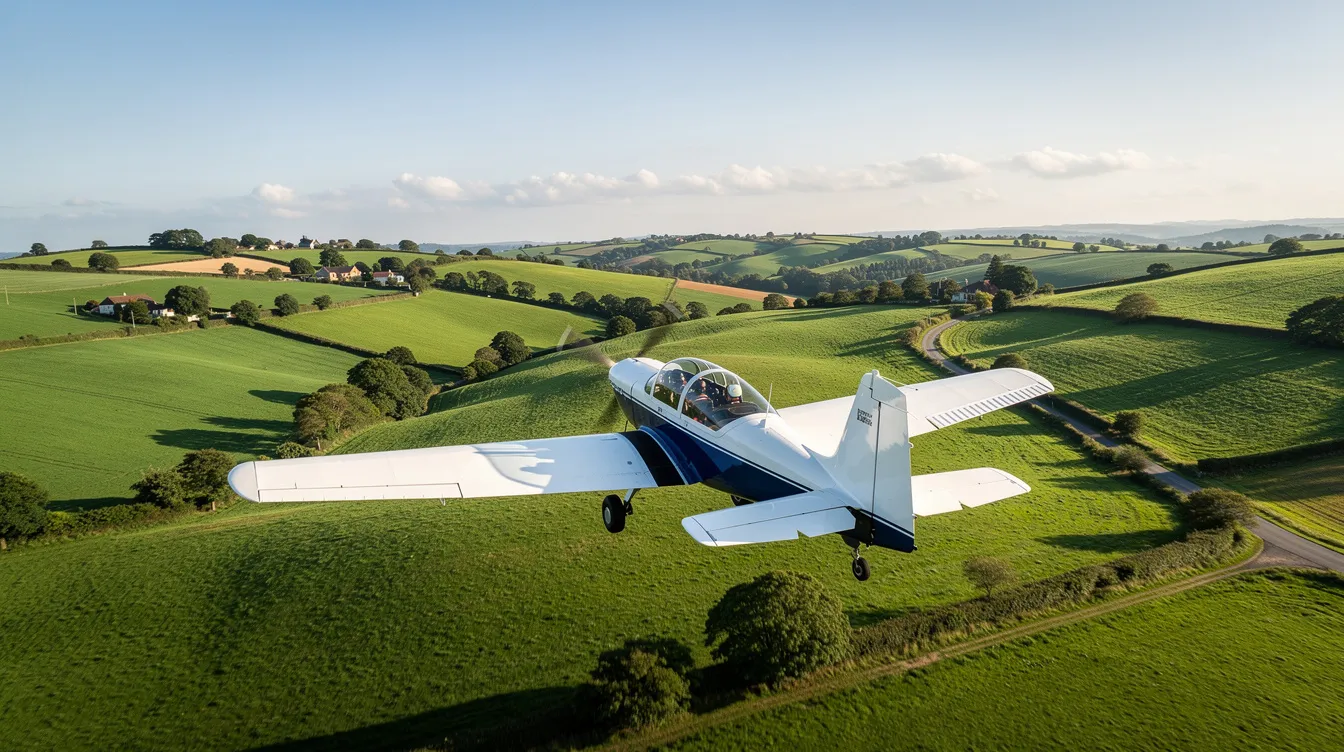
A two-seater plane offers one of the purest experiences in aviation—delivering the thrill of flight, hands-on control, and a direct connection to the sky. This guide is for aspiring pilots, aviation enthusiasts, and travelers considering private flight options. We cover technical specs, costs, use cases, and when to consider private jet alternatives. Whether you’re looking to enter private aviation, train as a pilot, or simply understand the role of two-seater planes in general aviation and recreational flying, this comprehensive overview will help you make informed decisions.
Key Takeaways About Two-Seat Aircraft
A two-seater plane is a light, fixed-wing airplane with a single piston engine (65–180 hp), an unpressurized cabin, and basic to mid-level avionics.
Cruise speeds range from 90 to 175 knots, with typical range between 400 and 800 nm.
Two-seater planes typically weigh between 450 and 1,000 kg and carry limited baggage (often 10–20 kg).
They provide an accessible entry point into private aviation for training, sport flying, and short tours.
Two-seater aircraft offer lower operating and maintenance costs compared to larger aircraft.
Used trainers are available from under $30,000; new Light Sport Aircraft are priced at $80,000–$150,000+.
Annual fixed ownership costs typically run $20,000–$35,000.
When trips demand speed, comfort, 4–10 seats, or all-weather capability, BlackJet's Jet Card programs offer premium private jet access.
What Is a Two-Seater Plane?
A two-seater plane is a light, fixed-wing two-seater aircraft typically powered by a single piston engine. Two-seater planes feature various seating arrangements, including side-by-side and tandem. Used worldwide since the 1950s for pilot training, recreational flying, and short scenic tours, two-seater airplanes are a fundamental aspect of general aviation and recreational flying.
The basic technical profile includes an empty weight around 300–550 kg, maximum takeoff weight of 450–1,000 kg, and a useful load that must cover two occupants, fuel, and minimal baggage. Most are unpressurized and designed for operations under 10,000 ft.
The Light Sport Aircraft framework shaped modern design after 2004: Light Sport Aircraft must weigh under 1,320 lbs (600 kg) on wheels, cruise no faster than 120 kt, and stall below 45 kt. Recent regulatory changes in the U.S. expanded sport-pilot privileges and light-sport aircraft frameworks further. In Europe, comparable rules apply through EASA.
Classic examples include the Cessna 152 (MTOW ~1,670 lb, cruise ~107 kt) and modern composite trainers like the Diamond DA20 or Tecnam P2002. Modern two-seater aircraft may include advanced avionics and GPS navigation systems, with glass cockpits from Garmin G3X or Dynon now common. Modern two-seaters often include ADS-B transponders for safety. Still, they lack the redundancy, pressurization, and comfort systems standard in top-tier private jets combining luxury and performance available through BlackJet.
Typical Uses for a Two-Seater Plane
Two-seater aircraft are often categorized as trainers, recreational planes, and aerobatic planes. They dominate entry-level flight training, local leisure flying, and specialized niches like aerial photography, whereas regional private jet charters, such as private jet services in Karachi or private jet charters in Lahore, focus on point-to-point efficiency and comfort rather than hands-on piloting.
Flight Training
Flight training remains the primary mission. Two-seater planes are ideal for private pilot training due to their forgiving handling characteristics. Student pilots typically log their first 40–60 hours in trainers like the Cessna 152 and Piper PA-38, burning just 20–30 L/h. Many two-seater aircraft feature dual flight controls for training purposes, and they are used in both civil and military flight training. Common two-seater models include Cessna 152 and Piper PA-38. Light Sport Aircraft are popular for recreational flying and flight training alike.
Recreational Flying
Recreational flying covers weekend sightseeing within 150–250 nm, breakfast runs between small airports, and fly-ins. Two-seaters can operate from short grass strips and small regional airports that larger aircraft cannot access. Even two-seater gliders utilize thermal lift to remain aloft without an engine, offering a silent variant of the experience. The responsive feel of a lightweight two-seater is hard to replicate in any other setting.
Aerobatic Flying
Aerobatic flying uses specialized two-seat aircraft like the Pitts S-2 and Extra 200/300. Aerobatic two-seater aircraft are designed for precision maneuvers and high-performance flying, with tandem seating and exceptional roll rates. Two-seater aircraft are often used for flight training and aerobatics in competition settings.
Now that we've explored the main uses, let's examine how these aircraft perform in key operational metrics.
Key Performance Metrics: Speed, Range, and Climb
Performance varies dramatically across the two-seater plane spectrum. Understanding cruise speed, range, and climb is essential for any buyer or renter.
Table: Performance Comparison of Popular Two-Seater Plane Models
Model | Type | Cruise Speed | Range | Climb Rate |
|---|
Cessna 152 | Certified trainer | 90–107 kt | ~400–590 nm | ~715 ft/min |
Piper PA-38 Tomahawk | Certified trainer | 93–100 kt | ~400–500 nm | ~720 ft/min |
BRM Aero Bristell | Modern LSA | 115–155 kt | ~600–800 nm | ~1,100 ft/min |
Vans RV-7/RV-9 | Experimental kit | 140–175 kt | ~600–750 nm | ~1,200–1,500 ft/min |
Classic trainers achieve 600–800 ft/min climb, while Rotax-powered LSAs reach 1,000–1,200 ft/min. High-performance models with retractable gear can push ~1,500–1,900 ft/min under ideal conditions.
Even the fastest two-seater aircraft cruising at 160–175 kt is far slower than light jets (typically 350–450 kt) used in BlackJet's network. For a regional business trip - say Vancouver to a meeting in York County - the time difference is substantial, and for very large groups the comparison extends all the way to private jets for up to 50 passengers.
With performance in mind, let's look at how weight and payload affect real-world usability.
Understanding Weight, Payload, and Useful Load
Three numbers on every two-seat aircraft data plate matter most: empty weight, maximum takeoff weight (MTOW), and useful load (the difference between them).
Take the Cessna 152: empty weight ~1,080 lb, MTOW ~1,670 lb, useful load ~590 lb. Two adults at 170–200 lb each, plus full fuel (~100 lb), leaves almost nothing for baggage. The BRM Aero Bristell offers a more generous ~121 lb baggage capacity, but trade-offs persist.
Installing IFR avionics, autopilots, or airframe parachutes increases empty weight, reducing what you can carry. Owners must calculate real-world payload with their own weight, a passenger, and standard fuel reserves - baggage is usually limited to 10–20 kg in many two-seater aircraft.
Private jet operators working with BlackJet apply strict weight-and-balance and performance calculations on every flight, allowing passengers to board without worrying about these constraints while benefiting from optimized safety margins.
Understanding the payload and weight limitations, let's explore the most popular two-seater plane models and their manufacturers.
Popular Two-Seater Plane Models and Blackshape Aircraft Manufacturers
The two-seater plane market spans vintage metal trainers, modern composite LSAs, experimental kits, and specialized aerobatic types.
Classic Certified Trainers
Cessna 150/152 (1960s–1980s), Piper PA-38 Tomahawk, Beechcraft Skipper. Factory-built and certified aircraft are more predictable and easier to insure for novice pilots, and these models remain staples in flight schools across Europe and North America.
Modern Composite and Metal LSAs
Diamond DA20, Tecnam P2002/P2008, BRM Aero Bristell, Sonaca Aircraft (Sonaca 200), Elixir Aircraft (Elixir), and Blackshape Aircraft (Blackshape Prime) represent the industry's push toward sleek, performance-focused two-seat aircraft. The Bristell with a 162 hp Rotax 916iS, for instance, blurs the line between LSA and higher-powered general aviation.
Experimental and Homebuilt Kits
Vans RV series (RV-7, RV-9, RV-12) dominate here. Builders enjoy custom configuration - propeller types, engine upgrades - with speeds reaching 160–175 kt and a strong community for support. The world of experimental aviation rewards patience and hands-on skill.
While these models deliver engaging, hands-on flying, they differ fundamentally in mission from the professionally crewed turboprop and entry-level private jets designed for affordability that BlackJet provides access to for business executives and high-net-worth travelers.
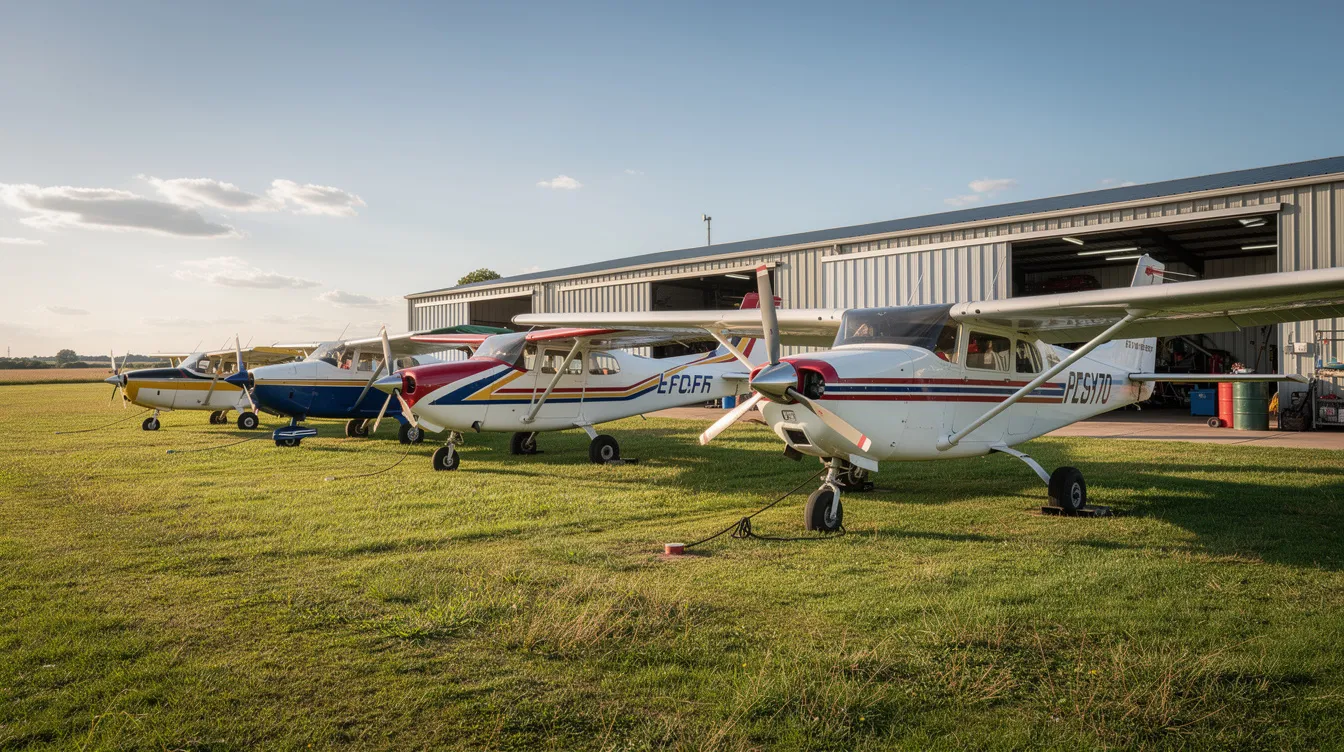
With the main models covered, let's look at how seating layout and comfort affect the flying experience.
Seating Layout and Comfort: Side-by-Side vs Tandem
Two-seater planes feature various seating arrangements, including side-by-side and tandem. Side-by-side seating places both occupants next to each other, making communication and instruction easier, while tandem seating arranges one seat behind the other, reducing drag and improving forward visibility—ideal for aerobatic flying.
Side-by-side layouts (Cessna 152, Diamond DA20, Vans RV-9A) offer easier communication, a shared instrument view, and more natural interaction for instruction and leisure flying. Cabin width is typically 100–110 cm.
Tandem layouts (Pitts S-2, Extra 200, certain Blackshape Aircraft designs) reduce frontal area and drag, giving better forward visibility for the front-seat pilot - ideal for aerobatics.
Comfort limitations are hard to ignore: narrow cabins, limited legroom, basic or no climate control, and high noise requiring headsets make flights beyond 2–3 hours fatiguing for many passenger types.
Contrast this with the spacious, pressurized cabins of private jets available through BlackJet - club seating, full climate control, quiet environments suitable for work or rest, and in some cabin classes, stand-up headroom.
Now that we've discussed comfort and layout, let's examine the engines, fuel, and operating costs that define two-seater ownership.
Engines, Fuel, and Operating Costs
Most two-seater aircraft use piston engines running on aviation gasoline (avgas) or, increasingly, Rotax engines capable of burning automotive fuel (mogas).
Lycoming O-235: Standard in the Cessna 152, commonly used in certified trainers.
Continental O-200: Common across legacy trainers, known for reliability and simplicity.
Rotax 912/912iS and 915 iS: Powering modern LSAs and experimental two-seater aircraft, offering lower fuel burn and compatibility with mogas.
Lycoming O-235
Used in classic trainers like the Cessna 152, valued for durability and ease of maintenance.
Continental O-200
Found in many older trainers, this engine is known for its straightforward operation and widespread support.
Rotax 912/912iS and 915 iS
Popular in modern LSAs and experimental aircraft, these engines are efficient, lightweight, and can use automotive fuel.
Two-seater aircraft burn 15–25 liters of fuel per hour. Classic trainers consume 6–8 US gph (23–30 L/h), while efficient Rotax-powered LSAs achieve 4–6 gph. Many budget-conscious owners weigh these figures carefully when comparing affordable small aircraft options. Filling both seats halves per-person fuel burn; conversely, solo flights double emissions per traveler in any aircraft.
Simplified maintenance of two-seater planes reduces annual inspection costs compared to larger, more complex types. Still, ownership costs for two-seater planes range from $20,000 to $35,000 annually when you account for insurance, hangar or tie-down fees, inspections, and engine overhaul reserves. Annual fixed expenses for two-seater ownership can exceed $35,000 for those in premium locations. A pilot flying 50 hours per year may spend $400 to $700 per hour when fixed costs are averaged in.
By comparison, chartering a turboprop costs between $1,000 and $3,000 per hour, while charter costs for light jets range from $3,500 to $7,000 per hour - higher per flight but with zero maintenance, hangar, or capital outlay, as explored in more detail in our guide to chartering a small private plane. For travelers prioritizing time efficiency, BlackJet's Jet Card programs eliminate downtime entirely.
With a clear understanding of costs and engines, let's compare buying a two-seater plane to accessing private jets through BlackJet.
Buying a Two-Seater Plane vs Accessing Private Jets with BlackJet
Buying Considerations
Some aviation enthusiasts choose to buy a personal two-seater aircraft, then compare that investment with broader private jet pricing and access options, including benchmarks like NetJets jet card costs and Flexjet jet card pricing. Frequent travelers often prefer to access larger aircraft through Jet Card membership programs like BlackJet's.
Used Cessna 152s in flyable condition sell for $15,000–$60,000; new LSAs with glass panels run $80,000–$150,000+.
Pre-purchase inspections, logbook reviews, and regulatory compliance checks are essential.
Best suited for pilots flying 50–150 hours per year who enjoy hands-on oversight and find fun in the process of maintaining and flying their own airplane.
BlackJet's Jet Card Alternative
Built on the same principles outlined in our guide to understanding jet card costs and benefits and a deeper dive into jet card pricing structures.
Guaranteed access to multi-seat jets and turboprops across cabin classes.
Fixed hourly rates, 24/7 digital booking, no ownership responsibilities.
Designed for executives and families wanting speed, privacy, and flexibility.
A Practical Scenario
A business owner keeps a two-seater at a local airfield for weekend flying - the budget-friendly joy of personal aviation. But when a same-day trip between New York and Chicago demands seating for four, all-weather capability, and the ability to work onboard, BlackJet's Jet Card makes the mission practical. Making that distinction is what separates enthusiasts from strategists.
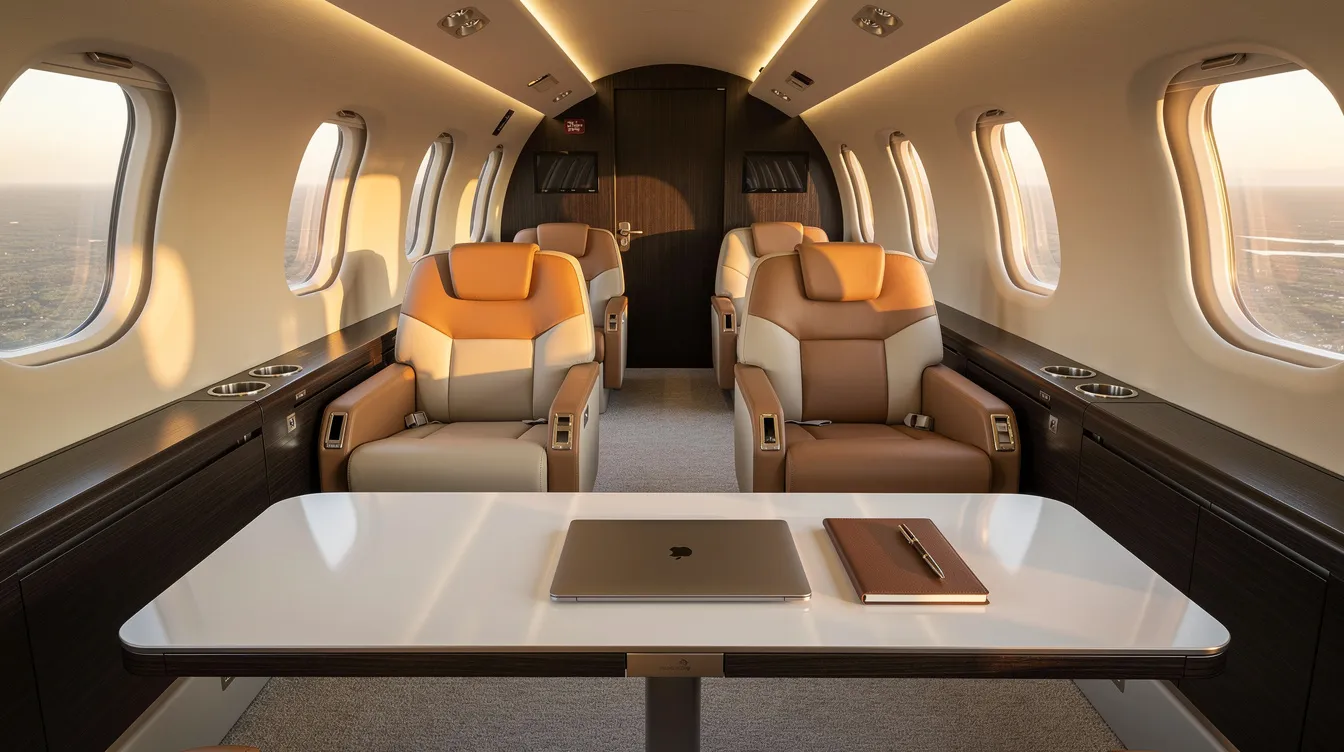
With ownership and access options compared, let's address the critical topics of safety, regulations, and environmental impact.
Safety, Regulations, and Environmental Impact
Safety and environmental considerations differ substantially between privately operated two-seater aircraft and professionally crewed private jets.
Licensing: Two-seater planes require a Private Pilot License (PPL), or a Light Aircraft Pilot Licence (LAPL) in Europe, or a Sport Pilot certificate in the US. Each involves medical certification, ground study, and in-flight training over several months. For those who prefer to avoid licensing altogether, learning how to buy a seat on a private jet is often a more practical path. Recurrent training is essential for flying two-seater planes safely over the years.
Safety limitations: Two-seater planes typically operate under VFR only. Most lack de-icing, pressurization, and weather radar, making them more sensitive to turbulence, crosswinds, and unexpected weather. Single-engine design means no redundancy - a critical section of any risk assessment. By contrast, leading private jet companies renowned for safety and service and BlackJet's network address these gaps through rigorous safety vetting of operators, professional crews, modern avionics, and certified IFR-capable aircraft.
Environmental impact: At 15–25 L/h per seat when fully occupied, two-seater aircraft are relatively fuel-intensive per passenger mile. Sustainable aviation fuel adoption is increasing in larger fleets, and electric two-seater prototypes are under development for future use. A 2024 life-cycle assessment found all-electric two-seaters can outperform fossil-fueled equivalents on climate impact given clean electricity and sufficient airframe lifetime. For larger groups, choosing efficient large-cabin private jets for up to 20 passengers can consolidate multiple airline or small-aircraft trips into a single, optimized flight. BlackJet's commitment to carbon-neutral flights through verified offsets and SAF where available represents the industry's leading edge on sustainability.
With safety and environmental factors in mind, let's answer some of the most common questions about two-seater planes and private jet access.
FAQ: Two-Seater Planes and When to Choose Private Jet Access
Can a non-pilot experience flying in a two-seater aircraft?
Yes. Many flying schools and clubs offer introductory "discovery flights" or scenic tours with certified instructors. These let a passenger ride along and sometimes briefly handle the control inputs under supervision - a memorable way to explore aviation without holding a license.
Are two-seater aircraft practical for business travel?
Only in narrow circumstances: two people, short distances, stable weather, light baggage. For most sellers, executives, or professionals who need to work on board, carry colleagues, or hold a tight schedule, chartered turboprops or jets deliver far more practical value, especially once you understand the full cost of chartering a small plane.
Is it cheaper to own a two-seater plane or use private jets?
Ownership has lower per-hour direct costs but substantial annual fixed expenses ($20,000–$35,000+). If you fly fewer than 50 hours per year, your effective hourly cost rivals or exceeds charter rates. Our analysis of 50-hour jet card pricing and value shows how pre-paid private jet hours compare in practice. Use frequency is the deciding factor - not the sticker price on the airplane for sale.
When does a private jet with BlackJet make more sense than a two-seater aircraft?
When your flying needs include more than two passengers, distances over a few hundred nautical miles, tight business schedules, or when comfort, privacy, and all-weather capability are priorities. Guides to the best jet cards for frequent flyers consistently highlight these same decision points. Lastly, if you value professional crew management and zero maintenance burden, a Jet Card is the natural fit.
Conclusion: Matching the Two Seater Aircraft to Your Mission
Two-seater aircraft excel at what they were designed for: personal flying, pilot training, and the pure aviation passion that keeps the world of general aviation alive. With cruise speeds of 90–175 kt, annual costs of $20,000–$35,000, and room for exactly two people and minimal baggage, they serve a clear and rewarding niche.
But when the mission changes - more passengers, longer legs, unpredictable weather, or time-critical schedules - the right tool changes with it. Many pilots and high-net-worth travelers combine both worlds: a two-seater plane at the local airfield for weekend joy, and BlackJet's Jet Card for serious business and family journeys.
Elevate your travel - effortlessly. With BlackJet, private flight is accessible on your terms through Jet Card programs built on rigorous safety, carbon-neutral performance, and unmatched flexibility. Explore our offerings and discover how refined, meaningful travel becomes your new standard.
Join BlackJet's Jet Card program for seamless, premium private travel - safety, sustainability, and flexibility built in.


 Sign up with google
 Sign up with Apple