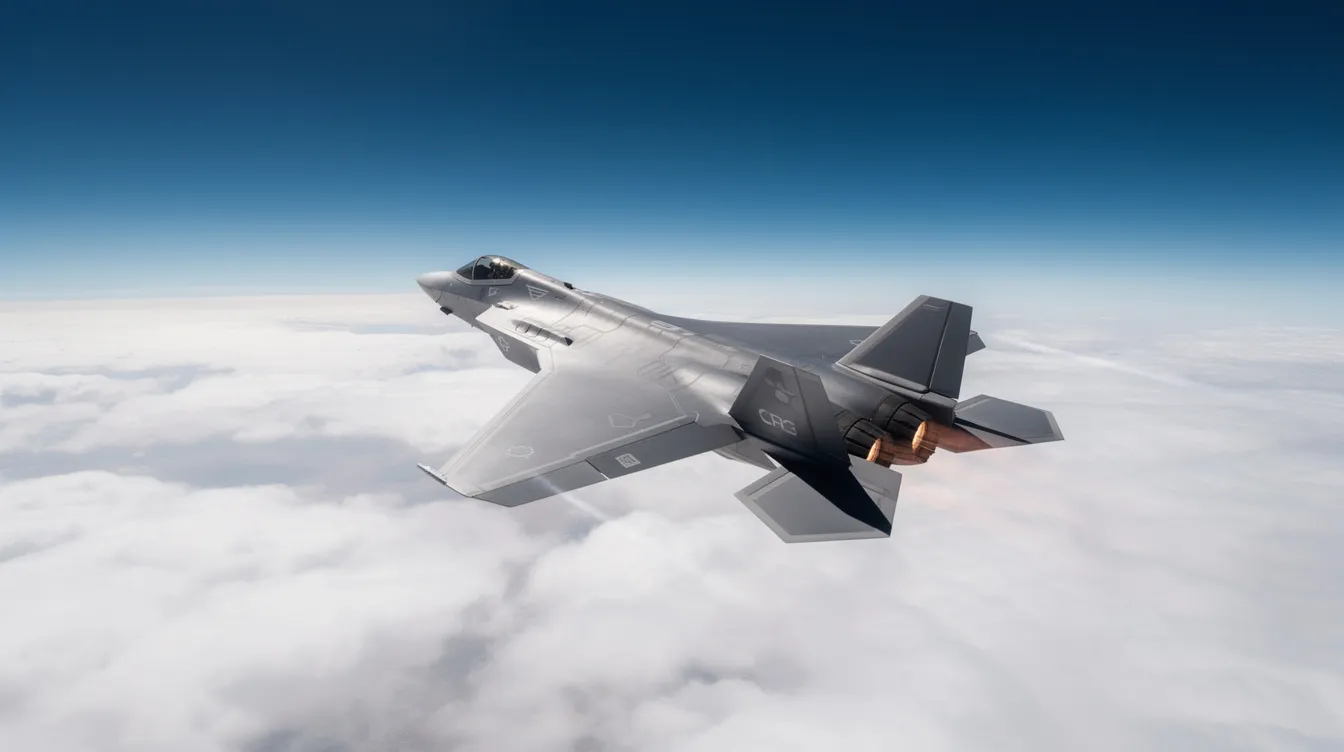
Speed has defined air combat since the earliest days of powered flight. Even in an era where stealth, sensors, and networked warfare increasingly drive battlefield outcomes, the top speed of US fighter jets remains a critical benchmark-a measure of how quickly a nation can project power, intercept threats, and control the skies. Understanding how fast these aircraft fly reveals the engineering trade-offs that shape every high-performance machine, from a Mach 2.5 air superiority fighter to a premium private jet.
Fighter jet design has evolved from prioritizing speed to incorporating stealth and sensors, yet velocity still matters. Military aircraft speeds are measured in Mach numbers, related to the speed of sound-roughly 761 mph at sea level but lower at high altitude where temperatures drop. When we say a jet reaches Mach 2.5, that translates to approximately 1,650 mph in thin, cold air above 40,000 feet.
The fastest aircraft are generally designed for air superiority and interception, built to close distance and engage threats before an adversary can react. Consider this: a fighter cruising at Mach 2.5 covers a 1,000-mile segment in roughly 36 minutes. A commercial airliner at Mach 0.85 needs about one hour and 45 minutes for the same distance. That gap in response time has shaped military doctrine for decades.
While BlackJet focuses on private jet access rather than combat aircraft, the engineering principles are shared across all high-performance aviation. The same obsession with thrust, materials science, and aerodynamic refinement that pushes fighters past Mach 2 also drives improvements in the business jets our members fly.
How Fighter Jet Speed Is Measured (Mach, Altitude, and Real-World Limits)
Mach number is the ratio of an aircraft's true airspeed to the local speed of sound. At sea level on a standard day, that speed is approximately 661 knots. At 40,000 feet, where the air is far colder, the speed of sound drops to around 574 knots. This means a jet flying "Mach 2" is moving at different ground speeds depending on altitude.
Several distinctions matter when comparing US Air Force and US Navy fighters:
Top speed at high altitude versus sea level: published maximums almost always reflect clean configuration at altitude, not loaded, low-level flight.
"Dash" speed versus sustainable cruise: afterburner-driven sprints burn fuel at extraordinary rates and are rarely sustained beyond minutes.
Supercruise allows aircraft to sustain supersonic speeds without afterburners, as demonstrated by the F-22 Raptor at roughly Mach 1.5-saving fuel and reducing infrared signature.
Actual performance of fighter jets can vary based on payload and conditions. External weapons, fuel tanks, and sensor pods add drag, making real-world combat speeds meaningfully lower than headline figures. Official top speed figures for modern fighters like the F-22 and F-35 are often conservative or partially classified, reflecting both security concerns and the reality that stealth coatings and sensor performance can degrade at extreme Mach numbers.
Pilots see indicated airspeed in the cockpit, while engineers reference true airspeed or Mach. For civilian and private aviation users, speed typically appears as knots or Mach in cruise-a simpler framework, but grounded in the same physics.
Fastest US Fighter Jets in Service Today (With Real Top Speed Figures)
Current US fighter jets balance speed, stealth, and multirole flexibility. Modern U.S. fighter jets can achieve top speeds between Mach 1.6 and Mach 2.5, depending on the airframe and mission profile. Here are the fastest operational platforms in USAF and Navy service today.
F-15C/D Eagle and F-15EX Eagle II. The F-15 Eagle is known for its exceptional speed and acceleration capabilities, with a combat record of zero losses in air-to-air engagements. The F-15 Eagle was capable of reaching Mach 2.5, and the modernized F-15EX Eagle II has a maximum speed of Mach 2.5 (~1,650 mph at altitude). Boeing delivered the first Eagle II aircraft to Eglin Air Force Base in the early 2020s. With the ability to carry 22 air-to-air weapons, the Eagle II serves as the USAF's premier missile truck-a high-speed complement to stealth assets.
F-22 Raptor. The F-22 Raptor was introduced in 2005 and remains operational as America's stealth air superiority fighter. The F-22 Raptor can reach speeds of Mach 2.25 (~1,500 mph) in clean configuration at high altitude, while its supercruise capability near Mach 1.5 allows sustained supersonic flight without afterburners. The F-22 Raptor features advanced supercruise capabilities and stealth, combined with thrust-vectoring engines that deliver exceptional maneuverability. It is projected to be supplemented by the Next Generation Air Dominance program around the 2030 timeframe.
F/A-18E/F Super Hornet. The Navy's carrier-based multirole fighter achieves a top speed around Mach 1.6–1.8 depending on configuration. Designed for reliability and all-weather operations rather than absolute velocity, the Super Hornet prioritizes ruggedness and mission flexibility.
F-35A/B/C Lightning II. The F-35 Lightning II prioritizes stealth and networked warfare over top speed, reaching Mach 1.6 (~1,200 mph) across all three variants: the F-35A for the Air Force, the F-35B (STOVL) for the Marines, and the F-35C carrier variant for the Navy. The F-35C became operational with the Navy in 2019.
Unlike Soviet-era interceptors that pushed toward Mach 3, these US fighters are optimized for sensors, stealth, and coordinated air dominance-not extreme Mach numbers alone.
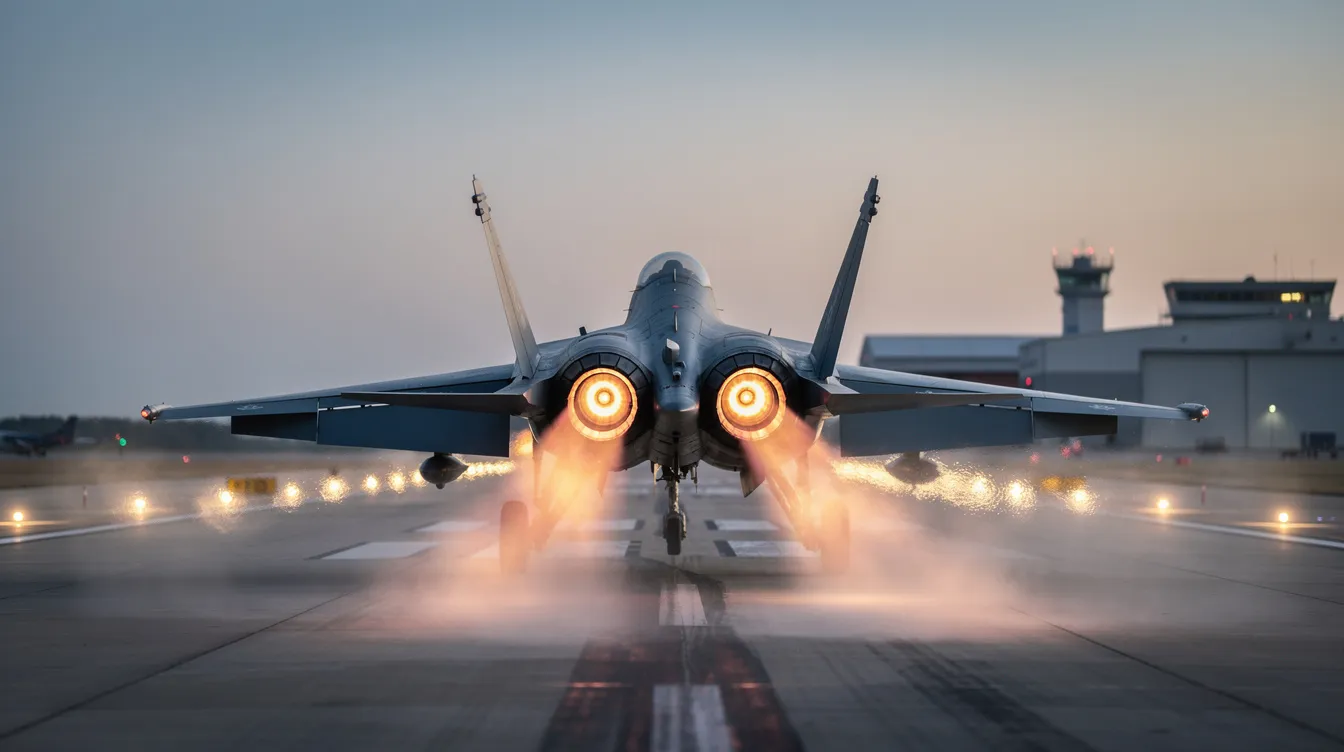
Historic US Speed Icons: Cold War and Vietnam-Era Fighters
Cold War doctrines demanded raw speed. The fight to intercept nuclear bombers and compete with Soviet aircraft produced some of the most iconic jets in aviation history, each designed to fly faster and higher than anything before it.
F-4 Phantom II. The F-4 Phantom has a top speed of Mach 2.23 and entered service in 1960, serving with the Air Force, Navy, and Marines through the Vietnam War and well beyond. This two-seat, twin-engine attack aircraft set numerous records, including an absolute altitude near 98,000 feet. In July 1961, a Phantom set closed-circuit speed records exceeding 1,390 mph. Despite its speed, the Phantom's early lack of an internal gun exposed design limitations in close combat over Vietnam, driving improvements in future fighter doctrine.
F-14 Tomcat. Built by Grumman, the F-14 Tomcat could reach speeds of Mach 2.34, making it one of the fastest carrier fighters ever launched. Its variable-sweep wings allowed pilots to optimize between high-speed interception and slower-speed maneuverability. The Tomcat served the Navy from aircraft carriers for over three decades before being phased out in 2006.
Other notable jets include the F-100 Super Sabre-the first US fighter capable of supersonic speed in level flight-and the F-105 Thunderchief, which flew high-speed, low-altitude strike missions during the Vietnam War. The F-111, another fast swing-wing aircraft, was retired by the USAF in 1998 after years of service as a bomber and strike platform. These aircraft traded agility for sheer speed, altitude, and payload-a philosophy that would evolve dramatically as stealth technology matured.
Carrier-Capable US Fighters: Speed from the Deck of the Sea
Operating from aircraft carriers imposes constraints that temper top speed. Reinforced landing gear, arresting hooks, folding wings, and the structural demands of catapult launches all add weight and drag. Yet carrier fighters must still deliver enough speed and thrust to defend the fleet.
The F-14 Tomcat combined Mach 2+ capability with long-range fleet defense, though its star eventually faded. The F-14 Tomcat was retired due to high operational costs, replaced by the more maintainable F/A-18 Hornet and Super Hornet. The original Hornet achieved speeds near Mach 1.8, while the Super Hornet operates around Mach 1.6 under combat-loaded conditions-the slowest of the Navy's modern fighter jets in raw top speed, but among the most reliable and capable multirole platforms ever built.
The F-35C Lightning II brings stealth to the carrier deck. With catapult-assisted launch and arrested recovery, its top speed of Mach 1.6 reflects an aircraft designed for networked strike and survivability rather than absolute velocity.
Early Navy jets-the F9F Panther, the FJ-2 and FJ-3 naval variants of the F-86 Sabre-had far lower top speeds but were essential stepping stones. Carrier launch and recovery cycles, deck space, and diverse mission types (fleet air defense, strike, close air support) continue to shape acceptable speed envelopes and fuel loads for every aircraft that operates at sea.
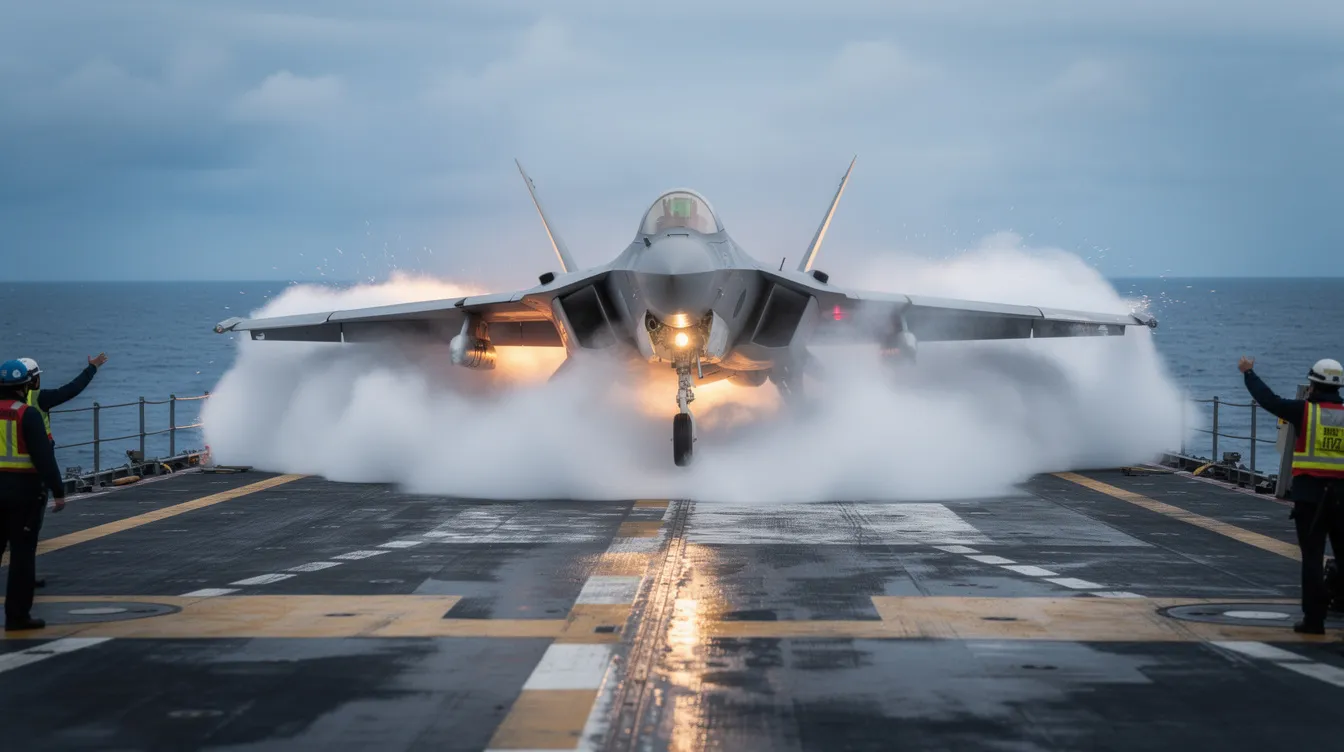
Where the F-15EX Eagle II and F-22 Raptor Fit in the Modern Speed Landscape
The F-15EX Eagle II and the F-22 Raptor represent complementary approaches to air superiority: one prioritizes raw speed and payload, the other stealth and supercruise. Together, they anchor the USAF's ability to fight across the spectrum of modern air combat.
The Eagle II is a modernized derivative of the F-15 family, fitted with digital fly-by-wire controls, large-area touchscreen displays, and advanced electronic warfare suites. Its stated top speed of Mach 2.5-with some unverified claims suggesting near Mach 3 in testing-makes it one of the fastest US fighter jets ever fielded. Its operational role is as a missile truck, capable of carrying over 22 air-to-air weapons to augment stealth platforms in large-scale campaigns. The number of improvements over legacy Eagles is substantial, from wire integration to sensor fusion.
The F-22 Raptor's twin Pratt & Whitney F119 engines deliver Mach 2.25 with afterburner and supercruise around Mach 1.5 without. This capability allows the Raptor to cover vast distances at supersonic speed while preserving fuel and minimizing infrared signature-a decisive advantage in contested airspace. The F-22 is gradually being phased toward supplementation by NGAD and expanded F-35 fleets post-2030, but it remains the answer to the question of what a purpose-built stealth air superiority fighter can achieve.
The philosophical difference is clear: the Eagle II is built for speed, range, and total missile load in high-intensity conflicts where stealth may be less critical. The Raptor is optimized for first-look, first-shot, first-kill, where advanced sensors and low observability matter more than a slightly higher Mach number.
Speed vs. Stealth, Maneuverability, and Range: Modern Design Trade-Offs
Raw top speed is now only one pillar among stealth, sensor fusion, electronic warfare, and maneuverability in determining a fighter's combat effectiveness. Fighter jets emphasize maneuverability and stealth as much as speed in modern design, and for good reason.
Pushing toward Mach 3 introduces immense heating at leading edges, structural stress on airframes, and exponential fuel-consumption penalties that gut range and loiter time. Stealth shaping and coatings often limit maximum speed to preserve low radar cross-section and reduce thermal signatures-making the aircraft harder to detect but slightly slower at the margins. Meanwhile, agility and high angle-of-attack performance, as demonstrated by the F-22's thrust vectoring, can be far more decisive in combat than an extra fraction of Mach.
Consider the comparison: the Soviet-era MiG-31 Foxhound has a top speed of Mach 2.83, the MiG-29 Fulcrum reaches speeds of Mach 2.3, and the MiG-23 Flogger has a maximum speed of Mach 2.35. These are impressive numbers, but such speeds are rarely sustained in real operations due to fuel constraints and engine wear. US fighters like the F-22 or F-35 operate slightly slower but with vastly superior situational awareness, survivability, and the ability to coordinate across networked forces-a trade-off that has proven its worth in every related engagement.
Multirole demands-air-to-air, ground attack, electronic warfare-force compromises in wing design and engine tuning. External stores drag speeds down; internal weapons bays preserve them but limit payload size. The list of trade-offs is long, and it mirrors a reality familiar in private aviation: optimizing around mission efficiency, range, and reliability rather than simply flying as fast as possible.
What Fighter Jet Speeds Reveal About Private Aviation Performance
Breakthroughs in engines, aerodynamics, and materials from US fighter jet programs consistently filter into business and private jets. The same interest in high thrust-to-weight engines, advanced composites, and laminar-flow surfaces that allows combat pilots to break Mach 2 also drives the performance gains in the aircraft BlackJet members fly.
Supersonic flight over land remains heavily restricted for civilian aircraft, so private jets focus on high-subsonic cruise speeds-typically Mach 0.80 to 0.90, or roughly 460 to 540 knots-while leveraging their ability to cruise higher than most commercial flights, especially among the top 10 best private jets in the world that combine speed, range, and cabin comfort. What matters more for private travelers is not marginal airspeed but total time saved, supported by tools like a dedicated private jet flight time calculator and an understanding of the broader private jet price list, costs, and options. Departing from a convenient airport, skipping connections, and landing closer to your destination often delivers greater efficiency than a faster cruise speed alone.
BlackJet's Jet Card programs provide access to aircraft across multiple categories-light, midsize, super midsize, and large cabin-each engineered with the same core principles of performance, reliability, and rigorous certification found in military aviation, and backed by premium private jet membership services, helping travelers navigate types of private jets for every traveler. For instance, a BlackJet Jet Card member flying from New York to Dallas on short notice can depart from a nearby private terminal, bypass commercial security lines, and land at an airport minutes from their meeting-effectively outpacing even faster military-derived platforms in door-to-door time saved, especially when compared with other access models like buying a seat on a private jet.
How BlackJet Curates Speed, Safety, and Sustainability for Members
BlackJet applies the same seriousness to safety, performance, and mission planning that the Air Force applies to fighter operations-but in service of executive and leisure travelers who demand precision without complexity through its 25+ Hour Jet Card program and other options such as a 50-hour Jet Card cost guide.
The Jet Card model-available in 25-hour and 50-hour programs-lets members pre-position flight hours much like the military pre-positions jets for rapid response, and a comprehensive guide to jet card cost alongside detailed jet card pricing structures helps frequent flyers understand how these programs are priced and where they deliver the most value. When a trip materializes, aircraft are matched, crews are assigned, and safety checks are completed behind the scenes, delivering many of the same advantages outlined in the best jet cards for frequent flyers. Members choose from multiple cabin classes tuned for different ranges and passenger loads, with every operator vetted against leading safety standards, whether they need the best private jet for 20 passengers or are planning trips that call for private jets for 50 passengers.
Sustainability is built in, not bolted on. BlackJet ensures every flight is carbon neutral through integrated offset programs supporting verified environmental projects-a commitment that matters to environmentally conscious travelers and parallels how modern defense programs increasingly track fuel usage and emissions, and aligns with the push toward the cheapest private jet and other affordable options that also consider environmental impact.
Technology ties it together: 24/7 digital booking tools, mobile access, and real-time flight support mirror the on-demand responsiveness that fighter squadrons rely on, while insights from the top private jet companies for luxury travel continue to shape expectations for responsiveness and service quality. Whether booking a last-minute transcontinental meeting or planning a weekend departure weeks, BlackJet handles aircraft matching, crew coordination, and route optimization seamlessly, simplifying many of the variables that drive private jet rental costs and considerations.
The same engineering rigor that propels America's fastest fighters at Mach 2.5 informs how BlackJet approaches every journey. Explore BlackJet's Jet Card programs and, if you fly frequently, compare options using an overview of jet card cost per hour and broader jet card pricing to discover how precision, safety, and sustainability redefine your standard of travel.
Frequently Asked Questions (FAQs) About US Fighter Jet Speeds
Q1: What is the fastest US fighter jet currently in service?
The F-15EX Eagle II holds the top speed record among US fighters today, reaching speeds up to Mach 2.5. The F-22 Raptor follows closely at Mach 2.25 with advanced supercruise capabilities.
Q2: How does Mach number relate to fighter jet speed?
Mach number is a ratio of the aircraft's speed to the speed of sound at the altitude it is flying. Since the speed of sound varies with altitude and temperature, Mach numbers provide a standardized way to compare speeds.
Q3: Why are modern US fighters not designed to exceed Mach 3 speeds?
Speeds above Mach 3 introduce extreme aerodynamic heating, structural stress, and fuel consumption penalties. Modern design prioritizes stealth, sensor integration, and maneuverability over raw speed.
Q4: How does carrier capability affect fighter jet speed?
Carrier-capable jets like the F-14 Tomcat and F/A-18 Super Hornet have structural reinforcements and design compromises that reduce top speed compared to land-based fighters but improve reliability and operational flexibility.
Q5: What role does maintenance play in fighter jet performance?
Regular maintenance ensures that fighter jets maintain peak performance, safety, and reliability. High-speed operations demand rigorous upkeep to manage wear and stress on engines and airframes.
Q6: How do US fighter jet speeds compare to commercial aircraft?
US fighters can cruise at speeds over Mach 1.5 to Mach 2.5, whereas commercial jets typically cruise at Mach 0.85. This speed advantage enables rapid response and air superiority missions.
Q7: Where can I find official Air Force photos of these fighter jets?
Official U.S. Air Force photos are available on the Air Force's public websites and archives, often accompanying articles and press releases about the aircraft.
Q8: How has the history of world war influenced US fighter jet development?
World War II and subsequent conflicts accelerated jet technology development, shaping design priorities such as speed, armament, and maneuverability seen in modern US fighters.
Q9: Is there any connection between US fighter jet technology and private aviation?
Yes, innovations in engines, materials, and aerodynamics developed for fighter jets often trickle down to improve private and business jet performance, safety, and efficiency.
Q10: How does Japan's air force compare in fighter jet speeds?
Japan operates advanced US-designed fighters like the F-15 and F-35, with speeds comparable to their US counterparts, reflecting strong bilateral defense cooperation.
Conclusion: The Strategic Edge of Speed in US Fighter Jets and Its Influence on Aviation
US fighter jet speeds are more than just numbers; they represent a strategic advantage that underpins national security and technological leadership. From the Mach 2.5 capabilities of the F-15EX Eagle II to the stealthy supercruise of the F-22 Raptor, these aircraft exemplify a balance of speed, agility, and advanced systems that define modern air superiority.
While raw velocity is tempered by design trade-offs such as stealth and fuel efficiency, the ability to rapidly project power remains paramount. This ethos of precision engineering and mission readiness resonates beyond military aviation, influencing the private jet sector where speed, safety, and sustainability converge.
At BlackJet, we embody these principles by offering Jet Card programs that provide members with seamless, flexible access to high-performance aircraft. Our commitment to rigorous safety standards, carbon-neutral flights, and cutting-edge technology ensures that every journey is not only fast but also responsible and reliable.
Explore how the legacy of America’s fastest fighters shapes the future of private aviation and discover how BlackJet can elevate your travel experience with unmatched speed, safety, and sophistication.


 Sign up with google
 Sign up with Apple