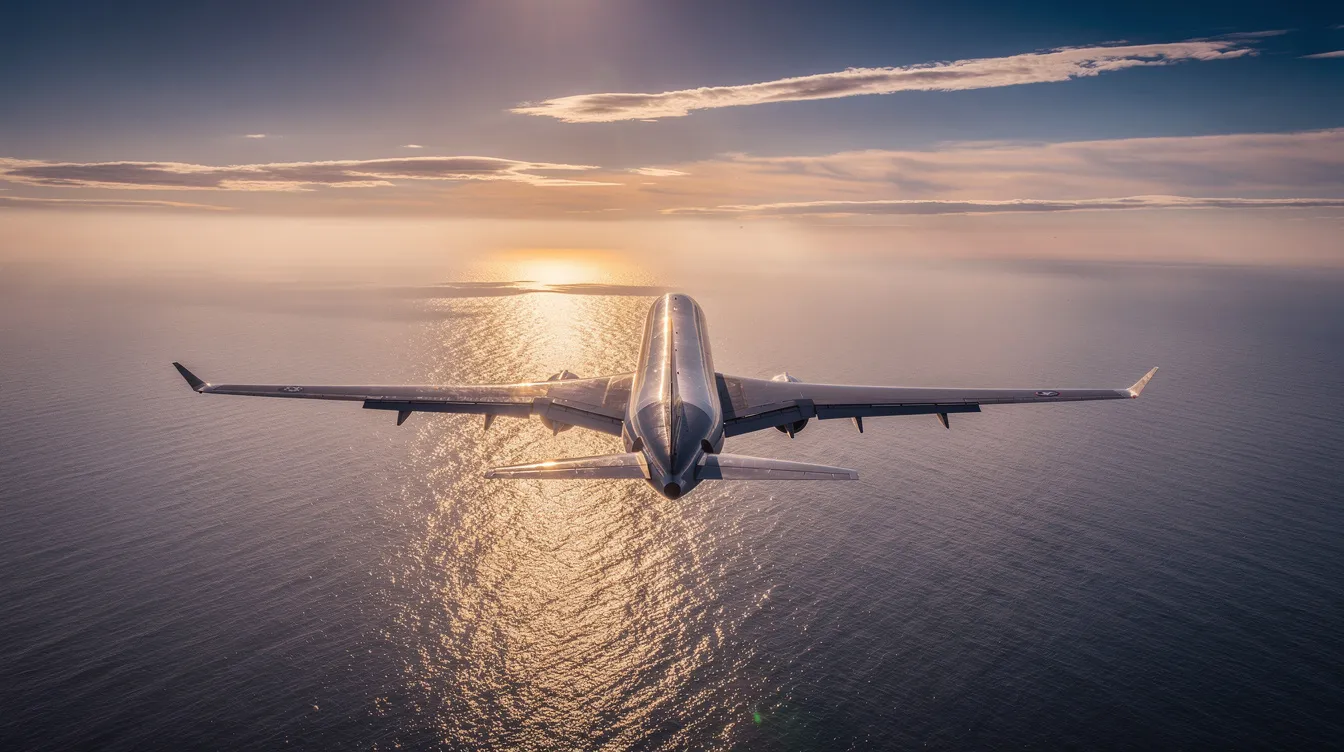
The Boeing 777 is the world's largest twinjet airliner, and the weight of a Boeing 777 is not a single number: depending on the variant and the weight category, its Operating Empty Weight (OEW) runs from about 297,300 pounds to more than 400,000 pounds, while Maximum Takeoff Weight (MTOW) ranges from 545,000 to 805,000 pounds. As a twin-engine wide-body that has reshaped long-haul aviation since the mid-1990s, the 777 spans several models with different weights, seating configurations, and mission profiles.
For aviation enthusiasts, airline and business aviation professionals, major operators, and private jet travelers comparing travel options, those numbers are more than technical specs. They influence range, fuel burn, airport compatibility, payload, and operating cost, which is why understanding Boeing 777 weight helps explain both airline planning decisions and the appeal of lighter, more flexible private aviation. This guide breaks down OEW, MTOW, and other weight categories across 777 variants, then connects those figures to aircraft design, safety and certification, fuel and range trade-offs, environmental impact, and how large-aircraft economics compare with private travel strategies.
Quick Answer: How Much Does a Boeing 777 Weigh?
The weight of a Boeing 777 depends on which variant you're discussing and which weight category you're measuring. OEW for Boeing 777 models ranges from approximately 297,300 lbs to over 400,000 lbs, while the Maximum Takeoff Weight of the Boeing 777 ranges from 545,000 to 805,000 lbs. The range of the Boeing 777 spans 5,235 to 9,380 nautical miles, with a cruise speed of around 905 km h, and it has a typical seating capacity of 314 to 451 passengers depending on the model and cabin layout.
Here's a summary of the most commonly referenced variants:
Variant | OEW (approx.) | MTOW (approx.) | MLW (approx.) |
|---|
777-200 | 134,800 kg / 297,300 lb | 247,200 kg / 545,000 lb | 201,800 kg / 445,000 lb |
777-200ER | 137,500 kg / 303,200 lb | 297,500 kg / 656,000 lb | 208,650 kg / 460,000 lb |
777-200LR | 145,200 kg / 320,200 lb | 347,450 kg / 766,000 lb | 237,680 kg / 524,000 lb |
777-300ER | 167,800 kg / 369,100 lb | 351,500 kg / 775,000 lb | 251,290 kg / 554,000 lb |
777-8 (777X) | TBD | ~365,140 kg / 805,000 lb | TBD |
777-9 (777X) | TBD | ~351,500 kg / 775,000 lb | TBD |
These are representative published figures from Boeing Commercial Airplanes data and regulatory sources, and Boeing is the manufacturer. Each airline's interior configuration slightly changes the actual operating empty weight; premium cabins with lie-flat seats and entertainment systems add hundreds of kilograms compared to high-density economy layouts.
Why does this matter? For major airlines, these weight figures drive range, fuel burn, and cargo capacity on every flight. For BlackJet's private aviation clients, they explain why the 777 dominates long-haul commercial routes—and why lighter, more flexible long-range private jets deliver a fundamentally different travel experience for those who value time, privacy, and control.

Why Aircraft Weight Matters: From Airline Economics to Private Jet Strategy
The Role of Weight in Aircraft Design and Operations
Weight is one of the core design constraints in any commercial aircraft. It directly determines range, fuel efficiency, ticket pricing, and which airports the aircraft can serve. Every kilogram aboard a Boeing 777 affects how far it can fly, how much fuel it burns, and how much revenue it generates.
MTOW and Its Impact on Range and Revenue
A heavier MTOW allows an aircraft to carry more fuel for ultra-long-haul flights—think a 777-200LR connecting Dubai to Los Angeles nonstop. It also allows more passengers and cargo, helping airlines maximize revenue on dense routes. But higher weight means higher fuel burn and landing fees, forcing a constant balance between capacity and costs.
Comparing Commercial Airliners and Private Jets
Consider the scale difference:
777-300ER MTOW: approximately 351.5 tonnes
Bombardier Global 7500 MTOW: approximately 48 tonnes
Gulfstream G650 MTOW: approximately 45 tonnes
Private jets can cross oceans with a fraction of the mass and far fewer passengers. A BlackJet Jet Card member flying from New York to Nice nonstop would typically choose an ultra-long-range private jet with a 10–12-passenger cabin, rather than sharing a ~350-seat 777 with hundreds of other travelers. The result: privacy, schedule control, and bespoke routing that a widebody airliner simply cannot offer.
Safety Margins and Certification
Both commercial airliners and private jets must meet strict structural margins around maximum weights, with significant reserves built into certified limits by the FAA and EASA. Safety is never compromised regardless of aircraft size.
Key Weight Definitions for the Boeing 777 Family
Public figures on the weight of a Boeing 777 can be confusing because multiple official weight categories exist. Here's a clear breakdown:
Manufacturer's Empty Weight (MEW)
The airframe plus standard equipment, unusable fuel, and fluids—no passengers, no cargo, no crew.
Operating Empty Weight (OEW)
MEW plus typical crew, catering, and standard operational items.
This is the baseline weight from which airlines build every flight plan.
Maximum Zero Fuel Weight (MZFW)
Maximum Taxi Weight (MTW)
Maximum Takeoff Weight (MTOW)
Maximum Landing Weight (MLW)
Example: 777-300ER Weight Categories
On a fully loaded international flight, passengers and cargo bring the aircraft near MZFW, and then fuel loading pushes it toward MTOW.
Business and government 777 VIP conversions can increase OEW significantly through dense luxury interiors, lounges, and extra systems while retaining the same structural MTOW. Similar definitions apply to the private jets BlackJet uses—dispatch teams calculate weight against runway length, weather, and alternate airports on every mission.
Weight and Specifications of the Boeing 777-200
The Boeing 777-200 is the original member of the family—commonly referred to as the aircraft that launched the entire program. The first Boeing 777 rolled out on April 9, 1994, and the first flight of the Boeing 777 occurred on June 12, 1994. Boeing delivered the first 777 to United Airlines on May 15, 1995, marking the model's entry into commercial service.
Core Weight-Related Technical Specifications
OEW: approximately 134,800 kg (297,300 lb)
MTOW: options from 229,500–247,200 kg (506,000–545,000 lb) depending on variant and engines
MLW: approximately 201,800 kg (445,000 lb)
MZFW: roughly 192,800 kg (425,000 lb)
Dimensions and Capacity
Length: about 63.7 m (209 ft 1 in)
Wingspan: approximately 60.9 m (199 ft 11 in)
Typical two-class capacity: around 314 passengers
Range: 5,240 nautical miles
The 777 features the largest-diameter turbofan engines of any aircraft, which remain a defining visual characteristic of the family.
Major Operators and Use Cases
Major airlines that historically operated the 777-200 include United Airlines, All Nippon Airways (commonly known as Nippon Airways), JAL, and British Airways. Different interior layouts slightly altered OEW through seat density, premium cabins, and in-flight entertainment choices. The 777-200's weight profile made it attractive for early ETOPS long-haul operations, replacing older tri-jets on transatlantic and transpacific routes—a role that now overlaps with the best private jets for 15 passengers favored by BlackJet members seeking flexibility and privacy.
Weight and Capabilities of the Boeing 777-200ER
The 777-200ER—the extended range variant—was developed to give airlines more payload-range flexibility from the same airframe. The 777-200ER first flew on October 7, 1996, and entered service with British Airways in February 1997.
Key Weight and Performance Figures
OEW: approximately 137,500 kg (303,200 lb)
MTOW: up to approximately 297,500 kg (656,000 lb) in increased gross weight configurations
MLW: typically about 208,650 kg (460,000 lb)
Range: 7,065 nautical miles with 301 seats (routes like London–Tokyo and New York–Johannesburg)
The higher MTOW allows substantially more fuel for longer routes, or more cargo on medium-long sectors when maximum range isn't needed.
Airline Use and Private Charter Comparison
This versatility made the 777-200ER a workhorse for airlines such as Air France, Emirates, Singapore Airlines, and American Airlines throughout the 2000s and beyond, while private charter for 100 passengers offers a more tailored alternative for large groups on similar long-haul missions.
To put the scale in perspective:
A fully loaded 777-200ER at near MTOW weighs roughly six times more than a Bombardier Global 6500, yet both can cross the Atlantic nonstop.
The difference lies in purpose: commercial airliners carry hundreds of passengers across a spacious cabin spanning over 6 meters in cabin width, while private flyers choose a lighter jet for speed through smaller airports, bespoke schedules, and a cabin configured for a handful of travelers rather than three hundred.
Ultra-Long-Range Weight Profile: Boeing 777-200LR
The 777-200LR, branded the "Worldliner," is the ultra-long-range specialist of the family. It set a world record in November 2005 with a nonstop flight from Hong Kong to London via the Pacific, covering 11,664 nautical miles and demonstrating the extreme capability that its weight profile enables.
Heavy-Duty Weight Figures
OEW: approximately 145,200 kg (320,200 lb)
MTOW: approximately 347,450 kg (766,000 lb)
MLW: approximately 237,680 kg (524,000 lb)
Fuel capacity: nearly 181,300 liters (47,890 US gal), enabled by optional auxiliary tanks
Range and Airline Use
Maximum design range: 8,555 nautical miles (routes like Doha–Los Angeles or Dubai–Auckland)
Airlines can trade passenger capacity for additional fuel on these ultra-long sectors to remain within structural limits.
Major airlines that have operated the 777-200LR include Qatar Airways, Emirates, PIA, and Air India, typically on "marathon" routes where no other twin-engine airliner could reach nonstop—a range profile similar to the best long-range private jets for sale that enable nonstop intercontinental missions for smaller groups.
High-end private jets with BlackJet access, such as those available through a Jet Card long-range category, can match or approach some of these ranges with much lower weight by carrying fewer passengers and optimizing cabins for comfort rather than density.
From a sustainability standpoint, more weight means more fuel burn and emissions per flight. BlackJet's carbon-neutral commitment offsets emissions from private flights, and the per-passenger impact differs substantially between a full 777-200LR and a lightly loaded private jet.
High-Capacity Workhorse: Boeing 777-300 and 777-300ER Weights
The 777-300 and 777-300ER stretch the original platform to nearly 74 m in length, maximizing capacity on high-demand routes and serving as the backbone of many long-haul fleets worldwide. The 777-300 made its first flight on October 16, 1997, offering airlines a first-generation stretched body with impressive seating density.
777-300 (Classic) Weight Numbers
OEW: approximately 160,000 kg (353,000 lb)
MTOW: up to approximately 299,300 kg (660,000 lb)
MLW: approximately 237,680 kg (524,000 lb)
Typical seating: up to 368 passengers in a three-class configuration, or 451 in high-density layouts
777-300ER Weight and Performance
OEW: approximately 167,800 kg (369,100 lb)
MTOW: approximately 351,500 kg (775,000 lb)
MLW: approximately 251,290 kg (554,000 lb)
Maximum range: 7,370 nautical miles
Capacity: up to 392 passengers in a two-class layout
The 777-300ER set a takeoff weight world record during its test program at approximately 774,600 lb, proving structural capability under extreme loads. The GE90-115B engines that power it made this model a favorite with airlines such as Emirates, Cathay Pacific, Qatar Airways, and Air France for dense intercontinental routes like Dubai–Los Angeles and Paris–Buenos Aires.
Cabin configurations—such as Emirates' 10-abreast economy and premium cabins—increase OEW through seats, monuments, and in-flight entertainment, but yield higher revenue per flight through sheer passenger numbers. A BlackJet member flying a transatlantic business mission avoids the massive, airport-constrained footprint and boarding time of a 777-300ER by selecting a heavy jet or ultra-long-range private jet, reducing door-to-door time even when cruising speeds are similar.
Cargo-Focused Mass: Boeing 777F Freighter Weights
The 777F freighter, derived mainly from the 777-200LR, was manufactured and optimized for high-density cargo rather than passengers. It entered service in 2009 with Air France as the launch customer, repurposing the long-range airframe for global freight networks.
Headline Weight Numbers
OEW: approximately 145,150 kg (320,000 lb), depending on operator fit
MTOW: approximately 347,450 kg (766,000 lb)
Maximum structural payload: approximately 102,000 kg (224,900 lb)
Main deck and lower hold volume: configured for pallets and containers
Weight distribution in freighter operations differs significantly from that of passenger aircraft, and large-group charters using the best private jets for 50 passengers must likewise account for how people and baggage are spread throughout the cabin. Cargo operators must respect rigorous center-of-gravity and floor loading limits due to concentrated heavy loads. Structure is reinforced to handle these stresses, but MTOW remains similar to the 777-200LR.
Major cargo airlines operating the 777F fleet include FedEx Express, Qatar Airways Cargo, Lufthansa Cargo, and others, with network choices driven by payload-range tradeoffs. Boeing has also developed Converted Freighter (BCF) concepts for the 777-200ER and 777-300ER, where interior stripping and cargo modifications change OEW and payload characteristics while basic structural weights remain.
For BlackJet members, the 777F illustrates a different dimension of aviation weight management, just as selecting the best private jet for 20 passengers requires balancing payload, range, and operating economics for sizable private groups. While these freighters move global trade, private aviation clients typically charter smaller dedicated cargo aircraft or use belly cargo on scheduled services for high-value shipments—yet the same weight and loading principles apply across every mission.
Next Generation Mass: Boeing 777X (777-8 and 777-9) Weights
Boeing continued the 777 family’s development with the 777X program in November 2013, introducing a new generation of wide-body airliner featuring composite wings with folding wingtips and new GE9X engines. The Boeing 777X aims to deliver roughly 10% lower operating costs and approximately 20% lower fuel burn compared to previous 777 models. First deliveries are projected around 2027, with the aircraft expected to enter service then, pending ongoing certification.
Approximate Planned Weight Figures
777-8: target MTOW approximately 365,140 kg (805,000 lb), seating around 350 passengers with ultra-long-range capability (~8,700+ nautical miles)
777-9: MTOW approximately 351,500 kg (775,000 lb), with the 777-9 variant able to carry over 400 passengers and range around 8,200 nautical miles
Despite similar or slightly higher MTOW compared to the 777-300ER, extensive use of composites and aerodynamic refinements—including extended raked wingtips that fold for ground operations—aim to lower effective weight per seat and per nautical mile, improving environmental performance substantially. The folding wingtips mechanism allows the very large wingspan to fit Code E gates, letting airports handle the mass and size without expanding stand clearances.
Airlines like Emirates, Qatar Airways, and Lufthansa have placed significant 777X orders, expecting these aircraft to anchor long-haul operations well into the 2030s. Weight-efficient design is central to the business case. These advances parallel innovations in the private jet market, where newer long-range jets offer more range with similar or lower MTOW than predecessors—efficiency gains that BlackJet leverages for carbon-offset operations and helps clients interpret via a clear private jet price list across aircraft categories and access models.
How Major Airlines Use the 777's Weight Advantage in Their Networks
Airlines Building Networks Around the 777
Eight major airlines and many more build their long-haul route structures around the Boeing 777 family, exploiting the combination of high MTOW, long range, and large cabins that no other twin-engine aircraft matches at this scale.
Concrete Examples
Emirates operates one of the world's largest 777 fleets—particularly the 777-300ER—using high MTOW to carry heavy passenger and cargo loads on trunk routes like Dubai–Sydney and Dubai–New York.
Qatar Airways deploys the 777-200LR and 777-300ER on ultra-long-haul services from Doha to North America and Asia.
British Airways and Air France rely on the 777-200ER and 777-300ER for transatlantic and Asia routes, balancing premium cabins with belly-hold cargo.
United and American Airlines use the 777-200 and 777-200ER for transatlantic and transpacific hub operations, having operated these types for decades.
MTOW Tuning and Scheduling
Airlines tune each aircraft's certified MTOW for specific routes. Some carriers opt for a lower certified MTOW to reduce landing fees when ultra-long range isn't required, while others maintain the highest MTOW to maximize flexibility for seasonal or cargo-heavy flights. This configurability is one reason the 777 has achieved such commercial success across diverse networks.
Airport Compatibility and Private Jet Contrast
Weight also affects scheduling: heavy aircraft need longer runways and specific time slots, influencing which airports can reliably handle them. Contrast this with private jets, which access shorter runways and secondary airports—bypassing the congestion that large 777s must endure. A BlackJet Jet Card member gains access to thousands of additional airports that no 777 will ever reach.
Passenger vs Cargo Weight: Real-World Loading on a Boeing 777
The published MTOW represents a maximum, but day-to-day flights often operate below it. Actual weight depends on passenger load, baggage, cargo, and fuel required for the planned route and weather conditions.
Example: 777-300ER Long-Haul Flight Weight Breakdown
Component | Weight |
|---|
OEW | ~167,800 kg |
Passengers (350 × 100 kg avg incl. baggage) | ~35,000 kg |
Belly cargo | ~15,000 kg |
Fuel (for ~7,000 nmi sector) | ~130,000 kg |
Estimated takeoff weight | ~347,800 kg |
MTOW limit | 351,500 kg |
This leaves only a few tonnes of margin.
If conditions demand more fuel—due to headwinds, weather at alternates, or diversions—cargo is offloaded first.
On less crowded flights, airlines maximize belly cargo to generate extra revenue while staying within weight limits.
Aviation authorities publish precise average passenger weight assumptions that airlines must follow. Weight and balance calculations happen for every single commercial flight, with dispatch teams verifying that the aircraft sits within its certified envelope.
BlackJet's operations team performs similar calculations for private jet missions, but with smaller passenger counts and bespoke luggage—skis, golf bags, business equipment—often using affordable private jet options that align capacity and cost with each trip. The private jet range calculations often include significant fuel flexibility, allowing efficient routing and fuel stops when the mission demands it.
How Weight Influences 777 Takeoff, Landing, and Runway Requirements
Takeoff Weight and Runway Length
Heavier takeoff weight demands more runway and affects climb performance. A 777-300ER at or near MTOW typically requires 3,000–3,500 m (9,800–11,500 ft) of runway for takeoff, depending on temperature, elevation, and wind conditions.
Hot temperatures and high-altitude airports—like Dubai in summer or Johannesburg at 1,694 m elevation—effectively reduce the weight the aircraft can carry because thinner air produces less lift.
When runway, temperature, or obstacle limitations prevent using full MTOW, airlines must reduce payload or fuel.
Landing Weight and Approach
Landing weight constraints matter equally. Dispatch teams plan fuel burn so the aircraft arrives near or below MLW.
Private Jet Runway Access
For private jet travelers, smaller MTOW is a strategic advantage, especially when flying on budget-friendly private aircraft that can access shorter runways and secondary airports while keeping hourly operating costs in check.
Many long-range private jets can use runways of 1,500–2,000 m, opening access to airports like Teterboro instead of JFK, or Biggin Hill instead of Heathrow.
BlackJet members save significant ground time by flying into airports that no 777 can reach—turning weight constraints into a competitive advantage rather than a limitation.
Structural Design and Materials: Managing the 777's Massive Weight
Airframe Materials and Weight-Saving Innovations
The Boeing 777 uses a mostly aluminum airframe with selected composite components—tailplane, floor beams, and fairings—accounting for roughly 9% of structural weight in earlier models. The 777X increases this substantially with composite wings.
The wing is engineered to support both its own mass and tens of thousands of kilograms of fuel.
A supercritical airfoil with 31.6° sweep on classic models distributes loads through high-strength spars and ribs designed to handle bending forces near MTOW.
Boeing reports that advanced alloys and composites saved over 1,450 kg of structural weight in the original 777 design, a significant margin in aerospace engineering.
Landing Gear and Systems
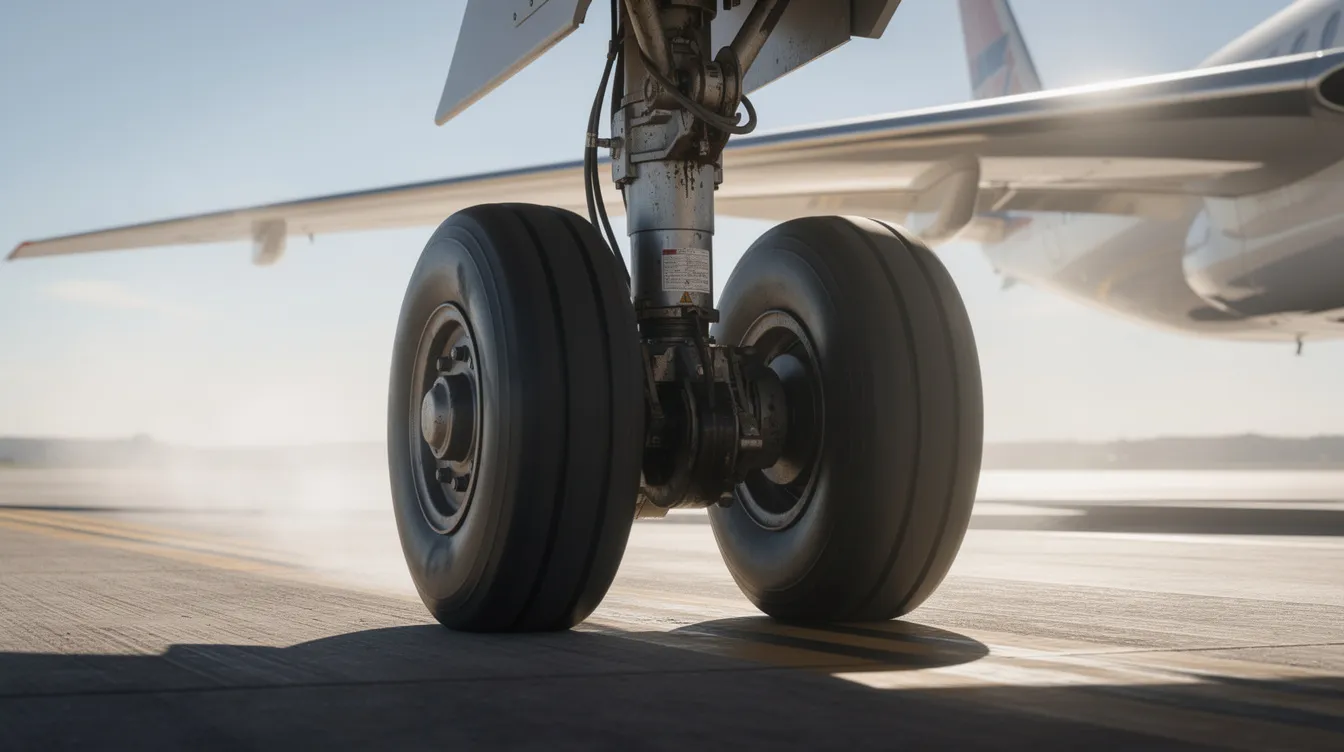
The main landing gear on the 777 is among the largest in commercial service.
Each bogie carries six wheels, spreading the aircraft's weight across multiple tires to keep pavement loading within airport limits.
Triple-redundant hydraulic systems and a blade-shaped tail cone housing a ram-air turbine provide emergency power under high loads.
Digital Design and Interior Optimization
Weight-saving design choices define the program:
The 777 was the first commercial aircraft to be entirely digitally designed.
It was Boeing's first fly-by-wire commercial aircraft, with fly-by-wire controls reducing mechanical complexity and weight.
Interior structures are optimized to lower OEW while meeting safety margins, enabling larger windows and a wider cabin.
Similar engineering philosophies apply to modern private jets, where carbon fiber wings, composite fuselages, and advanced avionics allow long range at lower weight—cutting fuel burn and supporting BlackJet's carbon-neutral commitments, even on the most expensive private jets configured as ultra-luxury flying residences.
Fuel, Weight, and Range: How the 777 Turns Mass into Miles
The Weight-Fuel-Range Tradeoff
The weight-fuel-range tradeoff is aviation's fundamental equation: more fuel increases weight and reduces initial efficiency, but enables long-range flights that would otherwise require stops. Fuel can constitute over 40% of the takeoff weight on long-haul flights of the Boeing 777—a staggering proportion that underscores how mass-intensive intercontinental travel really is.
Typical Fuel Capacity by Variant
777-200 / 777-200ER: roughly 171,000–171,175 liters (45,000+ US gal)
777-200LR / 777F: up to approximately 181,300 liters (47,890 US gal)
777-300ER: similar magnitude, spread across a larger airframe
Payload-Range Diagram and Tradeoffs
The "payload-range diagram" concept explains the tradeoff simply:
At maximum payload, range is limited because less weight margin remains for fuel.
At maximum range, airlines reduce payload to allow more fuel within MTOW.
A 777-200LR might reduce cargo loads on a 9,000+ nautical miles flight to remain within limits, while a medium-range route like London–Dubai could carry substantially more cargo at lower fuel weight.
For private aviation, ultra-long-range jets carry a high proportion of their MTOW as fuel with relatively light payload, giving BlackJet members the ability to fly nonstop on intercontinental routes with a small party and luggage, whether they access aircraft via on-demand charter or longer-term private jet leasing solutions. Efficient flight planning and modern fuel-efficient aircraft in partner fleets reduce both fuel burn and the amount of carbon offset required.
Weight, Safety Margins, and Certification of the Boeing 777
Certification Process and Structural Testing
Certified weights—MTOW, MLW, MZFW—are the outcome of exhaustive structural testing, analysis, and regulatory oversight from authorities including the FAA and EASA.
Key Certification Milestones
The first generation 777-200 flight test campaign in the early 1990s used nine test aircraft.
Simultaneous FAA and JAA (now EASA) certification was granted on April 19, 1995.
Extended ETOPS approval (up to 180 minutes and beyond) followed, based on engine reliability—crucial for a twin-engine aircraft operating far from diversion airports.
Weight features prominently in certification tests:
Structural static tests bend wings beyond expected loads.
Fatigue testing simulates life cycles at design weights.
Takeoff and landing performance is validated across weight ranges and atmospheric conditions.
Safety Record
As of May 2024, the Boeing 777 had 31 accidents, with the Boeing 777 having experienced five hull losses. There have been 542 fatalities involving the Boeing 777 across its operational history. While any loss is significant, this record across hundreds of millions of flight hours and decades of service underscores a robust design built around structural integrity and conservative weight margins.
BlackJet only partners with operators meeting rigorous third-party safety standards such as ARG/US, Wyvern, and IS-BAO, the same framework that underpins complex charter operations for 100 passengers on tailor-made group flights. Weight and balance calculations, maintenance tied to cycles and weight stresses, and pilot training across performance envelopes are central to both airline and private jet safety—an area where no compromises are involved.
Environmental Impact: Weight, Emissions, and Efficiency
Weight and Fuel Burn
More weight generally means more fuel burn, which translates directly into higher CO₂ emissions. This makes weight and aerodynamics central to every sustainable aviation discussion, whether the aircraft is manufactured for commercial fleets or private operations.
A 777-300ER on a long-haul leg burns approximately 6–7 tonnes of fuel per hour, depending on configuration and conditions.
Each kilogram of jet fuel produces about 3.16 kg of CO₂, so a single transcontinental flight can generate hundreds of tonnes of emissions.
Design Improvements for Efficiency
Design improvements reduce effective weight per seat and per tonne-kilometer:
Composite wings in the 777X lower structural weight.
Engine efficiency gains from the GE90 to the GE9X reduce fuel consumption by roughly 10%.
Aerodynamic refinements—including raked wingtips and optimized interior structures—cut drag.
Commercial vs Private Emissions
The commercial-vs-private comparison is nuanced:
A full 777-300ER achieves strong per-seat efficiency because of its sheer capacity, but total emissions per flight are enormous.
Private jets have lower total emissions per flight but carry fewer passengers, so per-passenger impact varies widely depending on load factors.
BlackJet commits to carbon-neutral flights for members by purchasing verified offsets for every hour flown, an approach that pairs well with unlimited private jet flight memberships where frequent travelers seek predictable costs and sustainability assurances. Careful aircraft selection prioritizing modern, fuel-efficient types, combined with optimized routing, reduces both fuel burn and the offset requirement. In an era where environmental performance increasingly influences travel decisions, this approach ensures that private aviation can be both a luxury and a responsible choice.

From Wide-Body Airliners to Private Jets: What the 777's Weight Teaches Private Flyers
The Boeing 777, as the world's largest twin-engine airliner, provides a benchmark for understanding scale in aviation. Standing next to one on the ground makes the contrast with a private jet immediately visceral.
Weight Comparison Table
Aircraft Type | MTOW (approx.) |
|---|
777-300ER | ~351.5 tonnes |
Large-cabin private jet | ~40–50 tonnes |
Super mid-size jet | ~15–20 tonnes |
These numbers translate directly into passenger experience:
A 777 carries 300–400+ passengers through a lengthy boarding process, rigid scheduling, and routing through congested hub airports.
A private jet carries 4–14 passengers with rapid boarding, access to smaller airports closer to the final destination, and negligible time lost at terminals.
Consider this scenario: a BlackJet Jet Card member traveling from New York to London chooses a long-range private jet or even buys a seat on a private jet, avoids JFK's commercial terminal queues, departs from a private terminal at Teterboro, and arrives at a more convenient UK airport. The total door-to-door journey time can be hours shorter than flying on a 777—even though the aircraft cruises at a similar speed in the air.
The 777's enormous weight enables global connectivity for the masses—a successful story in aviation history. But private aviation uses smaller, carefully selected aircraft to deliver strategic advantages that mass cannot: speed through the system, privacy, and control for a select clientele.
Conclusion: The Weight of the Boeing 777 and Your Travel Strategy
The weight of the Boeing 777—spanning OEW, MTOW, and payload across every model from the original -200 to the upcoming 777X—defines its role as a long-haul, high-capacity workhorse operated by the world's leading airlines. Variants like the 777-200ER, 777-200LR, 777-300ER, and the future 777-8 and 777-9 dominate global trunk routes precisely because their weight specifications enable unmatched combinations of range, capacity, and cargo revenue.
Understanding weight isn't technical trivia. It reveals how airlines balance fuel, payload, and performance on every flight—and why lighter, more agile private aircraft offer superior door-to-door efficiency for high-value travelers who need more than a seat assignment.
BlackJet's Jet Card programs and on-demand charter give members access to aircraft optimized for different mission profiles—from light jets for regional hops to ultra-long-range jets for intercontinental trips—without the cost and complexity of owning such assets.
Explore how BlackJet can complement your long-haul travel strategy with flexible, carbon-neutral private jet access that turns travel time into a strategic advantage.


 Sign up with google
 Sign up with Apple