For anyone who has glanced at wholesale fuel prices and noticed that jet fuel often undercuts premium gasoline at the pump, the short answer is this: jet fuel is usually cheaper than gasoline because it is taxed less, refined to a less complex specification than high-octane gas, and produced and moved in larger volumes that lower per-gallon costs. For frequent business flyers and high-net-worth leisure travelers who use or are considering private jet services, that difference is not academic—fuel is a major share of private aviation operating costs and influences trip pricing, route planning, and overall value. This article looks at the tax and regulatory gap between fuels, how refining, production volume, and transport logistics shape pricing, how jet fuel compares with gasoline in the market, and how BlackJet works to manage aviation fuel expense.
Fast Answer: Why Jet Fuel Often Costs Less Than Gasoline
The primary difference comes down to three forces working in tandem. First, governments tax automotive fuel and gasoline far more heavily than aviation turbine fuel; road-use excise taxes, state levies, and local surcharges can add $0.50 to $0.80 per gallon to the price of gasoline in many U.S. states, while commercial jet fuel is often exempt from highway taxes. Second, Jet A is produced and moved in enormous, stable volumes for the world's airlines, creating economies of scale that few other refined petroleum products can match. Third, kerosene-based fuel like Jet A requires less extreme octane-boosting refining than high-octane gasoline or aviation gasoline - meaning fewer processing steps and lower per-gallon manufacturing costs.
But "jet fuel cheaper" per gallon does not mean "cheap to fly." A midsize jet aircraft can burn 250 gallons per hour in cruise, so fuel costs still dominate operating budgets for airlines and private operators alike. The savings per gallon simply shrink the bill relative to what it would be if turbine engines ran on heavily taxed, elaborately refined automotive fuel.
At BlackJet, we track aviation fuel prices closely because they directly shape our hourly rates, route planning, and the value we deliver through our Jet Card programs. Understanding why jet fuel costs what it does helps our members appreciate the economics behind every seamless departure.
Private Jet Context: Why Fuel Prices Matter To High-End Travelers
Fuel is not a background detail for private flyers — it is the single largest variable in what a trip actually costs. For many private jet missions, fuel typically accounts for 35–60% of direct operating expenses, especially on longer flights and in larger cabin classes. Compare that with commercial airlines, where aviation fuel represents 20–40% of airline operating costs but is spread across hundreds of passengers aboard commercial aircraft on each flight.
Consider a concrete scenario. A midsize jet flying a New York–Miami round trip burns roughly 250 gallons per hour. At a representative Jet A fuel price of around $7.50 per gallon, a five-hour round trip (including taxi and positioning) runs approximately $9,375 in fuel alone. Shift that jet fuel price up by just one dollar per gallon and the same mission costs an additional $1,250 — money that appears on no passenger's gas station receipt but lands squarely on the operator's ledger. U.S. airlines spent $5.06 billion on aviation fuel in March 2026 alone, illustrating how quickly these numbers compound at scale. And global jet fuel prices can fluctuate by 10% weekly, adding another layer of unpredictability.
BlackJet addresses this volatility with fixed, fuel-inclusive Jet Card rates through its flagship 25+ Hour Jet Card program, so members see predictable pricing even when aviation fuel costs shift week to week.
From Crude Oil To Finished Products: Where Jet Fuel And Gasoline Come From
Both jet fuel and gasoline begin life as crude oil — a complex mixture of hydrocarbons pumped from reservoirs worldwide. Inside a refinery, that crude is heated and separated into fractions by boiling point: light fractions become automotive gasoline and petrochemical feedstocks, while middle distillates become diesel fuel and kerosene-type aviation turbine fuel such as Jet A and Jet A-1.
Refiners plan their "product slate" based on demand. In major aviation hubs across the United States, Europe, and the Middle East, kerosene-based jet fuel is a core output. Automotive fuel demand, meanwhile, dominates road markets and drives far higher gasoline volumes. According to the U.S. Energy Information Administration, each 42-gallon barrel of crude yields roughly 19–20 gallons of finished motor gasoline, 12–13 gallons of distillate (diesel and heating oil), and about 4.4–4.6 gallons of jet fuel.
Refineries can lean their output slightly using cracking and reforming units, but they cannot arbitrarily shift all production toward one product. When aviation demand increases — as it has post-pandemic — refiners adjust, but infrastructure and crude slate quality set hard limits. Jet A fuel production reached 576 million barrels in 2016, while 100LL AvGas production was only 4 million barrels in the same year, underscoring the vast scale difference between these two aviation fuel types.
Jet A vs Automotive Gasoline vs Aviation Gasoline (AvGas)
Three distinct fuel types dominate the conversation around aviation and road transport. They share a crude oil origin but diverge sharply in chemistry, application, and cost.
Jet A and Jet A-1:
Highly refined kerosene used in turbine engines powering business jets, airliners, and many turboprops
Jet A has a freezing point of -40°C and is primarily used in the United States; Jet A-1 has a lower freezing point of -47°C and is the most used jet fuel globally
Jet A-1 includes an antistatic additive, unlike Jet A
Measured by properties like freezing point, flash point, thermal stability, and energy content - the concept of jet fuel octane rating does not apply the same way it does to gasoline
Strict limits on water contamination, sulfur content, and particulate levels
Automotive gasoline:
A highly volatile road fuel designed for spark ignition car engines
Graded by octane rating (e.g., 87 regular, 91–93 premium), optimized for quick vaporization and clean combustion
Subject to significant federal excise taxes, state taxes, environmental regulations, and seasonal blends
Gasoline prices are affected by local competition and seasonal demand
Aviation gasoline (av gas, typically 100LL):
A higher octane fuel for spark ignition piston engines in piston aircraft such as training and legacy general-aviation planes
Contains tetraethyl lead (TEL) to reach approximately 100 octane, making it a complex, niche, and expensive product
Represents a tiny share of total aviation fuel volumes but is often the most costly per gallon of the three fuel types
For a deeper look at the chemistry behind jet fuels and the different types of jet fuel used in aviation, including carbon atoms, energy density, and how jet fuel specifications differ across standards, our dedicated guide covers the full picture.
Core Reason #1: Taxation And Regulatory Treatment
The tax gap between gasoline and jet fuel is perhaps the single most visible reason jet fuel is cheaper at the wholesale level.
Automotive gasoline taxes (U.S.): The federal excise tax on gasoline is $0.184 per gallon. States add an average of roughly $0.33 per gallon, and some jurisdictions pile on local and sales taxes. Total tax burden at the pump can easily exceed $0.50–$0.80 per gallon. Gasoline must also meet varying regional and seasonal specifications that carry their own compliance costs.
Aviation fuel taxes (U.S.): Federal excise taxes add $0.244 per gallon for aviation fuel in noncommercial use, while commercial operators pay as little as $0.044 per gallon under qualifying conditions. Jet fuel costs less due to lower taxes than gasoline — a structural advantage baked into policy.
International framework: Under the Chicago Convention and bilateral agreements, aviation fuel for international flights is largely exempt from double taxation. Domestic flights may still face state-level jet fuel taxes and airport-specific fees, but these are modest compared with road-use levies on gasoline.
Aviation fuel prices at FBOs also include in-plane fees and markups, but these function more like service charges than the structural road taxes that inflate gasoline's retail prices.
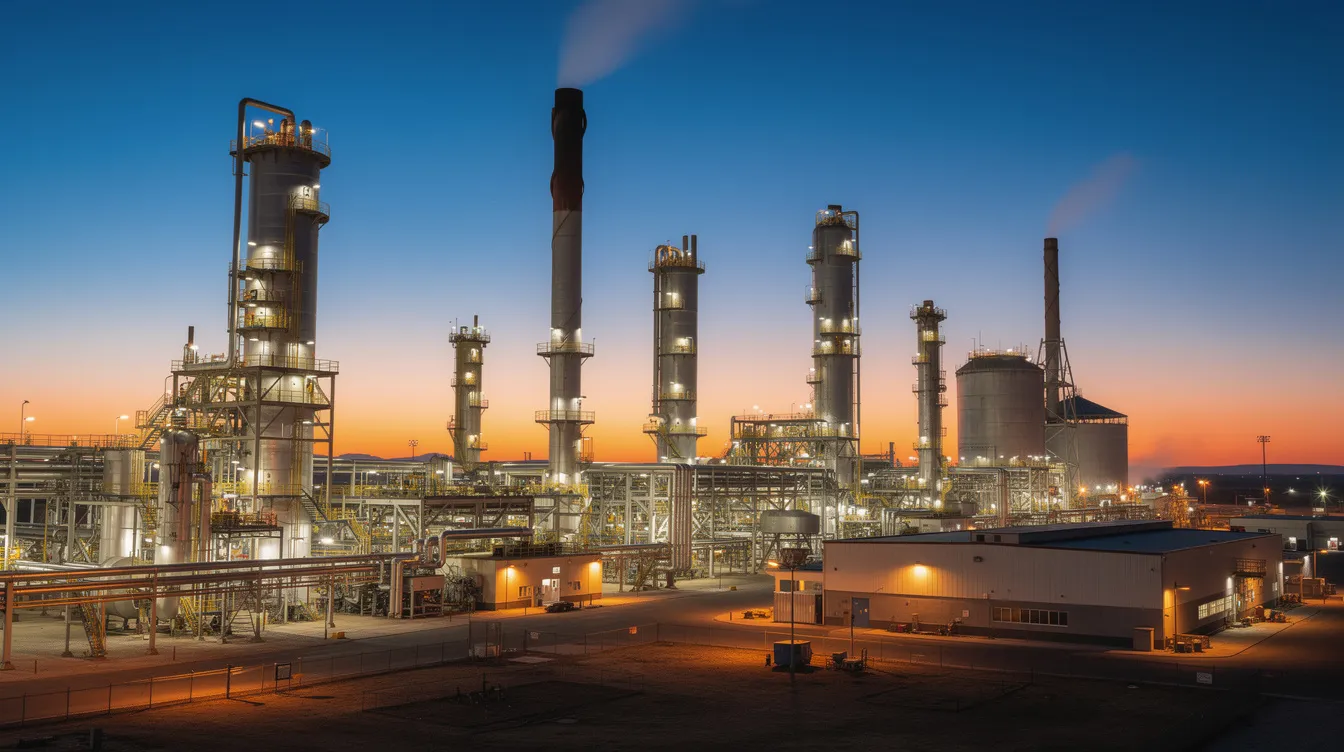
Core Reason #2: Economies Of Scale And Aviation Fuel Volumes
Scale is a quiet but powerful driver of lower fuel prices for jet aircraft operators.
Commercial airlines purchase jet fuel in large bulk quantities — billions of gallons annually across the industry. That volume lets refineries run kerosene hydrotreaters and distillation columns at peak efficiency and commit to long-term Jet A supply contracts, spreading fixed costs over enormous throughput. Bulk purchasing by airlines reduces per-gallon costs of jet fuel in ways that smaller fuel markets simply cannot replicate.
By contrast, av gas volumes are a fraction of Jet A production. In 2016, Jet A fuel production was 576 million barrels versus just 4 million barrels for 100LL AvGas — a ratio of more than 140 to 1. That disparity means fewer suppliers, less manufacturing competition, and higher per-unit costs for piston engine aircraft operators.
Jet fuel pricing is influenced by aviation demand and purchasing contracts that create predictable, long-horizon consumption patterns. When airlines and cargo carriers consume the lion's share of Jet A, the business aviation segment rides on those same economies of scale. BlackJet's Jet Card members effectively benefit from mass-market Jet A production, even while flying in a premium, private cabin.
Core Reason #3: Refining Complexity And Additives
Different fuel types demand different levels of processing, and those differences show up in cost per gallon.
Jet A:
Typically derived from straight-run kerosene plus middle distillate streams
Jet A fuel costs less due to simpler refining processes: hydrotreating to remove sulfur and ensure thermal stability, without the high-octane boosting that automotive premium gasoline or AvGas needs
Jet fuel requires fewer refining steps than automotive gasoline
Additives focus on safety: static dissipaters, corrosion inhibitors, and anti-icing agents
Automotive gasoline:
Gasoline requires extensive blending and processing to meet performance specifications, including precise volatility curves for cold starts and vapor lock prevention
Blended with reformate, alkylate, and oxygenates like ethanol to hit octane and emissions standards
Requires multiple seasonal blends (summer versus winter) and vapor pressure adjustments, adding operational complexity
AvGas (100LL):
Demands very high octane ratings to prevent pre-ignition and detonation in high-compression piston engines
Relies on tetraethyl lead and specialized blendstocks that are expensive and globally limited - TEL is produced by only a handful of manufacturers
Relative to AvGas and heavily refined high-octane gasoline, conventional jet fuel is simpler and cheaper to manufacture on a per-gallon basis.
Core Reason #4: Transport, Storage, And Distribution Logistics
How fuel moves from refinery to point of use has a surprisingly large impact on what you pay.
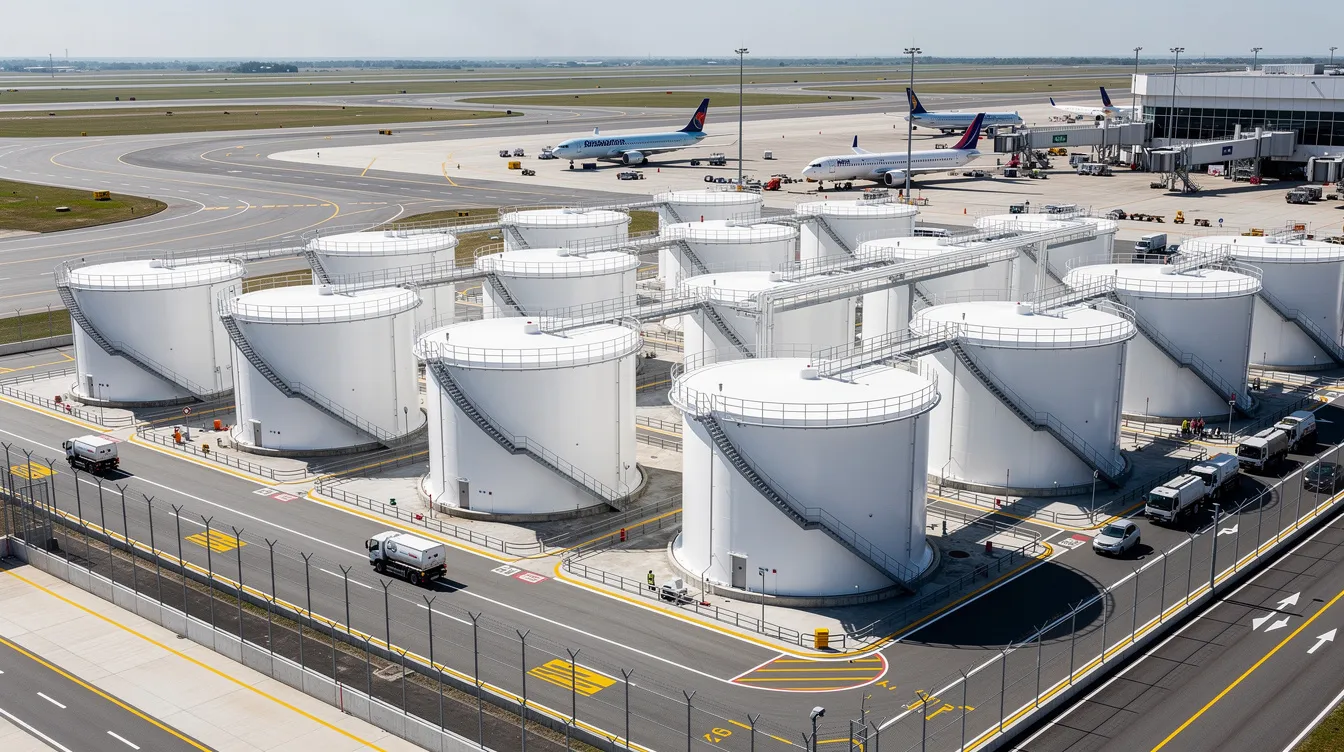
Jet A logistics: Jet A fuel is transported via pipelines, reducing costs significantly. Multi-product pipelines with strict interface management move kerosene-based fuel from refineries to major airports at low per-gallon expense. High, steady demand at airline hubs justifies dedicated airport facilities with large storage tanks, further improving economies of scale.
AvGas challenges: Lead content in aviation gasoline complicates pipeline shipping because contamination of other fuels would violate environmental rules. As a result, AvGas often moves by tank truck, rail, or barge at significantly higher unit costs.
Automotive gasoline network: Gasoline moves via pipeline to distribution terminals, then by truck to thousands of fuel stations, each requiring frequent replenishment and local storage. The retail distribution network is vast and fragmented, adding operating costs and retail markups even before taxes.
For a given unit of energy delivered, Jet A's ability to move in bulk through a relatively concentrated airport network allows lower logistics costs versus the highly dispersed car fueling infrastructure.
Price Benchmarks: Aviation Fuel Prices vs Fuel At The Pump
Aviation fuel prices are tracked differently from gasoline. Jet fuel spot prices appear on indices like Platts or Argus, often quoted per barrel on global energy markets. Retail aviation fuel prices at FBOs are quoted per gallon for Jet A and AvGas.
For context:
Fuel Type | Illustrative U.S. Price Range | Key Price Drivers |
|---|
Automotive gasoline (retail) | ~$2.00–$5.00/gal over two decades | Crude oil, state taxes, seasonal blends |
Jet A (FBO retail) | ~$4.81–$7.61/gal depending on era | Crude oil, demand cycles, FBO markups |
AvGas (100LL, FBO retail) | 30–80% above Jet A at same airport | Niche volume, leaded composition |
Jet fuel prices averaged $4.81 per gallon in April 2021, a period of suppressed travel demand. By July 2026, average Jet A at U.S. FBOs had climbed to approximately $7.61 per gallon, with regional variation from $6.80 to $8.43. Jet A fuel averaged $4.81 per gallon in April 2021 — roughly in line with retail gasoline at the time, but without the heavy tax load gasoline carries.
Market conditions can temporarily reverse the price comparison between jet fuel and gasoline, particularly when crude oil spikes or refinery disruptions tighten jet fuel supply. BlackJet and other private aviation providers negotiate contracted Jet A prices with operators and FBOs, smoothing out volatility for Jet Card members.
Why Jet Fuel Is Cheaper Than AvGas, But Not Necessarily "Cheap"
Many pilots and aircraft owners compare Jet A and AvGas directly since both are sold side by side at general-aviation airports. The pattern is consistent:
Jet A is generally cheaper per gallon than 100LL AvGas because of higher production volumes, simpler refining, and pipeline-friendly distribution
100LL AvGas is burdened by low volume, leaded composition, and specialized handling — often $1–$2 per gallon higher than Jet A at the same field
Consumer gasoline outside the airport can be lower or higher than Jet A depending on local tax dynamics and other fuels competing for shelf space
But "cheaper than AvGas" is relative. A business jet can easily burn hundreds to thousands of gallons per flight leg, making fuel a significant expenses line item even at favorable per-gallon rates. For turbine aircraft in BlackJet's Jet Card and charter network, the predominance of Jet A keeps per-hour aviation fuel costs more manageable than if these aircraft required specialty fuels like AvGas — a structural advantage that keeps private jet pricing within reach.
Jet Fuel, Diesel, And Diesel Engines: Why They're Similar But Not Interchangeable
Jet A is a kerosene-type middle distillate with similar carbon chain lengths to diesel fuel. Both have relatively low volatility compared to gasoline and share more in common chemically than either does with high-octane gasoline. But similarities end at the spec sheet.
Diesel for road vehicles is formulated for compression-ignition diesel engines and optimized for lubricity, cetane rating, and compatibility with ultra-low-sulfur diesel emission control systems in diesel vehicles
Jet fuel is optimized for turbine engines: continuous combustion, cold flow properties at high altitude, long-term stability in storage tanks, and strict water contamination limits
Some older diesel engines may tolerate limited jet fuel use in emergencies, but this is not recommended due to a lower flash point profile and different additive packages
Cost comparisons between diesel and jet fuel can mislead because each market has distinct taxes, handling, and safety requirements. For a thorough comparison, our guide on jet fuel vs diesel breaks down the chemistry and practical distinctions.
Fuel And Gasoline In Private Aviation: What BlackJet Members Actually Pay For
BlackJet's Jet Card and charter pricing bundles fuel, crew, maintenance, and other operating costs into a single hourly rate. Members are insulated from daily aviation fuel price swings, but understanding jet card cost per hour and underlying jet fuel costs still shape program pricing at each rate update.
Here is how BlackJet manages this behind the scenes:
We monitor aviation fuel prices across major regions and FBO networks, using that data when updating Jet Card hourly rates and our broader jet card pricing structure
Routes are evaluated for fuel efficiency and economic viability without sacrificing service quality
Members choose aircraft categories and missions — light jet versus midsize versus large cabin — each with different fuel burn and therefore different sensitivity to jet fuel price shifts
A practical example: a 25-hour Jet Card member who understands overall jet card cost and membership pricing and flies primarily short regional missions in a light jet sees a different fuel cost profile than an executive frequently crossing the Atlantic in a large-cabin jet like the Gulfstream G700. Understanding the relationship between types of private jets, burn rates, and mission length is central to how BlackJet keeps pricing transparent and competitive within its broader premium private jet card programs.
Sustainable Aviation Fuel (SAF): A More Expensive Jet Fuel Alternative
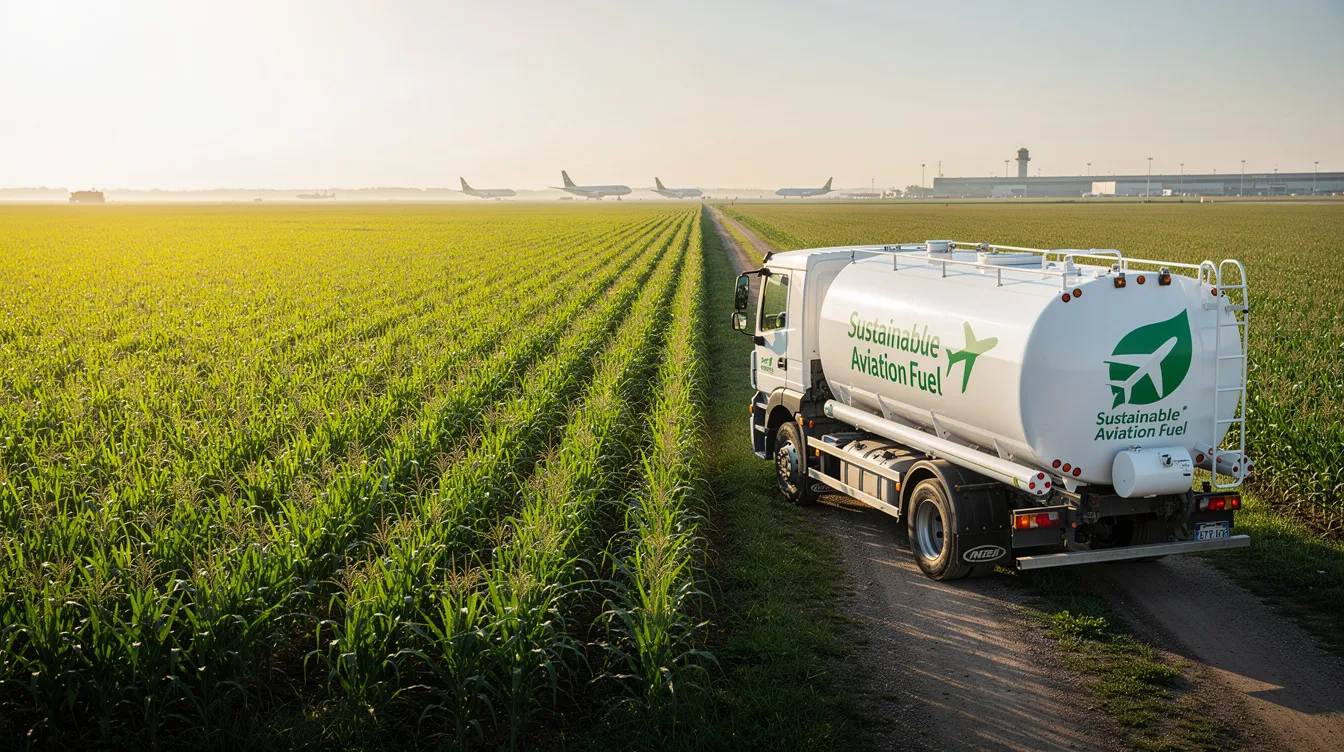
Sustainable aviation fuel is a drop-in alternative derived from waste oils, biomass, or synthetic processes, and its adoption interacts with regional pricing dynamics such as private jet costs in markets like India. The U.S. Air Force has also tested and certified alternative jet-fuel blends to reduce reliance on petroleum. It can be blended with conventional jet fuel — often up to 50% — without aircraft engine modification, following ASTM D-7566 standards.
SAF's environmental case is compelling:
Lifecycle carbon emissions reductions of up to 60–80% compared to conventional jet fuel, depending on the feedstock used
Compatible with existing turbine fuels infrastructure and aviation engines
The cost case is less favorable — for now. SAF currently costs roughly two to four times as much as standard Jet A at the neat fuel level, driven by limited production scale and complex processing, which is especially relevant for travelers seeking the cheapest private aircraft and budget-friendly options. Environmental regulations increase aviation fuel prices further when SAF mandates or blending requirements enter the picture. This higher cost is one reason SAF blends can push per-hour flight costs upward despite the underlying commodity still being classified as jet fuel, an important nuance for anyone evaluating the cheapest private jet options.
BlackJet focuses on carbon-neutral travel by pairing efficient aircraft selection with high-quality carbon offsets. Where SAF is available, clients may choose to prioritize it — aligning with corporate ESG goals or personal environmental priorities, while also weighing the benefits of the best jet cards for frequent flyers that integrate sustainability commitments. For more on our approach to sustainable aviation, including how carbon offsets work, our dedicated guide has the details.
Engine Compatibility And Safety: Why You Can't Just Use The Cheapest Fuel
Despite price differences across fuel types, the choice is dictated by engine design and certification — never by cost alone.
Spark ignition piston engines (car engines, many piston aircraft) require gasoline or AvGas with specific octane ratings to prevent pre-ignition and detonation
Compression-ignition diesel engines in some vehicles and rare diesel-powered aircraft need high-cetane fuel with proper lubricity
Turbine engines in jet aircraft and turboprops are designed around Jet A or Jet A-1 aviation fuel, and each jet engine relies on fuel that supports continuous combustion at high altitude and cold temperatures
Using jet fuel in gasoline engines can cause misfiring, detonation, or rapid engine damage. Using automotive fuel in a turbine aircraft is unsafe and prohibited — aircraft certification is tied to specific aviation fuel types. 100LL aviation gasoline is also unsuitable because it is not designed to burn the way turbine systems require. Jet fuel has its own stringent specifications, especially for cold temperature performance: Jet A has a freezing point of -40°C, while Jet A-1 has a lower freezing point of -47°C to handle international routes where aircraft encounter extreme cold temperatures at altitude.
Aviation fuel standards from ASTM and DEF STAN impose far stricter limits on water contamination, thermal stability, and engine performance under extreme conditions than those governing standard automotive fuel. Some military products also include specialized fuels such as rocket fuel, but those are separate from the civilian jet fuels discussed here. Safety, certification, and engine design always override any incentive to seek the cheapest fuel — a principle BlackJet follows rigorously through its operator network and safety protocols, including when arranging complex missions such as charter planes for around 100 passengers.
Frequently Asked Questions About Jet Fuel and Gasoline Pricing
Q1: Why is jet fuel taxed less than gasoline?
Jet fuel benefits from lower taxes because it is primarily used for aviation, which is often exempt from highway and road-use taxes that fund infrastructure. International agreements like the Chicago Convention further limit double taxation on aviation fuel for international flights.
Q2: What makes jet fuel cheaper to produce than gasoline?
Jet fuel requires fewer refining steps than gasoline. It is mainly straight-run kerosene treated for sulfur removal and stability, whereas gasoline undergoes complex blending and octane boosting to meet performance and environmental standards.
Q3: How does volume affect jet fuel pricing?
Jet fuel is produced and consumed in massive volumes by commercial airlines, allowing economies of scale that reduce per-gallon costs. In contrast, aviation gasoline (100LL) is a niche product with much smaller production volumes, leading to higher prices.
Q4: Are Jet A and Jet A-1 the same fuel?
They are similar kerosene-based fuels but differ mainly in freezing point and additives. Jet A-1 has a lower freezing point (-47°C) and includes an antistatic additive, making it suitable for international flights. Jet A (-40°C freezing point) is mostly used in the U.S.
Q5: Can you use jet fuel in a car or gasoline engine?
No. Jet fuel is designed for turbine engines and lacks the volatility and combustion characteristics required for spark ignition engines. Using jet fuel in a gasoline engine can cause damage and unsafe conditions.
Q6: How does jet fuel price impact private jet travel costs?
Fuel accounts for 35–60% of direct operating costs in private aviation. Changes in jet fuel price directly affect hourly charter rates and trip pricing, making fuel management critical for operators and travelers.
Q7: What is Sustainable Aviation Fuel (SAF), and how does its cost compare?
SAF is a bio-based alternative to conventional jet fuel that reduces carbon emissions. However, it currently costs 2 to 4 times more than standard Jet A fuel due to limited production and processing complexity.
Q8: How does BlackJet protect members from fuel price volatility?
BlackJet offers fixed, fuel-inclusive Jet Card rates that absorb fuel price fluctuations, providing members with predictable pricing even when market jet fuel costs change rapidly.
Q9: Why is AvGas more expensive than Jet A fuel?
AvGas requires complex refining, contains lead additives, and is produced in much smaller volumes. Its specialized nature and handling requirements drive higher per-gallon costs compared to Jet A.
Q10: What safety measures ensure the right fuel is used in aircraft?
Strict certification standards, fuel handling protocols, and operator safety audits ensure aircraft receive the correct fuel type. Engine design and certification mandate specific fuels for safe and efficient operation.
How BlackJet Manages Aviation Fuel Costs While Maintaining Luxury And Safety
Understanding why jet fuel is cheaper than gasoline is interesting. What matters more is how that knowledge translates into a better travel experience.
BlackJet and its partner operators manage aviation fuel costs through several integrated strategies:
Smart routing and positioning: Aircraft movements are planned to minimize unnecessary fuel burn, including reducing empty legs and optimizing departure points. Natural gas and other fuels are irrelevant to jet operations — the focus stays on procuring the best Jet A at the best price
Right-sizing aircraft: Matching aircraft category to mission length and passenger count avoids oversizing, which wastes fuel. A light jet for a two-hour hop; a large-cabin private jet for 20 passengers for a group trip; a large cabin for a transatlantic crossing. Each choice directly affects fuel efficiency
Preferred FBO networks: Negotiated rates with vetted FBOs keep Jet A purchase costs competitive without compromising service standards or fuel quality, which feeds directly into our published private jet price lists and options
Rigorous safety integration: Every fueling event follows strict quality checks — correct fuel type verification, chain-of-custody protocols, and contamination prevention. BlackJet works only with operators holding recognized safety certifications such as ARG/US and Wyvern, which include fuel-handling oversight as part of their audit scope
Carbon-neutral commitment: Every BlackJet flight is carbon neutral through verified offsets, regardless of Jet A price. Members never have to trade conscience for convenience, even when operating larger aircraft such as 12-seater private jets
The aviation industry is heavily dependent on crude oil prices, geopolitical stability, and refinery output decisions that no single operator controls. What BlackJet does control is how we absorb, plan around, and communicate those realities — so our members experience only the result: effortless, safe, and sustainable private travel at predictable rates.
Explore BlackJet's Jet Card programs to lock in premium, fuel-inclusive private jet access while we manage the complexity of aviation fuel prices behind the scenes. Whether you are analyzing overall jet card cost, comparing a 50-hour jet card program, exploring alternatives like Flexjet jet card pricing, learning how to buy a seat on a private jet, or benchmarking NetJets jet card costs, BlackJet can reshape your travel.


 Sign up with google
 Sign up with Apple