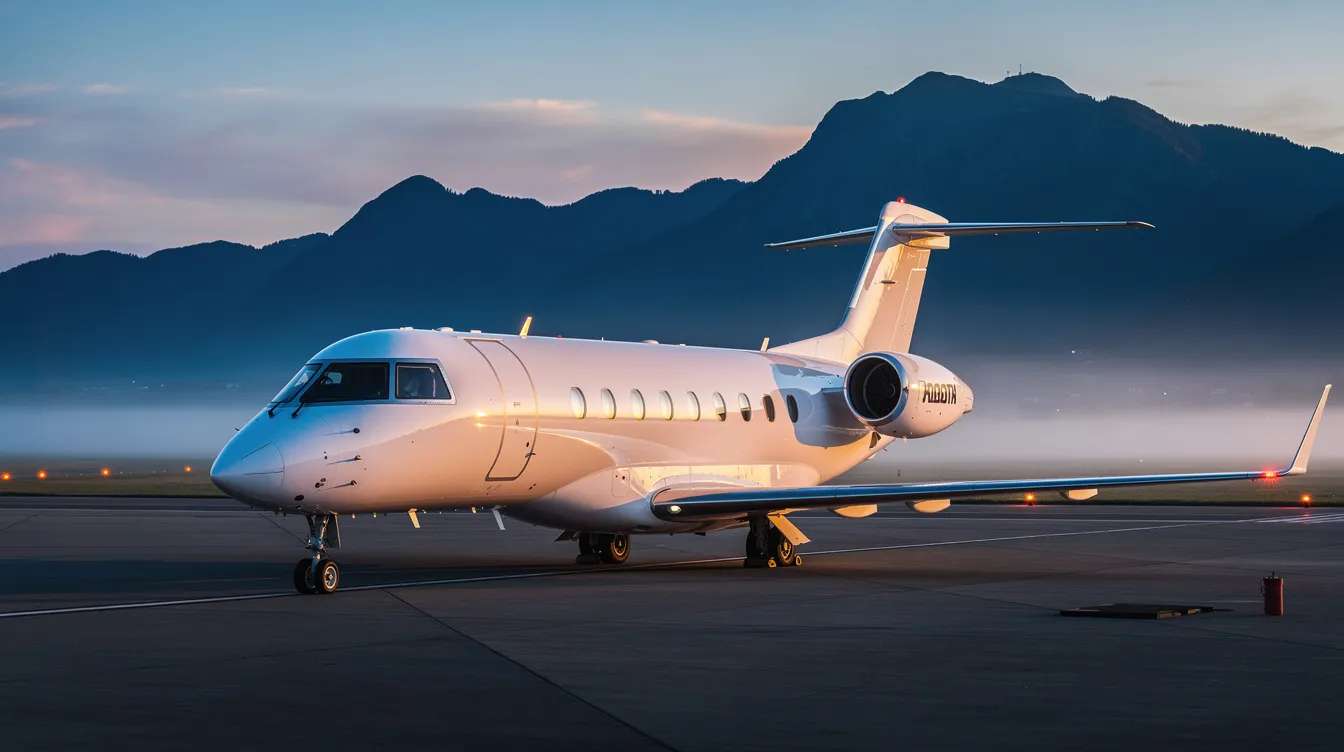
For discerning travelers and corporate executives, private jet access is not merely a symbol of prestige—it’s a strategic asset that transforms how business and leisure travel unfold. An 8-seater plane strikes the ideal balance between exclusivity and operational efficiency, accommodating small groups with ample comfort while enabling direct routes that save hours compared to commercial flights.
In today’s fast-paced world, time saved on airport formalities, connections, and delays translates directly into productivity and quality of life. With the ability to customize departure times, select preferred airports, and enjoy privacy and discretion, owning or accessing an 8-seater aircraft elevates travel from a routine necessity to a competitive advantage.
This article explores the landscape of 8-seater planes for sale, contrasting ownership with innovative access models like BlackJet’s Jet Cards. We delve into aircraft categories, costs, safety certifications, and sustainability considerations, helping you make an informed choice that aligns with your travel demands and values.
Key Takeaways
The most popular 8-seater plane types include turboprops like the Beechcraft King Air 250/350, light jets such as the Embraer Phenom 300E, and midsize jets like the Cessna Citation Latitude—each suited to different mission profiles and budgets.
New 8-seater aircraft prices typically range from $3 million to $12 million, with annual operating expenses often between $1.25 million and $1.5 million, making purchase practical only for those flying more than 200-400 hours annually.
Many buyers searching for an 8-seater plane for sale discover that structured access through BlackJet Jet Cards delivers superior value—offering carbon-neutral, safety-vetted private jets across multiple cabin classes without capital outlay or resale risk.
BlackJet sources appropriate light or midsize jets matched to passenger count, baggage needs, and runway performance, providing the flexibility to scale aircraft type as travel patterns evolve.
The inventory of aircraft for sale is constantly updated, providing buyers with access to the latest opportunities in the market.
This article includes a buyer’s checklist, detailed cost comparisons, and an FAQ section to support informed decision-making.
Why 8 Seater Aircraft Are a Strategic Asset (Not Just a Luxury)
Flying on a private jet transforms travel from a logistical burden into a strategic advantage. Compare the executive who spends four hours navigating security queues, connections, and baggage claim at Heathrow to fly from London to Nice, versus the one who departs from a private terminal, lands 90 minutes later, and walks directly to a waiting car. That’s not luxury—it’s time reclaimed for business trips that matter.
Consider a New York-based executive team flying to Miami for a Friday client presentation. Commercial options require a Thursday evening departure and a Sunday return. An 8-seater aircraft enables a same-day round-trip: depart at 6 AM, arrive at 10 AM, and return by 4 PM. The weekend stays intact.
This configuration—8 passengers—aligns perfectly with executive teams, family groups, and investor roadshows. It’s small enough for operational efficiency, large enough to accommodate a full working group with luggage. The strategic dilemma emerges here: commit capital to an 8-seater plane for sale, or access equivalent capability on-demand through solutions like BlackJet Jet Card membership?
This article examines piston aircraft, turboprops, light jets, and midsize jets that seat 8, alongside cost and safety considerations that determine whether ownership or access makes sense for your profile, complementing our broader guide to the best small private aircraft for every need.
Most Popular 8 Seater Plane Types in 2026
The term “8 seater plane” spans three distinct categories, each with different performance envelopes and economics. Understanding these categories is essential before evaluating specific models or exploring the most affordable private jet options as an entry point into private aviation.
Piston Aircraft
High-performance piston aircraft like the Beechcraft Baron G58 or Piper PA-46 family technically offer 6-8 seat configurations, though the aft cabin becomes cramped with full passenger loads. These represent the entry point for multi-engine personal aviation, with acquisition costs in the $1-3 million range for pre-owned examples. However, pressurization limitations and cruise speeds around 150-180 knots make them unsuitable for serious 8-passenger business use.
Turboprops
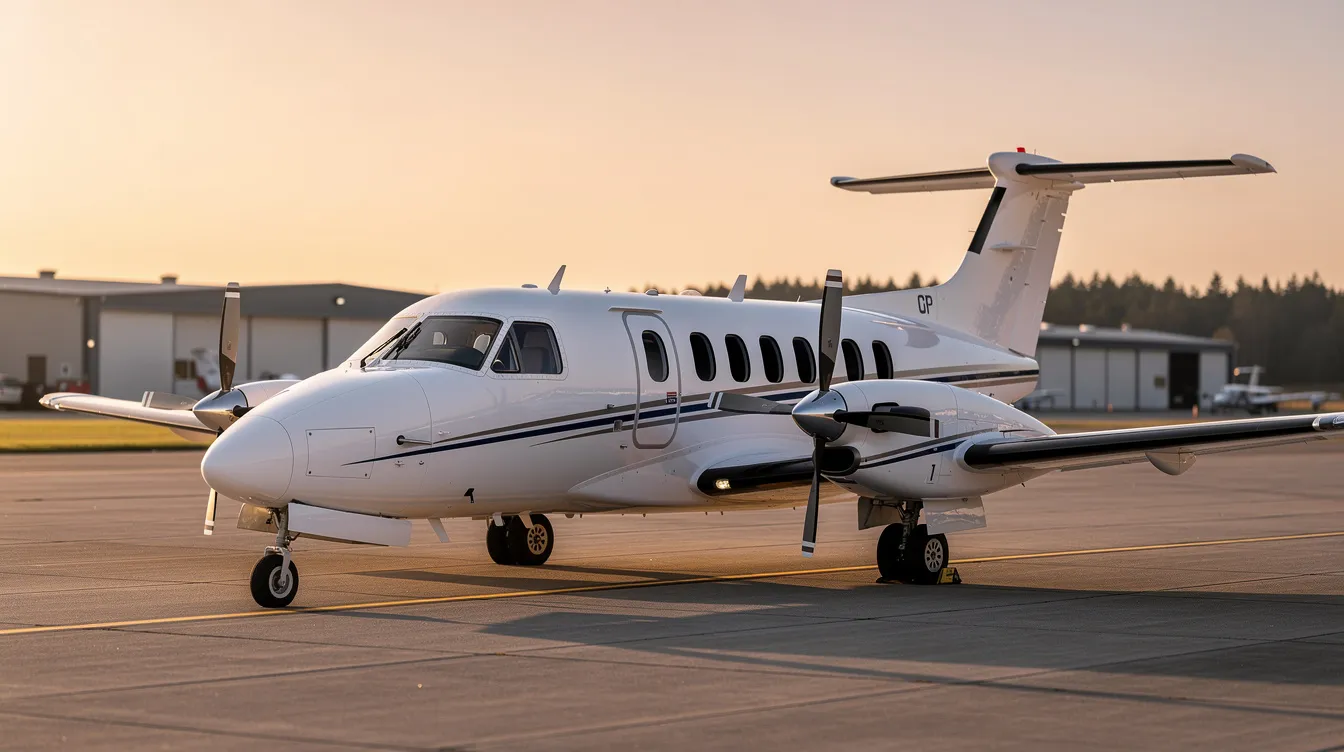
Turboprops stand out as a highly practical 8 seater plane type, especially for regional travel. Models like the Beechcraft King Air 250 and King Air 350 deliver 8-9 seats, combining efficient fuel consumption, excellent runway performance, and the ability to access smaller airports commercial jets cannot. The Pilatus PC-12 NGX, another notable turboprop, offers single-engine efficiency with exceptional short-field capability, though it provides a tighter cabin for 8 adults on longer flights.
Light Jets
Light jets are a premier 8 seater plane category for travelers prioritizing speed and cabin comfort. Aircraft such as the Embraer Phenom 300E and Cessna Citation CJ4 Gen2 provide 7-8 seats, cruise speeds exceeding 450 knots, and greater range than turboprops. These jets are ideal for business executives seeking rapid, efficient travel on routes up to approximately 2,200 nautical miles.
Midsize Jets
Midsize jets represent the upper echelon of 8 seater planes, designed for maximum comfort, range, and performance. Accommodating up to 10 passengers, these jets cruise faster than light jets and cover distances of 3,000 to 4,000 km non-stop. Models like the Cessna Citation Latitude combine spacious cabins with transcontinental range, perfect for executives requiring seamless travel across Europe or North America with enhanced route flexibility.
Highlighting these 8 seater plane types clarifies the options available to discerning travelers—each category tailored to specific mission profiles, budgets, and travel priorities.
Notable 8 Seater Aircraft Models to Consider
When evaluating an 8-seater plane for sale, several models appear regularly in listings. Each presents distinct advantages depending on your typical mission profile.
Beechcraft King Air 250 and King Air 350
These turboprop workhorses remain benchmarks for 8-passenger regional flight. The King Air 350 delivers approximately 260 knots cruise speed with a range of around 1,900-2,100 nautical miles. Pre-owned examples from 2010-2024 trade between $3.5-8 million, depending on condition and avionics upgrades. The combination of pressurized cabin, proven reliability, and access to shorter runways makes this the default choice for operators prioritizing versatility over speed.
Pilatus PC-12 NGX
This single-engine turboprop alternative offers exceptional cargo space and short-field performance—operating from strips under 1,800 feet. However, it cruises slower than jets at approximately 190 knots, and achieving 8 seats requires sacrificing baggage capacity. The PC-12 appeals to a niche valuing extreme runway flexibility over cabin volume.
Cessna Citation XLS+ and Citation Latitude
These midsize jets represent the perfect blend of range and cabin comfort for 7-8 passenger corporate trips. The Citation Latitude offers one of the most spacious midsize cabins available, with 6-foot-3 cabin height and a range exceeding 2,700 nautical miles. For buyers whose missions regularly extend to intercontinental routes, evaluating the best long-range private jets for sale provides additional context beyond this midsize segment. Expect acquisition costs of $12-20 million for newer examples.
Embraer Phenom 300E
This light jet consistently ranks among the best-selling business aircraft globally. It delivers up to 7-8 seats with a belted lavatory, cruise speed of around 450 knots, and a range of 2,100-2,200 nautical miles. Strong 2020s resale values reflect robust charter and fractional ownership demand. Pre-owned examples from 2015-2020 typically trade between $8-12 million, positioning them alongside many top private jets for sale under 10 million that appeal to value-focused buyers.
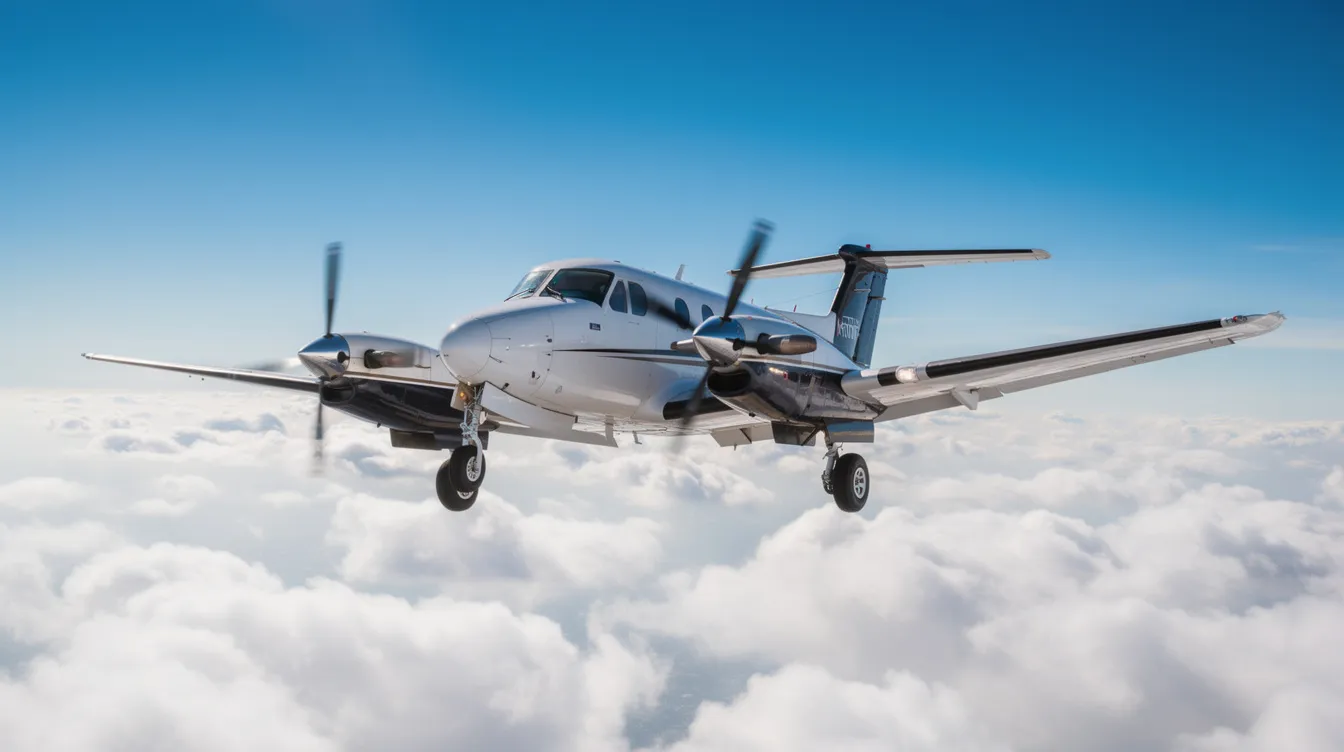
Buyers comparing King Air turboprops versus light jets versus midsize jets should evaluate their most frequent mission: distance, number of passengers, airport types, and weather profiles, including known icing conditions. The model you choose should match where you’ll fly most regularly.
True Cost of Owning an 8 Seater Plane vs. Jet Card Access
The acquisition price on an 8-seater plane for sale represents only the starting point. Ongoing operating costs, crew salaries, maintenance reserves, and depreciation matter far more over a 5-10 year horizon, especially when compared with structured programs explained in our guide to understanding Jet Card cost and membership pricing.
Acquisition Costs (2026 Market)
Aircraft Category | Typical Price Range |
|---|
Pre-owned King Air 250/350, PC-12 | $3-8 million |
Light Jets (Phenom 300E, Citation CJ4) | $8-12 million |
Midsize Jets (Citation Latitude, Challenger 3500) | $12-22 million |
Purchasers can find new and used aircraft through major online platforms and brokerages. The inventory of aircraft for sale is constantly updated, providing buyers with access to the latest opportunities in the market. Many of the best aircraft deals are often not publicly listed and are considered off-market opportunities—private jet brokers and aviation professionals can help buyers discreetly secure the right aircraft for their needs.
Annual Fixed Costs
Regardless of utilization, owners face substantial fixed expenses. Owning an 8-seater jet involves significant annual operating expenses, often between $1.25 million and $1.5 million. This includes hangar fees ($100,000-300,000), crew salaries ($250,000-500,000), insurance ($50,000-200,000), scheduled maintenance ($150,000-400,000), and training and regulatory compliance ($30,000-80,000)—cost dynamics that scale further when evaluating a 12-seater private jet’s total cost profile.
Flight operation for 8-seater jets typically involves fuel consumption of 200-300 gallons per hour, translating to $1,500-2,500 per flight hour in fuel alone for jets.
When Ownership Makes Sense
Purchase of an 8-seater is generally recommended only if flying more than 200-400 hours per year. Below this threshold, fixed costs create punishing per-hour economics. An airplane flying 100 hours annually absorbs $12,500-15,000 in fixed costs per flight hour before fuel or variable expenses.
BlackJet Jet Card Alternative
BlackJet’s Jet Card programs offer prepaid access to private jets—including 8-seater light and midsize jets—without capital outlay, crew management, or resale risk. Members purchase 25-hour or 50-hour blocks at fixed hourly rates by cabin class, with transparent fuel surcharges and peak-day premiums, with the BlackJet 25+ Hour Jet Card designed specifically for frequent flyers seeking predictable economics.
Access Model | Capital Required | Annual Fixed Costs | Flexibility |
|---|
Full Ownership | $3-22 million | $1.25-1.5 million | Aircraft-locked |
On-Demand Charter | None | None | Per-flight negotiation |
BlackJet Jet Card | Prepaid hours only | None | Category-flexible |
The value proposition becomes clear: predictable hourly rates, guaranteed availability, and the ability to match aircraft type to each mission’s requirements.
Safety, Certification, and Sustainability for 8 Seater Flights
When evaluating an 8-seater plane for sale, safety standards and operator certifications deserve as much scrutiny as range and interior specifications—principles that underpin the broader BlackJet premium private jet card programs and their vetted operator network.
Safety Benchmarks
Premium operators pursue voluntary certifications exceeding regulatory minimums. Key standards include ARGUS ratings (Platinum, Gold, Silver), Wyvern certification, IS-BAO registration, and Part 135 commercial certifications. Aircraft in the BlackJet network must meet strict maintenance, pilot-experience, and operational criteria—going beyond minimum regulatory requirements.
Modern aircraft feature synthetic vision technology, terrain awareness systems, and ADS-B equipment that enhance safety margins. When reviewing damage history on any aircraft, insist on complete logbooks documenting serial number verification, maintenance records, and any previous incidents.
Carbon-Neutral Operations
BlackJet delivers carbon-neutral flights by tracking fuel burn per leg, purchasing verified carbon offsets through recognized programs, and supporting environmental projects—at no extra cost to members. For the environmentally conscious traveler, this represents a practical sustainability solution without administrative burden, closely aligned with the sustainability features highlighted in our overview of 20-million-dollar private jet capabilities.
Buyers considering a purchase should request maintenance records, pilot training schedules, air conditioning system status, and safety audit reports before committing capital.
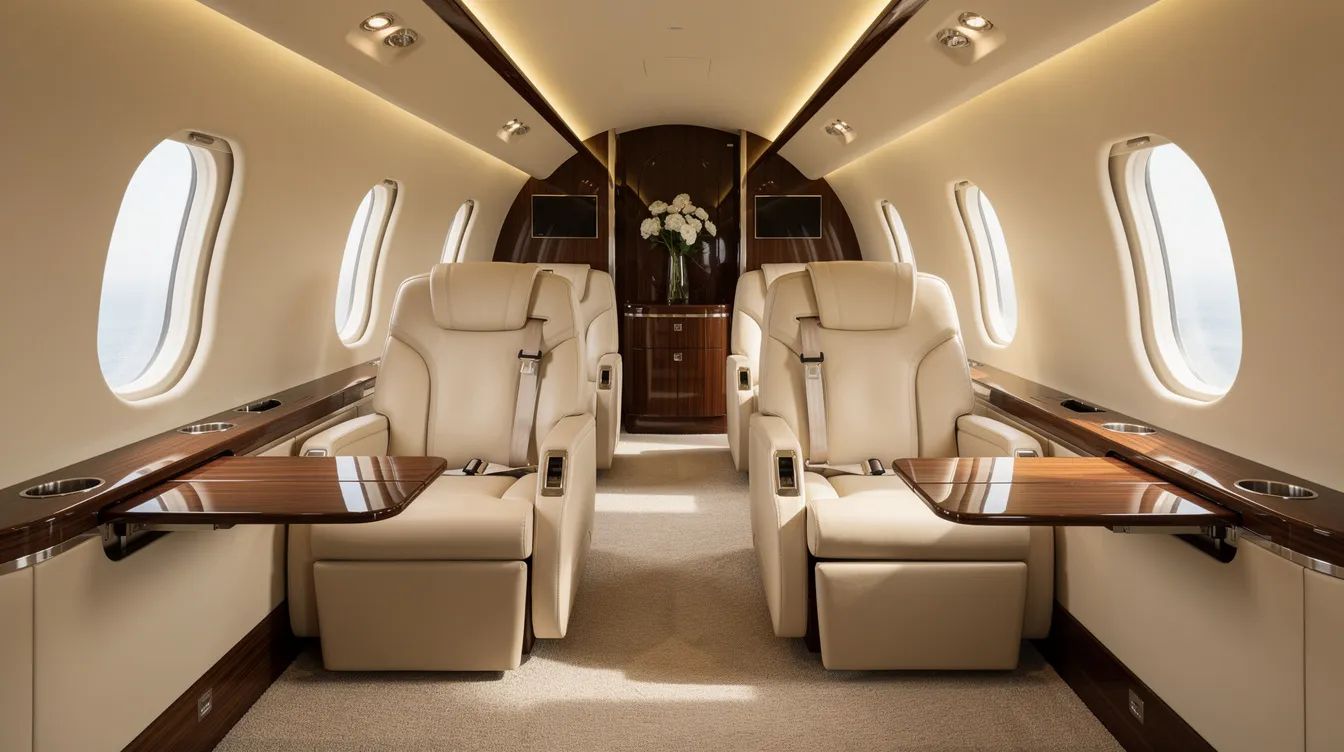
How BlackJet Jet Cards Deliver 8 Seater Access Without Buying a Plane
BlackJet positions itself as a premium Jet Card provider for frequent travelers who value safety, sustainability, and flexibility—without the complexity of ownership.
Core Jet Card Structure
The program offers 25-hour and 50-hour options with fixed hourly rates by cabin class. Light jets, midsize jets, and larger categories each carry distinct pricing, with transparent fuel surcharges when prices exceed benchmarks and peak-day premiums clearly communicated.
Digital Tools and Support
Members have access to 24/7 mobile booking, real-time flight support, and instant pricing estimates for typical 8-passenger routes. Itinerary management works seamlessly from phone or desktop, with a dedicated support team handling multi-city trip coordination.
Aircraft Matching
When customers need an 8-seater plane, BlackJet sources an appropriate light or midsize jet matched to passenger count, bags, and runway performance. For shorter hops, a King Air turboprop may be optimal; for transcontinental missions, a Citation Latitude delivers the range and speed required—an approach that contrasts with more ad hoc models used when you buy a seat on a private jet via shared-flight platforms.
Illustrative Scenarios
Consider an executive team flying from New York to Chicago to Dallas over two days. Via BlackJet Jet Card, they book a midsize jet, enjoy consistent service standards, and pay a predictable hourly rate—no crew management, no hangar fees, no depreciation concerns.
Or imagine a family flying from London to Palma regularly throughout August and March. Rather than owning an aircraft that sits idle most months, they request access through BlackJet, selecting appropriate cabin class for each trip while maintaining carbon-neutral performance—an attractive alternative for travelers also evaluating 10 million dollar private jet ownership options.
The inventory of aircraft for sale is constantly updated, but for many travelers, access through BlackJet provides the capability they need without the ownership burden.
Quick 8 Seater Aircraft Buyer’s Checklist
Before signing any purchase agreement, run through these considerations:
Mission Profile
Confirm typical passenger count (ideally 6-8 with stretch capacity)
Define range requirements (500, 1,500, or 2,500+ NM)
Identify runway characteristics at your most frequent airports
Assess weather profiles, including icing, terrain, and seasonal factors
Budget and Total Cost
Set acquisition budget, including pre-purchase inspection costs and, if relevant, review region-specific listings such as premium UK private jets for sale
Estimate annual flight hours realistically based on historical travel
Account for crew, hangar, insurance, and engine overhaul reserves, which become even more material with the largest private jets for sale
Plan an exit strategy considering market liquidity and depreciation
Aircraft Category Choice
Piston aircraft: owner-pilot recreational use only
Turboprops: regional flights under 1,500 NM, short runways
Light jets: speed priority, missions to 2,200 NM, with ultra-long-range options covered in our guide to the best long-range private jets
Midsize jets: transcontinental range, maximum cabin comfort, while larger-cabin aircraft suitable for 20 passengers are outlined in our guide to the best private jet for 20 passengers
Safety and Documentation
Demand a thorough pre-purchase inspection (PPI)—this is essential for used aircraft to verify airworthiness
Review complete logbooks and paint history
Obtain an independent appraisal (not the seller’s estimate)
Verify MSP Gold or equivalent engine program enrollment
Alternative Access Evaluation
Compare ownership numbers with the BlackJet Jet Card scenario
Connect with BlackJet to discuss typical routes and annual hours
Consider testing usage patterns via Jet Card before committing capital
Contact aviation professionals who can access off-market opportunities and navigate the acquisition process with precision, especially if you are benchmarking options against the top 10 private jets in the world.
Frequently Asked Questions About 8 Seater Planes and Jet Cards
Is a turboprop like a King Air 350 enough for 8 passengers, or do I need a jet?
A Beechcraft King Air 350 seats 8-9 passengers comfortably for flights up to approximately 1,500-1,800 nautical miles, with excellent short-field performance and lower operating costs than jets. For flights under 2-3 hours—think regional hops across Europe or coast-to-coast segments—a King Air or similar turboprop handles the mission well. However, for longer legs requiring higher cruise speeds or more luxurious cabin volume, light jets or midsize jets become the better fit. BlackJet can source both turboprops and jets, matching each trip to the optimal category rather than locking clients into a single aircraft type, and can even coordinate large-group solutions such as private jets for up to 50 passengers when your requirements extend beyond 8 seats.
How much does an 8-seater private jet actually cost per hour to operate?
Realistic 2026 operating costs range from approximately $3,000-4,500 per flight hour for light jets to $4,500-6,500 for midsize jets, depending on fuel prices and region. These figures combine fuel, maintenance reserves, crew, and overhead. Owners frequently underestimate fixed annual costs when looking at headline fuel numbers on a website. With a BlackJet Jet Card, clients see a single predictable hourly rate by cabin class that already bundles most of these costs, avoiding surprise expenses and simplifying budget planning—much like the structured pricing outlined in our analysis of NetJets Jet Card cost.
Can I specify an exact 8-seater aircraft model when I book with BlackJet?
BlackJet guarantees an aircraft category and cabin class—light jets, midsize jets, or larger—rather than a specific model. However, particular aircraft, such as a Phenom 300E or Citation XLS+, can often be requested subject to availability. BlackJet’s team matches member preferences for seating layout, wings configuration, baggage space, and runway needs, noting favored models in each member’s account profile. Safety, certification, and reliability are always prioritized over cosmetic preferences when sourcing individual aircraft.
What if my travel pattern changes after I buy an 8-seater plane?
Changes in business focus, family situation, or base airport can quickly render a chosen aircraft sub-optimal. The personal specifications that justified a Cessna Citation purchase may shift within two years, leading to costly upgrades, sales, or frustrating under-utilization. A Jet Card with BlackJet is inherently flexible: members can switch between turboprops, light jets, and midsize jets as trip needs evolve—without ownership friction. Many travelers test their real usage profile for a year or two via Jet Card access before committing significant capital, often comparing BlackJet against top private jet companies for luxury travel.
How do BlackJet’s carbon-neutral flights compare to operating my own aircraft?
BlackJet automatically measures and offsets emissions on each flight through verified carbon offset projects, delivering carbon-neutral performance by default with features that require no member administration. Private owners can replicate this by arranging their own offset programs, but it requires additional cost management and research into certified programs. BlackJet offers a simpler path to sustainable private aviation—environmental responsibility integrated directly into every 8-seat mission flown under the program, even when compared with the most expensive private jet options on the market.
Elevate your travel—effortlessly. Whether you’re actively searching for an 8-seater plane for sale or seeking world-class access without ownership complexity, BlackJet delivers safety-certified, carbon-neutral private flights on your terms. Explore our Jet Card programs and discover how refined, efficient travel becomes your new standard.
Become a member of BlackJet’s Jet Card program for effortless, high-end private travel—where safety, sustainability, and flexibility are seamlessly integrated.
Conclusion: Elevate Your Travel with BlackJet’s 8 Seater Access
Choosing between purchasing an 8-seater plane for sale and leveraging flexible access models is a pivotal decision for savvy travelers and corporate executives. While ownership offers control, it comes with significant financial commitments and operational complexities. BlackJet presents a compelling alternative—delivering premier private jet access through Jet Card programs that combine rigorous safety certification, carbon-neutral flights, and unmatched flexibility across light and midsize jets.
By joining BlackJet, you unlock effortless, strategic travel tailored to your evolving needs without the burdens of capital expenditure or asset management. Whether your itinerary calls for a turboprop’s runway agility or a midsize jet’s transcontinental reach, BlackJet’s digital platform and dedicated support ensure seamless booking, real-time flight assistance, and an elevated experience every time you fly.
Discover how BlackJet can reshape your private aviation journey. Visit blackjet.com to explore premium Jet Card options and start flying smarter—where safety, sustainability, and sophistication take flight on your terms.


 Sign up with google
 Sign up with Apple