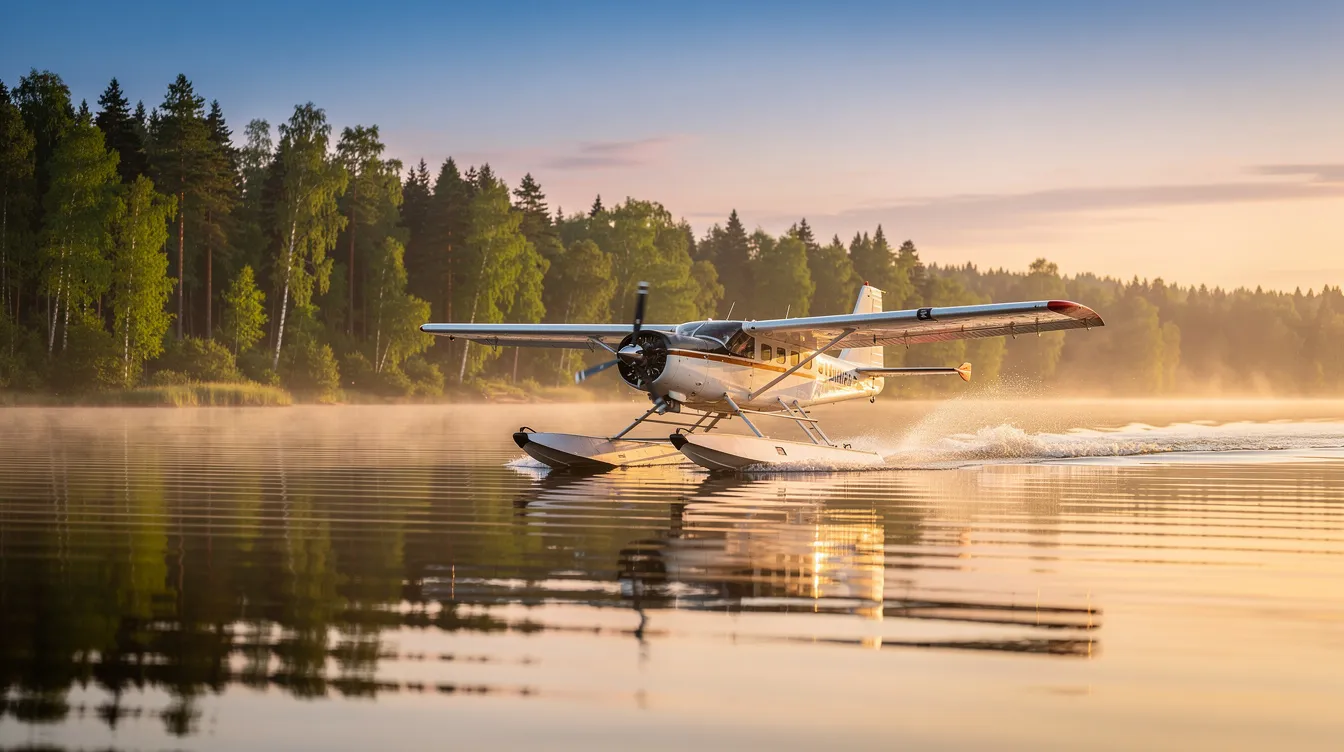
The Aero Adventure Aventura is a family of amphibious kit aircraft built for pilots who want to operate from water, grass, sand, snow, and pavement, with direct access to remote lakes, coastlines, and backcountry strips without relying on commercial airports. For recreational pilots, kit-building enthusiasts, and adventure-focused travelers—and for high-net-worth flyers weighing aircraft ownership against private aviation access—this article looks at the Aventura lineup, what flying it is like, where it fits best, how its safety and technology compare with private jets, and when a jet card option such as BlackJet may make more sense than owning a specialized aircraft, especially once you understand jet card membership pricing and costs.
Fast answers: What is the Aero Adventure Aventura line?
Aero Adventure LLC, based in DeLand, Florida, produces the Aventura line of amphibious kit aircraft designed for water, grass, sand, snow, and pavement operations. These Aventura seaplanes can be purchased as kits and shipped to various locations for assembly by the owner.
Three main variants make up the family. The Aventura UL is a single-seat ultralight that fits some no-license ULM categories. The Aventura HP is the high-performance single-seat choice, optimized for solo STOL fun; it can take off and land in less than 100 meters under light loading. The Aero Adventure Aventura II seats two passengers side by side, powered by a Rotax engine producing 92 hp, and turns a short lake into an airfield with water takeoff runs of 250 to 350 feet—an example of how the cheapest private aircraft and budget-friendly options can still unlock serious adventure access.
"Amphibious" means the hull lands on water while retractable landing gear allows the Aventura to operate on various surfaces, including pavement and turf. "STOL" refers to short takeoff and landing capabilities, confirmed by real-world runs under 350 feet on water and 400 to 500 feet from grass.
The same adventure-seeking, time-conscious travelers drawn to these aircraft often share one thing with private jet customers: a preference for skipping big airports and reaching destinations directly through premium private jet cards and Jet Card programs.
Aventura II and Aventura HP: Key features, performance, and pilot experience
The numbers below come from published kit specifications and pilot reports, not brochure claims alone.
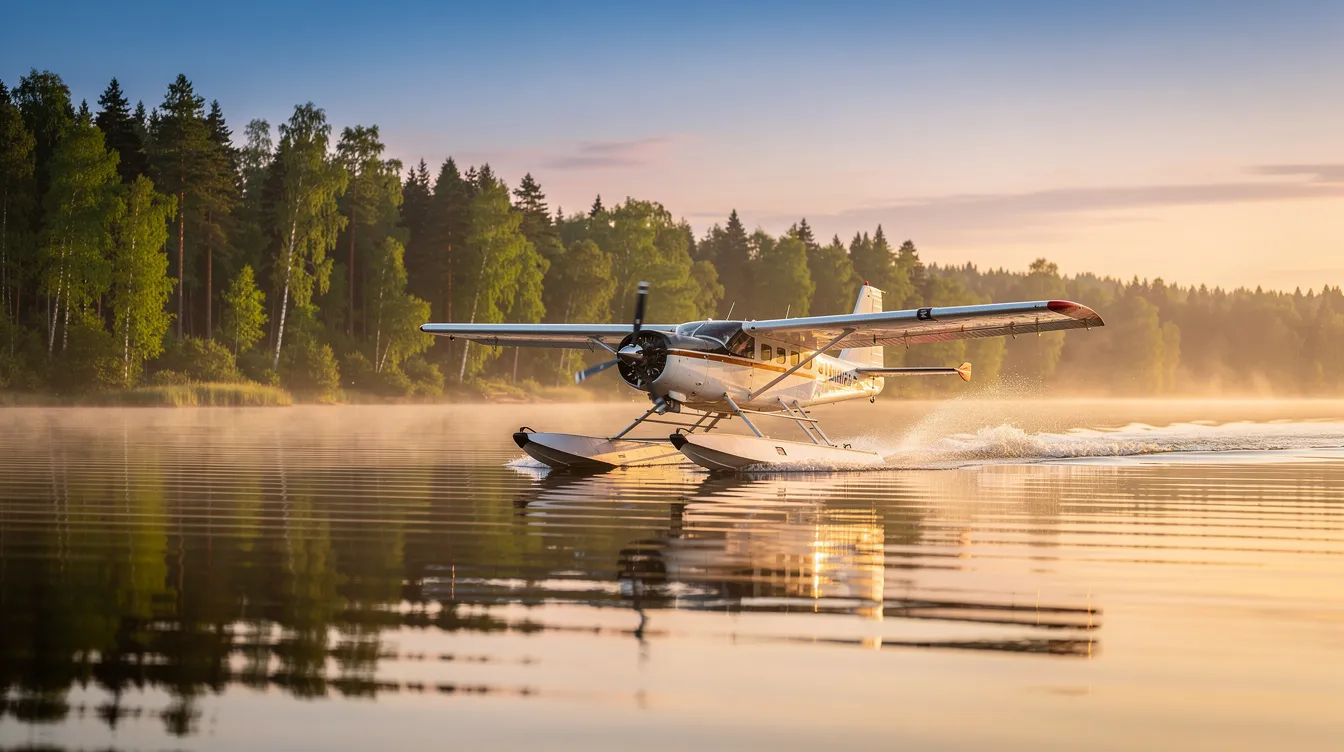
The Aventura II is built in a similar way to ultralight aircraft but carries two occupants. Its airframe features a fiberglass hull and Dacron fabric-covered wings on an aluminum-tube structure, with a high-wing, pusher configuration for improved visibility. The powerplant is typically a Rotax 912 or Rotax 914 engine with 92 HP, paired with dual controls, flaps, and retractable gear. The airframe without engine costs $31,000. Lightweight construction improves performance, keeps operating costs down, and delivers great STOL value. The Aventura can be powered by various engine options including Rotax variants from 80 to 100+ hp, and the plane can fit in a 26' box truck for transport to a build site or new home base.
The Aventura HP is supplied as a completed kit (minus engine, prop, and instruments). It uses Rotax 503 or 582 two-stroke engines in the 50 to 65 hp range, with empty weight as low as 330 lb and gross weight up to 950 lb. Fuel capacity on the HP runs 12 to 18 gallons depending on options. The aventura hp can take off and land in less than 100 meters, making remote lakes accessible in one length of shoreline—very different from 10 million dollar private jet options for luxury travelers that focus on speed and cabin comfort over water access.
Performance cruise speed across the family ranges from 75 to 85 mph. Stall speed on the Aventura II with flaps sits around 33 knots. Aventura II takes off in 250 to 350 feet with the Rotax 912 on water, and requires about 400 to 500 feet for takeoff from grass. Rate of climb on the II hits roughly 1,100 ft/min. Aventura's canard sponsons reduce drag and improve lift, aiding hull step behavior during water transitions. Wing area and wingspan provide the low wing loading needed for STOL work—metrics that look modest next to 15 million dollar private jet performance and features but are perfectly tuned for low-speed water ops.
Pilot experience details matter. The rear-mounted engine is loud as hell in pilot terms, so quality ANR headsets are basically mandatory. Glassy-water landings require precise attitude control to avoid porpoising, and rudder input matters in low-speed water handling and turns; tail strikes are a real risk without training. Builders report an average assembly time of 200 to 300 hours for the Aventura II. Some choose to buy a used or partially completed airframe to save months of build time. Aero Adventure currently has two used Aventura IIs in inventory, and one example listed shows a total time of 25 hours in flight, indicating a low-hour airframe ready for a new owner—worlds apart from 20 million dollar private jet features and ownership considerations aimed at global travel.
Feature | Aventura UL | Aventura HP | Aventura II |
|---|
Seating | 1 (single-seat ultralight) | 1 (high-performance ultralight) | 2 (side-by-side) |
Engine Options | Various Rotax two-stroke | Rotax 503 or 582 (50-65 hp) | Rotax 912 or 914 (92 hp) |
Assembly | Kit | Completed kit (minus engine) | Kit |
Takeoff Distance | N/A | Less than 100 meters | 250-350 feet (water), 400-500 feet (grass) |
Cruise Speed | Approx. 75 mph | Approx. 75-85 mph | Approx. 75-85 mph |
Empty Weight | Ultralight category limits | As low as 330 lb | Heavier, kit-built amphibian |
Fuel Capacity | N/A | 12-18 gallons | Varies |
Landing Gear | Retractable amphibious | Retractable amphibious | Retractable amphibious |
Construction | Kit-built fiberglass & fabric | Fiberglass & aluminum-tube | Fiberglass hull, Dacron fabric wings |
Assembly Time | N/A | N/A | 200-300 hours |
Transportability | N/A | N/A | Fits in 26' box truck |
Adventure use cases: From backcountry lakes to BlackJet gateways
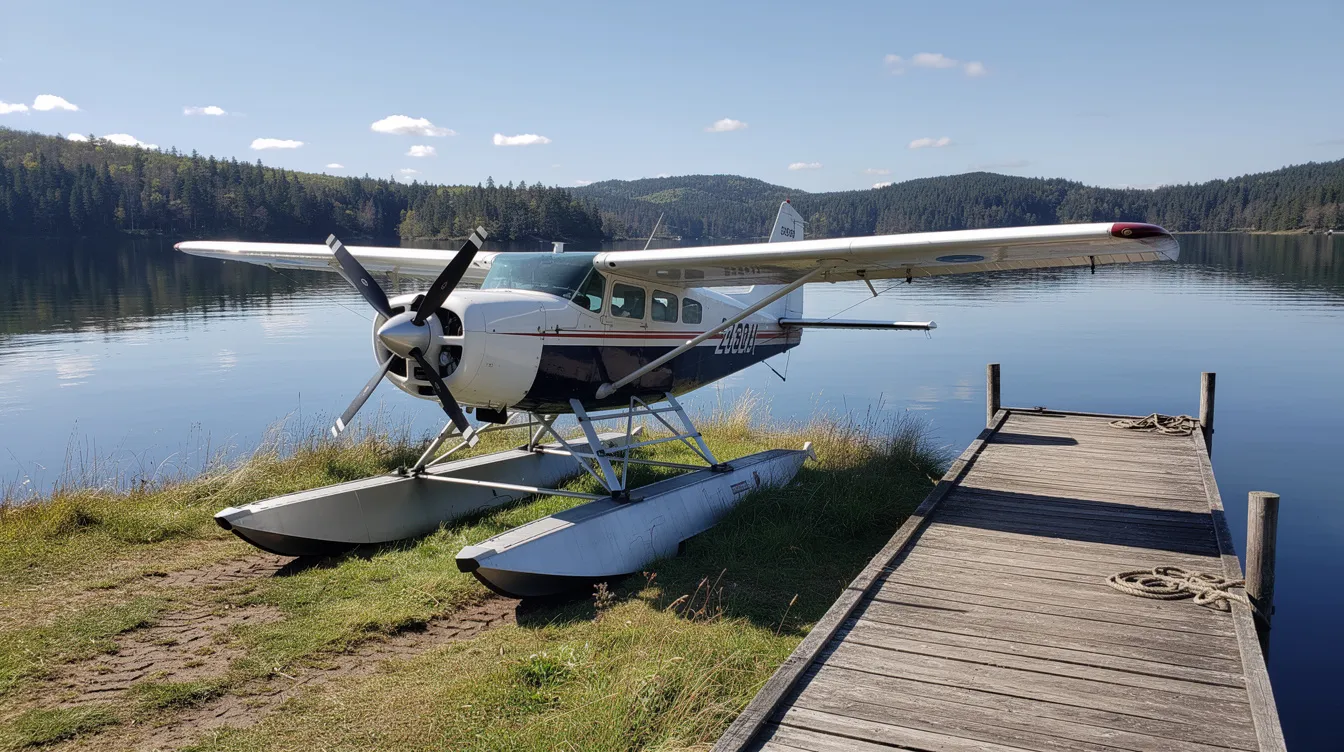
The Aventura is popular among recreational pilots and kit-building enthusiasts who want more than pattern work at a local strip. The aircraft is suitable for exploratory flying over lakes and coastlines, and there is an active community sharing tips and modifications for the Aventura through forums and fly-in events.
Consider Alex, a Florida-based pilot who keeps his Aventura II at DeLand (KDED). On weekends he hops freshwater lakes south of Palatka, then follows the St. Johns River to coastal inlets for a bit of fun before returning. Pre-flight means checking water conditions (wind chop, floating debris, safe fuel reserves) and coordinating overnight mooring at a friend's dock. Aventura II is known for its fun flying experience; low-altitude air over mangrove islands with doors off is the standard story pilots share.
A Canadian owner uses a 90+ hp Aventura HP on summer weekends to reach an Ontario fishing lodge inaccessible by road. The hull touches down on a lake at the property's edge, and the adventure starts from the cockpit seat—much like how affordable private plane rideshare options are making otherwise hard-to-reach destinations accessible to more travelers.
Now scale that spirit. A high-net-worth traveler uses a BlackJet 25-hour Jet Card to fly by private jet from New York to Orlando Executive in under two hours, arriving the same morning. A short drive to DeLand, and by noon they are flying a locally based Aventura II over the Intracoastal Waterway. Commercial airlines would turn that into a full-day ordeal with connections and rental cars. BlackJet's ability to book a private jet into smaller airports eliminates the gap between city life and waterborne adventure, and understanding how much it costs to rent a private jet helps frame when that tradeoff makes sense.
From light amphibians to private jets: Safety, technology, and sustainability
Operating an Aero Adventure amphibian safely demands discipline: formal seaplane training, recurrent practice for glassy-water and crosswind landings, and pre-flight inspection of hull seals, retractable gear mechanisms, and control linkages on a kit-built airframe. Aventura II requires both tailwheel and sea ratings in most jurisdictions before a pilot can legally carry a passenger.
Private jet travel applies that same emphasis at industrial scale. BlackJet uses only operators meeting rigorous third-party safety audits such as Wyvern Wingman, with professional crews, maintenance tracking, and documented procedures that exceed what any owner-flown experimental aircraft can match, whether you’re booking a light jet or a private jet configured for 20 passengers. The reliability gap between certified Part 135 operations and homebuilt hardware is wide and measurable, which is why many travelers compare top private jet companies for luxury travel and service before committing.
Technology contrast is concrete. A typical Aventura II instrument panel holds basic flight instruments, a radio, and maybe a compact EFIS, which is a far cry from what you’ll find on private jets that can carry 30 passengers in comfort. A super-midsize jet in the BlackJet network carries TCAS, terrain awareness, FMS-driven autopilots, and real-time avionics suites processing weather data continuously—especially true of the largest private jets for sale and charter that are built for intercontinental missions.
On sustainability: many Aventura owners already fly fuel-efficient four-stroke Rotax engines burning 4 to 6 gallons per hour. BlackJet extends that environmental awareness through carbon-neutral flights via verified offsets and SAF partnerships, at no extra cost to the cardholder, even on long-range private jets for nonstop international travel or newer private plane rideshare models that split capacity among travelers.
Choosing your next aero adventure: Kit ownership vs Jet Card access
The choice turns on how you want to spend your time. Building an Aero Adventure Aventura II kit means 200 to 300 hours of assembly, ongoing hangar or mooring fees, insurance, and licensing. The result is a fully built amphibian you maintain yourself, with the satisfaction of flying something your own hands created. The company ships kits to customers across the country, and plenty of builders recommend the experience for anyone comfortable with fiberglass, standard hardware, and Rotax powerplant installation, especially those comparing that sweat equity to the predictability of jet card pricing structures and benefits.
A BlackJet Jet Card takes a different approach: predictable hourly rates, zero airframe risk, professional crews, and cabin classes from light jets to large-cabin aircraft. No build time. No mooring. No corrosion inspection after a salt-water landing. For frequent flyers, a detailed look at 50 hour jet card cost and value can clarify when that model beats outright ownership.
Some clients choose both. They keep a personal Aventura on a local lake for weekend day trips and rely on BlackJet for long-range business or family travel. The idea is the same: freedom and access on your own schedule, with different tools for different distances, whether that means a smaller card or committing to a 100 hour jet card cost structure for heavy use.
If the Aventura ethos of open-air, water-borne flying speaks to you, and you want that same freedom extended to city-to-city travel at 450 knots, explore BlackJet membership. You can start small by buying a seat on a private jet through shared or semi-private options or by researching the cheapest private jet options for entry-level ownership and charter. Carbon-neutral flights, 24/7 booking, and safety certification built into every hour you fly.

Frequently Asked Questions about Aero Adventure Aventura
Q: What types of engines can power the Aero Adventure Aventura aircraft?
A: The Aventura family is typically powered by Rotax engines, including the Rotax 912 and 914 models producing around 92 horsepower. The Aventura HP uses smaller two-stroke engines like the Rotax 503 or 582 in the 50 to 65 hp range.
Q: How long does it take to assemble an Aventura II kit?
A: Builders generally report an assembly time between 200 and 300 hours, depending on experience and available resources. Some buyers also opt for partially assembled or used aircraft to reduce build time.
Q: What are the takeoff and landing distances for the Aventura aircraft?
A: The Aventura HP can take off and land in less than 100 meters, while the Aventura II requires about 250 to 350 feet on water and 400 to 500 feet on grass, showcasing excellent STOL capabilities.
Q: Do I need special pilot certifications to fly the Aventura II?
A: Yes, pilots typically require both tailwheel and sea ratings to operate the Aventura II legally and safely, given its amphibious and tailwheel configuration.
Q: How does owning an Aventura compare to using a private jet card like BlackJet?
A: Owning an Aventura offers hands-on adventure and direct water access but involves build time, maintenance, and operational responsibilities. A BlackJet Jet Card provides flexible, carbon-neutral private jet access with professional crews and no ownership hassles, ideal for longer or business travel.
Q: Are there training options available for flying the Aventura amphibious aircraft?
A: Yes, Aero Adventure offers flight training and transition courses, including seaplane ratings, often through certified instructors familiar with the aircraft and water operations.
Conclusion: Embrace Your Aero Adventure or Elevate with BlackJet
The Aero Adventure Aventura line embodies the spirit of exploration, offering pilots and enthusiasts a unique gateway to remote waterways, backcountry strips, and off-the-grid destinations. Its amphibious design, STOL capabilities, and kit-built flexibility make it a compelling choice for those who value hands-on adventure, customization, and access beyond traditional airports.
However, for high-net-worth travelers and frequent flyers who prioritize convenience, safety, and seamless city-to-city travel, BlackJet’s Jet Card programs present a strategic alternative. With professionally crewed, carbon-neutral private jet access across multiple cabin classes, BlackJet eliminates the time, limits, and complexities introduced by aircraft ownership. Whether you’re looking to complement your Aventura experience or replace it with effortless premium travel, exploring BlackJet membership can reshape how you approach your next aero adventure.
Discover how combining the freedom of amphibious flying with the prestige of private jet access can elevate your travel lifestyle—because true adventure knows no bounds.


 Sign up with google
 Sign up with Apple